Oxygen Micro Sensor Investment Analysis Information 2026: Explaining the Growth Strategy to a Scale of 138 Million USD
Global Market Size of Oxygen Micro Sensors Oxygen micro sensors are small sensors that measure oxygen concentration, oxygen partial pressure, and dissolved oxygen levels in micro-regions using microelectrodes and optical fiber probes. Depending on the measurement target, they can capture oxygen distribution and consumption with spatial resolution ranging from micrometers to millimeters. According to the latest research report published by Global Reports, titled "Global Market Size, Share, Company Rankings, Sales, and Demand Trend Forecast for Oxygen Micro Sensors (2026-2032)," the global market is expected to expand from 128 million USD in 2025 to 138 million USD in 2026, and reach 209 million USD by 2032. The compound annual growth rate (CAGR) from 2026 to 2032 is projected to be 7.2%, supported by advanced analytical applications in life sciences, environmental research, and microfluidic devices.
Inquire About This Product
basic information
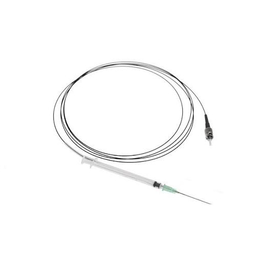
Main Technologies and Measurement Methods of Oxygen Micro Sensors Oxygen micro sensors are primarily classified into optical and electrochemical types. Optical oxygen micro sensors measure oxygen concentration by utilizing the quenching phenomenon of fluorescence and phosphorescence. A key feature is that they do not consume the oxygen being measured, and they can be configured as fiber optic probes or sensor spots. They are suitable for applications where physical impact on the sample needs to be minimized, such as in sealed containers or microchannels. On the other hand, the Clark-type oxygen microelectrode, a representative example of electrochemical sensors, achieves high spatial resolution and responsiveness through its fine tip. It is effective for measuring environments where steep oxygen concentration gradients are formed, such as in sediments, biofilms, and plant rhizospheres. The measurement targets vary widely, including aqueous solutions, cell culture media, biological tissues, gas phases, semi-solid samples, and organic solvents, with tip diameters selected according to the application, ranging from less than 10 μm to over 500 μm.
Price range
Delivery Time
Applications/Examples of results
Expansion of Demand in Life Sciences and Environmental Research The main customers for oxygen micro-sensors are universities, research institutions, marine and environmental analysis laboratories, pharmaceutical companies, and biotechnology firms. In the field of life sciences, they are used in research on hypoxia, cellular metabolism, organoids, tissue oxygenation, and drug response. In cell culture and organ-on-a-chip applications, the ability to assess localized oxygen environments, which are difficult to capture with just the average value of the entire culture medium, is crucial. In the environmental field, they are used to analyze microbial activity, oxygen penetration depth in sediments, the interface between seabed sediments and water, and biogeochemical cycles. Additionally, in packaging and headspace analysis, optical sensor spots can non-invasively monitor oxygen changes in small sealed spaces. The focus of demand is not on general-purpose measurements for mass production, but rather on specialized analytical applications that accurately capture localized oxygen conditions.
Company information

Global Reports integrates industrial information from around the world and provides highly accurate market intelligence to support corporate decision-making. We deliver in-depth analyses based on numerical data and facts, including market size, share, industry structure, price trends, growth forecasts, rankings of major companies, and competitive trends, with clear information categorized by country, region, and application. Leveraging a rich database that has supported the business growth of over 65,000 companies and an international research network, we accompany our clients in their global expansion and continuous growth.