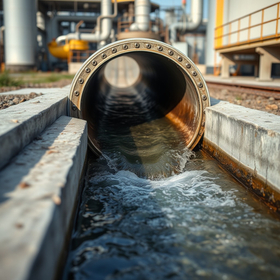
The recycling rate is about 76%. What about the utilization of organic matter? This explains the current status of effective utilization as seen from the differences in the amount of sewage sludge generated and the indicators.
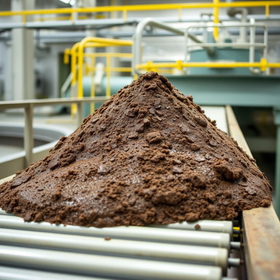
Sewage sludge refers to the sludge generated during the process of treating sewage at wastewater treatment plants. The amount of sludge generated is counted as the total of raw sludge and excess sludge. Article 21-2, Paragraph 2 of the Sewerage Act requires public sewer managers to not only reduce sludge but also to strive for its recycling as fuel or fertilizer. The obligation to make efforts for recycling was added in the 2015 amendment to the law. ■ How much is generated annually? The annual generation of sewage sludge for the fiscal year 2024 is approximately 2.34 million tons. Of this, about 344,000 tons were utilized as fertilizer. ■ Half is incinerated Half of the generated sewage sludge is incinerated and is not used as fertilizer due to variations in composition. ■ About 80% of solids are organic matter! About 80% of the solids in sewage sludge consist of organic matter. Therefore, there is potential for it to be used as energy in the form of biogas or solid fuel. Additionally, of the annual demand for phosphorus, which is about 300,000 tons, approximately 20%, or about 50,000 tons, is contained in sewage sludge. Please feel free to consult with us first.
Inquire About This Product
basic information
■What is the denominator for the recycling rate? The utilization of sewage sludge is mainly indicated by the following metrics: 1. Sewage sludge recycling rate: The percentage obtained by dividing the amount ultimately recycled by the amount of sewage sludge (based on dry weight at the time of sludge generation). 2. Sewage biomass recycling rate: The percentage of organic matter in the sludge that was utilized for energy production or green agricultural land use. 3. Sewage sludge energy recovery rate: The percentage of organic matter in the sludge that was utilized for energy recovery. ■Where does the difference between 76% and 42% come from? In the fiscal year 2024, the sewage sludge recycling rate is approximately 76%, while the sewage biomass recycling rate is 42%. The recycling rate includes uses as construction materials, such as cement. Even as of fiscal year 2017, effective utilization was primarily focused on material use, such as construction materials, with limited utilization that leverages the characteristics of biomass. Even within the same "recycling," the applications counted as the denominator differ. ■Is there a significant regional difference? In the fiscal year 2024, the recycling rates are 100% for Tottori Prefecture, Kochi Prefecture, and Oita Prefecture, while Nara Prefecture and Ishikawa Prefecture have rates of 23%, showing significant variation among prefectures.
Price range
Delivery Time
Applications/Examples of results
■Prioritizing Use as Fertilizer? Sewage sludge can be utilized as fertilizer through composting and phosphorus recovery by crystallization. In March 2023, the Ministry of Land, Infrastructure, Transport and Tourism notified local governments that the basic policy for sludge treatment is to "prioritize its use as fertilizer and maximize its utilization." In October of the same year, a new fertilizer standard (microbial phosphate fertilizer) that can be blended with other fertilizer materials was established. ■Current Status and Goals for Fertilizer Utilization Rate The fertilizer utilization rate for sewage sludge is approximately 15% for the fiscal year 2024, with a target of 30% by the fiscal year 2030. ■What About Use as Energy? Biogas derived from sewage sludge has a methane content of about 60% and is used for power generation and other purposes. As of the fiscal year 2024, the proportion of organic matter in sludge utilized for energy, such as biogas, solid fuel, and incineration waste heat (sewage sludge energy utilization rate), is approximately 31%. ■If You Are Having Trouble with Sludge Treatment Our company offers consultations on chemicals used for sludge dewatering and sludge treatment equipment such as dewatering machines. Please feel free to contact us.
catalog(3)
Download All Catalogs
Company information

Since our founding, we have continued to provide flexible services with the motto of accurately supplying a diverse range of products that respond to changes in the times and the diversification of consumer needs, tailored to various applications and requirements. With the corporate slogan "Chemical Engineering Partner," we, as a group of experts in chemical technology, actively discover ideas to solve our customers' problems from advanced technologies both domestically and internationally, and propose them.