Vehicle-mounted Smart Dimmer Glass Industry Report 2026: Market Size of 2,702 Million USD and Future Outlook
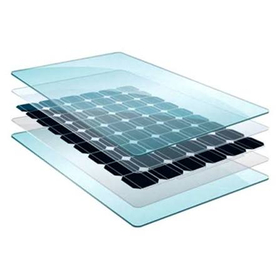
Smart dimming glass for vehicles refers to automotive glass and integrated glass modules that actively change the visible light transmittance and shading state through electrical signals. It employs technologies such as PDLC (Polymer Dispersed Liquid Crystal), electrochromic, SPD (Suspended Particle Device), and dye liquid crystal to achieve dimming, privacy protection, glare reduction, heat insulation, and improved comfort inside the vehicle. According to the latest research report published by Global Reports titled "Global Market Size, Share, Company Rankings, Sales, and Demand Trend Forecast for Smart Dimming Glass for Vehicles (2026-2032)," the global market is expected to expand from approximately 2.352 billion USD in 2025 to about 2.720 billion USD in 2026, and reach around 6.218 billion USD by 2032. The CAGR from 2026 to 2032 is projected to be 14.9%.
Inquire About This Product
basic information
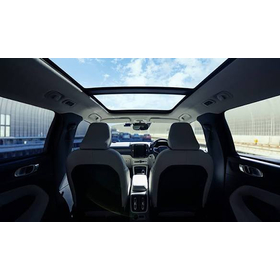
Market expansion centered around panoramic roofs The global shipment area in 2025 is estimated to be approximately 4.9 million square meters, with an average FOB price of about 480 USD per square meter for manufacturers. Currently, panoramic roofs and sunroofs are the main applications, with the Asia-Pacific region forming the largest production and demand area. The adoption of large glass roofs is advancing in electric vehicles and luxury SUVs, and in exchange for the sense of openness, the importance of automotive smart dimming glass is increasing as a countermeasure against the growing solar heat and glare.
Price range
Delivery Time
Applications/Examples of results
Technological evolution and diversification of applications The product functions have advanced from the conventional two-stage switching between transparent and opaque to continuous adjustment of transmittance, multiple zone control, and gradient dimming. PDLC offers fast switching and privacy control, electrochromic technology allows for continuous density adjustment, and SPD excels in shading while maintaining visibility. On the other hand, there are differences in technology regarding haze in transparent mode, response speed, power consumption, and temperature stability. By 2026, the dye liquid crystal dimming privacy glass jointly developed by XPENG and Fuyao Glass will enter mass production, realizing automatic dimming based on vehicle environment and passenger conditions. Additionally, an analysis by S&P Global in May 2026 points to the expansion of adoption in side windows. In addition to ensuring privacy in the rear seats and controlling sunlight, individual dimming for each passenger is expected to create new demand.
Company information
Global Reports integrates industrial information from around the world and provides highly accurate market intelligence to support corporate decision-making. We deliver in-depth analyses based on numerical data and facts, including market size, share, industry structure, price trends, growth forecasts, rankings of major companies, and competitive trends, with clear information categorized by country, region, and application. Leveraging a rich database that has supported the business growth of over 65,000 companies and an international research network, we accompany our clients in their global expansion and continuous growth.