
List of Scientific and Physics Equipment products
- classification:Scientific and Physics Equipment
3136~3150 item / All 36094 items


Reduce the workload from handling heavy objects! Here are five case studies that solved customer challenges! We are also accepting free consultations and tests tailored to your work!

- Other conveying machines


Support from product planning to filling, processing, and shipping for additives, cleaning agents, chemicals, deodorizing and disinfecting agents, etc.! For those who have raw materials but no place t...


- Other consumables
- Processing Contract
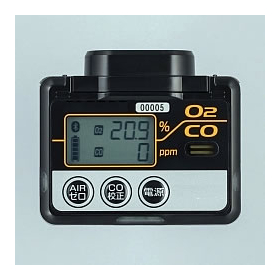

Two roles in one unit. Achieving highly efficient safety management all at once.
- Stainless steel container
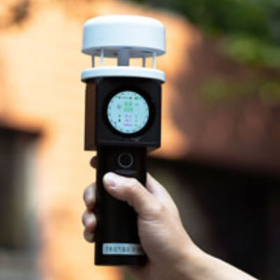
The MI1WST-73FNM uses ultrasonic technology to measure wind speed and direction, as well as temperature, humidity, and atmospheric pressure with multiple sensors.
- Stainless steel container
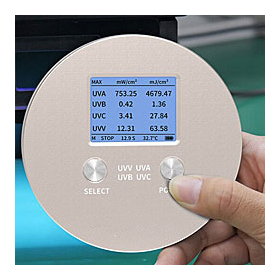
The MI1UV4CH-249M automatically identifies the test wavelength range and simultaneously measures the UV output and energy of UVA, UVB, UVC, and UVV.
- Stainless steel container
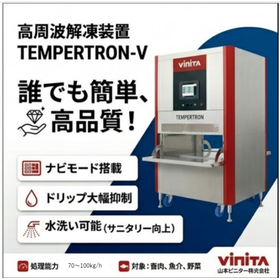

It is possible to defrost while still in boxes such as cardboard and Styrofoam! High-frequency defroster "Tempatron"!


- Food Processing Equipment
- Other food machinery
- Heating device

Notice of Participation in the 36th West Japan Food Industry Creation Exhibition '26 (May 20, 2026 (Wed) - May 22 (Fri))
Yamamoto Vinita will be exhibiting at the "36th Western Japan Food Industry Creation Exhibition '26" held at Tokyo Big Sight. Booth Number: West 4 Hall, Booth No. W4-39-05 *Exhibited Equipment: High-Frequency Rapid Thawing Device TEMPERTRON-VI Type - Thawing of beef, pork, chicken, vegetables, seafood, etc. - Heating and melting of dairy products such as butter, margarine, and chocolate - Achieves automation and labor-saving through rapid thawing. - This device can effectively heat even thick raw materials to the center. On the day of the event, we will also have a consultation desk for specific inquiries regarding thawing, heating, drying, and sterilization using radio waves (high frequency and microwaves). [Reasons for Improvement with High-Frequency Thawing] - Automation and line integration from raw material thawing to product completion on the day. - Thawing and heating in a short time frame of 20 to 30 minutes. - Reduction of personnel through automation of thawing and continuous thawing processes. - Ensuring thorough thawing of the center (uniform thawing quality) (elimination of surface drip loss). - Thawing without using water (reduction of water usage) (improvement of hygiene) (improvement of labor environment). - Elimination of excessive thawing (eradication of refreezing: reduction of food waste: thawing the necessary amount at the necessary time). Various companies have achieved improvements in their issues.


We propose a heater arrangement designed specifically through thermal analysis to achieve a uniform temperature distribution.
- Other heaters

It is possible to put a large electrical capacity into a small-sized heater! It can be used for applications such as molds, dies, and liquid heaters.


- Other heaters
- Heating device

This is a heater with a metal hoop wrapped around the heating element to increase the heat dissipation area. It can be used for gas heating applications such as duct heaters and drying ovens.


- Other heaters
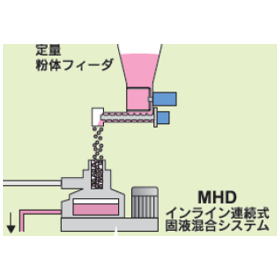

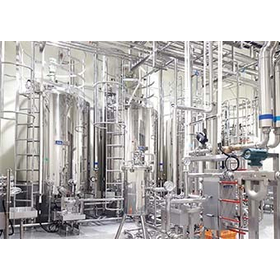
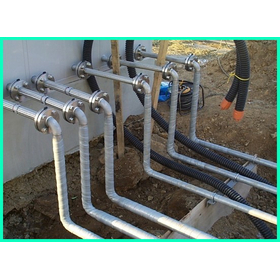
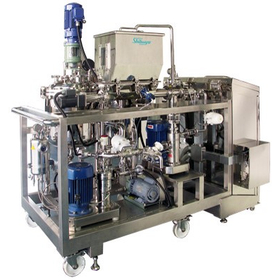
From powder supply to dispersion, defoaming, and transfer. A dispersion machine line compatible with high-viscosity slurries has been established.
- Emulsifier/Disperser
- Powder Supply Device
- Dispersion/emulsification equipment/homogenizer
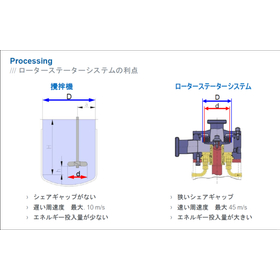
What are the reasons for changes in results from the lab to mass production? Causes and countermeasures for the deterioration of distributed quality during scale-up.
Despite obtaining good dispersion results in the lab, the challenge of unstable quality upon mass production occurs in many settings. The main cause of this is that the dispersion conditions are not replicated due to differences in scale. In lab equipment, the smaller size leads to higher energy density, making shear and flow more uniform, while in mass production equipment, the larger scale often results in insufficient dispersion energy at the same rotational speed and processing time. Additionally, differences in equipment structure and flow patterns can cause variations in the shear history and residence time experienced by particles, leading to differences in the dispersion state. Furthermore, simple scale-up does not ensure that critical parameters such as flow rate, residence time, and shear intensity match, making it difficult to reproduce the same results as in the lab. To address these challenges, it is essential to focus on process design based on dispersion energy density and flow conditions rather than merely increasing equipment size. By designing the system so that particles pass through the processing area under consistent conditions, it is possible to achieve reproducible dispersion quality even when the scale changes, as seen in inline continuous processing.
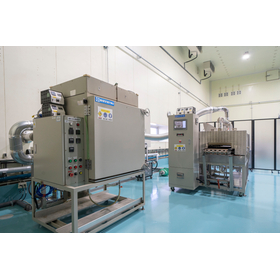
We would like to introduce some examples of the manufacturing of custom-made heaters by Shinnetsu Industry's superheated steam treatment equipment!

- Heating device
- Electric furnace
- Industrial Furnace
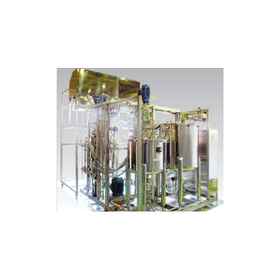
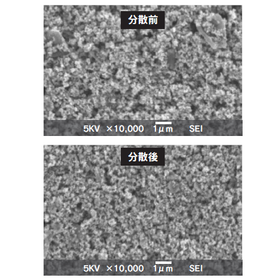
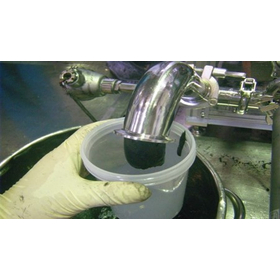
Inline dispersion system for continuous processing and stable dispersion of high-viscosity slurries.
- Emulsifier/Disperser
- Powder Supply Device
- Dispersion/emulsification equipment/homogenizer
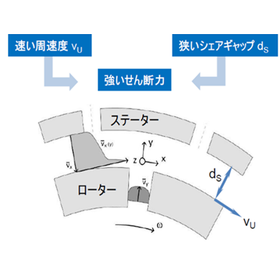
What is the relationship between viscosity and dispersion efficiency? The reason why dispersion becomes difficult under high viscosity conditions.
In dispersion processes, viscosity is an important factor that significantly affects dispersion efficiency. Generally, as viscosity increases, fluidity decreases, making it more difficult for dispersion energy to be transmitted to the particles. When viscosity is low, liquids flow easily, and shear energy is widely transmitted throughout the system, making it relatively easy to break apart particle agglomerates. On the other hand, as viscosity increases, flow becomes localized, and shear tends to be concentrated near the equipment. As a result, there is a mixture of particles that receive sufficient energy and those that do not, leading to variability in the dispersion state. Additionally, under high viscosity conditions, the movement of particles is also restricted, making collisions and breakdowns between agglomerates less likely. Consequently, even if the mixture appears homogeneous, there may be undispersed regions remaining internally. To enhance dispersion efficiency, it is crucial to implement appropriate shear conditions and flow designs according to viscosity. Particularly in inline continuous processing, it is possible to provide uniform shear to the particles within the flow, allowing for efficient transmission of dispersion energy even under high viscosity conditions. In dispersion processes, optimizing flow, shear, and processing time while considering the effects of viscosity is key to achieving stable dispersion quality.
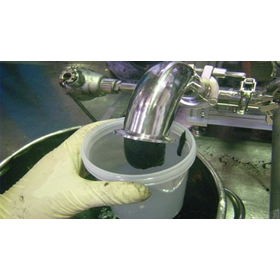
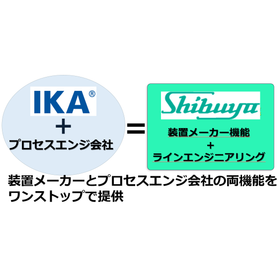
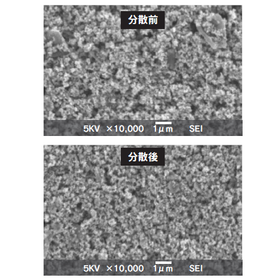
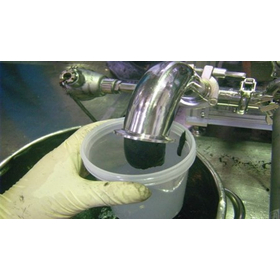
Supports high-viscosity dispersion of positive and negative electrode slurries. Assists in quality stabilization and mass production scale-up through continuous processing.
- Emulsifier/Disperser
- Powder Supply Device
- Dispersion/emulsification equipment/homogenizer
What is the relationship between viscosity and dispersion efficiency? The reason why dispersion becomes difficult under high viscosity conditions.
In dispersion processes, viscosity is an important factor that significantly affects dispersion efficiency. Generally, as viscosity increases, fluidity decreases, making it more difficult for dispersion energy to be transmitted to the particles. When viscosity is low, liquids flow easily, and shear energy is widely transmitted throughout the system, making it relatively easy to break apart particle agglomerates. On the other hand, as viscosity increases, flow becomes localized, and shear tends to be concentrated near the equipment. As a result, there is a mixture of particles that receive sufficient energy and those that do not, leading to variability in the dispersion state. Additionally, under high viscosity conditions, the movement of particles is also restricted, making collisions and breakdowns between agglomerates less likely. Consequently, even if the mixture appears homogeneous, there may be undispersed regions remaining internally. To enhance dispersion efficiency, it is crucial to implement appropriate shear conditions and flow designs according to viscosity. Particularly in inline continuous processing, it is possible to provide uniform shear to the particles within the flow, allowing for efficient transmission of dispersion energy even under high viscosity conditions. In dispersion processes, optimizing flow, shear, and processing time while considering the effects of viscosity is key to achieving stable dispersion quality.
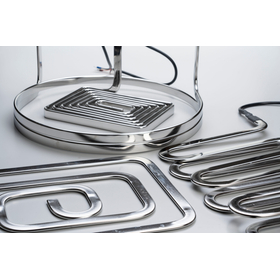
We would like to introduce some examples of custom-made super flat heaters produced by Shinnetsu Industry!

- Heating device
- Other heaters
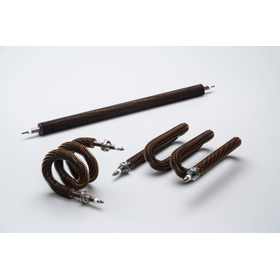
We would like to introduce some examples of fin heater production by Shin Netsu Kogyo, which manufactures heaters made to order!

- Heating device
- Other heaters
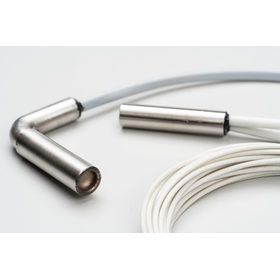
We would like to introduce some examples of cartridge heater production by Shinnetsu Industry, which manufactures heaters made to order!

- Other heaters
- Heating device