
List of Polymer Materials products
- classification:Polymer Materials
1~45 item / All 16165 items


It won't break even after 1 million repetitions! A mat switch with reliable operation, high durability, and low price. Suitable for options in machine tools as well. Please consult us about delivery t...
- Sensors


We can accommodate high resistance over 10,000 ohms, with diameters ranging from approximately 30 mm to 8 inches, and we also offer thinning and chip processing arrangements!
- Other semiconductors
- Processing Contract
- Wafer


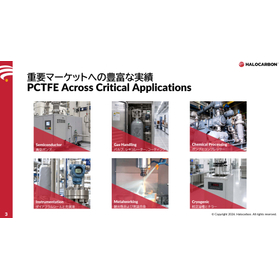
Achieves high oxidation stability and high-temperature performance! Non-combustible, does not mix with water, and can be easily removed.
- Lubricants
- Other polymer materials


Recycling PA6 from scrapped cars, bringing it back to vehicles without compromising performance.
- Engineering Plastics


Low energy, low temperature processing is possible.
- fiber
- Resource Recycling System
- Recycling Technology
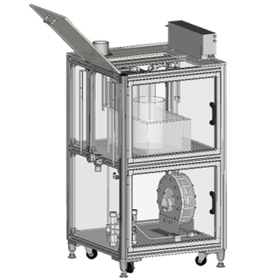
CFRP recycling technology using electrolytic sulfuric acid solution
- fiber
- Composite Materials
- Resource Recycling System
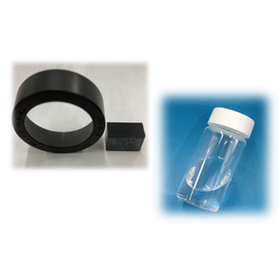

Providing low-friction solutions that combine lubricants and PEEK coatings!!
- Engineering Plastics
- Lubricants
- Coating Agent


Introducing new resin products, including the "Falcon F1," a two-component room temperature curing resin!


- Other polymer materials

Introducing a hardening resin for sample polishing that is solidified with heat and pressure.


- Composite Materials

We offer a wide range of grades of cellulose as a fixative for reactive and direct dyes.
- fiber
It is a refining agent and bleaching auxiliary for fiber processing.
- fiber
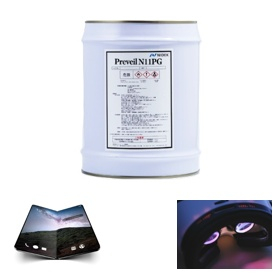

Achieves a coating with excellent high scratch resistance and flexibility through a special resin blend! Suitable for front panels and various product covers.
- Coating Agent
- Other polymer materials
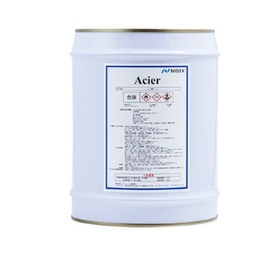
Our company has developed an organic-inorganic hybrid UV-curable hard coating agent. It has high hardness, excellent scratch resistance, and dirt-repellent properties.
- plastic
- Other optical parts
- Other polymer materials
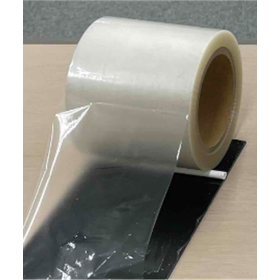
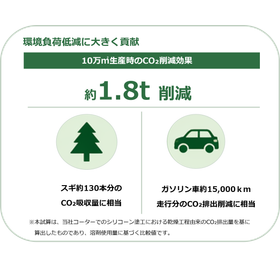
Significantly reduce environmental impact by replacing solvent-based silicone.
- Other consumables
- Paper and pulp products
- plastic
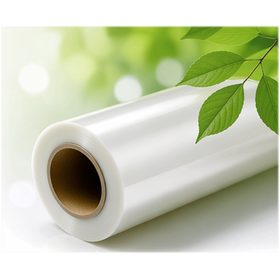
Start of sample provision for 'solvent-free silicone release film'
Prince Tack Co., Ltd. (President: Manabu Kaihara, Headquarters: Chuo-ku, Tokyo) has developed a "solvent-free silicone release film" and has begun providing samples. Until now, solvent-based silicone products have been mainstream, but with the shift to solvent-free, it is expected to significantly contribute to the reduction of CO2 emissions and VOC emissions, thereby reducing environmental impact.
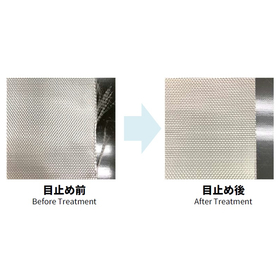

Suppressing fraying and enhancing rigidity. A special end-stopping treatment dramatically improves workability, tensile strength, and impact resistance, contributing to the high functionality of autom...
- fiber
- plastic
- Composite Materials
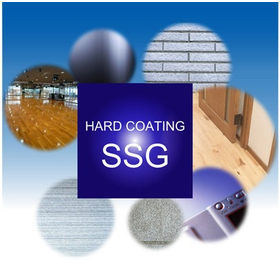
Inorganic/Organic Nano Composite One-Part Room Temperature Hard Coat Material SSG CoatⓇ
- Other polymer materials

[Notice] We will be exhibiting at the "1st Advanced Materials Exhibition"!
We will be exhibiting at the "1st High-Performance Materials Exhibition" (Booth Number: 22-44) held at Makuhari Messe. We will propose solutions to the challenges of "lightweighting," "high functionality," "process simplification," and "environmental compatibility" across a wide range of industries. ■ Main Exhibits ● High-Strength Thin GFRP → Achieves significant weight reduction and insulation through metal alternatives. Equipped with high impact resistance, corrosion resistance, and radio wave permeability, contributing to the lightweighting of various components. ● Low Dielectric Glass Cloth → Features low dielectric properties (Low Dk/Df) with minimal transmission loss, contributing to improved communication quality and enhanced sensing accuracy for millimeter-wave radar and other applications. ● Multifunctional Coating "D-ALIGNⓇ" → Our unique processing technology that applies dot coating while maintaining the substrate's breathability and flexibility, imparting various functions such as deodorization and adhesion. ● One-Component Room Temperature Curing Hard Coat Material "SSG CoatⓇ" → Cures at room temperature and adheres to various materials without the need for heating or UV equipment. Simplifies work processes while providing high scratch resistance and stain resistance. ● Recycled (PCR) Glass Fiber → Utilizes glass from used solar panels, contributing to the realization of a circular economy while maintaining conventional reinforcement performance. We sincerely look forward to your visit.
Combining unbreakable toughness with crystal-clear beauty in a single sheet. Refractive index control rewrites the common sense of transparent resins and glass fibers.
- fiber
- plastic
[Notice] We will be exhibiting at the "1st Advanced Materials Exhibition"!
We will be exhibiting at the "1st High-Performance Materials Exhibition" (Booth Number: 22-44) held at Makuhari Messe. We will propose solutions to the challenges of "lightweighting," "high functionality," "process simplification," and "environmental compatibility" across a wide range of industries. ■ Main Exhibits ● High-Strength Thin GFRP → Achieves significant weight reduction and insulation through metal alternatives. Equipped with high impact resistance, corrosion resistance, and radio wave permeability, contributing to the lightweighting of various components. ● Low Dielectric Glass Cloth → Features low dielectric properties (Low Dk/Df) with minimal transmission loss, contributing to improved communication quality and enhanced sensing accuracy for millimeter-wave radar and other applications. ● Multifunctional Coating "D-ALIGNⓇ" → Our unique processing technology that applies dot coating while maintaining the substrate's breathability and flexibility, imparting various functions such as deodorization and adhesion. ● One-Component Room Temperature Curing Hard Coat Material "SSG CoatⓇ" → Cures at room temperature and adheres to various materials without the need for heating or UV equipment. Simplifies work processes while providing high scratch resistance and stain resistance. ● Recycled (PCR) Glass Fiber → Utilizes glass from used solar panels, contributing to the realization of a circular economy while maintaining conventional reinforcement performance. We sincerely look forward to your visit.
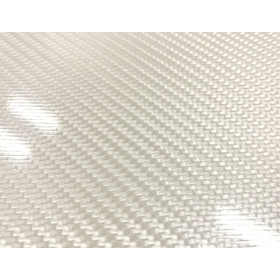
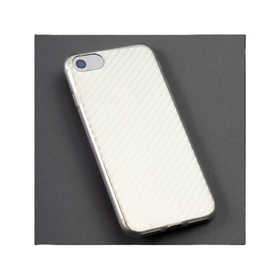
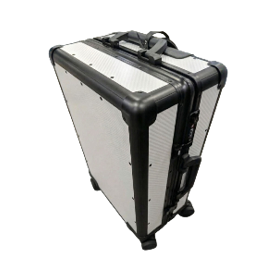
Enabling new design expressions that leverage the inherent beauty of glass cloth weave patterns.
- plastic
- fiber
[Notice] We will be exhibiting at the "1st Advanced Materials Exhibition"!
We will be exhibiting at the "1st High-Performance Materials Exhibition" (Booth Number: 22-44) held at Makuhari Messe. We will propose solutions to the challenges of "lightweighting," "high functionality," "process simplification," and "environmental compatibility" across a wide range of industries. ■ Main Exhibits ● High-Strength Thin GFRP → Achieves significant weight reduction and insulation through metal alternatives. Equipped with high impact resistance, corrosion resistance, and radio wave permeability, contributing to the lightweighting of various components. ● Low Dielectric Glass Cloth → Features low dielectric properties (Low Dk/Df) with minimal transmission loss, contributing to improved communication quality and enhanced sensing accuracy for millimeter-wave radar and other applications. ● Multifunctional Coating "D-ALIGNⓇ" → Our unique processing technology that applies dot coating while maintaining the substrate's breathability and flexibility, imparting various functions such as deodorization and adhesion. ● One-Component Room Temperature Curing Hard Coat Material "SSG CoatⓇ" → Cures at room temperature and adheres to various materials without the need for heating or UV equipment. Simplifies work processes while providing high scratch resistance and stain resistance. ● Recycled (PCR) Glass Fiber → Utilizes glass from used solar panels, contributing to the realization of a circular economy while maintaining conventional reinforcement performance. We sincerely look forward to your visit.