We have compiled a list of manufacturers, distributors, product information, reference prices, and rankings for Basics.
ipros is IPROS GMS IPROS One of the largest technical database sites in Japan that collects information on.

Basics Product List and Ranking from 50 Manufacturers, Suppliers and Companies | IPROS GMS

Last Updated: Aggregation Period:Feb 04, 2026~Mar 03, 2026
This ranking is based on the number of page views on our site.

Basics Manufacturer, Suppliers and Company Rankings

Last Updated: Aggregation Period:Feb 04, 2026~Mar 03, 2026
This ranking is based on the number of page views on our site.

  1. null/null
  2. null/null
  3. 因幡電機産業 産機カンパニー Osaka//Trading company/Wholesale
  4. 4 アーキヤマデ Osaka//Building materials, supplies and fixtures
  5. 5 研創 Hiroshima//others

Basics Product ranking

Last Updated: Aggregation Period:Feb 04, 2026~Mar 03, 2026
This ranking is based on the number of page views on our site.

  1. Pole foundation (NEXCO type, embedded type, anchor bolt type)
  2. Learn the Basics of AGVs in One Book: 'Unmanned Transport Vehicles You Can Learn from the Basics' 因幡電機産業 産機カンパニー
  3. Basics of Noise Countermeasures: Pay attention to this when placing termination resistors!
  4. 4 Lightweight Resin Foundation "Satone" 研創
  5. 4 NEXCO-type emergency telephone base

Basics Product List

1~30 item / All 83 items

Displayed results

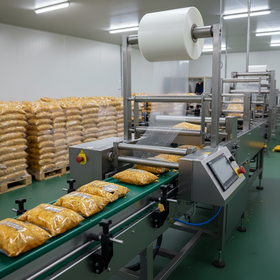
Fundamentals of rotary transmission components to shorten maintenance of flow pack packaging machines.

Introducing general solution approaches for maintenance reduction and key points for selecting rotary contacts and slip rings!

In the field of food packaging and pharmaceutical packaging, keywords such as "power supply for rotating parts" and "reduction of maintenance time for food packaging machines" are emerging as challenges. The rotary sealing section of a Flow Pack packaging machine rotates at high speed while performing heat sealing, necessitating the transmission of heater power and temperature sensor signals to the rotating shaft. Many troubles occur in this "part that transmits power and signals while rotating." Since continuous operation is a prerequisite in the packaging process, there is a demand for "shortening replacement work" and "rotating contacts that are easy to retrofit." *For more detailed information, please refer to the related link. For further inquiries, feel free to contact us.*

  • Food Packaging Machinery
  • Pharmaceutical Packaging Machine
  • Basics

Added to bookmarks

Bookmarks list

Bookmark has been removed

Bookmarks list

You can't add any more bookmarks

By registering as a member, you can increase the number of bookmarks you can save and organize them with labels.

Free membership registration

The basics of easy seals.

A wealth of information is available to deepen your knowledge about seal products!

This document is a booklet that contains information about seals. It provides a gentle explanation of seals in general. We would be very pleased if it could be of help to engineers who are dedicated to creating better products. 【Contents (Excerpt)】 ■ Introduction to Seals (1) - Definition of seals - Classification of seals - Theory of seals - Materials used in seals - Specification items for seal product materials *For more details, please refer to the PDF document or feel free to contact us.

  • Sealing
  • Other machine elements
  • Basics

Added to bookmarks

Bookmarks list

Bookmark has been removed

Bookmarks list

You can't add any more bookmarks

By registering as a member, you can increase the number of bookmarks you can save and organize them with labels.

Free membership registration

"Taking the best of rubber and resin!?" The Basics of Urethane Rubber

"Taking the best of rubber and resin!?" The basics of urethane rubber.

Urethane rubber has the name "rubber," but it is a plastic made from polyester. However, because it has properties very similar to rubber, it is often classified as synthetic rubber. Its most significant feature is that it combines the elasticity of synthetic rubber with the rigidity of plastic. Utilizing these properties, it is used in many industrial products such as belts, rollers, and gaskets.

Added to bookmarks

Bookmarks list

Bookmark has been removed

Bookmarks list

You can't add any more bookmarks

By registering as a member, you can increase the number of bookmarks you can save and organize them with labels.

Free membership registration

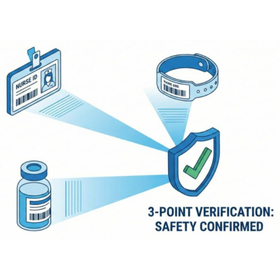
For Medical Safety Managers! Basics of the Three-Point Verification System and Barcode Operations

We will also introduce common troubles that occur on-site, their solutions, and key points for selecting hardware without making mistakes!

A three-point verification system that is essential for ensuring the quality and safety of medical care. However, there are not a few cases where, despite implementation, operational challenges arise such as "the barcode cannot be read" or "the device is too heavy, leading to dissatisfaction on-site." In fact, to maximize the effectiveness of the system, selecting hardware that fits the on-site environment is key. This time, we will introduce the basic knowledge of barcode operations to avoid interrupting workflows in medical settings, as well as how to choose suitable readers and handheld terminals. *For detailed content of the column, please refer to the related link. For more information, feel free to download the PDF or contact us.

  • Fixed-mount barcode reader
  • Handheld barcode reader
  • Basics

Added to bookmarks

Bookmarks list

Bookmark has been removed

Bookmarks list

You can't add any more bookmarks

By registering as a member, you can increase the number of bookmarks you can save and organize them with labels.

Free membership registration

PreForm Technical Guide: Understanding Support Design from the Basics

We have compiled know-how to improve print quality using the printing settings software 'PreForm' for the Form 3 series 3D printers.

This is a technical guide that helps improve the print quality of the popular 3D printer Form 3 series and reduce the time required for finishing processes. To make the most of the created models, it is important to print them at the quality expected in the design. By understanding how the Form 3 series prints and making adjustments to the print settings, you can create high-quality models and reduce the time spent on finishing processes. [Features of the document] ■ Easy to practice with screenshots Tips for support design are explained alongside PreForm screenshots. You can set up by comparing the actual screen with this document. ■ Compatible with various model shapes In addition to tips for support design, we also introduce the printing mechanism of the Form 3 series. By understanding "why support is needed in this area?", you can accommodate various models. ★ A print design guide (appendix) that also explains key points during model design is included. For more details, please request a catalog or view the PDF data from the download button below.

  • 3D Printer
  • Technical and Reference Books
  • Basics

Added to bookmarks

Bookmarks list

Bookmark has been removed

Bookmarks list

You can't add any more bookmarks

By registering as a member, you can increase the number of bookmarks you can save and organize them with labels.

Free membership registration

The Basics of Spectrum Analyzers You Can't Ask About Now (1)

[Application Example] Let's review the basic knowledge about spectrum analyzers.

A spectrum analyzer, abbreviated as "specan," is a highly sensitive measuring instrument that displays AC power by frequency. It may be damaged or yield inaccurate results due to static electricity, DC power input, or excessive AC power input. Additionally, there are many setting conditions for measurement, and changing these conditions can lead to different measurement results. There may be engineers who feel apprehensive about these issues, so let's review the basic knowledge of spectrum analyzers. 【Product Introduction】 ■ Handheld Spectrum Analyzer MSA538 *For more details, please refer to the PDF document or feel free to contact us. 【System Configuration】 ■ Signal Analyzer MSA538 ■ PC Software MAS500 ■ Others (various cables, adapters, etc.) *For more details, please refer to the PDF document or feel free to contact us.

  • Other electronic measuring instruments
  • Basics

Added to bookmarks

Bookmarks list

Bookmark has been removed

Bookmarks list

You can't add any more bookmarks

By registering as a member, you can increase the number of bookmarks you can save and organize them with labels.

Free membership registration

Basics of RF Signal Generators That You Can't Ask About Now (1)

[Application Example] Let's review the basic knowledge regarding RF signal generators.

【Product Introduction】 ■ RF Signal Generator MSG703 IQ vector generation capabilities, comprehensive modulation functions, and sweeping functions. ■ Signal Analyzer MSA538 The most popular model in the MSA500 series - Measurement frequency: 20kHz to 3.3GHz ■ PC Software MAS400/500 Software that displays spectral waveforms on a PC screen.

  • Other electronic measuring instruments
  • Basics

Added to bookmarks

Bookmarks list

Bookmark has been removed

Bookmarks list

You can't add any more bookmarks

By registering as a member, you can increase the number of bookmarks you can save and organize them with labels.

Free membership registration

[Technical Column] Fundamentals of Electromagnetic Field - Fluid Coupled Analysis

Examples using theoretical solutions without electromagnetic field analysis are provided! Explanations will be accompanied by diagrams and graphs!

This column introduces the foundation of fluid-structure interaction analysis, which is the "electromagnetic field." Molten metals and plasma are conductive fluids through which electric current flows. When analyzing these fluids in an electromagnetic field, it is necessary to combine electromagnetic field analysis, which involves solving Maxwell's equations, with fluid analysis, which involves solving the Navier-Stokes equations. This is fluid dynamics that takes into account the effects of the electromagnetic field, known as magnetohydrodynamics. For more details, please refer to the related links. We encourage you to read it. [Contents] ■ Coupled analysis of electromagnetic fields and fluids ■ Hartmann flow ■ Verification of Hartmann flow using OpenFOAM *For more detailed information about the column, please refer to the related links. Feel free to contact us for further inquiries.

  • Other analyses
  • Basics

Added to bookmarks

Bookmarks list

Bookmark has been removed

Bookmarks list

You can't add any more bookmarks

By registering as a member, you can increase the number of bookmarks you can save and organize them with labels.

Free membership registration

A must-see for those who want to learn the basics of chromatography! Basics of LC and GC.

I will explain the basics in an easy-to-understand way. It's a webinar where you can ask questions you might feel hesitant to ask now.

The highly acclaimed "Fundamentals of LC and GC Webinar" is now available on demand! - I understand GC well, but I'm not good at LC. - I've used LC, but I'm a beginner with GC. - Those who want to learn about the principles and differences between LC and GC. We will explain the basics in an easy-to-understand manner.

  • Analytical Equipment and Devices
  • Basics

Added to bookmarks

Bookmarks list

Bookmark has been removed

Bookmarks list

You can't add any more bookmarks

By registering as a member, you can increase the number of bookmarks you can save and organize them with labels.

Free membership registration

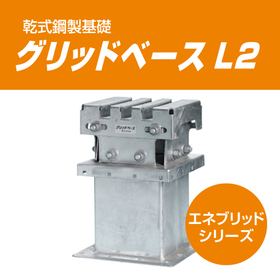
"Grid Base L2" for dry foundations of solar equipment and air conditioning equipment for flat roofs.

As a foundation for solar panel racks on flat roofs. Lightweight, dry, and quick to install!

The "Grid Base L2" is a dry steel foundation that replaces the installation of concrete foundations in existing buildings, which can be cumbersome. The key points are its dry and lightweight nature. Compared to concrete foundations, it is lighter and does not require a concrete curing period, allowing for a reduction in construction time. Additionally, the main body is equipped with a drainage feature, ensuring proper treatment of the waterproof layer's end, which helps mitigate waterproofing issues in the long term. It can be rationally integrated with rivet roof waterproofing, achieving the concept of "the waterproof layer extending to the foundation." 【Features】 ■ High strength and high corrosion resistance ■ Convenient height adjustment function ■ Reduced construction time and lightweight ■ No weaknesses created in the waterproof layer ■ Flexible response to substrate slopes *For more details, please refer to the PDF document or feel free to contact us.

  • Solar power generator
  • Energy efficient utilization system
  • Other Energy Saving
  • Basics

Added to bookmarks

Bookmarks list

Bookmark has been removed

Bookmarks list

You can't add any more bookmarks

By registering as a member, you can increase the number of bookmarks you can save and organize them with labels.

Free membership registration

Enabling solar panel installation on existing building flat roof RC substrate (case study)!

Active in solar panel installation on flat roofs! Lightweight and integrated waterproof foundation "Connecting Disk ADC." Enables the installation of solar panel systems on existing buildings with RC substrate roofs.

The Enebrid series is a fixed system for solar equipment on flat roofs. It is characterized by being lightweight and dry. Additionally, since it is based on a waterproofing renovation using a rivet roof waterproofing system, there is no concern about "worrying about roof waterproofing when placing solar equipment." At the same time as installing the solar equipment (to carry out waterproofing renovations), a new waterproofing warranty of 10 years is obtained. The waterproof sheets used are excellent in weather resistance and durability, allowing for peace of mind in maintaining and managing the equipment during the installation period of the solar panels. There are numerous case studies of implementation on RC substrates, such as school rooftops and apartment rooftops.

  • Solar power generator
  • Energy efficient utilization system
  • Other Energy Saving
  • Basics

Added to bookmarks

Bookmarks list

Bookmark has been removed

Bookmarks list

You can't add any more bookmarks

By registering as a member, you can increase the number of bookmarks you can save and organize them with labels.

Free membership registration

Fundamentals of Electromagnetic Field Analysis for Permanent Magnet Synchronous Motors

This presentation will introduce what can be achieved through electromagnetic field analysis using EMSolution by showing an example of analyzing a permanent magnet synchronous motor, along with information that is useful for design and development.

This document presents examples of electromagnetic field analysis focused on permanent magnet synchronous motors. 【No-load Analysis】 - Cogging torque waveform - Induced voltage (back electromotive force) waveform 【Load Analysis】 - Explanation of rotating magnetic field using magnetic flux line diagrams - Torque waveform at rated current - Current-torque characteristics - Current phase angle-torque characteristics 【Coupled Analysis / Parametric Analysis】 - Current waveform - Speed-torque characteristics and efficiency map We also explain what can be understood from these results and how they can be useful for design and other purposes. If you are interested in electromagnetic field analysis of permanent magnet synchronous motors, please take a look. *For more details, please refer to the PDF document or feel free to contact us.

  • Magnetic field analysis/electromagnetic wave analysis
  • simulator
  • PM motor
  • Basics

Added to bookmarks

Bookmarks list

Bookmark has been removed

Bookmarks list

You can't add any more bookmarks

By registering as a member, you can increase the number of bookmarks you can save and organize them with labels.

Free membership registration

Power from Radio Waves: Basics of UHF Band RFID Tag Operation

We conducted an experiment to light up an LED by converting "radio waves" into "electric power" through "wireless power transmission."

This time, we will confirm the basics of UHF band RFID (NFC) tags through experiments. We will provide an experimental video to easily check "how cards without batteries, such as tags for pharmaceuticals and apparel products, operate." Each tag is equipped with an IC chip. To operate that IC chip, "power" is, of course, necessary. RFID tags receive and operate on that "power" non-contactly. In other words, it is "wireless power transmission." In the case of UHF band RFID tags, the wireless source of "power" is "radio waves." *For more detailed information, you can view it through the related links. For more details, please download the PDF or feel free to contact us.

  • uhf_loop.jpg
  • uhf_dipole.jpg
  • RFID/IC tags
  • RFID related products and IC tag services
  • Basics

Added to bookmarks

Bookmarks list

Bookmark has been removed

Bookmarks list

You can't add any more bookmarks

By registering as a member, you can increase the number of bookmarks you can save and organize them with labels.

Free membership registration

Power from the Magnetic Field: Basics of HF Band RFID (NFC) Tag Operation

We conducted an experiment to light up an LED by converting "magnetic field" into "electric power" through "wireless power transmission."

This time, we will confirm the basics of HF band RFID (NFC) tags through experiments. We will provide an experimental video to easily check "how cards without batteries," such as transportation cards, driver's licenses, and My Number cards, operate. Each card is equipped with an IC chip. To operate that IC chip, "power" is, of course, necessary. RFID tags receive and operate using that "power" non-contactly. In other words, it is "wireless power supply." In the case of HF band RFID (NFC) tags, the wireless that serves as the source of "power" is an "alternating magnetic field." *For detailed content of the column, you can view it through the related links. For more information, please download the PDF or feel free to contact us.

  • In_production.jpg
  • magnetic2power.jpg
  • RFID/IC tags
  • RFID related products and IC tag services
  • Basics

Added to bookmarks

Bookmarks list

Bookmark has been removed

Bookmarks list

You can't add any more bookmarks

By registering as a member, you can increase the number of bookmarks you can save and organize them with labels.

Free membership registration

Guardrail foundation "Pre-Guard 2"

Guardrail & Guard Pipe Continuous Foundation Block "Pre-Guard 2"! (Type A to Type C)

It received a high evaluation in the effectiveness assessment using the NETIS (New Technology Information System) and was selected as a "quasi-recommended technology." NETIS registration: SK-060003-V (old number) It can also be applied to reinforced earth walls! Since it is a precast product, it can shorten construction time. It is lightweight, allowing for construction with small machinery. It is a low-carbon concrete product made using fine blast furnace slag.

Added to bookmarks

Bookmarks list

Bookmark has been removed

Bookmarks list

You can't add any more bookmarks

By registering as a member, you can increase the number of bookmarks you can save and organize them with labels.

Free membership registration

Pregard 2 Deep Type

Grooves and signs can be placed on the back side of the preguard. The posts can be installed vertically even on a road gradient of 12%.

■Pregard 2 is a precast guardrail foundation that complies with the revised standards of the "Standard Specifications for Vehicle Protective Barriers and Explanations" and the "Guidelines for Road Earthworks." ■For the H=920, BC-20 type, it can be installed on inner curves of 7 meters and outer curves of 18 meters. ■It is possible to install guardrail posts vertically up to a longitudinal slope of 12%. ■The deep type allows for the installation of side ditches or signs on the back side. ■The length of the base plate listed in the catalog is calculated based on backfill soil being "gravelly soil." For other soil types, please inquire. ■The applicable ditch sizes will be discussed separately. ■When installed on the wall material of a reinforced earth wall, the total width of the product may change depending on the conditions. Please inquire separately.

  • Municipal services and business location
  • others
  • Basics

Added to bookmarks

Bookmarks list

Bookmark has been removed

Bookmarks list

You can't add any more bookmarks

By registering as a member, you can increase the number of bookmarks you can save and organize them with labels.

Free membership registration

Precast Protective Fence Foundation "PreGuard II"

The products are integrated with dedicated fittings and filler concrete! It can be widely used at the top.

■This is a precast protective fence foundation standardized in accordance with the "Installation Standards and Explanations for Protective Fences." ■It is standardized in accordance with the "Installation Standards and Explanations for Protective Fences." ■It corresponds to protective fence types A (impact load P=50kN), B, and C (impact load P=30kN). ■This product can bear the loads acting on the protective fence by itself. ■It accommodates a planar alignment with an outer bending radius of R=8m and an inner bending radius of R=12m for standard products. ■The basic extension of the foundation is 8m or more. (Please consult us for lengths less than 8m.) ■Even if the pre-guard is damaged, partial replacement is possible.

  • others
  • 2D CAD Construction
  • 3D CAD
  • Basics

Added to bookmarks

Bookmarks list

Bookmark has been removed

Bookmarks list

You can't add any more bookmarks

By registering as a member, you can increase the number of bookmarks you can save and organize them with labels.

Free membership registration

Parking block dedicated foundation 'NSP-BASE'

A parking block foundation specifically designed to prevent tire slippage and foundation misalignment.

"NSP-BASE" is a dedicated foundation for parking blocks designed specifically for the NSP series, compatible with NSP-85H, 100H, and 120H. It prevents the foundation from shifting when tires roll over it, allowing for the installation of parking blocks on gravel, interlocking, and green block pavements. It enables secure fixation of parking blocks using adhesive and bolts. 【Features】 ■ Dedicated design for NSP series ■ Secure fixation of parking blocks using adhesive and bolts ■ Easy fixation with dedicated anchor pins (included) ■ Prevents foundation shifting when tires roll over it ■ Allows installation of parking blocks on green block pavements and more *For more details, please refer to the PDF document or feel free to contact us.

  • others
  • Basics

Added to bookmarks

Bookmarks list

Bookmark has been removed

Bookmarks list

You can't add any more bookmarks

By registering as a member, you can increase the number of bookmarks you can save and organize them with labels.

Free membership registration

Lightweight Resin Foundation "Satone"

By constructing the foundations of various pillars with EPS, we achieve lightweight design and significant reduction in construction time!

"Satowan" is a lightweight resin base for stand signs made using EPS (expanded polystyrene). There is no need to select seasons (such as cold regions) or weather to bury the completed base. Additionally, it requires only a short curing period to blend with the soil after completion, allowing for a shorter construction period. 【Features】 ■ Quick and reliable installation due to the dry construction method ■ Lightweight, making transportation and installation easy even with manual labor ■ Overall lightweight design reduces the burden on the ground ■ Compatible with various foundation types, including base types and insert types ■ Easy integration of wiring and grounding wires *For more details, please download the PDF or contact us.

  • plastic
  • Basics

Added to bookmarks

Bookmarks list

Bookmark has been removed

Bookmarks list

You can't add any more bookmarks

By registering as a member, you can increase the number of bookmarks you can save and organize them with labels.

Free membership registration

Technical Handbook: Latest Trends in DC Applications and Fundamentals of DC and AC

From basics to applications, standards, and case studies—free release of the "Complete Guide to DC Switches" to accelerate decarbonization!

With the rapid expansion of direct current applications in renewable energy, EVs, and data centers, the question of "how to choose a DC switch that can be safely disconnected" has become a common challenge for design and maintenance personnel. This document systematically organizes the basics of AC/DC, notable applications, arc discharge countermeasures, and examples of DC switches compliant with IEC60947-3 in 16 pages. It also illustrates the I-V curves by the number of contacts and the test conditions for "disconnection guarantee," allowing for immediate application in field decisions after reading. ● Main Readers Manufacturing industry electrical and mechanical designers / maintenance engineers, renewable energy and power supply personnel, purchasing and management executives ● Expected Outcomes ✓ Understand the essential differences between AC and DC in 30 minutes ✓ Grasp trends and standard requirements in the five major DC markets such as solar power, storage batteries, and railways ✓ Compare the advantages of three patterns of arc suppression and disconnection methods ✓ Quick reference for selecting IP66/67 and DC1000V compliant switches and their implementation effects ✓ Confirm investment recovery images through four case studies in construction machinery, communications, and storage systems As a first step to accelerate decarbonization and BCP measures, download it for free now and share it with your team.

  • Safety switch
  • Circuit breakers and switches
  • Basics

Added to bookmarks

Bookmarks list

Bookmark has been removed

Bookmarks list

You can't add any more bookmarks

By registering as a member, you can increase the number of bookmarks you can save and organize them with labels.

Free membership registration

Basics of Resistance Welding

Introducing the advantages and disadvantages of spot welding, a representative welding method, as well as its evolution and advancements!

About ten years after the introduction of resistance spot welding in 1885, the "spot welding method" was born, which concentrates a large current on a small point to form a spot weld. This welding method is characterized by its fast welding speed and simple operation, making it easy to automate, and it quickly expanded and developed into the main welding method for thin sheet welding. In the production of automobile bodies, where low cost and mass production are paramount, welding is made possible by ensuring the contact between sheets through the pressure applied to the electrodes, resulting in high productivity. It has been widely adopted as a suitable welding method for mass production. In the world of spot welding, there has been a long period focused on bare mild steel plates, during which issues related to the welding phenomenon did not become apparent, thereby delaying advancements in subsequent spot welding technology. Current spot welding technology still faces challenges, such as the low nugget formation ability of zinc-coated steel plates commonly used for rust prevention, and the high pressure conditions required for high-strength (high-tensile) steel plates introduced to improve collision safety. It is difficult to say that these issues have been resolved, and a fundamental reassessment of the welding phenomenon may be necessary rather than just superficial measures. *For more details, please refer to the PDF document or feel free to contact us.*

  • Welding Machine
  • Other processing machines
  • Basics

Added to bookmarks

Bookmarks list

Bookmark has been removed

Bookmarks list

You can't add any more bookmarks

By registering as a member, you can increase the number of bookmarks you can save and organize them with labels.

Free membership registration

Air Conditioning Basics: Refrigeration Ton, COP, IPLV

We will introduce the calculation formula for frozen tons and examples of IPLV calculation!

When expressing the capacity and efficiency of refrigeration machines and chillers, various units are used. This article explains the representative units related to air conditioning equipment. In actual properties, if the annual load pattern and cooling water temperature are known, and if the analysis results show that the annual operating ratio and cooling water temperature at partial load differ from the values in the IPLV calculation formula, it may be necessary to adjust the values in the calculation formula to match the analysis results. [Contents (Excerpt)] ■ Before the calculation formula - Basics of refrigeration and heat ■ Unit of refrigeration capacity: "ton of refrigeration" ■ Calculation formula for ton of refrigeration ■ Efficiency of refrigeration machines: What is COP? ■ Calculation formula for IPLV (Integrated Part Load Value) *Detailed content of the article can be viewed through related links. *For more information, please refer to the PDF materials or feel free to contact us.

Added to bookmarks

Bookmarks list

Bookmark has been removed

Bookmarks list

You can't add any more bookmarks

By registering as a member, you can increase the number of bookmarks you can save and organize them with labels.

Free membership registration

Basics of Laser Processing <Advantages and Disadvantages>

The finish is beautiful! Introducing laser processing that requires little maintenance.

A "laser" refers to a laser device that amplifies light and emits a single wavelength. There are various types, including "CO2 (carbon dioxide) lasers," "DPSS (solid-state) lasers," and "fiber lasers." The advantages include the ability to process a wide range of materials, from hard materials like ceramics and metals to soft materials like rubber, fabric, and paper, using simple processing jigs. Disadvantages include that etching large areas, such as with ITO, can take a long time, and thick plate processing is not a strong suit. [Advantages] - Non-contact processing - Dry process - Ultra-fine processing - Extremely low thermal processing *For more details, please refer to the PDF document or feel free to contact us.

Added to bookmarks

Bookmarks list

Bookmark has been removed

Bookmarks list

You can't add any more bookmarks

By registering as a member, you can increase the number of bookmarks you can save and organize them with labels.

Free membership registration

Web Seminar on the Basics of Synthesis, Analysis, and Applications of Metal-Organic Frameworks (MOFs)

A detailed explanation of the highly regarded porous metal-organic framework (MOF) from the basics to the latest research! Includes on-demand viewing!

■Title: Fundamentals of Synthesis, Analysis, and Applications of Metal-Organic Frameworks (MOFs) and Various Application Examples ~ From Gas Separation and Storage to Polymer Synthesis and Purification, and Bio Applications ~ ■Date: November 12, 2025 (Wednesday) 13:30 - 16:30 ■Target Audience Engineers/researchers interested in research and development of porous materials Researchers/developers of nanomaterials and polymer materials Individuals considering the separation and purification of various substances Engineers/researchers in battery materials, reaction fields/sensors/catalysts, etc. ■Knowledge Gained from the Seminar Characteristics of MOFs Specific methods for the design/synthesis/evaluation of MOFs Practical examples of how to utilize MOFs Various applications of MOFs (separation agents, sensors, catalysts, polymer synthesis, etc.) Understanding new separation technologies utilizing MOFs ■Instructor Nobuhiko Hosono, Associate Professor, The University of Tokyo ■Program 1. What are Porous Metal Complexes and Metal-Organic Frameworks (MOFs)? 2. Gas Storage and Separation Using MOFs 3. Recognition and Separation of Polymers Using MOFs 4. Examples of Other Functional Developments Using MOFs

  • Technical Seminar
  • Distance learning/E-learning
  • Other polymer materials
  • Basics

Added to bookmarks

Bookmarks list

Bookmark has been removed

Bookmarks list

You can't add any more bookmarks

By registering as a member, you can increase the number of bookmarks you can save and organize them with labels.

Free membership registration

[Pressure Gauge Guide] Basics of Pressure

A detailed introduction to the application range, accuracy grade, maximum allowable error, installation methods, and more of pressure gauges.

This document provides information on "Pressure" that is useful for the use of pressure gauges. It includes details about pressure units, standards for pressure gauges, testing methods for pressure gauges, and more, spanning a total of 13 pages. Additionally, it offers a detailed introduction to the installation methods for pressure gauges, using diagrams. 【Contents (excerpt)】 ■ About pressure units ■ Standards for pressure gauges - Application range - Definitions - Accuracy grades and maximum allowable errors, etc. *For more details, please refer to the PDF document or feel free to contact us.

Added to bookmarks

Bookmarks list

Bookmark has been removed

Bookmarks list

You can't add any more bookmarks

By registering as a member, you can increase the number of bookmarks you can save and organize them with labels.

Free membership registration

Understanding Well! The Basics of Glass Masks, Screen Masks, and Metal Masks

<Semiconductor-related Masks - Basic Information Release> A must-see for those who are handling various masks for the first time due to departmental transfers or job changes! A detailed explanation of the structure, types, and manufacturing methods of masks.

At Takeda Tokyo Process Service, we offer photomasks (glass masks), screen masks, and metal masks used for the formation of electronic circuits on printed circuit boards and electronic components, with short delivery times and low prices. With a robust production system, we respond to our customers' diverse needs with high-precision and high-quality masks! This document provides a detailed overview of "The Basics of Glass Masks, Screen Masks, and Metal Masks" from our unique perspective. It is intended for those who will be using masks for the first time due to departmental transfers, assignments, or job changes. Please make use of it when selecting! [Contents of the Document] ◎ Glass Mask Section - Basic structure, types, and manufacturing methods - About pellicle-equipped Cr glass masks - About Em glass masks and Cr glass masks ◎ Screen Mask Section… Basic structure, types of emulsions, and manufacturing methods ◎ Metal Mask Section… Basic structure, types, and manufacturing methods * This document can be viewed via [PDF Download]. * If you have any other questions, please feel free to contact us.

Added to bookmarks

Bookmarks list

Bookmark has been removed

Bookmarks list

You can't add any more bookmarks

By registering as a member, you can increase the number of bookmarks you can save and organize them with labels.

Free membership registration

Baseman Floor Fixed Foundation "HBMF Series"

It is possible to prevent loosening and rust! Introducing an excellent foundation for fixing earthen floors that greatly improves work efficiency!

The "HBMF Series" is a foundation for securing concrete floors that can be installed on sloped surfaces. The main body has a through hole that fits onto anchor bolts installed in the concrete floor, which are then secured with nuts. Pouring mortar into the through hole while it is secured with nuts can prevent loosening and rust. It is suitable for high seismic installations in narrow spaces and for vibration mitigation due to passing trains, and we offer a wide range of products. 【Features】 ■ Excellent work efficiency ■ Can be installed on sloped concrete floors ■ Can prevent loosening and rust ■ A wide variety of products available *For more details, please refer to the PDF materials or feel free to contact us.

  • others
  • Basics

Added to bookmarks

Bookmarks list

Bookmark has been removed

Bookmarks list

You can't add any more bookmarks

By registering as a member, you can increase the number of bookmarks you can save and organize them with labels.

Free membership registration