We have compiled a list of manufacturers, distributors, product information, reference prices, and rankings for Coating.
ipros is IPROS GMS ・ IPROS One of the largest technical database sites in Japan that collects information on.

Coating Product List and Ranking from 566 Manufacturers, Suppliers and Companies | IPROS GMS

Last Updated: Aggregation Period:Oct 28, 2026~Nov 24, 2026
This ranking is based on the number of page views on our site.

Coating Manufacturer, Suppliers and Company Rankings

Last Updated: Aggregation Period:Oct 28, 2026~Nov 24, 2026
This ranking is based on the number of page views on our site.

  1. 吉田SKT Aichi//Manufacturing and processing contract
  2. フロロテクノロジー Aichi//Chemical
  3. 日建塗装工業 Tokyo//Manufacturing and processing contract
  4. 4 フロロコート Saitama//others
  5. 5 中央自動車工業 営業開発部 営業推進グループ Osaka//Machine elements and parts

Coating Product ranking

Last Updated: Aggregation Period:Oct 28, 2026~Nov 24, 2026
This ranking is based on the number of page views on our site.

  1. Understand the differences between PTFE, PFA, FEP, and ETFE! Technical materials available. 吉田SKT
  2. Advantages and disadvantages of re-coating a non-stick frying pan. 吉田SKT
  3. Outstanding non-stick properties! Introducing "Plasma Coat." 大阪ガスケミカル株式会社 奈良表面加工センター
  4. 4 Causes of Teflon coating peeling and how to address them. 吉田SKT
  5. 5 High-performance coating "Glass Water Repellent Agent SKATO 360" 中央自動車工業 営業開発部 営業推進グループ

Coating Product List

2101~2130 item / All 3010 items

Displayed results

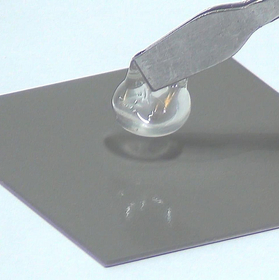
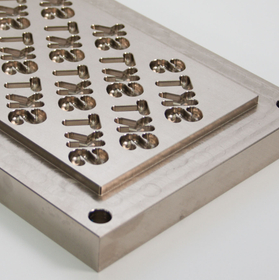
Hot melt adhesive release coating

Solving the adhesion of hot melt adhesive. Preventing entanglement with the conveyor roll.

In manufacturing lines that use hot melt adhesive, there can be issues where products coated with adhesive get caught in the transport rollers. Additionally, adhesive residue can lead to increased cleaning labor and a decline in product quality. Yoshida SKT's MRS coating makes it difficult for even soft hot melt adhesives to stick, and its effectiveness lasts even after cleaning with solvents. 【Usage Scenarios】 - Transport rollers after hot melt application - Guide components of adhesive coating machines - Labeling machines - Sealing machines 【Benefits of Implementation】 - Prevention of adhesive adhesion and entrapment - Effectiveness persists even after solvent cleaning - Prevention of adhesive residue - Reduction in cleaning labor *Features may vary depending on the type of product. For more details, please download the PDF or contact us.

  • ホットメルト_edited.jpg
  • s-CIMG3371_edited_edited.jpg
  • Surface treatment contract service
  • Coating

Added to bookmarks

Bookmarks list

Bookmark has been removed

Bookmarks list

You can't add any more bookmarks

By registering as a member, you can increase the number of bookmarks you can save and organize them with labels.

Free membership registration

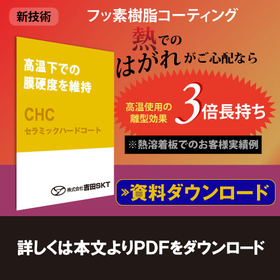
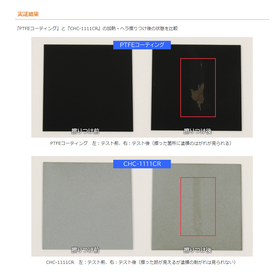
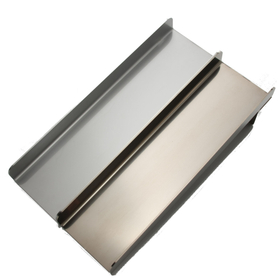
Heat plate release coating for resin bonding and heat sealing.

Solving the "sticking" of film welding heat plates. Release effect improved to three times compared to conventional methods.

In resin bonding and heat sealing processes, the adhesion of films and resins to the heating plates is a factor that reduces production efficiency. There are cases where conventional fluoropolymer coatings also cause sticking, leading to issues such as stringing and poor release. Yoshida SKT's CHC (Ceramic Hard Coat) and convex coatings have successfully improved durability in high-temperature environments and enhanced the release effect to three times that of conventional methods. 【Usage Scenarios】 - Heat plates for tray sealers - Bonding and fusing parts of resin films - Heat fusion molds for filter cases - Bonding processes for containers and lids 【Benefits of Implementation】 - Prevention of film and resin sticking - Reduction of stringing - Increased lifespan of heating plates (three times that of conventional) - Decreased maintenance frequency *For product details, please see the link below. *For more information, please refer to the PDF document or feel free to contact us.

  • FireShot Capture 492 - 【新開発】表面処理CHC(セラミックハードコート)のご紹介 - コーティングマガジン - 吉田SKT - www.y-skt.co.jp.png
  • Resin mold
  • Coating

Added to bookmarks

Bookmarks list

Bookmark has been removed

Bookmarks list

You can't add any more bookmarks

By registering as a member, you can increase the number of bookmarks you can save and organize them with labels.

Free membership registration

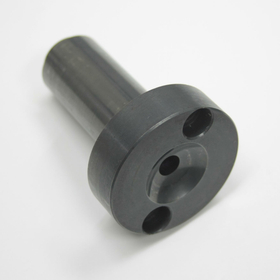
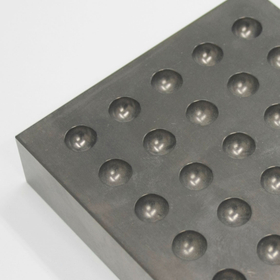
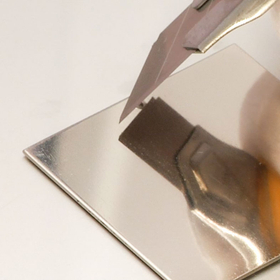
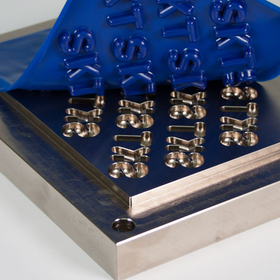
Bi-Coat for Electronic Components: Improved Release Properties of Precision Molds

Improving the release properties of injection molding molds and achieving micron-level dimensional accuracy.

In the electronic components industry, the miniaturization and high performance of products demand precise molding of molds. Particularly in the manufacturing of electronic components with fine shapes and complex structures, the release properties of the molds become a crucial factor that affects product quality. Poor release can lead to product deformation or damage, resulting in a decrease in yield. Bycoat extends the lifespan of molds and enables stable production due to its excellent release properties, sliding properties, and wear resistance. 【Application Scenarios】 - Injection molding molds for precision electronic components - Molds requiring micron-level dimensional accuracy - Molds used in harsh environments 【Benefits of Implementation】 - Prevention of yield loss due to poor release - Extension of mold lifespan - Stable supply of high-quality products For more details, please download the materials or contact us.

  • TYS-03K_edited.jpg
  • NYF-11-S 1_edited.jpg
  • 2021-05-22 (4)_edited.jpg
  • IMG_8528_edited_edited.jpg
  • IMG_0957edit_edited.jpg
  • Other surface treatment equipment
  • Coating

Added to bookmarks

Bookmarks list

Bookmark has been removed

Bookmarks list

You can't add any more bookmarks

By registering as a member, you can increase the number of bookmarks you can save and organize them with labels.

Free membership registration

Electrostatic prevention fluororesin coating "Safron®" (static electricity countermeasure)

Eliminate particle and ESD defects caused by static electricity. Unique coating that achieves both static prevention and non-stick properties.

Static electricity causes many problems in semiconductor manufacturing processes, such as particle adhesion, ESD damage, and powder attachment. Yoshida SKT's unique electrostatic prevention fluororesin coating "Safron(R)" achieves both static electricity prevention and non-stick properties through the addition of conductive materials. It supports a wide range of surface resistivity from 10^5 to 10^11 ohms/sq, and custom settings can be tailored to meet process needs. Yoshida SKT is one of the few authorized processors of Teflon(TM) coatings, with over 2,000 achievements and hundreds of surface treatment technologies as specialists. Please share your desired level of static electricity prevention and usage environment. Detailed specifications, case studies, and selection guides can be found in the materials. We encourage you to download the materials and make use of them.

  • others
  • Other semiconductor manufacturing equipment
  • Coating

Added to bookmarks

Bookmarks list

Bookmark has been removed

Bookmarks list

You can't add any more bookmarks

By registering as a member, you can increase the number of bookmarks you can save and organize them with labels.

Free membership registration

Coating for Semiconductor Manufacturing Equipment Transport Processes

From preventing scratches and chips on the transport handle to measures against corrosion of the structure. Coatings that enhance the reliability of wafer transport.

In semiconductor manufacturing, wafer transport devices play an extremely important role. By applying a fluororesin coating to the surface of the transport hand, we can prevent chipping and scratching of the wafers, contributing to improved yield. Additionally, applying the coating to the body and metal screws exposed to chemical environments helps suppress rust and corrosion, achieving longer equipment lifespan and stable operation. Yoshida SKT, as a pioneer in Teflon(TM) coating, has a track record of over 2,000 companies and can offer optimal grade selection and customization proposals tailored to the shape of transport parts and their usage environments. We will propose the best solution from hundreds of surface treatment technologies to address your challenges. For detailed technical information and case studies, please download the materials for review.

  • Other semiconductor manufacturing equipment
  • Coating

Added to bookmarks

Bookmarks list

Bookmark has been removed

Bookmarks list

You can't add any more bookmarks

By registering as a member, you can increase the number of bookmarks you can save and organize them with labels.
Free membership registration

Chemical-resistant coating for semiconductor manufacturing equipment
Chemical stability that withstands various chemical environments. An optimal fluororesin coating for corrosion prevention in semiconductor manufacturing equipment.

In semiconductor manufacturing processes, various chemical solutions, including acidic and alkaline ones, are used, making corrosion of equipment parts a significant challenge. Fluoropolymer coatings form chemically very stable films and exhibit high resistance to a wide range of chemical environments. They also accommodate temperature ranges according to the grade, maintaining stable performance over long periods. This contributes to the longevity of equipment, reduction of maintenance costs, and realization of stable operations. Yoshida SKT, as a pioneer in Teflon(TM) coatings, has extensive experience in the semiconductor field and offers optimal grade selection and customization proposals based on chemical conditions and usage environments. For more detailed information, please download the materials and check.

  • Other semiconductor manufacturing equipment
  • Coating

Added to bookmarks

Bookmarks list

Bookmark has been removed

Bookmarks list

You can't add any more bookmarks

By registering as a member, you can increase the number of bookmarks you can save and organize them with labels.

Free membership registration

Why do paints and inks stick to containers?

"There's a waste of paint left in the container" and "Cleaning during color changes is difficult." We will introduce the causes of these issues and the ideas for improvement through surface treatment.

In workplaces that handle liquid materials such as paints, inks, and adhesives, the adhesion of materials to the inner walls of containers and tanks leads to raw material loss and increased cleaning costs. ■ Why do liquid materials stick? Paints and inks contain components such as pigments, resins, and solvents. As the solvent evaporates, the concentration of the resin component increases, causing the viscosity to rise and solidify on the container walls. Once solidified, the paint film has a strong adhesion to the metal surface and cannot be easily removed. Additionally, prolonged storage and repeated use lead to the accumulation of thin layers of paint film on the inner walls of the container, further worsening the sticking issue. Yoshida SKT has a proven track record of non-stick coatings for paint and ink containers. If you are struggling with residual liquid loss or cleaning tasks, please feel free to consult us. *For detailed information about the coating, you can download the PDF or contact us at your convenience.

  • IMG_8557_edited_edited.jpg
  • ホットメルト_edited.jpg
  • Processing Contract
  • Coating

Added to bookmarks

Bookmarks list

Bookmark has been removed

Bookmarks list

You can't add any more bookmarks

By registering as a member, you can increase the number of bookmarks you can save and organize them with labels.

Free membership registration

Three features of "Bicoat®" - durability, wear resistance, and non-stick properties.

Long-lasting even in harsh usage environments. Exhibits excellent release properties with highly adhesive substances.

The features of "Bicoat(R)" can be summarized in three main points. The first is "remarkable durability." It has high hardness, making it resistant to scratches and suitable for long-term use. The second is "excellent wear resistance." With a high surface hardness, it is strong against wear, ensuring longevity even in harsh usage environments. The third is "superior non-stick and release properties." It demonstrates excellent release properties even against highly adhesive substances. Additionally, it allows for micron-level dimensional precision, making it suitable for applications requiring dimensional accuracy such as precision parts and molds, and it also possesses pressure resistance to maintain performance in high-pressure environments. *For more details, please download the PDF or contact us.

  • Surface treatment contract service
  • Coating

Added to bookmarks

Bookmarks list

Bookmark has been removed

Bookmarks list

You can't add any more bookmarks

By registering as a member, you can increase the number of bookmarks you can save and organize them with labels.

Free membership registration

Evolution version "Biocourt(R) Exceed" CR/HR series

Further improved non-adhesiveness, corrosion resistance, and heat resistance. Ideal for molds using resins with strong adhesion.

"Bycoat® Exceed" is an evolved product that enhances the non-stick properties, corrosion resistance, and heat resistance in addition to the basic performance of the conventional Bycoat®. It demonstrates more reliable release properties and durability in applications such as molds that use resins with strong adhesion. The series has two variations. In addition to the basic performance of Bycoat® (high hardness, long lifespan, dimensional stability), "Exceed CR" improves corrosion resistance, while "Exceed HR" enhances heat resistance.

  • Surface treatment contract service
  • Coating

Added to bookmarks

Bookmarks list

Bookmark has been removed

Bookmarks list

You can't add any more bookmarks

By registering as a member, you can increase the number of bookmarks you can save and organize them with labels.

Free membership registration

【技術Q&A】バイコート(R)の耐熱温度~260℃対応も~

フッ素樹脂の連続使用温度と同程度。高温環境には耐熱強化HRシリーズを用意

『バイコート(R)』の耐熱温度は使用するグレードによって異なります。 フッ素樹脂を使用したグレードでは、一般的なフッ素樹脂の連続使用温度と同程度の260℃に耐えるものもあります。ただし、具体的な耐熱温度は採用するグレードや使用環境によって異なります。 また『バイコート(R)エクシードHR』シリーズは特に耐熱性を高めたグレードで、より高温の環境でもご使用いただけます。具体的な使用温度条件については、技術営業担当にご相談ください。

  • Surface treatment contract service
  • Coating

Added to bookmarks

Bookmarks list

Bookmark has been removed

Bookmarks list

You can't add any more bookmarks

By registering as a member, you can increase the number of bookmarks you can save and organize them with labels.

Free membership registration

Main uses of "Safron(R)" - Measures against adhesion due to static electricity.

Wide-ranging support from dust adhesion prevention to transport guides, chemical tanks, food equipment, and transparent parts.

"SafeLon(R)" is suitable for preventing adhesion in environments where static electricity is a concern, such as preventing the adhesion of dust due to static electricity. By processing conveyor guides and chutes, it helps prevent poor flow and clogging during transport. In piping and chemical tanks, its chemical resistance contributes to protection from corrosion and improved safety. In stirring blades, it prevents the adhesion of chemicals and materials, reducing cleaning efforts. In the field of electronic components, it suppresses defects and the occurrence of defective products caused by static electricity in manufacturing equipment, while in food-related equipment, it achieves prevention of food adhesion and improved cleanability. The "SafeLon(R) CC+" specialized for transparency can provide anti-static properties while maintaining transparency in glass and transparent resin components.

  • Surface treatment contract service
  • Coating

Added to bookmarks

Bookmarks list

Bookmark has been removed

Bookmarks list

You can't add any more bookmarks

By registering as a member, you can increase the number of bookmarks you can save and organize them with labels.

Free membership registration

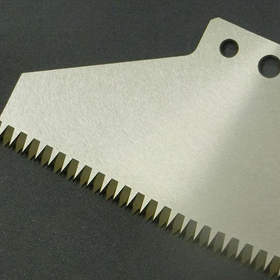
"MRS Coating" Industry-Specific Adoption Results - Packaging, Food, and Others

Achievements in seven industries: packaging, food, rubber and resin, printing, electronic components, automotive parts, and medical and pharmaceutical equipment.

MRS coating is widely used in various industries such as packaging, food, rubber and resin manufacturing, printing, electronic component manufacturing, automotive parts, and medical and pharmaceutical equipment. In the packaging industry, it is applied to devices and packaging machines that handle labels and tapes, while in the food industry, it is used in food processing equipment and conveyor systems. In the rubber and resin manufacturing industry, it is utilized in molding dies and deburring devices, and in the printing industry, it is used in devices that handle adhesive paper and seals. Additionally, in electronic component manufacturing, it is applied to manufacturing equipment that deals with adhesive materials, in the automotive parts industry, it is used in manufacturing equipment for rubber molded parts, and in the medical and pharmaceutical equipment sector, it is utilized in manufacturing devices.

  • Surface treatment contract service
  • Coating

Added to bookmarks

Bookmarks list

Bookmark has been removed

Bookmarks list

You can't add any more bookmarks

By registering as a member, you can increase the number of bookmarks you can save and organize them with labels.

Free membership registration

[Technical Q&A] Thickness of MRS Coating

The thin film grade MRS-014 is suitable for cutting tools and precision parts with minimal change to the surface shape.

The film thickness of MRS coatings varies depending on the grade and application. Grades such as MRS-014, which feature thin films, have a thickness suitable for cutting tools and precision parts, causing minimal changes to the surface shape. For specific film thicknesses and the range of thicknesses we can accommodate, please contact our technical sales representative. We will propose the optimal film thickness based on your application and requirements.

  • others
  • Coating

Added to bookmarks

Bookmarks list

Bookmark has been removed

Bookmarks list

You can't add any more bookmarks

By registering as a member, you can increase the number of bookmarks you can save and organize them with labels.

Free membership registration

[Technical Q&A] Heat Resistance Temperature of MRS Coating

The heat-resistant grade MRS-004 can be used at 300°C under certain conditions.

The heat resistance temperature of MRS coatings varies by grade. In particular, the MRS-004 grade, which has excellent heat resistance, can be used at temperatures up to 300°C under certain conditions. For specific usage temperature conditions, please consult our technical sales representative.

  • Surface treatment contract service
  • Coating

Added to bookmarks

Bookmarks list

Bookmark has been removed

Bookmarks list

You can't add any more bookmarks

By registering as a member, you can increase the number of bookmarks you can save and organize them with labels.

Free membership registration

For those troubled by adhesive stains on label applicators.

Suppress adhesive transfer and label jams, extending continuous operation time.

■Do you have any of these concerns? - It takes time to remove or clean contaminants. - I want to reduce the use of release agents, oils, and solvents. ■General measures and criteria for selecting surface treatments In label applicators, adhesives transfer to guides, peeling areas, and receiving parts, leading to wrinkling and clogging. If regular wiping, part replacement, and the use of release sheets still result in re-adhesion in a short period, coatings that excel in adhesive release or coatings that reduce contact area are candidates. We will check the adhesive strength and wear conditions and suggest options such as MRS or TP systems. ■You can consult with us at any stage of your concerns - Even if you haven't decided on the target object or usage conditions, please let us know your concerns. - Based on the information you provide, we will suggest candidates for surface treatments and points to check. - We will propose the provision of test pieces or prototypes depending on the situation. Please contact us first. - If you want to know about the functions and features of surface treatments, please download and view our catalog.

  • Surface treatment contract service
  • Coating

Added to bookmarks

Bookmarks list

Bookmark has been removed

Bookmarks list

You can't add any more bookmarks

By registering as a member, you can increase the number of bookmarks you can save and organize them with labels.

Free membership registration

For those troubled by scratches on the resin guide.

Reduce friction with the conveyed items and minimize scratches and wear particles on the resin guide.

■Do you have any of these concerns? - Equipment operation is unstable due to friction or snagging. - I want to reduce the burden of lubrication, cleaning, and parts replacement. ■General measures and criteria for selecting surface treatments For scratches on resin guides, first consider material changes, reducing contact width, using rollers, and adjusting surface pressure and position. If the shape cannot be changed and friction or wear debris with the conveyed items is an issue, low-temperature processable low-friction coatings are candidates. Consider low-temperature process coatings based on the resin's heat resistance, deformation, and whether it generates static electricity. ■You can consult us from the stage of your concerns - Even if the target object or usage conditions are not determined, please let us know your concerns. - Based on the information you provide, we will suggest candidates for surface treatments and points to confirm. - We will propose the provision of test pieces or prototypes depending on the situation. Please contact us first. - If you want to know about the functions and features of surface treatments, please download and view the catalog.

  • Surface treatment contract service
  • Coating

Added to bookmarks

Bookmarks list

Bookmark has been removed

Bookmarks list

You can't add any more bookmarks

By registering as a member, you can increase the number of bookmarks you can save and organize them with labels.

Free membership registration

For those troubled by undercoating corrosion and blistering.

Suppresses the penetration of moisture and chemical solutions, reducing film swelling and substrate corrosion.

■Do you have any of these concerns? - The burden of parts replacement and maintenance due to corrosion is significant. ■General measures and criteria for selecting surface treatments Blistering of the coating occurs due to pinholes, chemical penetration, temperature differences, and poor adhesion. If reoccurrence happens even after reviewing the material and film thickness, coatings or linings with enhanced permeability resistance are candidates. We will check the chemicals, temperature, pressure, and film thickness, and suggest options such as MY lining or Cerashield. ■You can consult us from the stage of your concerns - Even if the target object or usage conditions are not determined, please let us know your concerns. - Based on the information you provide, we will suggest candidates for surface treatments and verification items. - We will propose the provision of test pieces or prototypes depending on the situation. Please contact us first. - If you want to know about the functions and features of surface treatments, please download and view the catalog.

  • Surface treatment contract service
  • Coating

Added to bookmarks

Bookmarks list

Bookmark has been removed

Bookmarks list

You can't add any more bookmarks

By registering as a member, you can increase the number of bookmarks you can save and organize them with labels.

Free membership registration

For those struggling with achieving both corrosion resistance and static electricity prevention.

Protecting the substrate from the liquid medication while also suppressing adhesion and discharge caused by static electricity.

■Do you have any of these concerns? - The burden of parts replacement and maintenance due to corrosion is significant. ■General measures and criteria for selecting surface treatments For static electricity countermeasures in chemical equipment, grounding, conductive materials, and ionizers are generally considered. However, common fluororesins have high insulation properties, and static electricity may remain even with chemical resistance alone. For applications that require corrosion resistance, release properties, and static electricity prevention simultaneously, antistatic fluororesin coatings such as SafeLon and SafeLon AP+ are candidates. ■You can consult us from the stage of your concerns - Even if the target objects or usage conditions are not determined, please let us know your concerns. - Based on the information you provide, we will suggest candidates for surface treatments and points to confirm. - We will propose the provision of test pieces or prototypes depending on the situation. Please contact us first. - If you want to know about the functions and features of surface treatments, please download and view the catalog.

  • Surface treatment contract service
  • Coating

Added to bookmarks

Bookmarks list

Bookmark has been removed

Bookmarks list

You can't add any more bookmarks

By registering as a member, you can increase the number of bookmarks you can save and organize them with labels.

Free membership registration

For those troubled by seal adhesion issues with pillow packaging machines.

Reduce film and scorch adhesion, decreasing cleaning frequency and packaging line downtime.

■Do you have any of these concerns? - Stopping equipment for the removal or cleaning of contaminants - Wanting to reduce the use of release agents, tapes, covers, etc. ■General measures and criteria for selecting surface treatments When film or contents adhere to the heat sealers of pillow packaging machines, adjustments to temperature, pressure, and sealing time, application of release tape, and regular cleaning are performed. If tape replacement and cleaning are frequent and re-adhesion occurs due to wear, surface treatments that provide non-stick and abrasion resistance become candidates. ■You can consult us from the stage of your concerns - Even if the target objects or usage conditions are not determined, please let us know your concerns. - Based on the information you provide, we will suggest candidates for surface treatments and points to check. - We will propose the provision of test pieces or prototypes depending on the situation. Please contact us first. - If you want to know about the functions and features of surface treatments, please download and view the catalog.

  • Surface treatment contract service
  • Coating

Added to bookmarks

Bookmarks list

Bookmark has been removed

Bookmarks list

You can't add any more bookmarks

By registering as a member, you can increase the number of bookmarks you can save and organize them with labels.

Free membership registration

For those troubled by wear on the conveyor guide of the packaging machine.

Reduce friction and guide wear during high-speed transport, minimizing product clogging and damage.

■Do you have any of these problems? - Transport and operation are unstable due to friction or snagging. ■General countermeasures and criteria for selecting surface treatments In packaging machine transport guides, increased speed can lead to increased friction with products and films, resulting in jams, scratches, and guide wear. If surface polishing, changing guide materials, or using rollers does not provide sufficient durability, surface treatments that balance slip resistance and wear resistance become candidates. ■You can consult us from the stage of your concerns - Even if the target object or usage conditions are not yet determined, please let us know your concerns. - Based on the information you provide, we will suggest candidates for surface treatments and points to check. - We will propose the provision of test pieces or prototypes depending on the situation. Please contact us first. - If you want to know the functions and features of surface treatments, please download and view the catalog.

  • Surface treatment contract service
  • Coating

Added to bookmarks

Bookmarks list

Bookmark has been removed

Bookmarks list

You can't add any more bookmarks

By registering as a member, you can increase the number of bookmarks you can save and organize them with labels.

Free membership registration

Differences and Selection of PTFE, PFA, FEP, and ETFE | Comparison by Application

Heat-resistant, corrosion-resistant, non-stick... A comparison of four types of fluoropolymer explained with data. Yoshida SKT supports selection for all types.

The representative resins used for fluoropolymer coatings, PTFE, PFA, FEP, and ETFE, have different heat resistance and film-forming properties, making it important to select the right one for the intended application. ■PTFE: The highest continuous use temperature at 260°C, it is a representative fluoropolymer known for its excellent non-stick and low-friction properties. ■PFA: An improved resin of PTFE. In addition to the same heat resistance of 260°C, it provides a continuous film with fewer pinholes, making it the best performer for anti-corrosion coatings. It is also used for high-temperature release applications. ■FEP: Although its heat resistance is lower at 200°C compared to PTFE, it forms a smooth film with fewer pinholes through sintering. ■ETFE: A resin with a continuous use temperature of 150°C. It is also used for thick film linings such as roto-lining. Yoshida SKT Co., Ltd. has been engaged in fluoropolymer processing since 1963 and can accommodate coatings of PTFE, PFA, FEP, and ETFE. We will inquire about your application and usage environment to propose the optimal resin and processing method. You can also utilize our pre-evaluation with test pieces and numerical evaluation services for coating performance measurement.

  • IMG_1850_edited.jpg
  • IMG_1860_edited.jpg
  • Surface treatment contract service
  • Coating

Added to bookmarks

Bookmarks list

Bookmark has been removed

Bookmarks list

You can't add any more bookmarks

By registering as a member, you can increase the number of bookmarks you can save and organize them with labels.

Free membership registration

Coating Q&A: Comparison Points for Coating Companies

We will confirm the proposal details, evaluation methods, inspections, and post-use responses, and compare them under the same conditions.

Q: What points should I check when choosing a coating company? A: It's important to confirm whether they can propose treatments based on your usage conditions, whether there are methods to verify the necessary functions and quality, and whether they can respond to inspections and post-use consultations. When comparing prices, it is essential to align the conditions such as processing range, film thickness, and inspection content. Information about our quality control and supply system can be found on the page below.

  • Surface treatment contract service
  • Coating

Added to bookmarks

Bookmarks list

Bookmark has been removed

Bookmarks list

You can't add any more bookmarks

By registering as a member, you can increase the number of bookmarks you can save and organize them with labels.

Free membership registration

Coating Q&A: Industrial Non-Stick Coating

We offer non-stick treatments such as PTFE, PFA, FEP, and silicone, tailored to your needs.

Q: What are the differences between the fluoropolymer coating (Teflon coating) of household frying pans and the fluoropolymer coating of Yoshida SKT? A: Household frying pans primarily use PTFE for their fluoropolymer coating, with a film thickness of about 20 to 50 micrometers. Yoshida SKT, on the other hand, employs a non-stick treatment using not only PTFE but also PFA, FEP, and silicone. They offer a nano-process with a film thickness of about 1 micrometer, as well as the TP series and Super TP series, which create textures with fluoropolymers. The selection depends on the contaminants and usage conditions. For application to specific components, please consult us with the necessary functions and usage conditions.

  • Surface treatment contract service
  • Coating

Added to bookmarks

Bookmarks list

Bookmark has been removed

Bookmarks list

You can't add any more bookmarks

By registering as a member, you can increase the number of bookmarks you can save and organize them with labels.

Free membership registration

Coating Q&A: Processing Temperature of Fluororesin Coating

PTFE and PFA are generally heated to about 400°C. The thermal deformation and dimensional changes of the substrate are checked.

Q: What is the processing temperature for fluoropolymer resins? A: It varies depending on the type of fluoropolymer resin used, but generally, heating to around 400°C is required for PTFE and PFA. If you are concerned about thermal deformation or dimensional changes of the substrate at this temperature, please consult with a sales representative.

  • Surface treatment contract service
  • Coating

Added to bookmarks

Bookmarks list

Bookmark has been removed

Bookmarks list

You can't add any more bookmarks

By registering as a member, you can increase the number of bookmarks you can save and organize them with labels.

Free membership registration

Coating Q&A: Partial Repair of Coating

We will check the type of membrane and its damage condition, and consider partial repair or reprocessing.

Q: Can only the damaged parts be repaired? A: Since fluororesin coating requires heating in a furnace, it is often difficult to perform partial repairs on-site, and as a rule, the existing coating is removed and reprocessed. However, there are cases where partial repairs are possible, such as with thick PFA coatings or room temperature curing types like Cerashield. If you provide the treatment name, photos of the damaged areas, and usage conditions, we can guide you based on whether the necessary functions can be secured after the repair, so please consult with us first.

  • Surface treatment contract service
  • Coating

Added to bookmarks

Bookmarks list

Bookmark has been removed

Bookmarks list

You can't add any more bookmarks

By registering as a member, you can increase the number of bookmarks you can save and organize them with labels.

Free membership registration

Coating for Heat Seal Release for Packaging Materials

Release coating that suppresses adhesion troubles in the heat seal process and reduces the cleaning load on equipment.

In the heat sealing process of the packaging materials industry, the adhesion and residue of melted resin can lead to decreased production efficiency and quality defects, making reliable release properties essential. Especially in continuously operating equipment, minimizing resin adhesion to the sealing bar is crucial for stable product supply and simplifying maintenance. Our non-stick and release coatings demonstrate excellent release performance. [Usage Scenarios] - Prevention of resin adhesion to heat sealing bars - Reduction of maintenance frequency for sealing parts of packaging machines - Processing equipment for high-adhesive films [Benefits of Implementation] - Suppression of resin adhesion to sealing parts, stabilizing product quality - Reduction of downtime through simplified cleaning tasks - Improvement of equipment operating efficiency For more details, please download the materials or contact us.

  • IMG_8557_edited_edited.jpg
  • ホットメルト_edited.jpg
  • Processing Contract
  • Coating

Added to bookmarks

Bookmarks list

Bookmark has been removed

Bookmarks list

You can't add any more bookmarks

By registering as a member, you can increase the number of bookmarks you can save and organize them with labels.

Free membership registration

Water-repellent and oil-repellent petroleum-based solvent type FluoroSurf FG-4610 series

Oil-based solvent type with excellent cost performance *Sample available

Cheaper compared to non-flammable solvent types. Suitable for insulation, moisture-proofing, protective coatings, and conformal coatings, this is a petroleum-based solvent type of fluoro surfactant. 【Features】 ■ Cheaper compared to non-flammable solvent types ■ Uses n-heptane as the main solvent, which has low toxicity and minimal impact on plastics (Does not contain any substances designated under the PRTR Law) ■ Does not contain chlorine components that can cause dioxins. ■ We can also accommodate changes in resin concentration according to the desired film thickness. *If you would like a free sample, please include "Sample Request" in your inquiry.

  • Coating Agent
  • Coating

Added to bookmarks

Bookmarks list

Bookmark has been removed

Bookmarks list

You can't add any more bookmarks

By registering as a member, you can increase the number of bookmarks you can save and organize them with labels.

Free membership registration

Water and oil repellent treatment agent FluoroSurf FS-1600 series

A low surface tension coating film with functions such as water repellency, oil repellency, dirt resistance, low friction, and acid resistance can be easily formed. *Samples available.

Water and oil repellent treatment agents form a low surface tension film through coating. They effectively repel water and oil, strongly blocking the rise of oils, fats, resins, flux, and more, as well as preventing dirt and adhesion. They can also be used for waterproofing treatments on fibers and printed circuit boards. 【Features】 ■ Coating can be easily performed by dipping, brushing, etc. Automation is also possible with spray machines and dip machines. ■ Drying can be done at room temperature, with various settings available from fast-drying types (5 seconds) to slow-drying types (20 minutes). ■ The non-flammable solvent is non-flammable and low in toxicity, ensuring a good workplace environment. It also does not harm plastics. ■ A wide range of options is available according to your application, with various thicknesses possible from nano to micron. ■ Example of performance → Water contact angle 119°; Hexadecane contact angle 80° *If you would like a free sample, please include "Sample Request" in your inquiry.

  • Coating Agent
  • Coating

Added to bookmarks

Bookmarks list

Bookmark has been removed

Bookmarks list

You can't add any more bookmarks

By registering as a member, you can increase the number of bookmarks you can save and organize them with labels.

Free membership registration

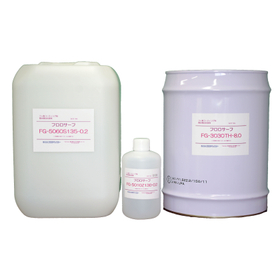
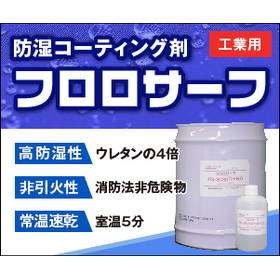
Electronic circuit board protective coating agent [Migration prevention] Non-hazardous material

High-performance fluorine-based coating agent, free of regulated substances.

The fluorosurf FG-3650 series protective coating for electronic substrates is suitable for waterproofing and insulation protection of electronic components, as well as moisture-proof and waterproof coating for mounted circuit boards. It exhibits protective functions such as moisture resistance, saltwater resistance, water resistance, acid resistance, resistance to lithium battery electrolyte, and water and oil repellency with a thin film. Free samples are available upon request. 【Introduction to Background】 ■ Prevent metal migration due to moisture in multilayer mounted circuit boards ■ Short circuits and failures caused by water droplets and humidity during outdoor use ■ Prevention of fire due to short circuits from leakage of lithium battery electrolyte ■ Occurrence of leaks and malfunctions due to condensation in high humidity *If you would like a free sample, please include "Request for Sample" in your inquiry.

Added to bookmarks

Bookmarks list

Bookmark has been removed

Bookmarks list

You can't add any more bookmarks

By registering as a member, you can increase the number of bookmarks you can save and organize them with labels.

Free membership registration

[Example] Waterproof and malfunction prevention coating for outdoor LED displays.

The high waterproofing properties of the fluorine coating agent can prevent malfunction due to rainwater intrusion and condensation when used outdoors.

The fluorosurf FG-3650 series protective coating for electronic substrates is suitable for waterproofing and insulation protection of electronic components, as well as moisture-proof and waterproof coating for mounted circuit boards. It exhibits protective functions such as moisture resistance, saltwater resistance, water resistance, acid resistance, resistance to lithium battery electrolyte, and water and oil repellency, all in a thin film. We offer free samples to those who request them. 【Challenges】 ■ High waterproofing ■ Quick-drying ■ Non-hazardous with low odor since the equipment is not explosion-proof *If you would like a free sample, please include "Request for Sample" in your inquiry.

  • black_light.jpg
  • IPROS61567518649095654966.jpeg
  • バナーブルー_300_250.jpg
  • Coating Agent
  • Coating

Added to bookmarks

Bookmarks list

Bookmark has been removed

Bookmarks list

You can't add any more bookmarks

By registering as a member, you can increase the number of bookmarks you can save and organize them with labels.

Free membership registration