We have compiled a list of manufacturers, distributors, product information, reference prices, and rankings for coating.
ipros is IPROS GMS IPROS One of the largest technical database sites in Japan that collects information on.

coating Product List and Ranking from 573 Manufacturers, Suppliers and Companies | IPROS GMS

Last Updated: Aggregation Period:Apr 22, 2026~May 19, 2026
This ranking is based on the number of page views on our site.

coating Manufacturer, Suppliers and Company Rankings

Last Updated: Aggregation Period:Apr 22, 2026~May 19, 2026
This ranking is based on the number of page views on our site.

  1. 吉田SKT Aichi//Manufacturing and processing contract
  2. 共進サーフェーシング Hiroshima//Manufacturing and processing contract
  3. フロロコート Saitama//others
  4. 4 シャイン工芸 Nara//Manufacturing and processing contract
  5. 5 日研化学研究所 Aichi//Printing Industry

coating Product ranking

Last Updated: Aggregation Period:Apr 22, 2026~May 19, 2026
This ranking is based on the number of page views on our site.

  1. Instead of exchanging for a new product, choose 'prolongation.' Solve wear on rotating machinery with wear-resistant coating. 共進サーフェーシング
  2. Causes of Teflon coating peeling and how to address them. 吉田SKT
  3. Advantages and disadvantages of re-coating a non-stick frying pan. 吉田SKT
  4. 4 Diamond-like carbon (DLC) coating process 栗田製作所 本社・京都事業部
  5. 5 BALINIT ALCRONA EVO - Born to evolve. Made to last. Oerlikon Japan Co., Ltd.

coating Product List

2371~2400 item / All 2624 items

Displayed results

Fluororesin coating for semiconductor devices (chemical resistance and corrosion prevention)

Resistant to strong acids, strong alkalis, and organic solvents. A chemical-resistant coating compatible with all processes in semiconductor manufacturing.

This is a fluororesin coating that protects equipment parts from corrosive chemicals such as acids, alkalis, and organic solvents used in semiconductor manufacturing processes. We offer a wide range of grades tailored to applications, including PTFE, PFA, and FEP, allowing for the selection of the optimal treatment based on the type of chemical, temperature, and substrate. Yoshida SKT is one of the few authorized processors of Teflon(TM) coatings, with over 2,000 achievements and hundreds of surface treatment technologies. Please provide details about the type of chemical, concentration, and usage environment. We will suggest the optimal grade for you. You can check detailed specifications, case studies, and selection guides in our materials. Please download the materials and make use of them.

  • Other semiconductor manufacturing equipment
  • coating

Added to bookmarks

Bookmarks list

Bookmark has been removed

Bookmarks list

You can't add any more bookmarks

By registering as a member, you can increase the number of bookmarks you can save and organize them with labels.

Free membership registration

Fluororesin coating for semiconductor devices (purity and metal contamination prevention)

Control metal ion contamination at the ppb level. Protect high-purity processes with fluororesin.

In semiconductor manufacturing, contamination by metal ions at the ppb level directly reduces yield. Fluororesin coatings cover metal surfaces with a stable chemically inert film, greatly suppressing the leaching of metal ions. This contributes to the stability of high-purity process quality and improved yield rates. Yoshida SKT is a specialist with over 2,000 achievements and hundreds of surface treatment technologies as one of the few authorized processors of Teflon(TM) coatings. Please let us know the chemicals you will use and the desired purity level. We will suggest the optimal grade. You can check detailed specifications, case studies, and selection guides in our materials. Please download the materials and make use of them.

  • Other semiconductor manufacturing equipment
  • coating

Added to bookmarks

Bookmarks list

Bookmark has been removed

Bookmarks list

You can't add any more bookmarks

By registering as a member, you can increase the number of bookmarks you can save and organize them with labels.

Free membership registration

PFAS-free lubricating coating "FFLC Series"

High lubrication and low friction without fluorine. Next-generation coating compliant with PFAS regulations.

Due to the strengthening of PFAS regulations, there is an increasing demand for alternatives to fluoropolymer coatings. The "FFLC Series," developed exclusively by Yoshida SKT, is PFAS-free (non-fluorinated) and demonstrates excellent lubrication performance, achieving low friction and wear resistance for sliding and conveying components. It is ideal for semiconductor manufacturing equipment manufacturers who want to balance environmental compliance with performance maintenance. Yoshida SKT is one of the few authorized processors of Teflon(TM) coatings, with a track record of over 2,000 companies and hundreds of surface treatment technologies. We also welcome inquiries about switching from currently used fluorinated coatings. Detailed specifications, case studies, and selection guides can be found in our materials. Please download the materials and make use of them.

  • others
  • coating

Added to bookmarks

Bookmarks list

Bookmark has been removed

Bookmarks list

You can't add any more bookmarks

By registering as a member, you can increase the number of bookmarks you can save and organize them with labels.

Free membership registration

Coating for Cleaning Processes in Semiconductor Manufacturing Equipment

Corrosion prevention, prevention of metal ion leaching, and prevention of wafer scratches. Summarizing and solving the challenges of cleaning equipment.

In the cleaning process of semiconductor manufacturing, the use of various chemical solutions poses serious challenges such as corrosion of equipment parts and the leaching of metal ions. By applying fluororesin coating to moving parts, chemical resistance is provided, preventing corrosion. The application in cleaning tanks helps suppress the leaching of metal ions, maintaining a high-purity cleaning process. Furthermore, the application to the wafer stage can also address the prevention of wafer scratches. Yoshida SKT, as a pioneer in Teflon(TM) coating, has extensive experience in the semiconductor field and excels in customizing solutions according to customer equipment specifications and chemical conditions. For detailed technical information and case studies, please download the materials for review.

  • Other semiconductor manufacturing equipment
  • coating

Added to bookmarks

Bookmarks list

Bookmark has been removed

Bookmarks list

You can't add any more bookmarks

By registering as a member, you can increase the number of bookmarks you can save and organize them with labels.

Free membership registration

Coating for inspection processes of semiconductor manufacturing equipment

Prevent damage, adhesion, and metal powder generation on wafers, and maintain a clean environment in the inspection process.

In the semiconductor manufacturing inspection process, issues such as wafer scratching, adhesion to the chuck stage, and the generation of metal powder from sliding components arise. Fluororesin coating, when applied to the chuck stage, serves as a physical protective film for the wafer, preventing scratches, and its non-stick properties prevent adhesion of the wafer, contributing to an efficient inspection process. Additionally, applying it to sliding components reduces the generation of metal powder, maintaining a clean inspection environment. Yoshida SKT is a customization specialist that offers optimal proposals from hundreds of surface treatment technologies. For more details, please download the materials or contact us.

  • Other semiconductor manufacturing equipment
  • coating

Added to bookmarks

Bookmarks list

Bookmark has been removed

Bookmarks list

You can't add any more bookmarks

By registering as a member, you can increase the number of bookmarks you can save and organize them with labels.

Free membership registration

Non-stick coating for semiconductor manufacturing equipment

Easily removes contaminants with low surface energy. A coating that significantly improves maintainability.

In semiconductor manufacturing processes, the adhesion of materials and deposits can lead to increased maintenance burdens on equipment and a decline in product quality. Fluororesin coatings, with their low surface energy, allow for easy removal of adhered dirt and substances, significantly contributing to the simplification of maintenance. They also excel in water repellency, improving liquid drainage and cleaning efficiency. Yoshida SKT is a leading company in fluororesin processing with a track record of over 2,000 companies. We offer optimal grades tailored to the adhered objects and environmental conditions from hundreds of surface treatment technologies. For more details, please download the materials or contact us.

  • Other semiconductor manufacturing equipment
  • coating

Added to bookmarks

Bookmarks list

Bookmark has been removed

Bookmarks list

You can't add any more bookmarks

By registering as a member, you can increase the number of bookmarks you can save and organize them with labels.

Free membership registration

Electrostatic discharge prevention coating for semiconductor manufacturing equipment

Combining excellent electrical insulation and static prevention functions. A coating that prevents static electricity troubles in semiconductor manufacturing.

In semiconductor manufacturing processes, the generation of static electricity can adversely affect wafers and electronic components. Fluororesin coatings have excellent electrical insulation properties and contribute to maintaining the performance and longevity of electronic components and equipment. On the other hand, conductive materials can impart antistatic properties, suppressing the generation of static electricity and maintaining a high-precision manufacturing environment. Yoshida SKT, as a pioneer in Teflon(TM) coatings, addresses both insulation and antistatic needs. We provide optimal customization proposals tailored to our customers' applications. For detailed technical information, please download the materials and check them.

  • Other semiconductor manufacturing equipment
  • coating

Added to bookmarks

Bookmarks list

Bookmark has been removed

Bookmarks list

You can't add any more bookmarks

By registering as a member, you can increase the number of bookmarks you can save and organize them with labels.

Free membership registration

High-purity coating for semiconductor manufacturing equipment

Suppresses metal ion leaching to an extremely low level. Suitable for semiconductor manufacturing processes that require high purity.

In semiconductor manufacturing, the leaching of metal ions is a significant issue that directly affects product quality. Fluororesin coatings form a very stable film and can suppress the leaching of metal ions to an extremely low level. Because the coating film itself is less likely to undergo chemical reactions, it maintains its performance even after long-term use, providing highly reliable protection. Yoshida SKT, as a pioneer in Teflon(TM) coatings, has extensive experience in the semiconductor manufacturing field, where high purity is required. We can select the optimal grade and provide customization according to our customers' process conditions. For detailed technical information, please download the materials for confirmation.

  • Other semiconductor manufacturing equipment
  • coating

Added to bookmarks

Bookmarks list

Bookmark has been removed

Bookmarks list

You can't add any more bookmarks

By registering as a member, you can increase the number of bookmarks you can save and organize them with labels.

Free membership registration

Fluororesin coating for semiconductor manufacturing equipment

From transportation, cleaning, etching, CMP, plating, to inspection. Coating that supports a wide range of processes in semiconductor manufacturing.

With the expansion of AI demand, the high operation and high precision of semiconductor manufacturing equipment are progressing, making it increasingly important to suppress surface-related troubles such as corrosion, adhesion, wear, and charging. Fluororesin coatings solve a wide range of challenges in processes such as transport, cleaning, etching, photomasks, CMP, plating, and inspection due to their five characteristics: chemical resistance, non-stick properties, slip properties, insulation, and purity. Yoshida SKT, as a pioneer in Teflon(TM) coatings, has a track record of over 2,000 companies and offers customized proposals that are optimal for customers' processes and equipment from hundreds of surface treatment technologies. Please download the materials to check specific application examples for each process.

  • Other semiconductor manufacturing equipment
  • coating

Added to bookmarks

Bookmarks list

Bookmark has been removed

Bookmarks list

You can't add any more bookmarks

By registering as a member, you can increase the number of bookmarks you can save and organize them with labels.

Free membership registration

Why does resin stick to the mold? The mechanism behind adhesion and release failure.

"Even with the use of release agents, the resin sticks to the mold..." This phenomenon is related to surface energy. We will introduce the mechanism of adhesion and the direction of countermeasures.

■Why "Sticking" Occurs When substances come into contact, a force that attracts them at the molecular level is generated due to the action of surface energy (surface tension). If the energy of the mold surface is high, molten resin or rubber is drawn to the mold surface, making it difficult to detach even after cooling and solidification. ■Cases Where Release Agents Alone Do Not Provide a Fundamental Solution Release agents are effective as a temporary measure, but they need to be applied each time a shot is made. Additionally, the components of the release agent can transfer to the product, leading to quality issues. ■Permanent Solutions Through Surface Treatment By applying surface treatment that lowers the energy of the mold surface, it is possible to ensure stable release properties even without a release agent. We have introduced a typical mechanism of release failure, but the causes of sticking vary depending on the type of resin, shape, molding temperature, pressure, and other factors at each site. The information provided is not exhaustive, and it is not uncommon for multiple factors to be intertwined. At Yoshida SKT, we carefully listen to our customers' molding conditions and materials to propose the optimal surface treatment. If you are struggling with release issues, please feel free to consult with us.

  • s-2021-06-22 (3).gif
  • ホットメルト_edited.jpg
  • IMG_9472_edited2.jpg
  • s-ロール.jpg
  • IMG_9363_edited.jpg
  • s-0197UJedit.jpg
  • DSC04626_edited.jpg
  • Processing Contract
  • coating

Added to bookmarks

Bookmarks list

Bookmark has been removed

Bookmarks list

You can't add any more bookmarks

By registering as a member, you can increase the number of bookmarks you can save and organize them with labels.

Free membership registration

Why do powders clog in pipes and hoppers? The mechanisms of adhesion and bridging.

"The powder does not come out of the hopper" and "it gets clogged in the piping." The causes are not just one. This explains the typical mechanisms of clogging and the countermeasures.

■Three Main Mechanisms of Powder Clogging (1) Adhesion to Walls Powder particles adhere to the inner walls of hoppers and pipes, narrowing the flow path and worsening the flow. The causes vary, including adhesion due to static electricity, moisture, and the physical adhesion of sticky powders. (2) Agglomeration of Particles Due to humidity and temperature influences, particles may stick together and form clumps. Agglomerated powders significantly reduce flowability and can block pipes and valves. (3) Bridging This phenomenon occurs when powder forms an arch-like structure (bridge) near the outlet of a hopper, becoming stable under its own weight. The particle size distribution, shape, and friction with the wall all affect this. ■Approach to Solutions To prevent powder clogging, one effective method is to reduce the friction of the wall surfaces that the powder contacts, thereby lowering adhesion forces. Particularly when static electricity is a cause of adhesion, surface treatments with anti-static functions are effective. The causes of powder clogging can vary with even slight differences in the environment. At Yoshida SKT, we propose optimal surface treatments based on the conditions provided by our customers. If you encounter issues with powder transport, please feel free to consult us.

  • 2021-06-02 (11).png
  • 2021-06-02 (18)-1.png
  • 2021-06-02 (18).png
  • Surface treatment contract service
  • coating

Added to bookmarks

Bookmarks list

Bookmark has been removed

Bookmarks list

You can't add any more bookmarks

By registering as a member, you can increase the number of bookmarks you can save and organize them with labels.

Free membership registration

Why is it difficult to find alternatives to fluoropolymer? Alternative technologies in the era of PFAS regulation.

I want to be PFAS-free, but I can't find an alternative that matches the performance of fluoropolymer... I will organize the reasons for this and the current state of alternative technologies.

■Reasons Why It Is Difficult to Find Alternatives to Fluoropolymer Fluoropolymers possess multiple excellent properties in a single material, such as non-stickiness, low friction, chemical resistance, heat resistance, and electrical insulation. Currently, while some of these properties can be met by common alternative materials, achieving all of them simultaneously remains a challenge. For example, silicone-based materials excel in heat resistance and release properties, but may fall short in chemical resistance and wear resistance compared to fluoropolymers. Engineering plastics may have types that excel in heat resistance and wear resistance, but they can still have issues with non-stickiness. ■Considerations When Exploring Alternatives Rather than trying to completely replace all the properties of fluoropolymers with a single material, the first step in selecting alternative technologies is to clarify "what functions are truly necessary for our applications." Is non-stickiness the most important, or is it chemical resistance, or heat resistance? By clearly prioritizing the functions, realistic alternative options become apparent. At Yoshida SKT, we will work together to find alternative solutions that meet your conditions from among hundreds of surface treatment technologies. If you are struggling with finding alternatives to fluoropolymers, please feel free to consult with us.

  • Surface treatment contract service
  • coating

Added to bookmarks

Bookmarks list

Bookmark has been removed

Bookmarks list

You can't add any more bookmarks

By registering as a member, you can increase the number of bookmarks you can save and organize them with labels.

Free membership registration

Why does stainless steel rust? = Corrosion mechanisms and anti-corrosion measures =

The belief that 'stainless steel shouldn't rust' is a misconception. This explains the conditions under which stainless steel can corrode and the measures to counteract it.

■Why Does Stainless Steel Rust? The corrosion resistance of stainless steel is maintained by a very thin oxide film (passivation film) that forms on its surface. When this film is damaged, the metal substrate is exposed and corrosion progresses. The typical causes of damage to the passivation film are as follows: - Pitting corrosion due to chloride ions: In environments containing chlorine, the passivation film can be locally destroyed, leading to localized corrosion. - Galvanic corrosion: When different types of metals come into contact and are exposed to an electrolyte solution, one metal preferentially corrodes due to the potential difference. - Stress corrosion cracking: This phenomenon occurs when tensile stress and a corrosive environment act simultaneously, causing the material to fracture in a brittle manner. While the above describes the typical corrosion mechanisms of stainless steel, the causes of corrosion can vary depending on factors such as the type and concentration of chemicals used, temperature, and stress conditions. At Yoshida SKT, we offer anti-corrosion coatings and linings tailored to our customers' usage environments. If you are troubled by metal corrosion, please feel free to consult us. *For information on anti-corrosion coatings and linings, please download the PDF for details.

  • s-00718Nedit.gif
  • 0055H2_edited.jpg
  • DSC_4981_edited.jpg
  • s-0078ZL_edited.jpg
  • Processing Contract
  • coating

Added to bookmarks

Bookmarks list

Bookmark has been removed

Bookmarks list

You can't add any more bookmarks

By registering as a member, you can increase the number of bookmarks you can save and organize them with labels.

Free membership registration

Why does unnecessary film form on the plating jig?

Unwanted plating film adhesion on the plating jig affects the jig's lifespan and plating quality.

In the plating process, unnecessary plating films adhere to the jigs used to apply plating to the products. ■ Why does plating adhere to the jigs? Since the jigs are also immersed in the plating solution, plating inevitably precipitates on the parts that come into contact with the solution. The accumulated plating film can reduce the dimensional accuracy of the jigs and, if it peels off and adheres to the products, it can cause quality defects. ■ Considerations for countermeasures Fluororesin coatings possess both electrical insulation and chemical resistance, making them suitable as coating materials for plating jigs. The optimal countermeasures vary depending on the type of plating, composition of the plating solution, shape of the jigs, target costs, and other factors. At Yoshida SKT, we have a track record of insulating and non-stick coatings for plating jigs. For details and case studies on the coatings, please download the PDF for confirmation.

  • Processing Contract
  • coating

Added to bookmarks

Bookmarks list

Bookmark has been removed

Bookmarks list

You can't add any more bookmarks

By registering as a member, you can increase the number of bookmarks you can save and organize them with labels.

Free membership registration

Why is the surface of rubber non-slip? = High friction characteristics and methods for reducing friction =

The "slip resistance" of rubber products is an inherent characteristic, but in some applications, slip properties are necessary.

Rubber generally has a high coefficient of friction and is a material that is not easy to slip on. ■ Why is rubber not slippery? Rubber is a material that easily undergoes elastic deformation. When pressed against a surface, it deforms along the contours, increasing the contact area. The larger the contact area, the greater the frictional force. Additionally, the surface of rubber may have tackiness, which increases friction and adhesion. ■ Cases where slip resistance is required In rubber O-rings, gaskets, and sealing components, smooth insertion during assembly and low friction during sliding are required. ■ Please consult us first The optimal measures vary depending on the type of rubber and the usage environment. Yoshida SKT's GLC series is a specialized coating that imparts low friction properties to the rubber surface. For more details, please download the materials and check.

  • Surface treatment contract service
  • coating

Added to bookmarks

Bookmarks list

Bookmark has been removed

Bookmarks list

You can't add any more bookmarks

By registering as a member, you can increase the number of bookmarks you can save and organize them with labels.

Free membership registration

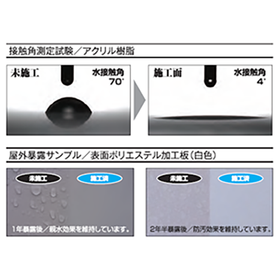
Non-stick coating agent FluoroSurf FG-5000 series

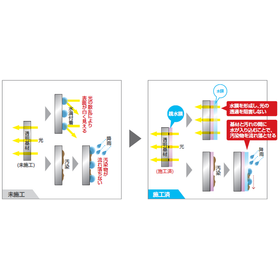
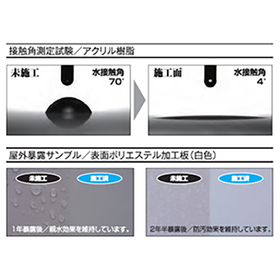
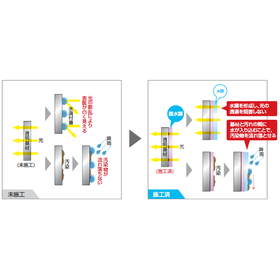
Forms a non-stick surface by applying. Adhesives and tapes will not adhere. It is a transparent thin film, so it does not affect the appearance of the material.

The "Anti-Contamination and Fingerprint Prevention Coating Agent FluoroSurf FG-5000 Series" is a coating agent that forms a non-stick surface with anti-contamination properties. It can be easily applied, dries at room temperature, and makes it difficult for not only tape and adhesives but also fingerprints and grease stains to adhere, while also allowing for easy removal. 【Features】 ■ Tape, adhesives, fingerprints, and dirt are less likely to adhere. ■ It is a high-adhesion coating film that chemically bonds to various materials such as glass and metal at room temperature, ensuring long-lasting functionality. ■ The coefficient of dynamic friction on the surface is low, providing a dry lubricated surface. ■ It is a transparent thin film, so it does not compromise the appearance of the material. ■ Application is easy, and a film is formed simply by drying at room temperature. ◎ Samples are available upon request. Please note that our products are industrial chemical products, and we cannot provide samples for personal use (in cases without corporate status), medical use, or applications involving contact with food.

  • 防汚.jpg
  • coating_sample.jpg
  • img-bouo02.jpg
  • IPROS61567518649095654966.jpeg
  • Coating Agent
  • coating

Added to bookmarks

Bookmarks list

Bookmark has been removed

Bookmarks list

You can't add any more bookmarks

By registering as a member, you can increase the number of bookmarks you can save and organize them with labels.

Free membership registration

Anti-fouling, low reflection, anti-reflective coating "UV hard coat agent additive"

<Free Sample Offer> Add a small amount to impart stain resistance and anti-reflective properties. Ideal for coatings on optical films and plastic touch panels!

The additive "FloroSurf FS-702X Series" from Floro Technology Co., Ltd. for UV hard coat agents can be added in small amounts to UV-curable acrylic hard coat agents to impart functionalities such as anti-fouling, low refractive index, slip properties, and water and oil repellency. It is suitable for surface modification of various plastic films, including plastic touch panels. 【Features】 - Effective with an addition amount of 1-3% - Low oil and grease sliding angle, demonstrating excellent fingerprint removal properties - Three types available based on compatibility with hard coat agents ~ Free samples are available exclusively for corporate clients! ~ Please indicate "Sample Request" using the [Contact Button] below.

  • Other optical parts
  • coating

Added to bookmarks

Bookmarks list

Bookmark has been removed

Bookmarks list

You can't add any more bookmarks

By registering as a member, you can increase the number of bookmarks you can save and organize them with labels.

Free membership registration

[Must-see for automobile manufacturers] Tire coating 'T-Cure Shine'

Increase the added value of automobiles and motorcycles! Ideal for new businesses such as regular maintenance at car dealerships and tire manufacturers & retailers!

"T-Cure Shine" is a new era coating treatment technology that gives tires shine and luster while protecting them from scratches and dirt. Traditionally, tire aesthetics relied on tire wax and similar products, but their effects were temporary and required frequent reapplication. However, "T-Cure Shine," developed by Hirakata Giken, uses a urethane resin for coating, eliminating the need for reapplication and providing a shine and luster that lasts longer than ever before. 【Features】 ● Long-lasting shine ● Protects tires from UV rays and scratches ● Easy maintenance; just rinse with a sponge and water even if dirty *For more details, please download the catalog and contact us. For coating services beyond tires, please consult our company representative.

  • Resin processing machine
  • Coating Agent
  • coating

Added to bookmarks

Bookmarks list

Bookmark has been removed

Bookmarks list

You can't add any more bookmarks

By registering as a member, you can increase the number of bookmarks you can save and organize them with labels.

Free membership registration

Anti-corrosion and anti-rust coating

Extending the lifespan of the substrate and improving its durability is possible! It boasts high heat resistance among plastic resins and also has good chemical resistance.

Our "Anti-corrosion and Anti-rust Coating" solves problems such as "wanting to prevent rust and deterioration of metal substrates (work)" and "wanting to extend the lifespan of the substrate." Basically, treatment with a thick film is possible. A thick coating significantly increases the maintainability of the substrate, leading to an extension of its lifespan and improvement in durability. "Nylon (PA)" has been used by manufacturers of piping, factory equipment parts, and seawater tanks, while "Low-Density Polyethylene (LDPE)" has been utilized by manufacturers of piping for construction, outdoor products, and fire hydrant covers. [Features] ■ Treatment with a thick film is generally possible ■ A thick coating significantly increases the maintainability of the substrate ■ Leads to an extension of the substrate's lifespan and improvement in durability ■ Relatively easy to repeat (resin stripping and regeneration) coating ■ Material with excellent toughness and wear resistance *For more details, please refer to the PDF document or feel free to contact us.

  • Surface treatment contract service
  • coating

Added to bookmarks

Bookmarks list

Bookmark has been removed

Bookmarks list

You can't add any more bookmarks

By registering as a member, you can increase the number of bookmarks you can save and organize them with labels.

Free membership registration

CVD (Chemical Vapor Deposition) coating refers to.

Functional ceramic films of various types are coated in single or multiple layers using the thermal chemical vapor deposition method, enhancing the performance of the material with the resulting high hardness and high adhesion ceramic films.

CVD coating refers to Chemical Vapor Deposition coating, which is a chemical film formation method. In a state of atmospheric pressure to medium vacuum (100 to 10^-1 Pa), gaseous raw materials are introduced, and energy such as heat, plasma, or light is applied to excite and promote chemical reactions to synthesize thin films or fine particles. These are then adsorbed and deposited on the surface of a substrate, chemically coating it with ultra-hard ceramic compounds. By using thermal chemical vapor deposition, various functional ceramic films are coated in single or multiple layers at high temperatures (900 to 1100°C), significantly enhancing the performance of the material with the resulting high hardness and high adhesion ceramic films. Functions of CVD coating include: slip resistance, chemical resistance, heat resistance, water and oil repellency, hydrophilicity, wear resistance, electrical properties, and dimensional stability.

  • Plasma surface treatment equipment
  • coating

Added to bookmarks

Bookmarks list

Bookmark has been removed

Bookmarks list

You can't add any more bookmarks

By registering as a member, you can increase the number of bookmarks you can save and organize them with labels.

Free membership registration

From small items to large works, leave the blasting process to us.

If it is only for blasting treatment, we can accommodate substrates up to about 10 meters, so please feel free to contact us.

Blast processing refers to a method of surface treatment that creates small bumps and roughens the surface by spraying or colliding powdered materials, fine balls, or sharp-edged balls. It is often simply called "blast." Depending on the purpose, there are various techniques and processing methods for blasting, such as polishing, striking, roughening, stripping, shaving, engraving, and cleaning. It is an essential treatment for coatings to enhance the adhesion of paint films. Sandblasting Sandblasting is a blasting method that uses compressed air from a compressor as the acceleration energy for particles, and when people refer to blasting, they often mean this sandblasting. Shot blasting This method involves rotating a wheel and using centrifugal force to accelerate and project particles. Wet blasting This is a wet blasting method that accelerates and sprays a mixture of water and abrasive material (slurry) using compressed air. Applications of blast processing Rust removal, paint stripping, oxide film removal, polishing, and burr removal.

  • Surface treatment contract service
  • coating

Added to bookmarks

Bookmarks list

Bookmark has been removed

Bookmarks list

You can't add any more bookmarks

By registering as a member, you can increase the number of bookmarks you can save and organize them with labels.

Free membership registration

What is PTFE, a fluororesin? Surface treatment by Minoru Sangyo Co., Ltd.

When referring to fluororesins, it often means PTFE, which has the highest production and usage among fluororesins.

What is PTFE resin? PTFE (Polytetrafluoroethylene) is known in Japanese as tetrafluoroethylene resin. It is a fluororesin (fluorocarbon resin) composed solely of fluorine and carbon, and is inert to most chemical agents and solvents. It is sometimes referred to as Teflon. When talking about fluororesins, PTFE is often the reference point, as it has the highest production and usage volume among fluororesins. Characteristics of PTFE resin PTFE resin possesses excellent electrical properties, non-stick characteristics, and lubricity, making it expected to be used in a wide range of fields such as chemistry, electricity, machinery, and space development. The fluorine coating on household frying pans is just one example of utilizing the non-stick and heat-resistant properties of fluororesins to make food less likely to stick to the pan. Properties of PTFE resin By imparting various properties of fluororesins (such as excellent non-stick, water-repellent, and slippery characteristics, resistance to chemicals, and high heat resistance) to the surface of materials, it is possible to prevent sticking and adhesion, reduce friction, and protect the materials. Additionally, there are other types such as PFA, FEP, and ETFE.

  • Surface treatment contract service
  • coating

Added to bookmarks

Bookmarks list

Bookmark has been removed

Bookmarks list

You can't add any more bookmarks

By registering as a member, you can increase the number of bookmarks you can save and organize them with labels.

Free membership registration

What is PFA, a fluororesin? Surface treatment by Minoru Sangyo Co., Ltd.

PFA was developed to improve the processability of PTFE. It can maintain stable mechanical strength at temperatures ranging from -200°C to 260°C.

Characteristics of PFA Heat Resistance It has a maximum continuous use temperature of 260°C, making it one of the highest heat-resistant materials compared to other resins, and it also demonstrates resistance at extremely low temperatures of -196°C. Chemical Resistance It is stable against strong acids, strong alkalis, and organic solvents, and does not degrade. Therefore, it is used in various components in the semiconductor field, which handles highly polar chemicals. Electrical Insulation It possesses high electrical insulation properties, with a low dielectric constant compared to various resins. Even when compared to ETFE, which is also a fluoropolymer, PFA shows a lower dielectric constant. Low Friction (Slipperiness and Non-Stick) It has a very low coefficient of friction, making it slippery. The dynamic friction coefficient of PFA is 0.2, compared to 0.4 for ETFE, which is also a fluoropolymer. Weather Resistance (UV Resistance) Fluoropolymers are hardly affected by oxidation from oxygen and chemicals in the atmosphere, allowing them to maintain their strength for over 30 years without degradation.

  • Surface treatment contract service
  • coating

Added to bookmarks

Bookmarks list

Bookmark has been removed

Bookmarks list

You can't add any more bookmarks

By registering as a member, you can increase the number of bookmarks you can save and organize them with labels.

Free membership registration

Add water and oil repellency with a fluororesin coating.

Water and oil repellency refers to the property of a substrate surface that repels water and oil. Water does not spread and wet the surface of the material, but instead forms into droplets, which is the state of water repellency.

When a water-repellent coating is applied to fibers, it is coated with a thin film and does not cover all the fabric's weave, which is an advantage in terms of breathability. However, when high pressure is applied to the water, it may seep through the fabric's weave to the backside. The difference between water-repellent and waterproof To briefly explain the difference between water-repellent and waterproof, water-repellent means repelling water as described above, while waterproof means not allowing water to pass through. In other words, a state where water does not pass through is "waterproof," and a state where water is repelled on the surface is "water-repellent." Advantages and disadvantages of water-repellent processing - Advantages The advantage of water-repellent processing is that it does not fill the gaps in the material, allowing for breathability. Therefore, it is often used in down jackets and coats when one wants to avoid getting wet from a small amount of rain without compromising comfort. - Disadvantages Since water-repellent processing is only superficial, as mentioned above, during heavy rain, water pressure may cause water to seep into the material's interior.

  • Surface treatment contract service
  • coating

Added to bookmarks

Bookmarks list

Bookmark has been removed

Bookmarks list

You can't add any more bookmarks

By registering as a member, you can increase the number of bookmarks you can save and organize them with labels.

Free membership registration

Non-adhesive coating to prevent fingerprint adhesion in medical settings.

It is a non-stick coating that protects the product from fingerprints and blood stains. The water-repellent coating also protects the product and helps prevent a decline in product functionality.

Anti-fouling and non-stick coating Non-stick coating film types Fluororesin Silicone Features of non-stick and water-repellent coatings Used to improve the release properties of jigs and prevent sticking, as well as for anti-fouling purposes. Also used to prevent the deterioration of product functionality caused by the adhesion of fingerprints, blood, and chemicals. Additionally, there are coatings that serve the role of water-repellent coatings, which prevent functional deterioration, freezing, and corrosion due to the adhesion of water droplets and solvents.

  • Surface treatment contract service
  • coating

Added to bookmarks

Bookmarks list

Bookmark has been removed

Bookmarks list

You can't add any more bookmarks

By registering as a member, you can increase the number of bookmarks you can save and organize them with labels.

Free membership registration

Electrostatic coating is powder coating by Minoru Sangyo Co., Ltd.

Electrostatic painting is a coating method that uses the power of static electricity to apply paint, as the name suggests.

◆Features of Electrostatic Coating Due to the force of static electricity, the paint is attracted to the object, allowing for efficient adhesion (high coating efficiency). Additionally, because the paint moves along electric field lines, it can be applied not only to the front of the spray gun but also to areas that are wrapped around and corners where compressed air has no escape, which is a characteristic of this method. The drawbacks include the tendency for paint to concentrate on convex areas where the electric field is concentrated, and there may be instances where paint adheres unexpectedly far away. Moreover, since high voltage is used, it is necessary to be cautious of electric shock accidents and the risk of fire. ◆Advantages of Electrostatic Coating 1. Easier to achieve a uniform paint film Because the paint is attracted by static electricity, it can be sprayed widely, allowing for relatively uniform adhesion of the paint. Adjusting the nozzle opening reduces the likelihood of uneven spraying, making it easier to obtain a uniform paint film. 2. Less paint loss In conventional spray painting, paint that misses the object or does not reach it becomes waste. In electrostatic coating, the proportion of paint that is attracted due to adhesion increases, which is expected to reduce paint loss.

  • Surface treatment contract service
  • coating

Added to bookmarks

Bookmarks list

Bookmark has been removed

Bookmarks list

You can't add any more bookmarks

By registering as a member, you can increase the number of bookmarks you can save and organize them with labels.

Free membership registration

Advantages of Powder Coating - Minoru Sangyo Co., Ltd.

A cost-effective painting method that is attracting attention now, with minimal impact on the environment and human health, and with strengthened efforts towards environmental conservation and health promotion.

Because it does not use any organic solvents commonly used in painting, it has a minimal impact on the environment and human health, and it is attracting attention in the current efforts to enhance environmental conservation and health promotion. Additionally, it excels in resource conservation and is easy to automate. ◆ Summary of the Benefits of Powder Coating ◆ 【About the Coating Film】 - High strength of the coating film - High durability of the coating film - Excellent performance of the coating film - Ability to form thick coating films - Resistant to rust 【About the Coating Method】 - Can form a thick coating film in one application - Paint recovery and reuse are possible - Less affected by painting environment (temperature, humidity, etc.) - Short curing time for the paint - Easy mechanization and automation of painting 【About Powder Coating】 - Does not contain organic solvents (VOCs: volatile organic compounds) - No odor 【Economic Aspects】 - Efficient use of paint without waste - Long service life (15-20 years) 【Safety Aspects】 - No need to consider air pollution or health hazards from VOCs - No risk of fire caused by VOCs

  • Surface treatment contract service
  • coating

Added to bookmarks

Bookmarks list

Bookmark has been removed

Bookmarks list

You can't add any more bookmarks

By registering as a member, you can increase the number of bookmarks you can save and organize them with labels.

Free membership registration

Disadvantages of Powder Coating (Powder Coating) 【Minoru Industries】

Powder coating is a coating method that uses static electricity to apply powder paint to a workpiece, followed by heating to melt and cure the paint.

◆Summary of the Disadvantages of Powder Coating◆ 【About the Coating Method】 - Coating appearance (prone to orange peel texture) - Difficult to form a thin coating film (generally over 30μm) - High curing temperature and preheating/heating temperatures - Color adjustments cannot be made after painting - Fine color adjustments are difficult *Our company offers over 6,000 color variations. - On-site application is difficult - Repainting is challenging *We also accept stripping work. 【Regarding Economic Factors】 - Initial investment is required due to the need for painting equipment - There may be initial costs for powder coatings. 【Regarding Safety】 - There is a risk of health hazards from dust - There is a risk of dust explosion occurrence

  • Surface treatment contract service
  • coating

Added to bookmarks

Bookmarks list

Bookmark has been removed

Bookmarks list

You can't add any more bookmarks

By registering as a member, you can increase the number of bookmarks you can save and organize them with labels.

Free membership registration

Insulating coating for various shapes of busbars.

It is possible to add insulation and durability to the bus bar. Furthermore, its adhesion is also very excellent, so it does not easily peel off.

Insulation coating for busbars is widely done using epoxy resin. Unlike insulation methods using insulating sleeves or tubes, a uniform insulating coating can be formed on complexly shaped busbars. Additionally, epoxy resin has characteristics such as flame resistance, high insulation withstand voltage, and excellent moisture resistance. Thanks to our unique masking method, we can accommodate mass production even for complexly shaped conductive parts. ◆ What is a busbar? A busbar refers to a strip or bar made of copper that conducts electricity within distribution boards, switchboards, substations, battery banks, or electrical devices. In areas where high voltage and large currents flow, the absence of insulation coating allows for good heat dissipation, and increasing the surface area helps suppress high-frequency electrical resistance. ◆ What is insulation coating? It is a processing technology that possesses excellent electrical properties among resins and is used for applications such as insulating components, preventing electrolysis, and addressing charging issues. It is widely adopted not only for insulation films but also for improving product performance through partial coating.

  • Surface treatment contract service
  • coating

Added to bookmarks

Bookmarks list

Bookmark has been removed

Bookmarks list

You can't add any more bookmarks

By registering as a member, you can increase the number of bookmarks you can save and organize them with labels.

Free membership registration

Summary of Types and Characteristics of Super Engineering Plastics [Minoru Sangyo Co., Ltd.]

Super engineering plastics, referred to as "super engineering plastics," are a general term for engineering plastics that are particularly excellent in heat resistance and chemical resistance among engineering plastics.

Similar to engineering plastics, there is no clear definition for super engineering plastics, but their characteristic is that they have heat resistance of approximately 150°C or higher and can be used for long periods in high-temperature environments. Some super engineering plastics can even be used at temperatures above 260°C. Additionally, many super engineering plastics contain fluorine, which gives them high resistance to solvents and chemicals. Super engineering plastics that can be used in even higher temperature environments are not only applicable in areas where engineering plastics are used, but it is also noted that their molecular chains contain benzene rings. On the other hand, fluorine resins do not contain benzene rings, but they have the highest electronegativity, and the bond between carbon and fluorine is very stable, which gives them excellent heat resistance, cold resistance, and other properties, making them one of the super engineering plastics. For medical devices, they are adopted due to their high transparency and ability to withstand high temperatures from steam sterilization. However, while super engineering plastics are high-performance resins, they also come with a high cost. Nevertheless, the characteristics and cost advantages of super engineering plastics often outweigh the costs, leading to their active consideration.

  • Surface treatment contract service
  • coating

Added to bookmarks

Bookmarks list

Bookmark has been removed

Bookmarks list

You can't add any more bookmarks

By registering as a member, you can increase the number of bookmarks you can save and organize them with labels.

Free membership registration