We have compiled a list of manufacturers, distributors, product information, reference prices, and rankings for evaluation.
ipros is IPROS GMS IPROS One of the largest technical database sites in Japan that collects information on.

evaluation Product List and Ranking from 115 Manufacturers, Suppliers and Companies | IPROS GMS

Last Updated: Aggregation Period:Jan 14, 2026~Feb 10, 2026
This ranking is based on the number of page views on our site.

evaluation Manufacturer, Suppliers and Company Rankings

Last Updated: Aggregation Period:Jan 14, 2026~Feb 10, 2026
This ranking is based on the number of page views on our site.

  1. null/null
  2. アイテス Shiga//Electronic Components and Semiconductors
  3. ユーロフィンFQL Kanagawa//Service Industry
  4. 4 一般財団法人材料科学技術振興財団 MST Tokyo//Testing, Analysis and Measurement
  5. 5 大同分析リサーチ Aichi//Service Industry

evaluation Product ranking

Last Updated: Aggregation Period:Jan 14, 2026~Feb 10, 2026
This ranking is based on the number of page views on our site.

  1. Evaluation of the rebound and vibration absorption properties of rubber materials アイテス
  2. Evaluation of Various Materials Using the No. 9 T-Plot Method (Basic Edition)
  3. Evaluation of pore structure of activated carbon fibers using the GCMC method.
  4. 4 Eurofins FQL Co., Ltd. | Business Information ユーロフィンFQL
  5. 5 Rapid response in the Kanto and metropolitan area! Temperature and humidity evaluation of 3D printed products using a constant temperature chamber. DENGYOアドバンス

evaluation Product List

181~210 item / All 363 items

Displayed results

Evaluation of particle size of positive electrode active material

Introducing examples of measurement cases for important management items in the production of lithium-ion batteries and all-solid-state batteries!

We would like to introduce a case of particle size measurement of cathode active materials using laser diffraction conducted by our company. In air or liquid, laser light is irradiated onto particles, and the angular dependence of the intensity of light scattered by the particles is measured. The angular dependence of the scattered light intensity is measured, and from that data, the particle size distribution (particle size distribution) is calculated. Commercially available reagents were used as samples, and measurements were conducted in a dry state without dispersing in a solvent. The particle size measurement results for NMC oxide showed a monodisperse state with particle sizes below several tens of micrometers, and the median diameter was calculated to be 12 μm. 【Case Overview】 ■ Measurement Method ・Dry ■ Particle Size Measurement Results for NMC Oxide ・Monodisperse state with particle sizes below several tens of micrometers ・Median diameter is 12 μm *For more details, please refer to the PDF document or feel free to contact us.

  • Laser microscope
  • Other measurement, recording and measuring instruments
  • evaluation

Added to bookmarks

Bookmarks list

Bookmark has been removed

Bookmarks list

You can't add any more bookmarks

By registering as a member, you can increase the number of bookmarks you can save and organize them with labels.

Free membership registration

Distortion evaluation using SEM equipment

EBSD: Electron Backscatter Diffraction

Measurements can be performed in bulk state without the need for thinning processes like TEM (NBD: Nano Beam Diffraction). It has the high spatial resolution characteristic of SEM and relatively high strain sensitivity. Additionally, there is a possibility of detecting local lattice strain as tensor data.

Added to bookmarks

Bookmarks list

Bookmark has been removed

Bookmarks list

You can't add any more bookmarks

By registering as a member, you can increase the number of bookmarks you can save and organize them with labels.

Free membership registration

Cryo-SEM analysis: Evaluation of the dispersion state of microparticles in liquid.

By rapid freezing and SEM observation, the dispersion of particles was confirmed through images! ★Data displayed at the 25th Interphex Japan★

When evaluating the particle size and structure of fine particles used in a liquid dispersion, it is common practice to dry the liquid to extract the fine particles as a powder and measure them using an electron microscope. However, this measurement method is not suitable for investigating how the particles are dispersed, as changes in the dispersion state and deformation of the particles can occur due to drying. In MST, to directly assess how fine particles are dispersed within a liquid sample, cryo-processing followed by SEM analysis (cryo-SEM analysis) is performed for evaluation.

  • Contract Analysis
  • evaluation

Added to bookmarks

Bookmarks list

Bookmark has been removed

Bookmarks list

You can't add any more bookmarks

By registering as a member, you can increase the number of bookmarks you can save and organize them with labels.

Free membership registration

Evaluation of the ionization potential of semiconductors

UPS: Ultraviolet Photoelectron Spectroscopy

In semiconductors, it is possible to determine the ionization potential from the valence band maximum (VBM) and the rising position on the high binding energy side (Ek(min)). Measurements are conducted after Ar ion sputter cleaning to remove surface organic contamination. ■ Determination of the valence band maximum (VBM) The spectrum near the valence band edge is extrapolated linearly to find the intersection with the background. ■ Calculation of the ionization potential Ionization potential (I.P.) = hν - W hν: Energy of the incident ultraviolet light (He I line 21.22 eV) W: Energy width of the spectrum (Ek(min) - VBM)

Added to bookmarks

Bookmarks list

Bookmark has been removed

Bookmarks list

You can't add any more bookmarks

By registering as a member, you can increase the number of bookmarks you can save and organize them with labels.

Free membership registration

[Analysis Case] Evaluation of Surface Deterioration of Polycarbonate

Structural analysis of resin surface degradation using TOF-SIMS.

Polycarbonate (PC) is a type of thermoplastic that has excellent transparency, impact resistance, and heat resistance. It has been reported that degradation occurs due to hydrolysis, leading to the generation of the raw material bisphenol A (BPA). Particularly in solar panels, it is important to understand how the surface of the material changes under UV (ultraviolet) irradiation. Below, we present a case study that evaluated the degree of degradation of the PC surface due to UV irradiation using TOF-SIMS.

Added to bookmarks

Bookmarks list

Bookmark has been removed

Bookmarks list

You can't add any more bookmarks

By registering as a member, you can increase the number of bookmarks you can save and organize them with labels.

Free membership registration

Valence evaluation of metal oxides by chemical shift

XPS: X-ray Photoelectron Spectroscopy

In XPS analysis, the binding state evaluation of the material surface is conducted by observing the energy of photoelectrons obtained through X-ray irradiation. It allows for the assessment of whether metal elements are in an oxidized state, and for elements with significant energy shifts (chemical shifts) due to oxidation, it also enables the evaluation of the presence and proportion of multiple valences. Below are the main metal elements and oxides for which multiple valence evaluations are possible.

Added to bookmarks

Bookmarks list

Bookmark has been removed

Bookmarks list

You can't add any more bookmarks

By registering as a member, you can increase the number of bookmarks you can save and organize them with labels.

Free membership registration

Evaluation of the orientation angle of organic film materials

XAFS: X-ray Absorption Fine Structure

Self-assembled monolayers (SAMs), which are oriented organic films, have their functions and properties, such as surface wettability and adsorption, altered by orientation and orientation angle. Using XAFS with synchrotron radiation, it is possible to evaluate the orientation and orientation angle of organic film materials by analyzing the X-ray incidence angle dependence of peak intensity.

Added to bookmarks

Bookmarks list

Bookmark has been removed

Bookmarks list

You can't add any more bookmarks

By registering as a member, you can increase the number of bookmarks you can save and organize them with labels.

Free membership registration

[Analysis Case] Evaluation of Additives in Polymer Materials

Qualitative analysis of components by LC/MS.

Many additives, including plasticizers, are used in polymer materials such as resin products. We present a case study on the qualitative analysis of additives contained in commercially available PVC resin. The components eluted by immersion in an organic solvent were qualitatively analyzed using LC/MS. As a result, components estimated to be DEHP (DOP) as a plasticizer and epoxy fat (plasticizer/stabilizer) were detected. By using standard samples, it is also possible to quantify each detected additive component.

Added to bookmarks

Bookmarks list

Bookmark has been removed

Bookmarks list

You can't add any more bookmarks

By registering as a member, you can increase the number of bookmarks you can save and organize them with labels.

Free membership registration

High-precision quantitative evaluation of impurities in SiGe.

SIMS: Secondary Ion Mass Spectrometry

In the quantitative and compositional evaluation of impurities in the semiconductor material SiGe using SIMS, the following considerations must be taken into account during analysis: ● If appropriate quantification corrections are not made according to the Ge concentration, the impurity quantification values may differ by more than 50% from the actual values. Standard samples corresponding to each composition are necessary for quantitative evaluation. ● It is known that the sputtering rates differ between Si and SiGe. In samples where the composition varies with depth, the sputtering rate changes with depth as well. At MST, high-precision compositional analysis is possible through the preparation of standard samples. Additionally, by using calibration curves, impurity analysis and sputtering rate corrections for each composition of SiGe can be performed.

Added to bookmarks

Bookmarks list

Bookmark has been removed

Bookmarks list

You can't add any more bookmarks

By registering as a member, you can increase the number of bookmarks you can save and organize them with labels.

Free membership registration

Evaluation of organic contamination using a wafer analyzer with GC-MS.

GC/MS: Gas Chromatography-Mass Spectrometry

The WA (Wafer Analyzer) is a device that heats wafers with a diameter of φ76 to 300mm to elevate their temperature, gasifying organic contaminants adhered to the wafer surface and trapping them in a collection tube. As a result, it can concentrate compounds such as phthalate esters and cyclic siloxanes, which are considered causes of device characteristic impacts and manufacturing troubles, allowing for high-sensitivity measurement using GC/MS. Quantification using hexadecane is also possible. - Evaluation of organic contaminants on one side of the wafer is possible. - Detection of easily volatile components is possible since vacuum pumping is not required. - Organic components can be detected with high sensitivity (for 300mm wafers, on the order of 0.01ng/cm²). - Quantification using hexadecane conversion is possible.

Added to bookmarks

Bookmarks list

Bookmark has been removed

Bookmarks list

You can't add any more bookmarks

By registering as a member, you can increase the number of bookmarks you can save and organize them with labels.

Free membership registration

Evaluation of metal contamination on the Si wafer surface

ICP-MS: Inductively Coupled Plasma Mass Spectrometry

The purpose of evaluating metal contamination on the surface of Si wafers using ICP-MS includes not only the contamination assessment of the Si wafers themselves but also the evaluation of contamination within semiconductor devices and the assessment of the working environment due to Si wafer exposure. Therefore, the analysis of the Si wafer surface is conducted for various purposes. ICP-MS analysis can sensitively obtain the amount of metal contamination on the surface of Si wafers, and it is also possible to specify the evaluation area according to the purpose.

Added to bookmarks

Bookmarks list

Bookmark has been removed

Bookmarks list

You can't add any more bookmarks

By registering as a member, you can increase the number of bookmarks you can save and organize them with labels.

Free membership registration

Surface shape evaluation using a laser microscope.

Laser microscope

This introduces the evaluation of surface shape using a laser microscope.

  • 光学顕微鏡写真.png
  • レーザー顕微鏡像.png
  • 断面解析.png
  • Contract measurement
  • Surface treatment contract service
  • evaluation

Added to bookmarks

Bookmarks list

Bookmark has been removed

Bookmarks list

You can't add any more bookmarks

By registering as a member, you can increase the number of bookmarks you can save and organize them with labels.

Free membership registration

Qualitative and quantitative evaluation of metallic impurities in non-alkali glass.

TOF-SIMS, D-SIMS: Secondary Ion Mass Spectrometry

In semiconductor manufacturing processes, the contamination of impurities can lead to a decrease in characteristics and manufacturing yield, making the prompt identification and quantification of impurity elements crucial. At MST, we qualitatively analyze impurity elements using TOF-SIMS (Static-SIMS) and quantitatively measure the detected elements in the depth direction using D-SIMS (Dynamic-SIMS), enabling the evaluation of impurities within devices. This document presents a case study of measuring metal impurities in alkali-free glass.

Added to bookmarks

Bookmarks list

Bookmark has been removed

Bookmarks list

You can't add any more bookmarks

By registering as a member, you can increase the number of bookmarks you can save and organize them with labels.

Free membership registration

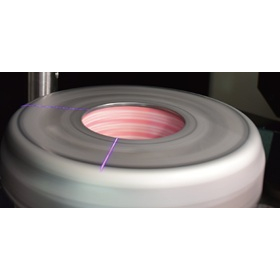
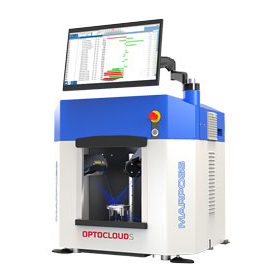
Evaluation of wafer warpage using a non-contact three-dimensional measurement device.

Non-contact three-dimensional measurement device

Non-contact three-dimensional measurement device

  • img_B0306_2.jpg
  • Contract Inspection
  • Contract measurement
  • evaluation

Added to bookmarks

Bookmarks list

Bookmark has been removed

Bookmarks list

You can't add any more bookmarks

By registering as a member, you can increase the number of bookmarks you can save and organize them with labels.

Free membership registration

Evaluation of local thermal conductivity by SThM

It is possible to visualize the phase separation structure of polymers from thermal conductivity information.

The probe tip made of SiO2 is coated with Pd, and the probe itself acts as a resistive element. Therefore, when current flows through the probe tip, a temperature rise occurs, and when it comes into contact with the sample surface, the sample absorbs the heat from the probe. To maintain a constant probe temperature, the amount of electricity supplied to the probe is adjusted, and by plotting the changes in the supplied electricity at each measurement point, the thermal conductivity of the measurement locations (for each material) is visualized as a distribution.

  • Contract Analysis
  • Contract measurement
  • evaluation

Added to bookmarks

Bookmarks list

Bookmark has been removed

Bookmarks list

You can't add any more bookmarks

By registering as a member, you can increase the number of bookmarks you can save and organize them with labels.

Free membership registration

[Analysis Case] Evaluation of the Composition of Secondary Battery Electrolyte

Qualitative and quantitative analysis of various components contained in the electrolyte.

In the electrolyte of lithium-ion secondary batteries, a combination of high dielectric constant solvents and low viscosity solvents is used to improve electrical conductivity. Additionally, additives and electrolytes (supporting salts) not only facilitate the transport of Li ions but also have the function of forming a film on the electrode surface, requiring various performance characteristics. This paper presents examples of qualitative and quantitative analysis of various components such as solvents, electrolytes, and additives by evaluating the electrolyte itself using ICP-MS, volatile components during electrolyte heating using GC/MS, and the dry residue of the electrolyte using TOF-SIMS.

Added to bookmarks

Bookmarks list

Bookmark has been removed

Bookmarks list

You can't add any more bookmarks

By registering as a member, you can increase the number of bookmarks you can save and organize them with labels.

Free membership registration

[Analysis Case] Local Area Evaluation of Positive Electrode Active Material in Secondary Batteries (C0614)

Composition, crystal structure, and chemical state evaluation near the surface of living materials are possible!

Our company conducts local area evaluation of positive electrode active materials for secondary batteries (C0614). It is known that in lithium-ion secondary batteries, the crystal structure of the active material surface and the valence of metal elements change due to ion extraction and insertion during charge and discharge, as well as degradation. In a case where TEM was used for local area evaluation to assess composition, crystal structure, and chemical state, it was found through EDX that AlOx is coated on the outermost layer. Additionally, electron diffraction and EELS revealed that the crystal structure and valence differ between the surface and the interior of the active material. [Measurement and Processing Methods] ■ [(S)TEM] Scanning Transmission Electron Microscopy ■ [TEM-EDX] Energy Dispersive X-ray Spectroscopy (TEM) ■ [TEM-EELS] Electron Energy Loss Spectroscopy *For more details, please download the PDF or feel free to contact us.

Added to bookmarks

Bookmarks list

Bookmark has been removed

Bookmarks list

You can't add any more bookmarks

By registering as a member, you can increase the number of bookmarks you can save and organize them with labels.

Free membership registration

Fragmentation of F-PDO using CellPet FT / Evaluation of anticancer drugs

Introduction to cancer drug evaluation using CellPet FT with cancer organoids! [Free technical materials available]

This document contains technical information on "Fragmentation of F-PDOs / Evaluation of Anticancer Drugs" using the spheroid fragmentation and dispersion device "CellPet FT." It features photographs showing the condition after processing immediately, as well as at 3, 9, and 13 days of culture, using a 70μm mesh filter. Please feel free to contact us if you have any inquiries. *For more details, please refer to the PDF document or feel free to contact us.*

  • Other Culture
  • Cell dispersion reagent
  • Other cell research
  • evaluation

Added to bookmarks

Bookmarks list

Bookmark has been removed

Bookmarks list

You can't add any more bookmarks

By registering as a member, you can increase the number of bookmarks you can save and organize them with labels.

Free membership registration

Comparison Evaluation of the Tabletop Automatic Culture Device "MakCell" and Manual Culture

The automatic culture device "MakCell" has less variation in temperature compared to manual culture! [Free technical materials available]

We will introduce a comparative evaluation between the tabletop automatic cell culture device "MakCell" and manual culture. Compared to manual culture, cell culture using MakCell showed an increase in the number of cells obtained. Regarding cell morphology, no significant changes were observed, and floating cells were confirmed in both MakCell and manual culture. ~Limited Information~ Only 2 units available in stock (as of March 2023), the list price of 13,700,000 yen (excluding tax) will be offered at a discounted price of 9,800,000 yen (excluding tax) for deliveries by the end of June 2023, which is approximately a 28.5% discount! [Delivery adjustment fee: 300,000 yen (excluding tax) separately] *For more details, please refer to the PDF document or feel free to contact us.

  • Other Culture
  • evaluation

Added to bookmarks

Bookmarks list

Bookmark has been removed

Bookmarks list

You can't add any more bookmarks

By registering as a member, you can increase the number of bookmarks you can save and organize them with labels.

Free membership registration

[DL Available/GD-OES Analysis and Measurement] Cleaning Evaluation of Plated Substrates

With GD-OES (Glow Discharge Optical Emission Spectroscopy), you can understand the film thickness and concentration of nickel plating. Please also use it for the analysis of other surface treatments.

Glow Discharge Optical Emission Spectrometry (GD-OES) is a method for analyzing the composition of a sample by sputtering atoms from its surface, exciting those atoms into a plasma state, and measuring the resulting emission. In this case, we will introduce the "investigation of substrate cleaning effects before the plating process" using GD-OES. Please take a moment to read the PDF materials. In addition to this case, our company has numerous analytical achievements related to plating. We also conduct various surface analyses, including XPS and Auger, in addition to GD-OES. If you have any questions, please feel free to consult with us. Seiko Future Creation Official Website https://www.seiko-sfc.co.jp/ *Other materials are also available. If you request through the inquiry button, we will send them to you.

  • Contract Analysis
  • Processing Contract
  • Plating Equipment
  • evaluation

Added to bookmarks

Bookmarks list

Bookmark has been removed

Bookmarks list

You can't add any more bookmarks

By registering as a member, you can increase the number of bookmarks you can save and organize them with labels.

Free membership registration

Free Seminar | Reliability Evaluation, Analysis, Quality Technology, Quality Assurance

We are holding a "free seminar" on reliability evaluation, analysis, and quality technology.

Although it is irregular, we hold "free seminars" on quality technology, including reliability evaluation, analysis, and other topics, several times a year. ■Examples of themes■ We send out announcements of the seminars to customers who have subscribed to our company’s email newsletter. In addition to free seminars, we also provide information about special campaigns and offers. We encourage you to consider registering.

  • Other contract services
  • evaluation

Added to bookmarks

Bookmarks list

Bookmark has been removed

Bookmarks list

You can't add any more bookmarks

By registering as a member, you can increase the number of bookmarks you can save and organize them with labels.

Free membership registration

Power Cycle Test | Reliability Evaluation of Power Modules and Power Devices

Reliability evaluation of power modules and power devices. We offer proposals from the construction of test environments tailored to your power cycle specifications to investigation and analysis!

When power semiconductors and power modules are repeatedly turned ON and OFF, the self-heating and cooling of the components and modules cause distortion due to the differences in expansion of the bonding materials, leading to a deterioration in bonding reliability. We offer power cycle testing that takes into account the heating operation due to repeated self-heating and cooling cycles. ■ Components, units, and devices where the adoption of power semiconductors and power modules is progressing: - Traction inverters for electric vehicles (EVs) and hybrid electric vehicles (HEVs) - On-board chargers and DC-DC converters - Motor control, robots, machine tools, elevators - Industrial inverters and uninterruptible power supplies (UPS) - Solar power generation systems and wind power generation systems

  • Engine parts
  • inverter
  • UPS/Uninterruptible Power Supply
  • evaluation

Added to bookmarks

Bookmarks list

Bookmark has been removed

Bookmarks list

You can't add any more bookmarks

By registering as a member, you can increase the number of bookmarks you can save and organize them with labels.

Free membership registration

Technical Information: Evaluation of Work Environment Measurement

Introduction of technical information such as A measurements conducted by dividing the unit work area into equal intervals both vertically and horizontally, and B measurements of air concentration!

I will introduce the evaluation of work environment measurement. Measurement A refers to the measurement conducted by dividing a unit workplace into equal intervals both vertically and horizontally to grasp the average state of harmful substance concentration in the air. Measurement B is a supplementary measurement to Measurement A, which involves measuring the air concentration at locations and times where the exposure level for workers is considered to be maximum. 【Overview】 ■ Measurement A: A measurement conducted by dividing a unit workplace into equal intervals both vertically and horizontally to grasp the average state of harmful substance concentration in the air. ■ Measurement B: A supplementary measurement to Measurement A, which involves measuring the air concentration at locations and times where the exposure level for workers is considered to be maximum. ■ First evaluation value: 5% of the unit workplace exceeds this concentration. ■ Second evaluation value: Arithmetic mean. *For more details, please refer to the related links or feel free to contact us.

  • Dust collector
  • evaluation

Added to bookmarks

Bookmarks list

Bookmark has been removed

Bookmarks list

You can't add any more bookmarks

By registering as a member, you can increase the number of bookmarks you can save and organize them with labels.

Free membership registration

Masui Electric Co., Ltd. Software Evaluation Business

A multifunction printer is a versatile device that can perform multiple functions with just one machine. Therefore, it is necessary to conduct tests from all angles!

Our company is dedicated to detecting defects (bugs) in software before shipment through software evaluation, and we strive daily to contribute to the improvement of software quality. Among these efforts, we particularly focus on the software evaluation of digital color/monochrome multifunction printers.

  • Evaluation Board
  • evaluation

Added to bookmarks

Bookmarks list

Bookmark has been removed

Bookmarks list

You can't add any more bookmarks

By registering as a member, you can increase the number of bookmarks you can save and organize them with labels.

Free membership registration