

ED3206565 TSH-9200
ED3206565 TSH-9200
[End of Sale for This Period] Teknos TEKNOS TSH-9200 Series Heater 1200W Power Monitor White TSH9200
- Company:イーデンキ
- Price:Less than 10,000 yen
Last Updated: Aggregation Period:Aug 05, 2026~Sep 01, 2026
This ranking is based on the number of page views on our site.
Last Updated: Aggregation Period:Aug 05, 2026~Sep 01, 2026
This ranking is based on the number of page views on our site.
Last Updated: Aggregation Period:Aug 05, 2026~Sep 01, 2026
This ranking is based on the number of page views on our site.
2491~2520 item / All 2751 items
ED3206565 TSH-9200
[End of Sale for This Period] Teknos TEKNOS TSH-9200 Series Heater 1200W Power Monitor White TSH9200
ED3166127 IFH-30TP
[Now accepting reservations] [Expected to arrive in mid-December] NakatomI NAKATOMI IFH-30TP Far Infrared Electric Heater IFH30TP
Washable 100% cotton Made in Japan stepless temperature control winter warm cold
Subiyama Textile NA-21SHZ-WR Foot Heater Wine Red Heater Electric Foot Warmer for Feet, Abdomen, Hands, Knees, Thighs, Heating, Dust Mite Control, Room Temperature Sensor NA21SHZWR
ED1550608 PH-800
TEKNOS PH-800 Parabolic Halogen Heater Floor Standing White PH800

Process heating up to 150°C is possible! Intermittent operation is acceptable up to 215°C.
The "Self-Regulating Heater Cable KTV Series" is an electric heating cable for process insulation that can maintain a maximum temperature of 150°C. The heat resistance specifications of this product are 150°C for continuous operation and 215°C for intermittent operation. It can be used as an electric heating system in hazardous locations of Class 1 and Class 2 in Japan, not only in general areas exposed to acids, alkalis, and organic materials but also through the specific system configuration of KTV products and their associated components. 【Features】 ■ Capable of maintaining process insulation up to 150°C ■ Type approval system ■ Complies with JIS testing (JISC3651) 【Product Composition】 ■ Conductor ■ Fluoropolymer resin insulation spacer ■ Self-regulating heating element ■ Fluoropolymer resin insulation coating ■ Tin-plated copper braid (shield) ■ CT: Fluoropolymer resin outer layer coating *For more details, please refer to the PDF materials or feel free to contact us.

![[Feature Introduction] SEITO Smart System 2](https://image.mono.ipros.com/public/product/image/4f3/2000398437/IPROS5537165758970747673.jpg?w=280&h=280)
Flexible equipment changes! We will also reduce maintenance labor.
We would like to introduce the features of the "SEITO Smart System." This system is a high value-added temperature system created through know-how cultivated by high-quality products, technology, and achievements. Features include the safety of being grounded in case of an external injury, the ability to be layered, and the fact that heater maintenance is not required, among various other characteristics. 【Features】 ■ Grounded winding (ground fault measures in place) ■ No disconnections; low surface temperature ■ Maintenance-free ■ Smart system guarantee *For more details, please feel free to contact us.

A heating heater that can adjust its output according to the surrounding temperature! High quality and no maintenance required for the heater. Reducing costs by 90% to about 10 million per month.
Seido Electric provides safe insulation heaters (self-regulating heaters) that have a long lifespan, can adjust output according to ambient temperature, and can be used in hazardous areas. Since the temperature is maintained at the upper limit, it does not overheat and can provide uniform insulation. The insulation heater operates on electricity, so a boiler operator is not required. It offers significant cost advantages compared to hot water and steam, and has recently gained attention! [Challenge] A confectionery manufacturer reported spending 10 million yen per month to melt chocolate and jam, which is costly and requires a boiler operator. They requested to reduce costs, including labor expenses. [Solution] By replacing the existing hot water and steam systems with insulation heaters (self-regulating heaters), we achieved a 90% cost reduction. ↓ ↓ ↓ The heaters can operate 24 hours on electricity, requiring only the cost of the necessary energy, reducing the monthly cost from 10 million yen to about 1 million yen, which is roughly one-tenth of the usual cost. The absence of a boiler operator also significantly reduced expenses, much to their satisfaction.


Variable heat output to optimize power consumption! This is a pipe heater that can be applied to complex shapes!
The "Pipe Heater" is an environmentally friendly heater for piping that does not waste water or energy. This system uses "self-regulating heating cables," which increase heater output at low temperatures, decrease heater output at moderate temperatures, and further reduce heater output to the minimum at high temperatures. The self-regulating feature prevents overheating and helps to reduce power consumption. 【Features】 ■ Self-regulating ■ Reduced power consumption ■ Low temperature = high heat output ■ Moderate temperature = low heat output ■ High temperature = minimum heat output *For more details, please refer to the PDF document or feel free to contact us.

Compared to conventional hot water and boiler heating, significant CO2 reduction is possible with self-regulating tape heaters. *There is a proven record of reducing costs to less than one-tenth annually.
The Auto Trace Heater (self-regulating tape heater) is a self-regulating heater developed by Reikem that operates in a parallel circuit. The heat trace solution is an auto trace (self-regulating) tape heater that provides insulation and temperature maintenance, created from the know-how cultivated through products, technology, and achievements. By switching from steam, it can reduce energy costs, achieving a reduction in maintenance and operating costs to less than one-tenth annually, and construction time to less than one-quarter. **Features of the Self-Regulating Tape Heater System:** - Output changes according to ambient temperature (self-regulating characteristics) - Long lifespan (countermeasures against aging degradation) - No maintenance required, etc. Due to the reliability and ease of installation of Reikem's Auto Trace Heater (self-regulating tape heater), it is widely used in various industries for process insulation and freeze prevention. This self-regulating tape heater has also been adopted by various electric power companies as part of energy-saving proposals. *For more details, please contact us or download the PDF.*


Reduce running costs by 90% with smart insulation! Instantly solve heater and boiler issues with labor-saving and energy-saving effects.
We often receive the following concerns from those using heaters and boilers: - The temperature doesn't rise... there are temperature inconsistencies... - The heater deteriorates quickly... - I don't want to do double installation... - Maintenance is difficult... For those facing such issues, we are offering a must-see collection titled "Solutions for Heater and Boiler Concerns"! [Contents Overview] ■ Common problems with heaters and boilers ■ Types of heaters ■ Case studies for problem resolution ■ Company introduction If you have any issues with heaters or boilers, please leave it to Saito Electric for proposals that can expect labor-saving and energy-saving effects, as well as reductions in carbon dioxide. We can provide solutions tailored to your company, as we can accommodate various types of heaters.

Capable of a wide range from 65℃ to 235℃! This is a reliable, safe, and process heating auto-trace freeze prevention heater!
Even without using a thermostat, it prevents overheating and burning, ensuring reliable and safe freeze protection and process heating. It is an auto-trace heater that can be cut to the required length on-site. 【Self-regulating heater product list】 ■ Up to 65°C ・Self-regulating trace heater: BTV1-CT, -CR (100V) ・Self-regulating trace heater: BTV2-CT, -CR (200V) ■ Up to 110°C ・Self-regulating trace heater: QTV1-CT, -CR (100V) ・Self-regulating trace heater: QTV2-CT, -CR (200V) ■ Up to 120°C ・Self-regulating trace heater: XTV1-CT, -CR (100V) ・Self-regulating trace heater: XTV2-CT, -CR (200V) ■ Up to 150°C ・Self-regulating trace heater: KTV1-CT, -CR (100V) ・Self-regulating trace heater: KTV2-CT, -CR (200V) ■ Up to 235°C ・Self-regulating trace heater: VPL1-CT (100V) ・Self-regulating trace heater: VPL2-CT (200V)


We are the official primary distributor of Reikem and handle various heaters from Reikem. We support energy savings and cost reduction, accommodating a variety of heaters!
Our company serves as an authorized sales and engineering agent for Raychem's self-regulating heaters (auto-trace heaters), supporting energy-saving, cost-reduction, and CO2 reduction for systems. The Raychem brand is recognized for its technical leadership as the inventor of self-regulating heating cables. Additionally, Raychem's cables adjust their output according to surrounding and process conditions, accurately delivering the necessary amount of heat to the required location at the right time, making them suitable for heat management systems. 【Features】 ■ Authorized primary engineering agent for Raychem, handling self-regulating heaters and more ■ Supporting energy-saving, cost-reduction, and CO2 reduction for systems *For more details, please refer to the PDF materials or feel free to contact us.


Reikem is top-class in the world! It is Reikem's self-regulating pipe heater that can warm pipes with low power consumption by running a heater alongside them.
Our company is a licensed sales and engineering agent for Raychem's self-regulating pipe heaters (auto-trace heaters), supporting energy-saving, cost-reduction, and CO2 reduction for pipe and tank heating systems. The Raychem brand is recognized for its technical leadership as the inventor of self-regulating heating cables. Additionally, Raychem's pipe heater cables adjust their output according to surrounding and process conditions, accurately delivering the right amount of heat to the necessary location at the required time, making them ideal for pipe and tank heat management systems. 【Features】 ■ Authorized primary engineering agent for Raychem, handling self-regulating pipe heaters and more ■ Supporting energy-saving, cost-reduction, and CO2 reduction for pipe and tank heating systems *For more details, please refer to the PDF document or feel free to contact us.


Attention those struggling with adhesive curing! This is a self-regulating heater that can maintain a constant temperature for liquids 24 hours a day, 365 days a year.
During cold periods such as winter, it is common for adhesives to harden. In the case of boilers, startup losses occur after breaks. Self-regulating heaters can be left unattended 24 hours a day, 365 days a year, so they are recommended for preventing hardening. They can evenly and permanently warm adhesives without any unevenness. The equipment cost is also one-third that of a boiler, which helps reduce costs, making them increasingly popular recently! Self-regulating heaters are electric systems, making them suitable for CO2 reduction and energy saving as part of SDGs initiatives. *For more details, please download the PDF.


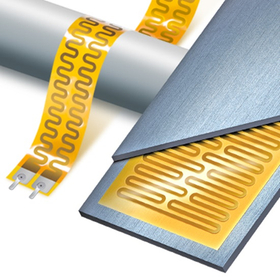
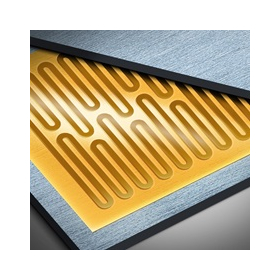
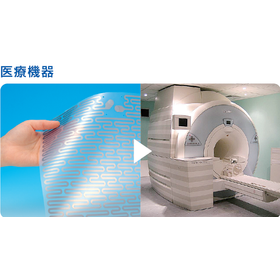
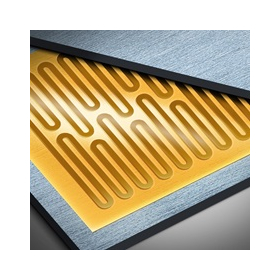
Custom-made polyimide heaters with excellent high heat resistance! Featuring an ultra-thin design that can be applied to curved surfaces, suitable for various applications in medical, semiconductor, automotive, and agricultural fields.
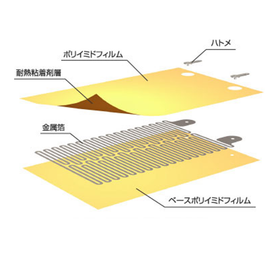
Polyimide heaters are heating elements that are thin, highly heat-resistant, and flexible. They use polyimide film as an insulator, demonstrating excellent heat resistance. Additionally, due to special processing, they can provide uniform heating over a wide area as planar heating elements. 【Features】 ■ Excellent high heat resistance that withstands harsh temperature environments ■ Extremely thin and flexible, perfectly fitting curved surfaces and tight spaces ■ Achieves a wide and uniform temperature distribution, enabling consistent heating ■ Custom-designed to suit applications in terms of size, shape, and power ■ For more details, please refer to the catalog or contact us directly.
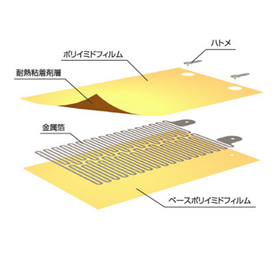
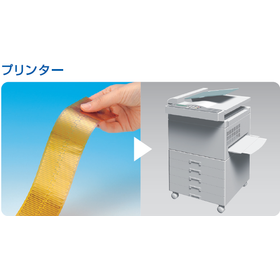
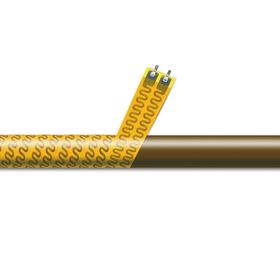
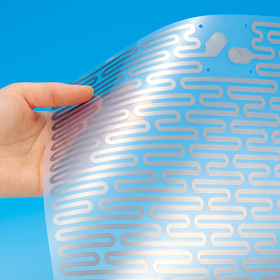
With high insulation and durability, it fits perfectly in narrow spaces and curved surfaces. A custom-made polyester heater that meets your needs.
Polyester heaters are thin and flexible heating elements suitable for heating curved surfaces and narrow spaces. They use polyester (PET) film as an insulating material, combining high insulation properties and durability. We can achieve a heating distribution tailored to your preferences and design and manufacture it custom-made. 【Features】 ■ Thin and soft, making it perfect for fitting into small spaces and curved surfaces ■ Uses polyester (PET) film as an insulating material, providing high insulation and durability ■ Custom-designed and manufactured to meet specific needs ■ The circuit is formed by etching, allowing for the intended heating distribution by the designer *For more details, please download the catalog or contact us directly.
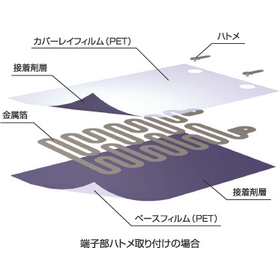
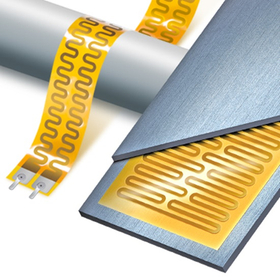
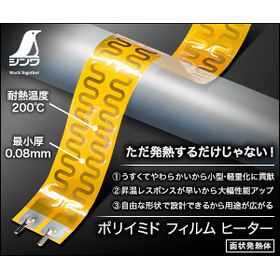
Film heaters that lead to stable operation of insulation, drying, and processing processes for various devices.
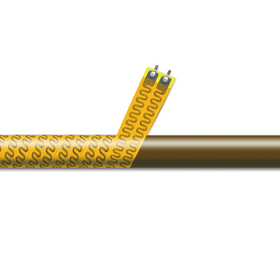
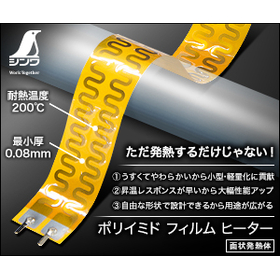
Shinwa's "Polyimide Heater" is a thin film heater that plays a vital role in temperature control for industrial equipment and production lines. It is easy to integrate into machinery and enclosures, achieving efficient heating while minimizing heat loss. 【Features】 ■ Freely designed to match the shape of the device ■ Stable heating from low to high temperatures ■ Improved processing quality through uniform heating ■ Energy-efficient structure ■ Reduced maintenance burden *For more details, please download or feel free to contact us.
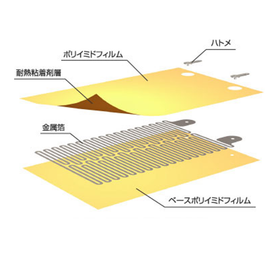
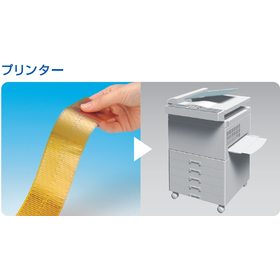
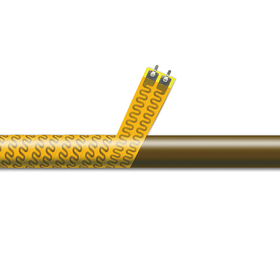
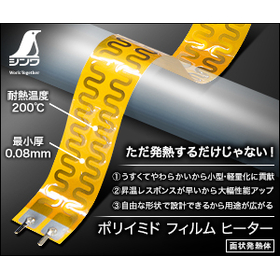
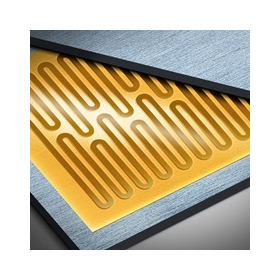
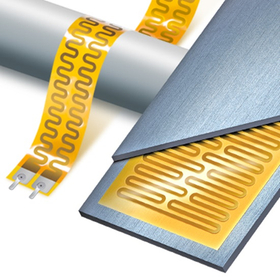
Thin, lightweight, and reliably generates heat. This slim heater utilizes temperature control technology that supports the performance of electronic devices, effectively functioning even in limited spaces.
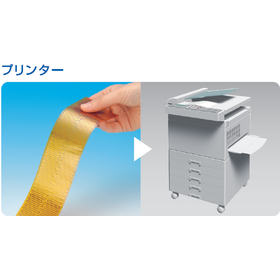
Shinwa's "Polyimide Heater" is designed for heat control in limited spaces such as inside OA equipment and PCs. Its thin film structure achieves both lightweight design and stable heating. 【Features】 ■ Ideal for internal heating of copiers and printers ■ Lightweight, ensuring design flexibility for equipment ■ Rapid heating for optimized thermal efficiency ■ Long lifespan and high reliability design ■ Low power operation reduces environmental impact *For more details, please download or feel free to contact us.

Complex shapes can also be manufactured! Heat-resistant jacket heaters, insulation covers that reduce dust, etc.
Our company, engaged in the development and design of industrial heaters, offers a lineup of mantle heaters and insulation covers suitable for high-temperature environments and clean rooms! We can manufacture not only flat and cylindrical shapes but also complex shapes, regardless of size. ◎ 'Mantle Heaters' for beakers and flasks ■ Jacket type with integrated heating element and insulation material ■ Capable of heating complex-shaped objects entirely ■ Excellent reproducibility through automatic cutting using CAD (2D, 3D) data ◎ Convenient 'Belt Heaters, Ribbon Heaters, etc.' for heating thin tubes ■ Silicone belt heater: A waterproof heater that wraps around piping for use ■ Ribbon heater: A heat-resistant heater that wraps around piping for use ■ Proven track record in the chemical, medical, food, semiconductor industries, and various research institutions ■ Custom manufacturing available for flat, cylindrical, complex, large, and small applications *For more details, please download the catalog or contact us.

It is a heater device that heats or superheats a fluid passing through the heating element to any desired temperature.
The DPH Dual Pax Heater "Utilization of Liquid Heating and Gas Heating" refers to the induction heating (IH heating) that is widely used in home appliances as an electromagnetic cooker. When high-frequency magnetic flux passes through metal, an overcurrent is generated within the metal. This overcurrent, along with the inherent resistance of the metal, produces Joule heat, causing only the metal to heat up. Since the metal itself generates heat, the thermal efficiency is extremely high, achieving instant heating. For more details, please download the catalog.

It heats up to the set temperature in just a few minutes, has good temperature accuracy, and temperature changes are speedy!
The application example introduced in "DPH / Superheated Steam: Applications in Food" is "Next-Generation Food Processing and Heating Technology (Suppression of Lipid and Flavor Component Oxidation)." High-temperature superheated steam acts on the food, rapidly heating it. By manipulating the steam velocity, steam temperature, injection time, and injection position, we can differentiate between "Baking Mode," "Drying Mode," "Steaming Mode," and "Sterilization Mode," allowing for effective heating and cooking of food. We also introduce "Anaerobic Heating Technology" and "Reaction and Decomposition Technology," so please take a look. [Overview of Application Examples] ■Utilization of Heated Steam by DPH *For more details, please refer to the catalog or feel free to contact us.

Metal heating elements can achieve uniform heating due to their stir-mixing properties in shape!
The "Use in the Chemical Industry" of DPH features a metal heating element inside that has distinctive structural characteristics. In processes like heating water, natural convection effectively heats the entire liquid, but when the viscosity is high, natural convection becomes less likely to occur, and the higher the viscosity, the more localized heating tends to happen. The internal metal heating element has a shape that promotes stirring and mixing, allowing the liquid to be naturally agitated as it passes through, enabling uniform heating. 【Features】 ■ Uniform heating is possible *For more details, please refer to the catalog or feel free to contact us.
![[Useful Information] What is annealing? Quality improvement through far-infrared heating.](https://image.mono.ipros.com/public/product/image/d15/2001487353/IPROS85835633781920258142.png?w=280&h=280)
Prevent damage and deformation of thermoplastic resins! A clear explanation of annealing treatment.
Annealing treatment is a method to prevent deformation of plastic products and resins. Plastics are broadly classified into "thermoplastic resins (thermoplastic plastics)" and "thermosetting resins (thermosetting plastics)." Annealing treatment is performed on thermoplastic resins. It is conducted to prevent damage and deformation of thermoplastic resins. This article will provide a clear explanation of annealing treatment. *For detailed content of the article, please refer to the related links. For more information, feel free to contact us.*
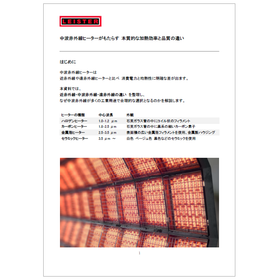
Solving heating challenges in plastic molding with medium-wave infrared heaters!
In the plastic molding industry, there is a constant demand for improvements in product quality and productivity. In particular, molding defects and uneven heating are significant challenges that lead to reduced yield and increased costs. Medium-wave infrared heaters excel in power consumption and uniform heating compared to near-infrared and far-infrared heaters, contributing to the resolution of these issues. This document explains why medium-wave infrared heaters are a rational choice for plastic molding. 【Usage Scenarios】 * Preheating plastic parts * Uniform temperature distribution of molds * Reduction of molding defects * Improvement of productivity 【Effects of Implementation】 * Shortened heating time * Reduced energy costs * Stabilization of product quality * Increased yield

We will solve issues such as 'the equipment is old and there are no blueprints... I want to use a refrigeration unit for cooling... I want to make it a sealed structure...' with custom design and manufacturing using our unique technology!
Do you have any of these troubles? ■ The equipment is old and there are no drawings or specifications... ■ I want to use a refrigeration unit for cooling... ■ I want to specify the material... ■ I want a high static pressure on the air side and a sealed structure... ■ I want to address severe corrosion... and more. At Matsuzawa Seisakusho, we offer custom-designed and manufactured plate fin heaters/coolers, known as 'unit heaters,' that flexibly respond to the above troubles and requests using our unique technology and know-how. ~ You can use it in the following places! ~ 〇 For heating in factories and warehouses 〇 For auxiliary drying in production lines *For more details, please download the PDF or feel free to contact us.

It is a fiberglass material with excellent safety and durability. It is resistant to thermal shock from heating and has excellent heat retention.
This is a mantle heater for flasks. We offer a variety of options depending on your needs. 【Features】 * Made of fiberglass material, it excels in safety and durability. * Flexible design fits without damaging glassware. * Minimal thermal shock from heating, providing excellent heat retention. * Safe heating with electric heating wires instead of an open flame. * Smooth temperature control with a controller. *For more details, please download the catalog or contact us.*
