We have compiled a list of manufacturers, distributors, product information, reference prices, and rankings for Fluorine resin coating.
ipros is IPROS GMS IPROS One of the largest technical database sites in Japan that collects information on.

Fluorine resin coating Product List and Ranking from 43 Manufacturers, Suppliers and Companies | IPROS GMS

Last Updated: Aggregation Period:Jul 08, 2026~Aug 04, 2026
This ranking is based on the number of page views on our site.

Fluorine resin coating Manufacturer, Suppliers and Company Rankings

Last Updated: Aggregation Period:Jul 08, 2026~Aug 04, 2026
This ranking is based on the number of page views on our site.

  1. 吉田SKT Aichi//Manufacturing and processing contract
  2. フロロコート Saitama//others
  3. 太平化成 Tokyo//Chemical
  4. 4 日建塗装工業 Tokyo//Manufacturing and processing contract
  5. 5 NIPPON FUSSO CO.,LTD. Osaka//Electronic Components and Semiconductors

Fluorine resin coating Product ranking

Last Updated: Aggregation Period:Jul 08, 2026~Aug 04, 2026
This ranking is based on the number of page views on our site.

  1. ADLON coating フロロコート
  2. Fluorine coating / Fluorine resin lining 太平化成
  3. Causes of Teflon coating peeling and how to address them. 吉田SKT
  4. 4 Advantages and disadvantages of re-coating a non-stick frying pan. 吉田SKT
  5. 5 Explaining the non-stick properties of Teflon and fluoropolymer resins! "Why don't they stick?" 吉田SKT

Fluorine resin coating Product List

391~420 item / All 441 items

Displayed results

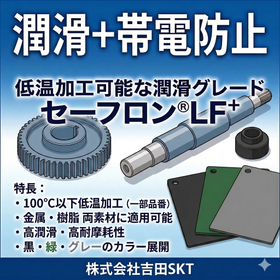
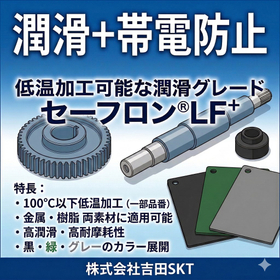
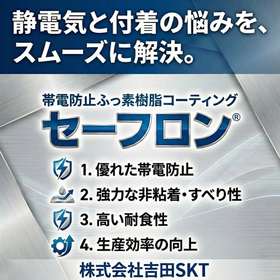
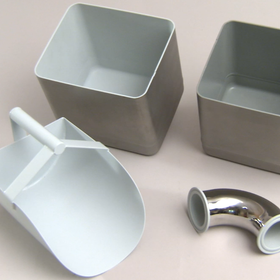
Both metal and resin! Coating 'Safron LF+' that can be processed at low temperatures.

Addressing the disadvantages of conventional antistatic fluoropolymer coatings! Lubrication grade suitable for low-temperature processing.

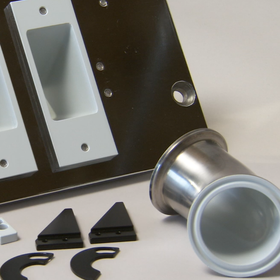
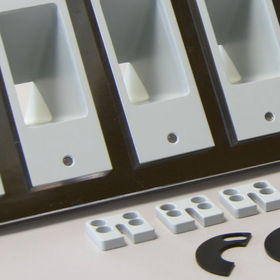
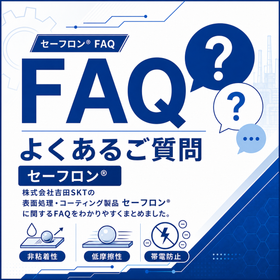
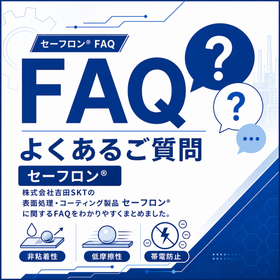
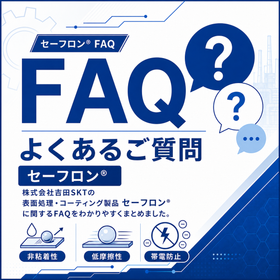
■Disadvantages of Conventional Antistatic Fluororesin Coatings - Requires high-temperature sintering (around 400°C) - Applicable only to metals - Limited color options - Low mechanical strength ■Features of Safron LF+ - Can be processed at low temperatures (below 100°C) - Applicable to both metals and resins - Rich color variations - High friction coefficient and mechanical strength - Antistatic performance equivalent to conventional Safron ■Customer Case Study for Problem Solving 【Antistatic Coating for Aluminum Parts in Semiconductor Equipment】 Challenge - Distortion of thin aluminum parts Solution - Low-temperature sintering with Safron LF+ Effect - Provision of antistatic performance and resolution of distortion issues *For more details, please check the detailed page and PDF materials via the link, or feel free to contact us.
  • 2021-06-02 (11).png
  • 2021-06-02 (18)-1.png
  • 2021-06-02 (18).png
  • Surface treatment contract service
  • Fluorine resin coating

Added to bookmarks

Bookmarks list

Bookmark has been removed

Bookmarks list

You can't add any more bookmarks

By registering as a member, you can increase the number of bookmarks you can save and organize them with labels.

Free membership registration

Achieve low-temperature processing and high lubricity! Newly developed 'Safron LF+'.

Solving the disadvantages of anti-static fluororesin coating! Newly developed Safron LF+ enables low-temperature processing and achieves high lubricity.

The new series "Safron LF+" of the antistatic fluororesin coating developed by Yoshida SKT achieves low friction and allows for low-temperature processing. This expands the options for color tone, film thickness, and processability. Additionally, the antistatic performance remains unchanged from the conventional Safron, and due to its high mechanical strength, it excels in film hardness and wear resistance. It can also accommodate applications that were not possible with previous Safron series, and the variety of colors has increased. For specific performance details, please refer to the property comparison table linked. Moreover, there are specific case studies addressing challenges such as antistatic coatings for flow paths of special inks used in organic EL and antistatic coatings that reduce distortion due to firing. If you have any questions about detailed information or other products, please feel free to contact us.

  • 2021-06-02 (11).png
  • 2021-06-02 (18)-1.png
  • 2021-06-02 (18).png
  • Surface treatment contract service
  • Fluorine resin coating

Added to bookmarks

Bookmarks list

Bookmark has been removed

Bookmarks list

You can't add any more bookmarks

By registering as a member, you can increase the number of bookmarks you can save and organize them with labels.

Free membership registration

An explanation of the fluoropolymer PTFE, which has excellent gas barrier properties and high chemical resistance.

PTFE is a rare resin that excels in chemical resistance, heat resistance, and gas barrier properties.

PTFE (polytetrafluoroethylene) has a very stable molecular structure and excellent chemical resistance. It is also known for its particularly high gas barrier properties among fluoropolymers. This is because PTFE has very low permeability, making it difficult for gases and vapors to pass through. Therefore, it is suitable for use under harsh chemical conditions, such as in chemical plants and semiconductor manufacturing processes. Furthermore, PTFE has high heat resistance and can be used in a temperature range from -200°C to +260°C. This allows it to maintain its properties even under extreme temperature conditions. However, it is important to select the appropriate usage environment, as it may react with fluorine (gas) or alkali metals (sodium, potassium, lithium) under certain conditions. Fluoropolymer lining can form a lining with high gas barrier and chemical resistance properties on the substrate. For more detailed information on chemical resistance, please download the materials or contact us.

  • Surface treatment contract service
  • Fluorine resin coating

Added to bookmarks

Bookmarks list

Bookmark has been removed

Bookmarks list

You can't add any more bookmarks

By registering as a member, you can increase the number of bookmarks you can save and organize them with labels.

Free membership registration

The best study material for fluororesins! What are the differences between PTFE and PFA?

[Presentation of Materials] A detailed explanation of the differences between fluororesins PTFE, PFA, FEP, and ETFE, including molecular structure and properties!

The technical document "Differences Between PTFE and PFA" provides a detailed explanation of PTFE, PFA, FEP, and ETFE, covering everything from molecular structure to properties. Fluoropolymers are well-known for their functionality, such as being non-stick and slippery, but many people may not be aware of their types and differences. This single volume allows you to thoroughly understand the differences and characteristics of each. If you are interested, please feel free to download it. [Contents (excerpt)] ■ Types and properties of fluoropolymers ■ Differences between PTFE and PFA / Overview of FEP and ETFE ■ Differences among four types of fluoropolymer coatings

  • Surface treatment contract service
  • Fluorine resin coating

Added to bookmarks

Bookmarks list

Bookmark has been removed

Bookmarks list

You can't add any more bookmarks

By registering as a member, you can increase the number of bookmarks you can save and organize them with labels.

Free membership registration

Ideal for those who want to know the differences between PTFE and PFA, as well as between FEP and ETFE.

【Presentation of Materials】A detailed explanation of the differences between PTFE and PFA, which are surprisingly not well known, including molecular structure and properties!

The technical document "Differences Between PTFE and PFA" provides a detailed explanation of PTFE, PFA, FEP, and ETFE, covering everything from molecular structure to properties. It is an ideal resource for those who want to understand the differences between PTFE and PFA, as well as FEP and ETFE. With this single document, you can gain a solid understanding of the differences and characteristics of each. If you are interested, please feel free to download it. [Contents (excerpt)] ■ Types and properties of fluoropolymer resins ■ Differences between PTFE and PFA / Overview of FEP and ETFE ■ Differences among four types of fluoropolymer coatings

  • Surface treatment contract service
  • Fluorine resin coating

Added to bookmarks

Bookmarks list

Bookmark has been removed

Bookmarks list

You can't add any more bookmarks

By registering as a member, you can increase the number of bookmarks you can save and organize them with labels.

Free membership registration

Presentation of materials for those who do not understand the benefits of fluororesin and cannot utilize it.

[Presentation of Materials] An explanatory document that addresses the voices of those who do not understand the characteristics and advantages of fluororesin, making it difficult to select appropriate materials.

The technical document "Differences Between PTFE and PFA" provides a detailed explanation of the differences in characteristics between PTFE and PFA, as well as information on FEP and ETFE, covering everything from molecular structure to properties. With this single volume, you can gain a solid understanding of the differences and characteristics of each. If you are interested, please feel free to download it. 【Contents (excerpt)】 ■ Types and properties of fluoropolymers ■ Differences between PTFE and PFA / Overview of FEP and ETFE ■ Differences among four types of fluoropolymer coatings

  • Surface treatment contract service
  • Fluorine resin coating

Added to bookmarks

Bookmarks list

Bookmark has been removed

Bookmarks list

You can't add any more bookmarks

By registering as a member, you can increase the number of bookmarks you can save and organize them with labels.

Free membership registration

Explaining the features, advantages, and disadvantages of ETFE coating.

ETFE coating is a coating technology that uses ETFE, a copolymer of tetrafluoroethylene and ethylene.

ETFE coating is a type of fluoropolymer coating that is primarily processed using techniques such as powder coating and rotational molding. ■ What is ETFE Coating? ETFE is a type of fluoropolymer, specifically a copolymer of tetrafluoroethylene and ethylene. It is mainly processed using powder coating technology and is considered a relatively thick coating among fluoropolymer coatings. Therefore, it is commonly referred to as ETFE lining. ■ Advantages of ETFE Coating ETFE has a low melting point and excellent processability, allowing for thick coatings on various substrate shapes. ■ Disadvantages of ETFE Coating On the other hand, because its molecular structure contains hydrogen (H), its heat resistance and chemical resistance are inferior compared to PTFE. ETFE coating requires the selection of materials and methods according to the application, environment, and substrate shape. Yoshida SKT offers ETFE coating services through powder coating and rotational molding (rotolining). *If you are considering ETFE coating, please feel free to contact us. For those considering various linings, please also check the "Basic Knowledge of Lining" PDF.

  • ETFE_edited.jpg
  • others
  • Fluorine resin coating

Added to bookmarks

Bookmarks list

Bookmark has been removed

Bookmarks list

You can't add any more bookmarks

By registering as a member, you can increase the number of bookmarks you can save and organize them with labels.

Free membership registration

Methods to solve release defects in injection molding.

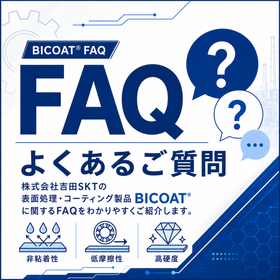
The astonishing durability that surpasses fluoropolymer coatings, "Bicoat," is a surface treatment suitable for applications subjected to mechanical stress. *Product and case materials are available.

**Main Causes of Release Failure in Injection Molding** Release failure is a common issue in the injection molding process. It often arises from excessive adhesion between the mold surface and the resin. This problem particularly occurs with complex shapes or thin-walled parts, where the resin strongly adheres to the mold surface. Surface roughness and insufficient draft angles can also worsen release properties. Additionally, high temperatures of the resin during release can contribute to release failure. "Bycoat® NYK-01" is a high-performance surface treatment that suppresses resin adhesion and wear in injection molding, thereby improving productivity. Its special coating, designed for use in high-temperature environments, achieves approximately double the lifespan compared to conventional surface treatments. This reduces the frequency of replacements and contributes to lower running costs. It has a proven track record with automotive motor parts manufacturers and has led to regular requests due to its reliable coating technology. **Features** ■ Incredible durability ■ High hardness, resistant to scratches ■ Excellent wear resistance ■ Outstanding non-stick and release properties ■ Safe for use in molds requiring micron-level precision *For more details, please refer to the PDF document or feel free to contact us.*

  • TYS-03K_edited.jpg
  • NYF-11-S 1_edited.jpg
  • 2021-05-22 (4)_edited.jpg
  • IMG_8528_edited_edited.jpg
  • Other surface treatment equipment
  • Fluorine resin coating

Added to bookmarks

Bookmarks list

Bookmark has been removed

Bookmarks list

You can't add any more bookmarks

By registering as a member, you can increase the number of bookmarks you can save and organize them with labels.

Free membership registration

PFAS-free release agent 'MRS Coating' for logistics and packaging

Powerful adhesive tape can also be removed! Contributes to the efficiency of packaging work.

In the logistics and packaging industry, the application and removal of adhesive tape on packaging materials are frequently performed. In this process, adhesive residue from the tape can reduce work efficiency and compromise product quality. Additionally, the difficulty in applying and removing labels also increases the burden of the work. MRS coating addresses these challenges, contributing to the efficiency of packaging operations and product protection. 【Usage Scenarios】 - Packaging of cardboard boxes - Fixing with adhesive tape - Label application 【Benefits of Implementation】 - Improved efficiency in tape removal tasks - Prevention of adhesive residue - Enhanced usability in label application *Features may vary depending on the type of product. For more details, please download the PDF or contact us.

  • ホットメルト_edited.jpg
  • s-CIMG3371_edited_edited.jpg
  • Surface treatment contract service
  • Fluorine resin coating

Added to bookmarks

Bookmarks list

Bookmark has been removed

Bookmarks list

You can't add any more bookmarks

By registering as a member, you can increase the number of bookmarks you can save and organize them with labels.

Free membership registration

Why do powders clog in pipes and hoppers? The mechanisms of adhesion and bridging.

"The powder does not come out of the hopper" and "it gets clogged in the piping." The causes are not just one. This explains the typical mechanisms of clogging and the countermeasures.

■Three Main Mechanisms of Powder Clogging (1) Adhesion to Walls Powder particles adhere to the inner walls of hoppers and pipes, narrowing the flow path and worsening the flow. The causes vary, including adhesion due to static electricity, moisture, and the physical adhesion of sticky powders. (2) Agglomeration of Particles Due to humidity and temperature influences, particles may stick together and form clumps. Agglomerated powders significantly reduce flowability and can block pipes and valves. (3) Bridging This phenomenon occurs when powder forms an arch-like structure (bridge) near the outlet of a hopper, becoming stable under its own weight. The particle size distribution, shape, and friction with the wall all affect this. ■Approach to Solutions To prevent powder clogging, one effective method is to reduce the friction of the wall surfaces that the powder contacts, thereby lowering adhesion forces. Particularly when static electricity is a cause of adhesion, surface treatments with anti-static functions are effective. The causes of powder clogging can vary with even slight differences in the environment. At Yoshida SKT, we propose optimal surface treatments based on the conditions provided by our customers. If you encounter issues with powder transport, please feel free to consult us.

  • 2021-06-02 (11).png
  • 2021-06-02 (18)-1.png
  • 2021-06-02 (18).png
  • Surface treatment contract service
  • Fluorine resin coating

Added to bookmarks

Bookmarks list

Bookmark has been removed

Bookmarks list

You can't add any more bookmarks

By registering as a member, you can increase the number of bookmarks you can save and organize them with labels.

Free membership registration

Why is it difficult to find alternatives to fluoropolymer? Alternative technologies in the era of PFAS regulation.

I want to be PFAS-free, but I can't find an alternative that matches the performance of fluoropolymer... I will organize the reasons for this and the current state of alternative technologies.

■Reasons Why It Is Difficult to Find Alternatives to Fluoropolymer Fluoropolymers possess multiple excellent properties in a single material, such as non-stickiness, low friction, chemical resistance, heat resistance, and electrical insulation. Currently, while some of these properties can be met by common alternative materials, achieving all of them simultaneously remains a challenge. For example, silicone-based materials excel in heat resistance and release properties, but may fall short in chemical resistance and wear resistance compared to fluoropolymers. Engineering plastics may have types that excel in heat resistance and wear resistance, but they can still have issues with non-stickiness. ■Considerations When Exploring Alternatives Rather than trying to completely replace all the properties of fluoropolymers with a single material, the first step in selecting alternative technologies is to clarify "what functions are truly necessary for our applications." Is non-stickiness the most important, or is it chemical resistance, or heat resistance? By clearly prioritizing the functions, realistic alternative options become apparent. At Yoshida SKT, we will work together to find alternative solutions that meet your conditions from among hundreds of surface treatment technologies. If you are struggling with finding alternatives to fluoropolymers, please feel free to consult with us.

  • Surface treatment contract service
  • Fluorine resin coating

Added to bookmarks

Bookmarks list

Bookmark has been removed

Bookmarks list

You can't add any more bookmarks

By registering as a member, you can increase the number of bookmarks you can save and organize them with labels.

Free membership registration

Why does stainless steel rust? = Corrosion mechanisms and anti-corrosion measures =

The belief that 'stainless steel shouldn't rust' is a misconception. This explains the conditions under which stainless steel can corrode and the measures to counteract it.

■Why Does Stainless Steel Rust? The corrosion resistance of stainless steel is maintained by a very thin oxide film (passivation film) that forms on its surface. When this film is damaged, the metal substrate is exposed and corrosion progresses. The typical causes of damage to the passivation film are as follows: - Pitting corrosion due to chloride ions: In environments containing chlorine, the passivation film can be locally destroyed, leading to localized corrosion. - Galvanic corrosion: When different types of metals come into contact and are exposed to an electrolyte solution, one metal preferentially corrodes due to the potential difference. - Stress corrosion cracking: This phenomenon occurs when tensile stress and a corrosive environment act simultaneously, causing the material to fracture in a brittle manner. While the above describes the typical corrosion mechanisms of stainless steel, the causes of corrosion can vary depending on factors such as the type and concentration of chemicals used, temperature, and stress conditions. At Yoshida SKT, we offer anti-corrosion coatings and linings tailored to our customers' usage environments. If you are troubled by metal corrosion, please feel free to consult us. *For information on anti-corrosion coatings and linings, please download the PDF for details.

  • s-00718Nedit.gif
  • 0055H2_edited.jpg
  • DSC_4981_edited.jpg
  • s-0078ZL_edited.jpg
  • Processing Contract
  • Fluorine resin coating

Added to bookmarks

Bookmarks list

Bookmark has been removed

Bookmarks list

You can't add any more bookmarks

By registering as a member, you can increase the number of bookmarks you can save and organize them with labels.

Free membership registration

Why does unnecessary film form on the plating jig?

Unwanted plating film adhesion on the plating jig affects the jig's lifespan and plating quality.

In the plating process, unnecessary plating films adhere to the jigs used to apply plating to the products. ■ Why does plating adhere to the jigs? Since the jigs are also immersed in the plating solution, plating inevitably precipitates on the parts that come into contact with the solution. The accumulated plating film can reduce the dimensional accuracy of the jigs and, if it peels off and adheres to the products, it can cause quality defects. ■ Considerations for countermeasures Fluororesin coatings possess both electrical insulation and chemical resistance, making them suitable as coating materials for plating jigs. The optimal countermeasures vary depending on the type of plating, composition of the plating solution, shape of the jigs, target costs, and other factors. At Yoshida SKT, we have a track record of insulating and non-stick coatings for plating jigs. For details and case studies on the coatings, please download the PDF for confirmation.

  • Processing Contract
  • Fluorine resin coating

Added to bookmarks

Bookmarks list

Bookmark has been removed

Bookmarks list

You can't add any more bookmarks

By registering as a member, you can increase the number of bookmarks you can save and organize them with labels.

Free membership registration

Explanation: The difference between Biocote® and fluoropolymer coatings.

High hardness, resistant to scratches and wear. Non-stick coating that withstands long-term use.

"Bi-Coat®" is a coating that achieves excellent non-stick and release properties through a treatment that combines inorganic and organic materials. Compared to conventional fluoropolymer coatings, it has high hardness, is resistant to scratches, and experiences less wear, making it durable for long-term use. It also has high dimensional accuracy and is suitable for applications requiring micron-level precision. *For detailed explanations, please check the link.*

  • Surface treatment contract service
  • Fluorine resin coating

Added to bookmarks

Bookmarks list

Bookmark has been removed

Bookmarks list

You can't add any more bookmarks

By registering as a member, you can increase the number of bookmarks you can save and organize them with labels.

Free membership registration

Selection Guide: How to Choose BiCote® Grades

Iron, stainless steel, aluminum, copper alloys... We propose the optimal grade tailored to the base material and usage environment.

The grades of "Bicoat(R)" are selected based on the usage environment and required performance. There are three main criteria for selection: (1) Type of substrate: Since compatibility varies depending on the substrate, such as iron, stainless steel, aluminum, or copper alloys, selection must be tailored to the substrate. (2) Operating temperature (3) The type of substances in contact will also affect the optimal grade. After understanding the specific usage environment and performance requirements, our technical sales representatives will propose the most suitable grade. Please feel free to consult with us.

  • Surface treatment contract service
  • Fluorine resin coating

Added to bookmarks

Bookmarks list

Bookmark has been removed

Bookmarks list

You can't add any more bookmarks

By registering as a member, you can increase the number of bookmarks you can save and organize them with labels.

Free membership registration

Main applications of "Bycoat(R)" - from mold release to sliding parts.

Prevention of resin adhesion, wear resistance, and improved slip properties. Safe to use in areas subject to mechanical loads.

"Bycoat(R)" is suitable for preventing resin adhesion and improving release properties in injection molding molds, and can also be used in precision molds where micron-level dimensional accuracy is required. It provides excellent lubrication for guides and chutes in various packaging machines, achieving wear resistance and improved sliding in areas where friction occurs. It is also useful for releasing components that come into contact with particularly adhesive substances, such as adhesives. Due to its excellent durability, it can be confidently used in applications subject to mechanical loads, such as IC encapsulation cavities, piezoelectric ceramic manufacturing equipment, molds for rubber and resin, and sliding parts.

  • Surface treatment contract service
  • Fluorine resin coating

Added to bookmarks

Bookmarks list

Bookmark has been removed

Bookmarks list

You can't add any more bookmarks

By registering as a member, you can increase the number of bookmarks you can save and organize them with labels.

Free membership registration

Case Studies: 8 Examples of Bicoat® Applications

From PET bottle molds to heat sealers. We will introduce examples of solving on-site challenges.

Here are some representative application examples of "Bicoat(R)." In blow molding molds for PET bottles, a release coating on the inner surface prevents the adhesion of softened PET resin due to heat, reducing maintenance burdens while maintaining the transparency of the PET bottles. In heat sealers for pillow packaging machines, non-stick and wear-resistant properties prevent resin adhesion and improve productivity. Additionally, it demonstrates effectiveness in a wide range of applications, including decorative sheet transfer molds, transport jigs, vacuum transfer molds, suction pads, ejector pins, and biodegradable plastic molding molds.

  • Surface treatment contract service
  • Fluorine resin coating

Added to bookmarks

Bookmarks list

Bookmark has been removed

Bookmarks list

You can't add any more bookmarks

By registering as a member, you can increase the number of bookmarks you can save and organize them with labels.

Free membership registration

PFAS-free compatible 'Bicoat(R)' product line expansion

There are product numbers that do not contain PFAS (fluororesin). Development of next-generation PFAS-free products is also underway.

Bikote(R) also offers PFAS-free product numbers that do not contain PFAS (fluororesin). For information on the presence or absence of PFAS for each product number, please contact us. Additionally, we are advancing the development of environmentally friendly PFAS-free coatings as part of our next-generation product development. If you are considering compliance with PFAS regulations, please feel free to consult with us.

  • Surface treatment contract service
  • Fluorine resin coating

Added to bookmarks

Bookmarks list

Bookmark has been removed

Bookmarks list

You can't add any more bookmarks

By registering as a member, you can increase the number of bookmarks you can save and organize them with labels.

Free membership registration

【Selection Guide】How to Choose SafeLon(R) Grades

The corrosion resistance is AP+, the anti-fouling and release properties are AS+, the low friction and resin substrate are LF+, and the transparency is CC+.

The various grades of "Saflon(R)" are selected based on the usage environment and required performance. For applications where corrosion resistance is particularly important, "Saflon(R) AP+" is suitable, while "Saflon(R) AS+" is appropriate for environments requiring stain resistance and release properties. If lubrication is needed or for applications on heat-sensitive substrates like resins, please choose "Saflon(R) LF+," and for applications requiring transparency, "Saflon(R) CC+" is recommended. After understanding your specific usage environment and performance requirements, our technical sales representatives will propose the optimal grade. Please feel free to consult with us.

  • Surface treatment contract service
  • Fluorine resin coating

Added to bookmarks

Bookmarks list

Bookmark has been removed

Bookmarks list

You can't add any more bookmarks

By registering as a member, you can increase the number of bookmarks you can save and organize them with labels.

Free membership registration

Seafron(R) LF+ - Low friction and low temperature processing product number as well.

Compatible with resin substrates at low-temperature processing numbers below 100℃. Excellent coating hardness and abrasion resistance.

"SafeLon(R) LF+" is a grade developed as a new option for applications that require not only static electricity prevention but also mechanical strength, which the conventional SafeLon(R) series could not adequately address. LF stands for "Low Friction," meaning it has a low coefficient of friction and excellent lubricity. It also excels in coating hardness and wear resistance, making it suitable for applications that require mechanical strength. Furthermore, while conventional fluoropolymer coatings typically require firing at around 400°C, there are product numbers that allow for low-temperature processing below 100°C, making it applicable not only to metals but also to resin substrates.

  • Surface treatment contract service
  • Fluorine resin coating

Added to bookmarks

Bookmarks list

Bookmark has been removed

Bookmarks list

You can't add any more bookmarks

By registering as a member, you can increase the number of bookmarks you can save and organize them with labels.

Free membership registration

【Technical Q&A】Compatible substrates for Saflon® - including resins -

Compatible with iron, stainless steel, aluminum, and copper alloys. With LF+, low-temperature processing is also possible for resin substrates.

The substrates compatible with "Safron(R)" include iron (ferrous materials), stainless steel (SUS), and aluminum. Additionally, some grades such as "Safron(R) LF+" are available in types that can be processed at low temperatures below 100°C, making them applicable to substrates with low heat resistance, such as resins. The applicability and pretreatment methods vary depending on the type and condition of the substrate, so please consult our technical sales representative for specific applicability.

  • Surface treatment contract service
  • Fluorine resin coating

Added to bookmarks

Bookmarks list

Bookmark has been removed

Bookmarks list

You can't add any more bookmarks

By registering as a member, you can increase the number of bookmarks you can save and organize them with labels.

Free membership registration

Add water and oil repellency with a fluororesin coating.

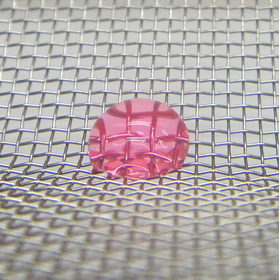
Water and oil repellency refers to the property of a substrate surface that repels water and oil. Water does not spread and wet the surface of the material, but instead forms into droplets, which is the state of water repellency.

When a water-repellent coating is applied to fibers, it is coated with a thin film and does not cover all the fabric's weave, which is an advantage in terms of breathability. However, when high pressure is applied to the water, it may seep through the fabric's weave to the backside. The difference between water-repellent and waterproof To briefly explain the difference between water-repellent and waterproof, water-repellent means repelling water as described above, while waterproof means not allowing water to pass through. In other words, a state where water does not pass through is "waterproof," and a state where water is repelled on the surface is "water-repellent." Advantages and disadvantages of water-repellent processing - Advantages The advantage of water-repellent processing is that it does not fill the gaps in the material, allowing for breathability. Therefore, it is often used in down jackets and coats when one wants to avoid getting wet from a small amount of rain without compromising comfort. - Disadvantages Since water-repellent processing is only superficial, as mentioned above, during heavy rain, water pressure may cause water to seep into the material's interior.

  • Surface treatment contract service
  • Fluorine resin coating

Added to bookmarks

Bookmarks list

Bookmark has been removed

Bookmarks list

You can't add any more bookmarks

By registering as a member, you can increase the number of bookmarks you can save and organize them with labels.

Free membership registration

Fluororesin Coating Course: What is Static Electricity Prevention?

Avoid troubles caused by static electricity charging on fluororesin surfaces!

The characteristics of fluoropolymer, such as corrosion resistance and non-stick properties, are widely used as solutions to various challenges in different plants and manufacturing facilities. On the other hand, problems caused by static electricity charging on the surface of fluoropolymer are also frequently encountered. For example, it is well understood that the volume resistivity of glass lining is around 10^12 Ωm, and precautions against static electricity hazards are taken; however, there have been cases where the fact that the volume resistivity of fluoropolymer exceeds 10^16 Ωm has not been adequately considered. *For more details on static electricity prevention, please contact us or download our catalog for more information.*

  • Coating Agent
  • Surface treatment contract service
  • Fluorine resin coating

Added to bookmarks

Bookmarks list

Bookmark has been removed

Bookmarks list

You can't add any more bookmarks

By registering as a member, you can increase the number of bookmarks you can save and organize them with labels.

Free membership registration

Fluororesin Coating Course: What is Non-Stick and Release Coating?

A clear explanation of non-stick grades of fluoropolymer by application!

FEP resin has the lowest critical surface tension among fluoropolymers (17.8 dyn/cm), making it difficult for liquids to wet the surface (i.e., it has high non-stick properties). Additionally, it has the lowest adhesion energy (42.0 dyn/cm), which means that even wetted liquids can easily detach (i.e., it has high release properties). For this reason, FEP resin is used in various fields, from molding molds for rubber and resin products like golf balls to molding shapes for solid propellant fuels in space shuttles and Ariane rockets, as well as in applications ranging from rolls to large paint mixing tanks. *For more details on non-stick and release coatings, please contact us or download our catalog for more information.*

  • Coating Agent
  • Surface treatment contract service
  • Fluorine resin coating

Added to bookmarks

Bookmarks list

Bookmark has been removed

Bookmarks list

You can't add any more bookmarks

By registering as a member, you can increase the number of bookmarks you can save and organize them with labels.

Free membership registration

Are you having trouble with surface coating peeling off?

We offer coatings that utilize the properties of fluororesin to meet our customers' needs!

Are you discarding products because the surface coating has worn off and the slip has decreased? At our company, if the base material is still intact, we can remove the previous coating and reapply a new one. Furthermore, we can offer three grades of Teflon coating tailored to your usage. [Types of Coatings] (Selectable based on application and required quality) - The familiar "Silver Coating" used for frying pans - "Thick Coating," which significantly increases the film thickness from the usual (30-50 microns) to a maximum of 2000 microns (2 mm) - "Special Coating," which allows for extending the lifespan by applying Teflon after thermal spraying metals or ceramics *For more details, please refer to the PDF document or feel free to contact us.

  • Processing Contract
  • Other metal materials
  • Heat exchanger
  • Fluorine resin coating

Added to bookmarks

Bookmarks list

Bookmark has been removed

Bookmarks list

You can't add any more bookmarks

By registering as a member, you can increase the number of bookmarks you can save and organize them with labels.

Free membership registration

Release prevention measures using ADLON coat for medical devices.

Measures against release in medical device manufacturing. Supporting precision molding.

In the medical device industry, the release from molds in precision parts manufacturing is a critical issue that affects both quality and production efficiency. Particularly for parts with fine shapes or complex structures, poor release can lead to product defects and increased manufacturing costs. ADLON coat enables molding without the use of release agents as a countermeasure against epoxy binder release, making post-processing easier. This contributes to improved quality and cost reduction in medical device manufacturing. 【Usage Scenarios】 - Molding of precision medical device parts - Application of epoxy binder to molds - When wanting to avoid contamination from release agents 【Effects of Implementation】 - Improved quality of post-processing due to the absence of release agents - Cost reduction through the reduction of molding defects - Enhanced quality of medical devices

  • Coating Agent
  • Fluorine resin coating

Added to bookmarks

Bookmarks list

Bookmark has been removed

Bookmarks list

You can't add any more bookmarks

By registering as a member, you can increase the number of bookmarks you can save and organize them with labels.

Free membership registration

Adhesion measures (release) for epoxy resin molding molds for medical devices.

Release measures for inclined magnetic field coils! No release agent needed.

In the manufacturing process of inclined magnetic field coils, the wire sections arranged are solidified with epoxy resin. Ensuring mold release properties during this process is crucial. Insufficient mold release can lead to molding defects and decreased productivity. Adron Coat enables molding without the use of release agents, addressing these challenges. 【Application Scenarios】 - Mold release during the manufacturing of inclined magnetic field coils - Mold release during the manufacturing of copper wire coils - Mold release during prepreg press molding 【Effects of Implementation】 - Reduction in the amount of release agent used - Easier re-bonding and painting due to the absence of release agent residue from not using a release agent - Increased productivity and reduced environmental pollution

  • Coating Agent
  • Fluorine resin coating

Added to bookmarks

Bookmarks list

Bookmark has been removed

Bookmarks list

You can't add any more bookmarks

By registering as a member, you can increase the number of bookmarks you can save and organize them with labels.

Free membership registration

Prevents sticking with ADLON coating for kitchen use!

Solve kitchen scorch marks and cleaning issues with ADLON coating!

In the kitchen industry, the sticking of cooking utensils and food materials leads to decreased work efficiency and increased cleaning efforts. Particularly with cooking utensils used at high temperatures, preventing sticking and improving cleanability are crucial. ADLON coating addresses these issues and enhances cooking efficiency. 【Usage Scenarios】 - Frying pans - Ovens - Baking sheets - Prevention of sticking in cooking utensils - Improved cleanability 【Benefits of Implementation】 - Reduces sticking and shortens cooking time - Makes cleaning easier and improves work efficiency - Reduces food waste - Extends the lifespan of cooking utensils

  • Coating Agent
  • Fluorine resin coating

Added to bookmarks

Bookmarks list

Bookmark has been removed

Bookmarks list

You can't add any more bookmarks

By registering as a member, you can increase the number of bookmarks you can save and organize them with labels.

Free membership registration

Extended flight time achieved by using Mg alloy for drones.

Achieving lightweight and durability for drones with Mg alloy and coating technology.

In the drone industry, the length of flight time is an important factor. The longer the flight time, the more extensive surveys and tasks can be performed, expanding business opportunities. However, the weight of the drone significantly affects flight time, creating a dilemma where increasing battery capacity leads to increased weight, resulting in shorter flight times. Magnesium alloys are lightweight yet possess high strength, contributing to weight reduction when used in drone bodies, which leads to extended flight times. Adroncoat addresses the challenges of corrosion, galvanic corrosion, and oxidation associated with magnesium alloys, making their adoption in drone bodies feasible. 【Use Cases】 - Long-duration aerial photography - Extensive surveying - Infrastructure inspection - Material transportation 【Benefits of Implementation】 - Extended flight time - Improved lifespan of the drone body - Reduced operational costs

  • Coating Agent
  • Fluorine resin coating

Added to bookmarks

Bookmarks list

Bookmark has been removed

Bookmarks list

You can't add any more bookmarks

By registering as a member, you can increase the number of bookmarks you can save and organize them with labels.

Free membership registration

Improvement of release properties of fluorocoat for semiconductors.

For those struggling with release in semiconductor manufacturing. Supported by 70 years of experience and evaluation equipment.

In the semiconductor industry, the release properties of parts from molds and jigs are crucial for improving product quality and production efficiency. Particularly in fine processing and high-precision manufacturing processes, poor release can lead to product damage and reduced yield. FluoroCoat, with 70 years of experience and comprehensive evaluation facilities, supports aspects such as initial evaluations and post-use (after testing) evaluation comparisons (sample evaluations, actual machine evaluations), assisting in solving release property challenges. We also accommodate prototype requests starting from one piece, including processing consultations and coating selection. 【Application Scenarios】 - Molds in semiconductor manufacturing - Jigs - Other parts requiring release properties 【Benefits of Implementation】 - Improved release properties - Increased product yield - Enhanced production efficiency

  • Coating Agent
  • Surface treatment contract service
  • Fluorine resin coating

Added to bookmarks

Bookmarks list

Bookmark has been removed

Bookmarks list

You can't add any more bookmarks

By registering as a member, you can increase the number of bookmarks you can save and organize them with labels.

Free membership registration