We have compiled a list of manufacturers, distributors, product information, reference prices, and rankings for Mass spectrometer.
ipros is IPROS GMS IPROS One of the largest technical database sites in Japan that collects information on.

Mass spectrometer Product List and Ranking from 16 Manufacturers, Suppliers and Companies | IPROS GMS

Last Updated: Aggregation Period:Jul 22, 2026~Aug 18, 2026
This ranking is based on the number of page views on our site.

Mass spectrometer Manufacturer, Suppliers and Company Rankings

Last Updated: Aggregation Period:Jul 22, 2026~Aug 18, 2026
This ranking is based on the number of page views on our site.

  1. 一般財団法人材料科学技術振興財団 MST Tokyo//Testing, Analysis and Measurement
  2. ブルカージャパン マイクロバイオロジー&インフェクション・ダイアグノスティクス事業部 微生物同定・菌株識別 Kanagawa//Testing, Analysis and Measurement
  3. ATONARP INC. Tokyo//Electronic Components and Semiconductors
  4. 4 プレッパーズ 本社 Shizuoka//others
  5. 4 LECOジャパン Tokyo//Testing, Analysis and Measurement

Mass spectrometer Product ranking

Last Updated: Aggregation Period:Jul 22, 2026~Aug 18, 2026
This ranking is based on the number of page views on our site.

  1. Overview and characteristics of LDI-MS (Laser Desorption Ionization Mass Spectrometry) 一般財団法人材料科学技術振興財団 MST
  2. [Analysis Case] Evaluation of Layer Structure and Film Thickness of Naturally Oxidized Copper (Cu) Surface Film 一般財団法人材料科学技術振興財団 MST
  3. Rapid Microbial Identification "MALDI Biotyper" ブルカージャパン マイクロバイオロジー&インフェクション・ダイアグノスティクス事業部 微生物同定・菌株識別
  4. [Analysis Case] LC/MS/MS Analysis of Catechin Metabolites in Urine 一般財団法人材料科学技術振興財団 MST
  5. 4 Introduction to the Technical Note of the Mass Spectrometry Device ASTON ATONARP INC.

Mass spectrometer Product List

31~47 item / All 47 items

Displayed results

[Analysis Case] Analysis of Discoloration Components in Fibers

It is possible to evaluate the organic and inorganic components on the fiber surface.

TOF-SIMS is a highly effective method for investigating the causes of foreign substances, contamination, and discoloration in various processes, as it allows for localized analysis of specific areas and simultaneous analysis of elemental composition and molecular information of organic and inorganic substances through the obtained mass spectrum. Additionally, it enables image analysis, making the visualization of molecular information of organic substances possible. This document summarizes the analysis results of discoloration in clean suits, which are textile products. From the qualitative results obtained by TOF-SIMS, it was inferred that the discolored areas may be due to sebum.

Added to bookmarks

Bookmarks list

Bookmark has been removed

Bookmarks list

You can't add any more bookmarks

By registering as a member, you can increase the number of bookmarks you can save and organize them with labels.

Free membership registration

[Analysis Case] Qualitative and Imaging Analysis of Micro Areas Using TOF-SIMS

Qualitative and imaging analysis of foreign substances in the sub-micrometer order and micro-regions is possible.

TOF-SIMS allows for simultaneous elemental analysis and molecular information analysis of organic and inorganic substances through mass spectra obtained by locally analyzing specific areas, making it effective for evaluating foreign substances and micro-regions. This document summarizes examples of analysis in sub-micron order micro-regions. Samples that were sputter-processed with FIB on layered structures were measured using TOF-SIMS. Evaluation of sub-micron order micro-regions has been achieved.

Added to bookmarks

Bookmarks list

Bookmark has been removed

Bookmarks list

You can't add any more bookmarks

By registering as a member, you can increase the number of bookmarks you can save and organize them with labels.

Free membership registration

[Analysis Case] Evaluation of Transdermal Absorption of Indomethacin in Three-Dimensional Cultured Human Skin

Visualization of the distribution of active ingredients applied to cultured skin using TOF-SIMS.

TOF-SIMS identifies components from the mass of molecular ions, eliminating the need for labels such as fluorescent substances, allowing for imaging without their influence. Additionally, cross-sectional imaging enables the evaluation of distribution in the depth direction. In this study, a gel formulation of indomethacin was applied to three-dimensional cultured human skin, visualizing the distribution of the permeated active ingredient. As a result, it was found that indomethacin is concentrated on the surface side of the stratum corneum. Furthermore, depth profile analysis observed a gradual penetration towards the cell layers.

Added to bookmarks

Bookmarks list

Bookmark has been removed

Bookmarks list

You can't add any more bookmarks

By registering as a member, you can increase the number of bookmarks you can save and organize them with labels.

Free membership registration

[Analysis Case] Evaluation of Material Structure of Organic EL (OLED)

It is possible to identify components for each layer, pixel by pixel.

To improve the reliability of organic EL, which is expected to expand in demand in the future, detailed structural analysis, state analysis, and identification of degradation causes will become increasingly important. We will introduce examples of evaluating layer structures and materials using TOF-SIMS and LC/MS. With TOF-SIMS, we were able to evaluate the layer structure and the component information of each layer. We conducted analyses of the components revealed by TOF-SIMS using LC/MS and a fluorescence detector, allowing us to assess the emission wavelength and understand the structure of the components. Thus, the combination of TOF-SIMS and LC/MS enables detailed evaluations.

Added to bookmarks

Bookmarks list

Bookmark has been removed

Bookmarks list

You can't add any more bookmarks

By registering as a member, you can increase the number of bookmarks you can save and organize them with labels.

Free membership registration

[Analysis Case] Transdermal Absorption Evaluation Using Three-Dimensional Cultured Human Skin

Distribution evaluation and quantitative analysis of the same sample are possible.

In recent years, the development of alternative methods to animal testing has progressed in the efficacy and safety testing of pharmaceuticals and cosmetics, with particular attention being paid to testing methods using three-dimensional cultured human skin. In this case study, a permeation test of indomethacin was conducted using a Franz cell, and TOF-SIMS and LC/MS/MS measurements were performed on the same skin sample. LC/MS/MS was used to quantify skin concentration and skin permeation, while TOF-SIMS was used to evaluate the component distribution within the skin. Measurement methods: TOF-SIMS, LC/MS, cryo-processing, cutting Product fields: Biotechnology, pharmaceuticals, cosmetics Analysis objectives: Composition distribution evaluation, safety testing For more details, please download the materials or contact us.

Added to bookmarks

Bookmarks list

Bookmark has been removed

Bookmarks list

You can't add any more bookmarks

By registering as a member, you can increase the number of bookmarks you can save and organize them with labels.

Free membership registration

[Analysis Case] LC/MS/MS Analysis of Catechin Metabolites in Urine

Qualitative analysis of catechin metabolites in urine, as well as investigation of temporal changes and individual differences.

By using high-sensitivity LC-MS (Q-TOF type), qualitative analysis of low-concentration components such as metabolites in biological samples is possible. It allows for the search for components that have undergone metabolism such as addition or conjugation in the body, as well as inter-sample comparisons aimed at investigating temporal changes and individual differences. After consuming a high-concentration catechin beverage and collecting urine, both unchanged catechin and the metabolite catechin-glucuronide conjugate were confirmed. The amounts of catechin and metabolites in the urine of eight individuals were plotted for excretion over 0.5 to 8 hours post-consumption, and comparisons were made.

Added to bookmarks

Bookmarks list

Bookmark has been removed

Bookmarks list

You can't add any more bookmarks

By registering as a member, you can increase the number of bookmarks you can save and organize them with labels.

Free membership registration

Mass array method: A gene analysis method using mass spectrometry.

Genetic analysis is a method that reads the nucleotide sequences of DNA to investigate gene mutations and functions.

In this method, the differences in the mass of bases are analyzed using MALDI-TOF-MS to determine the DNA base sequence. This allows for the detection of SNPs (single nucleotide polymorphisms), INDELs (insertions/deletions), CNVs (copy number variations), and more. It is characterized by the ability to analyze a large number of samples and detect a wide range of genes at once. - Multiplex PCR and MALDI-TOF-MS enable simultaneous analysis of up to 40 mutation sites. - Mass spectrometry specialized for the detection of bases (A/T/G/C) is possible. - A variety of analytical tools are available that have been pre-designed to detect target genes based on specific purposes. - Custom designs for analytical tools are also possible.

  • img_a0081_3.jpg
  • img_a0081_4.jpg
  • img_a0081_5.jpg
  • Contract Analysis
  • Contract measurement
  • Mass spectrometer

Added to bookmarks

Bookmarks list

Bookmark has been removed

Bookmarks list

You can't add any more bookmarks

By registering as a member, you can increase the number of bookmarks you can save and organize them with labels.

Free membership registration

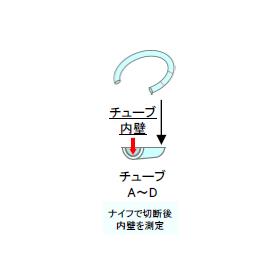
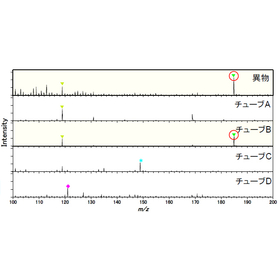
[Analysis Case] Investigation of Foreign Object Occurrence: Analysis of the Tube

It is possible to estimate the cause of wafer contamination!

TOF-SIMS is a very effective method for investigating the causes of contamination due to foreign substances, deposits, dirt, discoloration, and other factors related to the process. By comparing the mass spectral information obtained from contamination such as foreign substances with the mass spectral information of candidate contamination source components, it is possible to infer the sources of that contamination. In this document, we prepared four types of resin tubes used in the wafer manufacturing process and foreign substances on Si wafers, and by comparing their mass spectral information, we evaluated which components used in the process the contamination from the foreign substances was attributed to.

  • img_C0740_2.jpg
  • img_C0740_3.jpg
  • Contract measurement
  • Contract Inspection
  • Time-of-flight mass spectrometer
  • Mass spectrometer

Added to bookmarks

Bookmarks list

Bookmark has been removed

Bookmarks list

You can't add any more bookmarks

By registering as a member, you can increase the number of bookmarks you can save and organize them with labels.

Free membership registration

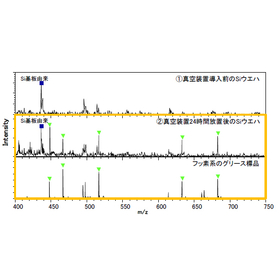
[Analysis Case] Contamination Analysis in Vacuum Equipment

It is possible to evaluate the causes of contamination in vacuum devices, such as oil backs and grease!

Vacuum devices that utilize the characteristic of low gas molecular density in a space are used in various applications such as thin film formation and surface analysis in the manufacturing process of electronic components. Since the chamber of a vacuum device is a closed space, the presence of trace amounts of molecules can easily cause contamination within the device. To suppress contamination, it is necessary to conduct investigations to identify contamination sources such as pumps, devices, and samples. This document presents a case study investigating contamination within a vacuum device using TOF-SIMS.

  • img_C0741_2.jpg
  • Contract measurement
  • Surface treatment contract service
  • Time-of-flight mass spectrometer
  • Mass spectrometer

Added to bookmarks

Bookmarks list

Bookmark has been removed

Bookmarks list

You can't add any more bookmarks

By registering as a member, you can increase the number of bookmarks you can save and organize them with labels.

Free membership registration

[Information] Rapid Identification of Microorganisms Using MALDI-TOF MS

Introduction to the principles, methods, specific examples of rapid microbial identification, as well as future challenges and applications in the food sector!

Today's food manufacturing is conducted in hygienically managed factories, where measures against foreign matter contamination and microbial contamination are important management issues. Packaging and containers utilize materials such as polymers, metals, and natural materials (like bamboo skin and leaves) that consider the characteristics of the food. Sterilization treatments, such as gamma irradiation, are performed as necessary to prevent microbial contamination. On the other hand, microorganisms adhering to food materials cannot be inspected visually and may proliferate after the product is filled. For more detailed information, please refer to the related catalog. [Contents (partial)] ■ Introduction ■ Overview and measurement principles of MALDI-TOF MS ■ Methods for identifying microorganisms using MALDI-TOF MS ■ Future challenges ■ Examples of applications in the food industry *For more details, please refer to the PDF document or feel free to contact us.

  • Other contract services
  • Sterilizer
  • Mass spectrometer

Added to bookmarks

Bookmarks list

Bookmark has been removed

Bookmarks list

You can't add any more bookmarks

By registering as a member, you can increase the number of bookmarks you can save and organize them with labels.

Free membership registration

Introduction to the Technical Note of the Mass Spectrometry Device ASTON

We will introduce various technical documents using the mass spectrometry device ASTON.

We would like to introduce a technical note using the mass spectrometer ASTON. < List of Technical Notes > 1. ASTON Technical Note_vol.2_Measurement of Krypton in Air 2. ASTON Technical Note_vol.3_Measurement of Tungsten Etching 3. ASTON Technical Note_vol.4_Reproducibility *Technical notes will be added as needed.

  • Other inspection equipment and devices
  • Mass spectrometer

Added to bookmarks

Bookmarks list

Bookmark has been removed

Bookmarks list

You can't add any more bookmarks

By registering as a member, you can increase the number of bookmarks you can save and organize them with labels.

Free membership registration

Precision mass spectrometry solutions for material release gases

Real-time precise mass analysis is possible.

By analyzing the behavior of gases that are released from materials when heated or generated through thermal decomposition, it is possible to understand the state of gas adsorption and chemical adsorption on the materials, as well as the thermal properties of the materials. Materials and products can emit gases when exposed to various conditions. These gases can, in some cases, affect the human body or cause defects in the quality and performance of products, potentially leading to issues even in trace amounts. Using the "infiTOF-UHV," it becomes possible to understand the behavior of desorbed gases in high-resolution mode. 【Features (infiTOF-UHV)】 ■ Multi-turn TOF analyzer ■ Real-time analysis with high resolution, resolution > 30,000 ■ Suitable for gas analysis, measurement range m/z 1 to 1,000 ■ Compact size for installation and measurement anywhere ■ Power supply operates at 100–230 VAC, 500W, ensuring energy efficiency without location constraints *For more details, please refer to the PDF document or feel free to contact us.

  • Analytical Equipment and Devices
  • Mass spectrometer

Added to bookmarks

Bookmarks list

Bookmark has been removed

Bookmarks list

You can't add any more bookmarks

By registering as a member, you can increase the number of bookmarks you can save and organize them with labels.

Free membership registration

[Application Data] Example of Analysis of Cationic Surfactants

Application to ion pair reagents! Analysis example using the "Solnac Tube" for desalting in LC/MS.

Surfactants that change their properties at interfaces have both "hydrophilic" and "lipophilic" structural components within a single molecule. The hydrophilic part of surfactants often contains highly polar acids or bases, so in HPLC analysis, it is also possible to use a mobile phase with added ion-pair reagents such as sodium dodecyl sulfate (SDS). As a sample, a mixed solution of cationic surfactants such as tetrabutylammonium chloride and cetylpyridinium chloride was used for LC/MS measurements. For details on conditions and analysis results, please download the catalog. 【LC Conditions (Partial)】 ■ Equipment: Agilent 1200 ■ Flow rate: 0.3 ml/min ■ Detector: UV (215 nm) ■ Sample: Each 2.5 ppm solution ■ Injection volume: 5 μL *For more details, please refer to the PDF document or feel free to contact us.

  • Tubes and hoses
  • Mass spectrometer

Added to bookmarks

Bookmarks list

Bookmark has been removed

Bookmarks list

You can't add any more bookmarks

By registering as a member, you can increase the number of bookmarks you can save and organize them with labels.

Free membership registration

Application Data: Example of Negative Ion Measurement by TFA Removal

Using the desalting tube "Solnac Tube" for LC/MS! Removing TFA and conducting negative ion measurement.

When analyzing acidic compounds using reversed-phase partition chromatography, an acidic mobile phase (set to a pH more than 2 units lower than the pKa of the analyte) may be used to suppress dissociation. Common acidic mobile phases suitable for use in LC/MS include acetic acid, formic acid, and trifluoroacetic acid (TFA), with TFA being appropriate for use at low pH. However, TFA is considered to have too high an acidity, which can lead to ionization suppression with almost 100% probability when detecting the analyte as a negative ion. TFA was removed from the eluent using a Solnac tube, and negative ion measurements were conducted. For details on conditions and analysis results, please download the catalog. 【LC Conditions (Partial)】 ■ Equipment: Agilent 1200 ■ Flow rate: 0.3 ml/min ■ Detector: UV (210 nm) ■ Sample: Tryptophan 20 ppm solution ■ Injection volume: 5 μL *For more details, please refer to the PDF document or feel free to contact us.

  • Tubes and hoses
  • Mass spectrometer

Added to bookmarks

Bookmarks list

Bookmark has been removed

Bookmarks list

You can't add any more bookmarks

By registering as a member, you can increase the number of bookmarks you can save and organize them with labels.

Free membership registration

Analysis of degradation products in lithium-ion batteries using IC-MS.

[Case Study] Identification of Degradation Byproduct Ion Species

Lithium-ion batteries (LiB) are important components in electric vehicles (EV) and many electronic devices. Their quality directly affects the performance of EVs and other devices. In this study, we conducted a comprehensive analysis of the degradation products of LiB anodes. By combining ion chromatography (IC) and high-resolution mass spectrometry (HRMS), we performed identification and structural analysis of the degradation products. The analysis utilized an IC system and a quadrupole mass spectrometer to collect high-resolution full scan MS and data-dependent MS/MS data of the degradation products, followed by component extraction and database searches. Component extraction was performed using software, and structural identification was conducted using a database. As a result, we successfully identified the degradation products and analyzed their structures, yielding new insights that contribute to the improvement of LiB performance. In particular, the use of HRMS data enabled clear identification of ion species of unknown degradation products, demonstrating significant contributions to quality control and performance enhancement of LiB. This research deepens the understanding of the degradation mechanisms of LiB and represents an important step toward future improvements in battery performance. For more details, please refer to the PDF.

Added to bookmarks

Bookmarks list

Bookmark has been removed

Bookmarks list

You can't add any more bookmarks

By registering as a member, you can increase the number of bookmarks you can save and organize them with labels.

Free membership registration

[Market Report] Global Market for Analytical Instruments

The global analytical instruments market is redefining accuracy and insights, predicting significant growth.

The global analytical instruments market reached a substantial size of 46.1 billion USD in 2022 and is poised to redefine accuracy and insights. With promising prospects for significant expansion, industry experts predict that this market will generate an impressive revenue of 83.9 billion USD by 2031. This surge forecast implies a remarkable compound annual growth rate (CAGR) of 6.89% during the forecast period from 2023 to 2031. Analytical instruments serve as the foundation for scientific discoveries, industrial innovations, and quality assurance across diverse fields such as pharmaceuticals, materials science, and environmental monitoring. These tools enable researchers, engineers, and professionals to unlock insights at the molecular level, enhancing the progress and accuracy of decision-making. You can check the application method by clicking the [PDF Download] button or apply directly through the related links.

  • others
  • Mass spectrometer

Added to bookmarks

Bookmarks list

Bookmark has been removed

Bookmarks list

You can't add any more bookmarks

By registering as a member, you can increase the number of bookmarks you can save and organize them with labels.

Free membership registration