1~45 item / All 233 items
Displayed results

Added to bookmarks
Bookmarks listBookmark has been removed
Bookmarks listYou can't add any more bookmarks
By registering as a member, you can increase the number of bookmarks you can save and organize them with labels.
Free membership registration
Contact this company
Inquiry Form1~45 item / All 233 items
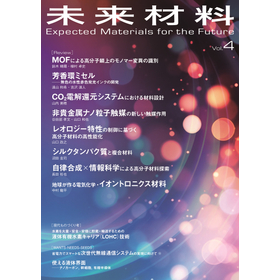
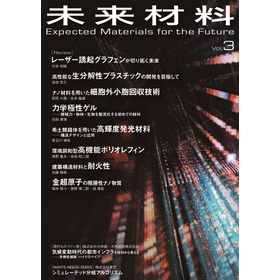
Foreword Exploration, Evaluation, and Biofunctionalization of Future Materials from the Perspective of Micro-Nano Technology Hiroyuki Fujita (Tokyo City University) Best Shot: Future Materials Unraveled Through Photography Design Principles of Heat-Resistant and Lightweight Metal Materials Created by Metal 3D Printing Technology Naoki Takada (Nagoya University) Contemporary Manufacturing Thoughts Liquid Organic Hydrogen Carrier (LOHC) Technology for Large-Scale, Safe, and Cost-Effective Hydrogen Storage and Transportation Yoshimi Okada (Chiyoda Corporation) Commentary Review Identification of Single Monomer Mutation on Polymer Chain Enabled by MOF Haruaki Suzuki & Takushi Uemura (The University of Tokyo) Others
Added to bookmarks
Bookmarks listBookmark has been removed
Bookmarks listYou can't add any more bookmarks
By registering as a member, you can increase the number of bookmarks you can save and organize them with labels.
Free membership registration
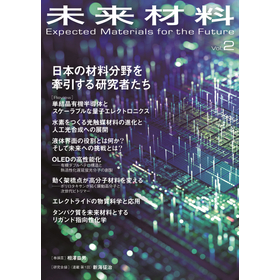
Foreword An 82-Year-Old Scholar Questions the Future Tetsuo Tsutsui (Emeritus Professor, Kyushu University) Best Shot: Exploring Future Materials through Photography Observing the Strings of Electron Spins and Their Movements with an Electron Microscope Xiu-Zhen Yu (RIKEN) Contemplating Modern "Manufacturing" Considering Urban Infrastructure in the Era of Climate Change from the Perspective of Materials ── Multifunctional Pavement "HydroPave" Hideo Sugimoto, Ryuhei Nagano, Kiyoshi Tokokawa (Obayashi Corporation) Hideo Fujii, Koichiro Ibaraki, Sakura Kakeda (Obayashi Road) Commentary Review The Future Unlocked by Laser-Induced Graphene Shaping the future with laser-induced graphene Kuniharu Takei (Hokkaido University) Others
Added to bookmarks
Bookmarks listBookmark has been removed
Bookmarks listYou can't add any more bookmarks
By registering as a member, you can increase the number of bookmarks you can save and organize them with labels.
Free membership registration
Foreword Reading one step ahead of the rapidly changing times, "Future Materials" Masuo Aizawa (Science and Technology International Exchange Center) Best Shot: Exploring Future Materials through Photography Materials used in the preservation and restoration of the Kitora Tomb murals Noriko Hayakawa (Tokyo National Research Institute for Cultural Properties) Contemporary Thoughts on "Manufacturing" The importance of greenhouse gas and water cycle observations from space by "Ibuki GW" Yasushi Kojima (Japan Aerospace Exploration Agency) Review Single-crystal organic semiconductors and scalable quantum electronics Junichi Taketani (The University of Tokyo) Evolution of photocatalytic materials for hydrogen production and their application to artificial photosynthesis Yosuke Kagejima & Kazunari Domei (Shinshu University) Others
Added to bookmarks
Bookmarks listBookmark has been removed
Bookmarks listYou can't add any more bookmarks
By registering as a member, you can increase the number of bookmarks you can save and organize them with labels.
Free membership registration
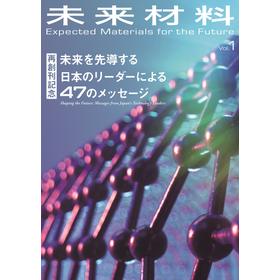
■Feature In Vol. 1, which marks the first step of a new beginning, we have received contributions from experts who have been active at the forefront of academia and industry, sharing their messages about the future of the materials field and the scientific community. The perspectives offered by various individuals from multiple fields will serve as inspiration and hints for the researchers who will carry the future, becoming a valuable part of Japan's relentless advancement in science and technology. We present the new beginning of "Future Materials," which aims to "pioneer the future of science and technology through interdisciplinary fusion," along with the wisdom of distinguished experts. ■Editorial Board <Chairperson> Ikuyoshi Tomita (Professor, Tokyo University of Science, Faculty of Materials Science and Technology) <Editorial Members> Kazunari Akiyoshi (Specially Appointed Professor, Graduate School of Medicine, Kyoto University | Emeritus Professor, Kyoto University) Masakazu Iwamoto (Visiting Researcher, Waseda University | Emeritus Professor, Tokyo Institute of Technology | Emeritus Professor, Hokkaido University) Nobuo Kimizuka (Specially Appointed Professor, Negative Emission Technology Research Center, Kyushu University) Takeshi Shiono (Visiting Professor, Graduate School of Advanced Science and Engineering, Hiroshima University | Emeritus Professor, Hiroshima University) Toshikazu Takada (Visiting Professor, Hiroshima University | Visiting Professor, Osaka Metropolitan University | Emeritus Professor, Tokyo Institute of Technology) ■Founding Chairperson Takeshi Endo (Emeritus Professor, Tokyo Institute of Technology)
Added to bookmarks
Bookmarks listBookmark has been removed
Bookmarks listYou can't add any more bookmarks
By registering as a member, you can increase the number of bookmarks you can save and organize them with labels.
Free membership registration
(1) "Studying Compatibility." (2) What is the Potential "Mind"? (3) Unraveling the "Compatibility" between Organizations and Individuals. This book redefines the relationship between organizations and individuals not as "fit" but as "resonance of vectors," presenting an attempt to geometrically visualize the invisible mind. Based on the mind vector composed of Knowledge (K), Intention (I), and Behavior (B), it mathematically elucidates the essence of compatibility using cosine similarity and dynamic trajectory analysis. It evolves human resource and organizational theory, which has relied on subjectivity and experience, into an explainable and reproducible "engineering of human understanding," explaining a new theoretical framework that realizes sustainable resonance between individuals and organizations. ■Main Contents Introduction: Prolegomena of Resonant Will Part 1: Conceptual Framework - Redefining P-O Fit Part 2: Measurement and Analysis - From Psychometrics to Mathematical Models Part 3: Implementation - Organizational Transformation through KIBI Part 4: Application and Practice - Resonance in Special Contexts Part 5: Future and Philosophy - Harmony of Free Vectors Special Appendix: Collection of Higher-Order Tensor Equations
Added to bookmarks
Bookmarks listBookmark has been removed
Bookmarks listYou can't add any more bookmarks
By registering as a member, you can increase the number of bookmarks you can save and organize them with labels.
Free membership registration
◇An overview of the world's energy and CO₂ in one book. ◇From oil to renewable energy—compare the current state of the world through graphs categorized by country, region, and type of energy. ◇A collection of global energy statistics to support decisions in policy, business, research, and education. This book is a systematic compilation of data based on the Energy Institute's "Statistical Review of World Energy 2026," organizing energy supply and consumption, electricity generation and capacity, and carbon dioxide (CO₂) emissions by country, region, and type of energy into graphs. What energy sources do different countries and regions depend on, how do they generate electricity, and how much CO₂ do they emit? Through six categories—oil, natural gas, coal, nuclear, hydro, and renewable energy—this resource allows for comparison and reference of their respective characteristics and differences. It serves as foundational material for energy and environmental policy, corporate business planning and market research, as well as research and education. ■Main Contents Introduction 1. Energy Supply and Consumption 2. Electricity Generation 3. Carbon Dioxide (CO₂) Emissions Appendix
Added to bookmarks
Bookmarks listBookmark has been removed
Bookmarks listYou can't add any more bookmarks
By registering as a member, you can increase the number of bookmarks you can save and organize them with labels.
Free membership registration
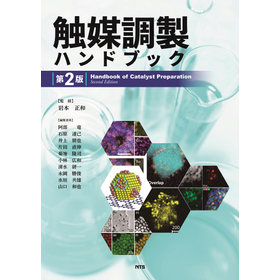
*Old Edition: "Handbook of Catalyst Preparation" (ISBN: 978-4-86043-377-2) [Only through reproducibility can science advance.] ◆ Reorganized from material groups to reaction types, supporting the investigation and exploration of catalysts suitable for specific reactions! ◆ Emphasizing "specific preparation methods" and "experimental reproducibility" inherited from the old edition, providing detailed explanations from background theory to specific operational procedures! ◆ Newly includes experimental methods such as solid catalysts, electrochemistry, adsorption, and quantum chemical calculations! ◆ An essential book for everyone involved in "making" catalysts, from students assigned to laboratories to researchers and engineers at the forefront of catalyst development! English Title Handbook of Catalyst Preparation, Second Edition
Added to bookmarks
Bookmarks listBookmark has been removed
Bookmarks listYou can't add any more bookmarks
By registering as a member, you can increase the number of bookmarks you can save and organize them with labels.
Free membership registration
◆ "Recipes," "Ingredients," "Cutting," "Heat Treatment (Boiling, Steaming, Stir-frying, Frying)," etc., scientifically explaining the secrets of deliciousness in each cooking process! ◆ Explanation of how to utilize cooking equipment! (OVEN, Microwave, Superheated Steam, 3D Food Printer, etc.) ◆ Detailed explanations of various cooking methods! (Low-temperature Cooking, Sous-vide Cooking, Molecular Cooking, etc.) ■ Main Table of Contents Part 1: Culinary Science Chapter 1: The Significance of Culinary Science Chapter 2: Methodology of Culinary Science Chapter 3: Analysis of Cooking Skills and Their Applications Part 2: Preparation and Preprocessing of Dishes Chapter 1: Recipe Development Chapter 2: Cutting Techniques and Deliciousness Part 3: Heat Treatment, Cooking, and Deliciousness Chapter 1: Characteristics of Heat Cooking Chapter 2: Stir-frying and Deliciousness Chapter 3: Frying and Deliciousness Chapter 4: Boiling and Deliciousness Chapter 5: Steaming and Deliciousness Chapter 6: Oven Cooking and Deliciousness Chapter 7: Microwave Cooking and Deliciousness Chapter 8: Superheated Steam Cooking and Deliciousness Chapter 9: Low-temperature Cooking and Deliciousness Chapter 10: Sous-vide Cooking and Deliciousness Chapter 11: Molecular Cooking and Deliciousness Chapter 12: Cooking with a 3D Printer and Deliciousness
Added to bookmarks
Bookmarks listBookmark has been removed
Bookmarks listYou can't add any more bookmarks
By registering as a member, you can increase the number of bookmarks you can save and organize them with labels.
Free membership registration
◇ Based on the impact of water quality, this book elucidates the deliciousness of various beverages (tea-based, fruit and vegetable drinks, carbonated drinks, coffee, dairy drinks, and others) using evidence-based methods. ◇ It outlines a scenario for the development of next-generation hit beverages utilizing instrumental analysis and sensory evaluation. Chapter 1: The Deliciousness of Beverages and Their Characteristics Chapter 2: The Deliciousness of Water Chapter 3: The Deliciousness of Tea-Based Beverages Chapter 4: The Deliciousness of Fruit and Vegetable Beverages Chapter 5: The Deliciousness of Carbonated Beverages Chapter 6: The Deliciousness of Coffee Chapter 7: The Deliciousness of Milk and Dairy Beverages Chapter 8: The Deliciousness of Other Beverages
Added to bookmarks
Bookmarks listBookmark has been removed
Bookmarks listYou can't add any more bookmarks
By registering as a member, you can increase the number of bookmarks you can save and organize them with labels.
Free membership registration
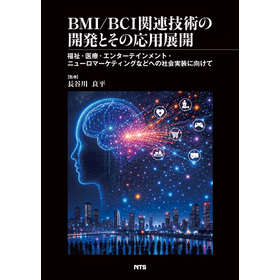
◇ An overview of BMI/BCI from measurement and analysis to medical and industrial applications, along with the latest research! ◇ A detailed explanation of the current state of BMI expanding into rehabilitation, welfare, and entertainment! ◇ A thorough explanation of the forefront of BMI implementation that supports patients. ■ Main Contents Introduction: The present, past, and future of BMI/BCI from the perspective of the supervisor Chapter 1: Key technologies for BMI development Chapter 2: Development of welfare devices Chapter 3: Development of medical devices Chapter 4: Cognitive training and entertainment Section 4: BMI using facial images and audio, along with application examples Chapter 5: Sensory evaluation technology Chapter 6: Clinical applications Chapter 7: Expectations for clinical and industrial applications of BMI
Added to bookmarks
Bookmarks listBookmark has been removed
Bookmarks listYou can't add any more bookmarks
By registering as a member, you can increase the number of bookmarks you can save and organize them with labels.
Free membership registration
◇How to measure and evaluate people's "pleasure/displeasure," "stress," and "sensibility" ◇No more need for expensive software! Start analyzing biological signals today with Excrl Worksee + example data ◇The correct way to measure and interpret biological signal data that dramatically enhances the reliability of product development involving human participation ◇A must-have data collection for researchers that includes all the "standards" and "methods" you want to know on-site ◇Buyer benefits! You can download Excel sample data! Chapter 1: Experimental Design and Number of Participants 1. Experimental Design 2. Participants (Statistical Power) 3. Ethical Review Chapter 2: Types of Biological Signals and Analysis Methods 1. Types of Biological Signals 2. Noise Countermeasures for Biological Signals 3. Setting Up Biological Amplifiers 4. Features of Biological Measurement Devices and A/D Conversion 5. Methods for Analyzing Biological Signals Chapter 3: Measurement and Analysis of Each Biological Signal Chapter 4: Statistical Processing
Added to bookmarks
Bookmarks listBookmark has been removed
Bookmarks listYou can't add any more bookmarks
By registering as a member, you can increase the number of bookmarks you can save and organize them with labels.
Free membership registration
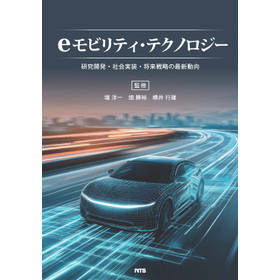
- Introduce national policies related to EVs and research and development trends in universities and companies, providing insights into the future of automobiles. - Explore the possibilities of realizing better transportation systems based on the latest research and development trends. - Envision the future of cars and transportation systems through new trends in CASE/MaaS, electrification policies and strategies, AI/ICT and social systems, and transportation businesses utilizing WPT. Part 1: Future Mobility Society Part 2: Electrification Strategy Part 3: Power Systems and Transportation Systems Part 4: Motion Control, Motors, and Power Electronics Part 5: Batteries and Capacitors Part 6: Wireless Power Transfer Part 7: Electrified Roads (Power Supply While Driving) Part 8: Education and Awareness - Towards the Future

Added to bookmarks
Bookmarks listBookmark has been removed
Bookmarks listYou can't add any more bookmarks
By registering as a member, you can increase the number of bookmarks you can save and organize them with labels.
Free membership registration
◆ The popular serialized column "Key Points of Experiments and Observations" from "Biological Science: Genetics" (published from 2016 to 2020) has been organized by field and compiled into a single, user-friendly volume! ◆ Science and biology teachers nationwide clearly explain the "key points" to avoid "failures" based on their field experiences! A practical guidebook for experiments to enhance the quality of learning! ◆ Experts thoroughly explain the concepts that are said to cause confusion in the field, such as "meiosis," "cell membrane bilayer," and "mechanisms of immunity" in the Special Column! [Part 1] Confirmation and Innovations in Basic Operations of Observational Experiments Explanations by researchers on the importance of fatty acids in biological membranes, meiosis, and the mechanisms of immunity Special Column-1 The Importance of Fatty Acids in Biological Membranes Special Column-2 How to Understand "Meiosis"? Special Column-3 Today's Immunology [Part 2] Key Points of Experimental Observations Cells Genetics and DNA Development and Morphogenesis Tissues and Organs Physiology of Biological Defense Biological Control Light Energy and Organisms [Part 3] Observing Organisms and Their Ecology in the Field Index
Added to bookmarks
Bookmarks listBookmark has been removed
Bookmarks listYou can't add any more bookmarks
By registering as a member, you can increase the number of bookmarks you can save and organize them with labels.
Free membership registration
◇ The "noise" and "vibration" of motors that cause performance degradation and failures in transportation equipment, machinery, and electronic devices. ◇ The author, who has been involved in motor research and development for many years, explains noise and vibration countermeasures in a Q&A format! Chapter 1: General Motor Noise and Vibration Chapter 2: Motor Electromagnetic Noise Chapter 3: Natural Frequencies of Motor Components Chapter 4: Ventilation Noise - Mechanism of Noise Generation - Chapter 5: Rotor Vibration Chapter 6: Motor Bearing Noise Chapter 7: CAE Structural Analysis of Motors Chapter 8: Measurement and Diagnostic Techniques for Motors Chapter 9: Solutions for Motor Noise and Vibration Troubles
Added to bookmarks
Bookmarks listBookmark has been removed
Bookmarks listYou can't add any more bookmarks
By registering as a member, you can increase the number of bookmarks you can save and organize them with labels.
Free membership registration
◇Systematically and in detail explain the necessary international rules and the latest trends in debris countermeasures for entering the space business! ◇From the perspective of space environment conservation, overview the current status of international rule-making and countermeasure technologies regarding the "space debris problem"! ◇Introduce the latest countermeasure technologies and codes of conduct necessary for sustainable space development! ◇Protect the Earth from space debris! Now is the time to systematically explain the current status of the orbital environment and its countermeasures! Introduction: The Current State of Space Utilization and the Potential of Space Business 〈Satoshi Kurosu〉 Part 1: The Latest Trends in International Legal Regulations and Rules Related to Space Activities Chapter 1: The Current Status of International Rule-Making in Space Business 〈Yu Takeuchi〉 Chapter 2: Legal Regulations and Rules Regarding Space Debris Chapter 3: The Current Status and Challenges of Responses to Space Debris in the Public and Private Sectors Chapter 4: The Impact of Military Activities on the Sustainability of Space Activities 〈Yasuhito Fukushima〉 Part 2: Technologies for Space Debris Countermeasures Chapter 1: Debris Observation Technologies Chapter 2: Generation of Debris and Its Impact Chapter 3: Debris Collision Defense Technologies Chapter 4: Development of Capture Satellites Chapter 5: Orbital Departure Technologies Chapter 6: Capture Technologies Chapter 7: Other Technologies Conclusion: Prospects for Space Business and Space Debris Countermeasures 〈Soichiro Kozuka〉
Added to bookmarks
Bookmarks listBookmark has been removed
Bookmarks listYou can't add any more bookmarks
By registering as a member, you can increase the number of bookmarks you can save and organize them with labels.
Free membership registration
◇Comprehensive coverage of the various systems and specific initiatives of representative countries in Europe, North America, and other regions. ◇Explanation of the emergence of new technologies and the activation of international collaboration. ◇Detailed analysis of trends in the United States, which leads the world, along with an introduction to related CCUS projects. 1. Executive Summary 2. Definitions of CCS/CCUS/DAC 3. Environmental destruction due to global warming 4. By region - Japan 4-II Japan's energy and CCS 4-II-2 Japan's CCS industry 4-II-2 Japan's CCS industry "Technology" 4-II-3 Japan's CCS industry DAC 4-II-4 Japan's CCS industry Demand Image 4-II-5 Japan's CCS industry Regulatory Matters 4-II-6 Entering Companies 5. By region - China, Southeast Asia, Australia 5. By region - China, 5. By region - Southeast Asia, Australia, Indonesia/Malaysia/Thailand/Australia 6. By region - EU 6-I Overall Europe 6-II Germany 6-III France 6-IV Norway, other EU 6-V United Kingdom 7. By region - United States 8. Trends of energy majors
Added to bookmarks
Bookmarks listBookmark has been removed
Bookmarks listYou can't add any more bookmarks
By registering as a member, you can increase the number of bookmarks you can save and organize them with labels.
Free membership registration
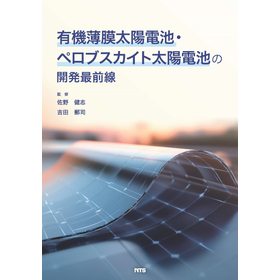
◇Maximizing the Power of the Sun! Following the Cutting Edge of Research and Development of Organic Thin-Film and Perovskite Solar Cells! Part 1: Organic Thin-Film Solar Cells Chapter 1: Material Development Chapter 2: Device Fabrication Technology and Device Physics Chapter 3: Peripheral Technologies Chapter 4: Applications of Organic Thin-Film Solar Cells Part 2: Perovskite Solar Cells Chapter 1: Elucidation of Power Generation, Degradation, and Efficiency Improvement Suppression Mechanisms Chapter 2: Film Formation Technology Chapter 3: Performance Enhancement Technology Chapter 4: Lead-Free Perovskite Solar Cells Chapter 5: Development of Tandem Solar Cells Chapter 6: Development of Quantum Dot Solar Cells Part 3: Common Fundamental Technologies Chapter 1: Measurement and Analysis Technologies Chapter 2: Efforts Towards Demonstration, Practical Use, and Space Applications Chapter 3: Manufacturing Process Development
Added to bookmarks
Bookmarks listBookmark has been removed
Bookmarks listYou can't add any more bookmarks
By registering as a member, you can increase the number of bookmarks you can save and organize them with labels.
Free membership registration
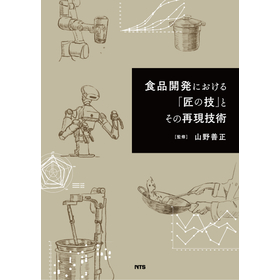
◇ A thorough explanation of the latest technology that analyzes, reproduces, and industrializes "artisan skills." ◇ Introduction to the latest trends in the development of cooking robots and cooking appliances! Chapter 1: Visualizing the Deliciousness of "Artisan Skills" Chapter 2: Large-Scale Cooking Technology Chapter 3: Development of Cooking Machines Chapter 4: Development of Cooking Robots Chapter 5: Development of Cooking Appliances Chapter 6: Case Studies of the Application of "Artisan Skills"
Added to bookmarks
Bookmarks listBookmark has been removed
Bookmarks listYou can't add any more bookmarks
By registering as a member, you can increase the number of bookmarks you can save and organize them with labels.
Free membership registration
◇ The miniaturization and high-density implementation of electronic devices are progressing, making "thermal design" even more important! ◇ Technologies for recovering, storing, transporting, and utilizing waste heat are also introduced! Chapter 1: Measurement Techniques for Heat Chapter 2: Development of Heat Dissipation and Cooling Materials Chapter 3: Thermal Design and Cooling Technologies Chapter 4: Recovery of Thermal Energy Chapter 5: Storage of Thermal Energy Chapter 6: Transportation of Thermal Energy Chapter 7: Waste Heat Utilization Technologies
Added to bookmarks
Bookmarks listBookmark has been removed
Bookmarks listYou can't add any more bookmarks
By registering as a member, you can increase the number of bookmarks you can save and organize them with labels.
Free membership registration
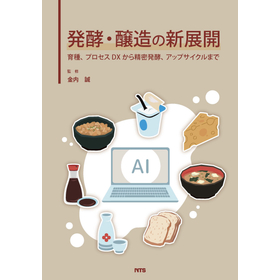
◇ An explanation of the latest research related to fermentation and brewing, as well as new manufacturing that integrates information science with a view toward the SDGs era! ◇ Development of fermentation and brewing technologies utilizing DX and AI, next-generation brewing plant systems ◇ Market trends and applications of the functionality and appeal of fermented and brewed foods, next-generation fermentation technologies, and precision fermentation technologies aimed at the production of specific substances ◇ A wide range of technologies from companies and researchers engaged in advanced initiatives such as upcycling through fermentation technology will also be introduced. Part 1: Latest research on major fermentation microorganisms Part 2: Breeding technologies Part 3: Automation of fermentation processes Part 4: Next-generation fermentation technologies Part 5: Functionality and appeal of fermented and brewed foods Part 6: Precision fermentation technologies Part 7: Upcycling through fermentation technology
Added to bookmarks
Bookmarks listBookmark has been removed
Bookmarks listYou can't add any more bookmarks
By registering as a member, you can increase the number of bookmarks you can save and organize them with labels.
Free membership registration
◇The basics are enriched so that those who will tackle odor issues from now on can acquire the necessary skills. ◇This is the definitive guide for solving problems in laboratories and on-site, incorporating questions posed to the instructors during technical consultations and seminars! Part 1: Basics (Q76) Part 2: Odor Collection Methods (Q32) Part 3: Odor Analysis (Q57) Part 4: Sensory Evaluation of Odors (Q15)
Added to bookmarks
Bookmarks listBookmark has been removed
Bookmarks listYou can't add any more bookmarks
By registering as a member, you can increase the number of bookmarks you can save and organize them with labels.
Free membership registration
◇Plastic films with a wide range of applications, including packaging for containers, automotive, and electronic components! ◇A detailed explanation of the fundamentals of rheology, film molding technology, and high functionality! ◇Introduction to simulation and evaluation technologies! Chapter 1: Trends in Film Molding Technology and High-Functionality Films Chapter 2: Fundamentals of Rheology Chapter 3: Development of Molding Machines Chapter 4: Materials for Film Molding Chapter 5: Development of Functional Materials and Functional Films Chapter 6: Film Molding Simulation and Evaluation Technologies
Added to bookmarks
Bookmarks listBookmark has been removed
Bookmarks listYou can't add any more bookmarks
By registering as a member, you can increase the number of bookmarks you can save and organize them with labels.
Free membership registration
◇The discovery and synthesis method became the reason for winning the Nobel Prize in Chemistry, attracting attention to the semiconductor, "quantum dots"! ◇Introduction to research on the applications of quantum dot displays, solar cells, lasers, light sources, quantum computers, and biomedicine!
Added to bookmarks
Bookmarks listBookmark has been removed
Bookmarks listYou can't add any more bookmarks
By registering as a member, you can increase the number of bookmarks you can save and organize them with labels.
Free membership registration
◇After 20 years of research, it finally bears fruit here! Introducing the latest applied research on how photonic crystals and photonic nanostructures are changing the possibilities of light! ◇A new era of photonic crystals and photonic nanostructures - experts in various fields explain their research results, from lasers to LiDAR and optical accelerators! Introduction: The history of photonic crystal research Chapter 1: Photonic crystal lasers Chapter 2: Chip-type photonic crystal LiDAR using silicon photonics Chapter 3: Research developments towards optoelectronic fusion accelerators utilizing photonic crystals Chapter 4: Topological photonics based on photonic crystals: fundamentals and waveguide applications Chapter 5: Fundamentals of new lens design and manufacturing utilizing metasurfaces
Added to bookmarks
Bookmarks listBookmark has been removed
Bookmarks listYou can't add any more bookmarks
By registering as a member, you can increase the number of bookmarks you can save and organize them with labels.
Free membership registration
◇Three-Dimensional Implementation Technology that Breaks Through the Limits of Miniaturization Chapter 1: Outlook and Challenges of Three-Dimensional Stacking Technology Chapter 2: Design Technology Chapter 3: TSV (Through-Silicon Via) Chapter 4: Bonding Technology Chapter 5: Interposer Chapter 6: Applications Chapter 7: Related Materials Chapter 8: Reliability
Added to bookmarks
Bookmarks listBookmark has been removed
Bookmarks listYou can't add any more bookmarks
By registering as a member, you can increase the number of bookmarks you can save and organize them with labels.
Free membership registration
◇Due to popular demand, we are urgently publishing the second report on "Chiplets," a semiconductor manufacturing technology that is gaining attention!! ◇As the division of design and manufacturing progresses through functional segmentation, we provide detailed information on a new business model called "Chiplet General Contractor," which oversees projects to combine multiple chiplets into a single product! ◇This book details how "small fabless design companies," which have been behind major corporations, can leverage their developed technologies and intellectual property as significant business opportunities, leading to collaboration with other companies and market entry! Chapter 1: Basics and Evolution of Chiplet Technology Chapter 2: The New Business Model of "Chip General Contractors" Chapter 3: Opportunities and Challenges for Small Fabless Design Companies - How "Small Design Power" is Changing the Semiconductor Ecosystem Chapter 4: Building the Chiplet Ecosystem Chapter 5: Case Study: Small Fabless Companies from Japan and Their Challenges Chapter 6: Future Scenarios and Business Strategies Chapter 7: A Future Map of the Semiconductor Industry from the Field Chapter 8: Future Directions for Small Fabless Companies (Engineers, Sales) in the Era of Chiplets
Added to bookmarks
Bookmarks listBookmark has been removed
Bookmarks listYou can't add any more bookmarks
By registering as a member, you can increase the number of bookmarks you can save and organize them with labels.
Free membership registration
◇The Cutting Edge of Hydrogen Combustion Technology Supporting a Decarbonized Society! ◇The Flame of Hydrogen Paving the Way to a Sustainable Energy Future Introduction: The Significance and Outlook of Hydrogen Utilization through Combustion Chapter 1: Fundamentals of Combustion Using Hydrogen Chapter 2: Hydrogen Combustion Burners and Boilers Chapter 3: Hydrogen Gas Turbines Chapter 4: Engines Using Hydrogen Chapter 5: Combustion Technologies Utilizing Hydrogen and Ammonia Chapter 6: Other Hydrogen Combustion-Related Technologies
Added to bookmarks
Bookmarks listBookmark has been removed
Bookmarks listYou can't add any more bookmarks
By registering as a member, you can increase the number of bookmarks you can save and organize them with labels.
Free membership registration
◇The definitive second edition of the highly praised "Biological Experiment Book" is here! ◇It includes all the serialized columns published from 2021 to 2025. ◇In the Special Column, experts explain topics such as "Earth Environment and Algal Bio" and "Genome Literacy and Educational Materials." ◇Visual pages feature "Formation of Fertilization Membrane and Development in Sea Urchins," "Morphological Changes in Meiosis Chromosomes," and "Observing Day 3 Chick Embryos"! 【Part I】Exploring the Transition from "Observation of Living Things" to "Inquiry" The spore discharge movement of Tsukushi (the spore stalk of Equisetum) Development of Sea Urchins—Confirming fertilization, cleavage, and larval stages in the laboratory Observation of Chicken Embryo Disks and Embryos—Connecting to the understanding of human development Innovative observation methods for Paramecium: "Stopping movement with edible film" 【Part II】Key Points for Experiments and Observations 【Cells】Simple observation methods for mitochondria that can be used in class—among others. 【Genes and DNA】Key points and innovations in recombinant DNA experiments—among others. 【Development and Morphogenesis】Advantages and applications of developmental experiments using Pacific oysters—among others. 【Tissues and Organs】Innovative methods for observing the tissues of diverse herbaceous plant leaves and flowers—among others. 【Part III】Observing the Outdoors (Natural World)
Added to bookmarks
Bookmarks listBookmark has been removed
Bookmarks listYou can't add any more bookmarks
By registering as a member, you can increase the number of bookmarks you can save and organize them with labels.
Free membership registration
◇The key to innovation lies in the "interface"! A comprehensive view of the technological evolution of next-generation biomaterials opened up by interface control! ◇Enabling "dialogue" with living organisms──The forefront of functional materials research opened up by understanding interfaces!
Added to bookmarks
Bookmarks listBookmark has been removed
Bookmarks listYou can't add any more bookmarks
By registering as a member, you can increase the number of bookmarks you can save and organize them with labels.
Free membership registration
◇From foundational technologies to higher-order functions, and then to the digitalization of the brain! A comprehensive view of the forefront of neuroscience. ◇From brain mapping to the dynamics of neural circuits, and then to digital transformation! Delving into the core of brain function dynamics. Part 1: Foundational Technologies in Brain Research Chapter 1: Brain Mapping Chapter 2: Molecular and Cellular Level Analysis Chapter 3: Imaging Technologies Part 2: Dynamics of Higher Brain Functions Chapter 1: Memory Network Mechanisms Chapter 2: Information Processing Mechanisms Chapter 3: Consciousness, Thought, and Cognition Mechanisms Chapter 4: Neural Circuit Dynamics Part 3: Digital Transformation of Brain Function and Ethics in Brain Research Chapter 1: Visualization and Quantification of Information through Data Integration Chapter 2: Development of Simulations Chapter 3: Modeling the Brain Chapter 4: Ethics in Neuroscience Research
Added to bookmarks
Bookmarks listBookmark has been removed
Bookmarks listYou can't add any more bookmarks
By registering as a member, you can increase the number of bookmarks you can save and organize them with labels.
Free membership registration
◇ A systematic explanation of the potential of ferroelectrics from materials, theory, and applications. A book that captures the new trends in materials science! ◇ The "now" and "future" of next-generation device development opened up by ferroelectrics. A systematic explanation of cutting-edge applied research! ◇ New trends in materials science - a systematic and detailed explanation of the entire landscape of ferroelectric research! Introduction: Latest trends in ferroelectric research contributing to Society 5.0 Part 1: Ferroelectrics and Material Development Chapter 1: Development of New Ferroelectrics Chapter 2: Synthesis of Ferroelectric Thin Films Part 2: Fundamental Research on Ferroelectrics Chapter 1: Observation Methods at the Nanoscale for Ferroelectrics Chapter 2: Characterization of Ferroelectric Properties Chapter 3: Mechanisms of Ferroelectric Property Emergence Chapter 4: Computational Science Part 3: Applied Research for Application Development Chapter 1: Development of Ferroelectric Memory and Transistors Chapter 2: Development of Energy Storage and Generation Devices Chapter 3: Others
Added to bookmarks
Bookmarks listBookmark has been removed
Bookmarks listYou can't add any more bookmarks
By registering as a member, you can increase the number of bookmarks you can save and organize them with labels.
Free membership registration
◇A detailed explanation of the latest research and technology of DLC, which continues to expand its applications in transportation equipment, machinery, electronic devices, tools, daily necessities, medical-related devices, and more! ◇Technological innovations over the past 20 years, along with new additions and introductions regarding ISO trends related to DLC from the previous edition! Chapter 1: Characteristics and Applications of DLC Chapter 2: Film Formation Methods, Film Structure, and Process Analysis of DLC Chapter 3: Practical Examples of DLC Chapter 4: Structural Analysis and Evaluation Chapter 5: Physical Properties and Evaluation of DLC Chapter 6: Future Prospects and Cutting-Edge Research on DLC Chapter 7: Latest Trends in ISO Standards
Added to bookmarks
Bookmarks listBookmark has been removed
Bookmarks listYou can't add any more bookmarks
By registering as a member, you can increase the number of bookmarks you can save and organize them with labels.
Free membership registration
◇ A definitive handbook on quantum technology covering everything from the principles of quantum to social implementation! ◇ A compass for quantum technology towards the "next 100 years"! Part 1: Fundamentals of Quantum Technology Part 2: Quantum Computing (Software) Part 3: Quantum Computing (Hardware) Part 4: Quantum Communication Part 5: Quantum Sensing Part 6: Quantum Materials and Foundational Technologies Part 7: Global Trends and Our Country's Initiatives
Added to bookmarks
Bookmarks listBookmark has been removed
Bookmarks listYou can't add any more bookmarks
By registering as a member, you can increase the number of bookmarks you can save and organize them with labels.
Free membership registration
◇Understand the trends in chiplets and advanced packaging that drive competitive advantage and investment opportunities! ◇A must-read for those who want to grasp the overall picture of core technologies that determine the competitiveness of semiconductors and their implementation and connection technologies, as well as AI hardware! Chapter 1: The Importance of Semiconductor Backend Processes in the AI Era Chapter 2: Overview of Advanced Packaging for AI Chapter 3: Chiplet Integration Technology and Interposers Chapter 4: High-Bandwidth Connection Technologies for HBM and Logic Chapter 5: Advanced Wiring, TSV, and Fine Bump Technologies Chapter 6: Optimization Technologies for Power and Signal Integrity (PDN/SI/PI) Chapter 7: Cutting-Edge Thermal Design, Heat Dissipation, and Cooling Technologies Chapter 8: Reliability and Yield Improvement Technologies in Backend Processes Chapter 9: Testing Technologies in the AI Era - KGD Assurance and Interposer Testing Chapter 10: Evolution of Material Technologies for Backend Processes Chapter 11: Optoelectronic Fusion I/O and Next-Generation Package Architecture Chapter 12: Conclusion: Backend Process Roadmap and the Future of AI Hardware
Added to bookmarks
Bookmarks listBookmark has been removed
Bookmarks listYou can't add any more bookmarks
By registering as a member, you can increase the number of bookmarks you can save and organize them with labels.
Free membership registration
◇ "Reducing Solvent × High Efficiency" achieved through mechanochemical reactions. Unraveling the current state of its societal implementation! ◇ Mechanochemical reactions are the next-generation process. An explanation of the latest trends in research and industry! ◇ The solid phase opens up next-generation processes. Clarifying the "current state" of mechanochemical reactions! Introduction: The potential and challenges of mechanochemical reactions in the SDGs era Part 1: Fundamentals of Mechanochemical Effects Chapter 1: Basics of Mechanochemistry Chapter 2: Dust explosions in mechanochemical processing and their prevention Part 2: Applied research and equipment development aimed at societal implementation Chapter 1: Mechanochemical effects and reaction processes Chapter 2: Mechanochemical reaction mechanisms and optimization Chapter 3: Material synthesis through mechanochemical reactions Chapter 4: Material development through mechanochemical reactions Chapter 5: Catalyst development through mechanochemical reactions Chapter 6: Recycling/environmental applications of mechanochemical reactions Chapter 7: Other applied research Chapter 8: Equipment introduction and case studies
Added to bookmarks
Bookmarks listBookmark has been removed
Bookmarks listYou can't add any more bookmarks
By registering as a member, you can increase the number of bookmarks you can save and organize them with labels.
Free membership registration
◇Origins and evolution of life, foundational technologies, microorganisms and synthetic biology ◇Applications of synthetic biology in industrial fields (healthcare, plants and agriculture, environment and material production) ◇Safety, ELSI, dual-use issues, and societal engagement Part 1: Basic Science of Synthetic Biology Chapter 1: Research on the origins and evolution of life and synthetic biology Chapter 2: Development and application research of foundational technologies in synthetic biology Chapter 3: Design and control of organisms through synthetic biology Part 2: Synthetic Biology and Microorganisms Chapter 1: Techniques for modifying microorganisms Chapter 2: Exploration and application of novel microorganisms Part 3: Applications of Synthetic Biology in Industrial Fields Chapter 1: Applications in healthcare and health Chapter 2: Applications in botany and agriculture Chapter 3: Applications in the environment and material production Chapter 4: Venture perspectives on synthetic biology Part 4: Engagement of Synthetic Biology with Society Chapter 1: Research related to ensuring the safety of synthetic biology Chapter 2: Synthetic biology and society
Added to bookmarks
Bookmarks listBookmark has been removed
Bookmarks listYou can't add any more bookmarks
By registering as a member, you can increase the number of bookmarks you can save and organize them with labels.
Free membership registration
◇ With the advancement of artificial intelligence, voice recognition and synthesis technology is making remarkable progress! ◇ Covering and explaining the latest technologies in voice recognition and synthesis, from the mechanisms of hearing and speech to future prospects! ◇ Packed with practical examples in entertainment, information, welfare, and more! ◇ Towards realizing communication for a richer life!! ■ Main Contents Introduction: Trends in Speech Processing Research and Future Prospects Part 1: Mechanisms of Hearing and Speech and the Latest Technologies in Voice Recognition and Synthesis Chapter 1: Mechanisms of Hearing and Speech Chapter 2: Latest Technologies in Voice Recognition Chapter 3: Latest Technologies in Voice Synthesis Part 2: Application Technologies for Voice Recognition, Synthesis, and Communication Chapter 1: Application Technologies for Voice Recognition Chapter 2: Application Technologies for Voice Synthesis Chapter 3: Communication Technologies Using Voice
Added to bookmarks
Bookmarks listBookmark has been removed
Bookmarks listYou can't add any more bookmarks
By registering as a member, you can increase the number of bookmarks you can save and organize them with labels.
Free membership registration
◇Performance, multifunctionality, low power consumption, low cost... semiconductors are one of the most essential materials for modern life, business, and social activities. ◇"Chiplets" are gaining attention as a new semiconductor manufacturing technology that leads to further miniaturization. ◇What are chiplets? An overview from advanced technologies to market forecasts. ◇This book provides insights into the current state of technology development aimed at solving challenges revealed by advancements in microfabrication technologies, such as development speed and yield! 1. What are chiplets? 2. Materials for chiplets 3. Structure of chiplets 4. Standardization of chiplets 5. Testing of chiplets 6. Market forecasts for chiplets 7. About chip general contractors (Appendix)
Added to bookmarks
Bookmarks listBookmark has been removed
Bookmarks listYou can't add any more bookmarks
By registering as a member, you can increase the number of bookmarks you can save and organize them with labels.
Free membership registration
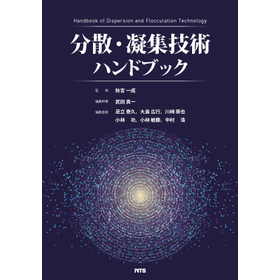
◇Covering dispersion and aggregation technologies from university research to various industrial fields, including environmental and biological areas. Part 1: Fundamental Principles Chapter 1: What are Dispersion and Aggregation? Chapter 2: History of Dispersion and Aggregation Chapter 3: Properties and Phenomena Related to Dispersion and Aggregation Chapter 4: Simulation of Dispersion and Aggregation Part 2: Measurement and Evaluation Chapter 1: Overview of Dispersion and Dispersion Stability Evaluation Chapter 2: Measurement and Evaluation Methods for Dispersion Chapter 3: Measurement and Evaluation Methods for Dispersion Stability Chapter 4: Experimental Measurement and Evaluation Methods for Interfacial Properties (Indirect Evaluation Methods for Dispersion/Dispersion Stability) Part 3: Synthesis of Fine Particles Chapter 1: Introduction Chapter 2: Hard Fine Particles Chapter 3: Soft Fine Particles Part 4: Industrial Applications Chapter 1: Energy and Electronics Chapter 2: Coating Materials and Colorants Chapter 3: Agriculture and Environmental Fields Chapter 4: Food Industry Chapter 5: Biotechnology Part 5: Colloid Aggregation and Dispersion in Advanced Science Chapter 1: Nano Carbon Chapter 2: Cellulose Nanofibers Chapter 3: Colloidal Crystals (Space) Chapter 4: Stabilized Emulsions of Fine Particles, Liquid Marbles Chapter 5: Microorganisms and Aggregation Chapter 6: Molecular Aggregation and Luminescence
Added to bookmarks
Bookmarks listBookmark has been removed
Bookmarks listYou can't add any more bookmarks
By registering as a member, you can increase the number of bookmarks you can save and organize them with labels.
Free membership registration
This book allows you to understand the challenges faced by society. You can learn chemistry effortlessly, without the need for memorization or experiencing any rejection. ■Original work: 'Chemistry in Context: Applying Chemistry to Society, Tenth Edition' (McGraw-Hill College; Lab Manual edition, 2020) ■Original work edited by: A Project of the American Chemical Society
Added to bookmarks
Bookmarks listBookmark has been removed
Bookmarks listYou can't add any more bookmarks
By registering as a member, you can increase the number of bookmarks you can save and organize them with labels.
Free membership registration
A detailed explanation of the fundamentals of drying engineering, equipment, evaluation, and application examples! A systematic and detailed explanation of the drying process, which is essential in the manufacturing industry! Drying and solidification of liquid and paste materials. Heat and mass transfer phenomena in wet materials. Rich in case studies!
Added to bookmarks
Bookmarks listBookmark has been removed
Bookmarks listYou can't add any more bookmarks
By registering as a member, you can increase the number of bookmarks you can save and organize them with labels.
Free membership registration
A systematic and detailed explanation of the various survival strategies exhibited by plants, along with the astonishing mechanisms of multidimensional communication between plants, plants and fungi, and plants and microorganisms! Listening to the voice of nature. An overview of the latest research trends in plant communication! Towards future ecosystems. Exploring the multidimensional dialogue of plants and examining the possibilities for agricultural applications!
Added to bookmarks
Bookmarks listBookmark has been removed
Bookmarks listYou can't add any more bookmarks
By registering as a member, you can increase the number of bookmarks you can save and organize them with labels.
Free membership registration
○Genetic Creatures Library No.3 "Biology of Thoroughbreds - The Secret of Racehorse Speed" ■Supervised by: Akihiro Tosaki ■Published by: NTS ◆Photo Gallery The Science of Thoroughbred Racehorses - The Secrets of Why Thoroughbreds Can Run Fast ◆Biology of Thoroughbreds General Overview: Horse Racing and Thoroughbreds - How Horse Racing Creates and Nurtures Racehorses 1. Definition of Thoroughbreds - Registration of Bloodlines and Genetic Testing 2. Coat Colors of Thoroughbreds - Understanding Coat Colors from Genetic Information 3. The Relationship Between Genetic Polymorphisms and Behavioral Traits in Horses - The "Personality" of Horses Created by Genes 4. Racing Ability of Thoroughbreds and Genes - Towards Producing Faster Horses 5. Raising and Training Thoroughbreds - Allowing Riding and Debuting as Racehorses 6. Running Ability of Thoroughbreds - All Adaptations for Running Fast 7. Sensory Functions of Horses and Focus on Racing - Controlling Vision and Hearing with Equipment for Athlete Survival 8. Breeding and Production of Thoroughbreds - Unique Production Management of Thoroughbreds 9. The Future of Retired Racehorses - Utilization of Thoroughbreds ◆Races and Work About the Stewards Involved in Horse Racing Events
Added to bookmarks
Bookmarks listBookmark has been removed
Bookmarks listYou can't add any more bookmarks
By registering as a member, you can increase the number of bookmarks you can save and organize them with labels.
Free membership registration
■Supervised by: Tetsushi Kusuda ■Published by: NTS ◆The Biology of the Shoebill The biology and conservation of the shoebill Classification of the shoebill ─ Was the "strange stork" of one family and one species an ancestor of pelicans? Ecology of the shoebill ─ A fish-eating lifestyle in wetlands Tracking wild shoebills in their habitat in Uganda Morphology of the shoebill ─ The role of its large beak and long legs Various methods of sex determination in birds and DNA-based sex determination in shoebills The first shoebill in Japan ─ A challenge to early breeding research The history and current status of shoebill care at Ueno Zoo Cases of shoebill egg-laying in Japanese zoos Visiting the Pairi Daiza Zoo in Belgium, where shoebill breeding has been successful New challenges in shoebill exhibition and breeding ─ Aiming for success in the Asian region Challenges in understanding reproductive physiology for breeding shoebills in captivity Conservation activities for shoebills at the Uganda Wildlife Conservation Education Centre ─ The role of zoos in their habitat Meeting shoebills across Japan ◆Photo Gallery ◆Contribution: The charm of the shoebill and tips for photography ◆Individual Library ◆Taxidermy and Skeleton Library
Added to bookmarks
Bookmarks listBookmark has been removed
Bookmarks listYou can't add any more bookmarks
By registering as a member, you can increase the number of bookmarks you can save and organize them with labels.
Free membership registration
"Comprehensive Guide to Corrosion Prevention Technology for Metallic Materials - From Basics to AI Technology" - "Corrosion" that could lead to serious accidents in various equipment and transportation! - An explanation of the mechanisms of corrosion, details of various corrosion phenomena, lifespan prediction, and sensing, detection, and monitoring technologies! - Additionally, the development of corrosion-resistant materials and corrosion prevention and maintenance technologies will also be introduced! ■ Supervised by: Fumio Kajiyama ■ Published by: NTS Preface: The Importance of Corrosion Prevention and the Role of This Book Chapter 1: Trends in International Standards in the Field of Corrosion Chapter 2: Corrosion Phenomena Chapter 3: Corrosion Testing Chapter 4: Lifespan Prediction Chapter 5: Corrosion Sensing, Detection, and Monitoring Technologies for Structures Chapter 6: Development of Corrosion-Resistant Materials Chapter 7: Corrosion Prevention and Maintenance Technologies for Metals and Structures
Added to bookmarks
Bookmarks listBookmark has been removed
Bookmarks listYou can't add any more bookmarks
By registering as a member, you can increase the number of bookmarks you can save and organize them with labels.
Free membership registration