iPROS Manufacturing
  • Search for products by classification category

    • Electronic Components and Modules
      Electronic Components and Modules
      58816items
    • Machinery Parts
      Machinery Parts
      74119items
    • Manufacturing and processing machinery
      Manufacturing and processing machinery
      98592items
    • Scientific and Physics Equipment
      Scientific and Physics Equipment
      34128items
    • Materials
      Materials
      36654items
    • Measurement and Analysis
      Measurement and Analysis
      54216items
    • Image Processing
      Image Processing
      14955items
    • Control and Electrical Equipment
      Control and Electrical Equipment
      52391items
    • Tools, consumables, and supplies
      Tools, consumables, and supplies
      64067items
    • Design and production support
      Design and production support
      12309items
    • IT/Network
      IT/Network
      42971items
    • Office
      Office
      13653items
    • Business support services
      Business support services
      33063items
    • Seminars and Skill Development
      Seminars and Skill Development
      6076items
    • Pharmaceutical and food related
      Pharmaceutical and food related
      28285items
    • others
      72641items
  • Search for companies by industry

    • Manufacturing and processing contract
      7346
    • others
      5009
    • Industrial Machinery
      4419
    • Machine elements and parts
      3280
    • Other manufacturing
      2884
    • IT/Telecommunications
      2546
    • Trading company/Wholesale
      2470
    • Industrial Electrical Equipment
      2301
    • Building materials, supplies and fixtures
      1813
    • software
      1637
    • Electronic Components and Semiconductors
      1564
    • Resin/Plastic
      1487
    • Service Industry
      1438
    • Testing, Analysis and Measurement
      1130
    • Ferrous/Non-ferrous metals
      985
    • environment
      702
    • Chemical
      629
    • Automobiles and Transportation Equipment
      560
    • Printing Industry
      509
    • Information and Communications
      452
    • Consumer Electronics
      417
    • Energy
      325
    • Rubber products
      313
    • Food Machinery
      305
    • Optical Instruments
      279
    • robot
      270
    • fiber
      250
    • Paper and pulp
      233
    • Electricity, Gas and Water Industry
      169
    • Pharmaceuticals and Biotechnology
      167
    • Warehousing and transport related industries
      146
    • Glass and clay products
      141
    • Food and Beverage
      129
    • CAD/CAM
      124
    • retail
      109
    • Educational and Research Institutions
      106
    • Medical Devices
      102
    • Ceramics
      97
    • wood
      89
    • Transportation
      83
    • Medical and Welfare
      63
    • Petroleum and coal products
      62
    • Shipbuilding and heavy machinery
      52
    • Aviation & Aerospace
      47
    • Fisheries, Agriculture and Forestry
      41
    • equipment
      30
    • Public interest/special/independent administrative agency
      29
    • self-employed
      24
    • Research and development equipment and devices
      23
    • Government
      21
    • Materials
      21
    • Mining
      17
    • Finance, securities and insurance
      13
    • Individual
      10
    • cosmetics
      10
    • Restaurants and accommodations
      9
    • Police, Fire Department, Self-Defense Forces
      7
    • Raw materials for reagents and chemicals
      3
    • Laboratory Equipment and Consumables
      3
    • Contracted research
      3
  • Special Features
  • Ranking

    • Overall Products Ranking
    • Overall Company Ranking
Search for Products
  • Search for products by classification category

  • Electronic Components and Modules
  • Machinery Parts
  • Manufacturing and processing machinery
  • Scientific and Physics Equipment
  • Materials
  • Measurement and Analysis
  • Image Processing
  • Control and Electrical Equipment
  • Tools, consumables, and supplies
  • Design and production support
  • IT/Network
  • Office
  • Business support services
  • Seminars and Skill Development
  • Pharmaceutical and food related
  • others
Search for Companies
  • Search for companies by industry

  • Manufacturing and processing contract
  • others
  • Industrial Machinery
  • Machine elements and parts
  • Other manufacturing
  • IT/Telecommunications
  • Trading company/Wholesale
  • Industrial Electrical Equipment
  • Building materials, supplies and fixtures
  • software
  • Electronic Components and Semiconductors
  • Resin/Plastic
  • Service Industry
  • Testing, Analysis and Measurement
  • Ferrous/Non-ferrous metals
  • environment
  • Chemical
  • Automobiles and Transportation Equipment
  • Printing Industry
  • Information and Communications
  • Consumer Electronics
  • Energy
  • Rubber products
  • Food Machinery
  • Optical Instruments
  • robot
  • fiber
  • Paper and pulp
  • Electricity, Gas and Water Industry
  • Pharmaceuticals and Biotechnology
  • Warehousing and transport related industries
  • Glass and clay products
  • Food and Beverage
  • CAD/CAM
  • retail
  • Educational and Research Institutions
  • Medical Devices
  • Ceramics
  • wood
  • Transportation
  • Medical and Welfare
  • Petroleum and coal products
  • Shipbuilding and heavy machinery
  • Aviation & Aerospace
  • Fisheries, Agriculture and Forestry
  • equipment
  • Public interest/special/independent administrative agency
  • self-employed
  • Research and development equipment and devices
  • Government
  • Materials
  • Mining
  • Finance, securities and insurance
  • Individual
  • cosmetics
  • Restaurants and accommodations
  • Police, Fire Department, Self-Defense Forces
  • Raw materials for reagents and chemicals
  • Laboratory Equipment and Consumables
  • Contracted research
Special Features
Ranking
  • Overall Products Ranking
  • Overall Company Ranking
  • privacy policy
  • terms of service
  • About Us
  • Careers
  • Advertising
  1. Home
  2. Machine elements and parts
  3. 萬代 本社
  4. Product/Service List
Machine elements and parts
  • Added to bookmarks

    Bookmarks list

    Bookmark has been removed

    Bookmarks list

    You can't add any more bookmarks

    By registering as a member, you can increase the number of bookmarks you can save and organize them with labels.

    Free membership registration

萬代 本社

addressHyogo/Nishi-ku, Kobe-shi/1072-1 Juwamachi, Ikawadani
phone078-978-6166
  • Special site
  • Official site
last updated:Mar 19, 2025
萬代logo
  • Contact this company

    Inquiry Form
  • Before making an inquiry

    Download Profile
  • Company information
  • Products/Services(251)
  • catalog(43)
  • news(1)

萬代 Product Lineup

  • category

91~135 item / All 146 items

Displayed results

Filter by category

We will solve problems like this. We will solve problems like this.
What is the Hometown Processing Network? What is the Hometown Processing Network?
Looking for a manufacturer. Looking for a manufacturer.
Major component manufacturer Major component manufacturer
What kind of machinery parts trading company is Bandai aiming for? What kind of machinery parts trading company is Bandai aiming for?
Delivery performance Delivery performance
Blog Blog
Blog

Blog

We would like to introduce our "blog."

What is a planetary gear? 3 key points even new employees can understand [Speed Increase & Reverse]

The key to control is "where to move and where to stop" — the true capabilities of the planetary mechanism.

In the previous content, we explained the purpose, features, and basic structure of the planetary gear mechanism. This time, as a conclusion, we will introduce the mechanisms of "speed increase" and "reverse" that occur when the sun gear and planetary carrier are fixed. The operation of the planetary gear mechanism changes significantly depending on which component is fixed and where the input and output are taken. In this presentation, we use still images to clearly organize the movement of the gears and their relationships while explaining the structural points. The planetary gear mechanism can control not only the reduction but also the rotation speed and direction. Please take a look at the high applicability hidden within its simple structure. *For more detailed content, you can view it through the related links. For more information, please download the PDF or feel free to contact us.

Added to bookmarks

Bookmarks list

Bookmark has been removed

Bookmarks list

You can't add any more bookmarks

By registering as a member, you can increase the number of bookmarks you can save and organize them with labels.

Free membership registration

What is a planetary gear? Two key points that even new employees can understand [Structure and Principle]

The order in which power is transmitted and the mechanism of deceleration—understanding the "structure" changes your perspective.

In the previous installment, we introduced the theme "What is a Planetary Gear?" in an easy-to-understand manner, covering its purpose and features. This time, as a continuation, we will explain the structure of the planetary gear mechanism and how the reduction is achieved. The planetary gear mechanism consists of three gears: the sun gear, the planet gears, and the ring gear. By fixing one of these, we can create movements such as reduction, reversal, and acceleration. This time, we will focus on the representative "reduction structure with the ring gear fixed" and explain how each gear takes on power and what roles they play. Particularly noteworthy is the complex motion of the planet gears, which both "rotate" and "orbit." This movement is the key to enabling a compact and highly efficient reduction mechanism. By understanding the workings of planetary gears, your perspective on design and selection should change as well. Please be sure to read to the end! *For more detailed content, you can view it through the related links. For more information, please feel free to download the PDF or contact us.

Added to bookmarks

Bookmarks list

Bookmark has been removed

Bookmarks list

You can't add any more bookmarks

By registering as a member, you can increase the number of bookmarks you can save and organize them with labels.

Free membership registration

Planetary Gear: Key Points for New Employees 1 [Purpose and Features]

The reason why the reducer fits compactly is explained by the planetary gear.

One of the particularly important keywords in the high-rigidity reducer "UXIMO" from Nissay, which we introduced last time, is "planetary gear." Immediately, a question came from within the company—specifically from our new employee, Mr. O. "What is a planetary gear?" Even if many have heard of mechanical terms, there are likely many who do not fully understand them. Therefore, this time, we have gently explained the purpose and characteristics of planetary gears. Why are planetary gears chosen in situations where a compact reduction mechanism is required? By grasping that "reason," the "structural edition" we will introduce next time will surely become clearer! *You can view the detailed content of the blog through the related links. For more information, please download the PDF or feel free to contact us.

Added to bookmarks

Bookmarks list

Bookmark has been removed

Bookmarks list

You can't add any more bookmarks

By registering as a member, you can increase the number of bookmarks you can save and organize them with labels.

Free membership registration

The new high-rigidity, short-lead-time reduction gear "UXIMO" is now available from Nissei!

"High rigidity × hollow × short delivery time" - that is the strength of UXIMO.

We are the authorized sales agent for the manufacturer "Nissei," whose main product is gear motors. This time, we would like to introduce the **new product "UXIMO"** that was highly recommended by the Nissei representative, as it is very appealing! UXIMO is a high-rigidity, large-diameter hollow type reducer, a new model released in 2021 aimed at joint axis applications. It employs a planetary gear structure utilizing an eccentric oscillating crankshaft internally. This resolves the issues of low rigidity and shaft diameter limitations that have been challenges in conventional reducers, greatly expanding design flexibility. Moreover, the delivery time is as short as one month. While competing manufacturers take over six months, we have a significant advantage in terms of speed of implementation. The pricing is also comparable to competitors, and through our agency, it can be even more advantageous...!? If you are interested in robots, AGVs, positioners, or similar products, please feel free to contact us! *For more details, you can view the blog through the related link. For further information, please download the PDF or feel free to reach out to us.*

Added to bookmarks

Bookmarks list

Bookmark has been removed

Bookmarks list

You can't add any more bookmarks

By registering as a member, you can increase the number of bookmarks you can save and organize them with labels.

Free membership registration

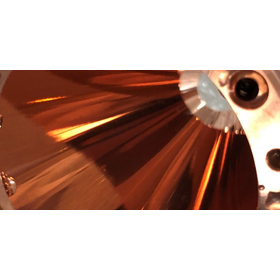
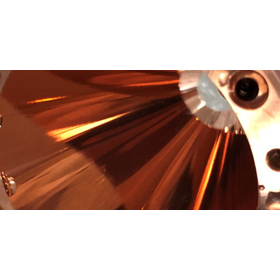
Will it get scratched during inspection!? The reality of tough pitch copper 'ultra-fine processing'

Achieving a surface roughness of Ra0.1 with copper. What lies ahead is "technology" and "trust."

Tough pitch copper—this material, which is particularly difficult to process even among pure copper, has seen an increase in prototype requests. The reason lies in the characteristics sought by customers. It is not the high thermal conductivity, but rather the high surface roughness requirements aimed at "light reflectivity." However, this copper is soft, ductile, and prone to copper powder adhering to cutting tools, making the processing conditions extremely strict. When a surface roughness of Ra0.1 is required, meticulous attention is needed to avoid processing deformation and ensure finishing quality. Our company can provide proposals and responses that take into account processing know-how and inspection processes. In fact, we handle it with extremely careful processes, such as separately processing dedicated samples to prevent inspection scratches. If you are struggling with fine processing of pure copper, please feel free to consult us. Our accumulated know-how and "Hometown Processing Network" will surely be of assistance to you. *This type of response is just a small part of the initiatives that Bandai engages in daily. Please take a look at the value we can offer to our customers.

Added to bookmarks

Bookmarks list

Bookmark has been removed

Bookmarks list

You can't add any more bookmarks

By registering as a member, you can increase the number of bookmarks you can save and organize them with labels.

Free membership registration

Leave the bending processing of steel pipes and round iron bars to us! We will propose the optimal method according to your conditions.

"Not whether it can be bent, but how it can be bent." The processing method changes depending on the conditions.

"Can you bend this?" This is a common inquiry we receive regarding the processing of steel pipes and round bars, but there are many underlying conditions such as bend radius, total length, diameter, wall thickness, tolerances, lot numbers, and whether there are subsequent processes involved. At Bandai, we assess the optimal method from multiple processing techniques, including NC pipe benders, press brakes, single-action presses, and burner heating, and provide proposals accordingly. Even in cases where bending as per the drawing is not possible, we can respond with proposals that are **"not constrained by processing,"** such as welding and assembly. Additionally, assembly support involving drilling, end processing, and welding can be handled seamlessly through our **"Hometown Processing Network."** From prototypes to mass production and complex processes, please feel free to consult us! *Please note that this type of response is just a small part of what Bandai does on a daily basis. We invite you to see the value we can provide to our customers.*

Added to bookmarks

Bookmarks list

Bookmark has been removed

Bookmarks list

You can't add any more bookmarks

By registering as a member, you can increase the number of bookmarks you can save and organize them with labels.

Free membership registration

Preventing recurrence and improving starts with "Why?" — Five questions to strengthen your thinking skills.

The misalignment of measures is due to the shallow exploration of the causes. By repeatedly asking questions, the essence becomes clear.

Are you familiar with "5 Whys Analysis"? It is a method of identifying the "essential cause" rather than just the superficial cause by repeatedly asking "why?" five times in response to troubles or challenges. In the past, when I was in charge of a medical device manufacturer, I had a bitter experience where the lack of depth in this analysis led to ineffective recurrence prevention measures. Even answers that seem reasonable at first glance can turn out to be off the mark when explored from different angles. Nowadays, companies like Toyota are utilizing "5 Whys Analysis" not only in inventory and brand strategies but also in various situations, highlighting the demand for "thinking skills" beyond just technical fields. This time, I will focus on this "5 Whys Analysis" and share tips for applying it to recurrence prevention and business improvement! *For more details, you can view the blog through the related link. For more information, please feel free to download the PDF or contact us.

Added to bookmarks

Bookmarks list

Bookmark has been removed

Bookmarks list

You can't add any more bookmarks

By registering as a member, you can increase the number of bookmarks you can save and organize them with labels.

Free membership registration

You can't see it in the equipment list—"live information" creates cost advantages.

Knowing the strengths and weaknesses of manufacturers is the strength of Bandai.

Is it too good to be true to be 'cheap, fast, and good'? — No, there are proper 'reasons' for it. We will delve into the 'secret of the low cost' of the 'Hometown Processing Network' that we introduced earlier. The key lies with H, a professional in welding and prototype processing. By maximizing their strengths in can manufacturing, they optimized costs through reduced setup times and improved processing efficiency. Identifying the 'strengths and weaknesses' that cannot be discerned from equipment lists or websites and ensuring optimal matching is the true essence of Bandai. We would like to present practical examples that those who want to maintain high quality while keeping costs down should definitely read. *Such efforts are just a small part of what Bandai does on a daily basis. Please take a look at the value we can provide to our customers.

Added to bookmarks

Bookmarks list

Bookmark has been removed

Bookmarks list

You can't add any more bookmarks

By registering as a member, you can increase the number of bookmarks you can save and organize them with labels.

Free membership registration

Can 'beautiful' and 'cheap' coexist? The professional craftsmanship behind canned products.

Is spot welding insufficient? The option of "auxiliary TIG" that proved effective in the can manufacturing field.

"Impressed by the beautiful finish" "This quality at this price? Isn't it too cheap?" — The surprising feedback we received was for a canning product made from SUS304 thin plates (φ400) with spot welding. The drawing only specified spot welding, but we proposed a unique solution by first applying TIG welding as a distortion countermeasure and then adding spot welding as a supplement, achieving both strength and appearance. The value of this "extra effort" resonates with customers who are particular about quality. What are the reasons behind our processing know-how that can handle small lots and high difficulty, as well as our price competitiveness? This is a must-see case for those struggling with SUS canning or considering VA/VE design! *Such efforts are just a small part of what Bandai does every day. Please take a look at the value we can provide to our customers.

Added to bookmarks

Bookmarks list

Bookmark has been removed

Bookmarks list

You can't add any more bookmarks

By registering as a member, you can increase the number of bookmarks you can save and organize them with labels.

Free membership registration

3-axis and 5-axis machining selection criteria are the optimization of "shape" and "cost."

Simultaneous 5-axis, indexed 5-axis, 3-axis — what influences machining accuracy, man-hours, and costs is the "selection eye."

"I thought standard machining was 5-axis" — This remark from a new employee during on-the-job training prompted us to organize the differences between 3-axis and 5-axis machining machines and the criteria for their selection. 5-axis machining machines have a configuration that adds two axes of tilt and rotation to the three axes of the spindle, making them strong in multi-surface machining and complex curved surface machining with one chucking. On the other hand, there are many cases where 3-axis machining is sufficient depending on the machining content, and choosing 5-axis can lead to excessive investment in terms of both man-hours and costs. It is necessary to select equipment according to the differences in mechanisms such as simultaneous 5-axis and indexing 5-axis, as well as the workpiece shape and precision requirements. The "Hometown Processing Network" not only provides equipment specifications but also offers optimal matching proposals based on the machining content! *This kind of response is just a small part of the efforts that Bandai engages in daily. Please take a look at the value we can provide to our customers.

Added to bookmarks

Bookmarks list

Bookmark has been removed

Bookmarks list

You can't add any more bookmarks

By registering as a member, you can increase the number of bookmarks you can save and organize them with labels.

Free membership registration

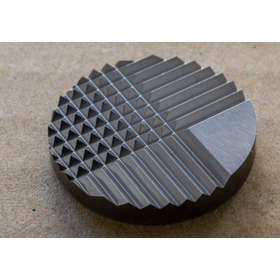
Is it really possible with machining? The reality of selection changes with drawings and processing equipment.

Processing that can be done with 3 axes, and processing that is difficult without 5 axes. Recognizing that difference requires "understanding of the equipment" and "the eyes of the site."

Have you ever looked at a drawing and thought, "Can't this be processed with machining?" In reality, if you make a mistake in selecting the processing machine, it can have a significant impact on cost and delivery time. In this blog, we will focus on the differences between 3-axis and 5-axis machining centers and discuss the "key points for determining processing methods." For example, consider a shape like a "round groove" on the outer circumference—at first glance, it may seem like machining could handle it, but the "φ" symbol on the drawing indicates dimensions based on lathe processing. It requires the ability to correctly assess the compatibility between the equipment and the shape. How to interpret the constraints of the site that are not visible in the design and the strengths and weaknesses of the machines—this is the first step toward making accurate processing proposals. Understanding the equipment and collaborating with the processing site helps prevent things from going "off the drawing." This content is something we would like not only young professionals but also those in design and technical departments to read! *Such responses are just a small part of the efforts that Bandai engages in daily. Please take a look at the value we can provide to our customers.
Added to bookmarks

Bookmarks list

Bookmark has been removed

Bookmarks list

You can't add any more bookmarks

By registering as a member, you can increase the number of bookmarks you can save and organize them with labels.

Free membership registration

Many major agricultural machinery manufacturers are hiring. A specialized system for leaf springs ensures stable supply.

From mold to heat treatment, everything is completed in-house. That's why both quality and delivery times are consistent.

The "leaf spring," which is essential for agricultural machinery, may not stand out in appearance, but it is a high-performance component that requires durability, the ability to handle repeated loads, and a stable spring constant. At Bandai, we collaborate with specialized processing companies that have a track record of working with major agricultural machinery manufacturers, including companies K, Y, and I, in the production of leaf springs. Our manufacturing system is characterized by the ability to complete all processes in-house, from material selection to press mold production, blank processing, bending, and hardening. This integrated management system enables us to respond quickly from mold setup to mass production and to meet strict quality and delivery management standards. Additionally, for parts that require precision, we also perform wire cutting and complex shape press processing, allowing us to make optimal proposals tailored to product characteristics. If you are facing issues with leaf springs for agricultural machinery, please consult with Bandai, which has a proven track record, trustworthiness, and responsiveness. *This type of response is just a small part of the efforts that Bandai engages in daily. Please take a look at the value we can provide to our customers.*

Added to bookmarks

Bookmarks list

Bookmark has been removed

Bookmarks list

You can't add any more bookmarks

By registering as a member, you can increase the number of bookmarks you can save and organize them with labels.

Free membership registration

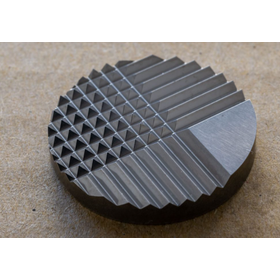
A rare "hand-bent spring" craftsman is still active! What is the reason why Bandai is chosen?

The reason why spring manufacturers across the country rely on us is that our "hand-winding technology" is alive and well.

Bandai is trusted by many customers as a "spring professional" with a proven track record in proposals for both coil springs and leaf springs. In particular, coil springs are precision components where the load varies finely based on wire diameter, coil diameter, winding direction, and number of turns, yet they are often scrutinized for cost as consumables. During the prototype stage, setup costs and delivery times with NC machines become challenges, but Bandai has established a system that allows for "hand-winding" by skilled artisans. We flexibly respond to special specifications that cannot be wound with NC machines and to short-term prototype requests, receiving production orders from spring manufacturers nationwide. Bandai's strength lies not only in "processing equipment" but also in leveraging "technology and people." If you are facing issues with coil springs, please feel free to consult us. *This type of response is just a small part of the efforts that Bandai engages in daily. Please take a look at the value we can provide to our customers.
Added to bookmarks

Bookmarks list

Bookmark has been removed

Bookmarks list

You can't add any more bookmarks

By registering as a member, you can increase the number of bookmarks you can save and organize them with labels.

Free membership registration

The answer is not far away, but close by. The birth story of the "Processing Network."
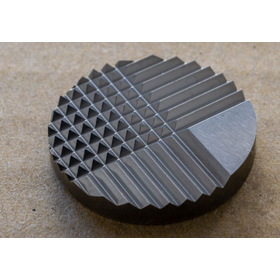
If you can't find it even after searching, try relying on "connections."

In order to find partners for mass production sheet metal processing, I spent days making dozens of cold calls to processing companies nationwide. Even so, I was struggling to find any promising leads and felt stuck. It was during this time that the executive of a prototype processing company in Shimane, who has been a great help to us, casually mentioned, "Shall I introduce you to a sheet metal company strong in mass production?" — that one remark was the beginning of everything. The person in charge at the introduced company came from the prototype department of an agricultural machinery manufacturer. They excel in the know-how of keeping costs down without compromising quality, and there are processing companies nearby that can handle welding, cutting, and surface treatment. A system was established that could handle 700 items in one go within a few minutes' drive, and at that moment, the "Hometown Processing Network" was born. The answer was not far away, but right next to trust. *This kind of support is just a small part of what Bandai does every day. Please take a look at the value we can provide to our customers.

Added to bookmarks

Bookmarks list

Bookmark has been removed

Bookmarks list

You can't add any more bookmarks

By registering as a member, you can increase the number of bookmarks you can save and organize them with labels.

Free membership registration

Localities have strengths. The true nature of the processing network that wins in price competition.

The reason for the low prices lies in the regions. A processing network that supports the front line of price competition.

As you read through the blog, many of you may have wondered, "What is the Hometown Processing Network?" This time, we will answer that question in full and address the simple query, "Why 'hometown'?" In fact, the charges of local processors differ significantly from those in urban areas. Supporting this price difference are capable processors who have major agricultural machinery manufacturers (K Company, Y Company, I Company, M Company) as their clients. They are a "professional group" forged under strict cost demands. Bandai connects directly with these excellent local processors and achieves a balance of high quality and low prices by matching optimal projects. Next time, we will introduce the background of how this network was created! *Such efforts are just a small part of what Bandai does on a daily basis. Please take a look at the value we can provide to our customers.

Added to bookmarks

Bookmarks list

Bookmark has been removed

Bookmarks list

You can't add any more bookmarks

By registering as a member, you can increase the number of bookmarks you can save and organize them with labels.

Free membership registration

A processing company known for its finishing faced challenges in the railway vehicle sector.

Quality assessment is determined by "who will use it" — the importance of understanding the application.

The company H that we are introducing this time is a sheet metal processing manufacturer known for its finishing quality within the "Hometown Processing Network." They have extensive delivery records for the food industry and railway vehicle manufacturers, and their burr-free finishes and beautiful weld beads are highly regarded. In fact, for this project, we received compliments from the customer stating, "The finish is very beautiful." However, due to the strict standards specific to railway vehicles, we unexpectedly received a notification for re-manufacturing. After applying TIG welding and anodizing to an aluminum product measuring 1 meter in length, spatter marks about 1mm in diameter emerged after processing. This phenomenon, which was not visible during processing and only appeared after anodizing, is a point that can only be recognized with an understanding of the usage environment. For products like railway vehicles that are handled by many people, even "sensitivity" becomes a factor in quality evaluation. This incident has reaffirmed the importance of "depth of understanding of application" alongside high technical skills. *Such responses are just a small part of the initiatives that Bandai engages in daily. Please take a look at the value we can provide to our customers.

Added to bookmarks

Bookmarks list

Bookmark has been removed

Bookmarks list

You can't add any more bookmarks

By registering as a member, you can increase the number of bookmarks you can save and organize them with labels.

Free membership registration

From observation to full-scale request. The journey with the vehicle manufacturer!

First, let's start with "taking a look." A challenge in processing products for vehicles.

"Do you have any experience in manufacturing processed products for vehicles?" One day, this question arrived from a train vehicle manufacturer, marking the beginning of a new challenge. While we had a track record of supplying off-the-shelf products (such as bearings), we had zero experience with processed products. Nevertheless, based on our past delivery records and evaluations of our finishing quality, I confidently replied, "We do not have a track record of supplying processed products for train vehicles, but we have never received complaints regarding our finishing quality." Amidst the tension, after providing thorough explanations, we secured inquiries for processed products for six vehicles due to interior renovations. Initially, the requests were mainly for relatively low-difficulty tasks such as laser and brake processing, but by accumulating achievements in delivery times, pricing, and quality, we eventually expanded into consultations for high-difficulty processing such as welding and assembly. This experience reflects how the technical capabilities of the "Hometown Processing Network" gradually shaped trust. *Please note that this type of response is just a small part of what Bandai does on a daily basis. We invite you to see the value we can provide to our customers.*

Added to bookmarks

Bookmarks list

Bookmark has been removed

Bookmarks list

You can't add any more bookmarks

By registering as a member, you can increase the number of bookmarks you can save and organize them with labels.

Free membership registration

To shave or to stack. The key to selection lies in 'material loss' and 'reading the drawings.'

Both 3D printers and cutting tools—what can be utilized is the ability to read blueprints, or "keen eyesight."

With the evolution of 3D printers, we have entered an era where parts with hollow structures and complex shapes, which were previously difficult to process, can now be produced with short lead times and low costs. Particularly in the case of prototypes and one-off items, where material waste can be significant, additive manufacturing has overwhelming advantages. On the other hand, for parts that require high-precision finishing and strict dimensional tolerances, traditional machining remains essential. In other words, it is not about "which is superior," but rather about discerning "which is optimal." At Bandai, we leverage our network that accommodates both 3D printing and machining to propose the best manufacturing method according to drawings and specifications. This "discerning ability" that connects technology and the field is the foundation of our sales style. *This type of response is just a small part of what Bandai engages in daily. Please take a look at the value we can offer to our customers.

Added to bookmarks

Bookmarks list

Bookmark has been removed

Bookmarks list

You can't add any more bookmarks

By registering as a member, you can increase the number of bookmarks you can save and organize them with labels.

Free membership registration

High intensity × high precision × complex shapes - What is the power of METALX?

Materials, layering, strength design――here is how to utilize shaping technology.

Hollow, complex shapes, and high strength... We are realizing designs that were difficult with conventional processing methods using 3D printer technology. At Bandai, we showcased our modeling samples at the Kansai Machine Element Technology Exhibition in 2019, receiving much feedback on the precision and beauty of the appearance. The 3D printer used for modeling is the Markforged METALX, which supports a variety of materials such as SUS, Inconel, and titanium, and is capable of high-density modeling with a 50μ pitch. Furthermore, through collaboration with the "Hometown Processing Network," we ensure strength with layered designs in partnership with specialized institutions. However, even if the machine is excellent, without proposals that understand and utilize it, we cannot secure orders. Next time, we will focus on how to "sell" this 3D printer and briefly introduce Bandai's sales style. *This kind of response is just a small part of what Bandai does every day. Please take a look at the value we can provide to our customers.

Added to bookmarks

Bookmarks list

Bookmark has been removed

Bookmarks list

You can't add any more bookmarks

By registering as a member, you can increase the number of bookmarks you can save and organize them with labels.

Free membership registration

Instead of super hard, spray super hard - the "another answer" you didn't know.

What is necessary is not "high hardness," but "high strategy." The way to use the technology of ultra-hard thermal spraying.

The "thermal spraying" technology involves melting metals and ceramics and spraying them onto the surface of a substrate. Among these, carbide thermal spraying offers significant advantages in both cost and processing risk, as it allows for high wear resistance only in the necessary areas. Previously, there was a project where all components made of S45C + carbide were produced entirely from carbide, but in hindsight, I feel that a more rational proposal could have been made using carbide thermal spraying. Due to a lack of knowledge, I was unable to make that suggestion at the time, but I will strive to utilize this learning and present the optimal options next time. *Such responses are just a small part of the efforts that Bandai engages in daily. Please take a look at the value we can provide to our customers.

Added to bookmarks

Bookmarks list

Bookmark has been removed

Bookmarks list

You can't add any more bookmarks

By registering as a member, you can increase the number of bookmarks you can save and organize them with labels.

Free membership registration

What is carbide? The "processing risks" and the options that emerged during the in-house study session.

Knowledge reduces risks and increases options—lessons learned from carbide.

"What is Chokou?" - This simple question prompted us to hold a study session on cemented carbide within Bandai. We shared information on material properties such as hardness and ductility, processing risks, the challenges of tool selection, and even examples of how we have addressed these issues in our company. What I felt again during this session is that correctly understanding the properties of materials directly reduces the risk of failure during processing and leads to better decisions regarding optimal manufacturing methods. For example, in a previous order for a cemented carbide product, we assumed that "adhesion is impossible" and manufactured everything in cemented carbide, only to later learn about an alternative called "cemented carbide thermal spraying." If we had known the options from the beginning, it might have led to reduced costs and processing risks - it was an eye-opening experience. Next time, I will provide a detailed introduction to the actual case of "cemented carbide thermal spraying." *Such initiatives are just a small part of what Bandai does every day. Please take a look at the value we can offer to our customers.

Added to bookmarks

Bookmarks list

Bookmark has been removed

Bookmarks list

You can't add any more bookmarks

By registering as a member, you can increase the number of bookmarks you can save and organize them with labels.

Free membership registration

What are the characteristics and roles of hardening, tempering, annealing, and normalizing?

Introducing four basic patterns of heat treatment that bring out the properties of iron in a blog!

There are four main methods of heat treatment. The toughness I mentioned last time is imparted by performing "tempering." It is often said "quenching and tempering," and it is common to carry out these processes together to give steel surface hardness and toughness. Annealing and normalizing are not frequently used in the processing we mainly handle, but the photo of the handle at the beginning shows that annealing was performed to soften the iron and bend it. The root part of the bend has undergone annealing. Without annealing, it would be hard, and cracks would occur during bending, or it would break. *You can view the detailed content of the blog through the related links. For more information, please download the PDF or feel free to contact us.*

Added to bookmarks

Bookmarks list

Bookmark has been removed

Bookmarks list

You can't add any more bookmarks

By registering as a member, you can increase the number of bookmarks you can save and organize them with labels.

Free membership registration

What is the toughness that is lost when hardness is increased?

Hardness can be rephrased as surface strength, while toughness can be described as strength against impact.

What is lost when something becomes hard? That is toughness. Toughness is like the ductility that a material possesses. When hardness increases, this ductility is compromised. What happens when toughness is compromised? Let’s take diamond, the hardest mineral in the world, as an example. While diamonds are thought to be extremely hard, this is only effective against wear and scratches; they can easily break when subjected to impact, such as from a hammer. This indicates that while diamonds have very high surface hardness, their internal toughness is very low. *For more details, you can view the related links. For more information, please download the PDF or feel free to contact us.*

Added to bookmarks

Bookmarks list

Bookmark has been removed

Bookmarks list

You can't add any more bookmarks

By registering as a member, you can increase the number of bookmarks you can save and organize them with labels.

Free membership registration

What is heat treatment? What is it done for?

A processing method that utilizes heat! We will explain it clearly based on the example of gears.

Heat treatment is a very important factor in the production of processed products. However, it is often difficult to distinguish between good and bad products based solely on their appearance, so it is essential to have a precise understanding of the process. If heat treatment is ordered without sufficient understanding, it could lead to significant problems later on. Our company has also had bitter experiences in the past where issues arose from heat treatment. Therefore, our company has conducted several internal study sessions, and our employees have a good understanding of the content and risks associated with heat treatment. Now, we will explain this in an easy-to-understand manner using the example of gears. *For detailed content of the blog, please refer to the related links. For more information, please download the PDF or feel free to contact us.*

Added to bookmarks

Bookmarks list

Bookmark has been removed

Bookmarks list

You can't add any more bookmarks

By registering as a member, you can increase the number of bookmarks you can save and organize them with labels.

Free membership registration

Everything is written on the blueprint. But the day came when I was asked, 'Did you really read it properly?'

Insufficient verification is a pitfall for professionals. Questioning the "obvious" leads to quality.

We received a request from a customer to perform additional processing on a standard bevel gear from a certain gear manufacturer. The "material" section of the drawing listed the model of the standard product, and both our company and the processing contractor proceeded with the prototype based on that information. However, after delivering the prototype, we were pointed out by the quality control representative that "the hardness is different." In a hurry, we rechecked the drawing and found that there was a clear hardness specification exceeding the standard product's hardness range mentioned separately in the drawing. This was a moment of reflection for us as professionals, caused by the assumption that "there should be no problem since it's a standard product" and a lack of thorough verification. Fortunately, we were able to address it with heat treatment, but it reinforced the idea that drawings should not only be reviewed at the beginning but should be examined thoroughly until the end. We will ensure that we do not waste this experience and will be diligent in checking every detail moving forward. *This kind of response is just a small part of the initiatives that Bandai engages in daily. Please take a look at the value we can provide to our customers.

Added to bookmarks

Bookmarks list

Bookmark has been removed

Bookmarks list

You can't add any more bookmarks

By registering as a member, you can increase the number of bookmarks you can save and organize them with labels.

Free membership registration

φ2×copper material = difficult to process. What is the reason that the material properties raise the hurdle?

High precision, fine, copper material. The moment they are assembled, the difficulty of processing skyrockets.

The request from the customer was for high-precision machining of copper pins, reducing from φ6 to φ2, with M4 tapping included. At first glance, copper may seem like an "easy-to-machine material," but due to its softness and tendency to deform, along with strict tolerances, general lathes cannot handle it, making precision machining with NC lathes essential. However, for extremely small diameters like this, chucking on an NC lathe itself is difficult. A partner who previously processed φ4 SUS material also responded that they could not accommodate this condition. Nevertheless, we did not give up and found a machining company within the "Hometown Processing Network" that has specialized technology for small diameters, successfully leading to an order. Copper material × high precision × extremely small diameter—this project made me realize that a comprehensive knowledge of materials and a strong machining network are necessary to address all these factors. *This kind of response is just a small part of what Bandai does every day. Please take a look at the value we can provide to our customers.

Added to bookmarks

Bookmarks list

Bookmark has been removed

Bookmarks list

You can't add any more bookmarks

By registering as a member, you can increase the number of bookmarks you can save and organize them with labels.

Free membership registration

Is the geometric tolerance too strict!? The role of connecting the "discrepancy" between drawing and processing.

The ideal of design and the reality of processing. Between them, there is Bandai.

A request for rod-shaped machined products from a customer. When we asked multiple lathe machining companies in the "Hometown Processing Network" for estimates, the responses were almost all "processing not possible." Upon confirming the reasons, many expressed that "the geometric tolerances are too strict." Indeed, while the specifications may be precise on paper, factors such as manufacturing difficulty, cost, and lead time significantly impact actual processing on the shop floor. This time, after confirming the customer's intentions, we adjusted the tolerance specifications, which ultimately allowed for smooth and realistic processing responses. The professionals in design and those in processing—bridging the gap between them, aligning intentions, and connecting to the site in the optimal way—this is one of the important roles of Bandai. *Such responses are just a small part of what Bandai does daily. Please take a look at the value we can provide to our customers.

Added to bookmarks

Bookmarks list

Bookmark has been removed

Bookmarks list

You can't add any more bookmarks

By registering as a member, you can increase the number of bookmarks you can save and organize them with labels.

Free membership registration

Don't get confused by bearing model symbols! Proposal for translation services.

Deciphering bearing model types and symbols is entrusted to Bandai. Prevent procurement mistakes with part number translation!

"I received a bearing that is different from the model I ordered...?" Such voices can be heard here and there in the bearing procurement field. Behind this, there are often **"manufacturer-specific symbols" that are not listed in the catalog.** For example, models like "6900ZZ1CM" or "6900ZZ1NXR*" may seem familiar at first glance, but symbols like "1" or "NXR" are not included in the catalog, which can confuse newcomers and customers. While veterans might brush it off as "Oh, that's a common one," it can be quite troublesome for those who are not used to it. This can lead to procurement mistakes or inquiries. That’s why we at Bandai make sure to thoroughly support you with such "confusing aspects." If you ever think, "This model looks unfamiliar..." please feel free to reach out to Bandai. We will provide clear explanations. *This kind of support is just a small part of what Bandai does every day. Please take a look at the value we can offer to our customers.*

Added to bookmarks

Bookmarks list

Bookmark has been removed

Bookmarks list

You can't add any more bookmarks

By registering as a member, you can increase the number of bookmarks you can save and organize them with labels.

Free membership registration

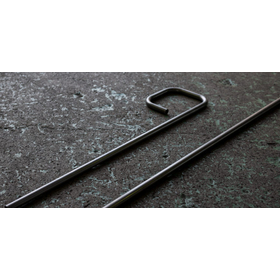
★Bending processing of steel pipes and round bars★ Not applicable for bending with a bender. Also compatible!

Bending processing using a vendor brake, as well as bending processing using burner heating, achieves "as per the drawing" with processing methods tailored to the bending radius and subsequent processes!

"Can you perform this bending process?" This is a common question we receive regarding the processing of pipe materials and round bars. Various conditions are involved, such as bending radius, total length, axis diameter, wall thickness, tolerances, lot size, and whether there are subsequent processes. In some cases, it may be difficult to process exactly according to the drawings... At Bandai, in addition to conventional NC pipe bending and bending using press brakes, we also accommodate bending using molds and artisan techniques like hand bending with burner heating. Sometimes, welding is also utilized in the bending process... Furthermore, in addition to secondary processing such as drilling and shaft end processing, we can consistently respond to assembly needs through welding by leveraging the "Hometown Processing Network," which consists of unique processing companies nationwide. From single prototype bending to mass production and assembly items that require multiple processes, please feel free to consult with us! \ We are currently offering case studies to solve your machine parts procurement issues! / For more details, please check the PDF data from "Catalog Download." If you have any concerns regarding machine parts procurement, please feel free to contact us.

Added to bookmarks

Bookmarks list

Bookmark has been removed

Bookmarks list

You can't add any more bookmarks

By registering as a member, you can increase the number of bookmarks you can save and organize them with labels.

Free membership registration

Solving precision component challenges with microfabrication technology for medical devices.

For precision machining of medical device components, wire cut electrical discharge machining technology.

In the medical device industry, miniaturization and high precision are advancing, making precision parts micro-machining technology essential. In particular, components related to human safety, such as implants and surgical instruments, require high accuracy and quality. There are many cases where conventional processing methods struggle to handle difficult shapes for polishing or fine groove machining, making the selection of processing methods crucial. Our wire-cut electrical discharge machining technology addresses these challenges and enables the production of high-quality precision parts. 【Application Scenarios】 - Implant components - Surgical instruments - Analytical instrument parts - Other medical device parts requiring micro-machining 【Benefits of Implementation】 - Improved product quality through high-precision processing - Capability to handle difficult shapes for polishing - Enhanced functionality through fine groove machining - Increased design flexibility

Added to bookmarks

Bookmarks list

Bookmark has been removed

Bookmarks list

You can't add any more bookmarks

By registering as a member, you can increase the number of bookmarks you can save and organize them with labels.

Free membership registration

Microgroove processing solutions for semiconductors

Achieving fine groove processing of semiconductor devices with wire-cut electrical discharge machining!

In the semiconductor industry, as devices become more densely packed, the precision and quality of fine groove processing are becoming increasingly important. In particular, the shape, dimensional accuracy, and surface roughness of fine grooves, which influence the performance of wafers and chips, have a significant impact on yield and product lifespan. There is a demand for technology that can process difficult shapes and ultra-fine grooves at equal intervals. Our wire-cut electrical discharge machining technology addresses these challenges and supports the manufacturing of high-quality semiconductor devices. 【Application Scenarios】 - Fine groove processing of semiconductor wafers - Electrode groove processing of IC chips - Fine structure processing of MEMS devices - Processing of other semiconductor components requiring fine grooves 【Benefits of Implementation】 - Improved device performance through high-precision fine groove processing - Increased yield - Extended product lifespan - Enhanced design flexibility

Added to bookmarks

Bookmarks list

Bookmark has been removed

Bookmarks list

You can't add any more bookmarks

By registering as a member, you can increase the number of bookmarks you can save and organize them with labels.

Free membership registration

Lightweight Solutions through Microfabrication for Aerospace Applications

Achieving lightweight aerospace components with wire cut electrical discharge machining!

In the aerospace industry, reducing the weight of aircraft is essential for improving fuel efficiency and performance. In particular, there is a demand for microfabrication technology that can reduce unnecessary parts while maintaining strength to achieve weight reduction. However, conventional processing methods have limitations in machining complex shapes and fine details, narrowing the possibilities for weight reduction. Our wire-cut electrical discharge machining technology addresses these challenges. 【Application Scenarios】 - Weight reduction of aircraft components - Weight reduction of rocket components - Weight reduction of satellite components 【Effects of Implementation】 - Improved fuel efficiency through weight reduction of components - Enhanced aircraft performance - Increased design flexibility

Added to bookmarks

Bookmarks list

Bookmark has been removed

Bookmarks list

You can't add any more bookmarks

By registering as a member, you can increase the number of bookmarks you can save and organize them with labels.

Free membership registration

Solve your micro-machining problems for molds!

Enhance the precision and quality of mold processing with artisan techniques!

In the mold industry, high-precision processing that affects product quality is required. In particular, the accuracy of dimensions and the smoothness of surfaces are important, as even slight errors can impact the overall performance of the product. There are many cases where traditional processing methods struggle to handle difficult shapes for polishing or extremely fine groove processing. Our wire-cut electrical discharge machining technology addresses these challenges and contributes to improving the precision of mold processing. 【Application Scenarios】 - High-precision mold manufacturing - Processing of complex shapes - Fine groove processing - Processing of difficult-to-polish areas 【Benefits of Implementation】 - Improved mold precision - Enhanced product quality - Reduced processing time - Decreased defect rate

Added to bookmarks

Bookmarks list

Bookmark has been removed

Bookmarks list

You can't add any more bookmarks

By registering as a member, you can increase the number of bookmarks you can save and organize them with labels.

Free membership registration

Solve your microfabrication problems for electronic devices!

Supporting the high density of electronic devices with artisan techniques!

In the electronics industry, miniaturization has made precision machining of components essential. In particular, high-precision processing technology is required to pack many functions into limited space. However, traditional machining methods may struggle to produce products that meet design specifications due to geometric constraints and limitations in processing accuracy. Bandai's "Hometown Processing Network" boasts wire-cut electrical discharge machining technology from specialized partners that addresses these challenges. It meets diverse customer needs, including difficult-to-polish shapes, surface roughness of curved surfaces, and ultra-fine groove processing. This technology contributes to the miniaturization and high performance of electronic devices. 【Application Scenarios】 - High-density mounted circuit boards - Compact electronic devices - Precision electronic components 【Benefits of Implementation】 - Increased design flexibility - Miniaturization and high performance of products - Reduced prototyping time

Added to bookmarks

Bookmarks list

Bookmark has been removed

Bookmarks list

You can't add any more bookmarks

By registering as a member, you can increase the number of bookmarks you can save and organize them with labels.

Free membership registration

Miniaturization of components achieved through precision machining technology for automobiles.

Supporting miniaturization and high precision of automotive parts with wire cut electrical discharge machining!

In the automotive industry, miniaturization of components is essential for improving fuel efficiency and space efficiency. In particular, high-precision micro-machining technology is required for engine parts and electronic control components. When faced with shapes that are difficult to process using conventional methods or when high surface precision is required, there is a possibility that product performance and durability may be affected. Our wire-cut electrical discharge machining technology addresses these challenges and contributes to the miniaturization and high precision of automotive parts. 【Application Scenarios】 - Micro-machining of engine parts - Precision machining of electronic control components - Manufacturing of small sensor components 【Benefits of Implementation】 - Weight reduction through component miniaturization - Performance improvement through high-precision machining - Increased design flexibility

Added to bookmarks

Bookmarks list

Bookmark has been removed

Bookmarks list

You can't add any more bookmarks

By registering as a member, you can increase the number of bookmarks you can save and organize them with labels.

Free membership registration

The beauty of watches realized through precision processing for watch decoration.

With the artisan's skill, we expand the possibilities of watch decoration.

In the watch decoration industry, there is a demand for diverse designs and high-quality finishes. In particular, delicate decorations and complex shapes greatly influence the value of a watch. However, traditional processing methods often have limitations in expressing fine details, which can impose constraints on design. Our electrical discharge machining technology addresses these challenges. 【Application Scenarios】 - Decoration of watch dials and bezels - Precision machining of movement components - Processing of precious metals and special materials 【Benefits of Implementation】 - Increased design freedom - High-quality finishes - Differentiation from competitors - Enhanced brand image

Added to bookmarks

Bookmarks list

Bookmark has been removed

Bookmarks list

You can't add any more bookmarks

By registering as a member, you can increase the number of bookmarks you can save and organize them with labels.

Free membership registration

Expanding the possibilities of small sensors with precision machining for robots!

With artisan skills, we meet the microfabrication needs of small sensors!

In the robotics industry, particularly in small sensors, high-precision component processing is required. As sensors become smaller and more high-performance, processing accuracy at the micron level significantly affects product performance. There are many challenges that traditional processing methods cannot address, such as difficult-to-polish shapes and ultra-fine groove processing. Our wire cut electrical discharge machining technology solves these challenges and contributes to the performance improvement of small sensors. 【Application Scenarios】 - Sensor components for robotic arms - Distance sensor components for autonomous robots - Precision sensor components for industrial robots 【Benefits of Implementation】 - Realization of high-precision sensor components - Improvement of small sensor performance - Increased design flexibility

Added to bookmarks

Bookmarks list

Bookmark has been removed

Bookmarks list

You can't add any more bookmarks

By registering as a member, you can increase the number of bookmarks you can save and organize them with labels.

Free membership registration

Efficiency Improvement through Microfabrication for the Energy Industry

Supporting precision machining of energy-related components with artisan skills!

In the energy industry, efficient energy use is required, and precise component machining is essential for this purpose. In particular, components used in high-temperature and high-pressure environments, as well as those with fine structures, demand high precision and durability. Wire electrical discharge machining technology addresses these challenges and contributes to improving energy efficiency. 【Application Scenarios】 - Component machining for power generation equipment - Component machining for energy-saving devices - Component machining for energy storage devices 【Effects of Implementation】 - Improved energy efficiency through high-precision component machining - Reduced maintenance costs due to enhanced component durability - Increased design flexibility by accommodating a variety of materials

Added to bookmarks

Bookmarks list

Bookmark has been removed

Bookmarks list

You can't add any more bookmarks

By registering as a member, you can increase the number of bookmarks you can save and organize them with labels.

Free membership registration

Microchannels realized through microfabrication technology for biotechnology.

With skilled craftsmanship, we meet the microfabrication needs of microfluidic channels!

In the field of biotechnology, particularly in microfluidics, precise fluid control and the realization of fine structures are essential. In various applications such as cell culture, drug delivery, and diagnostic devices, the shape of the flow path, dimensional accuracy, and surface roughness significantly affect performance. It is not uncommon for complex shapes and fine groove processing, which are difficult to achieve with conventional processing methods, to be required. Our wire-cut electrical discharge machining technology addresses these challenges and meets our customers' needs. 【Application Scenarios】 - Microfluidic devices - Cell culture chips - Diagnostic chips - Drug delivery systems - Research and development requiring precise fluid control 【Benefits of Implementation】 - Achievement of high-precision microchannels - Compatibility with a variety of materials - Flexible support from prototyping to mass production - Acceleration of research and development - Enhancement of product performance

Added to bookmarks

Bookmarks list

Bookmark has been removed

Bookmarks list

You can't add any more bookmarks

By registering as a member, you can increase the number of bookmarks you can save and organize them with labels.

Free membership registration

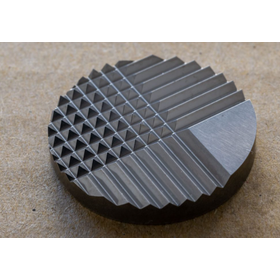
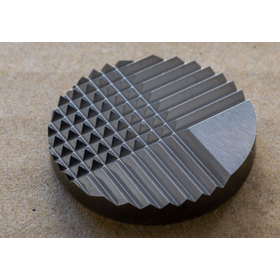
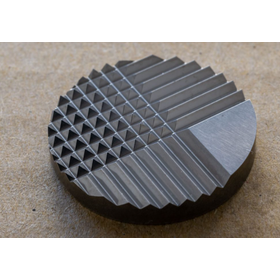
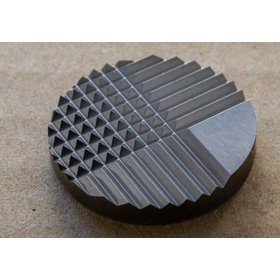
Space design utilizing the luster of tough pitch copper for interiors.

With a surface roughness of Ra0.1, brilliance in space. Precision machining technology for tough pitch copper.

In the interior design industry, it is essential to maximize the beauty of materials to enhance the quality of space. Particularly in designs that utilize light reflection, the precision of surface processing of materials greatly influences the impression of the space. Tough-pitch copper is attractive for its beautiful luster, but due to the difficulty of processing, there are many cases where its potential is not fully realized. Our company is well-versed in the characteristics of tough-pitch copper and offers advanced surface processing technology that achieves a surface roughness of Ra0.1. This technology brings a refined brilliance to spaces and expands design possibilities. 【Application Scenes】 - Reflectors for lighting fixtures - Decorative panels - Artworks 【Effects of Implementation】 - Enhanced luxury and sophistication of the space - Creation of depth and expansiveness through light reflection - Realization of design diversity

Added to bookmarks

Bookmarks list

Bookmark has been removed

Bookmarks list

You can't add any more bookmarks

By registering as a member, you can increase the number of bookmarks you can save and organize them with labels.

Free membership registration

Heat-resistant and light-reflective surface processing technology for tough pitch copper for space applications.

Achieve a surface roughness of Ra0.1! Ideal for heat-resistant components for space applications!

In space applications, the reliability of components under harsh environments is essential. Particularly for parts exposed to heat and light, high heat resistance and light reflectivity are crucial. Tough pitch copper is a material with excellent thermal conductivity and light reflectivity, but it is difficult to process, and there are few manufacturers capable of achieving a high surface roughness. Our technology maximizes the properties of tough pitch copper to meet the stringent requirements of space applications, achieving a surface roughness of Ra0.1. This allows us to provide high-quality components that balance heat resistance and light reflectivity, contributing to solving challenges in space development. 【Application Scenarios】 - Thermal shields for spacecraft - Optical components for satellites - Parts for rocket engines 【Benefits of Implementation】 - Achievement of high heat resistance and light reflectivity - Improved reliability of components - Long-term performance maintenance under harsh environments

Added to bookmarks

Bookmarks list

Bookmark has been removed

Bookmarks list

You can't add any more bookmarks

By registering as a member, you can increase the number of bookmarks you can save and organize them with labels.

Free membership registration

Heat dissipation solution for communication equipment using tough pitch copper.

Improve heat dissipation with a Ra0.1 surface roughness! Optimize the performance of communication devices!

In the telecommunications industry, as performance increases, heat dissipation measures have become an important issue. In particular, electronic components that are densely mounted face a higher risk of performance degradation and failure due to heat. Tough pitch copper has high thermal conductivity, but its difficulty in processing can make it challenging to achieve optimal heat dissipation solutions. Our company utilizes advanced microfabrication technology for tough pitch copper to achieve a surface roughness of Ra0.1, thereby maximizing heat dissipation performance. This contributes to improving the reliability of communication devices. 【Application Scenarios】 * Base stations * Servers * Communication modules * Other communication devices requiring heat dissipation 【Benefits of Implementation】 * Extended equipment lifespan * Stabilized performance * Reduced risk of failure

Added to bookmarks

Bookmarks list

Bookmark has been removed

Bookmarks list

You can't add any more bookmarks

By registering as a member, you can increase the number of bookmarks you can save and organize them with labels.

Free membership registration

Antibacterial surface processing technology for tough pitch copper used in medical devices.

Achieving antibacterial properties with a surface roughness of Ra0.1! Contributing to the improvement of medical device quality.

In the medical device industry, antimicrobial properties of surfaces are emphasized to reduce infection risks. Particularly, high antibacterial performance is required in areas that come into direct contact with patients, such as surgical instruments. Tough-pitch copper not only enhances light reflectivity but also imparts antibacterial properties, contributing to the improvement of medical device quality. Our company utilizes advanced microfabrication technology for tough-pitch copper to achieve a surface roughness of Ra0.1. This enhances antibacterial properties and supports safety in medical settings. 【Application Scenes】 - Surgical instruments - Medical trays - Handrails of patient beds - Other medical device components requiring antibacterial properties 【Effects of Implementation】 - Reduction of infection risks - Improvement of medical device durability - Enhancement of product added value - Gaining customer trust

Added to bookmarks

Bookmarks list

Bookmark has been removed

Bookmarks list

You can't add any more bookmarks

By registering as a member, you can increase the number of bookmarks you can save and organize them with labels.

Free membership registration

Surface processing technology that utilizes the luster of tough pitch copper for architecture.

Achieve a surface roughness of Ra0.1! It beautifully enhances the appearance of buildings.

In the construction industry, exterior design is a crucial element that significantly influences the value of a building. In particular, designs that utilize light reflection enhance the beauty of the building and increase its added value. Tough-pitch copper is an ideal material for exterior design due to its beautiful luster, but its difficulty in processing presents a challenge in maximizing its potential. Our company specializes in processing tough-pitch copper and utilizes technology that achieves a surface roughness of Ra0.1 to realize the exterior designs desired by our customers. 【Application Scenes】 - Exterior wall panels - Decorative items - Roofing materials 【Benefits of Implementation】 - Improvement of exterior design through beautiful luster - Maintenance of long-term aesthetics due to high durability - Adaptability to diverse designs

Added to bookmarks

Bookmarks list

Bookmark has been removed

Bookmarks list

You can't add any more bookmarks

By registering as a member, you can increase the number of bookmarks you can save and organize them with labels.

Free membership registration

Glossy surface processing technology for tough pitch copper for home appliance design

Achieving a surface roughness of Ra0.1! Enhancing the texture of home appliance design.

In home appliance design, the aesthetics of a product are extremely important. In particular, gloss and texture are significant factors that influence consumer purchasing intent. Tough pitch copper is often used in high-design products due to its beautiful luster, but the difficulty of processing can pose challenges for surface finishing technology. Achieving a surface roughness of Ra0.1 requires advanced processing techniques and quality control. Our company is well-versed in the characteristics of tough pitch copper and provides surface finishing technology to realize the designs our customers seek. 【Application Scenes】 - Exterior parts of high-end home appliances - High-design lighting fixtures - Interior products 【Effects of Implementation】 - Enhanced luxury and design quality of products - Differentiation from competitors' products - Improved brand image

Added to bookmarks

Bookmarks list

Bookmark has been removed

Bookmarks list

You can't add any more bookmarks

By registering as a member, you can increase the number of bookmarks you can save and organize them with labels.

Free membership registration
Prev 1234 Next
  • 展示会に出展したいけど準備が大変 展示会の情報をまとめて知りたい そんな展示会のお悩み展サポ(R)で解決! ブース装飾で実績豊富 展示会情報を多数掲載 出展前~後まで支援
  • 義務化された熱中症対策に取り組む製造現場、工場、物流倉庫へ 排気熱風なく室温-4.1℃※の冷風を 工事不要で暑さ対策 気化式スポットクーラー Pure Drive ピュアドライブ ※環境条件…室温35℃/湿度50%/風量「中」
    • Contact this company

      Inquiry Form
    • Before making an inquiry

      Download Profile

    Products

    • Search for Products

    Company

    • Search for Companies

    Special Features

    • Special Features

    Ranking

    • Overall Products Ranking
    • Overall Company Ranking

    support

    • site map
    IPROS
    • privacy policy Regarding external transmission of information
    • terms of service
    • About Us
    • Careers
    • Advertising
    COPYRIGHT © 2001-2026 IPROS CORPORATION ALL RIGHTS RESERVED.
    Please note that the English text on this page is automatically translated and may contain inaccuracies.