1~45 item / All 318 items
Displayed results
Filter by category

Added to bookmarks
Bookmarks listBookmark has been removed
Bookmarks listYou can't add any more bookmarks
By registering as a member, you can increase the number of bookmarks you can save and organize them with labels.
Free membership registration
Contact this company
Contact Us Online1~45 item / All 318 items
Filter by category

In this document, we provide a fluid compatibility chart to solve the "problems" faced by busy design and maintenance personnel. We comprehensively cover a vast array of fluids, including water-based fluids, oil-based fluids, solvents, and corrosive fluids, categorized for easy reference, allowing for intuitive compatibility assessment using symbols "◎, A, X." Additionally, selection criteria such as operating temperature, operating pressure, and piping shape are also necessary for making selections. Please use this as a reference to select gaskets suitable for your operating fluids. [Contents Included] ■ Water-based fluids and oil-based fluids (oils, alcohols) ■ Oil-based fluids (hydrocarbon gases, animal and vegetable oils) ■ Solvents and corrosive fluids (solvents, cleaning agents) ■ Solvents and corrosive fluids (acids, halogens) ■ Solvents and corrosive fluids (salts, alkalis, monomers, and other general chemicals) ■ Gas-based fluids I, Gas-based fluids II, Low-temperature fluids *For more details, please download the PDF or feel free to contact us.
Added to bookmarks
Bookmarks listBookmark has been removed
Bookmarks listYou can't add any more bookmarks
By registering as a member, you can increase the number of bookmarks you can save and organize them with labels.
Free membership registration
Before taking measures against electrolysis, let's confirm the identity of the enemy once again. Electrolysis is a phenomenon where metals corrode due to electrical actions, and there are mainly two types. First, galvanic corrosion, which is a representative of electrolysis. When dissimilar metals (e.g., carbon steel bolts on stainless steel flanges) come into contact through an electrolyte such as water or condensation, a tiny battery (galvanic cell) is formed. Next is stray current corrosion. This occurs when current (stray current) leaking from railway tracks (using direct current) or other electrical equipment flows into nearby underground metal pipes through the ground and causes severe corrosion at the exit point when it flows back out into the earth. *For detailed content of the column, please refer to the PDF. For more information, feel free to contact us.
Added to bookmarks
Bookmarks listBookmark has been removed
Bookmarks listYou can't add any more bookmarks
By registering as a member, you can increase the number of bookmarks you can save and organize them with labels.
Free membership registration
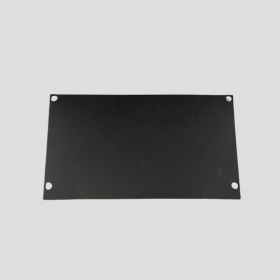
Leakage from gaskets in plant and factory piping flanges is a serious issue that directly leads to production stoppages, energy losses, and significant safety accidents. Remarkably, research shows that about two-thirds of all gasket-related troubles are caused by "poor installation." Among these installation issues, the overwhelming majority is due to "inadequate management of tightening force." In this article, we will thoroughly explain why "torque management" is essential for gasket sealing, covering the fundamental theory, the correct tightening procedures that can be practiced on-site starting tomorrow (in accordance with JIS B 2251), and specific examples of the three most common tightening failures (under-tightening, over-tightening, and uneven tightening) along with their countermeasures. *For detailed content of the column, please refer to the PDF. For more information, feel free to contact us.
Added to bookmarks
Bookmarks listBookmark has been removed
Bookmarks listYou can't add any more bookmarks
By registering as a member, you can increase the number of bookmarks you can save and organize them with labels.
Free membership registration
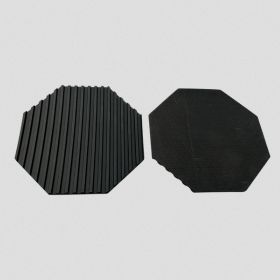
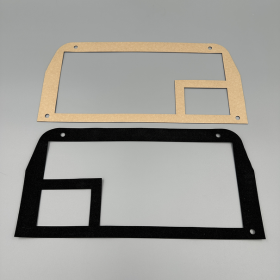
The document provides a list of compatibility of rubber materials with various oils, solvents, and chemicals used on-site. It includes a variety of materials such as Natural Rubber (NR), Butadiene Rubber (BR), Styrene Rubber (SBR), and Butyl Rubber (IIR). Additionally, selection criteria such as operating temperature, operating pressure, and piping shape are also necessary for selection. Please use this as a reference for selecting gaskets suitable for your operating fluids. [Contents] ■ Material List ■ Rubber Fluid Compatibility Table *For more details, please download the PDF or feel free to contact us.
Added to bookmarks
Bookmarks listBookmark has been removed
Bookmarks listYou can't add any more bookmarks
By registering as a member, you can increase the number of bookmarks you can save and organize them with labels.
Free membership registration
From industrial machinery to plant piping and building equipment, "rubber gaskets and packing" prevent fluid leaks and fill gaps, serving as extremely important components that support the performance and safety of equipment, despite being inconspicuous. However, even when grouped under the term "rubber," the types vary widely from natural rubber (NR) to nitrile rubber (NBR) and fluorine rubber (FKM), each possessing completely different characteristics (oil resistance, weather resistance, heat resistance, chemical resistance, mechanical strength). If this selection is incorrect, it can lead to serious problems such as "rubber swelling and leaking due to oil," "cracking due to ozone," or "hardening due to heat resulting in loss of sealing capability." In this article, we will thoroughly compare and explain the characteristics of nine major types of rubber materials, providing a "selection guide" to help you choose the right product for your application. *For detailed content of the column, please refer to the PDF. For more information, feel free to contact us.*
Added to bookmarks
Bookmarks listBookmark has been removed
Bookmarks listYou can't add any more bookmarks
By registering as a member, you can increase the number of bookmarks you can save and organize them with labels.
Free membership registration
In November 2015, a significant regulation that overturned the conventional wisdom of high-temperature insulation in Japan's industrial sector was enacted. This is the "RCF Regulation (Revised Labor Safety and Health Act)." RCF (Refractory Ceramic Fiber), which once dominated as a substitute for asbestos, has become a legally regulated substance due to concerns about its carcinogenicity. As a result, the selection of sealing and insulation materials in high-temperature areas exceeding 1000°C now faces new challenges. This article will thoroughly explain the fundamental question of "What is the RCF Regulation?" as well as why RCF is regulated and why AES has been chosen as its alternative, while unraveling the history of insulation materials. *For detailed content of the column, please refer to the PDF. For more information, feel free to contact us.*
Added to bookmarks
Bookmarks listBookmark has been removed
Bookmarks listYou can't add any more bookmarks
By registering as a member, you can increase the number of bookmarks you can save and organize them with labels.
Free membership registration
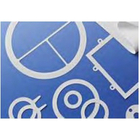
This is an example of producing a large-diameter flange gasket with an outer diameter of φ695mm and an inner diameter of φ595mm from a 3mm thick silicone rubber sheet based on the customer's drawing. The processing involved drilling 12 bolt holes of φ15mm on a P.C.D. of 655mm. Using our water jet cutting machine, we achieved high-precision cutting according to the data. Since no die was required, we were able to respond quickly to a request for a single prototype. Water jet cutting is suitable for processing elastic materials like rubber because it cuts with a high-pressure water stream. 【Processing Features】 ■ No die required, low cost, and short delivery time ■ Direct processing from drawings ■ High-quality cutting with no thermal impact ■ Easy repeat orders with data storage *For more details, please download the PDF or feel free to contact us.
Added to bookmarks
Bookmarks listBookmark has been removed
Bookmarks listYou can't add any more bookmarks
By registering as a member, you can increase the number of bookmarks you can save and organize them with labels.
Free membership registration
"I want a highly versatile gasket that can withstand both acidic and alkaline fluids. To avoid contamination of the product, a clean, white, high-performance sheet is necessary." ...In such a chemically demanding environment where higher levels of chemical resistance and cleanliness are required simultaneously, the high-performance sheet gasket "Vulcan No. MF300" (Bright Hyper) developed by Vulcan Co., Ltd. has been created to meet these stringent demands. This article will thoroughly explain why the MF300 is positioned as a higher model within the high-performance sheet series, focusing on its structural secrets, specific data that supports its performance, and the correct knowledge needed for safe use, all from a professional perspective. *For detailed content of the column, please refer to the related link. For more information, please download the PDF or feel free to contact us.*
Added to bookmarks
Bookmarks listBookmark has been removed
Bookmarks listYou can't add any more bookmarks
By registering as a member, you can increase the number of bookmarks you can save and organize them with labels.
Free membership registration
It is cumbersome to differentiate between gaskets for acidic and alkaline lines. I want to reduce the variety of stock and prevent human errors in selecting the wrong gasket. I want a single solution for all corrosive fluids." This is a significant challenge related to management costs and safety that maintenance personnel in plants handling diverse chemicals constantly face. To meet this ultimate demand, the flagship model of high-performance sheet gaskets developed under the name "universal" is the "Vulcan No. UF300" (Universal Hyper) by Vulcan Co., Ltd. In this article, we will thoroughly explain why the UF300 can be confidently declared as "capable of being used with the widest range of fluids" as the top model in the high-performance sheet series, from its structural secrets to specific data supporting its performance, and the correct knowledge for safe use, all from a professional perspective. *For detailed content of the column, please refer to the related link. For more information, please download the PDF or feel free to contact us.
Added to bookmarks
Bookmarks listBookmark has been removed
Bookmarks listYou can't add any more bookmarks
By registering as a member, you can increase the number of bookmarks you can save and organize them with labels.
Free membership registration
Among the various rubber materials, natural rubber (NR) is considered the origin and reference point. Even in today's world where various high-performance synthetic rubbers are developed, the exceptional mechanical properties of natural rubber continue to hold irreplaceable value in many fields. In this article, based on the provided physical property data, we will delve into why natural rubber remains indispensable in the industrial sector, exploring the core secret of its "strength" and the "weaknesses" that one should understand to maximize that strength. We will deliver solutions from the specialized trading company Daiko, from suitable material selection to precision processing. *For detailed content of the column, please refer to the related links. For more information, feel free to download the PDF or contact us directly.*
Added to bookmarks
Bookmarks listBookmark has been removed
Bookmarks listYou can't add any more bookmarks
By registering as a member, you can increase the number of bookmarks you can save and organize them with labels.
Free membership registration
High loads, strong impacts, and intense wear. Under such harsh conditions, rigid plastics can crack, and common rubber can tear. To solve this engineering challenge, a special material that combines the advantages of the rigidity of hard materials and the elasticity of rubber has been developed: urethane rubber (U). In this article, we will redefine why urethane rubber can be a new solution in high-load environments by examining its remarkable physical properties through material data. Furthermore, we will explain the operational rules for maximizing the use of this high-performance material, as well as the processing and selection solutions provided by the specialized trading company Daiko. *For detailed content of the column, please refer to the related links. For more information, feel free to download the PDF or contact us.*
Added to bookmarks
Bookmarks listBookmark has been removed
Bookmarks listYou can't add any more bookmarks
By registering as a member, you can increase the number of bookmarks you can save and organize them with labels.
Free membership registration
Modern advanced technologies must overcome extremely harsh environments, such as high temperatures exceeding 200°C and highly corrosive chemicals. In these extreme conditions, while other materials lose their performance, high-performance elastomers, specifically fluorine rubber (FKM), continue to exhibit stable performance over the long term. Its overwhelming heat resistance and chemical resistance place it among the highest class of rubber materials, establishing it as one of the reliable solutions in modern industry. This article will elucidate the ultimate performance of fluorine rubber through physical property data and propose selection and processing solutions to maximize its capabilities in collaboration with the specialized trading company Daiko. *For detailed content of the column, please refer to the related links. For more information, feel free to download the PDF or contact us.*
Added to bookmarks
Bookmarks listBookmark has been removed
Bookmarks listYou can't add any more bookmarks
By registering as a member, you can increase the number of bookmarks you can save and organize them with labels.
Free membership registration
In product development and technological innovation, "temperature" often stands as an insurmountable barrier. However, there exists a special material that can break through that barrier and enable technologies in areas that were previously deemed impossible. That material is silicone rubber (Si). In this article, we will redefine the essential properties of silicone rubber, demonstrating how it is not merely a "heat-resistant and cold-resistant material," but rather a "solution" that can expand technical limits. Furthermore, we will explain the selection and processing of this special material to elevate it into functional components from the perspective of the specialized trading company Daiko. *For more detailed content of the column, please refer to the related links. For further information, feel free to download the PDF or contact us.*
Added to bookmarks
Bookmarks listBookmark has been removed
Bookmarks listYou can't add any more bookmarks
By registering as a member, you can increase the number of bookmarks you can save and organize them with labels.
Free membership registration
The automobiles, buildings, and social infrastructure we see are constantly exposed to harsh environments such as sunlight, ozone, and rainwater. To ensure these facilities function over a long period, a "protective material" that shields the interior from environmental factors is essential. The key role in this is played by EPDM (ethylene propylene diene monomer rubber). In this article, we will redefine why EPDM is indispensable as the "invisible protective material" of modern society, based on its core performance characteristics derived from physical property data. Furthermore, we will propose selection and processing solutions to enable this excellent protective material to function as actual components, in collaboration with the specialized trading company Daiko. *For detailed content of the column, please refer to the related links. For more information, feel free to download the PDF or contact us.
Added to bookmarks
Bookmarks listBookmark has been removed
Bookmarks listYou can't add any more bookmarks
By registering as a member, you can increase the number of bookmarks you can save and organize them with labels.
Free membership registration
For the stable operation of industrial machinery, lubricants and hydraulic oils are essential. However, these oils can also cause many rubber materials to swell and deteriorate. To address this fundamental issue, NBR (nitrile rubber) was developed. NBR is a synthetic rubber designed with the clear purpose of "performing well in oil environments," and it should be called a specialist. In this article, we will deeply analyze why NBR has become synonymous with oil resistance, exploring the essence of its performance through physical property data. Additionally, we will clarify its "strengths" and "weaknesses" as a specialist, and propose suitable material selection and processing solutions in collaboration with the specialized trading company Daiko. *For detailed content of the column, please refer to the related links. For more information, feel free to download the PDF or contact us.*
Added to bookmarks
Bookmarks listBookmark has been removed
Bookmarks listYou can't add any more bookmarks
By registering as a member, you can increase the number of bookmarks you can save and organize them with labels.
Free membership registration
Outdoor use, contact with oil, repetitive motion, and safety. Industrial rubber components often require these seemingly contradictory performances simultaneously. To meet such complex demands, neoprene rubber (chemical name: chloroprene rubber, CR) was developed as an "engineering solution." In this article, we will redefine why neoprene is positioned as a "reliable standard material" for many engineers, based on its multifaceted performance data. Furthermore, we will propose specific applications and selection and processing solutions to maximize its performance in collaboration with the specialized trading company Daiko. *For detailed content of the column, please refer to the related link. For more information, feel free to download the PDF or contact us.
Added to bookmarks
Bookmarks listBookmark has been removed
Bookmarks listYou can't add any more bookmarks
By registering as a member, you can increase the number of bookmarks you can save and organize them with labels.
Free membership registration
The selection of rubber materials is an extremely important process that determines the performance, lifespan, and safety of a product. However, with a wide variety of options available, from natural rubber to fluorine rubber, it is not easy to judge "which rubber is the most suitable." This article serves as a comprehensive guide that consolidates information about seven major types of industrial rubber that have been individually explained so far. By deeply exploring the unique "personalities" of each material, focusing on their core characteristics and operating temperatures, we hope to assist you in making more informed material selections. We will also provide insights from the perspective of the specialized trading company Daiko, covering everything from optimal material selection to precision processing. *For detailed content of the column, please refer to the related links. For more information, feel free to download the PDF or contact us.
Added to bookmarks
Bookmarks listBookmark has been removed
Bookmarks listYou can't add any more bookmarks
By registering as a member, you can increase the number of bookmarks you can save and organize them with labels.
Free membership registration
This is an example of producing a large and complex U-shaped gasket measuring 545mm x 709mm from a non-asbestos joint sheet "Valqua No. 6500" with a thickness of 3mm, based on the customer's drawing. The processing involved drilling 17 holes with a diameter of 21mm. Using our water jet cutting machine, we achieved high precision cutting directly from CAD data. Valqua No. 6500 is a non-asbestos general-purpose joint sheet made by combining organic and inorganic fibers with NBR and other materials. It demonstrates good sealing properties against general utility fluids and has a long track record in a wide range of applications, including petroleum refining, chemical plants, ships, and general piping. [Processing Features] - Proposal for cost reduction - Low cost and short delivery time without the need for a die - Direct processing from drawings - Easy repeat orders with data storage *For more details, please download the PDF or feel free to contact us.
Added to bookmarks
Bookmarks listBookmark has been removed
Bookmarks listYou can't add any more bookmarks
By registering as a member, you can increase the number of bookmarks you can save and organize them with labels.
Free membership registration
"A pure PTFE gasket is concerning due to significant deformation (creep) caused by heat. I want to choose a reliable gasket with balanced performance for a line handling various chemicals." ...In response to the needs of environments where both chemical resistance and mechanical stability are required, the standard model of filled fluoropolymer gaskets is "Valkar No. 7020" (Valkalon Gasket) from Valkar Co., Ltd. This article will thoroughly explain why No. 7020 is commonly chosen in many chemical lines, from its structural secrets to specific data supporting its performance, as well as the correct knowledge for safe use, from a professional perspective. *For detailed content of the column, please refer to the related links. For more information, feel free to download the PDF or contact us.
Added to bookmarks
Bookmarks listBookmark has been removed
Bookmarks listYou can't add any more bookmarks
By registering as a member, you can increase the number of bookmarks you can save and organize them with labels.
Free membership registration
Contamination of products is something we absolutely want to avoid, but pure PTFE gaskets are prone to deformation (creep) and lack long-term reliability. Tightening management is difficult, and frequent re-tightening becomes necessary. This has been a long-standing dilemma faced by sites aiming to achieve both ultimate cleanliness and stable sealing performance. To address this challenge, the molecular structure of PTFE itself has been improved, resulting in the development of 'Valkar No. 7010-EX' (New Balfron Gasket) by Valkar Co., Ltd. In this article, we will thoroughly explain why No. 7010-EX can claim to have 'improved creep resistance,' from its structural secrets to specific data that supports its performance, as well as the correct knowledge for safe use, all from a professional perspective. *For detailed content of the column, please refer to the related link. For more information, please download the PDF or feel free to contact us.
Added to bookmarks
Bookmarks listBookmark has been removed
Bookmarks listYou can't add any more bookmarks
By registering as a member, you can increase the number of bookmarks you can save and organize them with labels.
Free membership registration
"There is no stock of standard sheet gaskets for large-diameter equipment." "There are distortions and scratches on the flange surface, and normal gaskets cannot stop the leakage." "Due to urgent maintenance, we must restore the seal immediately." …These are unexpected or difficult sealing challenges that are hard to address with standard-sized sheet gaskets. To meet this ultimate demand, the "Valkar No.7GS66A" (code seal [soft] oval type) developed by Valkar Co., Ltd. was created with the concept of "size-free." In this article, we will thoroughly explain why No.7GS66A can be a "trump card" for "emergency response" and "flanges with significant distortion," from the secret of its marshmallow-like softness to the most important "selection rules" and "correct usage" to fully utilize its performance, all from a professional perspective. *For detailed content of the column, you can view it through the related links. For more information, please download the PDF or feel free to contact us.
Added to bookmarks
Bookmarks listBookmark has been removed
Bookmarks listYou can't add any more bookmarks
By registering as a member, you can increase the number of bookmarks you can save and organize them with labels.
Free membership registration
In a line handling highly corrosive chemicals, leaks from flanges are absolutely unacceptable. With flanges that are glass-lined or resin-lined, high tightening force cannot be applied. These are the most demanding sealing challenges that require both advanced chemical resistance and the ability to conform to delicate flange surfaces. One solution to this difficult problem is the 'Fluororesin Jacket Gasket' series from Vulcan Corporation. In this article, we will thoroughly explain why this high-performance composite gasket is trusted in many chemical plants, covering its basic structure, the differences among the four main core materials (N, S, H, F types) that determine its performance, and the essential precautions that must be followed for safe use, all from a professional perspective. *For detailed content of the column, please refer to the related links. For more information, please download the PDF or feel free to contact us.
Added to bookmarks
Bookmarks listBookmark has been removed
Bookmarks listYou can't add any more bookmarks
By registering as a member, you can increase the number of bookmarks you can save and organize them with labels.
Free membership registration
"In a line handling highly corrosive chemicals, leaks from flanges are absolutely unacceptable. Flanges with glass lining or resin lining cannot withstand high tightening forces." This presents the most demanding sealing challenge, requiring both advanced chemical resistance and the ability to conform to delicate flange surfaces. One solution to this challenge is the "Fluororesin Jacket Gasket" series from Vulcan Corporation. In this article, we will thoroughly explain why this high-performance composite gasket is trusted in many chemical plants, covering its basic structure, the differences among the four main core materials (N, S, H, F types) that determine its performance, and the essential precautions that must be followed for safe use, all from a professional perspective. *For detailed content of the column, please refer to the related links. For more information, feel free to download the PDF or contact us directly.*
Added to bookmarks
Bookmarks listBookmark has been removed
Bookmarks listYou can't add any more bookmarks
By registering as a member, you can increase the number of bookmarks you can save and organize them with labels.
Free membership registration
"In a line handling strong acids and strong alkalis, the degradation and leakage of gaskets occur frequently." "With glass-lined flanges, it is impossible to apply clamping force, resulting in unstable seals." "Every time maintenance is performed, we struggle to peel off gaskets that have adhered to the flanges." These are serious sealing issues that arise daily in demanding environments such as chemical plants and pharmaceutical and food factories. To fundamentally solve these challenges, the high-performance sealing material designed with the philosophy of 'the right material in the right place' is the 'fluororesin jacket gasket' from Valkar Co., Ltd. In this article, we will delve into the three significant benefits that this high-performance composite gasket brings to the field, how it can solve the challenges you face, and provide specific guidelines for selecting the right product from a wide range of options, explained thoroughly from a professional perspective. *For detailed content of the column, you can view it through the related link. For more information, please download the PDF or feel free to contact us.*
Added to bookmarks
Bookmarks listBookmark has been removed
Bookmarks listYou can't add any more bookmarks
By registering as a member, you can increase the number of bookmarks you can save and organize them with labels.
Free membership registration
"I can't find the optimal gasket for the glass lining flange." "I want to achieve both high chemical resistance and flexibility that conforms to the distortion of the flange surface." "I heard that No.9010 is good, but the part numbers are too complicated, and I have no idea which one to choose." ... This is a serious issue faced by many site managers seeking high-performance sealing materials. The ultimate customized solution to this problem is Nichias Corporation's "TOMBO No.9010" (Naflon PTFE cushion gasket), commonly known as the "wrapped gasket." In this article, we will thoroughly explain the extremely complex part number system of this high-performance composite gasket, unraveling each one, and provide specific guidelines from a professional perspective to help you select the "suitable item" from countless combinations to address your challenges. *For detailed content of the column, you can view it through the related link. For more information, please download the PDF or feel free to contact us.
Added to bookmarks
Bookmarks listBookmark has been removed
Bookmarks listYou can't add any more bookmarks
By registering as a member, you can increase the number of bookmarks you can save and organize them with labels.
Free membership registration
In a line handling strong acids and strong alkalis, the deterioration and leakage of gaskets occur frequently." "With glass-lined flanges, it is impossible to apply sufficient tightening force, resulting in unstable seals." "Every time maintenance is performed, we struggle to peel off gaskets that have adhered to the flanges." …These are serious sealing issues that arise daily in demanding environments such as chemical plants and pharmaceutical and food factories. To fundamentally solve these challenges, a high-performance sealing material that embodies the philosophy of "the right material in the right place" in its ultimate form is Nichias Corporation's "TOMBO No.9010" (Naflon PTFE cushion gasket), commonly known as the "wrapped gasket." This article will delve into the three significant benefits that this high-performance composite gasket brings to the field, how it can resolve the challenges you face, and provide specific guidelines for selecting the optimal product from a wide range of options, explained thoroughly from a professional perspective. *For detailed content of the column, please refer to the related link. For more information, feel free to download the PDF or contact us directly.
Added to bookmarks
Bookmarks listBookmark has been removed
Bookmarks listYou can't add any more bookmarks
By registering as a member, you can increase the number of bookmarks you can save and organize them with labels.
Free membership registration
"Which is more suitable for our steam line, GR or NA?" "Is an inner ring necessary for this flange, or not?" "How should I specify this complex shape for the heat exchanger?" The Vortex Gasket, renowned as the "last line of defense" in sealing high-temperature and high-pressure lines, boasts immense trust. However, in exchange for its high performance, the selection process is extremely complicated, causing many field personnel to struggle. Incorrect selection can lead not only to increased costs due to over-specification but, in the worst case, could result in serious leakage incidents. This article does not praise a specific product. Using Nichias Corporation's "Vortex Gasket" as a subject, it serves as a comprehensive guide to explain a practical thought process (selection flow) aimed at solving the challenge of "complex gasket selection" that you face in the field. *For detailed content of the column, please refer to the related links. For more information, feel free to download the PDF or contact us.*
Added to bookmarks
Bookmarks listBookmark has been removed
Bookmarks listYou can't add any more bookmarks
By registering as a member, you can increase the number of bookmarks you can save and organize them with labels.
Free membership registration
Under extreme conditions such as high temperature, high pressure, thermal cycles, and cryogenic environments, the "Vortex Gasket (spiral gasket)" is trusted as the last line of defense. Its high sealing performance is essential for the stable operation of plants. However, this high performance can only be safely realized by adhering to strict rules (precautions) from design to selection, installation, and maintenance. Are you aware of this? This article does not praise the performance of the Vortex Gasket. Instead, it focuses solely on the risks hidden behind its high performance and the "precautions for use" that everyone on site must absolutely know to avoid those risks. It serves as a practical safety manual. *For detailed content of the column, please refer to the related links. For more information, feel free to download the PDF or contact us.
Added to bookmarks
Bookmarks listBookmark has been removed
Bookmarks listYou can't add any more bookmarks
By registering as a member, you can increase the number of bookmarks you can save and organize them with labels.
Free membership registration
"In high-temperature and high-pressure steam lines, the heat and pressure resistance of sheet gaskets has reached its limit." "In areas with significant temperature fluctuations (thermal cycles), gaskets quickly degrade and leaks occur." "We need a highly reliable sealing material that can handle everything from cryogenic liquefied gases to ultra-high temperature exhaust gases with a single structure." These are critical sealing challenges that arise in important lines, often referred to as the heart of the plant. In response to these challenges, Nichias Corporation presents the "Vortex Gasket" (spiral-shaped gasket), which combines the advantages of "metal" and "non-metal" to provide solutions. This article will delve into the three significant benefits that this semi-metal gasket brings to the field, how it can solve the difficult sealing challenges you face, and provide specific guidelines for selecting the appropriate product from a wide range of options, all explained from a professional perspective. *For detailed content of the column, please refer to the related link. For more information, feel free to download the PDF or contact us directly.*
Added to bookmarks
Bookmarks listBookmark has been removed
Bookmarks listYou can't add any more bookmarks
By registering as a member, you can increase the number of bookmarks you can save and organize them with labels.
Free membership registration
"Since it's a utility line, should we prioritize cost and go with the NA Vortex?" "No, since it's an important line, we should opt for the reliable GR Vortex." "Wait, this fluid is corrosive, so it has to be the Naflon Vortex, right?" The "Vortex Gasket," renowned as the "ultimate weapon" for sealing in high-temperature and high-pressure lines, boasts immense trust. However, among these, many field personnel are struggling with the appropriate differentiation of the three main models: "NA," "GR," and "Naflon (PTFE)," which are particularly in demand. This article does not unilaterally recommend specific products. Based solely on the official catalog information from Nichias Corporation, it aims to put an end to the eternal question of "Which of the three major Vortex models should we choose?" by thoroughly comparing and analyzing their performance, cost, and application ranges, providing a practical selection guide for everyone to confidently choose the "correct item" for their equipment. *For detailed content of the column, please refer to the related links. For more information, feel free to download the PDF or contact us.*
Added to bookmarks
Bookmarks listBookmark has been removed
Bookmarks listYou can't add any more bookmarks
By registering as a member, you can increase the number of bookmarks you can save and organize them with labels.
Free membership registration
"Which is more suitable for our line, black tight or clean tight?" "Is an inner ring necessary for this flange, or not?" "How should I specify this complex shape for the heat exchanger?" The "spiral wound gasket," renowned as the "last line of defense" in sealing high-temperature and high-pressure lines, boasts immense trust. However, in exchange for its high performance, the selection method is extremely complex, causing many field personnel to struggle. Incorrect selection can lead not only to increased costs due to over-specification but, in the worst case, could result in serious leakage accidents. This article does not praise a specific product. Using the Valqua "spiral wound gasket" as a subject, it serves as a comprehensive guide to explain a practical thought process (selection flow) to solve the challenge of "complex gasket selection" that you face in the field. *For detailed content of the column, you can view it through the related links. For more information, please download the PDF or feel free to contact us.
Added to bookmarks
Bookmarks listBookmark has been removed
Bookmarks listYou can't add any more bookmarks
By registering as a member, you can increase the number of bookmarks you can save and organize them with labels.
Free membership registration
"On the high-temperature and high-pressure steam line, the soft gasket could not withstand and leaked. In equipment that repeatedly starts and stops, the gasket deteriorates with each temperature change and leaks. During maintenance, it takes half a day to remove the gasket that has burned onto the flange." These are critical sealing issues that occur in important lines that can be considered the heart of the plant. In response to these challenges, the "spiral gasket" from Vulcan Corporation offers a solution by combining the advantages of "metal" and "non-metal." This article delves into the three significant benefits that this high-performance semi-metallic gasket brings to the field, how it solves the difficult sealing challenges you face, and provides specific guidelines for selecting the appropriate product from a wide range of options, explained thoroughly from a professional perspective. *For detailed content of the column, please refer to the related link. For more information, please download the PDF or feel free to contact us.*
Added to bookmarks
Bookmarks listBookmark has been removed
Bookmarks listYou can't add any more bookmarks
By registering as a member, you can increase the number of bookmarks you can save and organize them with labels.
Free membership registration
Based on the customer's drawing, we manufactured a large-diameter gasket with an outer diameter of φ548mm and an inner diameter of φ410mm from a 5mm thick NBR rubber sheet. First, we precisely cut the gasket body (with 16 φ27mm bolt holes on a P.C.D. of 510mm) and the ring-shaped parts using a water jet cutting machine. After that, we bonded the rings to both sides of the body, finishing it as a stepped seal gasket. *For more detailed information, please refer to the related links. For further details, you can download the PDF or feel free to contact us.
Added to bookmarks
Bookmarks listBookmark has been removed
Bookmarks listYou can't add any more bookmarks
By registering as a member, you can increase the number of bookmarks you can save and organize them with labels.
Free membership registration
Based on the customer's drawing, we produced a large curtain measuring 1250mm x 5600mm from a 6mm thick natural rubber sheet. Using our water jet cutting machine, we precisely cut the upper mounting holes (19 holes of φ15mm) and the curtain-like slits as a single unit. *For detailed information about the column, please refer to the related link. For more details, you can download the PDF or feel free to contact us.
Added to bookmarks
Bookmarks listBookmark has been removed
Bookmarks listYou can't add any more bookmarks
By registering as a member, you can increase the number of bookmarks you can save and organize them with labels.
Free membership registration
The "gland packing" is the heart of fluid equipment such as valves and pumps, ensuring that fluid leakage is reliably prevented. It goes without saying that this small sealing component plays an extremely important role in supporting the stable operation and safety of plants. However, even the highest performance gland packing can significantly degrade in performance with just one mistake in selection or handling, potentially leading to serious troubles such as leakage or equipment damage. In this article, we provide a "complete guide" to maximize the performance of gland packing and use it safely. We comprehensively explain the points of caution that professionals should practice, covering everything from design and selection to storage, installation, replacement, and disposal. *For detailed content of the column, please refer to the related links. For more information, feel free to download the PDF or contact us.
Added to bookmarks
Bookmarks listBookmark has been removed
Bookmarks listYou can't add any more bookmarks
By registering as a member, you can increase the number of bookmarks you can save and organize them with labels.
Free membership registration
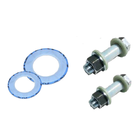
"When different metals are combined, one side becomes abnormally rusty." "Corrosion is spreading around the bolts of the piping flange." These are typical problems caused by "galvanic corrosion," which is frequently encountered in plants and machinery. Galvanic corrosion can be effectively prevented by correctly understanding its mechanism and taking appropriate measures. This article focuses on "electrical insulation," one of the many preventive measures against galvanic corrosion, and provides a comprehensive explanation of specific methods and how to select suitable insulation products according to site conditions. *For detailed content of the column, please refer to the related links. For more information, please download the PDF or feel free to contact us.*
Added to bookmarks
Bookmarks listBookmark has been removed
Bookmarks listYou can't add any more bookmarks
By registering as a member, you can increase the number of bookmarks you can save and organize them with labels.
Free membership registration
"I want to select the best product for our equipment from a wide variety of industrial sealing materials." "I urgently need a single gasket with a special shape that is not in the standard specifications." "I want to procure high-quality processed parts in a short delivery time while keeping costs down." In various industrial settings, challenges like these arise daily, from stable plant operations to maintaining the performance of machinery. One answer to these challenges is Daiko Co., Ltd., a "processing manufacturer" of industrial products. Daiko not only sells products but also utilizes industry-leading processing equipment and years of technology and experience to provide appropriate solutions tailored to each customer's challenges. This article delves into the diverse range of products centered around gaskets and packing that the company takes pride in, as well as the overwhelming processing technology that supports them. By reading this article to the end, you will understand why Daiko is relied upon in many workplaces. *For detailed content of the column, please refer to the related links. For more information, feel free to download the PDF or contact us.
Added to bookmarks
Bookmarks listBookmark has been removed
Bookmarks listYou can't add any more bookmarks
By registering as a member, you can increase the number of bookmarks you can save and organize them with labels.
Free membership registration
"The manhole packing of the boiler hardens due to heat and starts leaking immediately. The flange of the exhaust duct has a rough surface, making it impossible to seal with a sheet gasket. We want a safe non-ceramic heat-resistant material that complies with regulations." In high-temperature equipment such as power plants, waste incinerators, boilers, and drying furnaces, common gaskets quickly lose their performance due to heat. Responding to this demand is Daiko Co., Ltd., a manufacturer of industrial products that consistently produces "glass cloth gaskets" and "biodegradable cloth gaskets" in-house from raw materials to final products. This article will thoroughly explain why these heat-resistant cloth gaskets are suitable for sealing high-temperature areas, covering everything from the manufacturing process to the selection of materials based on application, as well as the limitations and precautions that should be known. *For detailed content of the column, please refer to the related links. For more information, feel free to download the PDF or contact us directly.*
Added to bookmarks
Bookmarks listBookmark has been removed
Bookmarks listYou can't add any more bookmarks
By registering as a member, you can increase the number of bookmarks you can save and organize them with labels.
Free membership registration
"We are looking for gaskets that are safe and cost-effective for piping lines of water and oil. We are considering alternatives to asbestos products, but we are concerned about processability and sealing performance. Due to sudden maintenance, we urgently need gaskets with special shapes." To meet these universal needs in "general piping" across various industries, Daiko Co., Ltd., a manufacturer of industrial products, confidently offers its original product, the "D6000 Non-Asbestos Joint Sheet." In this article, based on Daiko Co., Ltd.'s official comprehensive catalog, we will thoroughly explain why the D6000 continues to be chosen in many workplaces, its structure and outstanding performance, as well as the correct selection and usage methods to fully utilize its capabilities. *For detailed content of the column, please refer to the related link. For more information, please download the PDF or feel free to contact us.*
Added to bookmarks
Bookmarks listBookmark has been removed
Bookmarks listYou can't add any more bookmarks
By registering as a member, you can increase the number of bookmarks you can save and organize them with labels.
Free membership registration
"Since it is a resin flange, it cannot be tightened with strong force." "There may be some distortion on the flange surface, and with a sheet gasket, the leakage does not stop." "While we want the elasticity of rubber in the chemical line, we also want to ensure chemical resistance." Such issues frequently arise in the sealing of piping flanges. In particular, with PVC piping and FRP piping that cannot withstand high tightening forces, as well as flanges that are glass-lined, it is not uncommon for rigid sheet gaskets to fail to provide sufficient sealing performance. What Daiko Co., Ltd., a manufacturer of industrial products, offers is the high-performance molded gasket "D-Packing," which has a unique cross-sectional shape. In this article, based on Daiko Co., Ltd.'s official comprehensive catalog, we will thoroughly explain why D-Packing can achieve "high sealing performance" with "low tightening force," the secrets of its structure, the differentiation between two types according to application, and the correct knowledge to maximize its capabilities. *For detailed content of the column, please refer to the related link. For more information, please download the PDF or feel free to contact us.
Added to bookmarks
Bookmarks listBookmark has been removed
Bookmarks listYou can't add any more bookmarks
By registering as a member, you can increase the number of bookmarks you can save and organize them with labels.
Free membership registration
"In the line of strong acids and strong alkalis, the joint sheet deteriorates immediately." "At the dissimilar metal connections in the piping, corrosion due to electrolysis does not stop." "When using a PTFE gasket alone, the bolts loosened immediately and leaked." In chemical plants and precision equipment manufacturing lines, there are many situations where extremely high chemical resistance and electrical insulation properties are required, which cannot be addressed by common sealing materials. This article thoroughly explains why D7000 can simultaneously solve multiple challenges such as "corrosion resistance," "sealing performance," and "electrical insulation," as well as its unique hybrid structure and outstanding performance, along with the correct selection and usage methods to fully utilize its capabilities. *For detailed content of the column, please refer to the related links. For more information, feel free to download the PDF or contact us.
Added to bookmarks
Bookmarks listBookmark has been removed
Bookmarks listYou can't add any more bookmarks
By registering as a member, you can increase the number of bookmarks you can save and organize them with labels.
Free membership registration
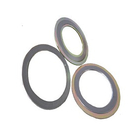
"This is a steam line with high temperature and high pressure that cannot be endured by a joint sheet." "I want to ensure a reliable seal for low-temperature fluids." "I need long-term stable sealing performance in a harsh environment where thermal cycles are repeated." Under such harsh conditions, which can be considered the heart of the plant, general gaskets are simply not sufficient. To meet the demands of these tough environments, Daiko Co., Ltd., a manufacturer of industrial products, has gathered its expertise to offer the high-performance semi-metallic gasket "D1000 Spiral Gasket." In this article, we will thoroughly explain why the D1000 Spiral Gasket is an indispensable presence in the important piping and equipment of plants, its intricate structure and outstanding performance, as well as the correct selection and usage methods to maximize its capabilities. *For detailed content of the column, please refer to the related links. For more information, please download the PDF or feel free to contact us.*
Added to bookmarks
Bookmarks listBookmark has been removed
Bookmarks listYou can't add any more bookmarks
By registering as a member, you can increase the number of bookmarks you can save and organize them with labels.
Free membership registration
"Heat is leaking from the gap in the boiler door." "How should I seal uneven areas like the connection of the exhaust duct?" "I want to cover the piping with insulation material, but there are many bends, making it impossible to use flat insulation boards." In the world of high-temperature equipment, there are many situations where flexible sealing materials and insulation are essential, not only for flat flange surfaces but also for door joints, duct seams, and curved piping. These complex and three-dimensional areas, which cannot be addressed with rigid sheet gaskets, are managed by various woven products made from fibers. This article delves into the world of heat-resistant woven products provided by Daiko Co., Ltd., a manufacturer of industrial processing products. *For detailed content of the column, please refer to the related links. For more information, please download the PDF or feel free to contact us.*
Added to bookmarks
Bookmarks listBookmark has been removed
Bookmarks listYou can't add any more bookmarks
By registering as a member, you can increase the number of bookmarks you can save and organize them with labels.
Free membership registration
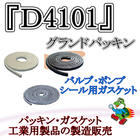
"Fluid is leaking from the pump shaft and won't stop," "The valve opening and closing is stiff, and too much torque is applied," "Which packing can withstand high-temperature thermal oil?" In the stable operation of plants and factories, "gland packing," which prevents fluid leakage from valve stems and pump shafts, plays an extremely important role as a sealing component, even though it may not be noticeable. This article will unveil the diverse world of gland packing provided by Daiko. *For detailed content of the column, you can view it through the related link. For more information, please download the PDF or feel free to contact us.*
Added to bookmarks
Bookmarks listBookmark has been removed
Bookmarks listYou can't add any more bookmarks
By registering as a member, you can increase the number of bookmarks you can save and organize them with labels.
Free membership registration
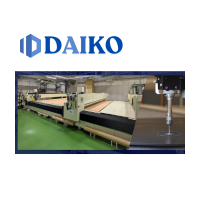
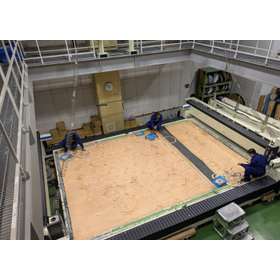
"I would like to have just one gasket made according to the drawing." "I need a large-diameter resin plate, but I don't know where to order it." "I want to create a prototype, but the mold costs are too high, so I've given up." In the manufacturing field, finding the "appropriate materials" is just as important as the "processing technology" that determines "how to shape those materials." No matter how excellent the material is, without precise processing technology, it is nothing more than a simple sheet or round rod. In this article, we will focus on the "processing equipment," which is the core secret of why Daiko Co., Ltd., a manufacturer of industrial products, can meet diverse customer needs with "high quality, short delivery times, and low costs." We will thoroughly explain the capabilities and potential of each piece of equipment. *For detailed content of the column, please refer to the related links. For more information, please download the PDF or feel free to contact us.*
Added to bookmarks
Bookmarks listBookmark has been removed
Bookmarks listYou can't add any more bookmarks
By registering as a member, you can increase the number of bookmarks you can save and organize them with labels.
Free membership registration