iPROS Manufacturing
  • Search for products by classification category

    • Electronic Components and Modules
      Electronic Components and Modules
      59254items
    • Machinery Parts
      Machinery Parts
      74877items
    • Manufacturing and processing machinery
      Manufacturing and processing machinery
      99734items
    • Scientific and Physics Equipment
      Scientific and Physics Equipment
      34812items
    • Materials
      Materials
      37086items
    • Measurement and Analysis
      Measurement and Analysis
      54923items
    • Image Processing
      Image Processing
      15053items
    • Control and Electrical Equipment
      Control and Electrical Equipment
      53222items
    • Tools, consumables, and supplies
      Tools, consumables, and supplies
      64396items
    • Design and production support
      Design and production support
      12492items
    • IT/Network
      IT/Network
      43568items
    • Office
      Office
      13770items
    • Business support services
      Business support services
      33258items
    • Seminars and Skill Development
      Seminars and Skill Development
      6316items
    • Pharmaceutical and food related
      Pharmaceutical and food related
      30350items
    • others
      73712items
  • Search for companies by industry

    • Manufacturing and processing contract
      7337
    • others
      4993
    • Industrial Machinery
      4415
    • Machine elements and parts
      3282
    • Other manufacturing
      2890
    • IT/Telecommunications
      2553
    • Trading company/Wholesale
      2470
    • Industrial Electrical Equipment
      2298
    • Building materials, supplies and fixtures
      1810
    • software
      1634
    • Electronic Components and Semiconductors
      1569
    • Resin/Plastic
      1491
    • Service Industry
      1444
    • Testing, Analysis and Measurement
      1129
    • Ferrous/Non-ferrous metals
      983
    • environment
      699
    • Chemical
      629
    • Automobiles and Transportation Equipment
      564
    • Printing Industry
      508
    • Information and Communications
      455
    • Consumer Electronics
      416
    • Energy
      327
    • Rubber products
      313
    • Food Machinery
      307
    • Optical Instruments
      277
    • robot
      271
    • fiber
      250
    • Paper and pulp
      232
    • Electricity, Gas and Water Industry
      169
    • Pharmaceuticals and Biotechnology
      167
    • Warehousing and transport related industries
      145
    • Glass and clay products
      140
    • Food and Beverage
      129
    • CAD/CAM
      125
    • retail
      109
    • Educational and Research Institutions
      105
    • Medical Devices
      103
    • Ceramics
      98
    • wood
      88
    • Transportation
      84
    • Medical and Welfare
      63
    • Petroleum and coal products
      62
    • Shipbuilding and heavy machinery
      51
    • Aviation & Aerospace
      48
    • Fisheries, Agriculture and Forestry
      42
    • Public interest/special/independent administrative agency
      31
    • equipment
      31
    • self-employed
      24
    • Research and development equipment and devices
      24
    • Government
      23
    • Materials
      22
    • Mining
      17
    • Finance, securities and insurance
      13
    • cosmetics
      11
    • Individual
      10
    • Restaurants and accommodations
      9
    • Police, Fire Department, Self-Defense Forces
      7
    • Laboratory Equipment and Consumables
      4
    • Raw materials for reagents and chemicals
      3
    • Contracted research
      3
  • Special Features
  • Ranking

    • Overall Products Ranking
    • Overall Company Ranking
Search for Products
  • Search for products by classification category

  • Electronic Components and Modules
  • Machinery Parts
  • Manufacturing and processing machinery
  • Scientific and Physics Equipment
  • Materials
  • Measurement and Analysis
  • Image Processing
  • Control and Electrical Equipment
  • Tools, consumables, and supplies
  • Design and production support
  • IT/Network
  • Office
  • Business support services
  • Seminars and Skill Development
  • Pharmaceutical and food related
  • others
Search for Companies
  • Search for companies by industry

  • Manufacturing and processing contract
  • others
  • Industrial Machinery
  • Machine elements and parts
  • Other manufacturing
  • IT/Telecommunications
  • Trading company/Wholesale
  • Industrial Electrical Equipment
  • Building materials, supplies and fixtures
  • software
  • Electronic Components and Semiconductors
  • Resin/Plastic
  • Service Industry
  • Testing, Analysis and Measurement
  • Ferrous/Non-ferrous metals
  • environment
  • Chemical
  • Automobiles and Transportation Equipment
  • Printing Industry
  • Information and Communications
  • Consumer Electronics
  • Energy
  • Rubber products
  • Food Machinery
  • Optical Instruments
  • robot
  • fiber
  • Paper and pulp
  • Electricity, Gas and Water Industry
  • Pharmaceuticals and Biotechnology
  • Warehousing and transport related industries
  • Glass and clay products
  • Food and Beverage
  • CAD/CAM
  • retail
  • Educational and Research Institutions
  • Medical Devices
  • Ceramics
  • wood
  • Transportation
  • Medical and Welfare
  • Petroleum and coal products
  • Shipbuilding and heavy machinery
  • Aviation & Aerospace
  • Fisheries, Agriculture and Forestry
  • Public interest/special/independent administrative agency
  • equipment
  • self-employed
  • Research and development equipment and devices
  • Government
  • Materials
  • Mining
  • Finance, securities and insurance
  • cosmetics
  • Individual
  • Restaurants and accommodations
  • Police, Fire Department, Self-Defense Forces
  • Laboratory Equipment and Consumables
  • Raw materials for reagents and chemicals
  • Contracted research
Special Features
Ranking
  • Overall Products Ranking
  • Overall Company Ranking
  • privacy policy
  • terms of service
  • About Us
  • Careers
  • Advertising
  1. Home
  2. Other manufacturing
  3. 澁谷工業 メカトロ統轄本部
  4. news list
Other manufacturing
  • Added to bookmarks

    Bookmarks list

    Bookmark has been removed

    Bookmarks list

    You can't add any more bookmarks

    By registering as a member, you can increase the number of bookmarks you can save and organize them with labels.

    Free membership registration

澁谷工業 メカトロ統轄本部

EstablishmentJune 1949
capital1139201Ten thousand
number of employees3000
addressIshikawa/Kanazawa-shi/Wakamiya 2-232
phone076-262-1200
  • Special site
  • Official site
last updated:Apr 14, 2026
澁谷工業logo
  • Contact this company

    Inquiry Form
  • Company information
  • Products/Services(66)
  • catalog(44)
  • news(24)

澁谷工業 List of News Articles

  • category

  • Publication year

  • Publication year : 2026

1~19 item / All 19 items

Displayed results

バッチ式.png

What are the reasons for the inability to disperse high-viscosity slurries? The mechanisms behind poor dispersion and design points for solutions.

  • NEW
  • Other・notification

In the dispersion process of high-viscosity slurries, issues such as "not being dispersed despite being mixed" and "remaining clumps" occur. The main cause of these problems is that the increase in viscosity reduces fluidity, preventing dispersion energy from being evenly transmitted throughout the system. Generally, dispersion breaks apart agglomerated particles through shear force, but in a high-viscosity state, the flow becomes localized, leading to differences between areas experiencing shear and those that do not. As a result, undispersed areas and agglomerates remain, causing variations in particle size distribution and quality issues. Furthermore, the higher the viscosity, the weaker the circulation within the equipment, making it difficult for particles to pass uniformly through the processing area, which also decreases reproducibility. In batch processing, variations in residence time and mixing state become particularly pronounced, making it easier for lot differences to occur. To achieve stable dispersion in high-viscosity systems, not only shear enhancement but also flow design and ensuring circulation are important. By simultaneously controlling flow and shear, as in inline continuous processing, uniform and highly reproducible dispersion can be achieved. Additionally, the wettability of the powder and the method of introduction during the initial dispersion are also crucial; if the initial dispersion is insufficient, the subsequent breaking efficiency decreases.

Apr 14, 2026

Added to bookmarks

Bookmarks list

Bookmark has been removed

Bookmarks list

You can't add any more bookmarks

By registering as a member, you can increase the number of bookmarks you can save and organize them with labels.

Free membership registration
カーボン混合液.jpg

What is the optimal solution for high solid content slurry dispersion? Stabilization methods through inline processing.

  • NEW
  • Other・notification

In the dispersion of high solid content slurries, viscosity increases and fluidity decreases, making it prone to poor dispersion and variability. The movement of particles is restricted, making it difficult for aggregates to break apart, and it is not uncommon for undispersed areas to remain. Additionally, poor wetting during powder addition and the formation of localized high concentration areas can lead to the occurrence of clumps, which is another challenge. These issues may not be completely resolved even with strong shear applied in subsequent processes. What is important under such high solid content conditions is to efficiently transmit dispersion energy and standardize the processing conditions for each particle. However, in batch processing, variations in flow and residence time can lead to differences in the dispersion state. On the other hand, in inline continuous processing, uniform shear can be applied to particles within the flow, allowing for efficient transmission of dispersion energy even under high viscosity and high solid content conditions. This results in a uniform dispersion state for each particle, achieving stable quality. In the dispersion of high solid content slurries, it is crucial not only to apply strong shear but also to design the process considering flow and processing conditions. Inline processing is one effective method to address these challenges.

Apr 15, 2026

Added to bookmarks

Bookmarks list

Bookmark has been removed

Bookmarks list

You can't add any more bookmarks

By registering as a member, you can increase the number of bookmarks you can save and organize them with labels.

Free membership registration
澁谷工業

What causes clumping when adding powder? Design points for preventing and addressing poor dispersion.

  • NEW
  • Other・notification

In dispersion processes, the occurrence of agglomerates (clumps) during powder addition, which cannot be resolved in subsequent dispersion stages, is a common issue in many settings. The cause of this is that the powder does not wet uniformly in the liquid, leading to the formation of localized high-concentration areas. These agglomerates are also referred to as "fisheyes," and due to their internal unwetted structure, they are difficult to break apart. Once an agglomerate forms during powder addition, liquid has difficulty penetrating its interior, resulting in only the outer layer being wetted, which makes it hard for the internal particles to be disintegrated. Additionally, depending on the addition position and speed, the powder may float on the liquid surface or remain stagnant without following the flow within the equipment, promoting the formation of agglomerates. Particularly under conditions of high viscosity or high solid content, the low fluidity makes it challenging to achieve uniformity in the initial dispersion stage, leading to a higher likelihood of agglomerates remaining. Such agglomerates may not be completely resolved even with strong shear in subsequent processes, causing variations in the quality of the final product and introducing foreign substances. To prevent the formation of agglomerates, it is crucial to improve wettability during powder addition, ensure appropriate addition positions and flow design, and optimize the initial dispersion. By performing shear and mixing simultaneously right after addition, as in inline powder addition and simultaneous dispersion, it is possible to suppress the formation of agglomerates and achieve stable dispersion quality.

Apr 14, 2026

Added to bookmarks

Bookmarks list

Bookmark has been removed

Bookmarks list

You can't add any more bookmarks

By registering as a member, you can increase the number of bookmarks you can save and organize them with labels.

Free membership registration
FOOMA2026 2.jpg

Notice of Participation in 'FOOMA JAPAN 2026' from June 2 (Tuesday) to June 5 (Friday), 2026

  • NEW
  • Company news

Shibuya Kogyo Co., Ltd. will exhibit at FOOMA JAPAN 2026, which will be held at Tokyo Big Sight from June 2 (Tuesday) to June 5 (Friday), 2026. We will introduce various devices that contribute to "quality improvement," "labor saving," and "cleaning efficiency" in food and beverage manufacturing. [Exhibition Details] ■ Two-stage superheated steam circulation baking machine (JESTOS Jr.) *Panel display and tasting available - Achieves high-quality baking that is fluffy in a short time using superheated steam - Capable of low-temperature to high-temperature cooking (with a firm browning) with a single machine - Prevents oxidation by blocking outside air with a shielding nozzle (patented) ■ 3D nozzle type container cleaning machine (TSW4000 model) *Actual machine display - Achieves high cleaning power with low water usage and short time - Contributes to reduced cleaning time and utility costs ■ Continuous and batch continuous solid-liquid mixing system *Panel display - Stabilizes the mixing and dispersion of powders and liquids inline - Accommodates high-viscosity materials and high solid content such as proteins, achieving uniform quality and reproducibility - Capable of engineering proposals including process design On the day, you can experience solutions to on-site challenges through actual machines, panels, and tastings. Please feel free to stop by our booth.

Apr 14, 2026

Added to bookmarks

Bookmarks list

Bookmark has been removed

Bookmarks list

You can't add any more bookmarks

By registering as a member, you can increase the number of bookmarks you can save and organize them with labels.

Free membership registration
プロセスフロー図 .png

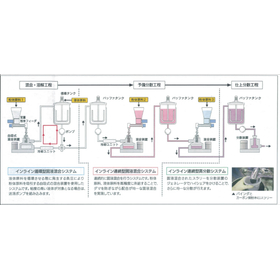
What is decentralized process design? Key points for stabilizing quality.

  • NEW
  • Other・notification

In dispersion engineering, stable quality cannot be achieved solely based on the performance of the equipment. What is important is the overall design of the process, taking into account material properties and process conditions. This is referred to as dispersion process design. Dispersion quality is determined not only by the strength of shear but also by multiple factors such as flow state, residence time, and method of input. If these conditions are not properly designed, localized agglomeration or variation can occur, making it difficult to maintain stable quality. For example, poor wetting during powder input or the occurrence of stagnant areas due to flow bias can lead to clumping or dispersion issues. Additionally, even if the shear energy is sufficient, if it does not act uniformly on all particles, differences in dispersion state will arise. Therefore, in dispersion processes, it is crucial to design "flow," "shear," and "processing time" as an integrated system. This allows for all particles to receive the same dispersion history, achieving uniform and highly reproducible dispersion quality. In particular, inline continuous processing has the advantage of maintaining consistent conditions within the flow, making it easier to ensure reproducibility in process design. Dispersion process design is a key concept for stabilizing quality and successfully scaling up.

Apr 15, 2026

Added to bookmarks

Bookmarks list

Bookmark has been removed

Bookmarks list

You can't add any more bookmarks

By registering as a member, you can increase the number of bookmarks you can save and organize them with labels.

Free membership registration
ローターステーター イラスト.png

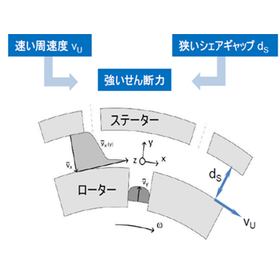
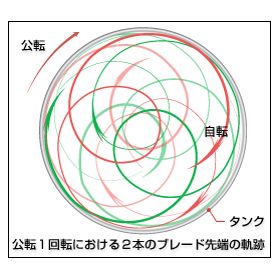
What is the relationship between viscosity and dispersion efficiency? The reason why dispersion becomes difficult under high viscosity conditions.

  • NEW
  • Other・notification

In dispersion processes, viscosity is an important factor that significantly affects dispersion efficiency. Generally, as viscosity increases, fluidity decreases, making it more difficult for dispersion energy to be transmitted to the particles. When viscosity is low, liquids flow easily, and shear energy is widely transmitted throughout the system, making it relatively easy to break apart particle agglomerates. On the other hand, as viscosity increases, flow becomes localized, and shear tends to be concentrated near the equipment. As a result, there is a mixture of particles that receive sufficient energy and those that do not, leading to variability in the dispersion state. Additionally, under high viscosity conditions, the movement of particles is also restricted, making collisions and breakdowns between agglomerates less likely. Consequently, even if the mixture appears homogeneous, there may be undispersed regions remaining internally. To enhance dispersion efficiency, it is crucial to implement appropriate shear conditions and flow designs according to viscosity. Particularly in inline continuous processing, it is possible to provide uniform shear to the particles within the flow, allowing for efficient transmission of dispersion energy even under high viscosity conditions. In dispersion processes, optimizing flow, shear, and processing time while considering the effects of viscosity is key to achieving stable dispersion quality.

Apr 15, 2026

Added to bookmarks

Bookmarks list

Bookmark has been removed

Bookmarks list

You can't add any more bookmarks

By registering as a member, you can increase the number of bookmarks you can save and organize them with labels.

Free membership registration
ローターステーター イラスト.png

What is distributed energy? A clear explanation of the important indicators that influence distributed quality.

  • NEW
  • Other・notification

In the dispersion process, it is not "how much to mix" but "how much energy to provide" that determines the quality of dispersion. The key factor here is dispersion energy. Dispersion energy refers to the amount of energy applied to break down the agglomeration of particles and achieve a uniform state. When dispersion is insufficient, it is often due to a lack of energy. Even if it appears to be mixed, the agglomeration between particles may not be resolved, leading to variations in quality and performance degradation. Dispersion energy is determined not only by the strength of the shear force but also by the duration of its application. In other words, it is important to consider it as "strength × time." In batch processing, this energy can vary for each particle, making it easier for differences in dispersion states to occur. On the other hand, in inline continuous processing, particles are subjected to the same shear conditions within a consistent flow, allowing for uniform application of dispersion energy. This results in a consistent dispersion state for each particle, achieving stable quality. In the dispersion process, it is crucial to provide the necessary dispersion energy to all particles without excess or deficiency. Therefore, process design that includes flow, shear, and processing time is essential.

Apr 15, 2026

Added to bookmarks

Bookmarks list

Bookmark has been removed

Bookmarks list

You can't add any more bookmarks

By registering as a member, you can increase the number of bookmarks you can save and organize them with labels.

Free membership registration
インラインvsバッチ 分散品質の違い.png

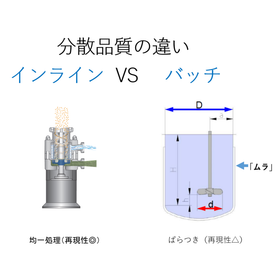
Why is continuous processing highly reproducible? An explanation of the mechanism that stabilizes distributed quality.

  • NEW
  • Other・notification

In dispersion processes, the variation in quality is one of the significant challenges. Even when processing under the same equipment and conditions, it is not uncommon for the dispersion state to differ from batch to batch. The main factor behind this is the variability in the dispersion history experienced by the particles. In batch processing, the shear and residence time experienced by each particle differ depending on their position and flow state within the tank. As a result, there is a mixture of sufficiently dispersed particles and undispersed particles, leading to variations in quality. This tendency becomes particularly pronounced under high viscosity or high solid content conditions. On the other hand, in continuous processing, particles pass through a consistent processing area, receiving nearly the same dispersion conditions. Because shear energy and residence time can be controlled consistently, the variability in dispersion history is minimized, resulting in a uniform and highly reproducible dispersion state. Moreover, continuous processing is advantageous during scale-up. By adjusting the flow rate, it becomes easier to replicate similar dispersion quality from the lab to mass production. This helps reduce the risk of quality fluctuations during the transition from development to mass production. What is crucial in dispersion processes is to provide the same processing history to all particles. Continuous processing easily meets this condition and is an effective method for stabilizing quality and ensuring reproducibility.

Apr 15, 2026

Added to bookmarks

Bookmarks list

Bookmark has been removed

Bookmarks list

You can't add any more bookmarks

By registering as a member, you can increase the number of bookmarks you can save and organize them with labels.

Free membership registration
カーボン混合液.jpg

What are the dispersion challenges of battery material slurries? Design points for uniform dispersion and quality stabilization.

  • NEW
  • Other・notification

In the manufacturing process of battery material slurry, it is important to uniformly disperse multiple materials such as conductive materials, active substances, and binders. However, on-site challenges arise, including the residual aggregation of conductive materials, variations in particle size distribution, and instability in coating properties. These issues stem from differences in dispersion behavior due to material characteristics. In particular, carbon-based conductive materials are prone to aggregation and can form a network structure if insufficient shear is applied, leading to poor dispersion. Additionally, battery material slurries often have high solid content and high viscosity, which can lead to reduced fluidity and make it difficult for dispersion energy to be transmitted uniformly. Furthermore, poor wetting during powder addition and differences in mixing order can also affect the dispersion state and final quality. Even if dispersion can be achieved without issues in the lab, variations in flow conditions and shear history during mass production may prevent the reproduction of similar quality. To resolve these challenges, it is crucial to design dispersion conditions tailored to the characteristics of the materials and to optimize the entire process, including flow, shear, and residence time. In inline continuous processing, particles are treated under consistent conditions, which helps to minimize variations in dispersion history and achieve uniform and reproducible quality. The design of the dispersion process plays a vital role in stabilizing battery performance.

Apr 15, 2026

Added to bookmarks

Bookmarks list

Bookmark has been removed

Bookmarks list

You can't add any more bookmarks

By registering as a member, you can increase the number of bookmarks you can save and organize them with labels.

Free membership registration
優れた分散性能.jpg

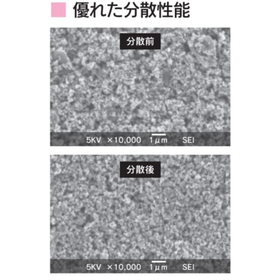
Case Studies of Distributed Engineering Failures | Why Can't We Resolve Issues with Dama and Quality Variability? Common Causes and Countermeasures.

  • NEW
  • Other・notification

In dispersion engineering, challenges such as "clumps persist regardless of how many times conditions are changed" and "variability in particle size distribution does not improve" occur in many settings. In one case, the cause of poor dispersion was attributed to equipment performance, leading to responses such as increasing rotation speed and extending processing time. However, the persistence of clumps and variability in quality were not resolved, and rather, new problems arose, such as particle fragmentation due to excessive shear. Behind such failures lies the misconception that "dispersion = just apply strong shear." In reality, if clumps are formed in the initial stage due to poor wetting or uneven flow when the powder is introduced, it is difficult to completely resolve them by applying strong shear in subsequent processes. Additionally, in batch processing, variations in flow and residence time lead to different dispersion histories for each particle, making it impossible to ensure reproducibility of quality. To address this issue, it is crucial to review the entire process, including not just changes in equipment conditions but also the steps from powder introduction to dispersion. By adopting configurations that apply shear simultaneously with powder introduction and implementing inline continuous processing that maintains consistent flow and dispersion conditions, it is possible to suppress initial clumps and achieve stable dispersion quality. Improving poor dispersion requires optimization of the entire process, not just the equipment alone.

Apr 15, 2026

Added to bookmarks

Bookmarks list

Bookmark has been removed

Bookmarks list

You can't add any more bookmarks

By registering as a member, you can increase the number of bookmarks you can save and organize them with labels.

Free membership registration
プロセス図1.jpg

What are the design points to maintain the uniformity of dispersed quality? Considerations for process design to enhance reproducibility.

  • NEW
  • Other・notification

Maintaining uniformity of quality in dispersion engineering has become an important issue in many manufacturing sites. Variations in particle size distribution and differences between batches are caused not only by equipment performance but also by differences in dispersion conditions and process design. In particular, uneven shear energy and variations in flow state can lead to differences in the disintegration state of particles, becoming a factor for quality instability. Additionally, in batch processing, variations in residence time and mixing conditions can easily occur, making it difficult to ensure reproducibility even under the same conditions. To achieve uniform dispersion quality, it is important to design the process as a whole rather than optimizing elements such as shear energy, flow state, and residence time individually. For example, by controlling the flow so that particles pass through the processing area under certain conditions, it becomes possible to suppress variations in dispersion history. Furthermore, adopting process designs that can maintain constant conditions, such as inline continuous processing, can reduce differences between batches and lead to the realization of stable dispersion quality. Uniformity is not just a result but a quality that should be built through process design, and for that, optimization from an engineering perspective is essential.

Apr 14, 2026

Added to bookmarks

Bookmarks list

Bookmark has been removed

Bookmarks list

You can't add any more bookmarks

By registering as a member, you can increase the number of bookmarks you can save and organize them with labels.

Free membership registration
バッチとローターステーター.jpg

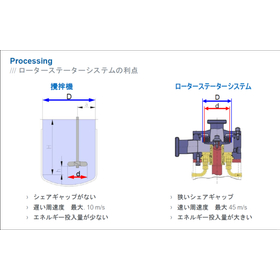
What are the reasons for changes in results from the lab to mass production? Causes and countermeasures for the deterioration of distributed quality during scale-up.

  • NEW
  • Other・notification

Despite obtaining good dispersion results in the lab, the challenge of unstable quality upon mass production occurs in many settings. The main cause of this is that the dispersion conditions are not replicated due to differences in scale. In lab equipment, the smaller size leads to higher energy density, making shear and flow more uniform, while in mass production equipment, the larger scale often results in insufficient dispersion energy at the same rotational speed and processing time. Additionally, differences in equipment structure and flow patterns can cause variations in the shear history and residence time experienced by particles, leading to differences in the dispersion state. Furthermore, simple scale-up does not ensure that critical parameters such as flow rate, residence time, and shear intensity match, making it difficult to reproduce the same results as in the lab. To address these challenges, it is essential to focus on process design based on dispersion energy density and flow conditions rather than merely increasing equipment size. By designing the system so that particles pass through the processing area under consistent conditions, it is possible to achieve reproducible dispersion quality even when the scale changes, as seen in inline continuous processing.

Apr 14, 2026

Added to bookmarks

Bookmarks list

Bookmark has been removed

Bookmarks list

You can't add any more bookmarks

By registering as a member, you can increase the number of bookmarks you can save and organize them with labels.

Free membership registration
バッチ式.png

What are the reasons for the inability to disperse high solid content slurries? Causes of poor dispersion and design points for solutions.

  • NEW
  • Other・notification

In the dispersion process of high solid content slurries, problems such as "too high viscosity to mix" and "unable to break down agglomerates" occur. The main cause of these issues is the increased frequency of particle contact, which strengthens the cohesive forces. As the solid content concentration increases, the distance between particles decreases, leading to interference between particles that reduces fluidity and prevents sufficient dispersion energy from being transmitted. Additionally, the crowding of particles restricts flow and makes shear localized, resulting in the persistence of undispersed areas and agglomerates. Furthermore, in a high solid content state, the increase in viscosity also leads to poor circulation and stagnation, causing variability in the dispersion state within the process. Particularly in batch processing, mixing inconsistencies and differences in processing history directly translate into quality differences, making it difficult to ensure reproducibility. To achieve stable dispersion under high solid content conditions, it is important not only to increase shear force but also to consider dispersion design that takes into account inter-particle interactions, as well as process design that simultaneously controls flow and shear. By establishing a mechanism like inline continuous processing, where particles pass through the processing area under constant conditions, uniform and highly reproducible dispersion can be achieved even at high solid contents.

Apr 14, 2026

Added to bookmarks

Bookmarks list

Bookmark has been removed

Bookmarks list

You can't add any more bookmarks

By registering as a member, you can increase the number of bookmarks you can save and organize them with labels.

Free membership registration
粒度分布比較図_v3.jpg

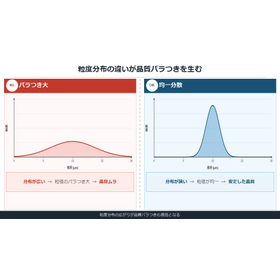
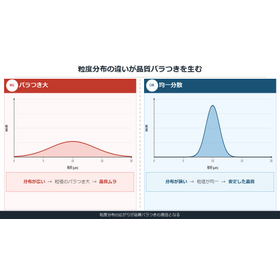
Why does dispersion not become uniform? An explanation of the causes of aggregation residuals and distribution variability, as well as design points to achieve uniform dispersion.

  • NEW
  • Other・notification

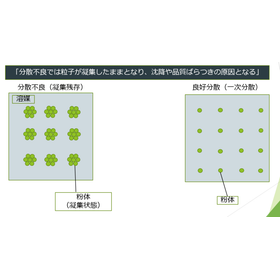
In dispersion engineering, there are many cases where, although the appearance seems mixed, the particles are not actually uniformly dispersed. One of the causes of this is that the aggregation between particles has not been sufficiently resolved. When there is insufficient dispersion energy, the particles do not break down to primary particles, and aggregates remain. Additionally, if the shear conditions or flow state are uneven, the dispersion state can vary locally, resulting in variations in particle size distribution. This is particularly true in high-viscosity systems or high solid content slurries, where low flowability makes it difficult for energy to be transmitted uniformly, leading to dispersion inconsistencies. Furthermore, in batch processing, variations in mixing uniformity and residence time tend to make it difficult to maintain a uniform dispersion state throughout the process. To achieve uniform dispersion, it is important to design dispersion energy according to particle characteristics and to maintain uniform flow conditions in the process design. By maintaining consistent shear conditions, as in inline continuous processing, it is possible to achieve a uniform dispersion state and reproducible quality. The order of input, the wettability of the powder, and the initial mixing state of the dispersion also have a significant impact on uniformity. In particular, if local clumps or uneven distribution occur during powder input, it becomes difficult to resolve them in subsequent dispersion processes, leading to dispersion inconsistencies.

Apr 14, 2026

Added to bookmarks

Bookmarks list

Bookmark has been removed

Bookmarks list

You can't add any more bookmarks

By registering as a member, you can increase the number of bookmarks you can save and organize them with labels.

Free membership registration
粒度分布比較図_v3.jpg

What are the causes and countermeasures for quality variation in dispersed engineering? An explanation of design points to prevent instability in particle size distribution and reduced reproducibility.

  • NEW
  • Other・notification

In dispersion processes, issues such as unstable particle size distribution and quality variation between batches occur in many settings. These quality variations are caused not only by equipment performance but also by variations in dispersion conditions, flow states, and process design. For example, when shear energy is uneven, differences arise in the disintegration state of particles, leading to a wider particle size distribution and residual agglomeration. Additionally, in batch processing, variations in mixing uniformity and residence time can cause fluctuations in dispersion state between batches, making it difficult to ensure reproducibility. Particularly in high-viscosity systems or high solid content slurries, even slight variations in conditions can significantly impact quality. To suppress quality variations, it is crucial to design processes that maintain consistent dispersion energy and flow conditions. By stabilizing conditions, as in inline continuous processing, it becomes possible to reduce inter-batch differences and achieve stable dispersion quality. Furthermore, in dispersion processes, not only the performance of the equipment itself but also operating conditions such as input order, residence time, and flow control greatly affect quality. Inline continuous processing makes it easier to maintain these conditions consistently, ensuring stable dispersion even in high-viscosity slurries. By designing the entire process, it is possible to fundamentally suppress quality variations.

Apr 14, 2026

Added to bookmarks

Bookmarks list

Bookmark has been removed

Bookmarks list

You can't add any more bookmarks

By registering as a member, you can increase the number of bookmarks you can save and organize them with labels.

Free membership registration
分散トラブル.png

What are the causes of dispersion troubles? An explanation of the reasons for aggregation, sedimentation, and variation, as well as design points to reconsider in the dispersion process.

  • NEW
  • Other・notification

In dispersion engineering, issues such as unresolved agglomeration, sedimentation, and unstable particle size distribution occur frequently at many sites. These problems are caused not only by the performance of the equipment but also by inconsistencies in particle characteristics, dispersion conditions, and process design. For example, when there is insufficient dispersion energy, particles do not break down to primary particles, and agglomeration remains. Additionally, if the shear conditions or flow state are not appropriate, uniform dispersion cannot be achieved, leading to sedimentation and variations in quality. Particularly in high-viscosity systems or high solid content slurries, even slight differences in conditions can significantly impact the results. Furthermore, in batch processing, variations in mixing uniformity and residence time make it difficult to ensure reproducibility. To resolve these dispersion issues, it is important to optimize the entire process, including particle characteristics, dispersion energy, and flow design, rather than simply changing the equipment. By maintaining consistent conditions, as in inline continuous processing, stable dispersion quality and reproducibility can be achieved.

Apr 14, 2026

Added to bookmarks

Bookmarks list

Bookmark has been removed

Bookmarks list

You can't add any more bookmarks

By registering as a member, you can increase the number of bookmarks you can save and organize them with labels.

Free membership registration
IPROS40862574326751949523.png

What are the reasons for the deterioration of distributed quality during scale-up? An explanation of the essence of how results change between the lab and mass production, along with design points to ensure reproducibility.

  • NEW
  • Other・notification

While dispersion was successful in the lab, transitioning to mass production leads to sedimentation and aggregation, resulting in unstable quality. Such challenges occur in many settings. One cause is that simple scale-up does not reproduce the flow conditions and shear conditions. Merely increasing the size of the stirrer significantly changes the forces acting on the particles and the dispersion state, making it impossible to achieve the same results as in the lab. This is particularly true for high-viscosity systems and nanoparticle dispersions, where even slight differences in conditions can greatly affect dispersion quality. Additionally, batch processing is susceptible to the effects of residence time and mixing uniformity, making it difficult to ensure reproducibility. To address these challenges, it is crucial to review the entire process, including shear history and flow design, rather than just scaling up the equipment. Approaches that maintain consistent conditions, such as inline continuous processing, are needed to reduce variability in dispersion state and replicate lab results in mass production. Furthermore, during scale-up, indicators such as energy density and circulation frequency become important, necessitating designs that maintain the amount of shear applied per unit volume. From this perspective, ensuring reproducibility throughout the entire process is key to stable production.

Apr 13, 2026

Added to bookmarks

Bookmarks list

Bookmark has been removed

Bookmarks list

You can't add any more bookmarks

By registering as a member, you can increase the number of bookmarks you can save and organize them with labels.

Free membership registration
IPROS40862574326751949523.png

Why does slurry settle? An explanation of the causes of instability after dispersion and key points for dispersion design and process improvement to prevent settling.

  • NEW
  • Other・notification

Even slurries that appear uniform after dispersion often face challenges of instability in quality due to sedimentation and separation over time, which is commonly observed in many settings. This phenomenon is not merely a result of insufficient stirring; it is influenced by the aggregation state of the particles, a lack of dispersion energy, and complex inter-particle interactions in the liquid. Particularly in the case of nanoparticles or high solid content slurries, even slight dispersion issues can significantly affect sedimentation behavior, leading to variations in product performance. Additionally, batch processing is susceptible to changes in state over time, making it difficult to ensure reproducibility. To suppress sedimentation, it is crucial to not only mix but also to break down particles to the primary particle level and achieve uniform dispersion. Furthermore, maintaining consistent shear conditions, as in inline continuous processing, can help stabilize the dispersion state and ensure uniform quality. Designing the dispersion state throughout the entire process is key to producing stable slurries that do not sediment.

Apr 14, 2026

Added to bookmarks

Bookmarks list

Bookmark has been removed

Bookmarks list

You can't add any more bookmarks

By registering as a member, you can increase the number of bookmarks you can save and organize them with labels.

Free membership registration
FOOMA2026 2.jpg

【June 2, 2026 (Tuesday) - June 5, 2026 (Friday)】 Announcement of participation in 'FOOMA JAPAN 2026'

  • NEW
  • Seminar・Event

Shibuya Kogyo Co., Ltd. will exhibit at FOOMA JAPAN 2026, which will be held at Tokyo Big Sight from June 2 (Tuesday) to June 5 (Friday), 2026. We will introduce various devices that contribute to "quality improvement," "labor saving," and "cleaning efficiency" in food and beverage manufacturing. [Exhibition Details] ■ Two-stage superheated steam circulation baking machine (JESTOS Jr.) *Panel display and tasting available - Achieves fluffy, high-quality baking in a short time using superheated steam - Capable of low-temperature to high-temperature cooking (with a firm browning) with just one machine - Prevents oxidation by blocking outside air with a shielding nozzle (patented) ■ 3D nozzle type container cleaning machine (TSW4000 model) *Actual machine display - Achieves high cleaning power with low water usage and short time - Contributes to reduced cleaning time and utility costs ■ Continuous and batch continuous solid-liquid mixing system *Panel display - Stable inline processing of mixing and dispersing powders and liquids - Accommodates high-viscosity materials and high solid content such as proteins, achieving uniformity and reproducibility in quality - Capable of engineering proposals including process design On the day, you can experience solutions to on-site challenges through actual machines, panels, and tastings. Please be sure to stop by our booth.

Apr 14, 2026

Added to bookmarks

Bookmarks list

Bookmark has been removed

Bookmarks list

You can't add any more bookmarks

By registering as a member, you can increase the number of bookmarks you can save and organize them with labels.

Free membership registration
Prev 1 Next
  • あなたの設計時間 CADに奪われていませんか? 制約から解放される新たな設計環境へ
  • 金属・化学・窯業・食品・医療品などのほぐし・解砕・ふるい分けがこれ一台 解砕機構付き佐藤式振動ふるい機 つばさ デモ実施中!
    • Contact this company

      Inquiry Form

    Products

    • Search for Products

    Company

    • Search for Companies

    Special Features

    • Special Features

    Ranking

    • Overall Products Ranking
    • Overall Company Ranking

    support

    • site map
    IPROS
    • privacy policy Regarding external transmission of information
    • terms of service
    • About Us
    • Careers
    • Advertising
    COPYRIGHT © 2001-2026 IPROS CORPORATION ALL RIGHTS RESERVED.
    Please note that the English text on this page is automatically translated and may contain inaccuracies.