1351~1395 item / All 1771 items
Displayed results
Filter by category

Added to bookmarks
Bookmarks listBookmark has been removed
Bookmarks listYou can't add any more bookmarks
By registering as a member, you can increase the number of bookmarks you can save and organize them with labels.
Free membership registration
Contact this company
Inquiry FormBefore making an inquiry
Download Profile1351~1395 item / All 1771 items
Filter by category

In the packaging manufacturing industry, there is a demand for balancing quality maintenance and production efficiency. While the operation of a quality management system based on ISO standards is important, a disconnect between this system and actual on-site operations can lead to delays in production planning and variations in quality. Our support for improving ISO operations and standardizing business processes helps visualize current operations and connect ISO standards with actual work, contributing to the establishment and implementation of a management system that can be operated and improved on-site, thereby enhancing process efficiency. 【Usage Scenarios】 - Improvement of resource efficiency through standardization of manufacturing processes - Strengthening of quality management systems - Acquisition and maintenance of ISO certification - Increased productivity through business efficiency improvements - Enhanced understanding of work among employees 【Benefits of Implementation】 - Increased productivity and cost reduction - Stabilization of quality - Strengthened compliance adherence - Overall performance improvement of the organization
Added to bookmarks
Bookmarks listBookmark has been removed
Bookmarks listYou can't add any more bookmarks
By registering as a member, you can increase the number of bookmarks you can save and organize them with labels.
Free membership registration
In a design office, it is essential to respond to the diverse requests of clients while maintaining consistent quality and an efficient production process. The operation of a quality management system based on ISO standards helps in standardizing operations and maintaining quality, but if there is a disconnect with the actual work on-site, it can lead to production delays and variations in specifications. Our support for improving ISO operations and standardizing business processes helps visualize current operations and connect ISO standards with actual work, thereby assisting in the establishment and entrenchment of a management system that can be operated and improved on-site, contributing to process efficiency. 【Usage Scenarios】 - Improved resource efficiency through the standardization of the production process - Strengthening of the quality management system - Acquisition and maintenance of ISO certification - Increased productivity through business efficiency - Enhanced understanding of work among employees 【Effects of Implementation】 - Increased productivity and cost reduction - Stabilization of quality - Strengthening of compliance adherence - Improvement of overall organizational performance
Added to bookmarks
Bookmarks listBookmark has been removed
Bookmarks listYou can't add any more bookmarks
By registering as a member, you can increase the number of bookmarks you can save and organize them with labels.
Free membership registration
In the advertising agency industry, it is essential to meet the diverse needs of clients and deliver high-quality deliverables by the deadline. The operation of a quality management system based on ISO standards contributes to the standardization and efficiency of operations; however, if there is a disconnect between this system and the actual work on the ground, it can lead to delays in delivery and variations in quality. Our support for ISO operation improvement and business standardization helps visualize current operations and connect ISO standards with actual work, thereby assisting in the establishment and entrenchment of a management system that can be operated and improved on-site, contributing to process efficiency. 【Usage Scenarios】 - Improved resource efficiency through the standardization of the production process - Strengthening of the quality management system - Acquisition and maintenance of ISO certification - Increased productivity through operational efficiency - Enhanced understanding of work among employees 【Effects of Implementation】 - Increased productivity and cost reduction - Stabilization of quality - Strengthened compliance - Overall performance improvement of the organization
Added to bookmarks
Bookmarks listBookmark has been removed
Bookmarks listYou can't add any more bookmarks
By registering as a member, you can increase the number of bookmarks you can save and organize them with labels.
Free membership registration
In the publishing industry, there is a demand for balancing the maintenance of content quality with the efficiency of production and distribution processes. While the operation of a quality management system based on ISO standards is important, a disconnect from the actual on-site operations can lead to delays in production schedules and variations in quality. Our support for improving ISO operations and standardizing business processes helps visualize current operations and connect ISO standards with actual work, thereby assisting in the establishment and embedding of a management system that can be operated and improved on-site, contributing to process efficiency. 【Usage Scenarios】 - Improvement of resource efficiency through standardization of manufacturing processes - Strengthening of quality management systems - Acquisition and maintenance of ISO certification - Increased productivity through business efficiency - Enhanced understanding of work among employees 【Effects of Implementation】 - Increased productivity and cost reduction - Stabilization of quality - Strengthened compliance with regulations - Improved overall organizational performance
Added to bookmarks
Bookmarks listBookmark has been removed
Bookmarks listYou can't add any more bookmarks
By registering as a member, you can increase the number of bookmarks you can save and organize them with labels.
Free membership registration
In the printing industry, there is a demand for balancing quality maintenance and production efficiency. While the operation of a quality management system based on ISO standards is important, a disconnect from actual on-site operations can lead to delays in production planning and variations in quality. Our support for improving ISO operations and standardizing business processes helps visualize current operations and connect ISO standards with actual work, thereby assisting in the establishment and entrenchment of a management system that can be operated and improved on-site, contributing to process efficiency. 【Usage Scenarios】 - Improvement of resource efficiency through standardization of manufacturing processes - Strengthening of quality management systems - Acquisition and maintenance of ISO certification - Increased productivity through business efficiency improvements - Enhanced understanding of work among employees 【Effects of Implementation】 - Increased productivity and cost reduction - Stabilization of quality - Strengthening of compliance adherence - Overall improvement in organizational performance
Added to bookmarks
Bookmarks listBookmark has been removed
Bookmarks listYou can't add any more bookmarks
By registering as a member, you can increase the number of bookmarks you can save and organize them with labels.
Free membership registration
In the wood processing industry, there is a demand for reducing environmental impact and establishing a sustainable production system. To achieve this, the operation of a quality management system based on ISO standards is crucial. However, if there is a disconnect between actual on-site operations and these standards, it may hinder the achievement of environmental goals and efficient production activities. Our support for improving ISO operations and standardizing business processes helps visualize current operations and connect ISO standards with actual practices, contributing to the reduction of environmental impact and supporting the establishment and maintenance of a management system that can be operated and improved on-site. 【Usage Scenarios】 - Improving resource efficiency through the standardization of manufacturing processes - Strengthening environmental management systems - Obtaining and maintaining certifications for standards such as ISO 14001 - Reducing energy consumption through business efficiency improvements - Enhancing employee environmental awareness 【Benefits of Implementation】 - Achieving reduced environmental impact and a sustainable production system - Strengthening compliance adherence - Improving productivity and reducing costs - Enhancing corporate image - Improving overall organizational performance
Added to bookmarks
Bookmarks listBookmark has been removed
Bookmarks listYou can't add any more bookmarks
By registering as a member, you can increase the number of bookmarks you can save and organize them with labels.
Free membership registration
In the textile industry, maintaining product quality and improving production efficiency are essential. To achieve this, the implementation of a quality management system based on ISO standards is crucial. However, if there is a disconnect between the actual on-site operations and the standards, it may hinder the stabilization of processes and the enhancement of productivity. Our support for improving ISO operations and standardizing business processes visualizes the current operations and connects ISO standards with actual practices, contributing to process optimization and supporting the establishment and entrenchment of a management system that can be operated and improved on-site. 【Usage Scenarios】 - Improving resource efficiency through standardization of manufacturing processes - Strengthening quality management systems - Obtaining and maintaining certifications such as ISO 9001 - Enhancing productivity through business efficiency improvements - Raising employee awareness of quality 【Benefits of Implementation】 - Increased productivity and cost reduction - Strengthened compliance adherence - Stabilization of product quality - Overall improvement in organizational performance
Added to bookmarks
Bookmarks listBookmark has been removed
Bookmarks listYou can't add any more bookmarks
By registering as a member, you can increase the number of bookmarks you can save and organize them with labels.
Free membership registration
In the pharmaceutical industry, it is essential to operate a strict manufacturing and quality management system in compliance with GMP (Good Manufacturing Practice) to ensure product safety and quality. The implementation of a quality management system based on ISO standards serves as a foundation to support GMP compliance; however, if there is a disconnect between this system and actual on-site operations, it may hinder the achievement of quality objectives and efficient production activities. Our support for ISO operational improvement and business standardization visualizes current operations and connects GMP and ISO standards with actual business practices, contributing to the achievement of quality goals and supporting the establishment and entrenchment of a management system that can be operated and improved on-site. 【Usage Scenarios】 - Stabilization of quality through standardization of manufacturing processes - Strengthening of quality management systems - Acquisition and maintenance of certifications such as GMP and ISO - Improvement of productivity through operational efficiency - Enhancement of employee quality awareness 【Benefits of Implementation】 - Strengthening of GMP compliance and realization of quality assurance systems - Enhanced compliance adherence - Increased productivity and cost reduction - Improved corporate image - Overall performance enhancement of the organization
Added to bookmarks
Bookmarks listBookmark has been removed
Bookmarks listYou can't add any more bookmarks
By registering as a member, you can increase the number of bookmarks you can save and organize them with labels.
Free membership registration
In the retail industry, there is a demand for improved customer satisfaction and sustainable business operations. To achieve this, it is crucial to implement a quality management system based on ISO standards; however, if there is a disconnect between actual on-site operations and these standards, it may hinder the ability to respond to customer needs and efficiently manage stores. Our support for ISO operation improvement and business standardization helps visualize current operations and connect ISO standards with actual practices, contributing to enhanced customer satisfaction and supporting the establishment and entrenchment of a management system that can be operated and improved on-site. 【Usage Scenarios】 - Improvement of service quality through the standardization of store operation processes - Strengthening customer response systems - Acquisition and maintenance of certifications such as ISO 9001 - Reduction of customer wait times through operational efficiency - Enhancement of employee service awareness 【Benefits of Implementation】 - Realization of improved customer satisfaction and sustainable store operations - Strengthening of compliance adherence - Increased efficiency and cost reduction in store operations - Enhancement of corporate image - Overall improvement in organizational performance
Added to bookmarks
Bookmarks listBookmark has been removed
Bookmarks listYou can't add any more bookmarks
By registering as a member, you can increase the number of bookmarks you can save and organize them with labels.
Free membership registration
In the energy industry, there is a demand for reducing environmental impact and establishing sustainable production systems. To achieve this, the operation of a quality management system based on ISO standards is important; however, if there is a disconnect between actual on-site operations and these standards, it may hinder the achievement of environmental goals and efficient production activities. Our support for improving ISO operations and standardizing business processes visualizes current operations and connects ISO standards with actual practices, contributing to the reduction of environmental impact and supporting the establishment and embedding of a management system that can be operated and improved on-site. 【Usage Scenarios】 - Improving resource efficiency through the standardization of manufacturing processes - Strengthening environmental management systems - Obtaining and maintaining certifications for standards such as ISO 14001 - Reducing energy consumption through business efficiency improvements - Raising employee awareness of environmental issues 【Benefits of Implementation】 - Achieving reduced environmental impact and sustainable production systems - Strengthening compliance adherence - Improving productivity and reducing costs - Enhancing corporate image - Improving overall organizational performance
Added to bookmarks
Bookmarks listBookmark has been removed
Bookmarks listYou can't add any more bookmarks
By registering as a member, you can increase the number of bookmarks you can save and organize them with labels.
Free membership registration
In the aerospace industry, high levels of safety and reliability are required, and the implementation of a strict quality management system is essential. The operation of a management system based on ISO standards is important for meeting these demands; however, if there is a disconnect between the actual on-site operations and the standards, it may hinder the achievement of safety standards and efficient development and production activities. Our support for ISO operation improvement and business standardization visualizes the current operations and connects ISO standards with actual practices, contributing to enhanced safety and supporting the establishment and integration of a management system that can be operated and improved on-site. 【Usage Scenarios】 - Quality improvement through standardization of development and manufacturing processes - Strengthening of safety management systems - Acquisition and maintenance of certifications such as ISO 9001 - Risk reduction through improved operational efficiency - Enhancement of employee awareness regarding quality and safety 【Benefits of Implementation】 - Improvement in safety and reliability - Strengthening of compliance adherence - Increased productivity and cost reduction - Enhancement of corporate image - Overall improvement in organizational performance
Added to bookmarks
Bookmarks listBookmark has been removed
Bookmarks listYou can't add any more bookmarks
By registering as a member, you can increase the number of bookmarks you can save and organize them with labels.
Free membership registration
In the IT and software industry, ensuring information security, such as cybersecurity measures and personal information protection, is regarded as extremely important. The operation of a quality management system based on ISO standards is essential to meet these requirements; however, if there is a gap between the actual development and operational processes, it can increase the risk of security incidents and hinder compliance. Our support for ISO operational improvement and business standardization visualizes current operations and connects ISO standards with actual business practices, contributing to the enhancement of information security levels and supporting the establishment and embedding of a management system that can be operated and improved on-site. 【Usage Scenarios】 - Strengthening information security management systems - Obtaining and maintaining certifications for standards such as ISO 27001 - Reducing risks through the standardization of development and operational processes - Enhancing employee security awareness - Strengthening compliance 【Benefits of Implementation】 - Reducing the risk of information security incidents - Strengthening compliance - Improving the overall security level of the organization - Enhancing corporate image - Achieving sustainable business operations
Added to bookmarks
Bookmarks listBookmark has been removed
Bookmarks listYou can't add any more bookmarks
By registering as a member, you can increase the number of bookmarks you can save and organize them with labels.
Free membership registration
In the medical device industry, strict regulatory compliance is required to ensure the safety and effectiveness of products. Therefore, the operation of a quality management system based on ISO standards is essential; however, if there is a gap between actual on-site operations and these standards, it may hinder the achievement of regulatory requirements and the maintenance of product quality. Our support for ISO operational improvement and business standardization visualizes current operations and connects ISO standards with actual business practices, thereby assisting in compliance with regulatory requirements and supporting the establishment and entrenchment of a management system that can be operated and improved on-site. 【Usage Scenarios】 - Strengthening regulatory compliance through the standardization of manufacturing and quality management processes - Obtaining and maintaining certifications for standards such as ISO 13485 - Reducing human errors through business efficiency improvements - Enhancing employees' quality awareness 【Benefits of Implementation】 - Strengthened regulatory compliance and reduced compliance risks - Stabilization of product quality and increased reliability - Improved productivity and cost reduction - Enhanced corporate image - Overall performance improvement of the organization
Added to bookmarks
Bookmarks listBookmark has been removed
Bookmarks listYou can't add any more bookmarks
By registering as a member, you can increase the number of bookmarks you can save and organize them with labels.
Free membership registration
In the automotive industry's supply chain, maintaining a quality management system and addressing environmental impact reduction are essential. While operations based on ISO standards are important, discrepancies between actual business practices and these standards can affect the efficiency and sustainability of the entire supply chain. Our support for improving ISO operations and standardizing business processes visualizes the current operations within the supply chain and connects ISO standards with actual practices, contributing to environmental impact reduction and supporting the establishment and embedding of a management system that can be operated and improved on-site. 【Utilization Scenarios】 - Improving resource efficiency through standardization of manufacturing processes - Strengthening environmental management systems - Obtaining and maintaining certifications for standards such as ISO 14001 - Reducing energy consumption through business efficiency improvements - Enhancing employee environmental awareness 【Effects of Implementation】 - Reduction of environmental impact and realization of a sustainable production system - Strengthening compliance adherence - Increased productivity and cost reduction - Improvement of corporate image - Overall performance enhancement of the organization
Added to bookmarks
Bookmarks listBookmark has been removed
Bookmarks listYou can't add any more bookmarks
By registering as a member, you can increase the number of bookmarks you can save and organize them with labels.
Free membership registration
In the chemical industry, maintaining a strict safety management system and reducing environmental impact are required. The operation of a quality management system based on ISO standards is important in meeting these demands; however, if there is a disconnect between this and on-site safety management tasks, it can increase the risk of accidents and hinder regulatory compliance. Our support for improving ISO operations and standardizing business processes visualizes the current operations in safety management within the chemical industry and connects ISO standards with actual operations, thereby assisting in achieving safety goals, reducing accident risks, and establishing and embedding a management system that can be operated and improved on-site. 【Usage Scenarios】 - Standardization of chemical substance management processes - Strengthening of safety management systems - Acquisition and maintenance of certification for standards such as ISO 45001 - Streamlining operations to reduce accident risks - Enhancing employee safety awareness 【Benefits of Implementation】 - Strengthening of safety management systems and reduction of accident risks - Enhanced compliance adherence - Increased productivity and cost reduction - Improved corporate image - Overall performance improvement of the organization
Added to bookmarks
Bookmarks listBookmark has been removed
Bookmarks listYou can't add any more bookmarks
By registering as a member, you can increase the number of bookmarks you can save and organize them with labels.
Free membership registration
In the food and beverage industry, there is a growing concern for consumer safety and security, leading to the demand for strict quality management systems. Quality management based on ISO standards is essential for ensuring product reliability; however, if there is a disconnect between actual on-site operations and these standards, it may hinder the achievement of quality goals and efficient production activities. Our support for improving ISO operations and standardizing business processes contributes to strengthening the quality management system by visualizing current operations and linking ISO standards with actual practices, thereby assisting in the establishment and entrenchment of a management system that can be operated and improved on-site. 【Application Scenarios】 - Stabilizing quality through standardization of manufacturing processes - Strengthening hygiene management systems such as HACCP - Obtaining and maintaining certifications for standards like ISO 9001 - Improving productivity through operational efficiency - Enhancing employees' quality awareness 【Benefits of Implementation】 - Stabilization and improvement of product quality - Strengthening compliance adherence - Increased productivity and cost reduction - Enhancement of corporate image - Overall improvement in organizational performance
Added to bookmarks
Bookmarks listBookmark has been removed
Bookmarks listYou can't add any more bookmarks
By registering as a member, you can increase the number of bookmarks you can save and organize them with labels.
Free membership registration
In the metal processing industry, it is important to maintain a consistent product quality and gain the trust of customers. To achieve this, it is necessary to establish a quality management system based on ISO standards and ensure that it is effectively implemented on-site. However, merely "creating" or "adhering to" ISO operations can lead to a disconnect from actual business practices, resulting in variations in quality and inefficiencies. Our support for improving ISO operations and standardizing business processes helps visualize current operations and connect ISO with actual practices, facilitating the establishment and embedding of a management system that can be operated and improved on-site. 【Usage Scenarios】 - Standardization of manufacturing processes - Strengthening of quality management systems - Acquisition and maintenance of certifications such as ISO 9001 - Business efficiency improvement and cost reduction - Employee skill enhancement and awareness improvement 【Benefits of Implementation】 - Stabilization and improvement of product quality - Increased customer satisfaction - Enhanced productivity and cost reduction - Strengthened compliance with regulations - Overall improvement in organizational performance
Added to bookmarks
Bookmarks listBookmark has been removed
Bookmarks listYou can't add any more bookmarks
By registering as a member, you can increase the number of bookmarks you can save and organize them with labels.
Free membership registration
In the paper industry, there is a demand for reducing environmental impact and establishing a sustainable production system. To achieve this, the operation of a quality management system based on ISO standards is crucial; however, if there is a disconnect between actual on-site operations and these standards, it may hinder the achievement of environmental goals and efficient production activities. Our support for improving ISO operations and standardizing business processes visualizes current operations and connects ISO standards with actual business practices, contributing to the reduction of environmental impact and supporting the establishment and embedding of a management system that can be operated and improved on-site. 【Usage Scenarios】 - Improvement of resource efficiency through standardization of manufacturing processes - Strengthening of environmental management systems - Acquisition and maintenance of certification for standards such as ISO 14001 - Reduction of energy consumption through increased operational efficiency - Enhancement of employee environmental awareness 【Benefits of Implementation】 - Realization of reduced environmental impact and a sustainable production system - Strengthening of compliance adherence - Improvement of productivity and cost reduction - Enhancement of corporate image - Overall performance improvement of the organization
Added to bookmarks
Bookmarks listBookmark has been removed
Bookmarks listYou can't add any more bookmarks
By registering as a member, you can increase the number of bookmarks you can save and organize them with labels.
Free membership registration
In the textile and apparel industry, it is important to maintain consistent product quality and gain customer trust. To achieve this, it is necessary to establish a quality management system based on ISO standards and ensure that it is effectively implemented on-site. However, merely "creating" or "adhering to" ISO operations can lead to a disconnect from actual business practices, potentially resulting in quality variations and inefficiencies. Our support for improving ISO operations and standardizing business processes helps visualize current operations and connect ISO with actual practices, facilitating the establishment and embedding of a management system that can be operated and improved on-site. 【Usage Scenarios】 - Standardization of manufacturing processes - Strengthening of quality management systems - Acquisition and maintenance of certifications such as ISO 9001 - Business efficiency improvements and cost reductions - Employee skill enhancement and awareness improvement 【Benefits of Implementation】 - Stabilization and improvement of product quality - Increased customer satisfaction - Enhanced productivity and cost reduction - Strengthened compliance with regulations - Overall performance improvement of the organization
Added to bookmarks
Bookmarks listBookmark has been removed
Bookmarks listYou can't add any more bookmarks
By registering as a member, you can increase the number of bookmarks you can save and organize them with labels.
Free membership registration
In the pharmaceutical industry, a strict quality management system compliant with GMP (Good Manufacturing Practice) is essential to ensure the safety and efficacy of products. Establishing a quality management system based on ISO standards and ensuring its reliable operation in the field directly correlates with trust from patients. However, formal ISO operations can lead to discrepancies with actual manufacturing processes, potentially resulting in quality variations and compliance risks. Our support for improving ISO operations and standardizing business processes helps visualize current operations while considering GMP requirements, connecting ISO with actual business practices to establish and embed a management system that can be operated and improved on-site. 【Utilization Scenarios】 - Standardization of pharmaceutical manufacturing processes - Strengthening quality management systems in line with GMP requirements - Acquisition and maintenance of certifications such as ISO 9001 - Business efficiency improvements and cost reductions - Employee skill enhancement and increased quality awareness 【Benefits of Implementation】 - Stabilization and improvement of product quality - Increased reliability from regulatory authorities - Enhanced productivity and cost reductions - Strengthened compliance adherence - Overall performance improvement of the organization
Added to bookmarks
Bookmarks listBookmark has been removed
Bookmarks listYou can't add any more bookmarks
By registering as a member, you can increase the number of bookmarks you can save and organize them with labels.
Free membership registration
In the machinery manufacturing industry, it is important to maintain consistent product quality and gain customer trust. To achieve this, it is necessary to establish a quality management system based on ISO standards and ensure that it is effectively implemented on-site. However, merely "creating" or "adhering to" ISO operations can lead to a disconnect from actual business practices, resulting in variations in quality and inefficiencies. Our support for improving ISO operations and standardizing business processes helps visualize current operations and connect ISO with actual practices, facilitating the establishment and integration of a management system that can be operated and improved on-site. 【Usage Scenarios】 - Standardization of manufacturing processes - Strengthening of quality management systems - Acquisition and maintenance of certifications such as ISO 9001 - Business efficiency improvements and cost reductions - Employee skill enhancement and awareness improvement 【Benefits of Implementation】 - Stabilization and improvement of product quality - Increased customer satisfaction - Enhanced productivity and cost reduction - Strengthened compliance adherence - Overall improvement in organizational performance
Added to bookmarks
Bookmarks listBookmark has been removed
Bookmarks listYou can't add any more bookmarks
By registering as a member, you can increase the number of bookmarks you can save and organize them with labels.
Free membership registration
In the electrical and electronics industry, it is important to maintain consistent product quality and gain customer trust. To achieve this, it is necessary to establish a quality management system based on ISO standards and ensure that it is effectively implemented on-site. However, merely "creating" or "following" ISO procedures can lead to a disconnect from actual operations, resulting in variations in quality and inefficiencies. To optimize processes from parts procurement to final product shipment across the entire supply chain, standardized operations are essential. Our support for improving ISO operations and standardizing business processes helps visualize current operations and connect ISO with actual practices, facilitating the establishment and implementation of a management system that can be operated and improved on-site. 【Usage Scenarios】 - Standardization of manufacturing processes - Strengthening of quality management systems - Acquisition and maintenance of certifications such as ISO 9001 - Business efficiency improvements and cost reductions - Employee skill enhancement and awareness improvement 【Benefits of Implementation】 - Stabilization and improvement of product quality - Increased customer satisfaction - Enhanced productivity and cost reductions - Strengthened compliance adherence - Overall performance improvement of the organization
Added to bookmarks
Bookmarks listBookmark has been removed
Bookmarks listYou can't add any more bookmarks
By registering as a member, you can increase the number of bookmarks you can save and organize them with labels.
Free membership registration
In the medical device industry, it is extremely important to ensure the safety and effectiveness of products and to meet the requirements of regulatory authorities. To achieve this, it is necessary to establish a strict quality management system based on ISO standards and to ensure that it is effectively implemented on-site. However, merely "creating" and "complying" with ISO operations can lead to a disconnect from actual business practices, potentially resulting in variations in quality and risks related to regulatory compliance. Our support for improving ISO operations and standardizing business processes helps visualize current operations and connect ISO with actual business practices, facilitating the establishment and entrenchment of a management system that can be operated and improved on-site. 【Usage Scenarios】 - Standardization of manufacturing processes - Strengthening of quality management systems - Acquisition and maintenance of certifications such as ISO 13485 - Strengthening of regulatory compliance systems - Streamlining operations and reducing costs 【Benefits of Implementation】 - Assurance of product safety and effectiveness - Increased reliability from regulatory authorities - Strengthened compliance adherence - Stabilization of quality management systems - Improvement of overall organizational performance
Added to bookmarks
Bookmarks listBookmark has been removed
Bookmarks listYou can't add any more bookmarks
By registering as a member, you can increase the number of bookmarks you can save and organize them with labels.
Free membership registration
In the aerospace industry, strict quality control and ensuring traceability are extremely important to guarantee the safety and reliability of products. Establishing a quality management system based on ISO standards and ensuring its effective implementation on-site is essential for meeting international standards. However, if there is a gap between the requirements of ISO standards and actual on-site operations, it may lead to deficiencies in traceability, variations in quality, and inefficient operations. Our support for improving ISO operations and standardizing business processes helps visualize the current business processes and link the requirements of ISO standards with actual operations, thereby assisting in the establishment and entrenchment of a management system that can be operated and improved on-site. This contributes to strengthening traceability in the aerospace sector. [Usage Scenarios] - Standardization of manufacturing and maintenance processes - Strengthening quality management systems and ensuring traceability - Acquisition and maintenance of certifications such as ISO 9001 - Business efficiency and compliance adherence - Employee skill enhancement and awareness improvement [Effects of Implementation] - Stabilization and improvement of product and service quality - Reliable assurance of traceability - Increased trust from customers - Improvement in productivity and cost reduction - Overall enhancement of organizational performance
Added to bookmarks
Bookmarks listBookmark has been removed
Bookmarks listYou can't add any more bookmarks
By registering as a member, you can increase the number of bookmarks you can save and organize them with labels.
Free membership registration
In chemical plants, maintaining a strict safety management system and ensuring its effective implementation on-site is extremely important. Establishing a quality management system based on ISO standards is essential for accident prevention and compliance, but "hollow operations" can lead to a disconnect from actual on-site work, resulting in decreased safety and the potential for unexpected incidents. Our support for ISO operational improvement and business standardization helps visualize the current operations of chemical plants and connects ISO standards with on-site safety management practices, facilitating the establishment and entrenchment of a management system that can be operated and improved on-site. 【Usage Scenarios】 - Standardization of plant operations - Strengthening of safety management systems - Acquisition and maintenance of certification for standards such as ISO 45001 - Improvement of risk assessment accuracy - Enhancement of employee safety awareness 【Benefits of Implementation】 - Maintenance and improvement of safe plant operations - Reduction of accident risks - Strengthening of compliance - Assurance of employee safety - Maintenance of trust from the local community
Added to bookmarks
Bookmarks listBookmark has been removed
Bookmarks listYou can't add any more bookmarks
By registering as a member, you can increase the number of bookmarks you can save and organize them with labels.
Free membership registration
In the food processing industry, ensuring product safety and gaining consumer trust is extremely important. To achieve this, it is necessary to establish a quality management system based on hygiene management standards such as HACCP, and to ensure that it is reliably implemented on-site. However, merely "creating" and "following" ISO operations can lead to a disconnect from actual business practices, potentially resulting in deficiencies in hygiene management and variations in quality. Our support for improving ISO operations and standardizing business processes helps visualize current operations and connect ISO with actual business practices, facilitating the establishment and entrenchment of a management system that can be operated and improved on-site. 【Usage Scenarios】 - Standardization of manufacturing processes - Strengthening of hygiene management systems - Acquisition and maintenance of certification for standards such as ISO 9001 - Business efficiency improvements and cost reductions - Employee skill enhancement and awareness improvement 【Effects of Implementation】 - Stabilization and improvement of product quality - Increased customer satisfaction - Enhanced productivity and cost reduction - Strengthened compliance adherence - Overall performance improvement of the organization
Added to bookmarks
Bookmarks listBookmark has been removed
Bookmarks listYou can't add any more bookmarks
By registering as a member, you can increase the number of bookmarks you can save and organize them with labels.
Free membership registration
In the semiconductor manufacturing industry, it is important to maintain consistent product quality and gain customer trust. To achieve this, it is necessary to establish a quality management system based on ISO standards and ensure that it is effectively implemented on the ground. However, merely "creating" or "following" ISO procedures can lead to a disconnect from actual operations, potentially resulting in quality variations and inefficiencies. Our support for improving ISO operations and standardizing business processes helps visualize current operations and connect ISO with actual practices, facilitating the establishment and embedding of a management system that can be operated and improved on-site. 【Usage Scenarios】 - Standardization of manufacturing processes - Strengthening of quality management systems - Acquisition and maintenance of ISO 9001 and other certifications - Business efficiency improvement and cost reduction - Employee skill enhancement and awareness improvement 【Benefits of Implementation】 - Stabilization and improvement of product quality - Increased customer satisfaction - Enhanced productivity and cost reduction - Strengthened compliance with regulations - Overall performance improvement of the organization
Added to bookmarks
Bookmarks listBookmark has been removed
Bookmarks listYou can't add any more bookmarks
By registering as a member, you can increase the number of bookmarks you can save and organize them with labels.
Free membership registration
In the automotive parts industry, it is important to maintain consistent product quality and gain the trust of customers. To achieve this, it is necessary to establish a quality management system based on ISO standards and ensure that it is effectively implemented on the ground. However, merely "creating" and "following" ISO procedures can lead to a disconnect from actual operations, potentially resulting in quality variations and inefficiencies. Our support for improving ISO operations and standardizing business processes helps visualize current operations and connect ISO with actual work, facilitating the establishment and embedding of a management system that can be operated and improved on-site. 【Usage Scenarios】 - Standardization of manufacturing processes - Strengthening of quality management systems - Acquisition and maintenance of certifications such as ISO 9001 - Business efficiency improvements and cost reductions - Employee skill enhancement and awareness improvement 【Benefits of Implementation】 - Stabilization and improvement of product quality - Increased customer satisfaction - Enhanced productivity and cost reductions - Strengthened compliance with regulations - Overall improvement in organizational performance
Added to bookmarks
Bookmarks listBookmark has been removed
Bookmarks listYou can't add any more bookmarks
By registering as a member, you can increase the number of bookmarks you can save and organize them with labels.
Free membership registration
In the energy industry's equipment maintenance, ensuring safety and stable operation is the top priority, which requires strict operational standards and continuous improvement. However, there are cases where ISO standards and internal rules have become mere formalities and are not linked to actual operations on-site. Inadequate operations can lead to unexpected troubles and decreased efficiency. Our "ISO Operational Improvement and Business Standardization Support" helps visualize the current equipment maintenance operations and connects ISO standards with on-site realities, supporting the establishment and entrenchment of a management system that can be operated and improved. 【Usage Scenarios】 - Standardization of equipment inspection processes - Strengthening of quality management systems - Acquisition and maintenance of certifications such as ISO 9001 - Business efficiency improvement and cost reduction - Employee skill enhancement and awareness improvement 【Benefits of Implementation】 - Stabilization and improvement of equipment operating rates - Strengthening of safety management systems - Increased productivity and cost reduction - Enhanced compliance adherence - Overall performance improvement of the organization
Added to bookmarks
Bookmarks listBookmark has been removed
Bookmarks listYou can't add any more bookmarks
By registering as a member, you can increase the number of bookmarks you can save and organize them with labels.
Free membership registration
In the aerospace industry, the design verification process requires high-quality standards and strict management systems. Confirming the validity of designs, early detection of defects, and ensuring product reliability are extremely important in this field, where safety is the top priority. If ISO standards and internal rules become mere formalities and are not adequately utilized in the design verification process, there is a risk of overlooking potential hazards. Our "ISO Operational Improvement and Business Standardization Support" helps visualize current business processes and effectively link ISO with actual design verification tasks, supporting the establishment and entrenchment of a management system that can be operated and improved on-site. 【Utilization Scenarios】 - Standardization of the design verification process - Strengthening of quality management systems - Acquisition and maintenance of certification for standards such as ISO 9001 - Business efficiency improvement and cost reduction - Employee skill enhancement and awareness improvement 【Effects of Implementation】 - Stabilization and improvement of quality in design verification - Increased product reliability - Enhanced productivity and cost reduction - Strengthened compliance adherence - Overall performance improvement of the organization
Added to bookmarks
Bookmarks listBookmark has been removed
Bookmarks listYou can't add any more bookmarks
By registering as a member, you can increase the number of bookmarks you can save and organize them with labels.
Free membership registration
In the automotive industry's supply chain, maintaining product quality, adhering to delivery deadlines, and ensuring compliance are extremely important. In particular, consistent quality management across the entire complex supply chain and standardization of operations at each stage are essential for improving product reliability and reducing risks. Inadequate operations or a lack of standardization can lead to serious issues such as quality problems, delays in delivery, and even recalls. Our support for ISO operational improvement and business standardization helps visualize current operations and build and establish a management system that connects ISO with actual operations, contributing to the overall performance improvement of the supply chain. 【Usage Scenarios】 - Standardization of manufacturing processes - Strengthening quality management systems - Obtaining and maintaining certifications such as ISO 9001 - Streamlining operations and reducing costs - Enhancing employee skills and awareness 【Effects of Implementation】 - Stabilization and improvement of product quality - Increased customer satisfaction - Improved productivity and cost reduction - Strengthened compliance adherence - Overall performance improvement of the organization
Added to bookmarks
Bookmarks listBookmark has been removed
Bookmarks listYou can't add any more bookmarks
By registering as a member, you can increase the number of bookmarks you can save and organize them with labels.
Free membership registration
In the pharmaceutical industry, particularly in clinical trial management, strict regulatory compliance and data accuracy are required. A lack of standardization in the clinical trial process and the formalization of operational rules can lead to decreased data reliability and increased compliance risks. Accurate record management, process consistency, and continuous improvement are essential for the success of clinical trials and regulatory approval. Our ISO operational improvement and business standardization support addresses these challenges and assists in building and establishing a management system that functions on-site. 【Usage Scenarios】 - Standardization of clinical trial processes - Strengthening of quality management systems - Acquisition and maintenance of ISO certification - Streamlining operations and ensuring compliance - Employee skill enhancement and awareness improvement 【Benefits of Implementation】 - Improved reliability of clinical trial data - Strengthened regulatory compliance - Increased efficiency in project execution - Enhanced overall organizational performance
Added to bookmarks
Bookmarks listBookmark has been removed
Bookmarks listYou can't add any more bookmarks
By registering as a member, you can increase the number of bookmarks you can save and organize them with labels.
Free membership registration
In educational institutions, it is necessary to respond to revisions of the curriculum guidelines and to flexibly address the diversifying learning needs. Additionally, reducing the workload of teaching staff and standardizing the quality of education are also important challenges. To tackle these issues, it is essential to standardize the design, operation, and improvement processes of effective curricula to maintain and enhance the quality of education. Our support for ISO operational improvement and business standardization helps visualize and standardize the business processes in educational settings, thereby assisting in solving these challenges. 【Usage Scenarios】 - Standardization of educational programs - Streamlining the textbook development process - Standardization of teaching staff's business processes - Strengthening the quality management system of education - Streamlining the curriculum revision process 【Effects of Implementation】 - Improved consistency and quality of educational programs - Increased efficiency and reduced burden for teaching staff - Maximization of learning outcomes - Strengthened compliance adherence - Enhanced educational capability across the organization
Added to bookmarks
Bookmarks listBookmark has been removed
Bookmarks listYou can't add any more bookmarks
By registering as a member, you can increase the number of bookmarks you can save and organize them with labels.
Free membership registration
In the inventory management of the food and retail industry, maintaining an appropriate inventory level and managing associated costs are essential. Excess inventory can lead to increased storage costs and waste losses, while shortages may result in lost sales opportunities. Accurate inventory management is crucial for improving customer satisfaction and ensuring profitability. Our support for ISO operational improvements and business standardization helps build operations tailored to the realities on the ground, enhancing the accuracy and efficiency of inventory management. 【Usage Scenarios】 - Standardization of inventory management in stores and warehouses - Streamlining of ordering and inspection processes - Thorough management of expiration and consumption dates - Improvement of inventory accuracy - Reduction of food waste 【Benefits of Implementation】 - Optimization of inventory costs - Reduction of lost sales opportunities - Decrease in waste losses - Improvement of operational efficiency - Enhancement of customer satisfaction
Added to bookmarks
Bookmarks listBookmark has been removed
Bookmarks listYou can't add any more bookmarks
By registering as a member, you can increase the number of bookmarks you can save and organize them with labels.
Free membership registration
In the transportation and logistics industry, standardization of business processes and reliable operations in accordance with these standards are essential to achieve safe and efficient delivery. In particular, optimizing delivery routes, managing vehicles, providing safety education for drivers, and accurately communicating information to customers are crucial elements directly linked to delivery efficiency. If these processes are unclear or diverge from the actual situation on the ground, it can lead to delays, mistakes, and ultimately a decrease in customer satisfaction. Our support for ISO operational improvement and business standardization addresses these on-site challenges by connecting ISO standards with actual operations, helping to build and establish a management system that can be operated and improved. 【Usage Scenarios】 - Standardization of the delivery process - Strengthening vehicle and operation management systems - Acquisition and maintenance of certification for standards such as ISO 9001 - Improving operational efficiency and reducing costs - Enhancing driver skills and safety awareness 【Effects of Implementation】 - Stabilization and improvement of delivery quality - Increased customer satisfaction - Improved productivity and cost reduction - Strengthened compliance - Enhanced overall organizational performance
Added to bookmarks
Bookmarks listBookmark has been removed
Bookmarks listYou can't add any more bookmarks
By registering as a member, you can increase the number of bookmarks you can save and organize them with labels.
Free membership registration
In the construction industry, ensuring safety on-site and complying with regulations are top priorities. Particularly in sites involving complex processes and diverse workers, it is essential to thoroughly implement safety management systems and standardize the associated business processes. Inadequate safety management can increase the risk of accidents and potentially lead to project delays and loss of trust. Our support for ISO operational improvement and business standardization strengthens safety management systems at construction sites and helps build operational frameworks that function effectively on-site. 【Usage Scenarios】 - Standardization of safety management systems at construction sites - Acquisition and maintenance of certification for standards such as ISO 45001 - Clarification and strict adherence to work procedures - Reduction of accident risks and prevention of recurrence - Strengthening compliance adherence 【Benefits of Implementation】 - Improved safety at construction sites - Reduced accident occurrence rates - Smooth progress of projects - Increased reliability from stakeholders - Strengthened compliance systems
Added to bookmarks
Bookmarks listBookmark has been removed
Bookmarks listYou can't add any more bookmarks
By registering as a member, you can increase the number of bookmarks you can save and organize them with labels.
Free membership registration
In financial institutions, strict risk management and compliance adherence are required. In particular, regulatory compliance and the strengthening of internal controls are essential for maintaining the overall reliability of the organization. Inadequate operations and a lack of standardization can lead to unexpected risks and regulatory violations. Our support for ISO operational improvement and business process standardization addresses these challenges by linking ISO standards with actual business processes to establish and embed a management system that functions on the ground. 【Utilization Scenarios】 - Standardization of business processes for regulatory compliance - Strengthening of internal controls - Development of risk management systems - Enhancement of compliance adherence - Improvement of operational efficiency and cost reduction 【Effects of Implementation】 - Reduction of risk occurrence - Strengthening of compliance adherence - Improvement of overall organizational reliability - Increased transparency of business processes - Enhanced employee awareness
Added to bookmarks
Bookmarks listBookmark has been removed
Bookmarks listYou can't add any more bookmarks
By registering as a member, you can increase the number of bookmarks you can save and organize them with labels.
Free membership registration
In medical institutions, strict business processes and standardized procedures are required to ensure patient safety and provide high-quality medical care. In particular, preventing medical accidents, managing infections, and thoroughly managing information are extremely important for gaining the trust of patients. Inappropriate procedures and the formalization of rules can increase the risk of medical errors and threaten patient safety. Our support for ISO operational improvement and business standardization helps visualize the current operations of medical institutions and clarifies the business processes, roles, and criteria for judgment that are directly linked to patient safety, thereby supporting the establishment and entrenchment of a management system that can be operated and improved on-site. [Utilization Scenarios] - Strengthening the medical safety management system - Standardizing infection management processes - Standardizing maintenance and management procedures for medical devices - Strengthening patient information management systems - Ensuring compliance with and entrenching in-house rules [Effects of Implementation] - Reducing the risk of medical accidents - Improving patient satisfaction - Reducing the burden on healthcare professionals and enhancing their skills - Strengthening compliance - Improving the overall quality of medical care within the organization
Added to bookmarks
Bookmarks listBookmark has been removed
Bookmarks listYou can't add any more bookmarks
By registering as a member, you can increase the number of bookmarks you can save and organize them with labels.
Free membership registration
In the IT service industry’s development process, a rapid response to change and the maintenance of consistent quality are required. Particularly, as methods such as agile development and continuous integration are adopted, the standardization of the development process and the hollowing out of the supporting ISO operations can increase the risk of project delays and quality deterioration. In response to these challenges, it is important to build a business framework that functions on-site, achieving efficiency and quality improvement throughout the entire development process. Our "ISO Operation Improvement and Business Standardization Support" meets the specific needs of IT service development processes and supports the establishment and entrenchment of management systems that can be operated and improved on-site. 【Usage Scenarios】 - Standardization of the development process - Strengthening of quality management systems - Acquisition and maintenance of certification for standards such as ISO 9001 - Business efficiency improvement and cost reduction - Employee skill enhancement and awareness improvement 【Benefits of Implementation】 - Stabilization and improvement of product quality - Increased customer satisfaction - Enhanced productivity and cost reduction - Strengthened compliance adherence - Overall performance improvement of the organization
Added to bookmarks
Bookmarks listBookmark has been removed
Bookmarks listYou can't add any more bookmarks
By registering as a member, you can increase the number of bookmarks you can save and organize them with labels.
Free membership registration
In the manufacturing industry, it is important to maintain consistent product quality and gain the trust of customers. To achieve this, it is necessary to establish a quality management system based on ISO standards and ensure that it is effectively implemented on-site. However, merely "creating" and "following" ISO procedures can lead to a disconnect from actual operations, resulting in variations in quality and inefficiencies. Our support for improving ISO operations and standardizing business processes helps visualize current operations and connect ISO with actual practices, facilitating the establishment and embedding of a management system that can be operated and improved on-site. 【Usage Scenarios】 - Standardization of manufacturing processes - Strengthening of quality management systems - Acquisition and maintenance of certifications such as ISO 9001 - Business efficiency improvements and cost reductions - Employee skill enhancement and awareness improvement 【Benefits of Implementation】 - Stabilization and improvement of product quality - Increased customer satisfaction - Enhanced productivity and cost reduction - Strengthened compliance adherence - Overall performance improvement of the organization
Added to bookmarks
Bookmarks listBookmark has been removed
Bookmarks listYou can't add any more bookmarks
By registering as a member, you can increase the number of bookmarks you can save and organize them with labels.
Free membership registration
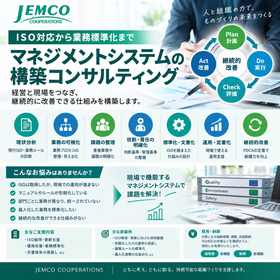
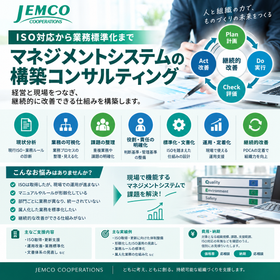
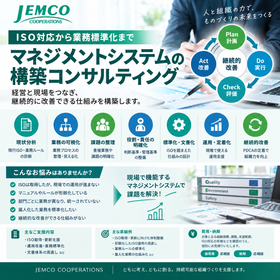
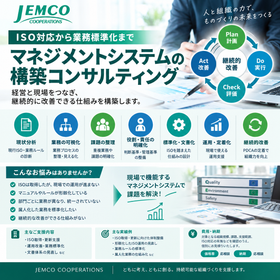
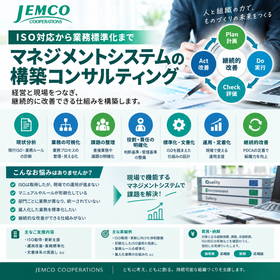
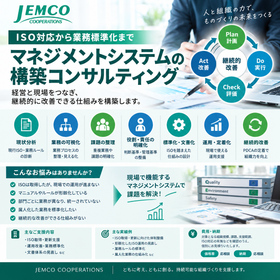
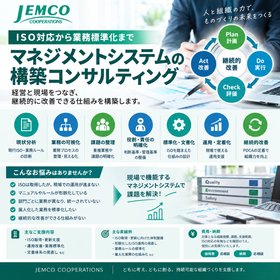
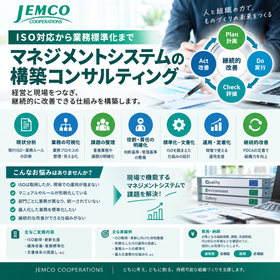
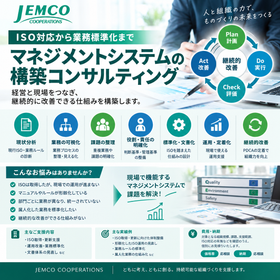
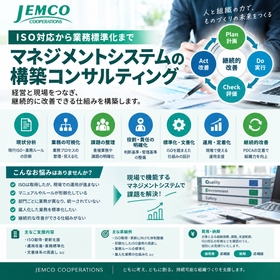
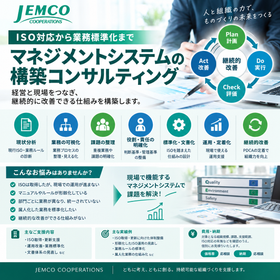
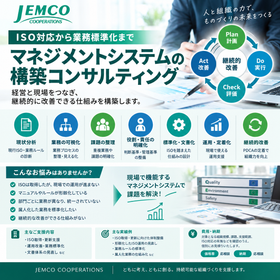
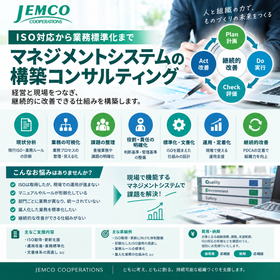
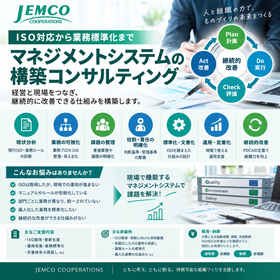
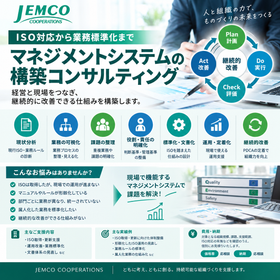
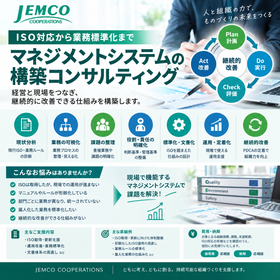
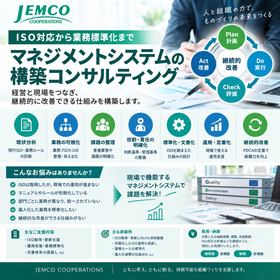
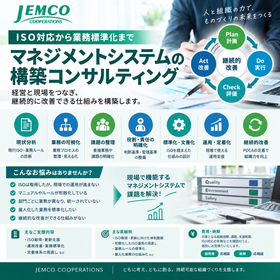
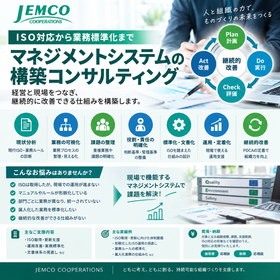
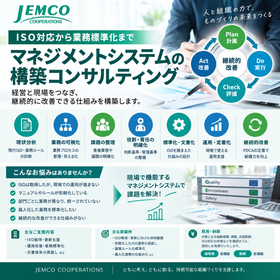
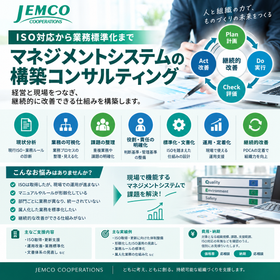
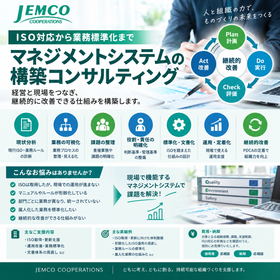
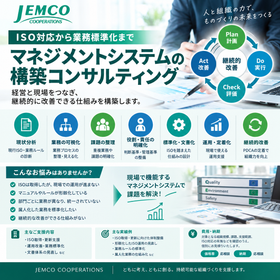
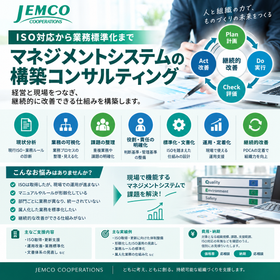
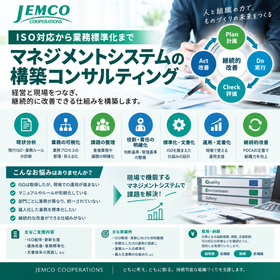
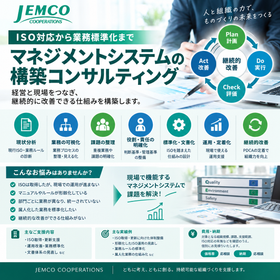
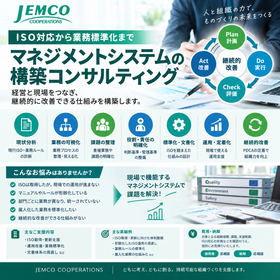
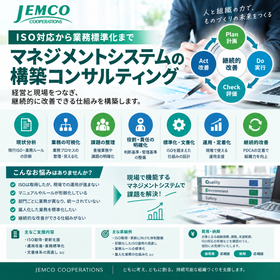
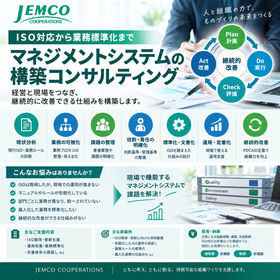
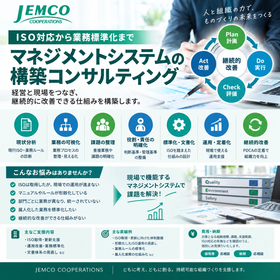
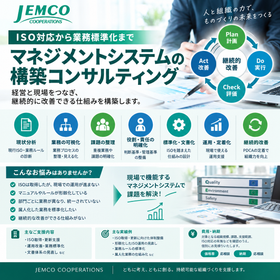
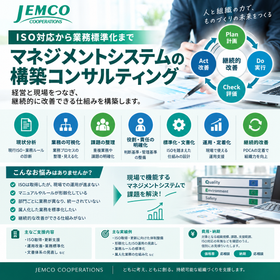
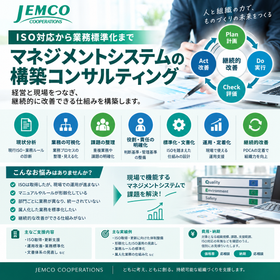
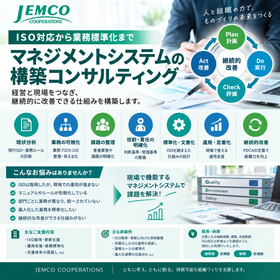
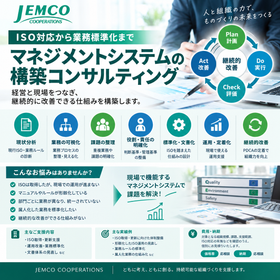
In the advertising and marketing industry, measuring effectiveness and continuous improvement are essential for enhancing ROI. In particular, collaboration across diverse channels and initiatives, as well as data-driven decision-making, are required. Inadequate management systems can lead to decreased return on investment and missed opportunities. Our management system development consulting clarifies the organization's policies, plans, and goals, and defines the roles of each department, thereby supporting the overall efficiency and maximization of results in advertising and marketing activities. 【Usage Scenarios】 - Standardization of planning, execution, and effectiveness measurement processes for advertising campaigns - Strengthening collaboration between marketing initiatives and data integration - Budget allocation and resource optimization based on ROI analysis - Accelerating information sharing and decision-making processes within teams 【Benefits of Implementation】 - Improved return on investment in advertising and marketing activities - Promotion of objective decision-making based on data - Enhanced overall organizational performance and goal achievement - Establishment of a continuous improvement cycle for sustainable growth
Added to bookmarks
Bookmarks listBookmark has been removed
Bookmarks listYou can't add any more bookmarks
By registering as a member, you can increase the number of bookmarks you can save and organize them with labels.
Free membership registration
In the real estate industry, particularly in property management, maintaining tenant satisfaction, preserving asset value, and ensuring efficient operations are essential. To smoothly carry out a wide range of tasks such as property maintenance, tenant communication, contract renewals, and cleaning/repair arrangements, a clear organizational structure based on defined policies and standardized business processes is indispensable. If these elements are unclear or not functioning, it can lead to a decline in management quality, increased costs, and a higher risk of troubles arising. Our management system construction consulting offers optimal solutions tailored to your company's situation, supporting improvements in property management operations and strengthening management. 【Usage Scenarios】 - Daily property management - Tenant communication and complaint handling - Repair and maintenance arrangements - Contract management and renewal operations - Cleaning and patrol services 【Benefits of Implementation】 - Streamlining and standardization of management operations - Improvement in tenant satisfaction - Maintenance and enhancement of property asset value - Optimization of management costs - Reduction of the risk of trouble occurrence
Added to bookmarks
Bookmarks listBookmark has been removed
Bookmarks listYou can't add any more bookmarks
By registering as a member, you can increase the number of bookmarks you can save and organize them with labels.
Free membership registration
In educational institutions, maximizing learning effectiveness and improving organizational efficiency are essential. In particular, clarifying educational policies, strengthening collaboration among faculty and staff, and enhancing the quality of learning programs are crucial for student growth. If these elements are unclear or collaboration is insufficient, it may negatively impact the quality of education. Our management system construction consulting provides optimal solutions to the challenges faced by educational institutions, supporting improvements in organizational operations and enhancing educational effectiveness. 【Usage Scenarios】 - Clarification and dissemination of educational policies and goals - Strengthening collaboration among faculty and staff and clarifying roles - Enhancing the quality of learning programs and measuring effectiveness - Improving and streamlining organizational operations 【Effects of Implementation】 - Fostering a sense of unity towards achieving organizational goals - Increasing faculty and staff motivation and enhancing their performance capabilities - Improving the quality of educational services for students - Establishing a sustainable cycle of organizational improvement
Added to bookmarks
Bookmarks listBookmark has been removed
Bookmarks listYou can't add any more bookmarks
By registering as a member, you can increase the number of bookmarks you can save and organize them with labels.
Free membership registration
In the food and beverage industry, thorough hygiene management is essential to protect customer safety and trust. Particularly in daily operations such as handling ingredients, cooking processes, and cleaning and disinfecting the premises, management based on clear standards and procedures is indispensable. Inadequate hygiene management can increase the risk of food poisoning and have serious repercussions on the reputation and management of the establishment. Our management system construction consulting addresses the unique challenges of the food and beverage industry and supports the establishment of an effective hygiene management system. 【Utilization Scenarios】 - Establishing hygiene standards for receiving, storing, cooking, and serving ingredients - Hygiene education for employees and management of compliance - Standardization and verification of cleaning and disinfecting procedures - Support for the introduction and operation of hygiene management methods such as HACCP - Strengthening measures to prevent foreign matter contamination 【Effects of Implementation】 - Reduction of food poisoning risks and increased customer trust - Improved hygiene awareness among employees and increased operational efficiency - Stabilization of store operations and maintenance and enhancement of brand image - Strengthening of compliance systems
Added to bookmarks
Bookmarks listBookmark has been removed
Bookmarks listYou can't add any more bookmarks
By registering as a member, you can increase the number of bookmarks you can save and organize them with labels.
Free membership registration
In the energy industry, ensuring stable operation and safety in equipment maintenance is extremely important. Deterioration and failure of equipment carry the risk of supply interruptions and accidents. Therefore, an established management system that enables planned inspections, appropriate maintenance, and rapid response in emergencies is required. Our management system construction consulting offers optimal solutions to these challenges and leads to improvements in management effectiveness. 【Usage Scenarios】 - Development of maintenance plans for plants, power stations, and transmission networks - Establishment of processes for regular inspections, preventive maintenance, and corrective maintenance - Development of procedures and systems for emergency response - Collection and analysis of maintenance data and its use in improvement activities - Formulation of safety management standards and establishment of compliance systems 【Benefits of Implementation】 - Improvement of equipment operating rates and maintenance of stable supply - Reduction of accident risks and enhancement of safety - Optimization of maintenance costs - Strengthening of compliance systems - Enhancement of maintenance awareness across the organization
Added to bookmarks
Bookmarks listBookmark has been removed
Bookmarks listYou can't add any more bookmarks
By registering as a member, you can increase the number of bookmarks you can save and organize them with labels.
Free membership registration