1~45 item / All 1729 items
Displayed results
Filter by category

Added to bookmarks
Bookmarks listBookmark has been removed
Bookmarks listYou can't add any more bookmarks
By registering as a member, you can increase the number of bookmarks you can save and organize them with labels.
Free membership registration
Contact this company
Inquiry FormBefore making an inquiry
Download Profile1~45 item / All 1729 items
Filter by category


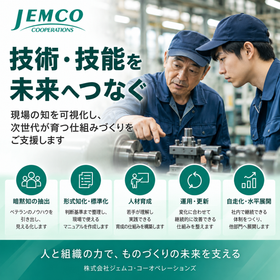
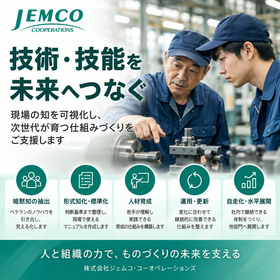
In the electronics component industry, as miniaturization and high precision advance, stable quality assurance and yield improvement are constantly required. Particularly in manufacturing processes that rely on the intuition and experience of skilled technicians, delays in the transfer of technology can lead to variations in quality and decreased yield. This service supports the establishment of a stable manufacturing system by visualizing on-site business processes and accumulating the tacit knowledge of skilled technicians as explicit knowledge. 【Usage Scenarios】 - Visualization and digital recording of skilled technicians' work procedures and decision-making criteria - Practical training for young and mid-level employees focused on yield improvement - Establishment of a technology transfer process utilizing AI and digital tools 【Benefits of Implementation】 - Promotion of the formalization and sharing of tacit knowledge that had been held by skilled technicians - Cultivation of an organizational culture where on-site employees discover their own challenges and engage in improvements - Increased efficiency and standardization of technology transfer through digital utilization
Added to bookmarks
Bookmarks listBookmark has been removed
Bookmarks listYou can't add any more bookmarks
By registering as a member, you can increase the number of bookmarks you can save and organize them with labels.
Free membership registration
In the energy industry's plant maintenance, inheriting the subtle predictive detection and judgment criteria possessed by skilled technicians is a crucial challenge for maintaining stable equipment operation. As equipment ages and technicians grow older, it is essential to eliminate dependence on individuals and establish a maintenance system based on data. This service supports the construction of an organizational structure that visualizes on-site business processes and accumulates and utilizes tacit knowledge as explicit knowledge, thereby achieving improved predictive accuracy in plant maintenance and the establishment of a system for technical inheritance. 【Utilization Scenes】 - Visualization and digital recording of judgment criteria of skilled technicians in plant maintenance - Practical training for young and mid-level employees focused on challenges in maintenance operations - Establishment of maintenance processes utilizing AI and digital tools 【Effects of Implementation】 - Promotion of formalization and sharing of maintenance techniques that had become tacit knowledge - Cultivation of an organizational culture where on-site employees discover challenges and engage in improvements - Increased efficiency and standardization of maintenance operations through digital utilization
Added to bookmarks
Bookmarks listBookmark has been removed
Bookmarks listYou can't add any more bookmarks
By registering as a member, you can increase the number of bookmarks you can save and organize them with labels.
Free membership registration
In the textile industry, the expertise and intuition developed over many years by skilled technicians in the formulation and processing of functional materials are crucial factors that influence product quality. Ensuring the advanced material design is reliably passed on to the next generation and maintaining a stable production system are key to strengthening competitiveness. This service supports the establishment of an organizational structure that visualizes on-site business processes and allows for the accumulation and utilization of tacit knowledge as explicit knowledge, thereby realizing a system for technology transfer. 【Usage Scenarios】 - Visualization and digital recording of criteria for decision-making in the design of functional materials - Practical training for young and mid-level employees focused on on-site challenges - Establishment of technology transfer processes utilizing AI and digital tools 【Benefits of Implementation】 - Promotion of the formalization and sharing of tacit knowledge from skilled techniques - Cultivation of an organizational culture where on-site employees discover challenges and engage in improvements - Increased efficiency and standardization of technology transfer through digital utilization
Added to bookmarks
Bookmarks listBookmark has been removed
Bookmarks listYou can't add any more bookmarks
By registering as a member, you can increase the number of bookmarks you can save and organize them with labels.
Free membership registration
In the paint industry, the color matching process, which significantly affects product quality, relies heavily on the intuition and experience of skilled technicians, making the transfer of technology a critical issue. To maintain fine adjustments in color and reproducibility, it is essential to pass down the judgment criteria developed over many years to the next generation. This service aims to visualize the on-site color matching process and support the establishment of an organizational structure that can accumulate and utilize tacit knowledge as explicit knowledge, thereby creating a system for technology transfer. 【Usage Scenarios】 - Visualization and digital recording of skilled technicians' color matching procedures and judgment criteria - Practical training for young and mid-career employees focused on on-site challenges - Establishment of a color matching technology transfer process utilizing AI and digital tools 【Benefits of Implementation】 - Promotion of the formalization and sharing of color matching techniques that had become tacit knowledge - Cultivation of an organizational culture where on-site employees discover challenges and engage in improvements - Increased efficiency and standardization of technology transfer through digital utilization
Added to bookmarks
Bookmarks listBookmark has been removed
Bookmarks listYou can't add any more bookmarks
By registering as a member, you can increase the number of bookmarks you can save and organize them with labels.
Free membership registration
In the packaging materials industry, there is a demand for a transition to environmentally friendly products and quantitative evaluation of environmental impact, making data collection and process standardization in manufacturing sites crucial. To accurately calculate and manage environmental impact data in complex manufacturing processes, it is essential to digitize on-site operations and decision-making criteria, creating a system that can be shared across the organization. This service supports the establishment of an organizational structure that visualizes on-site business processes and accumulates and utilizes tacit knowledge as explicit knowledge, thereby enabling the inheritance of technology and the creation of systems for business improvement that support the quantitative evaluation of environmental impact. 【Usage Scenarios】 - Visualization and digital recording of work procedures related to environmental impact data collection - Practical training for young and mid-level employees focused on environmental improvement challenges at the site - Establishment of an environmental impact evaluation process utilizing digital tools 【Benefits of Implementation】 - Promotion of the formalization and sharing of on-site knowledge necessary for environmental impact evaluation - Cultivation of an organizational culture where on-site employees discover and address environmental impact reduction challenges on their own - Efficiency and standardization of the environmental impact evaluation process through digital utilization
Added to bookmarks
Bookmarks listBookmark has been removed
Bookmarks listYou can't add any more bookmarks
By registering as a member, you can increase the number of bookmarks you can save and organize them with labels.
Free membership registration
In the water treatment industry, the strict management of water quality and the aging of skilled technicians have made the reliable inheritance of advanced analytical skills and the improvement of operational efficiency important challenges. Particularly in remote monitoring of water quality analysis, passing on the subtle judgment criteria and signs of anomalies that experienced workers have cultivated over many years to the next generation is essential for maintaining stable water quality. This service aims to realize a system for technical inheritance by supporting the establishment of an organizational structure that visualizes on-site business processes and accumulates and utilizes tacit knowledge as explicit knowledge. 【Usage Scenarios】 - Visualization and digital recording of judgment criteria from skilled technicians in water quality analysis - Practical training for younger and mid-level employees using remote monitoring data - Standardization of water quality management processes utilizing digital tools 【Effects of Implementation】 - Promotion of the formalization and sharing of water quality management techniques that had become tacit knowledge - Cultivation of an organizational culture where on-site employees discover challenges and engage in improvements - Increased efficiency and standardization of technical inheritance through digital utilization
Added to bookmarks
Bookmarks listBookmark has been removed
Bookmarks listYou can't add any more bookmarks
By registering as a member, you can increase the number of bookmarks you can save and organize them with labels.
Free membership registration
The acceleration of insurance claims in the life insurance industry requires the digitization of medical information issued by healthcare institutions and smooth collaboration. As telemedicine is being introduced, if the workflow in the medical field is not optimized, the digitization of information may lag, potentially leading to delays in the claims process. Our service supports the visualization of business processes in the medical field and helps create an organization where staff can autonomously utilize digital tools, contributing to the efficiency of operations on the healthcare provider's side and supporting the establishment of a sustainable medical system that accelerates your claims process. 【Usage Scenarios】 - Reconstruction of business workflows in healthcare institutions accompanying the introduction of telemedicine systems - Awareness and behavioral transformation of medical staff regarding digital utilization - Identification of challenges in telemedicine and establishment of improvement processes 【Effects of Implementation】 - Establishment of a sustainable operational system that considers the workload of the medical field - Cultivation of an organizational culture where staff independently identify and improve challenges - Efficiency and quality improvement of medical operations utilizing digital technology
Added to bookmarks
Bookmarks listBookmark has been removed
Bookmarks listYou can't add any more bookmarks
By registering as a member, you can increase the number of bookmarks you can save and organize them with labels.
Free membership registration
In the chemical industry, the increasing complexity of manufacturing processes and the aging of skilled technicians have made the reliable inheritance of advanced skills a critical issue. To ensure the stable operation of chemical plants and maintain quality, it is essential to pass on the subtle judgment criteria and operational insights that skilled workers have cultivated over many years to the next generation. This service aims to realize a system for skill inheritance by supporting the establishment of an organizational structure that visualizes on-site business processes and accumulates and utilizes tacit knowledge as explicit knowledge. 【Usage Scenarios】 - Visualization and digital recording of skilled technicians' work procedures and judgment criteria - Practical training for young and mid-career employees focused on on-site challenges - Establishment of a skill inheritance process utilizing AI and digital tools 【Benefits of Implementation】 - Promotion of the formalization and sharing of tacit knowledge that had been held by skilled technicians - Cultivation of an organizational culture where on-site employees discover challenges and engage in improvements - Increased efficiency and standardization of skill inheritance through digital utilization
Added to bookmarks
Bookmarks listBookmark has been removed
Bookmarks listYou can't add any more bookmarks
By registering as a member, you can increase the number of bookmarks you can save and organize them with labels.
Free membership registration
In the machinery industry, predictive maintenance to maintain stable operation of equipment relies heavily on the experience and intuition of skilled technicians, making the transfer of technology a challenge. To prevent unexpected failures and achieve planned maintenance, it is essential to visualize the judgment criteria of experienced workers and establish a system that allows for the sharing of technology across the organization by utilizing digital technologies. This service supports the creation of a predictive maintenance framework by integrating business improvement and personnel development using digital tools, starting from the challenges on the ground. [Usage Scenarios] - Visualization and digital recording of judgment criteria for abnormal sounds and vibrations in equipment by skilled technicians - Practical training for young and mid-level employees focused on the on-site challenges of predictive maintenance - Standardization of maintenance processes using AI and digital tools [Benefits of Implementation] - Promotion of formalization and sharing of maintenance know-how that had become tacit knowledge - Cultivation of an organizational culture where on-site employees discover challenges and engage in improvements - Increased efficiency and standardization of predictive maintenance processes through digital utilization
Added to bookmarks
Bookmarks listBookmark has been removed
Bookmarks listYou can't add any more bookmarks
By registering as a member, you can increase the number of bookmarks you can save and organize them with labels.
Free membership registration
In the food industry, strict traceability management is required to ensure food safety and security. Accurate record-keeping of work processes during manufacturing and the standardization of judgment criteria for skilled workers are extremely important for maintaining quality. Inadequate records and personalization can lead to management risks and variations in quality. This service supports the strengthening of traceability and the establishment of an organizational quality management system by visualizing on-site business processes and utilizing digital technology to accumulate techniques and procedures as explicit knowledge. 【Usage Scenarios】 - Digital recording of work procedures and quality judgment criteria in the manufacturing process - Visualization of on-site issues related to traceability management - Establishment of a technology transfer process for young employees using digital tools 【Benefits of Implementation】 - Formalization and sharing of manufacturing know-how that had been tacit knowledge - Increased efficiency and standardization of traceability management through digital utilization - Cultivation of an organizational culture where on-site employees discover issues and work on improvements themselves
Added to bookmarks
Bookmarks listBookmark has been removed
Bookmarks listYou can't add any more bookmarks
By registering as a member, you can increase the number of bookmarks you can save and organize them with labels.
Free membership registration
In the pharmaceutical industry, it is essential to ensure that the advanced skills of skilled technicians are reliably passed on to the next generation under strict quality control standards. In advancing the automation of manufacturing processes, it is crucial not only to introduce equipment but also to visualize on-site business processes and establish an organizational structure that can accumulate and utilize technology as explicit knowledge. This service supports the creation of a system for technology transfer by integrating business improvement and human resource development using digital technology, starting from on-site challenges. 【Usage Scenarios】 - Visualization and digital recording of skilled technicians' work procedures and decision-making criteria - Extraction of on-site challenges and development of young talent towards manufacturing process automation - Establishment of technology transfer processes utilizing AI and digital tools 【Benefits of Implementation】 - Promotion of the formalization and sharing of tacit knowledge that had been implicit among skilled technicians - Cultivation of an organizational culture where on-site employees discover challenges and engage in improvements - Increased efficiency and standardization of technology transfer through digital utilization
Added to bookmarks
Bookmarks listBookmark has been removed
Bookmarks listYou can't add any more bookmarks
By registering as a member, you can increase the number of bookmarks you can save and organize them with labels.
Free membership registration
In the metal processing industry, the aging of skilled technicians has made the inheritance of technology an urgent issue, and maintaining a stable operating rate is essential. To pass on advanced processing skills to the next generation and enhance productivity, it is crucial not only to introduce digital tools but also to visualize on-site business processes and establish an organizational structure that can accumulate and utilize technology as explicit knowledge. This service supports the creation of a system for technology inheritance by integrating business improvement and human resource development using digital technology, starting from the challenges faced on-site. 【Usage Scenarios】 - Visualization and digital recording of processing procedures and judgment criteria of skilled technicians - Practical training for young and mid-level employees focused on on-site challenges - Establishing a technology inheritance process utilizing AI and digital tools 【Benefits of Implementation】 - Promotion of the formalization and sharing of tacit knowledge that had been held by skilled technicians - Cultivation of an organizational culture where on-site employees discover challenges and engage in improvements - Increased efficiency and standardization of technology inheritance through digital utilization
Added to bookmarks
Bookmarks listBookmark has been removed
Bookmarks listYou can't add any more bookmarks
By registering as a member, you can increase the number of bookmarks you can save and organize them with labels.
Free membership registration
In the textile industry, as the demand for small-batch production of a wide variety of products increases, manufacturing processes that rely on the experience of skilled technicians have become a barrier to the inheritance of technology. To pass on the fine adjustments and criteria that differ for each product to the next generation, it is essential to visualize the on-site business processes and establish an organizational structure that can accumulate and utilize technology as explicit knowledge. This service supports the creation of a system for technology inheritance that supports small-batch production of various products by integrating business improvement and human resource development using digital technology, starting from the challenges faced on-site. 【Utilization Scenes】 - Visualization and digital recording of the work procedures and criteria of skilled technicians in diverse production - Practical training for young and mid-level employees focused on on-site challenges - Establishment of a technology inheritance process utilizing AI and digital tools 【Effects of Implementation】 - Promotion of the formalization and sharing of tacit knowledge of skilled techniques - Cultivation of an organizational culture where on-site employees discover challenges and engage in improvements - Efficiency and standardization of technology inheritance through digital utilization
Added to bookmarks
Bookmarks listBookmark has been removed
Bookmarks listYou can't add any more bookmarks
By registering as a member, you can increase the number of bookmarks you can save and organize them with labels.
Free membership registration
In the printing industry, as the trend towards small-batch production and shorter delivery times progresses, the collaboration between processes and the inheritance of skilled techniques have become important challenges. In particular, if the wisdom and judgment criteria of the on-site processes connecting printing, processing, and inspection become tacit knowledge, it can hinder smooth collaboration between processes and potentially lead to a decrease in production efficiency. This service aims to visualize on-site business processes and utilize digital technology to accumulate skills as explicit knowledge, thereby strengthening inter-process collaboration and supporting overall productivity improvement within the organization. 【Usage Scenarios】 - Visualization and digital recording of the judgment criteria of skilled workers in printing and processing processes - Practical training for young and mid-level employees focused on inter-process collaboration - Establishing information-sharing processes between processes using digital tools 【Benefits of Implementation】 - Formalization and sharing of the skills and know-how that had become tacit knowledge between processes - Fostering an organizational culture where on-site employees can identify challenges and improve inter-process collaboration - Streamlining and standardizing skill inheritance through digital utilization
Added to bookmarks
Bookmarks listBookmark has been removed
Bookmarks listYou can't add any more bookmarks
By registering as a member, you can increase the number of bookmarks you can save and organize them with labels.
Free membership registration
In the furniture manufacturing industry, small-batch production and made-to-order production are mainstream, and production systems typically rely on the advanced skills of skilled craftsmen. However, with the aging of technicians, the inheritance of tacit knowledge related to manufacturing know-how has become an urgent issue. To optimize made-to-order production, it is essential to not only introduce digital tools but also to visualize on-site business processes and establish an organizational structure that can accumulate and utilize technology as explicit knowledge. This service supports the creation of systems for technology inheritance and productivity improvement by integrating business improvement and human resource development using digital technology, starting from the challenges faced on-site. 【Usage Scenarios】 - Visualization and digital recording of skilled craftsmen's processing procedures and judgment criteria - Practical training for young and mid-level employees focused on on-site challenges in made-to-order production - Establishment of a technology inheritance process utilizing AI and digital tools 【Effects of Implementation】 - Promotion of the formalization and sharing of skilled manufacturing techniques that had become tacit knowledge - Cultivation of an organizational culture where on-site employees discover challenges and engage in improvements - Streamlining and standardization of technology inheritance through digital utilization
Added to bookmarks
Bookmarks listBookmark has been removed
Bookmarks listYou can't add any more bookmarks
By registering as a member, you can increase the number of bookmarks you can save and organize them with labels.
Free membership registration
In the aerospace industry, there is an urgent need for the integration and management of quality data in the manufacturing process, as extremely high quality standards are required. It is essential to build an organizational structure that can visualize quality judgments based on the tacit knowledge of skilled technicians and integrate and accumulate this information as data. This service supports the establishment of a robust quality management system by integrating business improvements and human resource development utilizing digital technology, starting from on-site quality issues. 【Usage Scenarios】 - Visualization and digital recording of quality judgment criteria from skilled technicians - Organization of on-site business processes aimed at quality data integration - Practical human resource development focused on on-site quality issues 【Benefits of Implementation】 - Promotion of the formalization and sharing of tacit knowledge from skilled technicians - Cultivation of an organizational culture where on-site employees discover quality issues and work on improvements themselves - Increased efficiency and standardization of quality management processes through digital utilization
Added to bookmarks
Bookmarks listBookmark has been removed
Bookmarks listYou can't add any more bookmarks
By registering as a member, you can increase the number of bookmarks you can save and organize them with labels.
Free membership registration
In the energy industry's remote monitoring of equipment, how to maintain and pass on the detection of abnormal signs and judgment criteria possessed by skilled technicians is key to stable operations. In a field that requires advanced expertise, in addition to the introduction of digital tools, visualizing business processes and building an organizational structure are essential for transferring tacit knowledge to the next generation. This service supports the creation of a sustainable technology inheritance system by integrating business improvement and human resource development using digital technology, starting from the challenges faced on-site. 【Utilization Scenes】 - Visualization and recording of judgment criteria of skilled workers in remote monitoring - Standardization of abnormal response processes based on monitoring data - Practical training for young engineers focused on on-site challenges 【Effects of Implementation】 - Formalization and sharing of monitoring and judgment know-how that had become tacit knowledge - Increased efficiency and standardization of technology inheritance through digital utilization - Cultivation of an organizational culture where on-site employees discover challenges and work on improvements themselves
Added to bookmarks
Bookmarks listBookmark has been removed
Bookmarks listYou can't add any more bookmarks
By registering as a member, you can increase the number of bookmarks you can save and organize them with labels.
Free membership registration
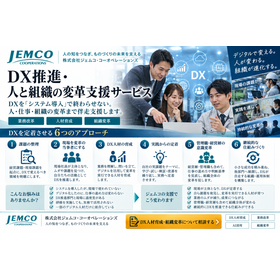
In the retail industry, providing an OMO customer experience that integrates online and offline is essential for improving customer satisfaction. However, there are many cases where digital tools are not utilized on-site, or there is a disconnect between the promoting department and store staff. This service goes beyond mere system implementation; it visualizes on-site business processes and supports the creation of an organization where staff can actively use digital tools to enhance the customer experience. 【Usage Scenarios】 - Reconstructing business flows associated with inventory and customer data integration between stores and e-commerce - Enhancing the customer service skills of store staff using digital tools - Planning and executing OMO initiatives based on on-site challenges 【Benefits of Implementation】 - Enabling on-site staff to use digital tools as "tools to improve their work" - Sharing challenges between the DX promotion department and on-site staff, leading to the penetration and establishment of initiatives - Creating small success stories and facilitating organizational transformation through horizontal deployment to other stores
Added to bookmarks
Bookmarks listBookmark has been removed
Bookmarks listYou can't add any more bookmarks
By registering as a member, you can increase the number of bookmarks you can save and organize them with labels.
Free membership registration
In the manufacturing industry, the aging of skilled technicians has made the inheritance of technology an urgent issue. To pass on advanced skills that have become tacit knowledge to the next generation, it is essential not only to introduce digital tools but also to visualize on-site business processes and establish an organizational structure that can accumulate and utilize technology as explicit knowledge. This service supports the creation of a system for technology inheritance by integrating business improvement and human resource development using digital technology, starting from the challenges faced on-site. 【Usage Scenarios】 - Visualization and digital recording of skilled technicians' work procedures and decision-making criteria - Practical training for young and mid-level employees focused on on-site challenges - Establishment of a technology inheritance process utilizing AI and digital tools 【Effects of Implementation】 - Promotion of the formalization and sharing of skilled techniques that had become tacit knowledge - Cultivation of an organizational culture where on-site employees discover challenges and engage in improvements - Increased efficiency and standardization of technology inheritance through digital utilization
Added to bookmarks
Bookmarks listBookmark has been removed
Bookmarks listYou can't add any more bookmarks
By registering as a member, you can increase the number of bookmarks you can save and organize them with labels.
Free membership registration
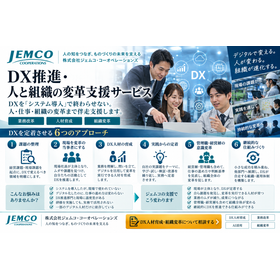
In optimizing pharmaceutical delivery in the logistics industry, it is essential not only to implement a delivery management system but also to adapt to the on-site delivery flow and transform staff awareness. Challenges such as the operational pace not keeping up with the system implementation or the burden being unevenly distributed among some staff can impact the quality and efficiency of delivery. Our service supports the establishment of a sustainable delivery optimization system by visualizing the operational processes in logistics and helping create an organization where staff can autonomously utilize digital tools. 【Usage Scenarios】 - Reconstruction of business flows associated with the implementation of delivery management systems - Awareness and behavioral transformation of logistics staff regarding digital utilization - Identification of challenges in pharmaceutical delivery and establishment of improvement processes 【Effects of Implementation】 - Establishment of a feasible operational system considering the workload of on-site staff - Cultivation of an organizational culture where staff independently identify and improve challenges - Enhancement of efficiency and quality in delivery operations through the use of digital technology
Added to bookmarks
Bookmarks listBookmark has been removed
Bookmarks listYou can't add any more bookmarks
By registering as a member, you can increase the number of bookmarks you can save and organize them with labels.
Free membership registration
In the development of medical malls, it is important for the tenant medical institutions to maintain a stable medical care system and continue to function as a hub for community healthcare. The introduction of telemedicine, in particular, contributes to strengthening the competitiveness of medical institutions; however, simply implementing the system may not keep pace with the workflow on-site or the staff's awareness, leading to the risk of the operation becoming merely a formality. Our service supports the establishment of a sustainable telemedicine system by visualizing the business processes in medical settings and fostering an organization where staff can autonomously utilize digital tools, thereby contributing to the enhancement of the operational value of medical malls. 【Usage Scenarios】 - Reconstruction of business workflows associated with the introduction of telemedicine in clinics within the medical mall - Transformation of awareness and behavior regarding digital utilization among tenant medical staff - Identification of challenges in telemedicine and establishment of improvement processes 【Effects of Implementation】 - Establishment of a feasible operational system that considers the workload on-site - Cultivation of an organizational culture where staff independently identify and improve challenges - Increased efficiency and quality of medical operations through the use of digital technology
Added to bookmarks
Bookmarks listBookmark has been removed
Bookmarks listYou can't add any more bookmarks
By registering as a member, you can increase the number of bookmarks you can save and organize them with labels.
Free membership registration
In the medical staffing industry, accurately capturing the needs of the healthcare institutions where staff are dispatched and placing the most suitable personnel is essential. Particularly in medical settings where telemedicine is being increasingly adopted, securing staff who can adapt to system operations and understand the workflow of the site is crucial. If the operational system at the site is not well established, the matched personnel may not be able to fully demonstrate their abilities, potentially affecting retention rates and the quality of care. Our service supports the establishment of a sustainable telemedicine system by visualizing the business processes in healthcare settings and assisting in the creation of an organization where staff can autonomously utilize digital tools. 【Usage Scenarios】 - Reconstruction of business workflows associated with the introduction of telemedicine systems - Awareness and behavioral transformation of medical staff regarding digital utilization - Identification of challenges in telemedicine and establishment of improvement processes 【Effects of Implementation】 - Establishment of a feasible operational system that considers the workload at the site - Cultivation of an organizational culture where staff independently identify and improve challenges - Increased efficiency and quality of medical operations through the use of digital technology
Added to bookmarks
Bookmarks listBookmark has been removed
Bookmarks listYou can't add any more bookmarks
By registering as a member, you can increase the number of bookmarks you can save and organize them with labels.
Free membership registration
In optimizing pharmaceutical delivery in the logistics industry, it is essential not only to implement a delivery management system but also to adapt to the on-site delivery flow and to transform the awareness of staff. Challenges such as the operational pace not keeping up with the system implementation or an uneven burden on certain staff can impact the quality and efficiency of deliveries. Our service supports the establishment of a sustainable delivery optimization system by visualizing the operational processes in logistics and helping to create an organization where staff can autonomously utilize digital tools. 【Usage Scenarios】 - Reconstruction of business flows accompanying the introduction of a delivery management system - Awareness and behavioral transformation of logistics staff regarding digital utilization - Identification of challenges and establishment of improvement processes in pharmaceutical delivery 【Effects of Implementation】 - Establishment of a feasible operational system that considers the workload of on-site staff - Cultivation of an organizational culture where staff independently identify and improve challenges - Improvement of efficiency and quality in delivery operations through the use of digital technology
Added to bookmarks
Bookmarks listBookmark has been removed
Bookmarks listYou can't add any more bookmarks
By registering as a member, you can increase the number of bookmarks you can save and organize them with labels.
Free membership registration
In the construction of electronic medical record (EMR) integration systems in the IT and telecommunications industry, it is essential not only to connect systems but also to adapt to the workflow of medical settings and to transform the awareness of staff. Even if a system is implemented, challenges such as the operational capacity of the field not keeping up or the burden being disproportionately placed on some staff can potentially affect the quality and efficiency of care. Our service supports the establishment of a sustainable EMR integration system by visualizing the business processes in medical settings and assisting in the creation of an organization where staff can autonomously utilize digital tools. 【Usage Scenarios】 - Reconstruction of business workflows accompanying the introduction of EMR integration systems - Awareness and behavioral transformation of medical staff regarding digital utilization - Discovery of issues and establishment of improvement processes in system operations 【Effects of Implementation】 - Establishment of an operational system that considers the workload of the field and is manageable - Cultivation of an organizational culture where staff can independently identify and improve issues - Increased efficiency and quality of medical operations through the use of digital technology
Added to bookmarks
Bookmarks listBookmark has been removed
Bookmarks listYou can't add any more bookmarks
By registering as a member, you can increase the number of bookmarks you can save and organize them with labels.
Free membership registration
In the financial industry, the rise of FinTech has made it urgent to create new customer experiences and improve operational efficiency using digital technology. However, simply introducing digital tools often leads to a disconnect from on-site business processes, resulting in limited practical application. To achieve true digital transformation (DX), it is essential to cultivate personnel who understand digital technology and can solve their company's challenges, along with transforming the organizational culture that supports this. Our service supports the creation of an organization where on-site employees can independently identify challenges and drive transformation using digital tools, starting from management issues. 【Utilization Scenarios】 - Sharing business challenges between the FinTech promotion department and on-site operations - Practical training focused on real challenges within the company - Implementation of business improvements using AI and digital technology - Awareness and behavioral changes involving management and executives 【Effects of Implementation】 - Establishing a system for continuous growth of DX promotion that does not rely on a few individuals but involves the entire organization - Directly linking digital utilization to practical work through the visualization of on-site business processes - Accelerating transformation through the creation of small success stories and horizontal deployment to other departments
Added to bookmarks
Bookmarks listBookmark has been removed
Bookmarks listYou can't add any more bookmarks
By registering as a member, you can increase the number of bookmarks you can save and organize them with labels.
Free membership registration
In building a telemedicine system in the healthcare industry, it is essential not only to introduce a system but also to adapt it to the workflow of medical settings and to transform the awareness of staff. Challenges such as the operational aspects not keeping pace with the system implementation or the burden being disproportionately placed on certain staff can potentially impact the quality and efficiency of care. Our service supports the establishment of a sustainable telemedicine system by visualizing the business processes in medical settings and fostering an organization where staff can autonomously utilize digital tools. 【Usage Scenarios】 - Reconstruction of business workflows accompanying the introduction of telemedicine systems - Awareness and behavioral transformation of medical staff regarding digital utilization - Identification of challenges in telemedicine and establishment of improvement processes 【Effects of Implementation】 - Establishment of an operational system that considers the workload of the field - Cultivation of an organizational culture where staff can identify and improve challenges on their own - Enhancement of efficiency and quality of medical operations through the use of digital technology
Added to bookmarks
Bookmarks listBookmark has been removed
Bookmarks listYou can't add any more bookmarks
By registering as a member, you can increase the number of bookmarks you can save and organize them with labels.
Free membership registration
In the construction industry, remote management of sites requires accurately understanding the situation from a distance and making quick decisions. However, even with the introduction of systems, there are cases where they are not utilized on-site, or a gap in understanding arises between the promoting department and the field, leading to the failure to achieve the expected effects. This service not only supports the introduction of digital tools but also helps to review on-site business processes and create an organization where employees can discover challenges themselves and utilize digital solutions. 【Usage Scenarios】 - Reconstructing on-site business flows accompanying the introduction of remote management systems - Sharing challenges and reforming awareness between site management and the DX promotion department - Practicing business improvements on-site using digital technologies 【Effects of Implementation】 - Establishing a practical digital utilization system on-site - Transforming the awareness and actions of management and on-site employees regarding digital utilization - Horizontal deployment to other sites through the creation of small success stories
Added to bookmarks
Bookmarks listBookmark has been removed
Bookmarks listYou can't add any more bookmarks
By registering as a member, you can increase the number of bookmarks you can save and organize them with labels.
Free membership registration
In the real estate industry's property management operations, the introduction of automation tools is key to efficiency; however, there are not a few cases where these tools do not take root on-site and become mere formalities. Automating management tasks requires not only the implementation of systems but also a review of on-site business processes and the cultivation of an organizational culture where employees can effectively utilize digital tools. Our service transforms automation from something that is "implemented" into an activity that "improves on-site work," achieving sustainable business improvement through practical transformation based on on-site challenges. 【Usage Scenarios】 - Digitalization and automation of routine tasks in property management - Strengthening collaboration and sharing challenges between the DX promotion department and on-site management staff - Identifying and improving bottlenecks through the visualization of management tasks 【Effects of Implementation】 - Establishing a system where on-site employees can independently identify challenges and improve operations using digital tools - Eliminating the personalization of management tasks, enabling efficient operations across the entire organization - Promoting horizontal deployment to other properties and departments by accumulating small success stories
Added to bookmarks
Bookmarks listBookmark has been removed
Bookmarks listYou can't add any more bookmarks
By registering as a member, you can increase the number of bookmarks you can save and organize them with labels.
Free membership registration
In the education sector, it is urgent to establish a digital environment aimed at realizing personalized optimized learning. However, there are challenges where the teaching staff at the site cannot fully utilize the systems introduced, or where the burden is concentrated on a few digital promotion personnel. To achieve true personalized optimized learning, it is essential not only to introduce tools but also to cultivate an organizational culture where teaching staff can independently identify challenges and improve their work using digital resources. This service supports the transformation of the entire organization through the visualization of on-site business processes and practical human resource development based on real issues. 【Usage Scenarios】 - Visualization and improvement of teaching staff's business processes for personalized optimized learning - Streamlining lesson preparation and school administration using digital tools - Sharing awareness among teaching staff and organizational problem-solving in promoting DX 【Effects of Implementation】 - Transformation into an organization where teaching staff can independently utilize digital resources to improve educational activities - Development of practical DX personnel based on real issues at the site - Increased efficiency in operations through digital utilization and a focus on improving the quality of education
Added to bookmarks
Bookmarks listBookmark has been removed
Bookmarks listYou can't add any more bookmarks
By registering as a member, you can increase the number of bookmarks you can save and organize them with labels.
Free membership registration
In the demand forecasting DX for the food service industry, the utilization of highly accurate forecasting data and the optimization of on-site operations based on that data are required. In particular, to achieve reductions in food waste and appropriate staffing, it is essential not only to implement systems but also to have organizational efforts where on-site staff understand the forecast figures and apply them to daily business improvements. This service supports practical transformation starting from management and on-site challenges, addressing issues such as systems not being utilized on the ground or becoming dependent on a few responsible individuals. 【Utilization Scenes】 - Optimization of ingredient ordering based on demand forecasts for each store - Shift creation and labor cost management linked to forecasting data - Utilization of forecast figures by on-site staff and implementation of business improvements 【Effects of Implementation】 - Establishment of objective decision-making based on data - Cost optimization through reductions in food waste and excess inventory - Improvement in productivity through on-site-led business enhancements
Added to bookmarks
Bookmarks listBookmark has been removed
Bookmarks listYou can't add any more bookmarks
By registering as a member, you can increase the number of bookmarks you can save and organize them with labels.
Free membership registration
In the tourism industry, there is a demand for improving customer satisfaction and responding to diverse needs, making it essential to enhance experiential value through the use of digital technology. However, challenges are often seen where the implementation of systems is disconnected from on-site operations, or where improvements are hindered by reliance on certain individuals within the organization. Our service supports not only the introduction of digital tools but also the creation of an organization where on-site employees can independently identify issues and improve services using digital technology. 【Usage Scenarios】 - Digital visualization of customer flow and congestion alleviation at tourist facilities - Enhancement of customer experience through the digitization of reservation and customer service operations at accommodation facilities - Service improvement activities utilizing digital technology by on-site staff 【Effects of Implementation】 - Increased customer satisfaction through on-site led business improvements - Reduced workload for staff and creation of customer service time through digital utilization - Establishment of a system to promote DX (digital transformation) across the entire organization
Added to bookmarks
Bookmarks listBookmark has been removed
Bookmarks listYou can't add any more bookmarks
By registering as a member, you can increase the number of bookmarks you can save and organize them with labels.
Free membership registration
In the energy industry's supply and demand adjustment operations, rapid and accurate data processing and decision-making are required due to fluctuations in market prices and the expansion of renewable energy adoption. Particularly in optimizing the increasingly complex supply-demand balance, the use of digital tools is essential; however, implementing systems that are disconnected from on-site operations poses a risk of reducing operational efficiency. Our service goes beyond merely introducing tools; it supports the visualization of on-site business processes and fosters an organization where employees can independently identify and solve issues, thereby achieving sustainable advancement in supply and demand adjustment operations. 【Usage Scenarios】 - Visualization and promotion of digitalization of manual tasks in supply and demand adjustment operations - Bridging the recognition gap between the DX promotion department and on-site personnel - Training personnel to improve supply and demand forecasting accuracy using AI and data analysis 【Benefits of Implementation】 - Establishment of a highly effective business improvement cycle led by on-site personnel - Development of personnel who can effectively utilize digital technologies and their integration into the organization - Resolution of the personalization of supply and demand adjustment operations and establishment of an organizational operational system
Added to bookmarks
Bookmarks listBookmark has been removed
Bookmarks listYou can't add any more bookmarks
By registering as a member, you can increase the number of bookmarks you can save and organize them with labels.
Free membership registration
In the automotive parts industry, standardization of the judgment criteria of skilled workers in mold adjustment is required to stabilize product quality. In particular, reliance on the experience of veterans in mold work, which requires fine adjustments, can lead to variations in quality and stagnation in the transfer of technology. This service addresses the challenges of technology transfer by organizing tacit knowledge through interviews with skilled workers and standardizing it into procedures that younger employees can replicate in practice. 【Usage Scenarios】 - Visualization of mold adjustment work that relies on veteran workers - Documentation of personalized adjustment judgment criteria - Efficiency improvement in on-the-job training (OJT) for younger engineers 【Effects of Implementation】 - Stabilization of quality through standardization of mold adjustment work - Reduction of training periods through the systematization of technology transfer - Improvement in productivity by eliminating personalization
Added to bookmarks
Bookmarks listBookmark has been removed
Bookmarks listYou can't add any more bookmarks
By registering as a member, you can increase the number of bookmarks you can save and organize them with labels.
Free membership registration
In the metal processing industry, it is essential to inherit the know-how of selecting and fine-tuning cutting conditions possessed by skilled workers in order to maintain product quality. However, when these criteria become tacit knowledge among veterans, the transfer of technology to younger workers stagnates, posing a risk of quality variation and decreased production efficiency. This service supports the maintenance of stable processing quality and the standardization of technology by verbalizing the criteria through interviews with experienced workers and organizing them into a form that younger workers can replicate in practice. 【Usage Scenarios】 - Standardization of cutting condition settings relying on the intuition and experience of veteran workers - Extraction and manualization of processing know-how that has become personalized - Clarification of decision-making criteria in on-the-job training for younger workers 【Benefits of Implementation】 - The tacit knowledge of skilled workers is converted into explicit knowledge, eliminating the personalization of technology - Standardized procedures enable younger workers to achieve stable processing quality - The establishment of a system for technology transfer allows for continuous personnel development within the company.
Added to bookmarks
Bookmarks listBookmark has been removed
Bookmarks listYou can't add any more bookmarks
By registering as a member, you can increase the number of bookmarks you can save and organize them with labels.
Free membership registration
In chemical plant operations, the judgment of skilled professionals is essential for ensuring stable equipment operation and safety, as they can detect even slight abnormal sounds, vibrations, and minute changes in instruments. However, the criteria for detecting such anomalies often rely on the individual experience of veteran workers, making it a challenge to pass this knowledge on to younger employees. Delays in judgment or oversights can lead to serious troubles, so it is necessary to articulate tacit knowledge and create a system that can be shared throughout the organization. This service organizes the judgment criteria through interviews with experienced workers and guides the next generation to a state where they can replicate these practices in the field. 【Usage Scenarios】 - Standardization of judgment criteria for detecting early signs of abnormalities in plant equipment - Articulation of inspection know-how based on the "five senses" possessed by skilled workers - Education of young operators on response procedures during abnormal situations 【Benefits of Implementation】 - Clarification of judgment criteria that had become personalized, leading to uniformity in anomaly detection accuracy - Increased efficiency in training younger employees and faster decision-making in the field - Establishment of a long-term safe operation system for the plant through the institutionalization of technology transfer
Added to bookmarks
Bookmarks listBookmark has been removed
Bookmarks listYou can't add any more bookmarks
By registering as a member, you can increase the number of bookmarks you can save and organize them with labels.
Free membership registration
In the micro-assembly process of the electronics industry, the advanced skills and judgment criteria of experienced workers significantly influence quality. However, such skills tend to be personalized, and it is often difficult to pass them on to younger workers through on-the-job training alone. Formalizing the reasoning behind decisions in fine tasks, such as "why this is done," and making it reproducible through tools like videos is essential for maintaining stable quality. This service supports the automation of technology transfer by extracting the know-how of experienced workers and organizing it into a usable format for practical application. 【Usage Scenarios】 - Filming and documenting the techniques of experienced workers in micro-assembly - Verbalizing personalized judgment criteria and developing manuals - Building an efficient training system for young workers and on-the-job training 【Benefits of Implementation】 - The tacit knowledge of experienced workers is formalized, enabling standardization of techniques - Utilizing videos improves understanding of fine task procedures - Systematizing education enables self-driven human resource development within the company
Added to bookmarks
Bookmarks listBookmark has been removed
Bookmarks listYou can't add any more bookmarks
By registering as a member, you can increase the number of bookmarks you can save and organize them with labels.
Free membership registration
In the aerospace industry, there are cases where reliance on the experience of skilled technicians in assembly processes, which require extremely high precision and quality, becomes a challenge. If the visualization of complex processes is insufficient, there is a risk of quality variation and stagnation in the transfer of technology. This service supports the standardization of technology and the maintenance of stable quality by extracting judgment criteria and know-how through interviews with experienced technicians and organizing them into a form that younger employees can replicate in practice. 【Usage Scenarios】 - Visualization of complex assembly tasks by skilled technicians - Standardization of judgment criteria that have become personalized - Efficiency improvement of on-the-job training (OJT) for younger technicians 【Effects of Implementation】 - Standardization of technology through the formalization of tacit knowledge - Stabilization of quality through clarification of work procedures - Establishment of a sustainable technology transfer system within the company
Added to bookmarks
Bookmarks listBookmark has been removed
Bookmarks listYou can't add any more bookmarks
By registering as a member, you can increase the number of bookmarks you can save and organize them with labels.
Free membership registration
In the textile industry, the inheritance of maintenance skills by experienced professionals is essential for the stable operation of weaving machines and the maintenance of quality. In particular, the tacit knowledge of veterans, developed over many years, to detect abnormalities from "sounds" and "vibrations" is a crucial factor that influences product quality. However, the reliance on individual on-the-job training (OJT) and the lack of standardized know-how make it difficult to pass on these skills. Our company supports the systematization of skill inheritance by organizing judgment criteria through interviews with experienced workers and standardizing them into a form that younger employees can replicate in practice. 【Utilization Scenes】 - Extraction of adjustment know-how for weaving machines held by veteran workers - Standardization of maintenance procedures that have become individualized - Establishment of a system for OJT training for younger workers 【Effects of Implementation】 - Stabilization of skill inheritance through the formalization of tacit knowledge - Standardization of work quality through clarification of maintenance judgment criteria - Establishment of a self-sustaining system that allows for continuous updating of skills within the company
Added to bookmarks
Bookmarks listBookmark has been removed
Bookmarks listYou can't add any more bookmarks
By registering as a member, you can increase the number of bookmarks you can save and organize them with labels.
Free membership registration
In the pharmaceutical manufacturing industry, strict adherence to procedures and reproducibility in the formulation process are required to ensure product quality and safety. In particular, formulations that rely on the experience of skilled workers carry the risk of quality variation and human error, making the standardization and fixation of work procedures essential. Our service supports the stabilization of the formulation process by extracting the tacit knowledge held by veterans through interviews and organizing it into a form that can be reproduced by younger workers in practical applications. 【Usage Scenarios】 - Extraction of judgment criteria from skilled workers in the formulation process - Standardization of personalized formulation procedures and development of manuals - On-the-job training (OJT) for younger workers to establish skills 【Benefits of Implementation】 - Stabilization of quality through fixed procedures in the formulation process - Resolution of personalization through the formalization of tacit knowledge - Systematization of technology transfer to the next generation
Added to bookmarks
Bookmarks listBookmark has been removed
Bookmarks listYou can't add any more bookmarks
By registering as a member, you can increase the number of bookmarks you can save and organize them with labels.
Free membership registration
In the woodworking furniture industry, the ability to discern the characteristics of wood, a natural material, and select the optimal grain is a skill known as "eye for detail," which significantly influences the value of the products. However, this judgment often relies on the experience of veteran craftsmen, making it challenging to pass down to younger generations. If intuitive judgments cannot be verbalized and standardized, there is a risk of quality variation and decreased productivity. Our support for the transmission of technology and skills organizes the criteria through interviews with skilled workers and translates them into a form that younger craftsmen can replicate, thereby supporting stable quality management and workforce development. 【Utilization Scenes】 - Verbalizing the criteria for wood selection and creating manuals - Systematizing on-the-job training (OJT) for young craftsmen regarding grain selection - Establishing standard operating procedures that reflect the judgment criteria of skilled craftsmen 【Effects of Implementation】 - The previously personalized criteria for grain selection are clarified - Reduction in the training period for young craftsmen and stabilization of quality - Establishment of a continuous development system within the company through the formalization of skills
Added to bookmarks
Bookmarks listBookmark has been removed
Bookmarks listYou can't add any more bookmarks
By registering as a member, you can increase the number of bookmarks you can save and organize them with labels.
Free membership registration
In the plastic molding industry, precise management of resin temperature is required to stabilize product quality. In particular, fine-tuning of molding conditions and temperature management according to the properties of the resin often relies on the experience of veterans, and the lack of inheritance of this know-how poses risks of quality variation and reduced yield. Our service extracts the tacit knowledge of skilled workers through interviews and organizes it into reproducible procedures for younger employees, thereby eliminating dependency on individuals and supporting the establishment of a stable production system. 【Usage Scenarios】 - Organizing the criteria for resin temperature adjustments that veterans perform based on intuition - Standardizing the reasons for "why that temperature" in setting molding conditions - Educating younger operators on temperature management know-how through on-the-job training (OJT) 【Benefits of Implementation】 - Formalizing the previously individualized temperature management know-how - Improving the judgment skills of younger operators and standardizing their work - Establishing a system for technical transfer to ensure continuous personnel development within the company
Added to bookmarks
Bookmarks listBookmark has been removed
Bookmarks listYou can't add any more bookmarks
By registering as a member, you can increase the number of bookmarks you can save and organize them with labels.
Free membership registration
In the shipbuilding industry, advanced skills of skilled technicians are essential to maintain high-quality welding standards. However, the criteria for welding and subtle know-how depend on the experiences of veteran individuals, making the transfer of skills to younger generations a challenge. Personalized on-the-job training (OJT) and manuals that are disconnected from the field make it difficult to create a state where the next generation can replicate practical work. Our support service extracts tacit knowledge through interviews with experienced workers and organizes it into a form that younger technicians can understand and replicate, thereby systematizing the transfer of skills. 【Usage Scenarios】 - Extraction and organization of criteria and know-how from skilled welders - Standardization of welding technology instruction for younger technicians - Development of work procedures linked to on-the-job training in the field 【Effects of Implementation】 - Tacit knowledge of veterans is converted into explicit knowledge, eliminating the personalization of skills - Establishment of a guidance system that allows younger technicians to replicate work in practice - Creation of a self-sustaining system for continuous skill transfer within the company
Added to bookmarks
Bookmarks listBookmark has been removed
Bookmarks listYou can't add any more bookmarks
By registering as a member, you can increase the number of bookmarks you can save and organize them with labels.
Free membership registration
In the printing and binding industry, sensory judgment based on the long years of experience of skilled workers is essential for color matching, which affects quality. However, this "tacit knowledge" is difficult to articulate, making the transfer of skills to younger workers a challenge. Relying on intuition in work can lead to variations in quality, so there is a demand for clarifying the criteria for judgment. This service supports the transfer of skills by organizing the reasons for judgments through interviews with experienced workers and standardizing them into a form that younger workers can replicate in practice. 【Usage Scenarios】 - Articulating the judgment criteria for color matching by skilled workers - Educating younger operators on color matching procedures - Creating standard manuals for color adjustment know-how that had been personalized 【Benefits of Implementation】 - Clarification of judgment criteria in color matching - Increased efficiency in the transfer of skills to younger workers - Stabilization of quality and standardization of work
Added to bookmarks
Bookmarks listBookmark has been removed
Bookmarks listYou can't add any more bookmarks
By registering as a member, you can increase the number of bookmarks you can save and organize them with labels.
Free membership registration
In the food processing industry, it is essential to inherit the delicate taste and judgment criteria of skilled workers to maintain consistent product quality. In particular, "taste adjustment" to accommodate individual differences in raw materials and seasonal changes tends to rely on tacit knowledge based on years of experience. This personalization can lead to variations in quality and stagnation in the transfer of skills. Our support for the transmission of technology and skills involves verbalizing and quantifying the judgment criteria through interviews with skilled workers, and organizing them into a reproducible form for younger staff, thereby achieving stable quality management and personnel development. 【Usage Scenarios】 - Verbalization and quantification of the taste judgment criteria of skilled workers - Standardization of adjustment procedures for subtle changes in raw materials - Structuring taste training and on-the-job training (OJT) for younger staff 【Effects of Implementation】 - The previously personalized taste judgment criteria become clear, leading to stabilization of quality - Standardization allows younger staff to produce at a consistent quality level - Structuring the transmission of skills optimizes education costs and establishes a self-sustaining system
Added to bookmarks
Bookmarks listBookmark has been removed
Bookmarks listYou can't add any more bookmarks
By registering as a member, you can increase the number of bookmarks you can save and organize them with labels.
Free membership registration
In the automotive parts industry, standardization of the judgment criteria of skilled workers in mold adjustment is required to stabilize product quality. Particularly in mold work that requires fine adjustments, reliance on the experience of veterans leads to personalization, which can cause variations in quality and stagnation in the transmission of technology. This service addresses the challenges of technology transfer by organizing tacit knowledge through interviews with skilled workers and standardizing it into procedures that younger employees can replicate in practice. 【Usage Scenarios】 - Visualization of mold adjustment work that relies on veteran workers - Documentation of personalized adjustment judgment criteria - Efficiency improvement in on-the-job training (OJT) for younger engineers 【Effects of Implementation】 - Stabilization of quality through the standardization of mold adjustment work - Reduction of training periods through the systematization of technology transfer - Improvement in productivity by eliminating personalization
Added to bookmarks
Bookmarks listBookmark has been removed
Bookmarks listYou can't add any more bookmarks
By registering as a member, you can increase the number of bookmarks you can save and organize them with labels.
Free membership registration