1~45 item / All 1626 items
Displayed results
Filter by category

Added to bookmarks
Bookmarks listBookmark has been removed
Bookmarks listYou can't add any more bookmarks
By registering as a member, you can increase the number of bookmarks you can save and organize them with labels.
Free membership registration
Contact this company
Inquiry FormBefore making an inquiry
Download Profile1~45 item / All 1626 items
Filter by category

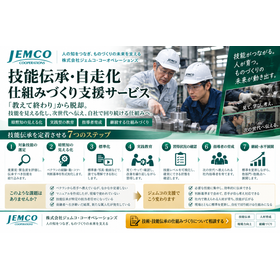
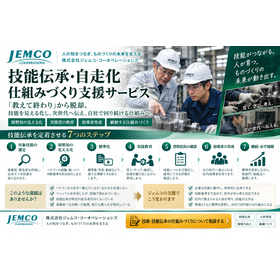
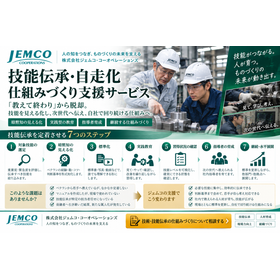
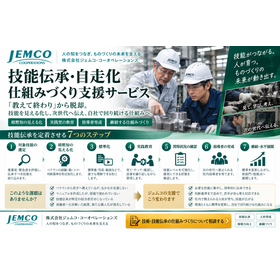
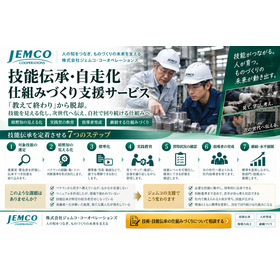
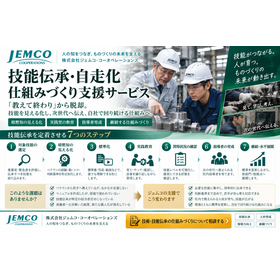
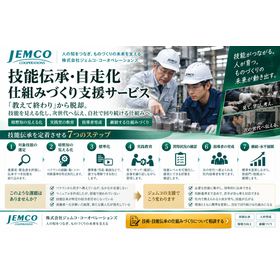
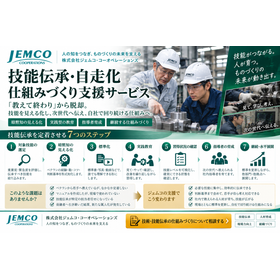
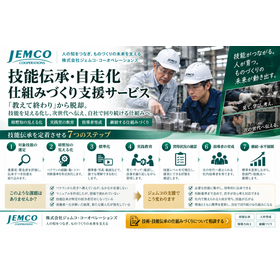
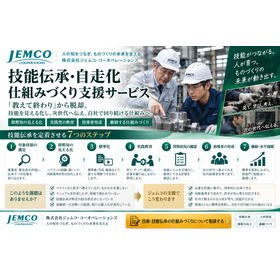
In the automotive parts industry, there is a strong demand for accuracy and uniformity in the implementation of fine electronic components to maintain in-vehicle quality. In particular, the advanced manual work of skilled workers tends to become personalized, and when the education of younger employees is left to individual supervisors, there can be variations in the level of skill acquisition, which hinders the stabilization of quality. This service consistently supports everything from the selection of critical skills to the visualization of tacit knowledge, standardization using videos, and the development of instructors, thereby establishing a system that allows the workplace to autonomously continue to refine skills. 【Usage Scenarios】 - Streamlining the learning process through educational videos for fine tasks - Preventing the loss of skills due to the retirement of skilled workers - Eliminating variations in skill acquisition during the education of younger workers - Standardizing work procedures that have become personalized 【Effects of Implementation】 - Tacit knowledge of skilled workers is formalized through videos, standardizing education - Younger workers acquire skills to the level where they can make independent judgments and practice - Continuous education within the company is made possible through the development of internal instructors - Visualization of skill levels enables planned human resource development
Added to bookmarks
Bookmarks listBookmark has been removed
Bookmarks listYou can't add any more bookmarks
By registering as a member, you can increase the number of bookmarks you can save and organize them with labels.
Free membership registration
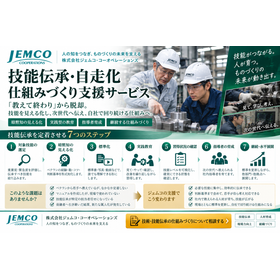
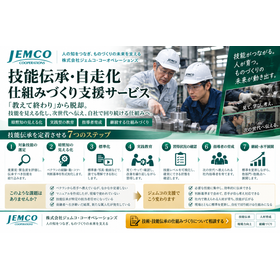
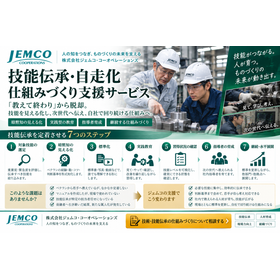
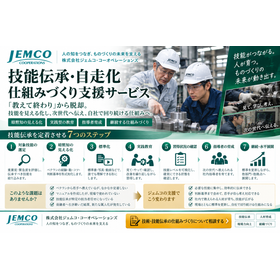
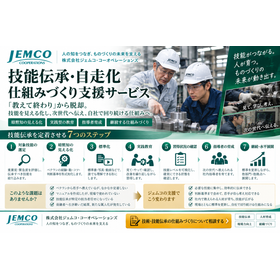
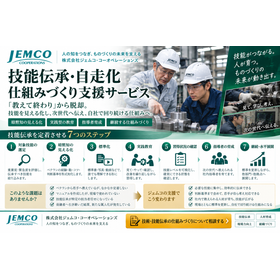
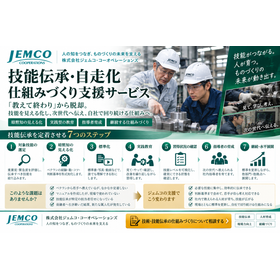
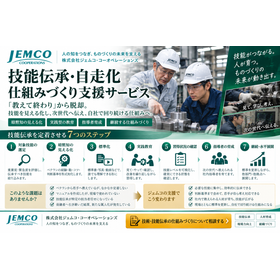
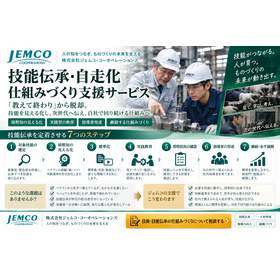
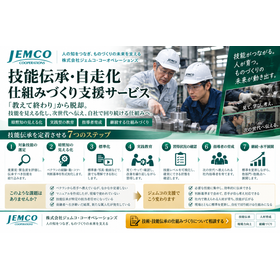
In the medical device manufacturing industry, strict adherence to traceability is required to ensure the safety and reliability of products. In particular, manual tasks such as the implementation of fine electronic components tend to become personalized, leading to variations in the skill levels of workers, which poses challenges for quality management. This service consistently supports everything from the selection of critical skills to the visualization of tacit knowledge, standardization using videos, and the development of instructors, helping to create an autonomous workplace where consistent quality can be maintained regardless of who is performing the task. 【Usage Scenarios】 - Streamlining the learning process through educational videos for fine tasks - Preventing the loss of skills due to the retirement of skilled workers - Eliminating variations in skill acquisition during the training of younger workers - Standardizing work procedures that have become personalized 【Effects of Implementation】 - The tacit knowledge of skilled workers is formalized through videos and other means, standardizing education - Young workers acquire skills to the level where they can make their own judgments and practice independently - Continuous education within the company is made possible through the development of internal instructors - Visualization of skill levels enables planned human resource development
Added to bookmarks
Bookmarks listBookmark has been removed
Bookmarks listYou can't add any more bookmarks
By registering as a member, you can increase the number of bookmarks you can save and organize them with labels.
Free membership registration
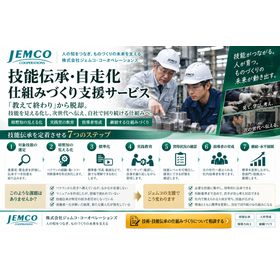
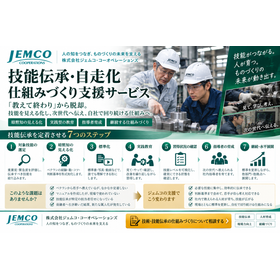
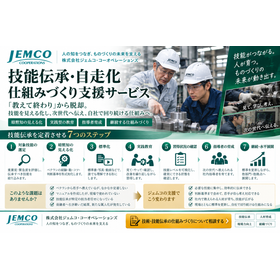
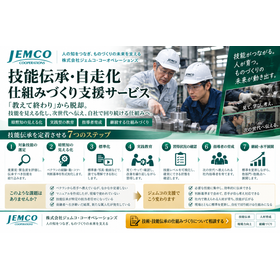
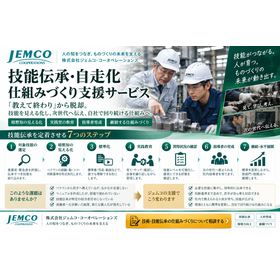
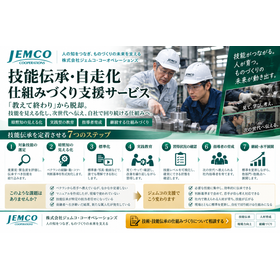
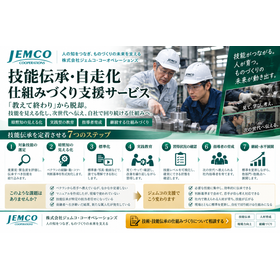
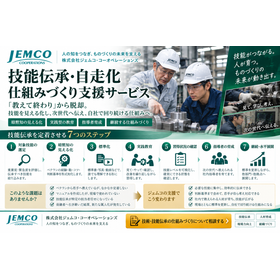
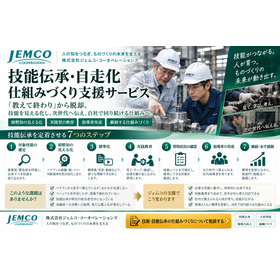
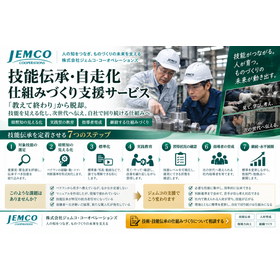
In the manufacturing of control boards for industrial robots, frequent setup changes due to diverse production and high accuracy in the implementation of fine components are required. In particular, processes that rely on the intuition and manual skills of skilled workers tend to become personalized, and when the education of younger workers is left to individual supervisors, there can be variations in their level of mastery, which becomes a factor that hinders the stabilization of quality in diverse production. This service consistently supports everything from the selection of critical skills to the visualization of tacit knowledge, standardization using videos, and the development of instructors, thereby establishing a system that allows the workplace to autonomously continue to refine skills. 【Usage Scenarios】 - Creating educational videos for fine tasks in diverse production - Preventing the loss of skills due to the retirement of skilled workers - Eliminating variations in the level of mastery in the education of younger workers - Standardizing work procedures that have become personalized 【Effects of Implementation】 - The tacit knowledge of skilled workers is formalized through videos and other means, standardizing education - Younger workers acquire skills to the level where they can make their own judgments and practice - Continuous education within the company is made possible through the development of internal instructors - Visualization of skill levels enables planned human resource development
Added to bookmarks
Bookmarks listBookmark has been removed
Bookmarks listYou can't add any more bookmarks
By registering as a member, you can increase the number of bookmarks you can save and organize them with labels.
Free membership registration
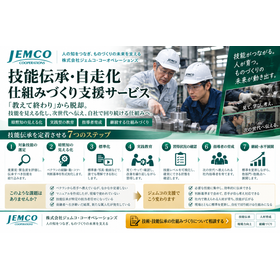
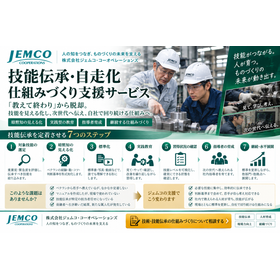
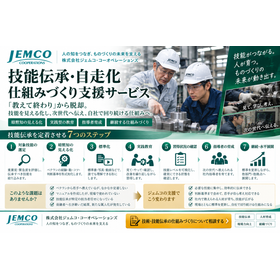
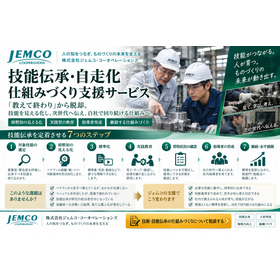
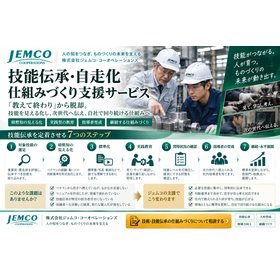
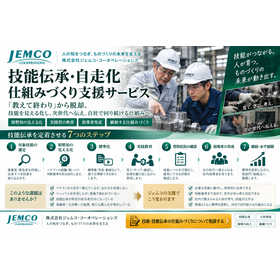
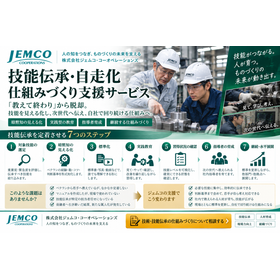
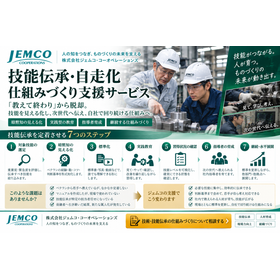
In the aerospace industry, the precise inheritance of fine soldering techniques by skilled workers is essential for the implementation of electronic components, which require extremely high reliability. In particular, advanced techniques performed manually tend to become personalized, and if the education of younger workers is left to individual responsibility, there will be variations in their level of mastery, which can hinder the stabilization of quality. This service consistently supports everything from the selection of critical skills to the visualization of tacit knowledge, standardization using videos, and the development of instructors, thereby establishing a system that allows the field to autonomously continue to refine their skills. 【Usage Scenarios】 - Streamlining the learning process through educational videos for high-reliability soldering work - Preventing the loss of skills due to the retirement of skilled workers - Eliminating variations in the level of mastery in the education of younger workers - Standardizing work procedures that have become personalized 【Benefits of Implementation】 - The tacit knowledge of skilled workers is formalized through videos and other means, standardizing education - Younger workers acquire skills to the level where they can make their own judgments and practice - Continuous education within the company is made possible through the development of internal instructors - Visualization of skill levels enables planned human resource development
Added to bookmarks
Bookmarks listBookmark has been removed
Bookmarks listYou can't add any more bookmarks
By registering as a member, you can increase the number of bookmarks you can save and organize them with labels.
Free membership registration
In the manufacturing field of home appliances, as products become smaller and more densely packed, there is a demand for stable operation of automated lines and the maintenance of advanced skills by the workers supporting them. In particular, fine adjustments and troubleshooting on automated lines tend to rely heavily on the experience of skilled workers, leading to a situation where individual expertise hinders the autonomous operation of the line. This service consistently supports everything from the selection of critical skills to the visualization of tacit knowledge, standardization using videos, and the development of instructors, thereby establishing a system that allows the workplace to continuously refine its skills autonomously. 【Usage Scenarios】 - Creating educational videos for fine tasks on automated lines - Preventing the loss of technology due to the retirement of skilled workers - Eliminating variability in skill acquisition among young workers during training - Standardizing line adjustment procedures that have become individualized 【Benefits of Implementation】 - Tacit knowledge of skilled workers is formalized through videos and other means, standardizing education - Young workers acquire skills to the level where they can make independent judgments and practice - Continuous education within the company is made possible through the development of internal instructors - Visualization of skill levels enables planned human resource development
Added to bookmarks
Bookmarks listBookmark has been removed
Bookmarks listYou can't add any more bookmarks
By registering as a member, you can increase the number of bookmarks you can save and organize them with labels.
Free membership registration
In the telecommunications infrastructure industry, the miniaturization and high density of high-speed communication boards require the precise inheritance of fine assembly work by skilled workers. In particular, advanced techniques that rely on visual inspection and manual work tend to become personalized, and when the education of younger workers is left to individual supervisors, there can be variations in the level of skill acquisition, leading to decreased yield. This service consistently supports everything from the selection of critical skills to the visualization of tacit knowledge, standardization using videos, and the development of instructors, thereby establishing a system that allows the field to autonomously continue to refine their skills. 【Usage Scenarios】 - Streamlining the acquisition process through educational videos for fine work on high-speed communication boards - Preventing the loss of skills due to the retirement of skilled workers - Eliminating variations in skill acquisition during the education of younger workers - Standardizing work procedures that have become personalized 【Benefits of Implementation】 - The tacit knowledge of skilled workers is formalized through videos and other means, standardizing education - Younger workers acquire skills to the level where they can make independent judgments and practice - Continuous education within the company is made possible through the development of internal instructors - Visualization of skill levels enables planned human resource development
Added to bookmarks
Bookmarks listBookmark has been removed
Bookmarks listYou can't add any more bookmarks
By registering as a member, you can increase the number of bookmarks you can save and organize them with labels.
Free membership registration
In the semiconductor manufacturing equipment industry, as products become smaller and more densely packed, there is a demand for the precise inheritance of fine assembly work by skilled workers. In particular, advanced techniques that rely on visual inspection and manual work tend to become personalized, and if the education of younger workers is left to individual supervisors, there can be variations in their level of mastery, which can hinder the stabilization of quality. This service consistently supports everything from the selection of critical skills to the visualization of tacit knowledge, standardization using videos, and the development of instructors, thereby establishing a system that allows the workplace to autonomously continue to refine skills. 【Usage Scenarios】 - Streamlining the learning process through educational videos for fine assembly work - Preventing the loss of technology due to the retirement of skilled workers - Eliminating variations in the level of mastery in the education of younger workers - Standardizing fine assembly procedures that have become personalized 【Benefits of Implementation】 - The tacit knowledge of skilled workers is formalized through videos and other means, standardizing education - Younger workers acquire skills to the level where they can make independent judgments and practice - Continuous education within the company is made possible through the development of internal instructors - Visualization of skill levels enables planned human resource development
Added to bookmarks
Bookmarks listBookmark has been removed
Bookmarks listYou can't add any more bookmarks
By registering as a member, you can increase the number of bookmarks you can save and organize them with labels.
Free membership registration
In the defense equipment industry, the reliable inheritance of fine craftsmanship by skilled workers is essential to support the long-term maintenance and operation of products. In particular, advanced manual work tends to become personalized, and if the education of younger workers is left to individual supervisors, there can be variations in the level of skill acquisition, which can hinder long-term quality maintenance. This service consistently supports everything from the selection of critical skills to the visualization of tacit knowledge, standardization using videos, and the development of instructors, thereby establishing a system that allows the field to autonomously continue to refine their skills. 【Usage Scenarios】 - Creating educational videos for fine work in long-term maintenance - Preventing the loss of skills due to the retirement of skilled workers - Eliminating variations in skill acquisition in the education of younger workers - Standardizing maintenance work procedures that have become personalized 【Effects of Implementation】 - The tacit knowledge of skilled workers is formalized through videos and other means, standardizing education - Younger workers acquire skills to the level where they can make independent judgments and practice - Continuous education within the company is made possible through the development of internal instructors - Visualization of skill levels enables planned human resource development
Added to bookmarks
Bookmarks listBookmark has been removed
Bookmarks listYou can't add any more bookmarks
By registering as a member, you can increase the number of bookmarks you can save and organize them with labels.
Free membership registration
In the field of renewable energy, power semiconductor implementation requires high efficiency and high reliability. In particular, fine implementation work tends to rely heavily on the skills of experienced workers, and if the transfer of knowledge to younger workers is insufficient, variations in quality may affect product performance. This service consistently supports everything from the selection of critical skills to the visualization of tacit knowledge, standardization using videos, and the development of instructors, creating a system that allows the workplace to autonomously continue to refine skills. 【Usage Scenarios】 - Streamlining the learning process through educational videos on fine work with power semiconductors - Preventing the loss of technology due to the retirement of skilled workers - Eliminating variations in skill acquisition among younger workers during training - Standardizing implementation procedures that have become personalized 【Effects of Implementation】 - The tacit knowledge of skilled workers is formalized through videos and other means, standardizing education - Young workers acquire skills to the level where they can make independent judgments and practice - Continuous education within the company is made possible through the development of internal instructors - Visualization of skill levels enables planned human resource development
Added to bookmarks
Bookmarks listBookmark has been removed
Bookmarks listYou can't add any more bookmarks
By registering as a member, you can increase the number of bookmarks you can save and organize them with labels.
Free membership registration
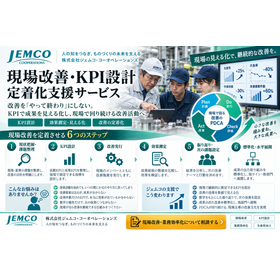
In the field of SaaS development, there is a demand for rapid response to market needs and acceleration of the development cycle. In particular, if the actual labor hours in the development process become formalized and bottlenecks remain unclear, it becomes difficult to shorten the release cycle and improve productivity. Our service supports the creation of a system where labor hour management is not just a record but is redesigned as a KPI directly linked to results, enabling the field to autonomously continue improvements. 【Usage Scenarios】 - Identification and resolution of bottlenecks in the development process - Comparative verification of productivity indicators before and after the implementation of improvement measures - Sharing of know-how between teams through the standardization of successful cases 【Effects of Implementation】 - Visualization of project profitability through the optimization of labor hour management - Setting and execution of objective improvement themes based on data - Establishment of a continuous productivity improvement cycle led by the field
Added to bookmarks
Bookmarks listBookmark has been removed
Bookmarks listYou can't add any more bookmarks
By registering as a member, you can increase the number of bookmarks you can save and organize them with labels.
Free membership registration
In the railway vehicle industry, it is extremely important to maintain high reliability even in harsh environments such as vibrations and temperature changes, which makes the implementation technology for the environmental durability of electronic components crucial. The subtle skills and intuition possessed by skilled workers tend to be personalized, and if the education of younger workers is left to individual supervisors, it can lead to variations in skill acquisition, which hinders the stabilization of quality. This service consistently supports everything from the selection of critical skills to the visualization of tacit knowledge, standardization using videos, and the development of instructors, thereby establishing a system that allows the field to autonomously continue to refine their skills. 【Usage Scenarios】 - Creating educational videos for fine work that ensures environmental durability - Preventing the loss of skills due to the retirement of skilled workers - Eliminating variations in skill acquisition in the education of younger workers - Standardizing work procedures that have become personalized 【Benefits of Implementation】 - The tacit knowledge of skilled workers is formalized through videos and other means, standardizing education - Younger workers acquire skills to the level where they can make independent judgments and practice - Continuous education within the company is made possible through the development of internal instructors - Visualization of skill levels enables planned human resource development
Added to bookmarks
Bookmarks listBookmark has been removed
Bookmarks listYou can't add any more bookmarks
By registering as a member, you can increase the number of bookmarks you can save and organize them with labels.
Free membership registration
In the agricultural machinery industry, ensuring the reliability of products operating in harsh outdoor environments requires precision in the fine work of circuit board assembly. In particular, high-quality assembly techniques that can withstand vibrations and temperature changes often rely heavily on the intuition of skilled workers, leading to a challenge of knowledge becoming too personalized. When the education of younger workers is left to individual supervisors, it results in inconsistencies in skill acquisition, which can hinder the longevity of products. This service provides comprehensive support from the selection of critical skills to the visualization of tacit knowledge, standardization using videos, and the development of instructors, creating a system that allows the field to autonomously continue honing their skills. 【Usage Scenarios】 - Streamlining the learning process through educational videos for circuit board assembly in harsh environments - Preventing the loss of assembly techniques due to the retirement of skilled workers - Eliminating inconsistencies in skill acquisition during the education of younger workers - Standardizing assembly procedures that have become personalized 【Benefits of Implementation】 - Tacit knowledge of skilled workers is formalized through videos and other means, standardizing education - Younger workers acquire skills to the level where they can make independent judgments and practice - Continuous education within the company is made possible through the development of internal instructors - Visualization of skill levels enables planned human resource development
Added to bookmarks
Bookmarks listBookmark has been removed
Bookmarks listYou can't add any more bookmarks
By registering as a member, you can increase the number of bookmarks you can save and organize them with labels.
Free membership registration
In the logistics system industry, the miniaturization and high density of sensor substrates require the accurate inheritance of fine tasks in mass production sites. In particular, advanced techniques that rely on visual inspection and manual work tend to become personalized, and if the education of younger workers is left to individual supervisors, there can be variations in skill acquisition, which hinders mass production efficiency and quality stabilization. This service consistently supports everything from the selection of critical skills to the visualization of tacit knowledge, standardization using videos, and the development of instructors, creating a system that allows the field to autonomously continue to refine skills. 【Usage Scenarios】 - Streamlining the acquisition process through educational videos for fine tasks involving sensor substrates - Preventing the loss of skills due to the retirement of skilled workers - Eliminating variations in skill acquisition during the education of younger workers - Standardizing work procedures that have become personalized 【Benefits of Implementation】 - Tacit knowledge of skilled workers is formalized through videos and other means, standardizing education - Younger workers acquire skills to the level where they can make independent judgments and practice - Continuous education within the company is possible through the development of internal instructors - Visualization of skill levels enables planned human resource development
Added to bookmarks
Bookmarks listBookmark has been removed
Bookmarks listYou can't add any more bookmarks
By registering as a member, you can increase the number of bookmarks you can save and organize them with labels.
Free membership registration
In the metal pressing industry, it is essential to cultivate multi-skilled workers in mold adjustment to improve production efficiency and establish a flexible production system. In particular, it is necessary to ensure that the advanced adjustment techniques and judgment criteria possessed by skilled workers are reliably passed on to the next generation, and to develop personnel capable of handling multiple processes. If the "tacit knowledge" of veteran experience and intuition becomes personalized, the standardization of mold adjustment may not progress, and there is a risk that the flexible operation of the production line will become difficult. This service consistently supports everything from the selection of critical skills to the visualization and standardization of tacit knowledge, and the development of instructors, creating a system that allows the field to autonomously continue to refine skills and promote multi-skilling. 【Usage Scenarios】 - Building an efficient skill acquisition process for multi-skilling in mold adjustment - Preventing the loss of mold adjustment techniques due to the retirement of veteran workers - Situations where education for younger workers is left to individual responsibility, leading to variability in adjustment proficiency - Improving situations where manuals are not utilized on-site, and the personalization of mold adjustment is not resolved.
Added to bookmarks
Bookmarks listBookmark has been removed
Bookmarks listYou can't add any more bookmarks
By registering as a member, you can increase the number of bookmarks you can save and organize them with labels.
Free membership registration
In the resin molding industry, it is essential to pass on the advanced judgment criteria of skilled workers in molding condition setting to the next generation in order to maintain stable quality and production efficiency. In particular, delicate adjustments such as resin fluidity and cooling time often rely heavily on the experience and intuition of veterans. If this reliance on individuals is not resolved, it may lead to variations in quality and stagnation in the transfer of technology. This service consistently supports everything from the selection of critical skills to the visualization of tacit knowledge, standardization, and the development of instructors, creating a system that allows the workplace to autonomously continue honing their skills. 【Usage Scenarios】 - Formalizing the know-how of molding condition setting - Preventing the loss of technology due to the retirement of veteran workers - Situations where education for younger employees is left to individual responsibility, leading to variations in skill acquisition - Improving situations where manuals are not utilized on-site, and reliance on individuals persists 【Effects of Implementation】 - The tacit knowledge of skilled workers is formalized, achieving standardization in education - Young workers acquire skills to the level where they can make independent judgments and practice - Continuous education within the company becomes possible through the development of internal instructors - Visualization of skill levels enables planned human resource development
Added to bookmarks
Bookmarks listBookmark has been removed
Bookmarks listYou can't add any more bookmarks
By registering as a member, you can increase the number of bookmarks you can save and organize them with labels.
Free membership registration
In the casting and forging industry, the inheritance of advanced skills and judgment criteria possessed by skilled workers is essential for the stable production of high-quality products. Particularly, if the implicit knowledge related to "intuition" and "tips" concerning temperature management and material handling becomes personalized, it may hinder the advancement of multi-skilled workers and make flexible operation of the production system difficult. This service consistently supports everything from the selection of critical skills to the visualization and standardization of implicit knowledge, as well as the development of instructors, thereby establishing a system that allows the workplace to autonomously continue honing their skills. 【Usage Scenarios】 - Building an efficient skill acquisition process aimed at multi-skilling - Preventing the loss of technology due to the retirement of veteran workers - Situations where education for younger employees is left to individual responsibility, leading to variability in skill acquisition - Improving situations where manuals are not utilized on-site, preventing the resolution of personalization 【Effects of Implementation】 - The implicit knowledge of skilled workers is formalized, achieving standardization of education - Younger employees acquire skills to the level where they can make their own judgments and practice - Development of in-house instructors enables continuous education within the company - Visualization of skill levels allows for planned human resource development
Added to bookmarks
Bookmarks listBookmark has been removed
Bookmarks listYou can't add any more bookmarks
By registering as a member, you can increase the number of bookmarks you can save and organize them with labels.
Free membership registration
In the machining industry, in order to respond to small-batch production of various types and improve production efficiency, it is essential to accelerate setup changes and develop multi-skilled workers. In particular, if the "tacit knowledge" such as intuition and tips held by skilled workers becomes personalized, it may take time for setup changes, making flexible operation of the production line difficult. This service consistently supports everything from the selection of critical skills to the visualization and standardization of tacit knowledge, and the development of instructors, establishing a system that allows the workplace to autonomously continue to refine skills and promote the efficiency of setup changes. 【Usage Scenarios】 - Streamlining and standardizing setup change operations - Preventing the loss of skills due to the retirement of veteran workers - Situations where education for younger workers is left to individual responsibility, resulting in inconsistent levels of skill acquisition - Improving situations where manuals are not utilized on-site, and personalization is not resolved 【Effects of Implementation】 - Tacit knowledge of skilled workers is formalized, achieving standardization of education - Young workers acquire skills to the level where they can make independent judgments and practice - Continuous education within the company becomes possible through the development of internal instructors - Visualization of skill levels enables planned human resource development
Added to bookmarks
Bookmarks listBookmark has been removed
Bookmarks listYou can't add any more bookmarks
By registering as a member, you can increase the number of bookmarks you can save and organize them with labels.
Free membership registration
In the surface treatment industry, it is essential to inherit precise judgment criteria from skilled workers to maintain product quality. Particularly in visual inspections and assessments of treatment conditions, if the "tacit knowledge" such as the experience and intuition of veterans becomes personalized, it leads to variations in judgment criteria and hinders the stabilization of quality. This service consistently supports everything from the selection of critical skills to the visualization and standardization of tacit knowledge, and the development of instructors, creating a system that allows the field to autonomously maintain and improve quality judgment criteria. 【Usage Scenarios】 - Standardization of quality judgment criteria and establishment of educational processes - Prevention of loss of technology and judgment criteria due to the retirement of veteran workers - Situations where education for younger employees is left to individual responsibility, resulting in variations in judgment outcomes - Improvement of situations where manuals are not utilized on-site, preventing the resolution of personalized quality judgment 【Effects of Implementation】 - Tacit knowledge of skilled workers is formalized, achieving standardization of quality judgment - Young employees acquire skills to the level where they can make judgments and practice independently - Development of in-house instructors enables continuous education within the company - Visualization of skill levels allows for planned human resource development
Added to bookmarks
Bookmarks listBookmark has been removed
Bookmarks listYou can't add any more bookmarks
By registering as a member, you can increase the number of bookmarks you can save and organize them with labels.
Free membership registration
In the electronic component assembly industry, the miniaturization and high density of products require the precise inheritance of fine work by skilled workers. In particular, advanced techniques that rely on visual inspection and manual work tend to become personalized, and when the education of younger workers is left to individual supervisors, there can be variations in the level of skill acquisition, which hinders the stabilization of quality. This service consistently supports everything from the selection of essential skills to the visualization of tacit knowledge, standardization using videos, and the development of instructors, thereby establishing a system that allows the workplace to autonomously continue to refine its skills. 【Usage Scenarios】 - Streamlining the acquisition process through educational videos for fine work - Preventing the loss of skills due to the retirement of skilled workers - Eliminating variations in skill acquisition during the education of younger workers - Standardizing work procedures that have become personalized 【Benefits of Implementation】 - The tacit knowledge of skilled workers is formalized through videos and other means, standardizing education - Younger workers acquire skills to the level where they can make their own judgments and practice - Continuous education within the company is made possible through the development of internal instructors - Visualization of skill levels enables planned human resource development
Added to bookmarks
Bookmarks listBookmark has been removed
Bookmarks listYou can't add any more bookmarks
By registering as a member, you can increase the number of bookmarks you can save and organize them with labels.
Free membership registration
In the mold manufacturing industry, the inheritance of advanced skills from experienced workers is essential in the finishing process, which significantly affects product quality. Particularly when "tacit knowledge," such as fine adjustments and judgment criteria, becomes personalized, there is a risk of quality variation and loss of skills. This service consistently supports everything from the selection of critical skills to the visualization and standardization of tacit knowledge, as well as the development of instructors, creating a system that allows the workplace to autonomously continue honing their skills. 【Usage Scenarios】 - Building an efficient skill acquisition process in the finishing process - Preventing the loss of skills due to the retirement of veteran workers - Situations where education for younger employees is left to individual responsibility, leading to variations in skill acquisition - Improving situations where manuals are not utilized on-site, and personalization is not resolved 【Effects of Implementation】 - Tacit knowledge of skilled workers is formalized, achieving standardization in education - Young workers acquire skills to the level where they can make their own judgments and practice - Development of in-house instructors enables continuous education within the company - Visualization of skill levels allows for planned human resource development
Added to bookmarks
Bookmarks listBookmark has been removed
Bookmarks listYou can't add any more bookmarks
By registering as a member, you can increase the number of bookmarks you can save and organize them with labels.
Free membership registration
In the welding processing industry, it is essential to inherit the advanced welding techniques possessed by skilled workers in order to stabilize product quality. In particular, if the "tacit knowledge" related to torch angles, speeds, and judgment criteria during welding becomes personalized, the transmission of skills to younger workers may stagnate, leading to the risk of quality variations. This service aims to visualize and standardize important skills through the motion analysis of skilled workers, establishing a system that allows the workplace to autonomously continue to refine their skills. 【Usage Scenarios】 - Formalizing skills through motion analysis of skilled welders - Building an efficient technical guidance process for younger workers - Preventing the loss of welding techniques due to veteran retirements - Eliminating variations in welding quality caused by personalization 【Benefits of Implementation】 - The intuition and tips of skilled workers are visualized, achieving standardization in education - Younger workers acquire skills to the level where they can make independent judgments and practice - Continuous education within the company becomes possible through the development of internal instructors - Visualization of skill levels enables planned human resource development
Added to bookmarks
Bookmarks listBookmark has been removed
Bookmarks listYou can't add any more bookmarks
By registering as a member, you can increase the number of bookmarks you can save and organize them with labels.
Free membership registration
In the rubber manufacturing industry, it is essential to maintain the advanced formulation know-how and processing techniques possessed by skilled workers to stabilize product quality. In particular, if the "tacit knowledge," such as the experience and intuition to discern the characteristics of raw materials, becomes personalized, the inheritance of technology may stagnate, leading to variations in quality and a decline in production efficiency. This service consistently supports everything from the selection of critical skills to the visualization and standardization of tacit knowledge, as well as the development of instructors, creating a system where the workplace can autonomously continue to refine skills and database formulation know-how. 【Usage Scenarios】 - Formalizing the formulation know-how of skilled workers and building a database - Preventing the loss of technology due to the retirement of veteran workers - Situations where education for younger employees is left to individual responsibility, resulting in varying levels of proficiency - Improving situations where manuals are not utilized on-site, and personalization is not resolved 【Effects of Implementation】 - Tacit knowledge of skilled workers is formalized, achieving standardization of education - Young employees acquire skills to the level where they can make independent judgments and practice - Continuous education within the company is made possible through the development of internal instructors - Visualization of skill levels enables planned human resource development
Added to bookmarks
Bookmarks listBookmark has been removed
Bookmarks listYou can't add any more bookmarks
By registering as a member, you can increase the number of bookmarks you can save and organize them with labels.
Free membership registration
In the heat treatment industry, strict temperature management and the unification of workers' judgment criteria are essential to maintain product quality. In particular, the fine adjustments made by skilled workers based on their years of experience and intuition are crucial factors that influence quality. If these judgment criteria become personalized, there is a risk of quality variation among workers, making stable production difficult. This service consistently supports everything from the selection of critical skills to the visualization of tacit knowledge, standardization, and the development of instructors, establishing a system that allows the workplace to autonomously continue to refine skills and unify temperature management judgment criteria. 【Usage Scenarios】 - Standardization of temperature management judgment criteria for skilled workers - Prevention of loss of quality management know-how due to veteran retirements - Resolution of variations in temperature adjustments by workers - Manualization of previously personalized judgment criteria 【Benefits of Implementation】 - Tacit knowledge of skilled workers is formalized, achieving standardization of education - Young workers acquire skills to the level where they can make independent judgments and practice - Continuous education within the company is made possible through the development of internal instructors - Visualization of skill levels enables planned human resource development
Added to bookmarks
Bookmarks listBookmark has been removed
Bookmarks listYou can't add any more bookmarks
By registering as a member, you can increase the number of bookmarks you can save and organize them with labels.
Free membership registration
In the logistics and warehousing industry, optimizing picking procedures is essential to improve delivery speed and achieve accurate inventory management. In particular, if the "tacit knowledge" such as efficient movement judgment and product knowledge possessed by skilled workers becomes personalized, it can lead to variations in work efficiency and make flexible personnel allocation during busy periods difficult. This service consistently supports everything from the selection of essential skills to the visualization and standardization of tacit knowledge, as well as the development of trainers, creating a system that allows the field to autonomously maintain and improve work quality. 【Usage Scenarios】 - Standardization of picking procedures and the establishment of an efficient learning process - Prevention of knowledge loss due to the retirement of veteran workers - Situations where education for younger employees is left to individual responsibility, leading to variations in work accuracy - Improvement of situations where manuals are not utilized on-site, and personalization is not resolved 【Effects of Implementation】 - Tacit knowledge of skilled workers is formalized, achieving standardization of education - Young employees acquire skills to the level where they can make independent judgments and practice - Development of in-house trainers enables continuous education within the company - Visualization of skill levels allows for planned human resource development
Added to bookmarks
Bookmarks listBookmark has been removed
Bookmarks listYou can't add any more bookmarks
By registering as a member, you can increase the number of bookmarks you can save and organize them with labels.
Free membership registration
In the field of equipment maintenance, the diagnostic skills for predicting failures, possessed by skilled workers, are essential for maintaining stable operations. It is particularly important to reliably pass on advanced judgment criteria that detect abnormalities from subtle changes in noise and vibrations to the next generation. If the "tacit knowledge" of veteran experience and intuition becomes personalized, there is a risk that preventing failures in advance will become difficult. This service consistently supports everything from selecting critical skills to visualizing and standardizing tacit knowledge, and training leaders, thereby establishing a system that allows the field to autonomously continue honing skills and inheriting diagnostic abilities. 【Usage Scenarios】 - Building an efficient skill acquisition process for failure prediction diagnostics - Preventing the loss of diagnostic techniques due to the retirement of veteran workers - Situations where education for younger employees is left to individual responsibility, leading to variability in diagnostic accuracy - Improving situations where manuals are not utilized on-site, and personalization is not resolved 【Effects of Implementation】 - Tacit knowledge of skilled workers is formalized, achieving standardization of diagnostic criteria - Young workers acquire diagnostic skills to the level where they can make judgments and practice independently - Continuous education within the company becomes possible through the development of internal trainers - Visualization of skill levels enables planned human resource development
Added to bookmarks
Bookmarks listBookmark has been removed
Bookmarks listYou can't add any more bookmarks
By registering as a member, you can increase the number of bookmarks you can save and organize them with labels.
Free membership registration
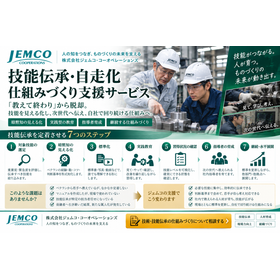
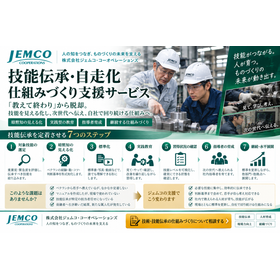
In the automotive parts industry, it is essential to cultivate multi-skilled workers to improve production efficiency and establish a flexible production system. In particular, it is necessary to ensure that the advanced skills and judgment criteria possessed by skilled workers are reliably passed on to the next generation, and to develop personnel capable of handling multiple processes. If the "tacit knowledge" of veteran workers, such as their experience and intuition, becomes personalized, it may hinder the advancement of multi-skilling and make flexible operation of production lines difficult. This service consistently supports everything from the selection of critical skills to the visualization and standardization of tacit knowledge, and the development of instructors, creating a system that allows the workplace to autonomously continue to refine skills and promote multi-skilling. 【Usage Scenarios】 - Building an efficient skill acquisition process aimed at multi-skilling - Preventing the loss of technology due to the retirement of veteran workers - Situations where education for younger workers is left to individual responsibility, leading to variability in skill acquisition - Improving situations where manuals are not utilized on-site, preventing the resolution of personalization 【Effects of Implementation】 - Tacit knowledge of skilled workers is converted into explicit knowledge, achieving standardization of education - Young workers acquire skills to the level where they can make their own judgments and practice - Continuous education within the company becomes possible through the development of internal instructors - Visualization of skill levels enables planned human resource development
Added to bookmarks
Bookmarks listBookmark has been removed
Bookmarks listYou can't add any more bookmarks
By registering as a member, you can increase the number of bookmarks you can save and organize them with labels.
Free membership registration
In the food processing industry, strict adherence to hygiene procedures and maintenance of quality are required to ensure product safety. In particular, the "tacit knowledge" related to cleaning, sterilization, and prevention of foreign matter contamination, which skilled workers perform based on experience, poses challenges as it is difficult to standardize and tends to become personalized. Inadequate transmission of this knowledge may lead to variations in hygiene management and increase the risk of quality incidents. This service consistently supports the selection of critical skills, visualization of tacit knowledge, standardization, and the development of trainers, thereby establishing a system that allows the workplace to autonomously maintain hygiene standards. 【Usage Scenarios】 - Preventing the loss of hygiene management know-how due to the retirement of veteran workers - Improving situations where manuals are not utilized on-site, leading to personalized work procedures - Addressing variations in hygiene awareness and skill acquisition among young workers, as education is left to individual responsibility - Preventing new personalization after the development of successors 【Benefits of Implementation】 - Tacit knowledge of hygiene management from skilled workers is formalized, achieving standardization of education - Young workers acquire hygiene procedures to the level where they can make independent judgments and practice - Development of internal trainers enables continuous education within the company - Visualization of skill levels allows for planned human resource development
Added to bookmarks
Bookmarks listBookmark has been removed
Bookmarks listYou can't add any more bookmarks
By registering as a member, you can increase the number of bookmarks you can save and organize them with labels.
Free membership registration
In the metal processing industry, it is essential to ensure that the advanced skills and judgment criteria possessed by skilled workers are reliably passed on to the next generation in order to maintain and improve product quality. In particular, "tacit knowledge," such as fine adjustments during processing and experiential rules, poses challenges as it is difficult to formalize and tends to become personalized. Inadequate transmission of this knowledge may lead to variations in quality and a decline in production efficiency. This service consistently supports everything from the selection of critical skills to the visualization and standardization of tacit knowledge, as well as the development of instructors, thereby establishing a system that allows the workplace to autonomously continue honing skills. 【Usage Scenarios】 - Prevention of loss of skills due to the retirement of veteran workers - Improvement of situations where manuals are not utilized on-site, leading to persistent personalization - Workplaces where education for younger employees is left to individual responsibility, resulting in inconsistent levels of skill acquisition - Prevention of new personalization after the development of successors 【Effects of Implementation】 - Tacit knowledge of skilled workers is formalized, achieving standardization of education - Young workers acquire skills to the level where they can make independent judgments and practice - Development of in-house instructors enables continuous education within the company - Visualization of skill levels allows for planned human resource development
Added to bookmarks
Bookmarks listBookmark has been removed
Bookmarks listYou can't add any more bookmarks
By registering as a member, you can increase the number of bookmarks you can save and organize them with labels.
Free membership registration
In chemical plant operations, it is essential to ensure that the advanced judgment criteria possessed by skilled workers, which can detect subtle changes, are reliably passed on to the next generation to maintain stable operation and safety of equipment. In particular, tacit knowledge such as "signs of abnormalities" based on years of experience is difficult to formalize into manuals and tends to become personalized, posing challenges. Inadequate transmission of this knowledge may lead to delays in abnormal detection and variations in quality. This service consistently supports everything from the selection of critical skills to the visualization and standardization of tacit knowledge, as well as the development of trainers, establishing a system that allows the field to autonomously continue honing their skills. 【Usage Scenarios】 - Preventing the loss of abnormal detection know-how due to the retirement of veteran workers - Improving situations where the judgment criteria in the field have become personalized, leading to inconsistencies in training young workers - Preventing new personalization after the development of successors 【Effects of Implementation】 - The intuition of skilled workers for abnormal detection is formalized, achieving standardization in education - Young workers acquire skills to independently judge and practice signs of abnormalities - Continuous education within the company becomes possible through the development of internal trainers - Visualization of skill levels enables planned human resource development
Added to bookmarks
Bookmarks listBookmark has been removed
Bookmarks listYou can't add any more bookmarks
By registering as a member, you can increase the number of bookmarks you can save and organize them with labels.
Free membership registration
In the micro-assembly processes of the electronic components industry, there is a need to reliably pass on the advanced manual skills and judgment criteria held by skilled workers to the next generation, in line with the miniaturization and high-density requirements of products. In particular, the "tacit knowledge" involved in handling fine components, such as the application of force and alignment, is difficult to standardize through manuals using words or still images, leading to challenges in inheritance that can become personalized. If the transmission of this knowledge is insufficient, there is a risk of quality variation and decreased yield. This service consistently supports everything from the selection of critical skills to the visualization of tacit knowledge, standardization using videos, and the development of instructors, thereby establishing a system that allows the field to autonomously continue honing their skills. 【Usage Scenarios】 - Prevention of the loss of micro-assembly technology due to the retirement of veteran workers - Improvement of situations where manuals are not utilized on-site, leading to persistent personalization - Education for younger workers being left to individual responsibility, resulting in varying levels of skill acquisition - Prevention of new personalization after the development of successors 【Effects of Implementation】 - Tacit knowledge of skilled workers is formalized through videos, achieving standardization in education - Young workers acquire skills to the level where they can make their own judgments and practice - Development of in-house instructors enables continuous education within the company - Visualization of skill levels allows for planned human resource development
Added to bookmarks
Bookmarks listBookmark has been removed
Bookmarks listYou can't add any more bookmarks
By registering as a member, you can increase the number of bookmarks you can save and organize them with labels.
Free membership registration
In the field of mechanical design, it is essential to ensure that the advanced skills and design philosophies held by veteran designers are reliably passed on to the next generation to guarantee product performance and reliability. In particular, implicit knowledge such as judgment criteria and "intuition" based on years of experience is difficult to convey through drawings and manuals alone, making it prone to becoming individualized. If the transmission of this knowledge is insufficient, it may lead to variations in design quality and a decline in development efficiency. This service consistently supports everything from the selection of critical skills to the visualization and standardization of implicit knowledge, as well as the development of instructors, establishing a system that allows the design field to autonomously continue honing its technology. 【Usage Scenarios】 - Prevention of the loss of design know-how due to the retirement of veteran designers - Improvement of situations where design philosophies are not formalized and individualization is not resolved - Environments where education for younger staff is left to individual responsibility, resulting in variations in the acquisition of design skills - Prevention of new individualization after the development of successors 【Effects of Implementation】 - Implicit knowledge of skilled designers is formalized, achieving standardization of education - Young staff understand design philosophies and acquire skills to the level where they can make independent judgments and practice - Continuous education within the company is made possible through the development of internal instructors - Visualization of skill levels enables planned human resource development
Added to bookmarks
Bookmarks listBookmark has been removed
Bookmarks listYou can't add any more bookmarks
By registering as a member, you can increase the number of bookmarks you can save and organize them with labels.
Free membership registration
In the textile and apparel industry, it is essential to reliably pass on the advanced sewing techniques and subtle judgment criteria possessed by skilled workers to the next generation in order to consistently provide high-quality products. In particular, the "tacit knowledge" gained from the experience and intuition of veterans is difficult to formalize, leading to challenges in transmission that can become overly dependent on individuals. Inadequate transmission may result in variations in sewing quality and a decline in production efficiency. This service provides comprehensive support from the selection of critical skills to the visualization and standardization of tacit knowledge, as well as the development of instructors, establishing a system that allows the workplace to autonomously continue honing their skills. 【Usage Scenarios】 - Prevention of loss of sewing techniques due to the retirement of veteran workers - Improvement of situations where sewing manuals are not utilized on-site, and dependency on individuals persists - Workplaces where education for younger employees is left to individual responsibility, resulting in inconsistent levels of skill acquisition - Prevention of new dependencies after the development of successors 【Effects of Implementation】 - Tacit knowledge of skilled workers is formalized, achieving standardization of education - Young workers acquire skills to the level where they can make their own judgments and practice independently - Development of in-house instructors enables continuous education within the company - Visualization of skill levels allows for planned human resource development
Added to bookmarks
Bookmarks listBookmark has been removed
Bookmarks listYou can't add any more bookmarks
By registering as a member, you can increase the number of bookmarks you can save and organize them with labels.
Free membership registration
In the mold manufacturing industry, it is essential to ensure that the advanced processing techniques and subtle judgment criteria possessed by skilled workers are reliably passed on to the next generation in order to maintain and improve product accuracy. In particular, the "tacit knowledge" based on years of experience is difficult to formalize into manuals, leading to challenges in transmission that can become overly personalized. If the transmission is insufficient, there is a risk of variations in processing accuracy and a decline in production efficiency. This service consistently supports everything from the selection of critical skills to the visualization and standardization of tacit knowledge, as well as the development of instructors, creating a system in which the workplace can autonomously continue to refine skills. [Usage Scenarios] - Prevention of loss of technology due to the retirement of veteran workers - Improvement of situations where manuals are not utilized on-site, and personalization is not resolved - Workplaces where education for younger employees is left to individual responsibility, resulting in variations in skill acquisition - Prevention of new personalization after successor training [Effects of Implementation] - Tacit knowledge of skilled workers is formalized, achieving standardization of education - Young workers acquire skills to the level where they can make their own judgments and practice - Continuous education within the company becomes possible through the development of internal instructors - Visualization of skill levels enables planned human resource development
Added to bookmarks
Bookmarks listBookmark has been removed
Bookmarks listYou can't add any more bookmarks
By registering as a member, you can increase the number of bookmarks you can save and organize them with labels.
Free membership registration
In the pharmaceutical manufacturing industry, it is required to comply with strict GMP (Good Manufacturing Practice) standards for manufacturing and quality control of pharmaceuticals to ensure product quality and safety. In particular, the accurate execution of work procedures in the manufacturing site necessitates the inheritance of advanced skills and judgment criteria possessed by skilled workers. However, if the "tacit knowledge" of veteran workers becomes personalized, it can lead to variations in education, posing risks from the perspective of GMP compliance. This service consistently supports everything from the selection of critical skills to the visualization and standardization of tacit knowledge, as well as the development of instructors, establishing a system that allows the site to autonomously continue to refine skills. 【Usage Scenarios】 - Standardization of the education process for GMP compliance - Prevention of loss of skills due to the retirement of veteran workers - Resolution of variations in skill acquisition during training of younger employees - Prevention of new personalization after successor development 【Effects of Implementation】 - Tacit knowledge of skilled workers is formalized, achieving standardization of education - Young employees acquire skills to the level where they can make independent judgments and practice - Continuous education within the company becomes possible through the development of internal instructors - Visualization of skill levels enables planned human resource development
Added to bookmarks
Bookmarks listBookmark has been removed
Bookmarks listYou can't add any more bookmarks
By registering as a member, you can increase the number of bookmarks you can save and organize them with labels.
Free membership registration
In the shipbuilding industry, it is essential to ensure that the advanced welding techniques and judgment criteria possessed by skilled workers are reliably passed on to the next generation in order to maintain the quality and safety of large structures. In particular, the "tacit knowledge" gained from the experiences and intuition of veterans is difficult to formalize, leading to challenges in transmission that can become overly personalized. Insufficient transmission may result in variations in welding quality and a decrease in production efficiency. This service consistently supports everything from the selection of critical skills to the visualization and standardization of tacit knowledge, as well as the development of instructors, creating a system where the workplace can autonomously continue to refine skills. 【Usage Scenarios】 - Prevention of loss of welding skills due to the retirement of veteran workers - Improvement of situations where manuals are not utilized on-site, and personalization is not resolved - Workplaces where education for younger workers is left to individual responsibility, leading to variations in skill acquisition - Prevention of new personalization after the development of successors 【Effects of Implementation】 - Tacit knowledge of skilled workers is formalized, achieving standardization of education - Young workers acquire skills to the level where they can make independent judgments and practice - Development of in-house instructors enables continuous education within the company - Visualization of skill levels allows for planned human resource development
Added to bookmarks
Bookmarks listBookmark has been removed
Bookmarks listYou can't add any more bookmarks
By registering as a member, you can increase the number of bookmarks you can save and organize them with labels.
Free membership registration
In the aerospace industry, it is essential to ensure that the advanced skills and strict judgment standards possessed by skilled workers are reliably passed on to the next generation in order to maintain extremely high product quality and safety. In particular, "tacit knowledge," such as the experience and intuition of veterans, poses challenges as it is difficult to formalize and tends to become personalized in its transmission. Insufficient transmission can lead to variations in quality and decreased production efficiency, making it difficult to maintain a stable quality assurance process. This service consistently supports everything from the selection of critical skills to the visualization and standardization of tacit knowledge, as well as the development of instructors, thereby establishing a system that allows the field to autonomously continue honing their skills. 【Usage Scenarios】 - Prevention of loss of skills due to the retirement of veteran workers - Improvement of situations where manuals are not utilized on-site, and personalization is not resolved - Environments where education for younger employees is left to individuals, resulting in variations in skill acquisition - Prevention of new personalization after successor training 【Benefits of Implementation】 - Tacit knowledge of skilled workers is formalized, achieving standardization of education - Young employees acquire skills to the level where they can make their own judgments and practice - Development of internal instructors enables continuous education within the company - Visualization of skill levels allows for planned human resource development
Added to bookmarks
Bookmarks listBookmark has been removed
Bookmarks listYou can't add any more bookmarks
By registering as a member, you can increase the number of bookmarks you can save and organize them with labels.
Free membership registration
In the woodworking and furniture industry, the skill of discerning the characteristics of wood, known as "eye for quality," is essential for maintaining product quality and value. However, the intuition and judgment criteria developed by veteran craftsmen through years of experience often become tacit knowledge, making it challenging to pass on to the next generation. Inadequate transmission of this knowledge can lead to variations in quality due to incorrect material selection and a decrease in yield. This service consistently supports everything from the selection of critical skills to the visualization and standardization of tacit knowledge, as well as the development of instructors, creating a system where the field can autonomously continue to refine its skills. 【Usage Scenarios】 - Preventing the loss of wood selection skills due to the retirement of veteran craftsmen - Situations where the judgment of wood characteristics is left to individuals, leading to variability in skill acquisition - Improving situations where manuals are not utilized on-site, resulting in a lack of standardization 【Effects of Implementation】 - The intuition of skilled craftsmen regarding wood selection is formalized, achieving standardization in education - Young workers acquire skills to the level where they can independently judge the quality of wood - Continuous education within the company becomes possible through the development of internal instructors - Visualization of skill levels enables planned human resource development
Added to bookmarks
Bookmarks listBookmark has been removed
Bookmarks listYou can't add any more bookmarks
By registering as a member, you can increase the number of bookmarks you can save and organize them with labels.
Free membership registration
In the woodworking and furniture industry, the skill of discerning the characteristics of wood, known as "eye for quality," is essential for maintaining the quality and value of products. However, the intuition and judgment criteria developed by veteran craftsmen through years of experience often become tacit knowledge, making it challenging to pass on to the next generation. Inadequate transmission of this knowledge can lead to variations in quality due to incorrect material selection and a decrease in yield. This service consistently supports everything from the selection of critical skills to the visualization and standardization of tacit knowledge, as well as the development of instructors, thereby establishing a system that allows the field to autonomously continue honing their skills. 【Usage Scenarios】 - Preventing the loss of wood selection skills due to the retirement of veteran craftsmen - Situations where the judgment of wood characteristics is left to individuals, resulting in varying levels of proficiency in the field - Improving situations where manuals are not utilized on-site, leading to a lack of standardization 【Effects of Implementation】 - The intuition of skilled craftsmen in wood selection is formalized, achieving standardization in education - Young workers acquire skills to the level where they can independently assess the quality of wood - Continuous education within the company becomes possible through the development of internal instructors - Visualization of skill levels enables planned human resource development
Added to bookmarks
Bookmarks listBookmark has been removed
Bookmarks listYou can't add any more bookmarks
By registering as a member, you can increase the number of bookmarks you can save and organize them with labels.
Free membership registration
In nursing care facilities, it is essential to acquire appropriate assistance techniques to provide safe and high-quality care to users. In particular, the subtle tips and judgment criteria for physical assistance that veteran staff possess are difficult to articulate, and education tends to be left to the individual in charge. Even if manuals are created, if they are not utilized on-site, it is challenging to establish the techniques. Our service supports the creation of a system of education that allows younger staff to make their own judgments and practice by formalizing the implicit knowledge of veterans, including the video manualization of assistance procedures. 【Usage Scenarios】 - Video manualization of complex assistance procedures - Extraction of experiences, intuition, and tips from veteran staff - Standardization of practical education for new staff - Strengthening the educational system through the development of instructors 【Effects of Implementation】 - Improvement in care quality through the standardization of assistance procedures - Resolution of the personalization of education and improvement of retention rates - Development of autonomous judgment skills in younger staff - Establishment of a sustainable education cycle across the organization
Added to bookmarks
Bookmarks listBookmark has been removed
Bookmarks listYou can't add any more bookmarks
By registering as a member, you can increase the number of bookmarks you can save and organize them with labels.
Free membership registration
In acute care hospitals, accurate mastery of complex nursing procedures is required to provide safe and high-quality nursing care. In particular, the judgment criteria and subtle tips possessed by veteran nurses are difficult to articulate, often leaving education to the discretion of individuals. Even if manuals are created, if they are not utilized in the field, it is challenging to establish skills. Our service supports the creation of an educational system that includes video manuals for nursing procedures, formalizing the tacit knowledge of veterans, and enabling younger nurses to make independent judgments and practice. 【Usage Scenarios】 - Video manuals for complex nursing procedures - Extraction of experiences, intuition, and tips from veteran nurses - Standardization of practical education for new nurses - Strengthening the educational system through the development of instructors 【Effects of Implementation】 - Improvement in care quality through standardization of nursing procedures - Resolution of education becoming overly dependent on individuals and improvement in retention rates - Development of autonomous judgment skills in younger nurses - Establishment of a sustainable educational cycle throughout the organization
Added to bookmarks
Bookmarks listBookmark has been removed
Bookmarks listYou can't add any more bookmarks
By registering as a member, you can increase the number of bookmarks you can save and organize them with labels.
Free membership registration
In pharmacies, safe and high-quality medication guidance tailored to each patient is required. In particular, the ingenuity and judgment criteria that veteran pharmacists possess when explaining to patients are difficult to articulate, and education tends to be left to the individuals in charge. Even if manuals are created, if they are not utilized in the field, it is challenging to establish guidance skills. Our service supports the creation of an educational system that includes video manuals for medication guidance, formalizing the tacit knowledge of veterans so that younger pharmacists can make their own judgments and practice. 【Utilization Scenes】 - Video manuals for key points of medication guidance - Extraction of experiences, intuition, and tips from veteran pharmacists - Standardization of practical education for new pharmacists - Strengthening the educational system through the development of instructors 【Effects of Implementation】 - Improvement in the quality of guidance through the standardization of medication guidance - Resolution of the personalization of education and improvement of retention rates - Development of autonomous judgment skills in younger pharmacists - Establishment of a sustainable educational cycle throughout the organization
Added to bookmarks
Bookmarks listBookmark has been removed
Bookmarks listYou can't add any more bookmarks
By registering as a member, you can increase the number of bookmarks you can save and organize them with labels.
Free membership registration
In the field of home care nursing, mastering accurate nursing procedures is essential to provide high-quality care within a limited timeframe. Particularly, the criteria and subtle tips from veteran nurses during on-site training are difficult to articulate, and education tends to rely heavily on the experience of the instructors. Even with manuals, if they are not utilized in the field, it is challenging to establish skills. Our service supports the creation of an educational system that formalizes the tacit knowledge of veterans, including the video manualization of nursing procedures, enabling younger nurses to make independent judgments and practice. 【Usage Scenarios】 - Video manualization of nursing procedures during on-site training - Extraction of experiences, intuition, and tips from veteran nurses - Standardization of practical education for new nurses - Strengthening the educational system through the development of instructors 【Effects of Implementation】 - Improvement in care quality through the standardization of nursing procedures - Resolution of the personalization of education and improvement in retention rates - Development of autonomous judgment skills in younger nurses - Establishment of a sustainable educational cycle across the organization
Added to bookmarks
Bookmarks listBookmark has been removed
Bookmarks listYou can't add any more bookmarks
By registering as a member, you can increase the number of bookmarks you can save and organize them with labels.
Free membership registration
In dental clinics, accurate mastery of clinical assistance procedures is required to provide smooth treatment. In particular, the judgment criteria and subtle tips held by veteran staff are difficult to articulate, and education tends to be left to individual instructors. Even if a manual is created, if it is not utilized in the field, it is challenging to establish the skills. Our service supports the creation of an educational system that includes video manuals for clinical assistance procedures, formalizing the tacit knowledge of veterans so that younger staff can make their own judgments and practice. 【Usage Scenarios】 - Video manual creation for complex clinical assistance procedures - Extraction of experiences, intuition, and tips from veteran staff - Standardization of practical education for new staff - Strengthening the educational system through instructor development 【Effects of Implementation】 - Improvement in the quality of treatment through standardization of clinical assistance procedures - Resolution of education becoming dependent on individuals and improvement in retention rates - Development of autonomous judgment skills in younger staff - Establishment of a sustainable educational cycle across the organization
Added to bookmarks
Bookmarks listBookmark has been removed
Bookmarks listYou can't add any more bookmarks
By registering as a member, you can increase the number of bookmarks you can save and organize them with labels.
Free membership registration
In the clinic's reception duties, careful and accurate responses to patients are required. In particular, the flexible judgment criteria and detailed response techniques possessed by veteran staff are difficult to articulate, often leaving education to the discretion of the individual in charge. Even if a manual is created, if it is not utilized on-site, standardizing the service becomes challenging. Our service supports the creation of an educational system that formalizes the tacit knowledge of veterans, including video manuals for reception procedures, enabling staff to make their own judgments and practice. 【Usage Scenarios】 - Video manual creation for complex reception and billing procedures - Extraction of know-how from veteran staff - Standardization of practical training for new staff - Strengthening the educational system through the development of instructors 【Effects of Implementation】 - Improved patient satisfaction through standardization of reception responses - Resolution of the personalization of education and improvement of retention rates - Development of staff's autonomous judgment skills - Establishment of a sustainable educational cycle across the organization
Added to bookmarks
Bookmarks listBookmark has been removed
Bookmarks listYou can't add any more bookmarks
By registering as a member, you can increase the number of bookmarks you can save and organize them with labels.
Free membership registration
In rehabilitation facilities, it is essential to accurately master specialized training programs to provide high-quality training tailored to each patient. In particular, the tips and criteria for physical assistance held by skilled staff are difficult to articulate, and education tends to be left to the individual in charge. Even if manuals are created, if they are not utilized on-site, it is challenging to establish the techniques. Our service supports the creation of an educational system that allows young staff to make their own judgments and practice by formalizing the tacit knowledge of experienced practitioners, including the video manualization of training programs. 【Utilization Scenes】 - Video manualization of complex training programs - Extraction of experienced staff's insights, intuition, and tips - Standardization of practical education for new staff - Strengthening the educational system through instructor development 【Effects of Implementation】 - Improvement in care quality through standardization of training programs - Resolution of education's dependency on individuals and improvement of retention rates - Development of autonomous judgment skills in young staff - Establishment of a sustainable educational cycle throughout the organization
Added to bookmarks
Bookmarks listBookmark has been removed
Bookmarks listYou can't add any more bookmarks
By registering as a member, you can increase the number of bookmarks you can save and organize them with labels.
Free membership registration