iPROS Manufacturing
  • Search for products by classification category

    • Electronic Components and Modules
      Electronic Components and Modules
      62326items
    • Machinery Parts
      Machinery Parts
      76093items
    • Manufacturing and processing machinery
      Manufacturing and processing machinery
      102282items
    • Scientific and Physics Equipment
      Scientific and Physics Equipment
      36651items
    • Materials
      Materials
      38019items
    • Measurement and Analysis
      Measurement and Analysis
      55096items
    • Image Processing
      Image Processing
      15457items
    • Control and Electrical Equipment
      Control and Electrical Equipment
      54761items
    • Tools, consumables, and supplies
      Tools, consumables, and supplies
      65879items
    • Design and production support
      Design and production support
      12704items
    • IT/Network
      IT/Network
      45943items
    • Office
      Office
      14196items
    • Business support services
      Business support services
      27057items
    • Seminars and Skill Development
      Seminars and Skill Development
      6625items
    • Pharmaceutical and food related
      Pharmaceutical and food related
      34555items
    • others
      76402items
  • Search for companies by industry

    • Manufacturing and processing contract
      7348
    • others
      5000
    • Industrial Machinery
      4460
    • Machine elements and parts
      3354
    • Other manufacturing
      2883
    • Trading company/Wholesale
      2688
    • IT/Telecommunications
      2574
    • Industrial Electrical Equipment
      2320
    • Building materials, supplies and fixtures
      1817
    • software
      1671
    • Electronic Components and Semiconductors
      1593
    • Resin/Plastic
      1501
    • Service Industry
      1487
    • Testing, Analysis and Measurement
      1134
    • Ferrous/Non-ferrous metals
      991
    • environment
      698
    • Chemical
      643
    • Automobiles and Transportation Equipment
      597
    • Printing Industry
      514
    • Information and Communications
      470
    • Consumer Electronics
      412
    • Energy
      338
    • Rubber products
      320
    • Food Machinery
      307
    • Optical Instruments
      283
    • robot
      278
    • fiber
      255
    • Paper and pulp
      231
    • Pharmaceuticals and Biotechnology
      173
    • Electricity, Gas and Water Industry
      168
    • Warehousing and transport related industries
      149
    • Glass and clay products
      138
    • Food and Beverage
      134
    • CAD/CAM
      125
    • Medical Devices
      112
    • Educational and Research Institutions
      112
    • retail
      108
    • Ceramics
      98
    • wood
      86
    • Transportation
      84
    • Petroleum and coal products
      67
    • Medical and Welfare
      62
    • Shipbuilding and heavy machinery
      51
    • Aviation & Aerospace
      49
    • equipment
      43
    • Fisheries, Agriculture and Forestry
      42
    • Materials
      36
    • Research and development equipment and devices
      33
    • Public interest/special/independent administrative agency
      32
    • self-employed
      24
    • Government
      23
    • Mining
      17
    • cosmetics
      16
    • Finance, securities and insurance
      15
    • Restaurants and accommodations
      10
    • Individual
      10
    • Police, Fire Department, Self-Defense Forces
      7
    • Raw materials for reagents and chemicals
      5
    • Laboratory Equipment and Consumables
      5
    • Contracted research
      3
  • Special Features
  • Ranking

    • Overall Products Ranking
    • Overall Company Ranking
Search for Products
  • Search for products by classification category

  • Electronic Components and Modules
  • Machinery Parts
  • Manufacturing and processing machinery
  • Scientific and Physics Equipment
  • Materials
  • Measurement and Analysis
  • Image Processing
  • Control and Electrical Equipment
  • Tools, consumables, and supplies
  • Design and production support
  • IT/Network
  • Office
  • Business support services
  • Seminars and Skill Development
  • Pharmaceutical and food related
  • others
Search for Companies
  • Search for companies by industry

  • Manufacturing and processing contract
  • others
  • Industrial Machinery
  • Machine elements and parts
  • Other manufacturing
  • Trading company/Wholesale
  • IT/Telecommunications
  • Industrial Electrical Equipment
  • Building materials, supplies and fixtures
  • software
  • Electronic Components and Semiconductors
  • Resin/Plastic
  • Service Industry
  • Testing, Analysis and Measurement
  • Ferrous/Non-ferrous metals
  • environment
  • Chemical
  • Automobiles and Transportation Equipment
  • Printing Industry
  • Information and Communications
  • Consumer Electronics
  • Energy
  • Rubber products
  • Food Machinery
  • Optical Instruments
  • robot
  • fiber
  • Paper and pulp
  • Pharmaceuticals and Biotechnology
  • Electricity, Gas and Water Industry
  • Warehousing and transport related industries
  • Glass and clay products
  • Food and Beverage
  • CAD/CAM
  • Medical Devices
  • Educational and Research Institutions
  • retail
  • Ceramics
  • wood
  • Transportation
  • Petroleum and coal products
  • Medical and Welfare
  • Shipbuilding and heavy machinery
  • Aviation & Aerospace
  • equipment
  • Fisheries, Agriculture and Forestry
  • Materials
  • Research and development equipment and devices
  • Public interest/special/independent administrative agency
  • self-employed
  • Government
  • Mining
  • cosmetics
  • Finance, securities and insurance
  • Restaurants and accommodations
  • Individual
  • Police, Fire Department, Self-Defense Forces
  • Raw materials for reagents and chemicals
  • Laboratory Equipment and Consumables
  • Contracted research
Special Features
Ranking
  • Overall Products Ranking
  • Overall Company Ranking
  • privacy policy
  • terms of service
  • About Us
  • Careers
  • Advertising
  1. Home
  2. Service Industry
  3. ジェムコ・コーオペレーションズ 本社
  4. Product/Service List
Service Industry
  • Added to bookmarks

    Bookmarks list

    Bookmark has been removed

    Bookmarks list

    You can't add any more bookmarks

    By registering as a member, you can increase the number of bookmarks you can save and organize them with labels.

    Free membership registration

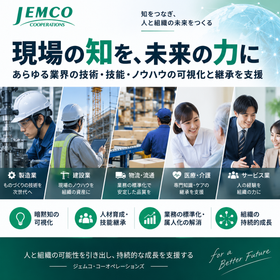
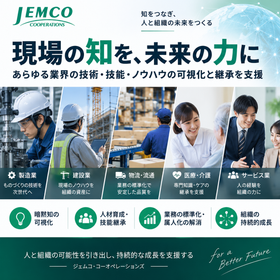
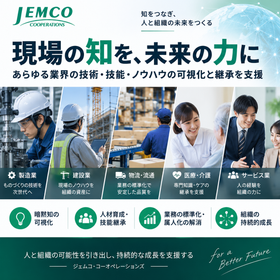
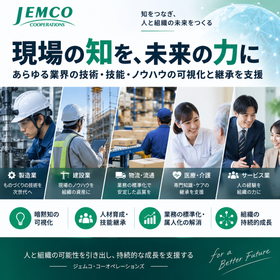
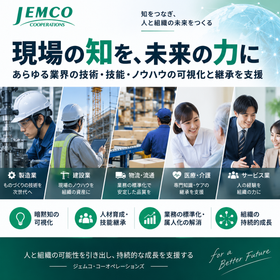
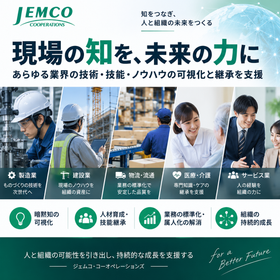
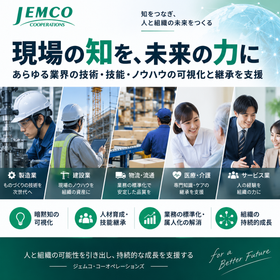
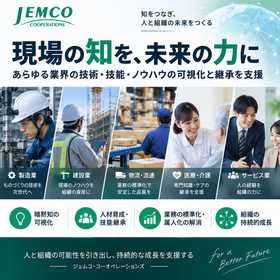
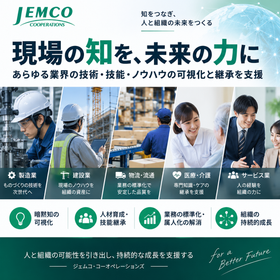
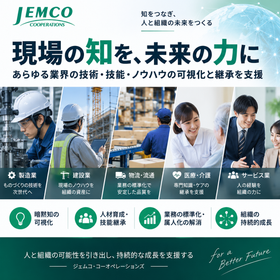
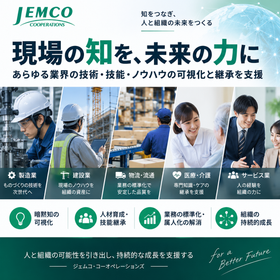
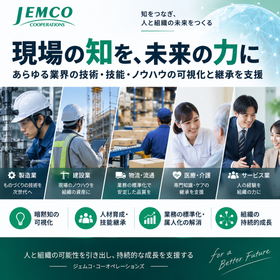
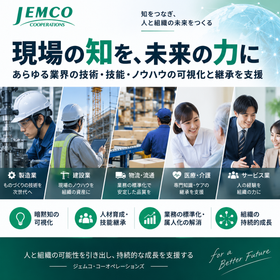
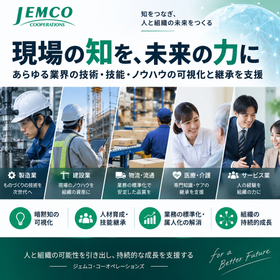
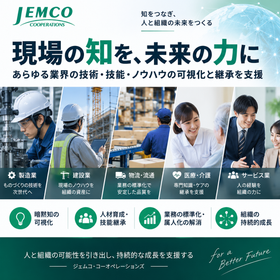
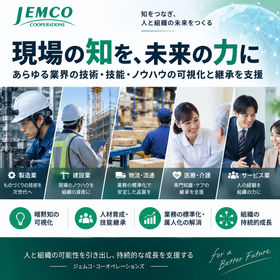
ジェムコ・コーオペレーションズ 本社

addressTokyo/Chiyoda-ku/9th Floor, Iino Building, 2-1-1 Uchiyama-cho, Cross Office Hibiya
phone03-3500-3575
  • Special site
  • Official site
last updated:Sep 28, 2026
ジェムコ・コーオペレーションズlogo
  • Contact this company

    Inquiry Form
  • Before making an inquiry

    Download Profile
  • Company information
  • Products/Services(1729)
  • catalog(21)
  • news(5)

ジェムコ・コーオペレーションズ Product Lineup

  • category

1~37 item / All 37 items

Displayed results

Filter by category

Exbridge Exbridge
JEMCO通信 JEMCO通信
経営・組織改革 経営・組織改革
人材育成・次世代リーダー育成 人材育成・次世代リーダー育成
DX・AI・業務効率化 DX・AI・業務効率化
生産現場改善・技術伝承 生産現場改善・技術伝承
営業・マーケティング・新規顧客開拓 営業・マーケティング・新規顧客開拓
製造業の人手不足を解決したい 製造業の人手不足を解決したい
技能伝承・属人化を解消したい 技能伝承・属人化を解消したい
製造業DX・業務効率化を進めたい 製造業DX・業務効率化を進めたい
工場・現場の生産性を向上したい 工場・現場の生産性を向上したい
若手・次世代人材を育成したい 若手・次世代人材を育成したい
経営・組織改革を進めたい 経営・組織改革を進めたい
生産現場改善・技術伝承

生産現場改善・技術伝承

生産性向上、品質改善、コスト最適化、ベテラン人材の技術・技能伝承など、製造現場が抱える課題の解決を支援するサービス・事例をご紹介します。
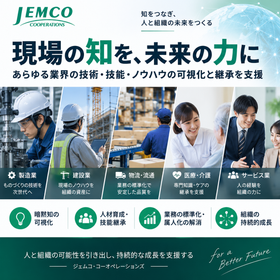
[For Special Makeup] Technical Inheritance and Skill Succession | Elimination of Personalization

Visualizing the experience, intuition, and techniques of veteran special effects makeup artists. Supporting the transmission of skills and the elimination of individual dependency.

In the special effects makeup industry, advanced expertise and skilled techniques significantly influence the quality of the work. In particular, the tacit knowledge gained through years of experience, intuition, tips, and judgment criteria from veteran technicians is essential for passing on to the next generation. However, these know-how are often difficult to articulate and prone to becoming personalized. Our support for the transmission of technology and skills involves careful interviews and work analysis with experienced professionals to concretely visualize and systematize tacit knowledge, including "why those judgments are made." This leads to the development of young talent, the inheritance of skills, the elimination of personalization, and a reduction in the risk of technology loss due to retirement. [Usage Scenarios] - Clarification of judgment criteria for expressions in special effects makeup - Standardization of skills among personnel - Promotion of learning from past production cases - Practical guidance in the development of young talent [Effects of Implementation] - Reduction in analysis time for special effects makeup techniques - Improvement and standardization of analysis accuracy - Sharing of previously personalized know-how - Overall enhancement of the organization's technical capabilities

Added to bookmarks

Bookmarks list

Bookmark has been removed

Bookmarks list

You can't add any more bookmarks

By registering as a member, you can increase the number of bookmarks you can save and organize them with labels.

Free membership registration

Technical inheritance and skill transfer for CG modeling

Visualizing the experience, intuition, and techniques of veteran shaping technology. Supporting skill inheritance and the elimination of individual dependency.

In the field of CG modeling, advanced expertise and skilled techniques significantly influence the quality of the work. In particular, the tacit knowledge accumulated over many years by veteran technicians—such as experience, intuition, tips, and criteria for judgment—is essential for passing on to the next generation. However, these know-how are often difficult to articulate and prone to becoming personalized. Our support for the transmission of technology and skills involves thorough interviews and work analysis with experienced professionals, making tacit knowledge visible and systematic by clarifying "why those judgments are made." This leads to the development of young talent, the inheritance of skills, the reduction of personalization, and the mitigation of risks associated with the outflow of technology due to retirement. 【Usage Scenarios】 - Clarification of judgment criteria for expression in modeling - Standardization of skills among personnel - Promotion of learning from past modeling cases - Practical guidance in the development of young talent 【Effects of Implementation】 - Reduction in analysis time for modeling techniques - Improvement and standardization of analysis accuracy - Sharing of previously personalized know-how - Enhancement of technical capabilities across the organization

Added to bookmarks

Bookmarks list

Bookmark has been removed

Bookmarks list

You can't add any more bookmarks

By registering as a member, you can increase the number of bookmarks you can save and organize them with labels.

Free membership registration

[For VR/AR Content] Technology Transfer and Skill Inheritance | Elimination of Personalization

Visualizing the experience, intuition, and tips of veteran VR/AR developers. Supporting the inheritance of development know-how and the elimination of dependency on individuals.

In the VR/AR content industry, advanced expertise and skilled techniques significantly influence the quality of content. In particular, the tacit knowledge gained from the experience, intuition, tips, and judgment criteria of veteran developers over many years is essential for passing on to the next generation. However, these know-how are often difficult to articulate and tend to become personalized. Our support for the transmission of technology and skills aims to visualize and systematize tacit knowledge through careful interviews and work analysis with experienced professionals, clarifying "why those judgments are made." This leads to the development of young talent, the transfer of skills, the reduction of personalization, and the mitigation of the risk of technical outflow due to retirements. 【Usage Scenarios】 - Clarification of judgment criteria for expressions in VR/AR development - Standardization of skills among personnel - Promotion of learning from past development cases - Practical guidance in the development of young talent 【Effects of Implementation】 - Reduction in analysis time for VR/AR development technologies - Improvement and standardization of analysis accuracy - Sharing of previously personalized know-how - Overall enhancement of organizational technical capabilities

Added to bookmarks

Bookmarks list

Bookmark has been removed

Bookmarks list

You can't add any more bookmarks

By registering as a member, you can increase the number of bookmarks you can save and organize them with labels.

Free membership registration

【For Event Planning】Technical Heritage and Skill Succession

Visualize the experience, intuition, and tips of veteran management. Support the transmission of skills and the elimination of dependency on individuals.

In the event planning industry, the judgment criteria and know-how of experienced personnel are crucial for smooth progress management. In particular, the tacit knowledge such as the experience, intuition, tips, and judgment criteria that veteran staff have cultivated over many years is essential for passing on to the next generation. However, these know-how are often difficult to articulate and tend to become personalized. Our support for the transmission of technology and skills aims to visualize and systematize tacit knowledge by specifically clarifying "why certain judgments are made" through careful interviews and work analysis with skilled individuals. This leads to the development of young talent, the transfer of skills, the resolution of personalization, and the reduction of risks associated with technology outflow due to retirement. [Usage Scenarios] - Clarification of judgment criteria in event management - Standardization of personnel skills - Promotion of learning from past event cases - Practical guidance in the development of young talent [Effects of Implementation] - Reduction in analysis time for progress management techniques - Improvement and standardization of analysis accuracy - Sharing of previously personalized know-how - Overall enhancement of organizational technical capabilities

Added to bookmarks

Bookmarks list

Bookmark has been removed

Bookmarks list

You can't add any more bookmarks

By registering as a member, you can increase the number of bookmarks you can save and organize them with labels.

Free membership registration

[For Traditional Performing Arts] Skill Inheritance and Technique Transmission | Elimination of Personalization

Visualizing the inheritance of traditional performing arts "forms." Supporting skill transmission and the resolution of individual dependence.

In the world of traditional performing arts, the "forms," movements, and expressions that have been cultivated over many years, along with the tacit knowledge of skilled practitioners, support the very foundation of the art. This valuable know-how is essential for passing on to the next generation, but it poses challenges as it is difficult to articulate and tends to become personalized. Our support for the transmission of skills and techniques involves careful interviews and analyses with skilled practitioners to concretely visualize and systematize the tacit knowledge, including "why it is performed in that way." This leads to the development of young talent, the transmission of skills, the reduction of personalization, and the mitigation of the risk of technical leakage. 【Usage Scenarios】 - Clarification of the criteria for "forms" in traditional performing arts - Standardization of skills among personnel - Promotion of learning from past performances - Practical guidance in the development of young talent 【Effects of Implementation】 - Reduction in the time required for skill and technique analysis - Improvement and standardization of analysis accuracy - Sharing of previously personalized know-how - Overall enhancement of organizational technical capabilities

Added to bookmarks

Bookmarks list

Bookmark has been removed

Bookmarks list

You can't add any more bookmarks

By registering as a member, you can increase the number of bookmarks you can save and organize them with labels.

Free membership registration

Technical inheritance and skill transfer for performing arts | Elimination of personal dependency

Visualizing the experience, intuition, and tips of veteran choreographers. Supporting skill inheritance and the elimination of individual reliance.

In the field of choreography within the performing arts industry, advanced expertise and skilled techniques significantly influence the quality of stage expression. In particular, the tacit knowledge accumulated over many years by veteran choreographers, including their experience, intuition, tips, and criteria for judgment, is essential for passing on to the next generation. However, these know-how are often difficult to articulate and tend to become personalized, presenting a challenge. Our support for the transmission of skills and techniques aims to visualize and systematize this tacit knowledge through careful interviews and task analysis with experienced practitioners, clarifying "why certain judgments are made." This approach contributes to the development of young talent, the transfer of skills, the reduction of personalization, and the mitigation of risks associated with the loss of expertise due to retirement. [Utilization Scenarios] - Clarification of criteria for judgment in choreography - Standardization of skills among personnel - Promotion of learning from past choreography examples - Practical guidance in the development of young talent [Effects of Implementation] - Reduction in the time required for analyzing choreography techniques - Improvement and standardization of analysis accuracy - Sharing of previously personalized know-how - Overall enhancement of technical skills within the organization

Added to bookmarks

Bookmarks list

Bookmark has been removed

Bookmarks list

You can't add any more bookmarks

By registering as a member, you can increase the number of bookmarks you can save and organize them with labels.

Free membership registration

[For Animation Production] Technical Inheritance and Skill Succession | Elimination of Personalization

Visualizing the experience, intuition, and tips of animators. Supporting skill inheritance and the elimination of individual dependency.

In the animation production industry, the quality of visuals is influenced by advanced specialized knowledge and skilled techniques in the drawing field. In particular, the tacit knowledge such as the experience, intuition, tips, and judgment criteria that veteran animators have cultivated over many years is essential for passing on to the next generation. However, these know-how are often difficult to articulate and tend to become personalized, presenting a challenge. Our support for the transmission of technology and skills aims to visualize and systematize tacit knowledge through careful interviews and work analysis with skilled professionals, making clear "why certain judgments are made." This leads to the development of young talent, the inheritance of skills, the elimination of personalization, and the reduction of risks associated with technology loss due to retirement. 【Application Scenarios】 - Clarification of judgment criteria for expression in drawing - Standardization of skills among personnel - Promotion of learning from past drawing examples - Practical guidance in the development of young talent 【Effects of Implementation】 - Reduction in analysis time for drawing techniques - Improvement and standardization of analysis accuracy - Sharing of previously personalized know-how - Overall enhancement of organizational technical capabilities

Added to bookmarks

Bookmarks list

Bookmark has been removed

Bookmarks list

You can't add any more bookmarks

By registering as a member, you can increase the number of bookmarks you can save and organize them with labels.

Free membership registration

Technical inheritance and skill succession for stage production | Elimination of personalization

Visualizing the experience, intuition, and tips of veteran lighting designers. Supporting skill transfer and the elimination of individual reliance.

In the field of lighting design within the stage performance industry, advanced expertise and skilled techniques significantly influence the quality of the stage. In particular, the tacit knowledge gained from years of experience, intuition, tips, and judgment criteria by veteran technicians is essential for passing on to the next generation. However, these know-how are often difficult to articulate and can easily become personalized. Our support for the transmission of technology and skills aims to visualize and systematize this tacit knowledge through careful interviews and work analysis with experienced individuals, making clear "why certain judgments are made." This leads to the development of young talent, the inheritance of skills, the reduction of personalization, and the mitigation of risks associated with the loss of technology due to retirement. 【Utilization Scenarios】 - Clarification of judgment criteria for expression in lighting design - Standardization of skills among personnel - Promotion of learning from past lighting design cases - Practical guidance in the development of young talent 【Effects of Implementation】 - Reduction in analysis time for lighting technology - Improvement and standardization of analysis accuracy - Sharing of previously personalized know-how - Overall enhancement of organizational technical capabilities

Added to bookmarks

Bookmarks list

Bookmark has been removed

Bookmarks list

You can't add any more bookmarks

By registering as a member, you can increase the number of bookmarks you can save and organize them with labels.

Free membership registration

【For Game Development】Technical Knowledge Transfer and Skill Succession | Elimination of Personalization

Visualizing the experience, intuition, and tips of programming in game development. Supporting skill inheritance and the elimination of individual dependency.

In the field of programming within the game development industry, advanced expertise and skilled techniques significantly influence the quality of games. In particular, the tacit knowledge accumulated over many years by veteran programmers—such as experience, intuition, tips, and judgment criteria—is essential for passing on to the next generation. However, these know-how are often difficult to articulate and tend to become personalized. Our support for the transmission of technology and skills aims to visualize and systematize this tacit knowledge through careful interviews and work analysis with experienced individuals, clarifying "why certain judgments are made." This leads to the development of young talent, the transfer of skills, the elimination of personalization, and the reduction of risks associated with technology outflow due to retirement. 【Usage Scenarios】 - Clarification of implementation judgment criteria in programming - Standardization of skills among personnel - Promotion of learning from past code examples - Practical guidance in the development of young talent 【Effects of Implementation】 - Reduction in analysis time for programming techniques - Improvement and standardization of analysis accuracy - Sharing of previously personalized know-how - Overall enhancement of organizational technical capabilities

Added to bookmarks

Bookmarks list

Bookmark has been removed

Bookmarks list

You can't add any more bookmarks

By registering as a member, you can increase the number of bookmarks you can save and organize them with labels.

Free membership registration

【For Music Production】Technical Transfer and Skill Inheritance | Elimination of Personalization

Visualizing the experience, intuition, and techniques of veteran mixers. Supporting skill transfer and the elimination of individual dependency.

In the field of mixing within the music production industry, advanced expertise and skilled techniques significantly influence the quality of musical works. In particular, the tacit knowledge gained over many years by veteran mixing engineers—such as experience, intuition, tips, and criteria for judgment—is essential for passing on to the next generation. However, these know-how are often difficult to articulate and tend to become personalized. Our support for the transmission of technology and skills aims to visualize and systematize this tacit knowledge through careful interviews and work analysis with experienced professionals, making clear "why certain judgments are made." This approach leads to the development of young talent, the transfer of skills, the reduction of personalization, and a decrease in the risk of technological outflow due to retirements. 【Usage Scenarios】 - Clarification of judgment criteria for acoustic expression in mixing - Standardization of skills among personnel - Promotion of learning from past mixing cases - Practical guidance in the development of young talent 【Effects of Implementation】 - Reduction in the time required for analyzing mixing techniques - Improvement and standardization of analysis accuracy - Sharing of previously personalized know-how - Overall enhancement of the organization's technical capabilities

Added to bookmarks

Bookmarks list

Bookmark has been removed

Bookmarks list

You can't add any more bookmarks

By registering as a member, you can increase the number of bookmarks you can save and organize them with labels.

Free membership registration

【For Video Production】Technical Inheritance and Skill Transfer | Elimination of Personalization

Visualizing the experience, intuition, and tips of veteran photography techniques. Supporting skill inheritance and the elimination of individual dependency.

In the field of filming technology within the video production industry, advanced specialized knowledge and skilled techniques significantly influence the quality of the footage. In particular, the tacit knowledge gained from years of experience, intuition, tips, and judgment criteria by veteran technicians is essential for passing on to the next generation. However, these know-how are often difficult to articulate and tend to become personalized. Our support for the transmission of technology and skills aims to visualize and systematize tacit knowledge through careful interviews and work analysis with experienced professionals, making clear "why certain judgments are made." This leads to the development of young talent, the inheritance of skills, the reduction of personalization, and the mitigation of risks associated with the outflow of technology due to retirement. 【Usage Scenarios】 - Clarification of judgment criteria for video expression in filming - Standardization of skills among personnel - Promotion of learning from past filming cases - Practical guidance in the development of young talent 【Effects of Implementation】 - Reduction in analysis time for filming techniques - Improvement and standardization of analysis accuracy - Sharing of previously personalized know-how - Overall enhancement of organizational technical capabilities

Added to bookmarks

Bookmarks list

Bookmark has been removed

Bookmarks list

You can't add any more bookmarks

By registering as a member, you can increase the number of bookmarks you can save and organize them with labels.

Free membership registration

[For Broadcasting and Media] Technology Transfer and Skill Succession | Elimination of Personalization

Visualizing veteran filming know-how. Supporting skill inheritance and the elimination of individual dependency.

In the field of filming operations within the broadcasting and media industry, advanced expertise and skilled techniques significantly influence the quality of video. In particular, the tacit knowledge gained from years of experience, intuition, tips, and judgment criteria by veteran operators is essential for passing on to the next generation. However, these know-how are often difficult to articulate and prone to becoming personalized. Our support for the transmission of technology and skills aims to visualize and systematize this tacit knowledge through careful interviews and work analysis with experienced professionals, making clear "why certain judgments are made." This leads to the development of young talent, the inheritance of skills, the reduction of personalization, and the mitigation of risks associated with technology loss due to retirement. 【Usage Scenarios】 - Clarification of judgment criteria related to video quality in filming - Standardization of skills among personnel - Promotion of learning from past filming cases - Practical guidance in the development of young talent 【Effects of Implementation】 - Reduction in analysis time for filming decisions - Improvement and standardization of analysis accuracy - Sharing of previously personalized know-how - Overall enhancement of organizational technical capabilities

Added to bookmarks

Bookmarks list

Bookmark has been removed

Bookmarks list

You can't add any more bookmarks

By registering as a member, you can increase the number of bookmarks you can save and organize them with labels.

Free membership registration

Aerospace Technology Transfer and Skill Succession | Elimination of Dependency on Individuals

Visualizing the experience, intuition, and tips of veterans. Supporting the transmission of inspection techniques and the elimination of individual dependency.

In the inspection field of the aerospace industry, advanced expertise and skilled techniques significantly influence product reliability. In particular, the tacit knowledge gained from the years of experience, intuition, and judgment criteria of veteran technicians is essential for passing on to the next generation. However, there are challenges in that this know-how is difficult to articulate and tends to become personalized. Our support for the transmission of technology and skills involves careful interviews and work analysis with experienced individuals to concretely visualize and systematize tacit knowledge, including "why that judgment is made." This leads to the development of young talent, the transfer of skills, the elimination of personalization, and the reduction of risks associated with technological loss due to retirement. 【Usage Scenarios】 - Investigating the causes of anomalies during inspections - Standardizing the skills of personnel - Promoting learning from past inspection cases - Providing practical guidance for the development of young talent 【Effects of Implementation】 - Reduction in inspection analysis time - Improvement and standardization of analysis accuracy - Sharing of previously personalized know-how - Enhancement of technical capabilities across the organization

Added to bookmarks

Bookmarks list

Bookmark has been removed

Bookmarks list

You can't add any more bookmarks

By registering as a member, you can increase the number of bookmarks you can save and organize them with labels.

Free membership registration

Automotive Technology Transfer and Skill Succession | Elimination of Personalization

Visualizing the experience, intuition, and tips of veterans. Supporting the transmission of inspection techniques and the elimination of individual dependence.

In the automotive industry's inspection field, advanced expertise and skilled techniques significantly influence product quality. In particular, the tacit knowledge accumulated over many years by veteran technicians—such as experience, intuition, tips, and judgment criteria—is essential for passing on to the next generation. However, these know-how are often difficult to articulate and tend to become personalized. Our support for the transmission of technology and skills aims to visualize and systematize this tacit knowledge by conducting thorough interviews and work analyses with experienced individuals, clarifying "why certain judgments are made." This leads to the development of young talent, the transfer of skills, the reduction of personalization, and the mitigation of risks associated with technology loss due to retirements. 【Usage Scenarios】 - Investigating the causes of defects in image processing - Standardizing the skills of personnel - Promoting learning from past defect cases - Providing practical guidance for the development of young talent 【Effects of Implementation】 - Reduction in defect analysis time - Improvement and standardization of analysis accuracy - Sharing of previously personalized know-how - Overall enhancement of organizational technical capabilities

Added to bookmarks

Bookmarks list

Bookmark has been removed

Bookmarks list

You can't add any more bookmarks

By registering as a member, you can increase the number of bookmarks you can save and organize them with labels.

Free membership registration

【For Security and Surveillance】Technology Transfer and Skill Succession | Elimination of Personalization

Visualizing the experience, intuition, and techniques of veterans. Supporting the inheritance of skills for situational understanding.

In understanding the situation of the security and surveillance industry, advanced expertise and skilled techniques influence accurate judgment and rapid response. In particular, the tacit knowledge accumulated over many years by veteran personnel, including experience, intuition, tips, and criteria for judgment, is essential for passing on to the next generation. However, these know-how are often difficult to verbalize and tend to become personalized. Our support for the transmission of technology and skills visualizes and systematizes tacit knowledge through careful interviews and work analysis with experienced individuals, making it clear "why that judgment is made." This leads to the development of young talent, the inheritance of skills, the elimination of personalization, and the reduction of risks associated with technology outflow due to retirement. 【Usage Scenarios】 - Investigating the causes of anomalies - Standardizing the skills of personnel - Promoting learning from past cases - Practical guidance in the development of young talent 【Effects of Implementation】 - Reduction in analysis time - Improvement and standardization of analysis accuracy - Sharing of previously personalized know-how - Overall enhancement of organizational technical capabilities

Added to bookmarks

Bookmarks list

Bookmark has been removed

Bookmarks list

You can't add any more bookmarks

By registering as a member, you can increase the number of bookmarks you can save and organize them with labels.

Free membership registration

Technical inheritance and skill transfer for sports analysis | Elimination of individual dependency

Visualizing the experience, intuition, and techniques of veterans. Supporting the transmission of sports analysis skills and the elimination of individual reliance.

In the field of sports analysis, advanced expertise and skilled techniques significantly influence the quality of analytical results. In particular, the tacit knowledge gained from the experience, intuition, and judgment criteria of veteran analysts over many years is essential for passing on to the next generation. However, these know-how are often difficult to articulate and prone to becoming personalized. Our support for the transmission of technology and skills aims to visualize and systematize tacit knowledge by specifically clarifying "why that judgment is made" through careful interviews and work analysis with experienced individuals. This leads to the development of young talent, the transfer of skills, the resolution of personalization issues, and the reduction of the risk of technical loss due to retirement. 【Usage Scenarios】 - Investigating the causes of issues that arise in sports analysis - Standardizing the skills of personnel - Promoting learning from past analysis cases - Providing practical guidance for the development of young talent 【Effects of Implementation】 - Reduction in analysis time - Improvement and standardization of analysis accuracy - Sharing of previously personalized know-how - Enhancement of analytical capabilities across the organization

Added to bookmarks

Bookmarks list

Bookmark has been removed

Bookmarks list

You can't add any more bookmarks

By registering as a member, you can increase the number of bookmarks you can save and organize them with labels.

Free membership registration

【For Research and Development】Technology Transfer and Skill Succession | Elimination of Personal Dependency

Visualizing the experience, intuition, and skills of veterans. Supporting the transmission of image processing technology and the elimination of dependency on individuals.

In the field of research and development, advanced expertise and skilled techniques significantly influence the quality of product development. In particular, the tacit knowledge acquired by veteran engineers over many years—such as experience, intuition, tips, and judgment criteria—is essential for passing on to the next generation. However, these know-how are often difficult to articulate and tend to become personalized. Our support for the transmission of technology and skills involves careful interviews and work analysis with experienced individuals to concretely visualize and systematize tacit knowledge, including "why certain judgments are made." This leads to the development of young talent, the transmission of skills, the elimination of personalization, and the reduction of risks associated with technology leakage due to retirement. 【Usage Scenarios】 - Investigating the causes of defects in image processing - Standardizing the skills of personnel - Promoting learning from past defect cases - Providing practical guidance for the development of young talent 【Effects of Implementation】 - Reduction in defect analysis time - Improvement and standardization of analysis accuracy - Sharing of previously personalized know-how - Enhancement of the overall technical capabilities of the organization

Added to bookmarks

Bookmarks list

Bookmark has been removed

Bookmarks list

You can't add any more bookmarks

By registering as a member, you can increase the number of bookmarks you can save and organize them with labels.

Free membership registration

[For Agriculture] Technical Transfer and Skill Succession in Growth Observation | Elimination of Personalization

Visualizing the experience, intuition, and tips of veterans. Supporting the transmission of growth observation techniques and the elimination of individual dependency.

In the field of agriculture, growth observation requires specialized knowledge and skilled techniques to accurately understand the condition of crops and make appropriate decisions. In particular, the tacit knowledge accumulated by veterans with many years of experience—such as their insights, intuition, tips, and criteria for judgment—is essential for passing on to the next generation. However, these know-how are often difficult to articulate and tend to become personalized. Our technology and skill transfer support aims to visualize and systematize this tacit knowledge through careful interviews and work analysis with experienced individuals, making clear "why certain judgments are made." This leads to the development of young talent, the transfer of skills, the reduction of personalization, and the mitigation of risks associated with technology loss due to retirement. 【Usage Scenarios】 - Investigating the causes of abnormalities during growth observation - Standardizing the skills of personnel - Promoting learning from past growth cases - Providing practical guidance for the development of young talent 【Effects of Implementation】 - Reduction in growth analysis time - Improvement and standardization of analysis accuracy - Sharing of previously personalized know-how - Enhancement of overall organizational technical capabilities

Added to bookmarks

Bookmarks list

Bookmark has been removed

Bookmarks list

You can't add any more bookmarks

By registering as a member, you can increase the number of bookmarks you can save and organize them with labels.

Free membership registration

【For Entertainment】Technology Transfer and Skill Inheritance | Elimination of Personalization

Visualizing the experience, intuition, and techniques of veteran photography skills. Supporting skill inheritance and the elimination of individual dependency.

In the field of filming technology within the entertainment industry, advanced expertise and skilled techniques significantly influence the quality of visuals. In particular, the tacit knowledge gained from years of experience, intuition, tips, and judgment criteria by veteran technicians is essential for passing on to the next generation. However, these know-how are often difficult to articulate and tend to become personalized, presenting challenges. Our support for the transmission of technology and skills involves thorough interviews and work analysis with experienced professionals to concretely visualize and systematize tacit knowledge, including "why certain judgments are made." This leads to the development of young talent, the inheritance of skills, the elimination of personalization, and the reduction of risks associated with technology loss due to retirement. 【Usage Scenarios】 - Clarification of judgment criteria for visual expression in filming - Standardization of skills among personnel - Promotion of learning from past filming cases - Practical guidance in the development of young talent 【Effects of Implementation】 - Reduction in analysis time for filming techniques - Improvement and standardization of analysis accuracy - Sharing of previously personalized know-how - Overall enhancement of organizational technical capabilities

Added to bookmarks

Bookmarks list

Bookmark has been removed

Bookmarks list

You can't add any more bookmarks

By registering as a member, you can increase the number of bookmarks you can save and organize them with labels.

Free membership registration

Technical inheritance and skill transfer for construction and infrastructure | Elimination of dependency on individuals

Visualizing on-site experience, intuition, and tips. Supporting skill inheritance and the elimination of individual dependency.

In the construction and infrastructure industry, the tacit knowledge possessed by experienced engineers is a crucial factor that influences the quality and safety of projects. In particular, know-how related to on-site judgment, experience, intuition, techniques, and criteria for decision-making is essential for passing on to the next generation. However, these types of knowledge are often difficult to articulate and tend to rely heavily on specific individuals. Our support for the transmission of technology and skills aims to visualize and systematize tacit knowledge by thoroughly interviewing skilled workers and analyzing their work, making it clear "why certain judgments are made." This leads to the development of young talent, the transfer of skills, the reduction of dependency on individuals, and the mitigation of risks associated with the loss of technology due to retirements. 【Utilization Scenarios】 - Clarification of on-site judgment criteria - Standardization of skills among personnel - Promotion of learning from past cases - Practical guidance in the development of young talent 【Effects of Implementation】 - Standardization of on-site judgments - Improvement and standardization of analysis accuracy - Sharing of previously individualized know-how - Enhancement of technical capabilities across the organization

Added to bookmarks

Bookmarks list

Bookmark has been removed

Bookmarks list

You can't add any more bookmarks

By registering as a member, you can increase the number of bookmarks you can save and organize them with labels.

Free membership registration

[For Education and Training] Technology Transfer and Skill Succession | Elimination of Dependence on Individuals

Visualizing the experience, intuition, and tips of veterans. Supporting the elimination of the personalization of practical instruction.

In the field of education and training, especially in practical instruction, the transmission of tacit knowledge such as the experience, intuition, and judgment criteria possessed by skilled practitioners is crucial. However, these know-how are often difficult to articulate, leading to variability in content depending on the instructor. To foster the development of young talent and standardize skills, it is essential to standardize the instructional content and share specific judgment criteria. Our support for the transmission of technology and skills visualizes and systematizes tacit knowledge through careful interviews and work analysis with experienced practitioners, clarifying "why certain judgments are made." This leads to practical instruction for younger employees, standardization of teaching skills, and the elimination of personalization in instructional content. 【Usage Scenarios】 - Clarification of judgment criteria in practical instruction - Standardization of instructors' skills - Promotion of learning from past cases - Practical instruction in the development of young talent 【Effects of Implementation】 - Standardization and improvement of instructional content - Sharing of previously personalized know-how - Enhancement of instructional capabilities across the organization

Added to bookmarks

Bookmarks list

Bookmark has been removed

Bookmarks list

You can't add any more bookmarks

By registering as a member, you can increase the number of bookmarks you can save and organize them with labels.

Free membership registration

Technology transfer and skill inheritance for medical and healthcare purposes | Elimination of dependency on individuals

Visualizing the experience, intuition, and techniques of veterans. Supporting the transmission of image processing technology in surgical assistance and alleviating personalization.

In the field of surgical assistance within the medical and healthcare industry, advanced expertise and skilled techniques significantly impact patient safety and treatment outcomes. In particular, the tacit knowledge gained from the years of experience, intuition, and judgment criteria of veteran doctors and technicians is essential for passing on to the next generation. However, these know-how are often difficult to articulate and tend to become personalized. Our technology and skill inheritance support aims to visualize and systematize this tacit knowledge by conducting thorough interviews and task analyses with experienced professionals, making clear "why certain judgments are made." This approach contributes to the development of young professionals, the transfer of skills, the reduction of personalization, and the mitigation of risks associated with the loss of technology due to retirements. 【Usage Scenarios】 - Investigating causes during image analysis in surgical assistance - Standardizing the skills of personnel - Promoting learning from past cases - Providing practical guidance for the development of young professionals 【Benefits of Implementation】 - Reduced analysis time - Improved and standardized analysis accuracy - Sharing of previously personalized know-how - Enhanced technical capabilities across the organization

Added to bookmarks

Bookmarks list

Bookmark has been removed

Bookmarks list

You can't add any more bookmarks

By registering as a member, you can increase the number of bookmarks you can save and organize them with labels.

Free membership registration

[For the Manufacturing Industry] Technology Transfer and Skill Inheritance | Elimination of Dependency on Individuals

Visualizing the experience, intuition, and tips of veterans. Supporting the elimination of personalization in quality control.

In the field of quality control in manufacturing, advanced expertise and skilled techniques significantly influence product quality. In particular, the tacit knowledge gained from the long-term experience, intuition, tips, and judgment criteria of veteran technicians is essential for passing on to the next generation. However, these know-how are often difficult to articulate and tend to become personalized. Our support for the transmission of technology and skills aims to visualize and systematize tacit knowledge through careful interviews and work analysis with experienced individuals, clarifying "why certain judgments are made." This leads to the development of young talent, the transfer of skills, the reduction of personalization, and the mitigation of the risk of technological loss due to retirements. 【Usage Scenarios】 - Investigating the causes of defects in image processing - Standardizing the skills of personnel - Promoting learning from past defect cases - Providing practical guidance for the development of young talent 【Effects of Implementation】 - Reduction in defect analysis time - Improvement and standardization of analysis accuracy - Sharing of previously personalized know-how - Overall enhancement of organizational technical capabilities

Added to bookmarks

Bookmarks list

Bookmark has been removed

Bookmarks list

You can't add any more bookmarks

By registering as a member, you can increase the number of bookmarks you can save and organize them with labels.

Free membership registration

Technical inheritance and skill transfer for audio equipment | Elimination of dependency on individuals

Visualizing the experience, intuition, and skills of veterans. Supporting the transmission of sound adjustment techniques and the elimination of individual dependency.

In the field of sound adjustment within the audio equipment industry, advanced expertise and skilled techniques significantly influence product quality. In particular, the tacit knowledge gained from years of experience, intuition, tips, and judgment criteria by veteran technicians is essential for passing on to the next generation. However, these know-how are often difficult to articulate and tend to become personalized. Our support for the transmission of technology and skills involves careful interviews and work analysis with experienced individuals to concretely visualize and systematize tacit knowledge, including "why that judgment is made." This leads to the development of young talent, the inheritance of skills, the reduction of personalization, and the mitigation of risks associated with technology loss due to retirement. 【Usage Scenarios】 - Investigating the causes of defects in sound adjustment - Standardizing the skills of personnel - Promoting learning from past defect cases - Providing practical guidance for young talent development 【Effects of Implementation】 - Reduction in defect analysis time - Improvement and standardization of analysis accuracy - Sharing of previously personalized know-how - Enhancement of overall organizational technical capabilities

Added to bookmarks

Bookmarks list

Bookmark has been removed

Bookmarks list

You can't add any more bookmarks

By registering as a member, you can increase the number of bookmarks you can save and organize them with labels.

Free membership registration

Technical inheritance and skill transfer for cameras and imaging equipment | Elimination of dependency on individuals

Visualizing the experience, intuition, and techniques of veterans. Supporting the transmission of image processing technology and the elimination of dependency on individuals.

In the image processing field of the camera and imaging equipment industry, advanced expertise and skilled techniques significantly influence product quality. In particular, the tacit knowledge gained from years of experience, intuition, tips, and judgment criteria by veteran engineers is essential for passing on to the next generation. However, these know-how are often difficult to articulate and tend to become personalized. Our support for the transmission of technology and skills involves careful interviews and work analysis with skilled workers to specifically visualize and systematize tacit knowledge, including "why that judgment is made." This leads to the development of young talent, the inheritance of skills, the elimination of personalization, and the reduction of the risk of technical loss due to retirement. 【Usage Scenarios】 - Investigating the causes of defects in image processing - Standardizing the skills of personnel - Promoting learning from past defect cases - Providing practical guidance for the development of young talent 【Effects of Implementation】 - Reduction in defect analysis time - Improvement and standardization of analysis accuracy - Sharing of previously personalized know-how - Overall enhancement of organizational technical capabilities

Added to bookmarks

Bookmarks list

Bookmark has been removed

Bookmarks list

You can't add any more bookmarks

By registering as a member, you can increase the number of bookmarks you can save and organize them with labels.

Free membership registration

Technical inheritance and skill succession for watches and jewelry | Elimination of dependency on individuals

Visualizing skilled craftsmanship. Supporting the transmission of techniques in watchmaking and jewelry, and alleviating personalization issues.

In the watch and jewelry industry, advanced expertise and skilled craftsmanship determine the quality of products. In particular, the tacit knowledge gained from years of experience, intuition, techniques, and judgment criteria of veteran artisans is essential for passing on to the next generation. However, these know-how are often difficult to articulate and tend to become personalized. Our support for the transmission of technology and skills aims to visualize and systematize tacit knowledge by thoroughly interviewing skilled workers and analyzing their tasks, making it clear "why such judgments are made." This contributes to the development of young talent, the transfer of skills, the elimination of personalization, and the reduction of risks associated with the outflow of technology due to retirement. 【Usage Scenarios】 - Investigating the causes of defects during assembly adjustments - Standardizing the skills of personnel - Promoting learning from past defect cases - Providing practical guidance for the development of young talent 【Effects of Implementation】 - Reduction in defect analysis time - Improvement and standardization of analysis accuracy - Sharing of previously personalized know-how - Overall enhancement of organizational technical capabilities

Added to bookmarks

Bookmarks list

Bookmark has been removed

Bookmarks list

You can't add any more bookmarks

By registering as a member, you can increase the number of bookmarks you can save and organize them with labels.

Free membership registration

Technical inheritance and skill transfer for electronic components | Elimination of dependency on individuals

Visualizing the experience, intuition, and skills of veterans. Supporting the transmission of technology in electronic component assembly adjustment and the elimination of dependency on individuals.

In the assembly and adjustment field of the electronic components industry, advanced expertise and skilled techniques significantly influence product quality. In particular, the tacit knowledge gained over many years by veteran technicians—such as experience, intuition, tips, and judgment criteria—is essential for passing on to the next generation. However, these know-how are often difficult to articulate and tend to become personalized. Our support for the transmission of technology and skills involves careful interviews and work analysis with experienced individuals, making tacit knowledge visible and systematic by clarifying "why those judgments are made." This leads to the development of young talent, the inheritance of skills, the elimination of personalization, and the reduction of risks associated with technology loss due to retirement. 【Utilization Scenes】 - Investigating the causes of defects in assembly and adjustment - Standardizing the skills of personnel - Promoting learning from past defect cases - Providing practical guidance for the development of young talent 【Effects of Implementation】 - Reduction in defect analysis time - Improvement and standardization of analysis accuracy - Sharing of previously personalized know-how - Enhancement of technical capabilities across the organization

Added to bookmarks

Bookmarks list

Bookmark has been removed

Bookmarks list

You can't add any more bookmarks

By registering as a member, you can increase the number of bookmarks you can save and organize them with labels.

Free membership registration

Technical inheritance and skill succession for machine tools | Elimination of dependency on individuals

Visualizing the experience, intuition, and tips of veterans. Supporting the transfer of machine tool operation skills and the elimination of dependency on individuals.

In the field of machine tool operation, advanced expertise and skilled techniques significantly influence product quality. In particular, the tacit knowledge accumulated over many years by veteran technicians—such as experience, intuition, tips, and judgment criteria—is essential for passing on to the next generation. However, these know-how are often difficult to articulate and tend to become personalized. Our support for the transmission of technology and skills aims to visualize and systematize this tacit knowledge through careful interviews and work analysis with skilled workers, making it clear "why certain judgments are made." This leads to the development of young talent, the transfer of skills, the elimination of personalization, and the reduction of risks associated with technology loss due to retirements. 【Usage Scenarios】 - Investigating the causes of defects in machine tool operation - Standardizing the skills of personnel - Promoting learning from past defect cases - Providing practical guidance for young talent development 【Effects of Implementation】 - Reduction in defect analysis time - Improvement and standardization of analysis accuracy - Sharing of previously personalized know-how - Enhancement of overall organizational technical capabilities

Added to bookmarks

Bookmarks list

Bookmark has been removed

Bookmarks list

You can't add any more bookmarks

By registering as a member, you can increase the number of bookmarks you can save and organize them with labels.

Free membership registration

Technical inheritance and skill transfer for industrial robots | Elimination of dependency on individuals

Support the visualization of veteran experience, intuition, and tips in the maintenance and inspection of industrial robots, aiding in the transmission of technology and the elimination of dependency on specific individuals.

In the maintenance and inspection of industrial robots, advanced expertise and skilled techniques significantly impact the stable operation of equipment and the maintenance of production efficiency. In particular, the tacit knowledge gained from the long years of experience, intuition, and judgment criteria of veteran technicians is essential for passing on to the next generation. However, these know-how are often difficult to articulate and tend to become personalized, presenting a challenge. Our support for the transmission of technology and skills involves thorough interviews and work analysis with experienced personnel, making tacit knowledge visible and systematic by clarifying "why that judgment is made." This leads to the development of young talent, the inheritance of skills, the resolution of personalization, and the reduction of risks associated with the outflow of technology due to retirement. 【Usage Scenarios】 - Investigating the causes of anomalies during maintenance and inspection - Standardizing the skills of personnel - Promoting learning from past maintenance cases - Providing practical guidance for the development of young talent 【Effects of Implementation】 - Reduction in maintenance analysis time - Improvement and standardization of analysis accuracy - Sharing of previously personalized know-how - Overall enhancement of organizational technical capabilities

Added to bookmarks

Bookmarks list

Bookmark has been removed

Bookmarks list

You can't add any more bookmarks

By registering as a member, you can increase the number of bookmarks you can save and organize them with labels.

Free membership registration

Technical inheritance and skill succession for measuring instruments | Elimination of dependency on individuals

Visualize the veteran's experience, intuition, and tips in the calibration procedures of measuring instruments to support technical inheritance and the elimination of dependency on individuals.

In the calibration procedures of measuring instruments, advanced expertise and skilled techniques significantly influence product quality. In particular, the tacit knowledge gained from years of experience, intuition, tips, and judgment criteria by veteran technicians is essential for passing on to the next generation. However, these know-how are often difficult to articulate and tend to become personalized. Our support for the transmission of technology and skills involves careful interviews and work analysis with experienced individuals to specifically visualize and systematize tacit knowledge, including "why that judgment is made." This leads to the development of young talent, the inheritance of skills, the elimination of personalization, and the reduction of risks associated with technology loss due to retirement. 【Usage Scenarios】 - Investigating the causes of defects during calibration - Standardizing the skills of personnel - Promoting learning from past defect cases - Practical guidance in the development of young talent 【Effects of Implementation】 - Reduction in defect analysis time - Improvement and standardization of analysis accuracy - Sharing of previously personalized know-how - Overall enhancement of organizational technical capabilities

Added to bookmarks

Bookmarks list

Bookmark has been removed

Bookmarks list

You can't add any more bookmarks

By registering as a member, you can increase the number of bookmarks you can save and organize them with labels.

Free membership registration

Technical inheritance and skill transfer for optical equipment | Elimination of dependency on individuals

Visualizing the experience, intuition, and techniques of veterans. Supporting the improvement of inspection accuracy in optical devices and the elimination of dependency on specific individuals.

In the inspection field of the optical equipment industry, advanced expertise and skilled techniques significantly influence product quality. In particular, the tacit knowledge gained from the long-term experience, intuition, tips, and judgment criteria of veteran technicians is essential for passing on to the next generation. However, these know-how are often difficult to articulate and tend to become personalized, presenting a challenge. Our support for the transmission of technology and skills involves careful interviews and work analysis with experienced individuals to concretely visualize and systematize tacit knowledge, including "why that judgment is made." This leads to the development of young talent, the succession of skills, the elimination of personalization, and the reduction of risks associated with the outflow of technology due to retirements. 【Usage Scenarios】 - Investigating the causes of defects during inspections - Standardizing the skills of personnel - Promoting learning from past defect cases - Providing practical guidance for the development of young talent 【Effects of Implementation】 - Reduction in defect analysis time - Improvement and standardization of analysis accuracy - Sharing of previously personalized know-how - Overall enhancement of organizational technical capabilities

Added to bookmarks

Bookmarks list

Bookmark has been removed

Bookmarks list

You can't add any more bookmarks

By registering as a member, you can increase the number of bookmarks you can save and organize them with labels.

Free membership registration

Technical inheritance and skill transfer for automotive parts | Elimination of dependency on individuals

Visualizing the experience, intuition, and tips of veterans. Supporting improvements in production efficiency.

In the assembly and adjustment sector of the automotive parts industry, advanced expertise and skilled techniques significantly influence product quality. In particular, the tacit knowledge accumulated over many years by veteran technicians—such as experience, intuition, tips, and judgment criteria—is essential for passing on to the next generation. However, these know-how are often difficult to articulate and tend to become personalized. Our support for the transmission of technology and skills involves careful interviews and work analysis with skilled workers, making tacit knowledge visible and systematic by clarifying "why that judgment is made." This leads to the development of young talent, the inheritance of skills, the reduction of personalization, and the mitigation of risks associated with technology loss due to retirement. 【Usage Scenarios】 - Investigating the causes of defects in assembly and adjustment - Standardizing the skills of personnel - Promoting learning from past defect cases - Providing practical guidance for the development of young talent 【Effects of Implementation】 - Reduction in defect analysis time - Improvement and standardization of analysis accuracy - Sharing of previously personalized know-how - Enhancement of technical capabilities across the organization

Added to bookmarks

Bookmarks list

Bookmark has been removed

Bookmarks list

You can't add any more bookmarks

By registering as a member, you can increase the number of bookmarks you can save and organize them with labels.

Free membership registration

Aerospace Technology Transfer and Skill Succession | Elimination of Dependency on Individuals

Visualizing the experience, intuition, and skills of veterans. Supporting the inheritance of technology in the aerospace field and the elimination of dependency on individuals.

In the assembly and adjustment field of the aerospace industry, advanced expertise and skilled techniques significantly influence product quality. In particular, the tacit knowledge accumulated over many years by veteran technicians—such as experience, intuition, tips, and judgment criteria—is essential for passing on to the next generation. However, these know-how are often difficult to articulate and prone to becoming personalized. Our support for the transmission of technology and skills aims to visualize and systematize tacit knowledge through careful interviews and work analysis with experienced individuals, clarifying "why those judgments are made." This approach contributes to the development of young talent, the transfer of skills, the elimination of personalization, and the reduction of risks associated with the loss of technology due to retirements. 【Usage Scenarios】 - Investigating the causes of defects in assembly and adjustment - Standardizing the skills of personnel - Promoting learning from past defect cases - Providing practical guidance for the development of young talent 【Effects of Implementation】 - Reduction in defect analysis time - Improvement and standardization of analysis accuracy - Sharing of previously personalized know-how - Enhancement of overall organizational technical capabilities

Added to bookmarks

Bookmarks list

Bookmark has been removed

Bookmarks list

You can't add any more bookmarks

By registering as a member, you can increase the number of bookmarks you can save and organize them with labels.

Free membership registration

[For Medical Devices] Technology Transfer and Skill Succession | Elimination of Personalization

Visualizing the experience, intuition, and tricks of veterans. Supporting the inheritance of quality management techniques for medical devices and the elimination of dependency on individuals.

In the quality control of the medical device industry, advanced expertise and skilled techniques significantly influence product quality. In particular, the tacit knowledge gained from the years of experience, intuition, tips, and judgment criteria of veteran technicians is essential for passing on to the next generation. However, these know-how are often difficult to articulate and tend to become personalized. Our support for the transmission of technology and skills aims to visualize and systematize tacit knowledge through careful interviews and work analysis with experienced individuals, making clear "why certain judgments are made." This leads to the development of young talent, the inheritance of skills, the elimination of personalization, and the reduction of risks associated with technology loss due to retirement. 【Application Scenarios】 - Investigating the causes of defects during assembly adjustments - Standardizing the skills of personnel - Promoting learning from past defect cases - Providing practical guidance for the development of young talent 【Effects of Implementation】 - Reduction in defect analysis time - Improvement and standardization of analysis accuracy - Sharing of previously personalized know-how - Overall enhancement of organizational technical capabilities

Added to bookmarks

Bookmarks list

Bookmark has been removed

Bookmarks list

You can't add any more bookmarks

By registering as a member, you can increase the number of bookmarks you can save and organize them with labels.

Free membership registration

Technology transfer and skill inheritance for semiconductor manufacturing equipment | Elimination of dependency on individuals

Visualizing the experience, intuition, and tips of veterans. Supporting the standardization of semiconductor manufacturing equipment design.

In the semiconductor manufacturing equipment industry, advanced expertise and skilled techniques significantly influence product quality. In particular, the tacit knowledge gained from the experience, intuition, tips, and judgment criteria of veteran engineers over many years is essential for passing on to the next generation. However, these know-how are often difficult to articulate and tend to become personalized, presenting a challenge. Our support for the transmission of technology and skills involves careful interviews and work analysis with experienced individuals, making tacit knowledge visible and systematic by clarifying "why those judgments are made." This leads to the development of young talent, the inheritance of skills, the elimination of personalization, and the reduction of risks associated with technology loss due to retirement. 【Application Scenarios】 - Clarification of judgment criteria in design standardization - Standardization of skills among personnel - Promotion of learning from past design cases - Practical guidance in the development of young talent 【Effects of Implementation】 - Reduction in design analysis time - Improvement and standardization of analysis accuracy - Sharing of previously personalized know-how - Enhancement of design capabilities across the organization

Added to bookmarks

Bookmarks list

Bookmark has been removed

Bookmarks list

You can't add any more bookmarks

By registering as a member, you can increase the number of bookmarks you can save and organize them with labels.

Free membership registration

[For Precision Equipment Manufacturers] Technology Transfer and Skill Succession | Elimination of Dependence on Individuals

Visualizing the experience, intuition, and tips of veterans. Supporting the transmission of precision equipment assembly and adjustment techniques and the elimination of dependency on individuals.

In the assembly and adjustment field of the precision machinery industry, advanced specialized knowledge and skilled techniques significantly influence product quality. In particular, the tacit knowledge accumulated over many years by veteran technicians—such as experience, intuition, tips, and judgment criteria—is essential for passing on to the next generation. However, these know-how are often difficult to articulate and prone to becoming personalized. Our support for the transmission of technology and skills involves careful interviews and work analysis with skilled workers to concretely visualize and systematize tacit knowledge, including "why that judgment is made." This leads to the development of young talent, the inheritance of skills, the elimination of personalization, and the reduction of risks associated with technical loss due to retirement. 【Usage Scenarios】 - Investigating the causes of defects in assembly and adjustment - Standardizing the skills of personnel - Promoting learning from past defect cases - Providing practical guidance for young talent development 【Effects of Implementation】 - Reduction in defect analysis time - Improvement and standardization of analysis accuracy - Sharing of previously personalized know-how - Enhancement of technical capabilities across the organization

Added to bookmarks

Bookmarks list

Bookmark has been removed

Bookmarks list

You can't add any more bookmarks

By registering as a member, you can increase the number of bookmarks you can save and organize them with labels.

Free membership registration

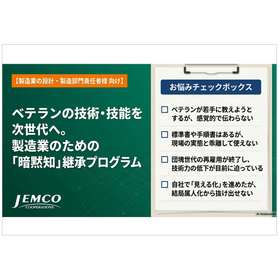
[Data] "Tacit Knowledge" Inheritance Program for the Manufacturing Industry

Simply creating a "manual" is not enough for maintaining and improving true technical skills!

This document introduces a "tacit knowledge" inheritance program for the manufacturing industry. An essential approach to formalizing tacit knowledge and ensuring its transfer is urgently needed. It is not merely superficial hearings. We logically unravel "why it is done (purpose/function)" and transform it into formal knowledge that everyone can understand. Please take a look. [Contents (partial)] ■ Troubleshooting checklist ■ The crisis of "skill hollowing" if left unaddressed ■ The comprehensive strength of the Gemco Group: a seamless process from diagnosis to self-driving ■ Unique extraction techniques: 13 focal points and VE functional expressions ■ Human resource development that promotes "self-driving" without relying on consultants ■ Implementation results: the overwhelming outcomes brought by the visualization of technology *For more details, please download the PDF or feel free to contact us.

Added to bookmarks

Bookmarks list

Bookmark has been removed

Bookmarks list

You can't add any more bookmarks

By registering as a member, you can increase the number of bookmarks you can save and organize them with labels.

Free membership registration
Prev 1 Next
  • 全3回・無料ウェビナー 規制情報の収集・管理に課題はありませんか? 毎月100件以上施行される新しい規制に対応するためのソリューションをご紹介
  • 技術・製品展示会 新技術創出交流会2026 入場無料 来場登録受付中 開催日時10月22日木・23日金 会場東京たま未来メッセ
    • Contact this company

      Inquiry Form
    • Before making an inquiry

      Download Profile

    Products

    • Search for Products

    Company

    • Search for Companies

    Special Features

    • Special Features

    Ranking

    • Overall Products Ranking
    • Overall Company Ranking

    support

    • site map
    IPROS
    • privacy policy Regarding external transmission of information
    • terms of service
    • About Us
    • Careers
    • Advertising
    IPROS Services
    • >IPROS GMS | Search site for the manufacturing industry
    • >IPROS | Search site for the B2B industry
    COPYRIGHT © 2001-2026 IPROS CORPORATION ALL RIGHTS RESERVED.
    Please note that the English text on this page is automatically translated and may contain inaccuracies.