181~225 item / All 267 items
Displayed results
Filter by category

Added to bookmarks
Bookmarks listBookmark has been removed
Bookmarks listYou can't add any more bookmarks
By registering as a member, you can increase the number of bookmarks you can save and organize them with labels.
Free membership registration
Contact this company
Inquiry Form181~225 item / All 267 items
Filter by category

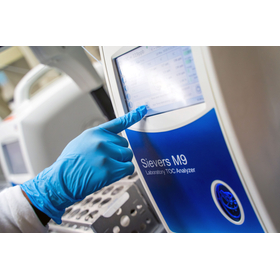
In the pharmaceutical industry, cleaning validation and product changeover are essential processes to ensure product quality and safety. In particular, the use of at-line TOC measurement based on PAT is very useful. - PAT Guidance Introduced in 2004, PAT guidance is an innovative framework for drug development, manufacturing, and quality assurance. This guidance provides a scientific, risk-based approach and promotes innovation and efficiency improvements by the industry and regulatory agencies. The PAT guidance introduces the "at-line" method, which involves sampling and measurement close to the process. By using the Sievers M9 portable TOC meter, it becomes possible to test rinse samples and swab samples for cleaning validation and product changeover at-line.
Added to bookmarks
Bookmarks listBookmark has been removed
Bookmarks listYou can't add any more bookmarks
By registering as a member, you can increase the number of bookmarks you can save and organize them with labels.
Free membership registration
In the pharmaceutical industry, cleaning validation of manufacturing equipment is a crucial element of quality control. In particular, accurately detecting residues of alkaline cleaning agents is essential for ensuring product safety and quality. Here, we will introduce a method for simultaneously measuring the TOC and conductivity of alkaline cleaning agents using the Sievers M9 TOC analyzer. - Characteristics and Importance of Alkaline Cleaning Agents We selected CIP-100Ⓡ as the alkaline cleaning agent commonly used for cleaning manufacturing equipment during product changeovers in the pharmaceutical industry. Its composition includes potassium hydroxide (10-30%) and disodium EDTA (1-5%), which contribute to its cleaning effectiveness. In cleaning validation, it is important to confirm that no cleaning agent remains on the equipment after the final rinse.
Added to bookmarks
Bookmarks listBookmark has been removed
Bookmarks listYou can't add any more bookmarks
By registering as a member, you can increase the number of bookmarks you can save and organize them with labels.
Free membership registration
In the pharmaceutical industry, cleaning validation is an essential element for ensuring the reliability and quality of the manufacturing process. In particular, cleaning validation using TOC is gaining attention for its accuracy and efficiency. Sievers' validation support package for cleaning validation provides a systematic approach to building cleaning validation and complements the existing quality management standards, requirements, and guidelines commonly used in the pharmaceutical and biopharmaceutical industries. This document includes guidance, construction examples, worksheets, templates, and sample protocols, significantly reducing the time and effort required to establish cleaning validation.
Added to bookmarks
Bookmarks listBookmark has been removed
Bookmarks listYou can't add any more bookmarks
By registering as a member, you can increase the number of bookmarks you can save and organize them with labels.
Free membership registration
Cleaning validation is an essential process in pharmaceutical manufacturing. However, traditional manual sampling and swab testing are time-consuming, carry a high risk of human error, and are costly. This is where Process Analytical Technology (PAT) comes into play. Based on guidance published by the FDA in 2004, this technology provides recommendations for understanding, controlling, and continuously verifying processes. By using PAT, it becomes possible to understand processes without manual sampling or analysis, leveraging real-time data. Utilizing real-time data on TOC, IC, and conductivity from online TOC analyzers enables comprehensive understanding of the cleaning process through online cleaning validation.
Added to bookmarks
Bookmarks listBookmark has been removed
Bookmarks listYou can't add any more bookmarks
By registering as a member, you can increase the number of bookmarks you can save and organize them with labels.
Free membership registration
In the food and beverage industry, effective cleaning of manufacturing equipment is essential to deliver high-quality and safe products to consumers. It is particularly important to appropriately reduce the risk of contamination by microorganisms. According to the FDA, the primary cause of product recalls in the food and beverage industry in 2017 was product contamination by microorganisms. Therefore, proper cleaning processes are required to reduce microbial contamination. Additionally, it is important to have means to verify the effectiveness of the cleaning process. TOC (Total Organic Carbon) is a widely adopted non-specific analytical method for detecting potential contaminants such as product residues, detergents, and microorganisms. To use TOC, it is necessary to consider the recovery rates and linearity of substances that may remain after cleaning. While testing for chemical contaminants and compounds using TOC is common, there is limited information regarding the recovery rates of microorganisms. By using the Sievers M9 TOC analyzer, it is possible to detect microbial residues at lower concentrations than visual inspection in cleaning evaluations. TOC analysis is effective for measuring residues, monitoring cleaning processes, and reducing overall risks. This enables more accurate and efficient microbial management in the cleaning evaluation of manufacturing equipment.
Added to bookmarks
Bookmarks listBookmark has been removed
Bookmarks listYou can't add any more bookmarks
By registering as a member, you can increase the number of bookmarks you can save and organize them with labels.
Free membership registration
In recent years, the demand for gluten-free products has surged. Consequently, in food and beverage factories, the cleaning of manufacturing equipment has become an increasingly important issue when producing both gluten-containing and gluten-free products. In particular, strict cleaning between batches is required to prevent carryover of materials between products. - Challenges in Gluten-Free Management When dedicated equipment for gluten-free products cannot be secured, it is necessary to thoroughly clean the manufacturing equipment. Allergen testing is mandated to prove that no specified ingredients remain after cleaning, but this requires time and skilled techniques. Traditional testing methods, such as the ELISA method, have high accuracy but are labor-intensive and time-consuming, leading to a demand for more efficient methods. Against this backdrop, the Sievers M9 TOC analyzer is gaining attention. This instrument can simultaneously measure TOC and conductivity, making it very effective for determining the nature of contaminants remaining after equipment cleaning.
Added to bookmarks
Bookmarks listBookmark has been removed
Bookmarks listYou can't add any more bookmarks
By registering as a member, you can increase the number of bookmarks you can save and organize them with labels.
Free membership registration
In the pharmaceutical industry, cleaning validation is an essential process to ensure the quality and safety of products. In particular, accurately detecting residues of protein samples is crucial for guaranteeing the cleanliness of manufacturing equipment. TOC analyzers consist of a combination of oxidation methods and detection methods. - Oxidation Method of TOC Analyzers Commercially available TOC analyzers oxidize organic compounds to carbon dioxide using methods such as combustion oxidation or oxidants combined with ultraviolet oxidation. - Detection Method of TOC Analyzers To detect the concentration of carbon dioxide generated from the oxidation of organic compounds, non-dispersive infrared absorption (NDIR) methods and conductivity methods are commonly used. - Sievers Measurement Technology Sievers TOC analyzers employ a wet ultraviolet oxidation combined with gas-permeable membrane conductivity measurement method, allowing for high accuracy in measuring recovery rates even for protein samples, thus providing reliable data. This is expected to ensure product quality and safety and contribute to the overall reliability improvement in the industry.
Added to bookmarks
Bookmarks listBookmark has been removed
Bookmarks listYou can't add any more bookmarks
By registering as a member, you can increase the number of bookmarks you can save and organize them with labels.
Free membership registration
In the pharmaceutical and cosmetics industries, cleaning validation of manufacturing equipment is a very important process. In particular, accurately detecting residues of insoluble and difficult-to-decompose compounds is essential for ensuring product quality and safety. TOC analyzers are widely adopted non-specific analytical methods for detecting residual products and cleaning agents in manufacturing equipment. The Sievers M9 TOC analyzer can measure with high accuracy even for insoluble and difficult-to-decompose compounds, providing reliable data.
Added to bookmarks
Bookmarks listBookmark has been removed
Bookmarks listYou can't add any more bookmarks
By registering as a member, you can increase the number of bookmarks you can save and organize them with labels.
Free membership registration
In the pharmaceutical industry, cleaning validation of manufacturing equipment is a crucial element of quality control. In cleaning validation, conductivity is useful for detecting residual cleaning agents, but it cannot accurately assess the concentration of organic substances. TOC is very useful in the cleaning evaluation of manufacturing equipment because it can detect both types of organic substances (conductive and non-conductive). Particularly in cases where non-conductive organic substances are present, relying solely on conductivity for cleaning evaluation increases the risk of missing organic contamination.
Added to bookmarks
Bookmarks listBookmark has been removed
Bookmarks listYou can't add any more bookmarks
By registering as a member, you can increase the number of bookmarks you can save and organize them with labels.
Free membership registration
Potassium hydroxide is a commonly used cleaning agent in the pharmaceutical industry. However, it cannot be detected by TOC because it does not contain carbon. Therefore, using conductivity as a detection method is effective. However, there are often trace amounts of residual organic matter, and TOC measurement is essential to detect this. The Sievers M9 TOC analyzer can measure both conductivity and TOC simultaneously, making it useful for detecting residual concentrations of potassium hydroxide.
Added to bookmarks
Bookmarks listBookmark has been removed
Bookmarks listYou can't add any more bookmarks
By registering as a member, you can increase the number of bookmarks you can save and organize them with labels.
Free membership registration
Sodium hydroxide is a commonly used cleaning agent in the pharmaceutical industry. However, it cannot be detected by TOC because it does not contain carbon. Therefore, using conductivity for detection is effective. However, there are often trace amounts of residual organic matter, and TOC measurement is essential for detecting this. The Sievers M9 TOC analyzer can simultaneously measure both conductivity and TOC, making it useful for detecting residual concentrations of sodium hydroxide.
Added to bookmarks
Bookmarks listBookmark has been removed
Bookmarks listYou can't add any more bookmarks
By registering as a member, you can increase the number of bookmarks you can save and organize them with labels.
Free membership registration
Cleaning validation is an essential process to ensure the cleanliness of manufacturing equipment. This process requires highly sensitive and reliable swab or rinse sample analysis. In particular, vials with a low and stable TOC background are necessary. Using kits with high TOC or significant variability increases the risk of errors, leading to incorrect assessments of equipment cleanliness and the possibility of unnecessary cleaning. Sievers' cleaning validation kits provide low TOC backgrounds with minimal variability, resulting in more sensitive and accurate results. Additionally, using vials with a cleaning guarantee ensures the accuracy and completeness of the analysis.
Added to bookmarks
Bookmarks listBookmark has been removed
Bookmarks listYou can't add any more bookmarks
By registering as a member, you can increase the number of bookmarks you can save and organize them with labels.
Free membership registration
The design of a robust cleaning process for pharmaceutical manufacturing is crucial for cleaning validation. Traditionally, the design of cleaning processes in pharmaceutical manufacturing has focused on reducing the most potent and toxic active pharmaceutical ingredients (APIs). For validated cleaning processes, the emphasis is on reducing risks and demonstrating process control and understanding. A newly highlighted concept for risk reduction is the identification of comprehensive cleanability and master soil. In the past, potential substances were considered individually, and all substances were ranked based on the time required for cleaning completion under worst-case cleaning conditions. The master soil was established based on the time to cleaning completion, and the cleaning process was optimized around the reduction of the master soil. Often, this relied on subjective ranking through visual confirmation as a qualitative indicator. To optimize the cleaning process of pharmaceutical manufacturing facilities, we propose a method to measure total organic carbon (TOC) and conductivity in real-time to evaluate cleanability.
Added to bookmarks
Bookmarks listBookmark has been removed
Bookmarks listYou can't add any more bookmarks
By registering as a member, you can increase the number of bookmarks you can save and organize them with labels.
Free membership registration
The TOC meter Sievers M9 is very effective in quantitatively detecting trace residues of cleaning agents and plays an important role in cleaning validation and process validation. Furthermore, by simultaneously measuring conductivity and TOC, it allows for a deeper understanding of the cleanliness of both ions and organic substances after the cleaning process.
Added to bookmarks
Bookmarks listBookmark has been removed
Bookmarks listYou can't add any more bookmarks
By registering as a member, you can increase the number of bookmarks you can save and organize them with labels.
Free membership registration
Cleaning validation in the pharmaceutical industry is a crucial process to ensure the quality and safety of products. This importance increases significantly when dealing with complex compounds. We will introduce the evaluation of recovery rates of alkaline cleaning agents using Sievers' TOC measurement technology.
Added to bookmarks
Bookmarks listBookmark has been removed
Bookmarks listYou can't add any more bookmarks
By registering as a member, you can increase the number of bookmarks you can save and organize them with labels.
Free membership registration
The evaluation of the cleaning process is a very important issue in manufacturing. In particular, to ensure product quality, it is necessary to confirm that the cleaning standards are appropriate. Here, we will introduce a method to evaluate the validity of cleaning standards using the process capability index.
Added to bookmarks
Bookmarks listBookmark has been removed
Bookmarks listYou can't add any more bookmarks
By registering as a member, you can increase the number of bookmarks you can save and organize them with labels.
Free membership registration
- Establishing the Cleaning Validation Process Each process of cleaning validation is unique, and factors such as raw materials, process flow diagrams, work procedures, and minimum batch size (MBS) influence the cleaning process. The cleaning validation process is divided into three stages: design, qualification, and verification, and these should be continuously confirmed and updated throughout the duration of the process. It is necessary to set a Maximum Allowable Carryover (MAC) when switching products in production equipment. The MAC is the amount of the previous product that can be present in the next product without posing a risk to the patient. Here, we will introduce the method for calculating the Maximum Allowable Carryover (MAC) in cleaning validation.
Added to bookmarks
Bookmarks listBookmark has been removed
Bookmarks listYou can't add any more bookmarks
By registering as a member, you can increase the number of bookmarks you can save and organize them with labels.
Free membership registration
In cleaning validation, when considering worst-case scenarios involving low solubility compounds or poorly designed cleaning processes, TOC analysis is effective. TOC analysis is a non-specific analytical method that can detect substances remaining on surfaces such as APIs, surfactants, and decomposing agents.
Added to bookmarks
Bookmarks listBookmark has been removed
Bookmarks listYou can't add any more bookmarks
By registering as a member, you can increase the number of bookmarks you can save and organize them with labels.
Free membership registration
- Purpose and Challenges of Cleaning The cleaning process is designed to effectively remove compounds, ensuring that no decomposition products or residual cleaning agents are left in the manufacturing equipment, allowing it to be used for the production of the next batch. Relying on specific analytical methods can take years from design/development/completion and requires significant manpower.
Added to bookmarks
Bookmarks listBookmark has been removed
Bookmarks listYou can't add any more bookmarks
By registering as a member, you can increase the number of bookmarks you can save and organize them with labels.
Free membership registration
TOC and conductivity are important analytical items that support cleaning validation, cleaning verification, and cleaning monitoring. TOC measurements can be performed in response to user requests in various settings, including laboratories, manufacturing sites (at-line), and online (final rinse water monitoring from CIP).
Added to bookmarks
Bookmarks listBookmark has been removed
Bookmarks listYou can't add any more bookmarks
By registering as a member, you can increase the number of bookmarks you can save and organize them with labels.
Free membership registration
Cleaning validation is a very important process in the pharmaceutical industry. Various analytical methods are used to ensure that manufacturing equipment is properly cleaned. Among these, TOC analyzers and HPLC are widely used as representative methods. Here, we conducted a cost comparison of TOC analyzers and HPLC from various perspectives (initial costs, maintenance costs, and labor costs).
Added to bookmarks
Bookmarks listBookmark has been removed
Bookmarks listYou can't add any more bookmarks
By registering as a member, you can increase the number of bookmarks you can save and organize them with labels.
Free membership registration
- Portable residual chlorine meter usable as a testing method for tap water - Visually easy to understand and simple to operate - Supports three types of reagents (tablet reagents, powder reagents, liquid reagents) with one device - Durable and robust, suitable for fieldwork (IP67) - Accurate, reproducible, and reliable measurements - Ergonomically designed - Automatic data storage - Data transfer via wired or wireless connection
Added to bookmarks
Bookmarks listBookmark has been removed
Bookmarks listYou can't add any more bookmarks
By registering as a member, you can increase the number of bookmarks you can save and organize them with labels.
Free membership registration
In a refinery, strict management of water quality and quantity is necessary for efficient operations. An average refinery consumes about 1.5 barrels of water to produce 1 barrel of crude oil. Rapid decision-making using real-time data contributes to cost and time savings, as well as water reuse and recycling. The water used in refineries varies widely, including cooling water and boiler feedwater, each with different water quality requirements. In particular, boiler feedwater requires high purity. To quickly assess the deterioration of water quality, responsive measuring instruments are necessary. Refineries primarily use large amounts of water for cooling and heating, but significant water is also used in other processes. Water quality monitoring helps facilitate decisions on regeneration/discharge/processes while managing and minimizing water usage and complying with regulatory requirements. Since most of the incoming pollutants originate from natural organic matter, and the main products are organic matter with the primary discharge standards being organic matter concentration, TOC monitoring allows for real-time decision-making and process control improvement. Directly monitoring organic matter throughout the refinery, from river intake to river discharge, aids in operational efficiency, cost management, and plant sustainability.
Added to bookmarks
Bookmarks listBookmark has been removed
Bookmarks listYou can't add any more bookmarks
By registering as a member, you can increase the number of bookmarks you can save and organize them with labels.
Free membership registration
Pharmaceutical companies are always required to demonstrate validated cleaning programs. Here, we present five ways to successfully implement a cleaning validation program.
Added to bookmarks
Bookmarks listBookmark has been removed
Bookmarks listYou can't add any more bookmarks
By registering as a member, you can increase the number of bookmarks you can save and organize them with labels.
Free membership registration
I will explain the long-term test regarding the measurement methods for COD and nitrate without the use of reagents, conducted at the Paisenberg wastewater treatment plant. The test began in early November 2015 and was carried out to evaluate the effects of seasonal changes.
Added to bookmarks
Bookmarks listBookmark has been removed
Bookmarks listYou can't add any more bookmarks
By registering as a member, you can increase the number of bookmarks you can save and organize them with labels.
Free membership registration
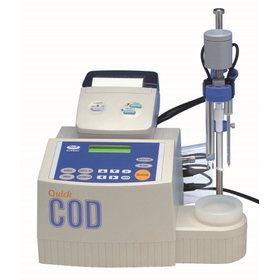
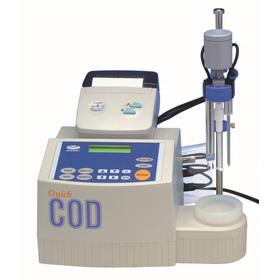
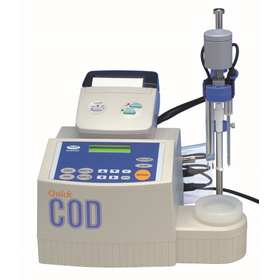
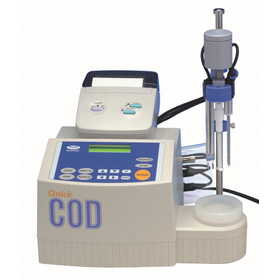
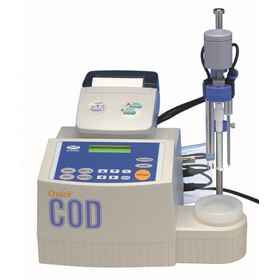
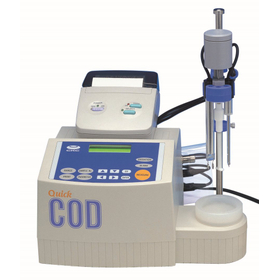
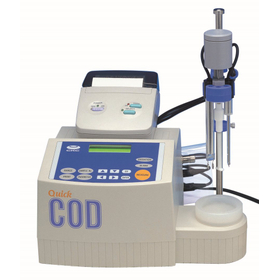
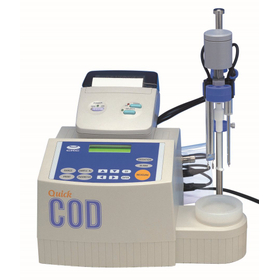
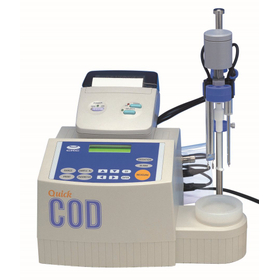
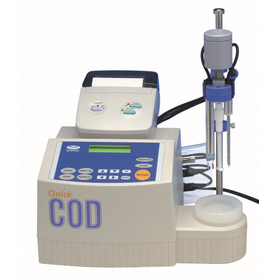
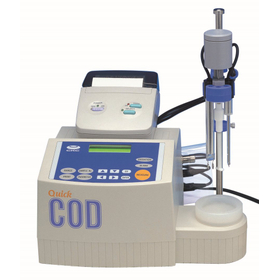
Customers measuring COD using the JIS method. By introducing a simple COD meter, you can expect a reduction in measurement time and an improvement in work efficiency! For example, simple COD meters using electric titration methods or spectrophotometry allow for rapid and accurate measurements. This enables immediate response on-site and enhances operational efficiency. Let's first take a look at what benefits there are!
Added to bookmarks
Bookmarks listBookmark has been removed
Bookmarks listYou can't add any more bookmarks
By registering as a member, you can increase the number of bookmarks you can save and organize them with labels.
Free membership registration
Chemical Oxygen Demand (COD) It is the amount of oxidizing agent consumed when organic matter in water is decomposed by an oxidizing agent, converted into an equivalent amount of oxygen. It indicates the degree of organic pollution in lakes and marine areas (unit: mg/L).
Added to bookmarks
Bookmarks listBookmark has been removed
Bookmarks listYou can't add any more bookmarks
By registering as a member, you can increase the number of bookmarks you can save and organize them with labels.
Free membership registration
TOC allows for the direct measurement of organic matter load. It is preferred over traditional oxygen demand methods like BOD and COD because it does not require hazardous chemicals and results can be obtained in less than 10 minutes.
Added to bookmarks
Bookmarks listBookmark has been removed
Bookmarks listYou can't add any more bookmarks
By registering as a member, you can increase the number of bookmarks you can save and organize them with labels.
Free membership registration
The TOC method for cleaning validation is an important technique for evaluating the cleanliness of equipment. The TOC method is recognized as a way to assess the carbon content in samples and is used to evaluate the cleanliness of equipment. In accordance with ICH Q2B guidance, examples of the evaluation of various parameters related to the validation of analytical methods using TOC will be introduced.
Added to bookmarks
Bookmarks listBookmark has been removed
Bookmarks listYou can't add any more bookmarks
By registering as a member, you can increase the number of bookmarks you can save and organize them with labels.
Free membership registration
✓ Rapid measurement of TOC over a wide measurement range Measurement time: 4 seconds Initial response time: 6 minutes (ICR off), 10 minutes (ICR on) Response time: 3.25 minutes Measurement range: 0.20 ppb to 10 ppm ✓ Three models to choose from Lab type / Portable type / Online type ✓ Three measurement modes to choose from Online measurement / Grab measurement / Auto-sampler measurement
Added to bookmarks
Bookmarks listBookmark has been removed
Bookmarks listYou can't add any more bookmarks
By registering as a member, you can increase the number of bookmarks you can save and organize them with labels.
Free membership registration
In cleaning validation, it is important to select the appropriate analytical method according to the purpose. By choosing the optimal analytical method for each phase (design, validation, verification), the risk of product contamination can be minimized.
Added to bookmarks
Bookmarks listBookmark has been removed
Bookmarks listYou can't add any more bookmarks
By registering as a member, you can increase the number of bookmarks you can save and organize them with labels.
Free membership registration
Data integrity is a crucial requirement in pharmaceutical manufacturing, and there is a strong demand to easily manage electronic data and metadata in one place. Pharmaceutical companies must not only ensure patient safety and meet data integrity requirements but also improve production efficiency to respond to production demands. By reviewing data in real-time and conducting trend analysis, processes can be streamlined through encrypted data transfer. Additionally, utilizing electronic signature functionality allows for even faster record reviews. Features of DataShare Elite Software: - Compatibility with both new and old models of Sievers TOC analyzers - Management of metadata including error history and audit trails - Electronic signatures for data (measurement results, audit trails) - Access to lab/online TOC analyzers from a single PC
Added to bookmarks
Bookmarks listBookmark has been removed
Bookmarks listYou can't add any more bookmarks
By registering as a member, you can increase the number of bookmarks you can save and organize them with labels.
Free membership registration
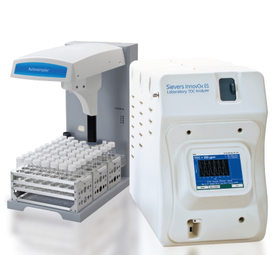
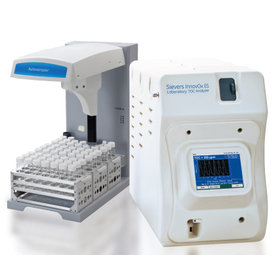
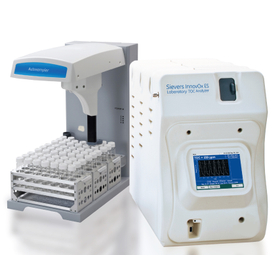
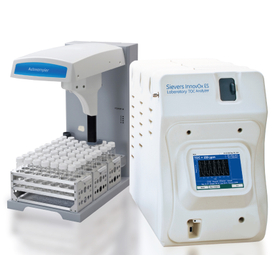
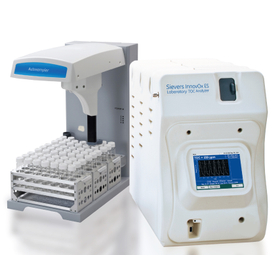
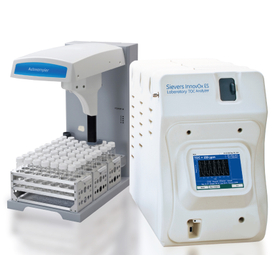
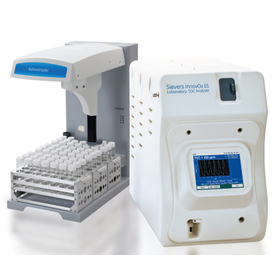
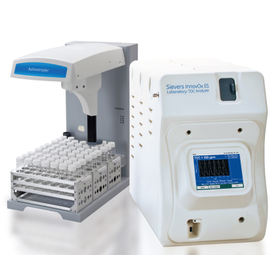
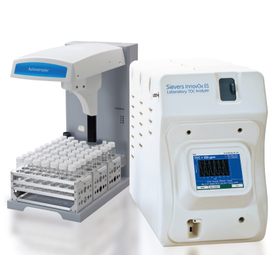
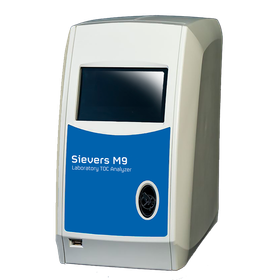
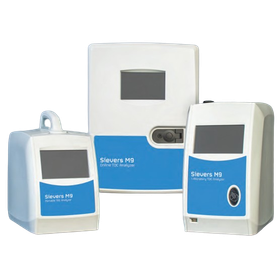
The Sievers M9 can accommodate a variety of applications due to its unique gas-permeable membrane conductivity measurement method and wide measurement range (0.03 ppb to 50 ppm). Features of the Sievers M9: - No carrier gas required - Stability in ultra-low concentration range - 12 months of calibration stability - Three models to choose from based on application (laboratory type/portable type/online type) - Compliance with data integrity requirements based on 21 CFR Part 11 (optional) - The sample conductivity measurement function allows simultaneous measurement of TOC and conductivity (USP<645> Stage 1) (optional) - An auto-sampler can automatically analyze up to 63 samples (40mL) (optional)
Added to bookmarks
Bookmarks listBookmark has been removed
Bookmarks listYou can't add any more bookmarks
By registering as a member, you can increase the number of bookmarks you can save and organize them with labels.
Free membership registration
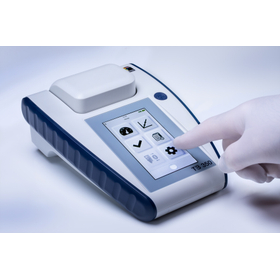
- Rapid measurement (initial response 4 minutes, measurement interval 15 seconds *during online measurement) - Simultaneous monitoring of TOC and conductivity - Capable of online/offline analysis with a single unit - Excellent portability suitable for maintenance of pure water systems (compact and lightweight) - Built-in sample pump allows users to perform calibration on-site - Easy part replacement by users and low maintenance - Calibration standard solution provided - Capable of displaying TOC trend graphs
Added to bookmarks
Bookmarks listBookmark has been removed
Bookmarks listYou can't add any more bookmarks
By registering as a member, you can increase the number of bookmarks you can save and organize them with labels.
Free membership registration
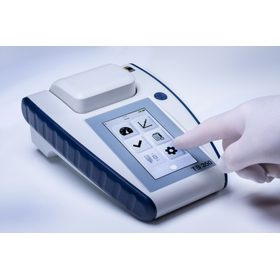
- Rapid measurement (initial response 4 minutes, measurement interval 15 seconds *during online measurement) - Simultaneous monitoring of TOC and conductivity - Capable of online/offline analysis with a single unit - Excellent portability suitable for maintenance of pharmaceutical water systems (compact and lightweight) - Compliant with pharmacopoeias of various countries (USP <643>/EP<2.2.44>) - Built-in sample pump allows users to perform calibration and system suitability tests on-site - Standard solutions provided for calibration and system suitability testing - Screen and documentation available in Japanese - Capable of displaying TOC trend graphs
Added to bookmarks
Bookmarks listBookmark has been removed
Bookmarks listYou can't add any more bookmarks
By registering as a member, you can increase the number of bookmarks you can save and organize them with labels.
Free membership registration
Water quality monitoring using the Sievers TOC analyzer enables equipment maintenance, protection, reduction of downtime, and mitigation of process failures.
Added to bookmarks
Bookmarks listBookmark has been removed
Bookmarks listYou can't add any more bookmarks
By registering as a member, you can increase the number of bookmarks you can save and organize them with labels.
Free membership registration
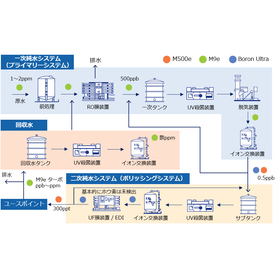
Product lineup according to purpose: Corresponding to each process such as raw water, RO water, reclaimed water, UF/EDI, and use points.
Added to bookmarks
Bookmarks listBookmark has been removed
Bookmarks listYou can't add any more bookmarks
By registering as a member, you can increase the number of bookmarks you can save and organize them with labels.
Free membership registration
- Low concentration stability (quantitative lower limit: 4 ppb) - Operates immediately after power on - No carrier gas required - Calibration frequency is once a year - Short measurement time (4 measurements per sample in 14 minutes) - Compact design - Three types: lab type / portable type / online type - Inorganic carbon removal device (ICR) is built-in as standard - Optional auto-sampler for automatic measurement of up to 63 samples (40 mL vials) - Custom multi-point calibration protocol compliant with notification methods for the water sector
Added to bookmarks
Bookmarks listBookmark has been removed
Bookmarks listYou can't add any more bookmarks
By registering as a member, you can increase the number of bookmarks you can save and organize them with labels.
Free membership registration
The Sievers M9e can accommodate a variety of applications thanks to its unique gas-permeable membrane conductivity measurement method and wide measurement range (0.03 ppb to 50 ppm). The optional turbo mode (analysis time of 4 seconds) is useful for monitoring recovery water. Features of the Sievers M9e: - Matching of measurement deviations - Stability in ultra-low concentration ranges - Automatic operation (calibration / verification / data analysis, etc.) - 12 months of calibration stability - Three models to choose from based on application (laboratory type / portable type / online type) - Sample conductivity measurement function (optional) allows simultaneous measurement of TOC and conductivity - Auto-sampler (optional) can automatically analyze up to 63 samples (40mL each).
Added to bookmarks
Bookmarks listBookmark has been removed
Bookmarks listYou can't add any more bookmarks
By registering as a member, you can increase the number of bookmarks you can save and organize them with labels.
Free membership registration
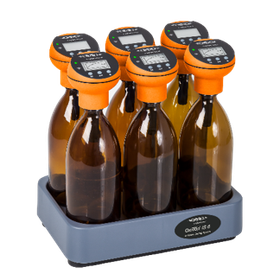
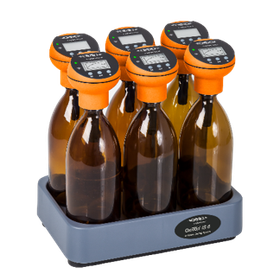
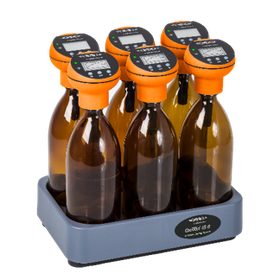
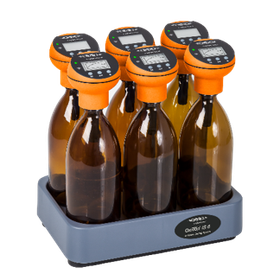
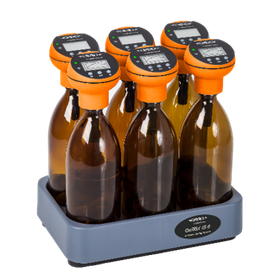
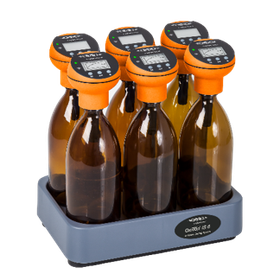
Various industries are advancing the development of biodegradable materials as part of their efforts to address environmental issues. Research on biodegradable plastics is also included as one of the research and development projects under the Moonshot Research and Development Program led by the Cabinet Office (Goal 4). There are challenges with biodegradability testing... - Large testing equipment is required - Requesting external inspection agencies significantly increases costs and time - There is a limit to the number of samples that can be measured simultaneously For those who want to start with simple screening, OxiTop is recommended! - Cost-effective testing can be done in-house - Changes over time can be monitored even during measurement - Automatic recording of measurement values with data logger functionality - Up to 100 samples can be measured simultaneously - Can be conducted under OECD301F testing conditions
Added to bookmarks
Bookmarks listBookmark has been removed
Bookmarks listYou can't add any more bookmarks
By registering as a member, you can increase the number of bookmarks you can save and organize them with labels.
Free membership registration
**Challenges Faced by Wastewater Treatment Plants** - High power consumption (over 50% due to aeration and mixing in reaction tanks) - DO levels fluctuate with a delay from ammonia treatment - Conventional DO control leads to excessive aeration - In combined sewer systems, DO levels fluctuate due to rainfall - Excessive addition of hydrogen donors (such as methanol) **What the Online Ammonia/Nitrate Sensor VARiON Can Do** - Clarifies the timing of nitrification completion for controlling aeration flow rate - Measures in disinfection equipment to adjust chlorine dosage - Controls the injection amount of methanol and other substances that promote denitrification = Reduction in power consumption and chemical costs
Added to bookmarks
Bookmarks listBookmark has been removed
Bookmarks listYou can't add any more bookmarks
By registering as a member, you can increase the number of bookmarks you can save and organize them with labels.
Free membership registration
The IQ Sensor Net system helps collect the necessary data for monitoring and controlling processes by freely combining 21 types of sensors. It supports small-scale operations with 2 sensors up to large-scale processing processes with a maximum of 20 sensors, providing optimal water quality management tailored to users. It also supports remote monitoring, allowing data to be viewed from anywhere using a smartphone, tablet, or computer as long as there is an internet connection. This enables operation from outside the facility when urgent on-site response is needed. Types of sensors: DO (marine water compatible model available), pH/ORP (marine water compatible model available), conductivity (marine water compatible model available), turbidity (marine water compatible model available), color, SS (marine water compatible model available), MLSS, ammonia, nitrate, nitrite, organic matter, sludge interface.
Added to bookmarks
Bookmarks listBookmark has been removed
Bookmarks listYou can't add any more bookmarks
By registering as a member, you can increase the number of bookmarks you can save and organize them with labels.
Free membership registration
We offer electrodes that can accommodate various applications. ■pH Electrodes - SensoLyt SEA … For wastewater measurement (high turbidity, AgCl-free internal liquid, suitable for samples containing sulfides) - SensoLyt SEA-HP … For inline measurement (inside piping, pressure and heat resistant) - SensoLyt DWA … For drinking water measurement (suitable for low conductivity samples) - SensoLyt ECA … For wastewater measurement (single pin pole design, long-term stability) - SensoLyt TFA … For industrial wastewater measurement ■ORP Electrodes - SensoLyt PtA … For wastewater measurement (suitable for high turbidity samples) - SensoLyt PtFA … For industrial wastewater measurement
Added to bookmarks
Bookmarks listBookmark has been removed
Bookmarks listYou can't add any more bookmarks
By registering as a member, you can increase the number of bookmarks you can save and organize them with labels.
Free membership registration
The 4-electrode conductivity sensor TetraCon 700IQ is particularly suitable for a wide range of applications in high concentration areas compared to 2-electrode sensors, such as in treatment plants handling heavily loaded wastewater and effluent. It employs a unique measurement technology that reduces the effects of polarization, achieving high-precision measurements. The 4-electrode TetraCon 700 uses two pairs of independent electrodes, with the voltage electrodes generating a stable and consistent reference potential. The advantage of this technology is the reduction of measurement errors caused by polarization effects in high concentration areas. *There are also sensors available for seawater.
Added to bookmarks
Bookmarks listBookmark has been removed
Bookmarks listYou can't add any more bookmarks
By registering as a member, you can increase the number of bookmarks you can save and organize them with labels.
Free membership registration
■Space-saving design & easy operation: Compact design approximately the size of A3 paper. After starting operation, it automatically performs standard liquid calibration and blank measurement at user-defined intervals. ■Easy maintenance: Essentially only requires reagent replenishment! The electrode activation function also simplifies electrode maintenance. ■Compatible with diverse samples: Suitable for a wide range of applications in freshwater and seawater. Measurement principle is resistant to coloring and turbidity. ■Environmental consideration: The reagents used do not contain harmful components, reducing the burden of wastewater treatment. ■Automatic measurement with a minimum cycle of 10 minutes: Capable of measuring 24-hour temporal changes that are difficult with manual analysis or laboratory equipment.
Added to bookmarks
Bookmarks listBookmark has been removed
Bookmarks listYou can't add any more bookmarks
By registering as a member, you can increase the number of bookmarks you can save and organize them with labels.
Free membership registration