- Publication year : 2026
1~13 item / All 13 items
Displayed results

Added to bookmarks
Bookmarks listBookmark has been removed
Bookmarks listYou can't add any more bookmarks
By registering as a member, you can increase the number of bookmarks you can save and organize them with labels.
Free membership registration
Contact this company
Inquiry Form1~13 item / All 13 items

Results of 7 years of on-site experience and in-house training. Towards the development of the next generation of plating engineers. At Kodama Co., Ltd., we are advancing initiatives to cultivate foreign talent not just as a means of securing personnel, but as engineers who support Japanese manufacturing. Recently, two employees from Vietnam, who have accumulated 7 years of on-site experience in plating processing at our company, have both passed the national certification for "1st Class Plating Technicians." The two employees are responsible for practical work in barrel plating lines and composite plating lines, handling copper, tin, nickel plating, electroless nickel, and electroless nickel with Teflon. In addition to daily on-the-job training (OJT), our company supports the acquisition of specialized knowledge and skills through practical training at the "Kodama Plating School" and guidance from top-class plating technicians.
Added to bookmarks
Bookmarks listBookmark has been removed
Bookmarks listYou can't add any more bookmarks
By registering as a member, you can increase the number of bookmarks you can save and organize them with labels.
Free membership registration
At Kodama Co., Ltd., we propose the optimization of film thickness, plating range, substrate specifications, and processing lots to maintain the quality of gold plating while keeping costs down. The price of gold plating can fluctuate significantly based on surface area, film thickness, gold market prices, and quantity. By reviewing unnecessary film thickness, changing from full plating to partial gold plating, and optimizing substrate specifications and masking methods, it may be possible to reduce the amount of gold used and processing costs. We cater to electronic components, terminals, connectors, contacts, and semiconductor-related parts. We can assist with everything from prototypes to mass production, including pure gold plating, hard gold plating, partial gold plating, thick gold plating, and gold plating on SUS.
Added to bookmarks
Bookmarks listBookmark has been removed
Bookmarks listYou can't add any more bookmarks
By registering as a member, you can increase the number of bookmarks you can save and organize them with labels.
Free membership registration
At Kodama Co., Ltd., we address yellow discoloration and blackening that occurs in silver-plated products, from investigating the causes to implementing discoloration prevention treatments. Silver easily reacts with hydrogen sulfide and sulfur compounds in the air, leading to the formation of black silver sulfide (Ag₂S) on the surface, which causes discoloration. Factors such as exhaust gases, rubber, cardboard, adhesives, sweat and sebum, and high-temperature and high-humidity environments also promote discoloration. As countermeasures, we propose discoloration inhibitors (anti-sulfur treatments), chromate treatments, and simple rust prevention treatments. Furthermore, the use of anti-sulfur bags, avoiding direct contact with cardboard and rubber, and storing in environments that avoid high temperature and humidity are also important packaging and storage methods. We cater to terminals, connectors, busbars, contacts, EV and automotive components, and electrical parts. We can assist with everything from prototypes to mass production for matte silver, glossy silver, hard silver, super hard silver, and partial silver plating.
Added to bookmarks
Bookmarks listBookmark has been removed
Bookmarks listYou can't add any more bookmarks
By registering as a member, you can increase the number of bookmarks you can save and organize them with labels.
Free membership registration
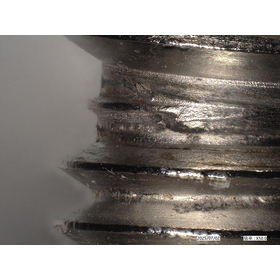
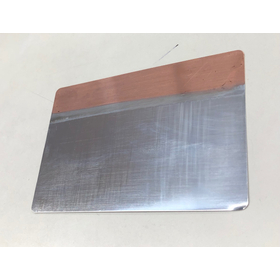
Peeling, swelling, and partial lack of adhesion—such defects are not always solely caused by the plating solution. Various factors can be considered, including insufficient degreasing, oxide films, rust, inadequate substrate treatment, current conditions, the state of the material surface, and internal stress due to thick plating. At Kodama Co., Ltd., we analyze the causes based on symptoms, materials, types of plating, and usage environments, and we consider improvement methods. We also welcome inquiries about peeling and adhesion issues with plated products processed by other companies.
Added to bookmarks
Bookmarks listBookmark has been removed
Bookmarks listYou can't add any more bookmarks
By registering as a member, you can increase the number of bookmarks you can save and organize them with labels.
Free membership registration
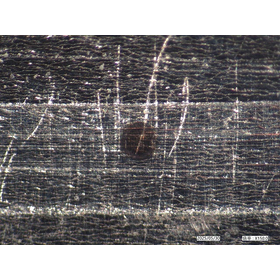
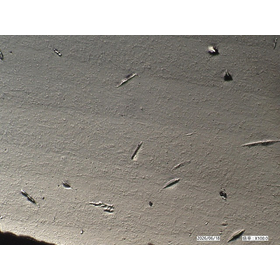
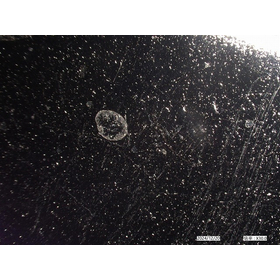
Are there any issues with the plated surface such as "roughness," "the appearance of granular particles," or "foreign substances adhering"? The main causes include foreign substances or sludge in the plating solution, insufficient filtration, residual foreign substances after pretreatment, scratches or burrs on the material surface, foreign matter contamination from jigs or equipment, and the management condition of the plating bath. At Kodama Co., Ltd., we will check the material, pretreatment, plating solution, filtration equipment, jigs, and more to identify the causes. Please feel free to consult us about appearance defects during mass production or issues with products processed by other companies.
Added to bookmarks
Bookmarks listBookmark has been removed
Bookmarks listYou can't add any more bookmarks
By registering as a member, you can increase the number of bookmarks you can save and organize them with labels.
Free membership registration
After plating, defects such as "whitening," "lack of gloss in some areas," and "variations in gloss and color depending on the lot" may occur. Possible causes include insufficient degreasing and pre-treatment, concentration and additives in the plating solution, current density, liquid temperature, agitation, rinsing, and drying conditions. At Kodama Co., Ltd., we verify the material, pre-treatment, plating solution, current conditions, and post-treatment to identify the causes of defects. We also utilize tests such as the Harsel test as needed to improve plating conditions.
Added to bookmarks
Bookmarks listBookmark has been removed
Bookmarks listYou can't add any more bookmarks
By registering as a member, you can increase the number of bookmarks you can save and organize them with labels.
Free membership registration
After plating, issues such as "white stains appearing," "water droplet marks remaining," and "discoloration over time" may occur. Possible causes include insufficient rinsing, chemical residues, pure water and water quality management, residual moisture during drying, liquid remaining in holes or welds, humidity and condensation during storage, and packaging methods. At Kodama Co., Ltd., we consider rinsing, pure water cleaning, air blowing, drying, and storage methods according to product shape and plating type. You can consult us about measures against stains and discoloration for various platings such as silver, tin, gold, and nickel.
Added to bookmarks
Bookmarks listBookmark has been removed
Bookmarks listYou can't add any more bookmarks
By registering as a member, you can increase the number of bookmarks you can save and organize them with labels.
Free membership registration
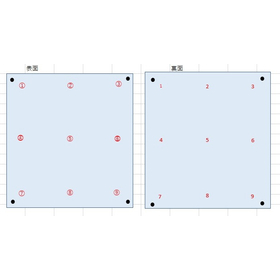
In electric nickel plating, it is important not only to ensure the required film thickness but also to verify the extent of film thickness distribution across the entire product. At Kodama Co., Ltd., to check the film thickness distribution of nickel plating under actual processing conditions, copper plates (200×200×t2mm) were used, and film thickness measurements were conducted under the target thickness of 2μm and specifications of 1–3μm. For samples A to F, a total of 18 points were measured per plate, with 9 points on the front and 9 points on the back, resulting in a total of 108 points measured. As a result, the film thickness for these 108 points ranged from 1.01 to 1.84μm, with an average of 1.374μm and a standard deviation of 0.186μm, and all 108 points fell within the specification range of 1–3μm. On the Kodama-related page, not only the average value but also the maximum value, minimum value, standard deviation, Cp, and Cpk are published.
Added to bookmarks
Bookmarks listBookmark has been removed
Bookmarks listYou can't add any more bookmarks
By registering as a member, you can increase the number of bookmarks you can save and organize them with labels.
Free membership registration
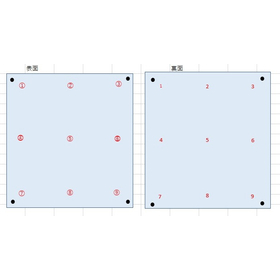
In silver plating, it is important not only to ensure the requested film thickness but also to suppress the variation in film thickness across the entire product and to process it with stable quality. At Kodama Co., Ltd., to confirm the film thickness distribution of silver plating under actual processing conditions, silver plating was performed on six copper plates (200×200×t2mm) with a target film thickness of 2.0μm, and a total of 108 points on the surface and back were measured. As a result, the film thickness ranged from 1.26 to 2.36μm, with an average of 1.79μm, and all 108 measurement points fell within the specified range of 1.0 to 3.0μm. On the Kodama-related page, not only the average value but also the maximum value, minimum value, standard deviation, Cp, and Cpk are published.
Added to bookmarks
Bookmarks listBookmark has been removed
Bookmarks listYou can't add any more bookmarks
By registering as a member, you can increase the number of bookmarks you can save and organize them with labels.
Free membership registration
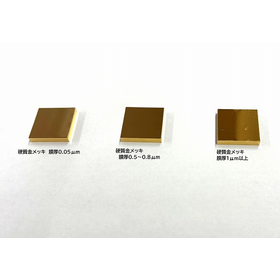
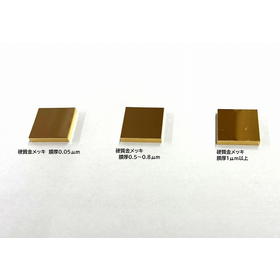
In gold plating, various thickness specifications are adopted, ranging from thin films of about 0.05μm to thick coatings of over 1μm, depending on the application and required performance. At Kodama Co., Ltd., to confirm the variation in film thickness in actual hard gold plating processing, we conducted film thickness measurements on copper material samples with three specifications: over 0.05μm, 0.5–0.8μm, and over 1.0μm. A total of 72 points were measured, with 24 points for each specification, and the minimum, maximum, average, and standard deviation values were calculated. Thickness Specification | Number of Measurements | Minimum Thickness | Maximum Thickness | Average Thickness | Standard Deviation 0.05μm or more | 24 points | 0.06μm | 0.09μm | 0.0683μm | 0.0094μm 0.5–0.8μm | 24 points | 0.55μm | 0.66μm | 0.6175μm | 0.0341μm 1.0μm or more | 24 points | 1.17μm | 1.26μm | 1.2121μm | 0.0253μm
Added to bookmarks
Bookmarks listBookmark has been removed
Bookmarks listYou can't add any more bookmarks
By registering as a member, you can increase the number of bookmarks you can save and organize them with labels.
Free membership registration
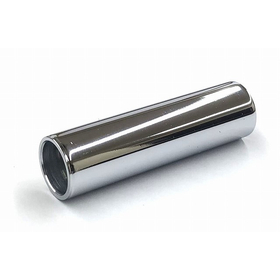
At Kodama Co., Ltd., we conduct thickness measurements of hard chrome plating on actual processed products (for thick coatings, dimensions are measured with a micrometer) to verify the quality of the plating with specific numerical values. This time, we applied hard chrome plating to 24 products made of iron with a diameter of φ15×L200 and measured the variation in thickness. The thickness standard is set at 30μm or more. The measurement results showed a minimum of 35μm, a maximum of 46μm, and an average of 38.92μm, confirming that all 24 measured points were above 30μm.
Added to bookmarks
Bookmarks listBookmark has been removed
Bookmarks listYou can't add any more bookmarks
By registering as a member, you can increase the number of bookmarks you can save and organize them with labels.
Free membership registration
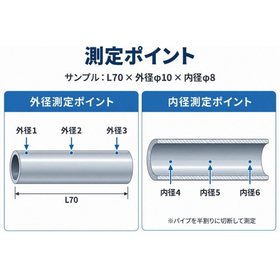
Electroless nickel plating is characterized by its ability to form a relatively uniform coating on products with complex shapes. In this instance, we conducted electroless nickel plating on 12 pipe products aiming for a film thickness of 12μm, measuring the thickness at three points on the outer diameter and three points on the inner diameter. We not only measured the outer diameter but also split the pipes to measure the thickness in the inner diameter section, confirming the degree of thickness variation and uniformity between the outer and inner diameters. [We measured the thickness at a total of 72 points: 12 products × 6 points] Outer diameter: Average of 36 points: 12.71μm Inner diameter: Average of 36 points: 11.80μm
Added to bookmarks
Bookmarks listBookmark has been removed
Bookmarks listYou can't add any more bookmarks
By registering as a member, you can increase the number of bookmarks you can save and organize them with labels.
Free membership registration
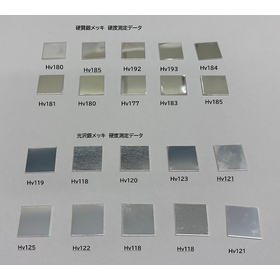
At Kodama Co., Ltd., we conduct coating hardness measurements using a micro Vickers hardness tester as part of our quality assurance for silver-plated coatings. According to JIS Z 2244 (Vickers hardness measurement test), we measured the hardness of hard silver plating and bright silver plating over a period of 10 days. The required hardness for silver plating varies depending on the application and required characteristics. In particular, for sliding parts and contact components, hardness is one of the important quality items for evaluating wear resistance and durability. 【Hardness Measurement of Silver Plating: 10-Day Actual Measurement Using Micro Vickers Hardness Tester】 Hard Silver Plating: Average Hardness: Hv184.0, Minimum Value: Hv177, Maximum Value: Hv193 Bright Silver Plating: Average Hardness: Hv120.5, Minimum Value: Hv118, Maximum Value: Hv125
Added to bookmarks
Bookmarks listBookmark has been removed
Bookmarks listYou can't add any more bookmarks
By registering as a member, you can increase the number of bookmarks you can save and organize them with labels.
Free membership registration