

Reading the Truth of the Smartphone Light Sensor Industry through Data: Background of Rapid Growth and Future Predictions Global Reports
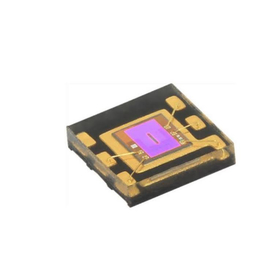
The smartphone light sensor refers to the global market for smartphone light sensors, which is estimated to reach \$755 million by 2025, and is projected to grow at a CAGR of 5.6% from 2026 to 2032, reaching \$981 million by 2032. The global sales volume in 2025 is expected to be approximately 1.425 billion units, with an average price of about \$530 per thousand units. Smartphone light sensors detect ambient light, color, correlated color temperature, infrared reflection, flicker, and serve as important optical semiconductor components responsible for automatic brightness adjustment, display color temperature control, power saving, eye comfort, camera white balance, and proximity detection during calls.
Inquire About This Product
basic information
Global Market Size of Smartphone Light Sensors According to the latest research report published by Global Reports, titled "Global Market Size, Share, Company Rankings, Revenue, and Demand Trend Forecast for Smartphone Light Sensors (2026-2032)," the global market for smartphone light sensors is estimated to be 755 million USD in 2025 and is projected to reach 708 million USD in 2026. Subsequently, it is expected to grow at a compound annual growth rate (CAGR) of 5.6% from 2026 to 2032, expanding to 981 million USD by 2032.
Price range
Delivery Time
Applications/Examples of results
High Functionality of Smartphone Light Sensors Smartphone light sensors are subdivided into ambient light sensors (ALS), color/CCT sensors, RGB/multi-channel spectral sensors, flicker detection, proximity sensors, and display-under-integrated types. With the spread of OLED, narrow bezels, high refresh rates, and foldable displays, there is a shift from the traditional front opening placement to slit-type or under-screen placement. Smartphone light sensors are required to maintain high sensitivity while compensating for interference from OLED emissions and variations in panel transmittance. The competitive axis for smartphone light sensors is shifting from simple component pricing to system performance. Standard ALS and ALS + proximity sensors have a high level of maturity, with estimated gross profit margins of around 20-35%, leading to intense price competition. On the other hand, under-OLED sensing, RGB color temperature detection, flicker detection, multi-channel spectral sensing, and custom products for flagship devices face entry barriers such as optical implementation precision, algorithm adaptation, customer certification, and stable supply, potentially reaching gross profit margins of around 35-50%.
Company information

Global Reports integrates industrial information from around the world and provides highly accurate market intelligence to support corporate decision-making. We deliver in-depth analyses based on numerical data and facts, including market size, share, industry structure, price trends, growth forecasts, rankings of major companies, and competitive trends, with clear information categorized by country, region, and application. Leveraging a rich database that has supported the business growth of over 65,000 companies and an international research network, we accompany our clients in their global expansion and continuous growth.


