Bicyclo-homofarnesal market size 2026-2032: Significant expansion with a growth rate of 1.8%.
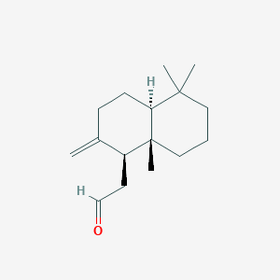
Bicyclohomofarnesal is a synthetic aldehyde-based fragrance ingredient with a bicyclic sesquiterpenoid skeleton, and its molecular formula is C₁₆H₂₆O. It is characterized by a warm dry woody, amber, and ambergris-like scent, has relatively low volatility, and is used to enhance the richness, diffusion, and persistence of fragrances. Its main applications include perfumes, personal care products, soaps, detergents, and home fragrances, and it is also utilized as an intermediate raw material in the development of high-value amber-based fragrance materials. According to the latest research report published by Global Reports titled "Global Market Size, Share, Company Rankings, Sales, and Demand Trend Forecast for Bicyclohomofarnesal (2026-2032)," the global market is expected to expand from approximately 10.92 million USD in 2025 to about 11 million USD in 2026, with a compound annual growth rate (CAGR) of 1.8% from 2026 to 2032, reaching approximately 12.24 million USD by 2032.
Inquire About This Product
basic information
One of the factors supporting the market for bicyclohemonofarnesal is the demand for woody-amber fragrances in perfumes, personal care products, and home fragrance products. In luxury perfumes and gender-neutral fragrances, materials that provide depth and calmness to the scent are emphasized. Additionally, in detergents, fabric softeners, and indoor fragrance products, the ability to maintain the scent even after use affects product value. Bicyclohemonofarnesal is positioned not only as a component that forms the fragrance but also as a material that adjusts the overall persistence and composition of the fragrance formulation. Since the required strength of the scent, lingering aroma, and compatibility with other fragrance components vary by application, it is important in product development to evaluate not only the individual fragrance but also its behavior when incorporated into the formulation.
Price range
Delivery Time
Applications/Examples of results
The Role of Natural Ambergris Alternatives and Synthetic Materials Natural ambergris has unique aromatic characteristics, but challenges such as supply constraints, high prices, considerations for animal welfare, and the sustainability of sourcing routes exist. As a result, fragrance manufacturers are increasingly interested in synthetic fragrances that are easier to manage in terms of quality and can be supplied consistently. Bicyclo-homofarnesol is one of the alternative materials that can be used in the formulation design to reproduce ambergris-like scents. However, the complexity of the aroma and the behavior of natural and synthetic materials differ. When it comes to actual adoption, it is necessary to comprehensively verify not only the reproducibility of the scent but also the purity of the raw materials, isomer composition, stability, and regulatory compliance. Since the evaluation criteria change depending on the application of the final product, repeated prototyping and evaluation between fragrance companies and consumer goods manufacturers will be key to adoption.
Company information

Global Reports integrates industrial information from around the world and provides highly accurate market intelligence to support corporate decision-making. We deliver in-depth analyses based on numerical data and facts, including market size, share, industry structure, price trends, growth forecasts, rankings of major companies, and competitive trends, with clear information categorized by country, region, and application. Leveraging a rich database that has supported the business growth of over 65,000 companies and an international research network, we accompany our clients in their global expansion and continuous growth.