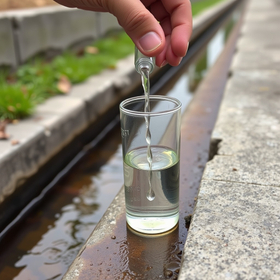
Nanobubbles are invisible bubbles now referred to as ultrafine bubbles. This explains the naming conventions, measurement considerations, and the use of bubbles in water treatment.
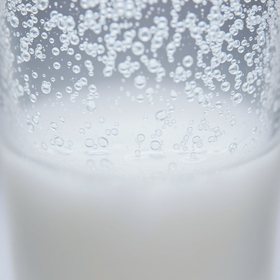
Nanobubbles refer to very small bubbles with a diameter generally smaller than 1μm. Currently, the term "ultrafine bubbles" is used. Bubbles smaller than approximately 100μm are collectively referred to as "fine bubbles," with those ranging from 1 to 100μm being classified as microbubbles. ■ Why has the name changed? The change was partly due to the potential confusion with the risks associated with nanomaterials. Fine bubbles have been proposed from Japan to international standards (ISO), and a standard defining the terminology has been established. Because there are two names, it is important to be cautious when reading materials to ensure they refer to the same thing. ■ Visible microbubbles, invisible nanobubbles Microbubbles cloud water, making it appear white, and they rise slowly. Theoretically, an air bubble with a diameter of 10μm rises in water at a speed of only about 3mm per minute. In contrast, ultrafine bubbles are colorless and transparent, making them invisible to the naked eye. Even though they are both referred to as "fine bubbles," their appearance to the eye is completely different. Please feel free to consult us.
Inquire About This Product
basic information
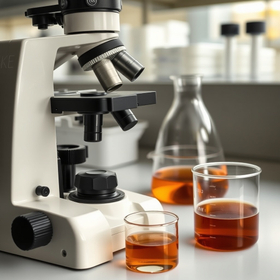
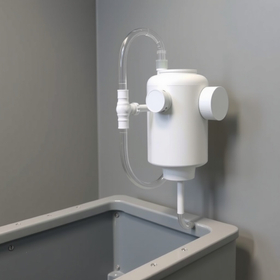
■ How can we confirm that it is "included"? The number and size of ultra-fine bubbles are measured using methods such as light scattering or tracking the movement of particles. However, these methods cannot strictly distinguish between bubbles and solid fine particles. Whether the water contains fine particles before measurement also affects the interpretation of the results. To measure accurately, it is necessary to conduct measurements under conditions where no solid fine particles are present at all. ■ Are there products without bubbles? Since bubbles are not visible, there are products where the amount of bubbles is unclear or products that contain very few bubbles. ■ Is the mechanism understood? The mechanism by which very small bubbles are formed and remain in water is not yet fully established theoretically. When encountering information claiming effects, it is important to verify what was measured and how. ■ How to create bubbles There are methods for generating bubbles, such as the swirling liquid flow type that creates a fast swirling flow in a tube to finely tear the gas, and the pressurized dissolution method. The pressurized dissolution method involves applying pressure to dissolve a large amount of gas in water and then reducing the pressure to release the gas that can no longer be dissolved as bubbles.
Price range
Delivery Time
Applications/Examples of results
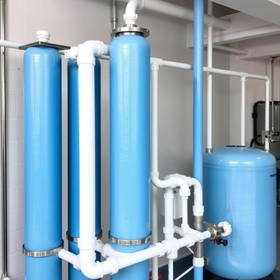
■How are bubbles used in water treatment? Bubbles themselves have been used in water treatment for a long time. A representative example is aeration in the activated sludge process, where air is supplied to microorganisms. Another example is pressurized flotation, which uses fine bubbles to lift contaminants. Although the purposes are different, both are technologies that introduce air bubbles into water. ■How are bubbles used in pressurized flotation? In pressurized flotation, water saturated with air is returned to atmospheric pressure to generate fine bubbles, which attach to solid particles in the wastewater. The solid particles with attached bubbles have an apparent specific gravity less than that of water, causing them to float to the surface. By removing the floating solids, they can be separated from the water. The same principle of pressurized dissolution is also used in the generation of ultrafine bubbles. ■The role changes with bubble size! 1. Microbubbles: Appear white and float slowly. This size of bubble is used in pressurized flotation. 2. Ultrafine bubbles: Invisible. There are still challenges in understanding the mechanism and measuring them. Before introducing nanobubbles, it is essential to determine which size of bubbles and how many are present. Our company offers inspections of wastewater treatment facilities that use aeration and pressurized flotation, as well as recommendations for water treatment chemicals. Please feel free to consult with us first.
catalog(3)
Download All Catalogs
Company information

Since our founding, we have continued to provide flexible services with the motto of accurately supplying a diverse range of products that respond to changes in the times and the diversification of consumer needs, tailored to various applications and requirements. With the corporate slogan "Chemical Engineering Partner," we, as a group of experts in chemical technology, actively discover ideas to solve our customers' problems from advanced technologies both domestically and internationally, and propose them.