What is effective chlorine concentration? How to measure it and how to read the display [Basic knowledge]

What is 12%? We will explain what is being counted as effective chlorine, the differences between %, ppm, and mg/L, and the mechanism of titration to check effective chlorine.
The specifications and purchase specifications for chlorine-based agents state concentrations such as "effective chlorine 12.0% or more." Even with the same "%" or "ppm," if you do not know what the value represents as a ratio of what to what, you may misinterpret it. First, let's look at the meaning of the term effective chlorine. ■ What does effective chlorine measure? The chemical formulas for effective chlorine include chlorine (Cl2), hypochlorous acid (HClO), and hypochlorite ion (ClO-). The ratio of these three forms varies depending on the pH of the liquid. Regardless of their form, the concept of effective chlorine is to count them collectively as a measure of chlorine. ■ Is 12% a "minimum" value? In the standards for sodium hypochlorite used for drinking water, effective chlorine is defined as "12.0% or more," regardless of grade, which sets a lower limit. This does not mean a solution that is exactly 12%, but rather that it should not fall below that level. Some purchase specifications may require a quality of 6.0% or more. It is also important to note that effective chlorine may decrease during storage. Please feel free to consult us first.
Inquire About This Product
basic information
■Are ppm and mg/L the same? ppm represents one part per million and is treated as "ppm=mg/kg" in terms of effective chlorine, indicating a weight-based ratio. On the other hand, mg/L refers to the weight per liter of liquid. For dilute solutions close to water, they can be treated as almost the same value, but concentrated solutions are heavier than water, leading to differences. ■How much heavier is the concentrated solution? 1. Products with 12% effective chlorine: specific gravity of 1.17 2. Standards for tap water: from special grade to second grade with a specific gravity of 1.16 or less (at 20°C) 3. 15% aqueous solution: density of 1.23g/cm³ (at 25°C) ■When converted by specific gravity, it is nearly 20% more If we assume a liquid with 12% by weight and a specific gravity of 1.17, the effective chlorine per liter would be about 140g, which is nearly 20% more than reading it as 120g/L. ■Are there different types of %? In the national residual chlorine testing method, the concentration of the reagent is expressed as "5w/v%", which refers to a solution made by dissolving 25g of potassium iodide in 500mL. This % is expressed based on weight per volume, which differs from the % based on the weight of the liquid. It is reassuring to check the meaning of the displayed % in the specification sheet or SDS.
Price range
Delivery Time
Applications/Examples of results
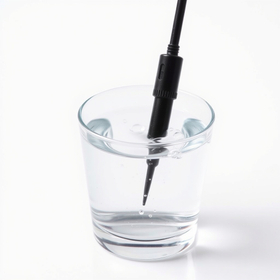
■How to measure effective chlorine? The national method for testing residual chlorine involves a procedure to measure the effective chlorine in chlorine water through titration. 1. Add potassium iodide and sulfuric acid to the sample to precipitate iodine. 2. Use starch as an indicator and titrate with sodium thiosulfate solution (0.1 mol/L) until the blue color disappears. 3. Effective chlorine (mg/L) = 3.545 × titration volume (mL) × factor × 1000 ÷ sample (mL). ■The value obtained is per 1L of liquid The value obtained from this formula is per 1L of liquid. ■Can it be easily measured on-site? Currently, there is no simple method to measure the effective chlorine concentration of sodium hypochlorite on-site. When accurate values are needed, it is advisable to consult the department responsible for water quality testing or a registered water quality testing organization. ■Consult about reading concentration displays as well Our sodium hypochlorite products include a lighter 15kg option compared to conventional products, as well as low-concentration products for schools. Please inquire about how to read product concentration displays and how to choose a concentration suitable for your application. Feel free to consult us first.
catalog(3)
Download All Catalogs
Company information

Since our founding, we have continued to provide flexible services with the motto of accurately supplying a diverse range of products that respond to changes in the times and the diversification of consumer needs, tailored to various applications and requirements. With the corporate slogan "Chemical Engineering Partner," we, as a group of experts in chemical technology, actively discover ideas to solve our customers' problems from advanced technologies both domestically and internationally, and propose them.