
List of Image Processing products
- classification:Image Processing
6751~6780 item / All 14946 items


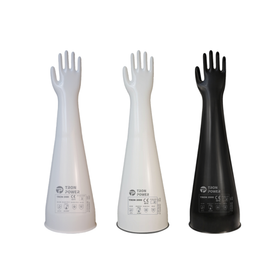
For those who have isolators. Achieving high chemical resistance and workability. Low cost and short delivery times are also possible for glove box and isolator gloves.


- Work gloves
Notice of participation in 'INTERPHEX Week Tokyo' from May 20 (Wednesday) to May 22 (Friday), 2026.
Ito Corporation will be exhibiting at "INTERPHEX Week Tokyo" held at Makuhari Messe. This exhibition is the largest in Japan, showcasing a wide range of products and services related to the research and manufacturing of pharmaceuticals, cosmetics, and regenerative medicine from 25 countries and regions around the world. Pharmaceutical and cosmetic manufacturers, as well as regenerative medicine companies, will be attending from all over the globe. We will be showcasing "Gloves for Glove Boxes/Isolators" manufactured by Tron Power. We look forward to your visit.


Live monitoring supported with DSS Express! H.265 PoE equipped network recorder.
- Surveillance Camera System

Supports ONVIF and RTSP! H.265 PoE equipped network recorder.
- Surveillance Camera System

H.265 PoE equipped network recorder! Supports live monitoring with DSS Express.
- Surveillance Camera System


Domestic DDNS adoption! Hybrid recording possible for up to 2 IP cameras (3MP).
- Surveillance Camera System

The infrared irradiation distance is about 10m! Camera with a resolution of 1920(H)x1080(V).
- Surveillance Cameras

The current consumption is a maximum of 100mA! The camera has a resolution of 1920x1080 (1080P).
- Surveillance Cameras

The resolution is 1920x1080 (1080P)! A camera with digital zoom from X1 to X8.
- Surveillance Cameras

The horizontal rotation angle is 360° endless! Camera compatible with UTC/auto focus.
- Surveillance Cameras

The current consumption is 260mA! Equipped with an IR cut filter and privacy mask.
- Surveillance Cameras

The electronic shutter ranges from 1/30 to 1/60000! Camera compatible with POC one-cable.
- Surveillance Cameras

The lens is 2.8-12.0mm megapixels! Equipped with a privacy mask in four locations.
- Surveillance Cameras

Equipped with day-night function and HLC function! Camera with motorized autofocus.
- Surveillance Cameras

The S/N ratio is 55dB! Equipped with an IR cut filter and flicker-free function.
- Surveillance Cameras

The video format is 1080P AHD! Receiver for 5CFB coaxial cable up to 300M.
- Surveillance Cameras

Day-night compatible with external infrared! Camera with a current consumption of 130mA.
- Surveillance Cameras

The lens is 2.8-12.0mm megapixels! Camera equipped with an IR cut filter.
- Surveillance Cameras

The infrared irradiation distance is approximately 10 meters, with a wide-angle diffusion type of 4 lights! A camera with a signal-to-noise ratio of 52dB.
- Surveillance Cameras

Motorized auto-focus! With 2.0MP, simultaneous output of AHD and CVBS is possible.
- Surveillance Cameras

AHD and CVBS simultaneous output! A camera equipped with HLC function and day-night function.
- Surveillance Cameras

Adopts a 2-light system for life-and-death LED! Life-and-death confirmation can be performed from the LED lamp.
- Surveillance Camera System

4CH outdoor recorder compatible with AHD 2.0MP! Equipped with UTC function.
- Surveillance Camera System

Suppression of unauthorized access from external sources through SSID stealth and MAC address filtering features.
- Surveillance Camera System

AHD 1080P Full High Definition! Analog and SD card recording compatible.
- Surveillance Camera System


It is a historic chemical products trading company founded in the 7th year of the Taisho era, and at the same time, it is a technology company that performs cutting-edge processing such as optical thi...
- Sensors
- Laser Components
- Surveillance Cameras

We will be exhibiting at the "Decoration Technology Exhibition 2026."
We would like to inform you that we will be exhibiting at the "Decoration Technology Exhibition 2026: 'Textures that Captivate the Eyes and Heart'" to be held on January 23, 2026 (Friday) at the Osaka Industrial Creation Center (Organizer: Osaka Industrial Promotion Organization). 【About the Exhibition】 Date and Time: January 23, 2026 (Friday) 10:30 AM - 4:30 PM Location: Osaka Industrial Creation Center, 3rd Floor, Booth No. 1-4-5 Honmachi, Chuo Ward, Osaka City, 541-0053 Exhibition Content: We will introduce innovations in surface treatment! Our group will undertake a series of contract processing treatments, from vacuum deposition and sputtering to UV hard coating. ◆ Vacuum deposition and sputtering products ◆ UV hard coating products ◆ Optical thin film (metal mirror) products, pattern processing products *Advance registration is required, so please apply here. *Please note that the reception is on the 4th floor.

It is a high light-transmitting ITO coating that combines an ITO film (transparent conductive film) with a dielectric multilayer anti-reflective film. It prevents condensation while allowing high tran...
- Other optical parts
- Sensors
- Surveillance Cameras

"I will provide a thorough explanation about ITO (transparent conductive film)!" has been added to the technical trend keywords.
ITO (Indium Tin Oxide) is a special material that is transparent yet possesses high conductivity, making it indispensable in modern display technology, touch panels, and solar cells. In recent years, the demand for ITO has rapidly increased alongside the proliferation of smartphones and flat panel displays. This time, we will provide a detailed explanation of the properties, applications, and manufacturing methods of ITO, and introduce the unique ITO proposals from Adachi New Industry. Please see how ITO, which is transparent yet conducts electricity, supports our daily lives. 1. Summary of ITO properties 2. Applications of ITO 3. Manufacturing methods of ITO 4. Features of ITO from Adachi New Industry For more details, please visit our company website.

It is an optical thin-film filter that reduces the reflectance at specific wavelengths and improves transmittance. By increasing the amount of light, it contributes to energy saving and power reductio...
- Other optical parts
- lens
- Sensors
I have added 'A Comprehensive Explanation of UV-IR Cut Filters in 5 Minutes!' to the technical trend keywords.
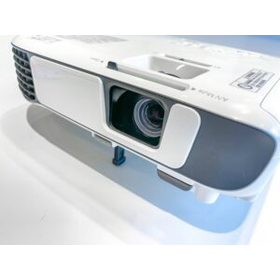
The UV-IR cut filter is an optical thin-film filter that selectively removes unwanted light in the ultraviolet (UV) and infrared (IR) wavelength ranges, allowing only specific wavelength bands of light to be transmitted or reflected with high precision. This filter achieves wavelength selectivity by utilizing interference effects through the precise layering of multilayer dielectric films and metal films. Generally, it requires control of film thickness on the order of nanometers, exceeding several tens to over a hundred layers, and its optical properties are determined by multiple parameters such as film thickness accuracy, refractive index of the film material, smoothness of the film interfaces, and adhesion of the films. 1) What is a UV-IR cut filter? 2) Historical background of UV-IR filter manufacturing in Japan 3) Why has overseas manufacturing of UV-IR cut filters progressed? 4) If UV-IR cut filters were to be produced again in Japan... necessary points (hypothesis) 5) Technically important points when selecting UV-IR cut filters 6) Future prospects Conclusion - The efforts of Adachi New Industry Co., Ltd. to focus on domestic production in Japan For more details, please visit our company website.

It is an optical filter that cuts ultraviolet and infrared light while having a high transmittance in the visible light range.
- Other optical parts
- Surveillance Cameras
- Sensors
I have added 'Understanding Cutoff and Cut-On in 5 Minutes!' to the technical trend keywords.
Optical filters are important devices used to extract only the necessary wavelengths from light or to block unnecessary wavelengths. They are utilized in a wide range of fields, from cameras and displays that we commonly see, to spectroscopic analysis devices used in medical and bio fields, as well as in industrial applications such as laser processing and optical communication. Light encompasses a broad wavelength range, including ultraviolet, visible, and infrared light; if the desired light cannot be precisely controlled, it can lead to issues such as false detection, increased noise, and decreased image quality. This is where the concepts of "cut-on" and "cut-off" come into play. These concepts indicate the boundary where light begins to transmit and the boundary where transmission ends, forming the foundation of optical filter design. 1. Definition and Basic Principles of Cut-On and Cut-Off The most important parameters for correctly designing and evaluating optical filters are the "cut-on wavelength" and "cut-off wavelength." These are not just names; they are reference values that numerically define the effective performance of the filter, specifically which wavelength ranges are transmitted and which ranges are blocked. 2. Technical Points of Design and Control For more details, please visit our company website.

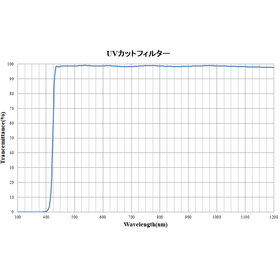
It is a filter that efficiently cuts (reflects) short-wavelength UV (ultraviolet) light while allowing visible light to pass through.
- Sensors
- Other optical parts
- Lighting for image processing
I have added 'Understanding Cutoff and Cut-On in 5 Minutes!' to the technical trend keywords.
Optical filters are important devices used to extract only the necessary wavelengths from light or to block unnecessary wavelengths. They are utilized in a wide range of fields, from cameras and displays that we commonly see, to spectroscopic analysis devices used in medical and bio fields, as well as in industrial applications such as laser processing and optical communication. Light encompasses a broad wavelength range, including ultraviolet, visible, and infrared light; if the desired light cannot be precisely controlled, it can lead to issues such as false detection, increased noise, and decreased image quality. This is where the concepts of "cut-on" and "cut-off" come into play. These concepts indicate the boundary where light begins to transmit and the boundary where transmission ends, forming the foundation of optical filter design. 1. Definition and Basic Principles of Cut-On and Cut-Off The most important parameters for correctly designing and evaluating optical filters are the "cut-on wavelength" and "cut-off wavelength." These are not just names; they are reference values that numerically define the effective performance of the filter, specifically which wavelength ranges are transmitted and which ranges are blocked. 2. Technical Points of Design and Control For more details, please visit our company website.

It is a dielectric multilayer film filter that transmits visible light and reflects near-infrared light.
- Other optical parts
- Color camera
- Sensors
I have added 'Understanding Cutoff and Cut-On in 5 Minutes!' to the technical trend keywords.
Optical filters are important devices used to extract only the necessary wavelengths from light or to block unnecessary wavelengths. They are utilized in a wide range of fields, from cameras and displays that we commonly see, to spectroscopic analysis devices used in medical and bio fields, as well as in industrial applications such as laser processing and optical communication. Light encompasses a broad wavelength range, including ultraviolet, visible, and infrared light; if the desired light cannot be precisely controlled, it can lead to issues such as false detection, increased noise, and decreased image quality. This is where the concepts of "cut-on" and "cut-off" come into play. These concepts indicate the boundary where light begins to transmit and the boundary where transmission ends, forming the foundation of optical filter design. 1. Definition and Basic Principles of Cut-On and Cut-Off The most important parameters for correctly designing and evaluating optical filters are the "cut-on wavelength" and "cut-off wavelength." These are not just names; they are reference values that numerically define the effective performance of the filter, specifically which wavelength ranges are transmitted and which ranges are blocked. 2. Technical Points of Design and Control For more details, please visit our company website.


A work analysis and improvement tool that combines AI (machine learning) and skeletal detection technology for visualizing and monitoring human tasks such as assembly work.
- Surveillance Camera System
- Image Processing Software
- Other assembly machines