
List of Pharmaceutical and food related products
- classification:Pharmaceutical and food related
3331~3375 item / All 35049 items


Reduce the workload from handling heavy objects! Here are five case studies that solved customer challenges! We are also accepting free consultations and tests tailored to your work!

- Other conveying machines


By combining parts, it is possible to produce large pallets of 2m x 4m size. Even if damaged, partial replacement is possible, making it economical. *Available from a single piece.


- palette
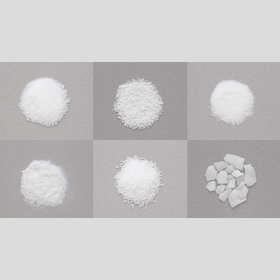

This explains the methods of granulation processing and contract processing to improve the issues of scattering, segregation, adhesion, and clogging that occur in powder processing.
- Processing Contract
- Other crushing, classification, granulation, tableting related machines
- Surface treatment contract service


We are introducing basic knowledge about RFID on our company website!
- RFID related products and IC tag services
- RFID/IC tags
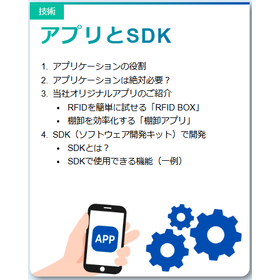
The "RFID Dedicated Site RFID Room" introduces a wealth of information related to RFID.
- RFID related products and IC tag services
- RFID/IC tags
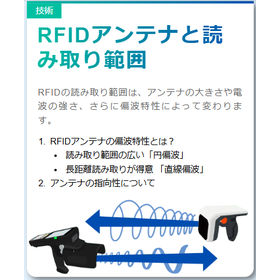
The "RFID Dedicated Site RFID Room" introduces a wealth of information related to RFID.
- RFID related products and IC tag services
- RFID/IC tags

Our website "RFID Dedicated Site RFID Room" features a wealth of information about RFID.
- RFID related products and IC tag services
- RFID/IC tags

What actually changes with RFID? We introduce various examples of RFID applications.
- RFID related products and IC tag services
- RFID/IC tags
"How should I choose an RFID reader?" We will answer that question by explaining the RFID readers we handle.
- IC tag
- RFID/IC tags
- IC tag reader/writer


<Demo available> High off-road capability with a suspension that can handle outdoor environments and uneven surfaces! Can be used for various purposes as a platform. Easy to attach the robot's casing.
- Transport and handling robots
- Trolley
- Trolley


Digital transformation of water quality management for shrimp farming using ion chromatography for land-based aquaculture! Simultaneous measurement of nitrite, nitrate, and phosphate!


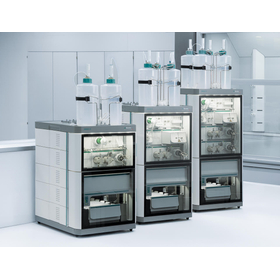

- Ion Chromatography
- Water quality testing
- Ion Measurement
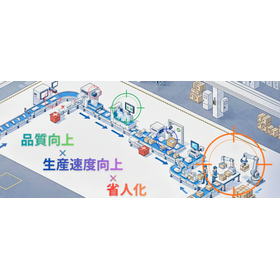

Integrating packaging technology and image inspection technology! Achieving labor reduction, increased production speed, and improved quality simultaneously.
- Other appearance and image inspection equipment
- Other transport machines and equipment
- Binding/Packing Machine


Leave it to our company with a wealth of experience! We will make proposals until you are satisfied.
- Water quality testing
- Other Air Analysis
- Environmental Analysis


A breath-by-breath gas metabolism monitor that does not require warming up time.
- Other analytical and testing equipment

IC: Ion Chromatography - A high-performance type of ion chromatograph that compactly integrates necessary functions such as pumps and suppressors.


- Water quality testing
- Ion Chromatography
- Analytical Equipment and Devices

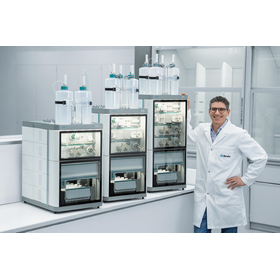
[Ion Chromatography Technical Document] Simultaneous analysis of multiple ions in wastewater using an ion chromatograph.


- Analytical Equipment and Devices
- Water quality testing
- Wastewater treatment equipment, technology and maintenance


We extract active ingredients from materials and make the most of them!
- Other contract services


Points to be mindful of in humidity management and energy saving.
- air conditioning
- Other air conditioning equipment
- Air Conditioning System

Differences from air conditioning and energy-saving usage methods.
- air conditioning
- Other air conditioning equipment
- Air Conditioning System


Packed with useful information for solving challenges in resin molding manufacturing sites! Tips for maximizing product quality, production efficiency, and added value from limited resources.
- Seminar

To visualize waste and choose measures suited to the site.
- air conditioning
- Other air conditioning equipment
- Air Conditioning System


Recommended for infectious disease prevention measures/livestock infectious disease prevention measures!
- Lab coat, clothing, shoes
- Other safety and hygiene products
- Other safety and protection products

Recommended for infectious disease prevention measures/livestock infectious disease prevention measures!
- Lab coat, clothing, shoes
- Other safety and hygiene products
- Other safety and protection products

Support for non-contact awareness of occupancy in meeting rooms and private rooms. Streamlining office monitoring and space management without the need for cameras.
- Area Sensor
- Safety Sensors
- Other Sensors
Understanding occupancy in meeting rooms and private rooms without using cameras | Introducing MotionCatch's applications for offices | You can also download product materials and comparison charts.
We would like to introduce MotionCatch as a monitoring sensor that can be used to understand office occupancy. Using millimeter-wave radar and AI, it non-contactly detects human movement and occupancy status. Since it does not use a camera and does not record images, it can be considered for installation in places where cameras are difficult to place, such as conference rooms, private rooms, and work areas. 【Suitable for the following situations】 - Understanding whether conference rooms are actually in use - Monitoring occupancy and absence in private rooms and work areas - Checking if absences are prolonged It can be installed on walls or ceilings and has a design that easily blends into existing spaces. Product materials and a comparison table of monitoring sensors can be downloaded from the related catalog below. We also welcome inquiries regarding the conditions for rooms where installation is possible and the number of units, so please feel free to contact us.
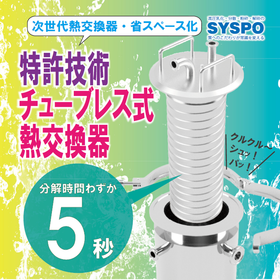

Are you troubled by scale (water stains) on the inner surface of heat transfer tubes? We have obtained a patent for a structure that allows for easy cleaning of the liquid-contacting parts with a brus...
- Heat exchanger
- Heat exchanger
- Other Heat Exchangers
Non-contact monitoring of guest rooms. Supporting fall and sudden change measures, with consideration for privacy and no need for cameras.
- Sensors
- Area Sensor
- Other Sensors
Non-contact monitoring of hospital rooms, private rooms, and restrooms. Supports early detection of falls and sudden changes, with consideration for privacy and no need for cameras.
- Sensors
- Area Sensor
- Other Sensors
Published a technical column "How to Choose a Camera-less Monitoring System" | Quick reference for 3 methods / Suitability by location / Choosing based on scenarios / 5 selection criteria to check.
We have published a technical column titled "How to Choose Camera-less Monitoring" (A4, 4 pages, with illustrations). When considering monitoring devices, the discussion often revolves around "whether to use a camera or not," but what truly matters is the perspective of what you want to notice in that location. This document organizes the differences between three methods: camera, millimeter-wave radar, and mat/load-based systems, and summarizes how to choose based on suitability for different locations. [Contents] - There are three main types of monitoring methods (Camera / Millimeter-wave radar / Mat/load-based) - Quick reference table of differences between methods (What can be detected / Installation and environment / Usability / Privacy) - Choosing based on scenarios (Falls at night / Toilet and changing room / Confirming presence in living spaces, etc.) - Three common decision points that can cause confusion on-site, and three frequent mistakes - Five items to check during selection This document organizes the general trends for each method. Since the actual feasibility and specifications vary by product, if you let us know the location and what you want to notice, we can assist you with choosing the right option.


From October 29 (Tuesday) to 31 (Thursday), 2024! We will be exhibiting small ultrasonic dispersion devices and ultrasonic generators!


- Emulsifier/Disperser
- Powder Supply Device
- Dispersion/emulsification equipment/homogenizer
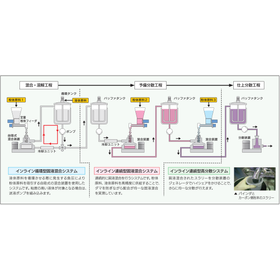
What is decentralized process design? Key points for stabilizing quality.
In dispersion engineering, stable quality cannot be achieved solely based on the performance of the equipment. What is important is the overall design of the process, taking into account material properties and process conditions. This is referred to as dispersion process design. Dispersion quality is determined not only by the strength of shear but also by multiple factors such as flow state, residence time, and method of input. If these conditions are not properly designed, localized agglomeration or variation can occur, making it difficult to maintain stable quality. For example, poor wetting during powder input or the occurrence of stagnant areas due to flow bias can lead to clumping or dispersion issues. Additionally, even if the shear energy is sufficient, if it does not act uniformly on all particles, differences in dispersion state will arise. Therefore, in dispersion processes, it is crucial to design "flow," "shear," and "processing time" as an integrated system. This allows for all particles to receive the same dispersion history, achieving uniform and highly reproducible dispersion quality. In particular, inline continuous processing has the advantage of maintaining consistent conditions within the flow, making it easier to ensure reproducibility in process design. Dispersion process design is a key concept for stabilizing quality and successfully scaling up.
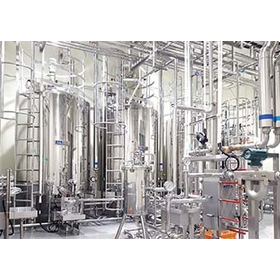
Suppressing sedimentation and evenly dispersing the protein.
- Dispersion/emulsification equipment/homogenizer
- Powder Supply Device
- Beverage Production Equipment
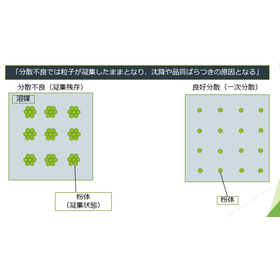
What are the causes of dispersion troubles? An explanation of the reasons for aggregation, sedimentation, and variation, as well as design points to reconsider in the dispersion process.
In dispersion engineering, issues such as unresolved agglomeration, sedimentation, and unstable particle size distribution occur frequently at many sites. These problems are caused not only by the performance of the equipment but also by inconsistencies in particle characteristics, dispersion conditions, and process design. For example, when there is insufficient dispersion energy, particles do not break down to primary particles, and agglomeration remains. Additionally, if the shear conditions or flow state are not appropriate, uniform dispersion cannot be achieved, leading to sedimentation and variations in quality. Particularly in high-viscosity systems or high solid content slurries, even slight differences in conditions can significantly impact the results. Furthermore, in batch processing, variations in mixing uniformity and residence time make it difficult to ensure reproducibility. To resolve these dispersion issues, it is important to optimize the entire process, including particle characteristics, dispersion energy, and flow design, rather than simply changing the equipment. By maintaining consistent conditions, as in inline continuous processing, stable dispersion quality and reproducibility can be achieved.
The quality of the battery slurry is determined by the process. A dispersion design that can be reproduced from research to mass production.
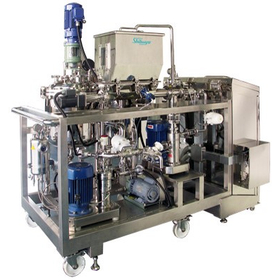
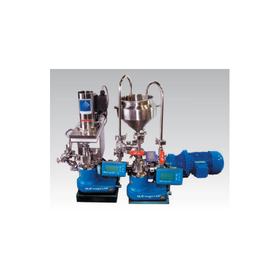
- Emulsifier/Disperser
- Vacuum degassing machine
- Dispersion/emulsification equipment/homogenizer
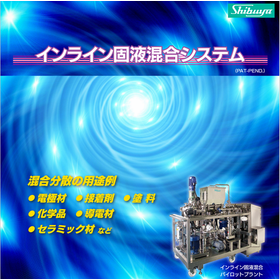
Reproducibility of slurry dispersion is created from process design.
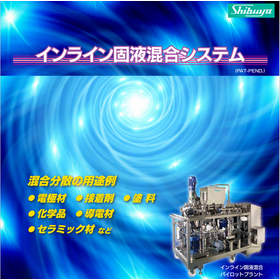
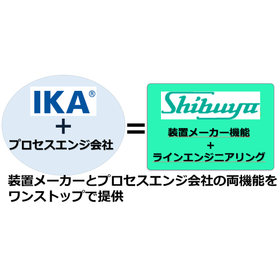
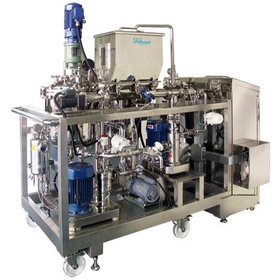
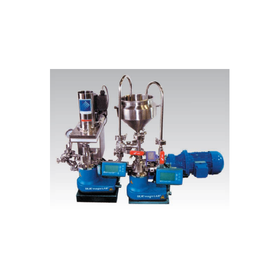
- Emulsifier/Disperser
- Vacuum degassing machine
- Dispersion/emulsification equipment/homogenizer
Why can't powders be supplied stably? - What causes supply irregularities in low bulk density powders?
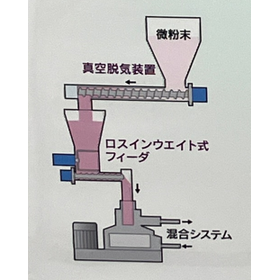
In low bulk density powders and fine powders, issues such as "unstable supply," "pulsation," and "bridging without falling" frequently occur. Particularly with CNTs, carbon black, and flake powders, the particles tend to entangle easily and have low flowability, making stable quantitative supply difficult with conventional powder feeding methods. When powder supply becomes unstable, instantaneous concentration fluctuations occur, significantly affecting the dispersion quality, viscosity, and conductivity in subsequent processes. In practice, even problems that appear to be "poor dispersion" often have their causes on the powder supply side. Moreover, in low bulk density powders, bridging, rat-holing, and supply pulsations due to air entrapment are likely to occur within the hopper, and simply relying on feeder capacity may not resolve these issues. To achieve stable supply, it is crucial to design the entire process, including hopper design, supply methods, transport conditions, and feeding methods, according to the characteristics of the powder. Our company offers a solid-liquid mixing process that includes quantitative supply using loss-in-weight feeders and integration with inline dispersion devices. By designing the entire process from powder supply to dispersion as a cohesive unit, we support the establishment of stable manufacturing conditions even for high-performance materials.
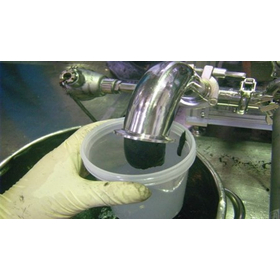
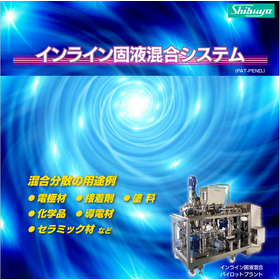
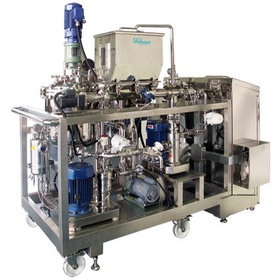
The quality of the positive electrode slurry is determined by the process, not the equipment. A dispersed design that takes mass production into account.
- Emulsifier/Disperser
- Vacuum degassing machine
- Dispersion/emulsification equipment/homogenizer
Non-contact detection of falls, getting out of bed, and prolonged immobility. A monitoring sensor for care facilities that considers privacy without the need for cameras.
- Sensors
- Area Sensor
- Other Sensors
Published a technical column "How to Choose a Camera-less Monitoring System" | Quick reference for 3 methods / Suitability by location / Choosing based on scenarios / 5 selection criteria to check.
We have published a technical column titled "How to Choose Camera-less Monitoring" (A4, 4 pages, with illustrations). When considering monitoring devices, the discussion often revolves around "whether to use a camera or not," but what truly matters is the perspective of what you want to notice in that location. This document organizes the differences between three methods: camera, millimeter-wave radar, and mat/load-based systems, and summarizes how to choose based on suitability for different locations. [Contents] - There are three main types of monitoring methods (Camera / Millimeter-wave radar / Mat/load-based) - Quick reference table of differences between methods (What can be detected / Installation and environment / Usability / Privacy) - Choosing based on scenarios (Falls at night / Toilet and changing room / Confirming presence in living spaces, etc.) - Three common decision points that can cause confusion on-site, and three frequent mistakes - Five items to check during selection This document organizes the general trends for each method. Since the actual feasibility and specifications vary by product, if you let us know the location and what you want to notice, we can assist you with choosing the right option.

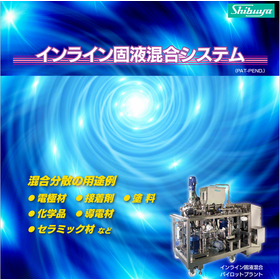
The dispersion quality of battery materials is determined by the process. A solid-liquid mixing dispersion system that suppresses agglomeration and aggregation.
- Emulsifier/Disperser
- Vacuum degassing machine
- Dispersion/emulsification equipment/homogenizer
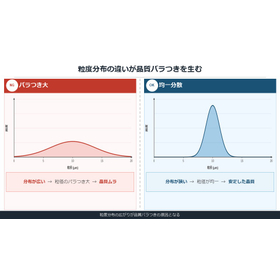
What are the causes and countermeasures for quality variation in dispersed engineering? An explanation of design points to prevent instability in particle size distribution and reduced reproducibility.
In dispersion processes, issues such as unstable particle size distribution and quality variation between batches occur in many settings. These quality variations are caused not only by equipment performance but also by variations in dispersion conditions, flow states, and process design. For example, when shear energy is uneven, differences arise in the disintegration state of particles, leading to a wider particle size distribution and residual agglomeration. Additionally, in batch processing, variations in mixing uniformity and residence time can cause fluctuations in dispersion state between batches, making it difficult to ensure reproducibility. Particularly in high-viscosity systems or high solid content slurries, even slight variations in conditions can significantly impact quality. To suppress quality variations, it is crucial to design processes that maintain consistent dispersion energy and flow conditions. By stabilizing conditions, as in inline continuous processing, it becomes possible to reduce inter-batch differences and achieve stable dispersion quality. Furthermore, in dispersion processes, not only the performance of the equipment itself but also operating conditions such as input order, residence time, and flow control greatly affect quality. Inline continuous processing makes it easier to maintain these conditions consistently, ensuring stable dispersion even in high-viscosity slurries. By designing the entire process, it is possible to fundamentally suppress quality variations.
Support for non-contact monitoring of nighttime bed exits. Reducing the burden of supervision while considering privacy.
- Safety Sensors
- Area Sensor
- Other Sensors

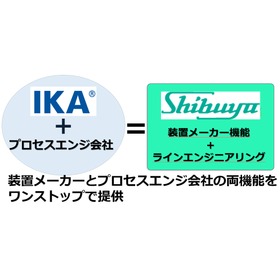
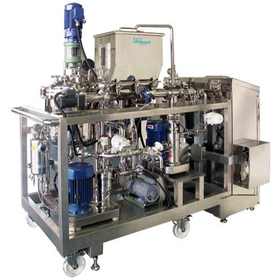
Dispersion is not determined by the equipment. It is determined by the process design of the solid-liquid mixing dispersion system.
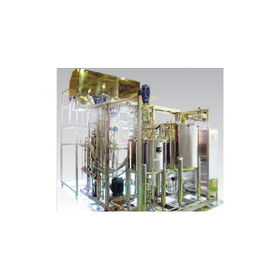
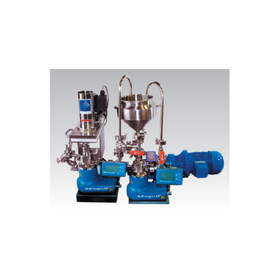
- Dispersion/emulsification equipment/homogenizer
- Emulsifying and dispersing machine
- Emulsifier/Disperser
What is decentralized process design? Key points for stabilizing quality.
In dispersion engineering, stable quality cannot be achieved solely based on the performance of the equipment. What is important is the overall design of the process, taking into account material properties and process conditions. This is referred to as dispersion process design. Dispersion quality is determined not only by the strength of shear but also by multiple factors such as flow state, residence time, and method of input. If these conditions are not properly designed, localized agglomeration or variation can occur, making it difficult to maintain stable quality. For example, poor wetting during powder input or the occurrence of stagnant areas due to flow bias can lead to clumping or dispersion issues. Additionally, even if the shear energy is sufficient, if it does not act uniformly on all particles, differences in dispersion state will arise. Therefore, in dispersion processes, it is crucial to design "flow," "shear," and "processing time" as an integrated system. This allows for all particles to receive the same dispersion history, achieving uniform and highly reproducible dispersion quality. In particular, inline continuous processing has the advantage of maintaining consistent conditions within the flow, making it easier to ensure reproducibility in process design. Dispersion process design is a key concept for stabilizing quality and successfully scaling up.

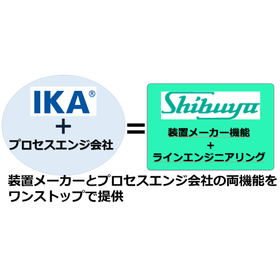
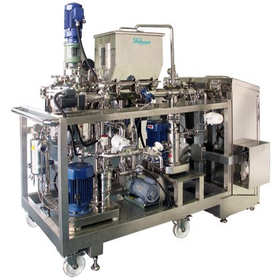
Thanks to our unique dispersion system, mixing and dispersing fine powders can be achieved in a short time without causing clumping! We can accommodate both continuous and batch processes.
- Emulsifier/Disperser
- Vacuum degassing machine
- Dispersion/emulsification equipment/homogenizer
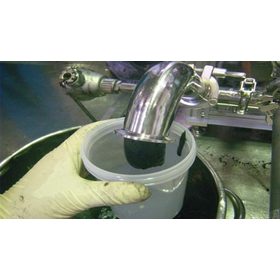
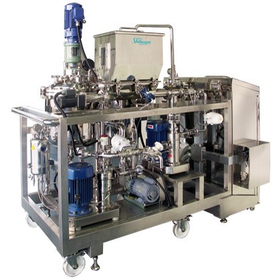
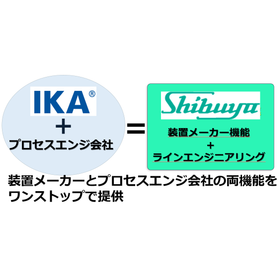
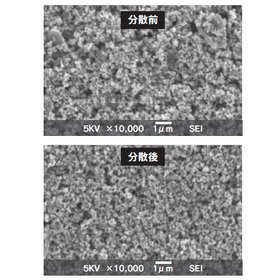
Supports CNT aggregation prevention and uniform dispersion. Assists in stabilizing the quality of conductive material slurry through continuous processing.
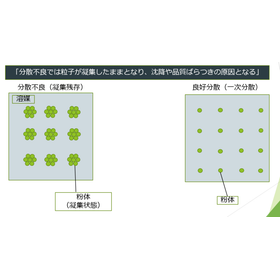
- Emulsifier/Disperser
- Powder Supply Device
- Dispersion/emulsification equipment/homogenizer
What causes clumping when adding powder? Design points for preventing and addressing poor dispersion.
In dispersion processes, the occurrence of agglomerates (clumps) during powder addition, which cannot be resolved in subsequent dispersion stages, is a common issue in many settings. The cause of this is that the powder does not wet uniformly in the liquid, leading to the formation of localized high-concentration areas. These agglomerates are also referred to as "fisheyes," and due to their internal unwetted structure, they are difficult to break apart. Once an agglomerate forms during powder addition, liquid has difficulty penetrating its interior, resulting in only the outer layer being wetted, which makes it hard for the internal particles to be disintegrated. Additionally, depending on the addition position and speed, the powder may float on the liquid surface or remain stagnant without following the flow within the equipment, promoting the formation of agglomerates. Particularly under conditions of high viscosity or high solid content, the low fluidity makes it challenging to achieve uniformity in the initial dispersion stage, leading to a higher likelihood of agglomerates remaining. Such agglomerates may not be completely resolved even with strong shear in subsequent processes, causing variations in the quality of the final product and introducing foreign substances. To prevent the formation of agglomerates, it is crucial to improve wettability during powder addition, ensure appropriate addition positions and flow design, and optimize the initial dispersion. By performing shear and mixing simultaneously right after addition, as in inline powder addition and simultaneous dispersion, it is possible to suppress the formation of agglomerates and achieve stable dispersion quality.
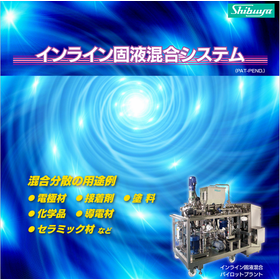
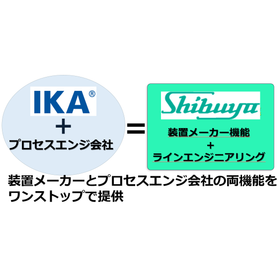
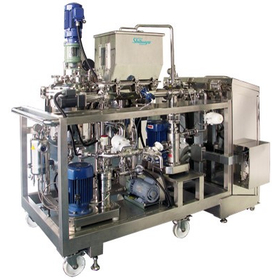
Easily agglomerated CNF, uniformly without clumping. The quality of dispersion is determined by process design.
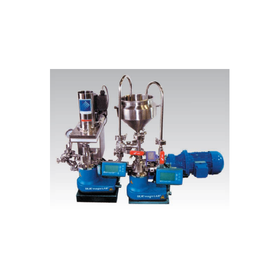
- Emulsifier/Disperser
- Dispersion/emulsification equipment/homogenizer
- Emulsifying and dispersing machine