

Case studies related to EV (Electric Vehicle) analysis
Analyze the EVolution of EV development!
We provide suitable analysis menus for essential components of EVs, including onboard batteries and devices.
- Company:一般財団法人材料科学技術振興財団 MST
- Price:Other
Last Updated: Aggregation Period:Jul 22, 2026~Aug 18, 2026
This ranking is based on the number of page views on our site.
Last Updated: Aggregation Period:Jul 22, 2026~Aug 18, 2026
This ranking is based on the number of page views on our site.
Last Updated: Aggregation Period:Jul 22, 2026~Aug 18, 2026
This ranking is based on the number of page views on our site.
301~330 item / All 1231 items
Analyze the EVolution of EV development!
We provide suitable analysis menus for essential components of EVs, including onboard batteries and devices.
![[Analysis Case] Analysis of Organic EL (OLED) Emission Layer](https://image.mono.ipros.com/public/product/image/4da/2000836431/IPROS30124068337241213764.png?w=280&h=280)
Quantitative evaluation of the guest in the light-emitting layer and film thickness is possible.
Organic EL displays are advancing towards practical use by leveraging advantages such as high brightness, high-resolution color, and thinness due to their self-emission principle. In the emission layer, guest molecules are doped into host molecules to enhance the emission efficiency. In this study, we identified the emission layer materials for red pixels in organic EL display elements. Additionally, we conducted thickness evaluation of the emission layer using a newly developed step gauge and quantified the guest materials within the emission layer. This allows for qualitative and quantitative analysis of guest molecules in the emission layer, as well as evaluation of the thickness of the emission layer. Measurement methods: TOF-SIMS, TEM, XPS Product field: Displays Analysis purpose: Composition evaluation, identification, thickness evaluation For more details, please download the materials or contact us.


Differences between LDI-MS and MALDI-MS
LDI (Laser Desorption Ionization) is a method that uses only the energy of ultraviolet lasers to sublime and ionize molecules. On the other hand, MALDI (Matrix-Assisted Laser Desorption Ionization) is a method that sublimates and ionizes molecules by exposing a sample mixed with a matrix to ultraviolet lasers.

![[Analysis Case] Evaluation of Two-Dimensional Electron Gas Layer in Normally Off GaN HEMT](https://image.mono.ipros.com/public/product/image/0d3/2001053862/IPROS18812954731846806019.jpeg?w=280&h=280)
We can offer a one-stop solution for comprehensive analysis of product research.
GaN-based high electron mobility transistors, known as GaN HEMTs (High Electron Mobility Transistors), utilize an AlGaN/GaN heterostructure to achieve a two-dimensional electron gas layer (2DEG), resulting in high electron mobility. They are used in applications such as fast chargers, leveraging these characteristics. This document presents the disassembly and evaluation of normally-off GaN HEMT devices. We will introduce a case study that employs a combination of analytical methods to gather comprehensive insights about the samples. Measurement methods: SIMS, TEM, SCM, SMM. Product field: Power devices. Analysis objectives: Trace concentration measurement, shape evaluation, film thickness evaluation, structural evaluation, product investigation. For more details, please download the document or contact us.

![[Analysis Case] Evaluation of Discoloration Causes in Ceramics](https://image.mono.ipros.com/public/product/image/0f5/2001072527/IPROS98951661335687037922.jpeg?w=280&h=280)
TOF-SIMS enables imaging of the discoloration causes of inorganic materials.
Ceramics are inorganic compound materials widely used in everyday goods and electronic components. For evaluating the discoloration of ceramics caused by impurities and adherents, TOF-SIMS analysis, which allows for imaging analysis of trace components regardless of organic or inorganic substances at the focus area, is effective. This document presents a case study where the discoloration of aluminum oxide ceramics was analyzed using TOF-SIMS, demonstrating the cause of discoloration through ion images and line profiles. Measurement method: TOF-SIMS Product field: Manufacturing equipment and components Analysis purpose: Composition distribution evaluation For more details, please download the document or contact us.


![[Analysis Case] Evaluation of the Distribution of Cleaning Components on Ceramic Surfaces](https://image.mono.ipros.com/public/product/image/dd6/2001078419/IPROS21162307022246007129.jpeg?w=280&h=280)
It is possible to visualize the distribution of cleaning components and evaluate the distribution in the depth direction.
Ceramics are inorganic compound materials widely used in everyday items and electronic components. Their surface condition significantly affects the properties and performance of materials such as everyday items and electronic components. Therefore, it is important to properly evaluate the surface condition when assessing the functionality of ceramics. This document introduces a case study evaluating the cleaning components that contribute to the wettability of ceramic surfaces made of zirconium oxide, using TOF-SIMS to assess surface distribution and depth distribution. Measurement method: TOF-SIMS Product field: Manufacturing equipment and components Analysis purpose: Qualitative and distribution evaluation For more details, please download the document or contact us.

![[Analysis Case] Structural Analysis of Fluoropolymer by LDI-MS](https://image.mono.ipros.com/public/product/image/458/2001216941/IPROS21418647727252247343.jpeg?w=280&h=280)
Structural analysis of fluorine-based grease, fluorine-based lubricants, and fluorine-based oils.
Fluoropolymer materials are chemically stable and possess various properties, making them widely used in industrial machinery, semiconductors, and electronics. LDI-MS (Laser Desorption Ionization Mass Spectrometry) is an analytical method that can ionize fluoropolymers with molecular weights of around several thousand while maintaining their molecular structure, allowing for the determination of the repeating units and molecular weights of fluoropolymers, as well as the estimation of end group compositions and structures. This document presents a case study on the structural analysis of perfluoropolyether (PFPE), which is used as a base oil in lubricants and heat transfer fluids. Measurement method: MALDI-MS Product field: Polymer materials Analysis purpose: Composition evaluation and identification, chemical bonding state evaluation For more details, please download the document or contact us.


![[Analysis Case] Analysis of the HTM Layer in Perovskite Solar Cells](https://image.mono.ipros.com/public/product/image/8b6/2001510346/IPROS17391914276253465326.jpg?w=280&h=280)
Evaluation of component and depth direction distribution is possible.
Perovskite solar cells have excellent conversion efficiency in a film form and can be manufactured at low cost, leading to active research and development towards practical application. TOF-SIMS (Time-of-Flight Secondary Ion Mass Spectrometry) is effective for component analysis of the HTM layer (hole transport layer), evaluation of main components, dopants, and the depth distribution of impurities. This document presents a case study of depth analysis from the HTM layer to the perovskite layer. Measurement method: TOF-SIMS Product field: Solar cells Analysis purpose: Identification, distribution evaluation For more details, please download the document or contact us.
![[Analysis Case] Component Analysis of Additives in Rubber Products](https://image.mono.ipros.com/public/product/image/c2b/2001512432/IPROS10397238807307473945.jpg?w=280&h=280)
We will conduct a comprehensive qualitative evaluation of vulcanization accelerators, aging inhibitors, lubricants, and other substances in rubber products.
Rubber products contain various additives such as vulcanization accelerators, antioxidants, plasticizers, and lubricants. This document presents case studies of the analysis of additives found in commercially available rubber products. After immersing the rubber in an organic solvent, the resulting solution was analyzed using LC/MS/MS, revealing the presence of several additive components, including N-(1,3-dimethylbutyl)-N'-phenyl-1,4-phenylenediamine, which is commonly used as an antioxidant. By conducting LC/MS/MS analysis, comprehensive qualitative analysis is possible.


![[O-PTIR] PTIR detection method submicron infrared spectroscopy](https://image.mono.ipros.com/public/product/image/899/2001512496/IPROS16568394973420817436.jpg?w=280&h=280)
Infrared spectroscopy is a method for obtaining information about molecular structure by measuring the infrared absorption due to molecular vibrations.
O-PTIR has the following features: - It allows for spectral and image measurements in small areas due to its spatial resolution (maximum spatial resolution: less than 1μm). - No need for thin sectioning (effective for samples that are difficult to thin section, such as foreign materials). - Measurements can generally be performed non-destructively. - Similar analyses can be performed using the FT-IR library.

We will introduce the target of analysis, the physical property information obtained, and examples of analysis.
Analysis targets (Information such as composition and crystal structure is required for calculations) ? The main analysis targets are systems with periodicity, such as crystals. ? Calculations for systems with amorphous structures, surfaces, and interfaces are also possible. Obtained physical property information ? Crystal structure parameters (lattice constants, atomic arrangements, etc.) ? Electronic structure and spin states (charge distribution, band structure, Fermi surface, magnetic moments, etc.) ? Chemical bonding states such as covalent bonds and ionic bonds ? Stable structures and defect formation energies when lattice defects such as atomic substitutions and vacancies are present ? Formation energies and atomic arrangements of surfaces and interfaces ? Information related to chemical reactions, such as activation energies and structures of intermediates ? Electronic response characteristics such as dielectric functions, electrical resistivity, and Seebeck coefficients ? Thermodynamic quantities of solids, such as specific heat ? Various spectroscopic spectra (XPS, XAFS, etc.)

It is effective to differentiate between the two methods according to the purpose components and the size of the imaging field.
TOF-SIMS and MALDI-MS, which are representative mass spectrometry methods for solid sample surfaces, both enable qualitative analysis and imaging analysis. TOF-SIMS, which utilizes hard ionization methods, can detect inorganic and organic components with masses up to several hundred with high sensitivity. On the other hand, MALDI-MS, which employs soft ionization methods, can detect polymers in the range of thousands to tens of thousands. Additionally, the spatial resolution of the images also varies depending on the diameter of the irradiation beam.
![[Analysis Case] Analysis of Solvents and Additives in Lithium-Ion Secondary Battery Electrolytes](https://image.mono.ipros.com/public/product/image/a4f/2001514199/IPROS883252348601360385.jpg?w=280&h=280)
Extraction of electrolyte from the product and component evaluation.
The characteristics and reliability of lithium-ion secondary batteries are greatly influenced by materials, among which the impact of the electrolyte is said to be significant. Commercial products in various shapes, such as cylindrical and laminated types, can have their electrolytes extracted using appropriate methods, allowing for the identification of organic solvents and additives. The following case involves extracts from prismatic batteries, confirming the use of ethylene carbonate (EC), ethyl methyl carbonate (EMC), and diethyl carbonate (DEC) as organic solvents, and fluoroethylene carbonate (FEC) as an additive.


![[Analysis Case] Evaluation of the Imidization Reaction of Polyimide](https://image.mono.ipros.com/public/product/image/4f6/2001514909/IPROS9764562775285683590.jpg?w=280&h=280)
The degree of imidization due to differences in heating conditions can be evaluated using XPS.
Polyimide has very high heat resistance and excellent electrical insulation and mechanical properties, making it an essential material not only for electronic components but also for a wide range of fields such as precision machinery, automobiles, and aerospace. In its reliability evaluation, research on imide bonds is important. This document presents an example of XPS measurements conducted on polyimide before and after heating. Changes in the amount of oxygen and the chemical shifts of carbon, nitrogen, and oxygen confirmed that imidization progressed after heating. Additionally, by performing waveform analysis, it is also possible to determine the proportion of polyimide present.

![[Analysis Case] Composition Analysis of the Surface Film on the Positive Electrode of Secondary Batteries](https://image.mono.ipros.com/public/product/image/714/2001515644/IPROS8666014416619228796.jpg?w=280&h=280)
Evaluation of the distribution of organic components and active substances on the surface, qualitative analysis.
The segregation of components and the formation of films on the surface of the positive electrode of lithium-ion secondary batteries are factors that influence the electric capacity. We will introduce a case study on Li(NiCoMn)O2 (NCM), which is used as a positive electrode, where micro-region mapping was conducted using AES, and qualitative analysis of organic components (binder) and active material surface films was performed using XPS and TOF-SIMS. These methods allow for analysis with a series of treatments conducted under an Ar atmosphere, which helps to suppress the alteration of the sample.
![[Analysis Case] Rietveld Analysis of Secondary Battery Cathode Materials](https://image.mono.ipros.com/public/product/image/91c/2001515647/IPROS17390029324911313716.jpg?w=280&h=280)
Quantitative analysis of positive electrode active materials, precise evaluation of crystal structure.
In lithium-ion secondary batteries, Li(NiCoMn)O2 (NCM) used as the positive electrode can achieve higher capacity by increasing the Ni ratio, and it also excels in high-temperature storage, making it suitable for mass production for automotive applications. On the other hand, cation mixing, where Ni ions occupy Li sites, is considered one of the factors contributing to the degradation of secondary batteries. This presentation will introduce a case where the metal content of the positive electrode active material was evaluated using ICP-MS, the crystal structure was assessed using XRD, and the results were used to perform Rietveld analysis to evaluate the proportion of cation mixing.
![[Analysis Case] Evaluation of Curing Degree of UV-Cured Resin by FT-IR](https://image.mono.ipros.com/public/product/image/f43/2001515660/IPROS18184307625799082404.jpg?w=280&h=280)
By capturing changes in functional groups, it is possible to evaluate the curing degree of UV-curable resins.
Resins that excel in chemical resistance and electrical insulation are used as insulators, coatings, and adhesives for various electronic components. FT-IR (Fourier Transform Infrared Spectroscopy) can investigate the causes of defects such as the degree of curing of resins, making it effective for product development. As an example, we will introduce a case where the degree of curing of UV-curable resins was evaluated. It is effective for examining the UV exposure time in adhesives and assessing the curing state when delamination occurs in products.
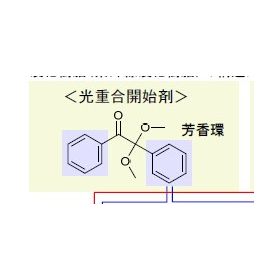

![[Analysis Case] Wide-area Quantitative Mapping using XPS](https://image.mono.ipros.com/public/product/image/47e/2001516679/IPROS11530861591932546207.jpg?w=280&h=280)
It is possible to evaluate the composition distribution in an area of up to 70×70mm.
This is an example of wide-area quantitative mapping using XPS. We evaluated organic residue on silicon wafers using the following procedure. To graph the amount (atomic concentration) rather than peak intensity, it is less affected by sample roughness and allows for data acquisition over a wide area. It is suitable for investigating organic and inorganic contamination, discoloration, surface treatments, etc., as it enables an overview assessment of the compositional distribution on the sample surface.


Weight analysis
The main components of wood biomass consist of cellulose, hemicellulose, and lignin, and their composition ratios vary depending on the plant species from which they originate. The composition ratios of these three components can be evaluated by applying specific chemical treatments such as the Klason method or the Wise method to the samples and measuring their weights. At MST, the proportion of the main components in wood biomass is calculated according to the following analysis flow.


![[Analysis Case] Imaging of Brain Lipids](https://image.mono.ipros.com/public/product/image/0cc/2001525408/IPROS9464058308901370697.jpg?w=280&h=280)
Lipid mapping of mouse brain using MALDI-MS.
MALDI-MS (Matrix-Assisted Laser Desorption Ionization Mass Spectrometry) is a method that allows for the detection and imaging of organic components in their molecular ion form. In particular, MALDI imaging is effective for evaluating the distribution of biological components and substances administered to living organisms in pharmacokinetic studies and pharmaceutical research and development. MST can provide a consistent process from sample preparation to measurement. This document presents an example of analysis where lipids were imaged using MALDI-MS, starting from the preparation of mouse brain slices.


![[Analysis Case] Qualitative Analysis of Paper Surface and Evaluation of Component Distribution](https://image.mono.ipros.com/public/product/image/59f/2001525715/IPROS4415981005502336381.jpg?w=280&h=280)
It is effective for checking the impact of packaging materials on samples and the residues before and after changes to equipment.
There are various colored products made from paper used as wrapping paper, which contain diverse components. Since these coloring components can affect adhesion to contact materials and cause contamination, it is important to understand the components of the paper surface. This document presents a case study investigating the components of paper surfaces with different colors using TOF-SIMS.


![[Analysis Case] Simultaneous Qualitative Analysis of Inorganic and Organic Contaminants/Adhesives on Wafers](https://image.mono.ipros.com/public/product/image/c6d/2001528047/IPROS16763775033636229157.jpg?w=280&h=280)
Simultaneous measurement of inorganic and organic components in minute specific areas.
TOF-SIMS has features such as simultaneous evaluation of organic and inorganic materials, capability for micro-area analysis, and high sensitivity for analyzing the very surface, making it effective for residue investigation in cleaning processes. An example is presented where pure water was dried on a silicon wafer. Optical microscopy only reveals slight point-like foreign substances and cloudiness. However, the results measured by TOF-SIMS showed that in the contaminated areas, organic components such as hydrocarbons, PDMS, and amides, which tend to adsorb naturally, were aggregated.


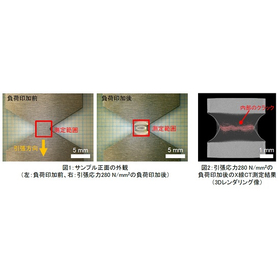
Capable of evaluating three-dimensional structural changes according to tensile stress.
In situ X-ray CT measurements allow for internal structure analysis under conditions where a load (tension or compression) is applied to the sample. In this document, in situ X-ray CT measurements were conducted using an aluminum plate as the sample, both in its normal state and in an extended state. We calculated the tensile stress applied to the sample and monitored the internal structural changes under each stress condition. By combining in situ X-ray CT measurements with image analysis technology, it is possible to evaluate under actual usage conditions, which was previously difficult, and assess the impact of stress on the product.

![[Analysis Case] Quantitative Analysis Using NMR 31P Nucleus (B0278)](https://image.mono.ipros.com/public/product/image/387108/IPROS4937671356700403746.png?w=280&h=280)
It is possible to calculate the concentration of phosphorus-containing organic compounds using 31P nuclear magnetic resonance!
We offer NMR (Nuclear Magnetic Resonance Analysis) services. Since NMR directly observes nuclear spins, the area of the peaks of the measured nuclides obtained from the measurement is proportional to the number and concentration of the nuclides contained in the solution or solid being measured. Based on this principle, NMR allows for quantitative analysis without the need for a calibration curve. For example, using the integral value of the peak of the 31P nucleus, it is possible to determine the concentration of one component of a two-component mixture from the known concentration of the other component according to a relationship. [Measurement Method / Processing Method] ■ [NMR] Nuclear Magnetic Resonance Analysis *For more details, please download the PDF or feel free to contact us.
![[Analysis Case] Evaluation of the Chemical State of RuO2 Catalyst by in-situ XAFS](https://image.mono.ipros.com/public/product/image/387108/IPROS17745638524264630958.png?w=280&h=280)
Measurements can be made under specific gas atmosphere and temperature conditions! Ideal for evaluating the state in special environments such as catalysts.
We offer the evaluation of the chemical state of RuO2 catalysts using in-situ XAFS (C0456). Under controlled conditions with gas atmospheres and temperatures tailored to the sample environment, it is possible to assess the chemical bonding state and local atomic structure of the sample. Therefore, it is suitable for cases where state evaluation is required in special environments, such as catalysts. In a case where RuO2 powder was heated from room temperature to 400°C under a reducing atmosphere using in-situ XAFS, it was confirmed from the shape of the spectrum that RuO2 is reduced to Ru between 100°C and 200°C. [Measurement Method / Processing Method] ■ [XAFS] X-ray Absorption Fine Structure *For more details, please download the PDF or feel free to contact us.
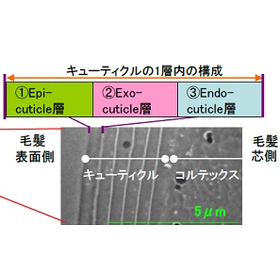
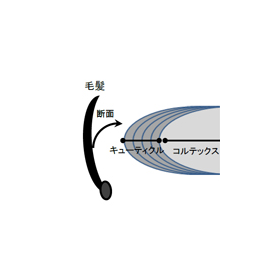
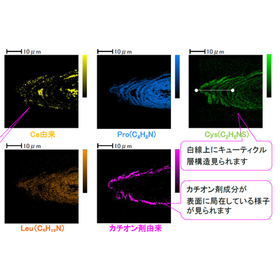
![[Analysis Case] Imaging of the Cuticle](https://image.mono.ipros.com/public/product/image/387108/IPROS6178692742015490136.png?w=280&h=280)
It is possible to evaluate the distribution of components in the hair cuticle!
Our organization offers imaging of cuticles. The evaluation of cuticles has been limited to structural observation using electron microscopy due to their fine structure, and detailed component distribution has remained unclear. By using TOF-SIMS, which can evaluate the distribution of inorganic and organic materials at the sub-micron level, it is possible to assess the distribution of various components within the cuticle. This document presents the results of evaluating hair and visualizing the component distribution within the cuticle. [Measurement and Processing Method] ■ [TOF-SIMS] Time-of-Flight Secondary Ion Mass Spectrometry *For more details, please download the PDF or feel free to contact us.
![[Analysis Case] Structural Analysis of End Groups of Polycarbonate](https://image.mono.ipros.com/public/product/image/387108/IPROS1028899218469848598.png?w=280&h=280)
End groups of polycarbonate can be distinguished by the manufacturing method using thermal decomposition GC/MS!
Our organization offers analysis of the end group structure of polycarbonate. Polycarbonate is an engineering plastic known for its excellent impact resistance and heat resistance, and it is widely used as a material in electrical, electronic, and optical devices. There are mainly two methods of manufacturing polycarbonate, and the end group structure, which affects the physical properties of the polymer, varies depending on the manufacturing method. Since the end group portion of the polymer is small compared to the main chain, the analytical methods available for its structural analysis are limited. Here, we present a case study evaluating the end group structure of polycarbonate using thermal decomposition GC/MS. [Measurement Method / Processing Method] ■ [GC/MS] Gas Chromatography Mass Spectrometry *For more details, please download the PDF or feel free to contact us.
![[Analysis Case] Metal Analysis in Organic Materials](https://image.mono.ipros.com/public/product/image/387108/IPROS2054725598952486196.png?w=280&h=280)
Microwave decomposition combined with ICP-MS! Metal analysis in organic materials is possible.
Our organization conducts metal analysis in organic materials. Metal components can cause a decrease in insulation properties when they contaminate organic materials, such as in semiconductor devices. Therefore, it is important to understand the amount of metal in organic materials. In this case, we analyzed the metal content in organic materials (polyethylene products, polypropylene products, polyimide films). Organic materials can be acid-digested by irradiating them with microwaves in a sealed state (under high temperature and pressure). [Measurement Method / Processing Method] ■ [ICP-MS] Inductively Coupled Plasma Mass Spectrometry *For more details, please download the PDF or feel free to contact us.
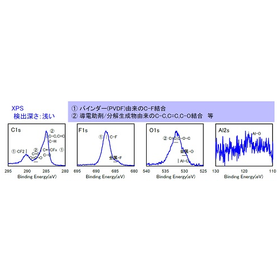
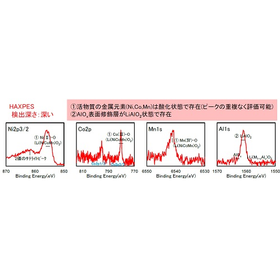
![[Analysis Case] Evaluation of Binding States in Secondary Battery Cathodes](https://image.mono.ipros.com/public/product/image/387108/IPROS12753877347085630426.png?w=280&h=280)
You can evaluate the sample in its original state, from the binder and coating to the active substance.
Our organization conducts evaluations of the bonding state of cathodes in secondary batteries. X-ray photoelectron spectroscopy (XPS), which is one of the methods for analyzing surface states, is suitable for evaluating binders and conductive additives due to its shallow detection depth (approximately 10 nm). Hard X-ray photoelectron spectroscopy (HAXPES), which uses hard X-rays (Ga rays) for excitation, allows us to obtain information about active materials buried under binders without causing damage, thanks to its deeper detection depth. 【Measurement and Processing Methods】 ■ [XPS] X-ray Photoelectron Spectroscopy ■ [HAXPES] Hard X-ray Photoelectron Spectroscopy ■ Processing under controlled atmosphere *For more details, please download the PDF or feel free to contact us.
![[Analysis Case] Imaging of Lipids](https://image.mono.ipros.com/public/product/image/387108/IPROS14745925966247357948.png?w=280&h=280)
Imaging of lipids in mouse testis! Introducing cases measured with TOF-SIMS and MALDI-MS.
Our organization conducts lipid imaging. TOF-SIMS excels in low-mass components and enables imaging with high spatial resolution. On the other hand, MALDI-MS specializes in high-mass components and offers a wide variety of lipids that can be imaged. Here, we present examples of measurements taken with TOF-SIMS and MALDI-MS, using lipid imaging mass spectrometry results from mouse testes as a case study. [Measurement Methods] ■ [TOF-SIMS] Time-of-Flight Secondary Ion Mass Spectrometry ■ [MALDI-MS] Matrix-Assisted Laser Desorption Ionization Mass Spectrometry *For more details, please download the PDF or feel free to contact us.
