We have compiled a list of manufacturers, distributors, product information, reference prices, and rankings for Bacteria.
ipros is IPROS GMS IPROS One of the largest technical database sites in Japan that collects information on.

Bacteria Product List and Ranking from 37 Manufacturers, Suppliers and Companies

Last Updated: Aggregation Period:Dec 24, 2025~Jan 20, 2026
This ranking is based on the number of page views on our site.

Bacteria Manufacturer, Suppliers and Company Rankings

Last Updated: Aggregation Period:Dec 24, 2025~Jan 20, 2026
This ranking is based on the number of page views on our site.

  1. セティ 健康科学部 Tokyo//others
  2. B・Jコーポレーション Kanagawa//environment
  3. null/null
  4. 4 OsakaSodaCO.,LTD. Development&Commercialization Div. Hyogo//Chemical
  5. 5 光英科学研究所 本社 Saitama//others

Bacteria Product ranking

Last Updated: Aggregation Period:Dec 24, 2025~Jan 20, 2026
This ranking is based on the number of page views on our site.

  1. Plant-based lactic acid bacteria (sterilized) [Lactic Acid Bacteria HOKKAIDO]
  2. lactic acid bacterium OS‑1010 OsakaSodaCO.,LTD. Development&Commercialization Div.
  3. Cow dung compost fermentation promoter, stable odor control, fermentation bacteria BJC-HKGF. B・Jコーポレーション
  4. 4 Lactic Acid Bacteria Production Substance Powder Fine Flora 16 (FF16) 光英科学研究所 本社
  5. 4 Fermentation Promoter Compost Fermentation Microorganism BJC-HK1 B・Jコーポレーション

Bacteria Product List

61~75 item / All 78 items

Displayed results

Tianji Yoshino Kudzu Lactic Acid Bacteria

Plant-based lactic acid bacteria derived from kudzu, gentle on the body, for a healthy life.

Our company handles "Tengoku Yoshino Kudzu Lactic Acid Bacteria." Research on kudzu has shown that the "flowers," "vines," and "leaves" also contain effective components such as kudzu isoflavones, saponins, and lignin, similar to kudzu root. This product is a lactic acid bacterium derived from "kudzu vines," cultivated with "kudzu dextrin" processed using our unique method, and has been confirmed to have high immune-activating effects through nano-processing. [Features] ■ Unique cultivation method ■ Nano-processed lactic acid bacteria *For more details, please download the PDF or feel free to contact us.

  • Food/beverage functional materials
  • Food ingredients (powder)

Added to bookmarks

Bookmarks list

Bookmark has been removed

Bookmarks list

You can't add any more bookmarks

By registering as a member, you can increase the number of bookmarks you can save and organize them with labels.

Free membership registration

"Plant-based lactic acid bacteria" attracting attention.

Adaptable to a wide range of environments! Various uses are being considered to leverage this advantage.

Lactic acid bacteria that inhabit plant materials such as vegetables and fruits are called "plant-based lactic acid bacteria" and are isolated from plant materials like grains, vegetables, fruits, and seeds. Compared to animal-based lactic acid bacteria used in yogurt fermentation, they possess various characteristics to survive in nutrient-poor and harsh environments, can adapt to a wide range of environments, and can ferment a variety of substrates. In recent years, food manufacturers have also begun to focus on "plant-based lactic acid bacteria," exploring various applications to leverage their advantages. **Features** - Growth range: Can thrive in nutrient-poor environments - Acid resistance: Strong - Salt resistance: Strong - Coexistence with other bacteria: Strong - Optimal temperature: Wide range of optimal temperatures - Fermentation: Capable of fermenting various sugars other than lactose **Effects of Lactic Acid Bacteria** - Improved water retention - Emulsifying action of fats - Preservative action - Texture improvement - Enhanced taste and aroma - Promotion of plant growth

  • Food synthesis and fermentation
  • Others Synthesis/Fermentation

Added to bookmarks

Bookmarks list

Bookmark has been removed

Bookmarks list

You can't add any more bookmarks

By registering as a member, you can increase the number of bookmarks you can save and organize them with labels.

Free membership registration

[Development Example] Various Vegetable and Fruit Juices

Introducing the flow of the trial production test! We will conduct tests from the selection of lactic acid bacteria strains to exposure tests with artificial gastric juice and artificial intestinal fluid.

We would like to introduce the fermentation tests for various vegetable and fruit juices conducted by our company. We determine the dilution ratio of concentrated fruit juice and vegetable juice, select lactic acid bacteria strains, and choose fermentation time and temperature for fermentation. After fermentation, we measure the number of lactic acid bacteria, pH, and sugar content (screening of lactic acid bacteria strains). Subsequently, we confirm the preservation stability, conduct tests for the intestinal reachability of lactic acid bacteria, perform exposure tests with artificial gastric juice and artificial intestinal fluid, and set sterilization temperature and time if necessary. 【Flow of Prototype Testing】 ■ Determination of dilution ratio, selection of lactic acid bacteria strains, selection of fermentation time and temperature ■ Fermentation ■ Measurement of lactic acid bacteria count after fermentation, pH and sugar content measurement (screening of lactic acid bacteria strains) ■ Confirmation of preservation stability / intestinal reachability tests / exposure tests with artificial gastric juice and artificial intestinal fluid ・ Setting of sterilization temperature and time (if sterilization is necessary) *For more details, please refer to the PDF document or feel free to contact us.

  • Food synthesis and fermentation
  • Others Synthesis/Fermentation

Added to bookmarks

Bookmarks list

Bookmark has been removed

Bookmarks list

You can't add any more bookmarks

By registering as a member, you can increase the number of bookmarks you can save and organize them with labels.

Free membership registration

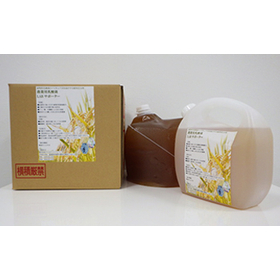
Utilization of Lactic Acid Bacteria in Agriculture: "Agricultural Lactic Acid Bacteria LAB Supporter"

Rice Growth Activator: It is expected to improve yield and quality, as well as reduce costs, by enhancing the growing environment with agricultural lactic acid bacteria!

Lactic acid bacteria that have a positive effect on crop growth are referred to as agricultural lactic acid bacteria. From our collection of 3,000 strains, we have selected and mixed the two strains that are most effective in improving the growth environment for crops, which is expected to enhance vitality. By using it during seedling cultivation, the following effects have been confirmed: - Improvement of root development in seedlings - Changes in soil microbial communities and an increase in beneficial bacteria *For more details, please refer to the PDF document or feel free to contact us.

  • Biofertilizer for Agriculture
  • Other plant-based products
  • Yeast and fungi

Added to bookmarks

Bookmarks list

Bookmark has been removed

Bookmarks list

You can't add any more bookmarks

By registering as a member, you can increase the number of bookmarks you can save and organize them with labels.

Free membership registration

Purururun Lactic Acid Bacteria Grand Jelly α

Lactic acid bacteria FK-23・LFK (11 patented strains)

Boost your immunity to withstand COVID-19 (Based on the latest data from Nichinichi Pharmaceutical) Effect of FK23 Lactobacillus http://fk23.nichinichi-phar.co.jp/fk23/index.html LFK Effect (Infection Defense) http://fk23.nichinichi-phar.co.jp/lfk/index.html Both of these are included in Purururun Lactobacillus Grand Jelly α 10g 30 sticks, regular price 4,200 yen (excluding tax) JAN 4562196567348

  • others

Added to bookmarks

Bookmarks list

Bookmark has been removed

Bookmarks list

You can't add any more bookmarks

By registering as a member, you can increase the number of bookmarks you can save and organize them with labels.

Free membership registration

Bifine F (composite lactic acid bacteria production substance)

A new lactic acid bacteria supplement "Bifine F" using "Composite Lactic Acid Bacteria Sixteens," which gathers the power of beneficial bacteria through unique technology.

1: Contains 16 types of probiotics including 3 types of bifidobacteria and many lactic acid bacteria all at once. 2: Contains fermented ingredients derived from beneficial bacteria. 3: The soy milk used for fermentation is made from domestically grown soybeans. 4: Contains dietary fiber that serves as food for beneficial bacteria in the gut. 5: Uses olive oil that contains the highly regarded omega-9. 6: Easy-to-swallow soft capsules made with plant-derived coatings.

  • others

Added to bookmarks

Bookmarks list

Bookmark has been removed

Bookmarks list

You can't add any more bookmarks

By registering as a member, you can increase the number of bookmarks you can save and organize them with labels.

Free membership registration

lactic acid bacterium OS‑1010

Plant-based lactic acid bacteria OS-1010 that enhance and activate mitochondria.

The plant-based lactic acid bacteria OS-1010 developed by our company enhances and activates "mitochondria," which supports beauty and health, making it a new type of lactic acid bacteria that is expected to improve health from the very foundation of the body. Mitochondria are one of the organelles present in almost all cells and play a crucial role in producing energy within the body. It has been suggested that a decline in mitochondrial function can lead to various health issues, making it an important substance for protecting our beauty and health. Through years of bio-research by the Osaka Soda Group, we discovered the plant-based lactic acid bacteria OS-1010, which has the effect of enhancing and activating mitochondria, and successfully commercialized it. Plant-based lactic acid bacteria OS-1010 is expected to be utilized in various products, including functional foods, as an anti-aging care ingredient.

Added to bookmarks

Bookmarks list

Bookmark has been removed

Bookmarks list

You can't add any more bookmarks

By registering as a member, you can increase the number of bookmarks you can save and organize them with labels.

Free membership registration

How long does BI need to be cultured?

An explanation of the shortening of BI cultivation time, which has been a topic of discussion for many years!

This document explains the reduction of incubation time for biological indicators (RIT), which has been a topic of discussion for many years. It includes guidelines published by the U.S. FDA, information about today's global market, and two applications of biological indicators in the sterilization process. For any questions, inquiries, or product information, please feel free to contact Leben Japan Co., Ltd. 【Contents (example)】 ■ Reduction of incubation time for biological indicators ■ Recognition by SGM (currently Mesa Labs) ■ Well-characterized testing systems ■ Proliferation patterns of self-contained biological indicators ■ Two applications of biological indicators *For more details, please refer to the PDF document or feel free to contact us.

Added to bookmarks

Bookmarks list

Bookmark has been removed

Bookmarks list

You can't add any more bookmarks

By registering as a member, you can increase the number of bookmarks you can save and organize them with labels.

Free membership registration

[Information] MesaLabs Inc. FAQs

Information on the handling of BI ampoules is now available! We present the FAQs from MesaLabs.

This document introduces the FAQs from MesaLabs. It includes questions such as accidentally leaving a BI ampoule at room temperature overnight, and inquiries regarding the confirmation of bacterial counts during acceptance testing, presented in FAQ format. If you have any questions or concerns, please feel free to contact us. [Content Included (Example)] ■ Handling of BI ampoules ■ Sterilization validation of steam piping ■ Confirmation of bacterial counts during acceptance testing ■ Resistance of spores ■ Facility contamination due to BI *For more details, please refer to the PDF document or feel free to contact us.

Added to bookmarks

Bookmarks list

Bookmark has been removed

Bookmarks list

You can't add any more bookmarks

By registering as a member, you can increase the number of bookmarks you can save and organize them with labels.

Free membership registration

Plant-based lactic acid bacteria "K-2"

Lactic acid bacteria isolated from sake lees!

We handle the lactic acid bacteria 'K-2' derived from sake lees. Since it is not a live bacterium, it has high heat resistance and can be applied to various foods. It can be used in a wide range of applications, including lactic acid bacteria supplements (tablets and granules), nutritional functional foods, snacks (from dried goods to fresh items, both Japanese and Western sweets), jelly, and beverages (while it disperses well, please use stabilizers if it settles). 【Features】 - Contains 1 trillion lactic acid bacteria per gram - High heat resistance due to being a non-live bacterium, allowing for application in various foods - No lactic acid is produced, so there is no change in acidity and the product's flavor remains stable - No concerns about line contamination *For more details, please download the PDF or feel free to contact us.

  • Food/beverage functional materials

Added to bookmarks

Bookmarks list

Bookmark has been removed

Bookmarks list

You can't add any more bookmarks

By registering as a member, you can increase the number of bookmarks you can save and organize them with labels.

Free membership registration

Fermentation promoter for composting raw waste, fermentation bacteria BJC-HK2.

It is used as a fermentation accelerator for kitchen waste disposal systems, regardless of the model, in various manufacturers' home and commercial kitchen waste processors.

Fermentation accelerators and fermentation bacteria for organic waste treatment have very strong fermentation power and a very high rate of organic matter decomposition and reduction. Therefore, they are used in various organic waste treatment machines regardless of the manufacturer, and are utilized in a wide range of fields by livestock farmers, including the treatment of livestock manure and the composting of sludge discharged from water treatment facilities (septic tanks). The fermentation bacteria used in the fermentation accelerators are a liquid fermentation agent made from a complex group of microorganisms, primarily plant-based lactic acid bacteria blended for organic waste treatment, along with actinomycetes, yeast, and more than ten other types of microorganisms, all cultivated using a unique method to achieve high concentration. The fermentation bacteria in this product can produce a large amount of actinomycetes, which are essential for soil, by fermenting at high temperatures of 60 to 70°C after using the fermentation accelerator, thus enabling the creation of high-quality compost. Additionally, the unpleasant odors typically associated with fermentation, such as ammonia and hydrogen sulfide, can be reduced through the action of the enzymes and microorganisms contained in the fermentation accelerator, allowing for ideal fermentation conditions.

  • Biofertilizer for Agriculture

Added to bookmarks

Bookmarks list

Bookmark has been removed

Bookmarks list

You can't add any more bookmarks

By registering as a member, you can increase the number of bookmarks you can save and organize them with labels.

Free membership registration

Cyclodextrin inclusion complex product "Bitter Tea CD Powder"

Sample available! Masks the unique intense bitterness. It is an easy-to-drink extract powder.

"Kudou Tea CD Powder" is a product that enhances the absorption of ursolic acid contained in Kudou tea, a type of Chinese tea, by encapsulating it with γ-CD (gamma-cyclodextrin). By using γ-CD, the bitterness of the Kudou tea extract is masked, successfully resulting in a product that is an easy-to-drink extract powder. The triterpenes contained in this product have been found to increase solubility in the digestive tract when encapsulated with γ-CD, confirming improved absorption. Samples are available upon request. Please feel free to contact us. [Applications of Kudou Tea Powder] ■ Anti-inflammatory effects ■ Anti-hyperlipidemic effects ■ Liver function improvement effects ■ Anti-wrinkle effects *For more details, please refer to the PDF document or feel free to contact us.

  • Food/beverage functional materials
  • Pharmaceutical materials and carriers

Added to bookmarks

Bookmarks list

Bookmark has been removed

Bookmarks list

You can't add any more bookmarks

By registering as a member, you can increase the number of bookmarks you can save and organize them with labels.

Free membership registration

What are lactic acid bacteria?

Over 3,000 strains are held! Here, we introduce lactic acid bacteria that are used in many foods.

Lactic acid bacteria are a general term for "bacteria that produce a large amount of lactic acid from glucose," and they can be broadly classified into two types based on their habitat. Lactic acid bacteria break down sugars contained in food to produce lactic acid (lactic acid fermentation), which changes the taste and aroma of food and improves its preservation, resulting in benefits for humans. For example, they have been used in various fermented foods such as yogurt, cheese, miso, soy sauce, and pickles for a long time. 【Characteristics of Lactic Acid Bacteria】 ■ Broadly classified into two types based on habitat ■ Break down sugars in food to produce lactic acid (lactic acid fermentation) ■ Change the taste and aroma of food and improve preservation ■ Various types of lactic acid bacteria are used depending on the food *For more details, please refer to the PDF document or feel free to contact us.

  • Food synthesis and fermentation
  • Others Synthesis/Fermentation

Added to bookmarks

Bookmarks list

Bookmark has been removed

Bookmarks list

You can't add any more bookmarks

By registering as a member, you can increase the number of bookmarks you can save and organize them with labels.

Free membership registration

[Research Material] The Global Market for Lactic Acid Bacteria

World Market for Lactic Acid Bacteria: Food Use, Pharmaceutical Use, Food Industry, Medical Industry, Others

This research report (Global Lactobacillaceae Market) investigates and analyzes the current state and outlook for the global lactobacilli market over the next five years. It includes information on the overview of the global lactobacilli market, trends of major companies (sales, selling prices, market share), market size by segment, market size by major regions, and distribution channel analysis. The segments by type in the lactobacilli market focus on food and pharmaceutical applications, while the segments by application target the food industry, medical industry, and others. The regional segments are categorized into North America, the United States, Europe, Asia-Pacific, Japan, China, India, South Korea, Southeast Asia, South America, the Middle East, and Africa to calculate the market size of lactobacilli. It also includes the market share of major companies in the lactobacilli sector, product and business overviews, and sales performance.

Added to bookmarks

Bookmarks list

Bookmark has been removed

Bookmarks list

You can't add any more bookmarks

By registering as a member, you can increase the number of bookmarks you can save and organize them with labels.

Free membership registration