Coatingのメーカーや取扱い企業、製品情報、参考価格、ランキングをまとめています。
イプロスは、 製造業 BtoB における情報を集めた国内最大級の技術データベースサイトです。

Coating - メーカー・企業573社の業務用製品ランキング | イプロスものづくり

更新日: 集計期間:Mar 11, 2026~Apr 07, 2026
※当サイトの各ページの閲覧回数を元に算出したランキングです。

Coatingのメーカー・企業ランキング

更新日: 集計期間:Mar 11, 2026~Apr 07, 2026
※当サイトの各ページの閲覧回数を元に算出したランキングです。

  1. 吉田SKT Aichi//Manufacturing and processing contract
  2. トーカロ Hyogo//Manufacturing and processing contract
  3. フロロコート Saitama//others
  4. 4 シャイン工芸 Nara//Manufacturing and processing contract
  5. 5 NIPPON FUSSO CO.,LTD. Osaka//Electronic Components and Semiconductors

Coatingの製品ランキング

更新日: 集計期間:Mar 11, 2026~Apr 07, 2026
※当サイトの各ページの閲覧回数を元に算出したランキングです。

  1. Advantages and disadvantages of re-coating a non-stick frying pan. 吉田SKT
  2. Causes of Teflon coating peeling and how to address them. 吉田SKT
  3. Water-repellent, non-stick, anti-adhesion coating "tt-kote series" トーカロ
  4. 4 BALINIT ALCRONA EVO - Born to evolve. Made to last. Oerlikon Japan Co., Ltd.
  5. 5 Explanation of the types of mold coatings, their purposes, and features. 吉田SKT

Coatingの製品一覧

2251~2280 件を表示 / 全 2639 件

表示件数

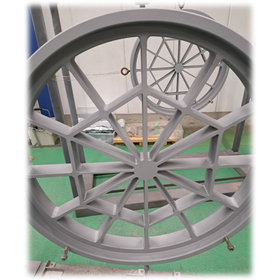
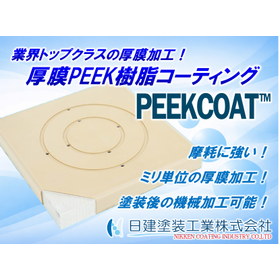
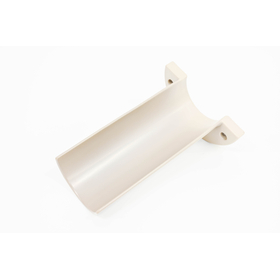
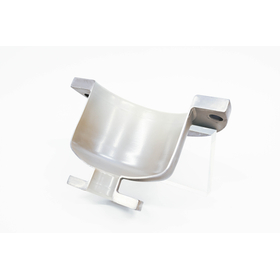
For ceramic coating alternatives! PEEK coating PEEK paint

Attention companies concerned about PFAS regulations! The re-coating span is extended, allowing for reduced maintenance time. *Case study collection available!

The "PEEK Coating" is a product that enables coating by powdering PEEK (polyether ether ketone) resin and subsequently dissolving it in water. After application, it can be hardened by firing, allowing the performance of PEEK resin to be added. It excels in wear resistance, chemical resistance, heat resistance, and non-stick properties. By applying and firing it onto molds, it can significantly improve mold lifespan and eliminate the hassle of re-coating, among various other benefits. 【Features】 ■ High heat resistance (continuous use temperature of 260°C) ■ Chemical stability against acids, alkalis, organic solvents, etc. as a chemical resistance ■ Reduces friction and wear, achieving longer lifespan *For more details, please download the PDF or feel free to contact us.

ブックマークに追加いたしました

ブックマーク一覧

ブックマークを削除いたしました

ブックマーク一覧

これ以上ブックマークできません

会員登録すると、ブックマークできる件数が増えて、ラベルをつけて整理することもできます

無料会員登録

PFAS-free coating [wear resistance, chemical resistance, heat resistance, non-stick]

Attention companies concerned about PFAS regulations! The re-coating span is extended, allowing for reduced maintenance time. *Case study collection available!

"PEEK Coating" is a product that enables coating by powdering PEEK (polyether ether ketone) resin and subsequently dissolving it in water. After application, it can be hardened by firing, allowing the performance of PEEK resin to be enhanced. It excels in wear resistance, chemical resistance, heat resistance, and non-stick properties. By applying and firing it on molds, it can significantly improve mold lifespan and eliminate the hassle of re-coating, among various other benefits. 【Features】 ■ High heat resistance (continuous use temperature of 260°C) ■ Chemical stability against acids, alkalis, organic solvents, etc., as a chemical resistance ■ Reduces friction and wear, achieving longer lifespan *For more details, please download the PDF or feel free to contact us.

ブックマークに追加いたしました

ブックマーク一覧

ブックマークを削除いたしました

ブックマーク一覧

これ以上ブックマークできません

会員登録すると、ブックマークできる件数が増えて、ラベルをつけて整理することもできます

無料会員登録

The superiority of PEEK coating understood through comparison.

Excellent wear resistance! It also demonstrates high performance in non-stick properties.

We would like to introduce the advantages of our "PEEK Coating." When compared to other coating materials, it is clear that our coating surpasses others in wear resistance, chemical resistance, heat resistance, and insulation properties. In terms of non-stick properties, it also demonstrates high performance, second only to fluorine coatings, and there are many cases where our coating, which excels in wear resistance in various environments, lasts a long time. 【PEEK AP105 Specifications】 ■ Continuous use temperature: 260℃ ■ Hardness: 9H ■ Presence of pinholes: None *For more details, please download the PDF or feel free to contact us.

ブックマークに追加いたしました

ブックマーク一覧

ブックマークを削除いたしました

ブックマーク一覧

これ以上ブックマークできません

会員登録すると、ブックマークできる件数が増えて、ラベルをつけて整理することもできます

無料会員登録

Super low friction coating for engine internal parts!

If you're looking for coatings for sliding parts inside the engine, such as piston rings and valve guides, this is a must-see! PEEK resin with a friction coefficient of 0.035 or lower is also possible.

Our company offers PEEK coating as an alternative to PFAS and other coatings. If you are looking for ultra-low friction coatings, please consider our PEEK coating (AP105+AT135). *Friction coefficient: below 0.035 【Industries Served】 ■Industrial Machinery Sector Precision machinery bearings: Due to low friction, it is suitable for bearings in precision equipment that require high-speed rotation and fine movements. High-speed rotating equipment: Used in sliding parts of equipment requiring high-speed rotation, such as machine tool spindles and high-speed motors. ■Automotive Industry Internal engine components: By applying it to sliding parts inside the engine, such as piston rings and valve guides, it contributes to improved fuel efficiency and performance. Transmission components: Used on sliding surfaces of gears and bearings to enhance power transmission efficiency. ■Aerospace Industry Mechanical parts of aircraft: By using it on sliding parts of movable sections and control systems of the airframe, it contributes to improved fuel efficiency and reliability. ■Energy Industry Bearings of wind turbines: Used in components like main shaft bearings of large wind turbines under high load and low-speed rotation conditions. Bearings in hydroelectric power generation equipment: By applying it to bearing parts used in underwater environments, it contributes to improved power generation efficiency.

ブックマークに追加いたしました

ブックマーク一覧

ブックマークを削除いたしました

ブックマーク一覧

これ以上ブックマークできません

会員登録すると、ブックマークできる件数が増えて、ラベルをつけて整理することもできます

無料会員登録

For transmission parts! Ultra-low friction coating.

Improves power transmission efficiency by using it on the sliding surfaces of gears and bearings! PEEK resin with a friction coefficient of 0.035 or lower is also possible.

Our company offers PEEK coatings as an alternative to PFAS and other coatings. If you are looking for ultra-low friction coatings, please consider our PEEK coating (AP105+AT135). *Friction coefficient: 0.035 or lower 【Industries Served】 ■Industrial Machinery Sector Precision machinery bearings: Low friction contributes to the performance of precision equipment bearings that require high-speed rotation and fine movements. High-speed rotating equipment: Used in sliding parts of equipment that require high-speed rotation, such as machine tool spindles and high-speed motors. ■Automotive Industry Internal engine components: By applying to sliding parts within the engine, such as piston rings and valve guides, it contributes to improved fuel efficiency and performance. Transmission components: Used on sliding surfaces of gears and bearings to enhance power transmission efficiency. ■Aerospace Industry Aircraft mechanical parts: Used in sliding parts of movable sections and control systems of the airframe, contributing to improved fuel efficiency and reliability. ■Energy Industry Wind turbine bearings: Used in components such as main shaft bearings of large wind turbines under high load and low-speed rotation conditions. Hydropower equipment bearings: Applied to bearing parts used in underwater environments, contributing to improved power generation efficiency.

ブックマークに追加いたしました

ブックマーク一覧

ブックマークを削除いたしました

ブックマーク一覧

これ以上ブックマークできません

会員登録すると、ブックマークできる件数が増えて、ラベルをつけて整理することもできます

無料会員登録

Mold inhibitor

The purpose is to suppress the occurrence, growth, and proliferation of mold, and to prevent product deterioration.

We would like to introduce "mold inhibitors," which aim to prevent the occurrence of mold during the manufacturing or storage of products, thereby preventing mold growth in general consumer goods and preventing product deterioration. Mold is a colloquial term that refers to certain microorganisms and is also known as filamentous fungi due to its filamentous form. Mold has mycelium that corresponds to the roots and stems of plants, and it reproduces by forming spores at the tips of the mycelium that correspond to the stems. 【Features】 ■ Suppresses the occurrence, growth, and proliferation of mold. ■ Prevents mold growth in general consumer goods during the manufacturing or storage of products, thereby preventing product deterioration. ■ A wide variety of products are available to suit different purposes, including types that can be blended into plastics and types that can be used in water-based applications. *For more details, please refer to the related links or feel free to contact us.

  • Chemicals
  • Chemicals and anti-mold materials
  • Coating

ブックマークに追加いたしました

ブックマーク一覧

ブックマークを削除いたしました

ブックマーク一覧

これ以上ブックマークできません

会員登録すると、ブックマークできる件数が増えて、ラベルをつけて整理することもできます

無料会員登録

Onward Technology Co., Ltd.

Under a consistent quality management system, we respond with advanced coating technology.

In addition to TiN, TiCN, TiAlN, CrN, and DLC-EX, we apply various OS series films, DLC-Prism, CFCACX, and other proprietary high-precision, high-quality thin film PVD coatings to various tools, molds, and parts. We offer PVD and PCVD coating contract processing, surface treatment services, and PVD coating equipment sales. Our main products are PVD and PCVD coating contract processing products.

ブックマークに追加いたしました

ブックマーク一覧

ブックマークを削除いたしました

ブックマーク一覧

これ以上ブックマークできません

会員登録すると、ブックマークできる件数が増えて、ラベルをつけて整理することもできます

無料会員登録

Nanocoat TS Corporation

Contract processing of hard thin film coatings for improving the durability of precision molds and sliding parts.

Nanocoat TS Co., Ltd. specializes in contract processing of hard thin film coatings aimed at improving the durability of precision molds and sliding parts. We offer a wide range of surface treatment technologies, including PVD (Certec) and hybrid DLC coatings, surface analysis services, and salt bath soft nitriding processing at our Osaka facility. With thin film creation technology, vacuum and plasma technology, thin film evaluation testing, and tribology as our core technologies, we provide high-quality products to our customers.

ブックマークに追加いたしました

ブックマーク一覧

ブックマークを削除いたしました

ブックマーク一覧

これ以上ブックマークできません

会員登録すると、ブックマークできる件数が増えて、ラベルをつけて整理することもできます

無料会員登録

[Case Study] Freed from the application work of release agents with convex release coating.

We achieved cost and time savings through a coating that provides long-lasting prevention of sticking.

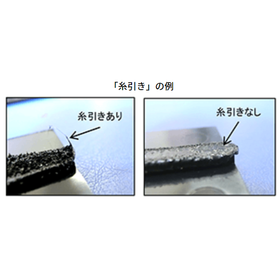
The manufacturing process of weather strips involved transporting extruded rubber on rolls while heating and drying it in a furnace. Due to changes in the rubber material formulation for environmental measures and durability, it became necessary to process the rubber at higher temperatures than before, resulting in the rubber becoming sticky immediately after entering the furnace. When a common fluororesin coating was applied to the transport rolls, it was confirmed that the rubber stuck to them like a suction cup. By adopting our "Super TP Coating," we significantly reduced the sticking of the rubber and achieved a relatively soft contact surface. [Case Study] ■ Purpose of surface treatment: Quality improvement, operational stability, reduction of work loss, compliance with safety and environmental requirements ■ Required functions: Non-stick, release properties, long lifespan ■ Treatment adopted: Super TP Coating *For more details, please refer to the PDF document or feel free to contact us.

  • IMG_9347_edited.jpg
  • Processing Contract
  • Coating

ブックマークに追加いたしました

ブックマーク一覧

ブックマークを削除いたしました

ブックマーク一覧

これ以上ブックマークできません

会員登録すると、ブックマークできる件数が増えて、ラベルをつけて整理することもできます

無料会員登録

[Mold Release Case] Super Durable Fluorine-based Organic Coating 'Bicoat'

Adhesive sheet adhesion is almost zero! Mold surface treatment | Case study flyer

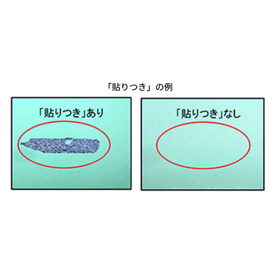
We would like to introduce a case where the adhesion of decorative sheets to molds during transfer was resolved. Decorative sheets with adhesive are set onto parts using molds and are then vacuum transferred. During this process, it was observed that excess sheets, aside from the parts, adhered to some parts of the mold. To prevent the adhesion caused by the adhesive of the decorative sheets, surface treatment for the molds was explored. By adopting our "Bicoat," significant improvements in adhesion prevention were achieved. The adhesion of decorative sheets was reduced to nearly zero, resulting in a level of effectiveness that satisfied our customers. [Key Points of the Case] - Purpose of Surface Treatment: Quality and operational stability, realization of development needs, reduction of replacement and material costs - Required Functions: Non-adhesive, release properties, long lifespan - Treatment Adopted: Bicoat(R) *For more details, please refer to the PDF document or feel free to contact us.

  • s-0181UC_edited.jpg
  • s-0186XT.jpg
  • Processing Contract
  • Coating

ブックマークに追加いたしました

ブックマーク一覧

ブックマークを削除いたしました

ブックマーク一覧

これ以上ブックマークできません

会員登録すると、ブックマークできる件数が増えて、ラベルをつけて整理することもできます

無料会員登録

Blister resistance increased by 10 times - Fluororesin lining 'MY Lining'

Achieves penetration resistance performance that greatly exceeds that of standard fluoropolymer lining. It demonstrates ten times the blister resistance compared to our standard PFA lining.

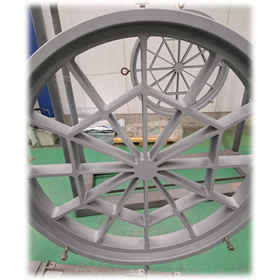
"MY Lining(R)" is a corrosion-resistant lining that significantly improves permeation resistance compared to standard PFA. It offers a lifespan that is expected to be several dozen times longer than that of conventional products (according to our coatings). It is suitable for environments that could not be used before and for places where the previous lifespan was unsatisfactory. It can also be lined in complex shapes such as eye plates and stirrers. 【Features】 ■ Dramatic improvement in permeation resistance performance (compared to our products) ■ Thick film processing is possible (MAX 2000μm) ■ Strong adhesion (vacuum resistance) ■ Seamless integrated processing ■ Can be lined in complex shapes such as eye plates and search machines *For more details, please refer to the PDF document or feel free to contact us.

  • 2021-06-02 (38).png
  • 2021-06-02 (37).png
  • 2021-06-02 (39).png
  • 2021-06-02 (40).png
  • Surface treatment contract service
  • Coating

ブックマークに追加いたしました

ブックマーク一覧

ブックマークを削除いたしました

ブックマーク一覧

これ以上ブックマークできません

会員登録すると、ブックマークできる件数が増えて、ラベルをつけて整理することもできます

無料会員登録

[Automotive Industry Case Study] Surface Treatment to Eliminate Adhesion to Molds

Almost zero adhesion! Case study on surface treatment solutions during decorative sheet transfer. *There is a collection of case studies on equipment improvements for molding.

We would like to introduce a case where the adhesion of decorative sheets to molds during transfer was eliminated. In the process of setting adhesive decorative sheets onto parts using molds and performing vacuum transfer, there was a phenomenon where the excess sheet outside the parts adhered to a part of the mold. To prevent the adhesion caused by the adhesive on the decorative sheets, our customer was exploring surface treatment for the molds. By adopting our "Bicoat," significant improvements in adhesion prevention were achieved. The adhesion of the decorative sheets was reduced to nearly zero, resulting in a level of satisfaction for our customer. [Key Points] - Purpose of surface treatment: Quality and operational stability, realization of development needs, reduction of replacement and material costs - Required functions: Non-adhesive, release properties, long lifespan - Treatment adopted: Bicoat [Achieved Effects] - By designing surface roughness and release effects tailored to the adhesive materials, which cannot be achieved with conventional fluororesin coatings or plating treatments, significant improvements in adhesion prevention were realized. - The adhesion of decorative sheets was reduced to nearly zero. *For more details, please refer to the PDF document or feel free to contact us.

  • Processing Contract
  • Coating

ブックマークに追加いたしました

ブックマーク一覧

ブックマークを削除いたしました

ブックマーク一覧

これ以上ブックマークできません

会員登録すると、ブックマークできる件数が増えて、ラベルをつけて整理することもできます

無料会員登録

Teflon Coating "Processing Methods and Processing Steps"

What is the processing method for Teflon coating? Here, we will introduce the processing methods (steps) to ensure adhesion between the substrate and Teflon resin.

Non-stick properties of 'Teflon coating' require a special processing procedure to ensure adhesion to the substrate. 【Overview of Processing Steps】 ■ Substrate Acceptance ○ Inspection of the substrate will be conducted. ○ If there are any issues that may hinder processing, we may request corrections. ■ Degreasing Treatment ○ Cleaning the substrate of dirt and oil using solvents. ○ Heating the substrate in a furnace to thermally decompose fats and contaminants. ■ Pre-treatment - Blasting ○ The processing surface is blasted to remove rust and dirt, and to create a suitably rough surface. - Etching and Chemical Coating Treatment ○ Pre-treatment is performed according to functionality when blasting is not feasible. ■ Primer Coating ○ A primer is applied to enhance adhesion between the substrate and fluoropolymer. ■ Baking ○ Curing of the primer is performed. ■ Coating - Powder Coating ○ Fluoropolymer powder is applied using a special coating machine. - Enamel Coating ○ Fluoropolymer enamel is applied either by machine or manually. ■ Baking ○ The fluoropolymer is heated and melted to form a coating film. ■ Inspection ○ After processing is completed, we inspect to ensure that the work meets specifications and agreements. For more details, please refer to the PDF.

  • s-2021-04-27 (43).jpg
  • 2021-06-02 (34).png
  • 2021-06-02 (21)-1.png
  • Surface treatment contract service
  • Coating

ブックマークに追加いたしました

ブックマーク一覧

ブックマークを削除いたしました

ブックマーク一覧

これ以上ブックマークできません

会員登録すると、ブックマークできる件数が増えて、ラベルをつけて整理することもできます

無料会員登録

[Case Study] Improvement of Mold Release for Molding Dies! Non-Stick Coating for Aluminum Molds

What is the coating used to release rubber products that tend to stick from molds? We will introduce case studies of solutions through the surface treatment of molding molds.

■Concern When molding rubber of different materials in layers, the products molded in the mold enter the vulcanization process while still in the shape of the mold. The products were made of materials that easily adhered to the mold, resulting in a phenomenon where they stuck to the mold and could not be removed after vulcanization. ■Background During demolding, strong forces are applied, so using standard fluororesin coatings posed a risk of peeling due to insufficient film strength. We recommended a Bi-Coat that excels in release properties and wear resistance, but the mold in question was made of soft aluminum and required surface treatment compatible with sulfur vulcanization, necessitating the selection of a Bi-Coat treatment that could adapt to both conditions. ■Coating Adopted Super Bi-Coat NYY-11-F05 ■Adoption Process and Effects We tested a Bi-Coat suitable for aluminum substrates and usable for sulfur vulcanization. Initially, demolding was good, but rubber adhesion began to occur within a short period. Therefore, we proposed and tested the "Super Bi-Coat NYY-11-F05," which excelled in release properties, achieving both initial demolding and sustained release properties. This led to its adoption. *Product data PDF is available for download.*

  • 2021-05-22 (4)_edited.jpg
  • IMG_8528_edited_edited.jpg
  • s-0186XT.jpg
  • Surface treatment contract service
  • Coating

ブックマークに追加いたしました

ブックマーク一覧

ブックマークを削除いたしました

ブックマーク一覧

これ以上ブックマークできません

会員登録すると、ブックマークできる件数が増えて、ラベルをつけて整理することもできます

無料会員登録

Nano-level ultra-thin film surface treatment "Nano Process" for precision parts *Materials available upon request.

A super-thin film coating process that pursues water-repellent, oil-repellent, non-stick, and liquid slide-off properties! We are currently offering materials with characteristic data compiled for the new series.

The ultra-thin film surface treatment "Nano Process" coats surfaces with a thin film ranging from the nano level to about 1μm, enhancing water repellency, oil repellency, non-stick properties, and liquid sliding properties. It causes almost no dimensional changes and maintains optical properties, making it possible to process "precision parts" and in fields that require high dimensional and surface accuracy, where fluororesin coatings have been difficult until now. <Examples of industries requiring high surface accuracy> Semiconductors, Automotive, Batteries, Electronic Components, Medical Devices, etc. Additionally, the Nano Process has been renewed with four new functions, each with distinct features and applications. 【Features of Each Series】 ■ TC-10S Excellent precision of 100nm, visible light transmittance, water repellency, and oil repellency. ■ TLS Series Superior non-stick properties against adhesive materials like tape. ■ NCFPC Series Excellent liquid sliding properties for water and oil. ■ HP Series Excellent hydrophilicity. Currently, we are distributing materials that summarize the characteristics and functions of all series along with property data. If you are interested in more details or are facing challenges with surface treatment in precision fields, please download the materials or contact us directly.

ブックマークに追加いたしました

ブックマーク一覧

ブックマークを削除いたしました

ブックマーク一覧

これ以上ブックマークできません

会員登録すると、ブックマークできる件数が増えて、ラベルをつけて整理することもできます

無料会員登録

[Surface Treatment Example] Prevention of Resist Liquid Adhesion with Ultra-Thin Fluorine Coating

Achieve high water and oil repellency and release properties with an ultra-thin film! Fluorine coating with a thickness of less than 100 nanometers, 'Nano Process TC-10S' *Case studies and materials available.

We will introduce a case where the ultra-thin film fluorine coating "Nano Process TC-10S" achieved liquid drainage of the resist and improved product defects. ■Challenge Points - When applying resist liquid to a film-like substrate, the resist liquid adheres to the suction jig, causing the jig's resist liquid to stick to the next transport substrate. - Adhesion of resist liquid to the substrate causes product defects. - To prevent resist adhesion, the frequency of jig cleaning has increased. - With Teflon coating, the surface irregularities are transferred as patterns onto thin substrates, leading to product defects. ■Solution Points - The thin film fluorine coating with a thickness of less than 1μm does not transfer surface irregularities to the substrate. - The release properties of the resist liquid are good, reducing the risk of liquid adhesion to the substrate. - Reduction in cleaning time for suction jigs. - Decrease in product defects. ■Features of TC-10S - It maintains optical properties with almost no dimensional changes. - It enables processing in fields that require "precision parts" and "high dimensional and surface accuracy," which were difficult to process with previous fluororesin coatings. *For details on the case and surface treatment, please refer to the PDF document or feel free to contact us.

ブックマークに追加いたしました

ブックマーク一覧

ブックマークを削除いたしました

ブックマーク一覧

これ以上ブックマークできません

会員登録すると、ブックマークできる件数が増えて、ラベルをつけて整理することもできます

無料会員登録

Maintenance period extended by 20 times! Case study of continuous cutting process of PP sheets.

What is a non-stick coating that extends the maintenance cycle of cutting blades by 20 times? *Currently offering a collection of case studies on surface treatments that improve adhesive troubles with cutting tools.

We would like to introduce a case study from the process of cutting thin PP sheets used for clear files. ■ Key Points of the Issue - A problem occurred where the PP sheet stuck to the cutting blade, causing the line to stop. - The blade type is a shear type with two blades, similar to scissors. - When PP adheres, the cutting surface becomes rough, leading to product defects. ■ Background of Selection - Standard fluororesin coatings have a thick film that reduces cutting performance. - The non-stick properties of fluororesin may sometimes be insufficient to prevent sticking. - A thin, superior non-stick coating compared to fluororesin coatings is needed. ■ Effects of the Coating - Troubles that occurred every other day have ceased for a month and a half. - The coating protects the blade edge, reducing the risk of workers cutting their hands. - By reducing product defects, it eliminates material loss amounting to tens of thousands of tons annually. Non-stick coatings for blades contribute to increased productivity, cost reduction, and improved safety. You can download a collection of case studies on cutting process improvements. We also have a trial set of the coating available. Please feel free to apply. ▽ Click here to apply for the collection of cutting process improvement case studies and the trial set ▽

  • s-カット工程 イラスト2.gif
  • s-2021_2キャンペーンLP構成_edited2.gif
  • s-CIMG3371_edited_edited.jpg
  • IMG_0707_edited2_edited.jpg
  • IMG_0702_edited_edited_edited_edit.jpg
  • IMG_0678_edited.jpg
  • IMG_0670_edited.jpg
  • IMG_0699_edited.jpg
  • Processing Contract
  • Coating

ブックマークに追加いたしました

ブックマーク一覧

ブックマークを削除いたしました

ブックマーク一覧

これ以上ブックマークできません

会員登録すると、ブックマークできる件数が増えて、ラベルをつけて整理することもできます

無料会員登録

Surface treatment technology: "Surface treatment with excellent corrosion resistance and anti-corrosion properties."

Fluororesin excels in chemical resistance among resins. It is suitable for protecting substrates from corrosion caused by chemicals and gases, and it is an extremely low moisture-absorbing material.

We will introduce surface treatment technology that provides properties to prevent deterioration or alteration caused by chemical substances (chemical resistance) and functions to protect against dirt by making it difficult for water to penetrate. Due to its structure, fluororesin has excellent chemical resistance against most acids, alkalis, and organic solvents, and it is also a material with extremely low water absorption. Therefore, surface treatment using fluororesin is suitable for protecting the substrate from corrosion caused by chemicals in an all-around manner. 【Selected Surface Treatments (Partial)】 ■ Chemical Resistance / Corrosion Resistance - Fluororesin Coating (Teflon Coating) ■ Chemical Resistance / Corrosion Resistance / Blister Resistance - MY Lining(R) *For more details, please refer to the PDF document or feel free to contact us.

  • s-0050YP.gif
  • 0055H2_edited.jpg
  • 0179TD_edited.jpg
  • Processing Contract
  • Coating

ブックマークに追加いたしました

ブックマーク一覧

ブックマークを削除いたしました

ブックマーク一覧

これ以上ブックマークできません

会員登録すると、ブックマークできる件数が増えて、ラベルをつけて整理することもできます

無料会員登録

Presentation of Case Studies: Streamlining Conveying Devices and Conveying Sections with Surface Treatment Technology!

It is possible to achieve "profit improvement" and "productivity enhancement" by using surface treatment technology to eliminate waste hidden in conveying devices and conveying processes!

【Collection of Improvement Case Studies for Conveying Devices and Processes Using Surface Treatment Technology - Free Gift】 Yoshida SKT's unique surface treatment technology, which excels in "anti-sticking and slip resistance," will improve your conveying processes and contribute to increased profits. By utilizing surface treatment technology... - You can prepare and implement measures before problems arise. - It enables the promotion of labor-saving, cleanliness, and automation through robotics. - It reduces indirect work, allowing workers to focus on their primary tasks. One of Yoshida SKT's surface treatment technologies, convex coating, will assist in improving your conveying processes! 1. What Makes Yoshida SKT's Convex Coating Different It can control a wide range of convex formations tailored to conditions, ensuring a high level of improvement certainty. 2. We Have Improvement Case Studies We have a proven track record with various conveying materials and have improved diverse conveying troubles such as adhesives and rubber products. If you are interested, please request a "trial set" from the related link!

ブックマークに追加いたしました

ブックマーク一覧

ブックマークを削除いたしました

ブックマーク一覧

これ以上ブックマークできません

会員登録すると、ブックマークできる件数が増えて、ラベルをつけて整理することもできます

無料会員登録

Super Engineering Plastics Properties List

What is the list of characteristics of super engineering plastics that overcome the weaknesses of general-purpose plastics?

[Materials Document Featuring All 13 Types of Super Engineering Plastics Characteristics] ■PTFE (Polytetrafluoroethylene) ■PFA (Tetrafluoroethylene-Perfluorovinyl Ether Copolymer) ■FEP (Tetrafluoroethylene-Hexafluoropropylene Copolymer) ■PCTFE (Chlorotrifluoroethylene Homopolymer) ■ETFE (Tetrafluoroethylene-Ethylene Copolymer) ■ECTFE (Chlorotrifluoroethylene-Ethylene Copolymer) ■PVDF (Polyvinylidene Fluoride Homopolymer) ■PBI (Polybenzimidazole) ■PEEK (Polyether Ether Ketone) ■PI (Polyimide) ■PAI (Polyamide Imide) ■PES (Polyether Sulfone) ■PPS (Polyphenylene Sulfide) *For more details, please download and view the PDF. The characteristic tables are for general properties and do not guarantee the physical properties by our company.

  • Surface treatment contract service
  • Coating

ブックマークに追加いたしました

ブックマーク一覧

ブックマークを削除いたしました

ブックマーク一覧

これ以上ブックマークできません

会員登録すると、ブックマークできる件数が増えて、ラベルをつけて整理することもできます

無料会員登録

Teflon Coating: An Explanation for Those Considering Implementation

What are the key points when processing Teflon coating for production equipment? We are offering a guide that explains three important checkpoints!

Introduction of Teflon coating to in-house equipment. When customers consult about Teflon coating, do you have any of the following concerns? - I don't really know where to start... - I'm not familiar with Teflon coating at all... For those who want to know more about the introduction of Teflon coating, we have prepared a "Guide to Introduction." The document is structured based on actual cases with three key checkpoints. To smoothly proceed with the introduction of coating, we clearly explain what you should check in advance and what you need to understand. [Document Overview] 1. The purpose of introducing coating 2. The materials to be coated 3. The usage environment and conditions for coating In fact, by introducing Teflon coating to production equipment, we have received feedback from customers such as: - "Adhesion of paint to jigs has decreased." - "Cleaning time has been reduced." - "Defective products have decreased, and productivity has improved." *For more details, please download the document or contact us.

  • Surface treatment contract service
  • Coating

ブックマークに追加いたしました

ブックマーク一覧

ブックマークを削除いたしました

ブックマーク一覧

これ以上ブックマークできません

会員登録すると、ブックマークできる件数が増えて、ラベルをつけて整理することもできます

無料会員登録

[Surface Treatment Solution Case] Improved Extrusion Molding Troubles of Elastomers!

Prevent eye discharge when extruding elastomers. Reduce defects with mold release surface treatment!

■Concerns We received an inquiry from a customer who is prototyping a new elastomer extrusion product. They wanted to resolve the issue of unstable production due to adhesion to the extrusion mold. ■Background for Coating Adoption Initially, the adhesion was so severe that it was impossible to form the product, but after adopting our surface treatment, they were able to prevent adhesion to a degree that allowed production. However, during continued mass production, it was discovered that defects due to the adhesion of eye mucus occurred after about a month of use. ■Selected Surface Treatment 'MRS Coating MRS-102' ■Selection Process and Effects To further address the defects, we proposed MRS-102. Although eye mucus did occur during testing, it did not adhere to the mold and could be easily removed, which helped suppress the occurrence of defects, allowing for continuous use for six months. *For more details on the adopted 'MRS-102', please refer to the materials or contact us.*

  • ホットメルト_edited.jpg
  • s-CIMG3371_edited_edited.jpg
  • Processing Contract
  • Coating

ブックマークに追加いたしました

ブックマーク一覧

ブックマークを削除いたしました

ブックマーク一覧

これ以上ブックマークできません

会員登録すると、ブックマークできる件数が増えて、ラベルをつけて整理することもできます

無料会員登録

Reducing losses in the production process and achieving stable operations! Tips for utilizing surface treatment *Booklet available.

Are you struggling with an increase in defects in the production process and stable operations? This is packed with tips for improving the production site using surface treatment! It also explains the mechanism of adhesion.

In the field of manufacturing, daily improvements are essential in the "production process"... To all those aiming for "quality enhancement," "stable operation," and "reduction of work loss," we are pleased to present a comprehensive guide on utilizing "surface treatment (release properties)" to solve production line troubles, titled 【Tips for Utilizing Surface Treatment - Preservation Edition】. Additionally, by imparting "release and slip properties" through surface treatment, we are also offering a separate collection of "Case Studies on Process Improvement" that showcases actual improvements in production processes! Feel free to download and check the contents.

  • Other surface treatment equipment
  • Coating

ブックマークに追加いたしました

ブックマーク一覧

ブックマークを削除いたしました

ブックマーク一覧

これ以上ブックマークできません

会員登録すると、ブックマークできる件数が増えて、ラベルをつけて整理することもできます

無料会員登録

Fluororesin coating "Strong against thermal environments with composite technology with ceramics"

A coating technology that minimizes the decrease in film hardness even in high-temperature environments by combining fluororesin and ceramic!

CHC (Ceramic Hard Coat) is a new type of fluoropolymer coating that achieves both non-stick properties and high film hardness at elevated temperatures, comparable to standard fluoropolymer coatings. ■ Features - Non-stick properties equivalent to PTFE and PFA - High film hardness at temperatures above 200°C (compared to PTFE) * Based on internal testing ■ Applications - Resin welding plates - Resin molding molds - Heater plates * For detailed product information, please download the PDF or refer to the link below.

ブックマークに追加いたしました

ブックマーク一覧

ブックマークを削除いたしました

ブックマーク一覧

これ以上ブックマークできません

会員登録すると、ブックマークできる件数が増えて、ラベルをつけて整理することもできます

無料会員登録

[New Technology] Surface Treatment Example: Release Effect for High Temperatures Lasts 3 Times Longer!

Successfully improved the high-temperature durability of conventional fluororesin coatings with CHC technology! Introducing a surface treatment that has tripled the lifespan of thermal welding plates.

CHC (Ceramic Hard Coat) is a new type of fluoropolymer coating that combines the non-stick properties and high-temperature film hardness equivalent to that of conventional fluoropolymer coatings. ■ Examples of Surface Treatment Applications - A case where the release effect achieved by processing a heat-fused plate lasted three times longer than PTFE coating. - A case that achieved both high-temperature release and long-term durability in the heat welding process of filter cases. - A case that resolved the "peeling" and "blistering" issues of fluoropolymer coatings on resin welding plates. - A case that eliminated adhesive adhesion and peeling at high temperatures, which could not be resolved with PTFE coatings. *You can download a PDF summarizing the details of the cases and product materials. For more information, please contact us.

ブックマークに追加いたしました

ブックマーク一覧

ブックマークを削除いたしました

ブックマーク一覧

これ以上ブックマークできません

会員登録すると、ブックマークできる件数が増えて、ラベルをつけて整理することもできます

無料会員登録

[Pharmaceutical Case Study] Introduction of Surface Treatment to Facilitate the Transport of IV Bags

What are the solutions to transportation troubles on the production line of intravenous fluid packs? We will introduce examples of surface treatment implementation.

■Issues to be Resolved Elimination of line clogging troubles when transporting infusion packs through stainless steel chutes. ■Reason for Choosing Surface Treatment Although a pusher was installed on the transport line, the inefficiency could not be resolved. ■Background for Selecting Surface Treatment - Buff polishing and fluororesin coating were adopted for the chute surface, but improvements were limited. - The need to continue using the pusher arose. - Co-deposited plating with fluororesin was also used, but it did not lead to improvements. ■Adopted Surface Treatment "Super TP HL" ■Effects of Surface Treatment By adopting a surface treatment that allows control of surface shape using only fluororesin, it became possible to operate smoothly without using a pusher. All lines have been adopted and can now be used without any troubles. *Detailed materials on the surface treatment can be downloaded as a PDF.

  • 調整00000013_edited.jpg
  • 調整00000012_edited.jpg
  • Surface treatment contract service
  • Coating

ブックマークに追加いたしました

ブックマーク一覧

ブックマークを削除いたしました

ブックマーク一覧

これ以上ブックマークできません

会員登録すると、ブックマークできる件数が増えて、ラベルをつけて整理することもできます

無料会員登録

What is 'fluororesin' that you can't ask about now? *Textbook on fluororesin available.

You can relearn the basics of fluororesin coating! We are distributing a textbook filled with practical content, from fundamental information to tips for selection.

Types and characteristics of fluoropolymer resins, differences in functions and features in coatings, and other content that you may be hesitant to ask about are explained in detail. In addition to basic information, we also introduce practical tips for selection, suitable substrates for coatings, and case studies, all in a total of 38 pages. If you are interested, please feel free to download the materials. 【Contents (excerpt)】 ■ What are fluoropolymer resins ■ Explanation of the characteristics of fluoropolymer resins ■ Processing methods for fluoropolymer coatings ■ Tips for selecting fluoropolymer coatings ■ Suitable substrates for fluoropolymer coatings ■ Case studies of fluoropolymer coatings

  • intro.jpg
  • index.jpg
  • p3.jpg
  • p5.jpg
  • Surface treatment contract service
  • Coating

ブックマークに追加いたしました

ブックマーク一覧

ブックマークを削除いたしました

ブックマーク一覧

これ以上ブックマークできません

会員登録すると、ブックマークできる件数が増えて、ラベルをつけて整理することもできます

無料会員登録

Learn from basics to advanced applications in one book! A textbook on fluororesin coatings.

Packed with content that connects theory to practice, from basics to applications! This is an extensive work spanning 38 pages where you can learn all about fluororesin coatings.

We are distributing a textbook on "Fluororesin Coating" from our company, a specialized manufacturer of surface treatment and fluororesin coatings! This document, consisting of 38 pages, is packed with content that connects the basics of fluororesins to their applications. With this single book, you can learn the fundamentals of fluororesins, practical case studies, and tips for selecting coatings. If you are interested, please download the document and take a look.

  • intro.jpg
  • index.jpg
  • p3.jpg
  • p5.jpg
  • Surface treatment contract service
  • Coating

ブックマークに追加いたしました

ブックマーク一覧

ブックマークを削除いたしました

ブックマーク一覧

これ以上ブックマークできません

会員登録すると、ブックマークできる件数が増えて、ラベルをつけて整理することもできます

無料会員登録

Teflon Coating "Method for Measuring Film Thickness"

To use Teflon coating for a long time, not only selection and processing technology are important, but also quality inspection. Let me introduce Yoshida SKT's quality inspection.

Here, we will introduce the measurement inspection of Teflon coating thickness. When you consult about Teflon coating, if a thickness is agreed upon during the meeting, we will conduct a thickness measurement inspection during the post-processing inspection process to confirm whether the thickness has been processed according to the meeting or the order form. ■ Unit of Thickness In coating thickness measurement, the unit commonly used is "μm (micrometers)" = one-thousandth of a millimeter. ■ Specifications of Thickness The thickness varies depending on the specifications and applications. For fluororesin coatings, it is often around 20-50μm for general purposes and more than 300μm for corrosion-resistant applications. ■ Measurement Method In thickness measurement inspections, a thickness gauge is primarily used for confirmation. This method is a non-destructive type of inspection that does not damage the coating. The thickness gauge typically measures the thickness of the coating by pressing a probe, known as a "probe," vertically against the surface of the coating processed on the metal substrate. *For more details about the thickness measurement inspection, please visit our website via the link or contact us.

  • 2021-06-02 (21).png
  • 2021-06-02 (22).png
  • 2021-06-02 (15).png
  • Surface treatment contract service
  • Coating

ブックマークに追加いたしました

ブックマーク一覧

ブックマークを削除いたしました

ブックマーク一覧

これ以上ブックマークできません

会員登録すると、ブックマークできる件数が増えて、ラベルをつけて整理することもできます

無料会員登録

Teflon Coating "Method of Pinhole Inspection"

To use Teflon coating for a long time, not only selection and processing technology are important, but also quality inspection. Let me introduce Yoshida SKT's quality inspection.

Why is it a problem if there are pinholes in the Teflon coating film in the first place? In a typical fluororesin coating (thickness: 20-50 μm), there are countless holes (pinholes) that are invisible to the eye and reach the substrate. For applications that require non-stick or slippery properties, these pinholes rarely have a negative impact on performance. However, in applications where corrosion resistance is required, chemicals can reach the substrate (metal) through the pinholes, causing corrosion and leading to holes or causing the coating to peel off. To eliminate pinholes, the coating can be thickened by applying multiple layers, ensuring that there are no pinholes that connect the coating surface to the substrate. At Yoshida SKT, we conduct inspections using insulation resistance meters, pinhole testers, and chemical detection methods according to the coating specifications and substrates. These methods are non-destructive tests that do not damage the coating film. *For more details on pinhole inspection, please visit our website via the link or contact us.*

  • 2021-06-02 (21).png
  • 2021-06-02 (22).png
  • 2021-06-02 (15).png
  • Surface treatment contract service
  • Coating

ブックマークに追加いたしました

ブックマーク一覧

ブックマークを削除いたしました

ブックマーク一覧

これ以上ブックマークできません

会員登録すると、ブックマークできる件数が増えて、ラベルをつけて整理することもできます

無料会員登録