

Why does stainless steel rust? = Corrosion mechanisms and anti-corrosion measures =
The belief that 'stainless steel shouldn't rust' is a misconception. This explains the conditions under which stainless steel can corrode and the measures to counteract it.
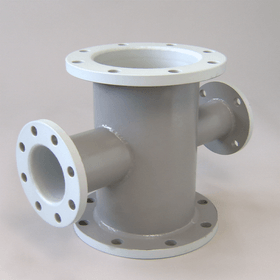
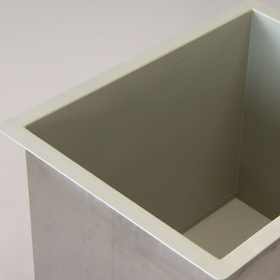
■Why Does Stainless Steel Rust? The corrosion resistance of stainless steel is maintained by a very thin oxide film (passivation film) that forms on its surface. When this film is damaged, the metal substrate is exposed and corrosion progresses. The typical causes of damage to the passivation film are as follows: - Pitting corrosion due to chloride ions: In environments containing chlorine, the passivation film can be locally destroyed, leading to localized corrosion. - Galvanic corrosion: When different types of metals come into contact and are exposed to an electrolyte solution, one metal preferentially corrodes due to the potential difference. - Stress corrosion cracking: This phenomenon occurs when tensile stress and a corrosive environment act simultaneously, causing the material to fracture in a brittle manner. While the above describes the typical corrosion mechanisms of stainless steel, the causes of corrosion can vary depending on factors such as the type and concentration of chemicals used, temperature, and stress conditions. At Yoshida SKT, we offer anti-corrosion coatings and linings tailored to our customers' usage environments. If you are troubled by metal corrosion, please feel free to consult us. *For information on anti-corrosion coatings and linings, please download the PDF for details.
- Company:吉田SKT
- Price:Other









![[Example] Providing anti-fouling properties (fingerprint reduction) to optical films.](https://image.mono.ipros.com/public/product/image/261/2000640024/IPROS67959889521440395788.jpeg?w=280&h=280)


![[Anti-Soiling Example] Fluorine-based Anti-Soiling Coating Agent FluoroSurf](https://image.mono.ipros.com/public/product/image/34b/2000640098/IPROS62057206006610556052.png?w=280&h=280)

![[Example] I want to make the ink container's remaining amount visible.](https://image.mono.ipros.com/public/product/image/3fb/2000640118/IPROS60900565052865699680.jpeg?w=280&h=280)


![[Release Agent Example] Fluorine treatment on mold surface in-house (easy application + room temperature drying)](https://image.mono.ipros.com/public/product/image/2000644819/IPROS3639848623618787077.jpg?w=280&h=280)


![[Example] Providing anti-soiling and anti-reflective functions to optical films.](https://image.mono.ipros.com/public/product/image/967/2000645166/IPROS66666003853876161168.jpeg?w=280&h=280)

