46~90 item / All 120 items
Displayed results
Added to bookmarks
Bookmarks listBookmark has been removed
Bookmarks listYou can't add any more bookmarks
By registering as a member, you can increase the number of bookmarks you can save and organize them with labels.
Free membership registration
Contact this company
Inquiry FormBefore making an inquiry
Download Profile46~90 item / All 120 items
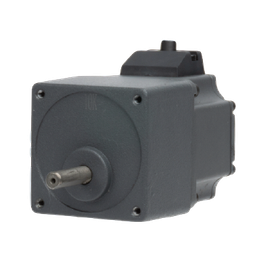
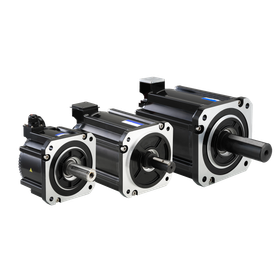
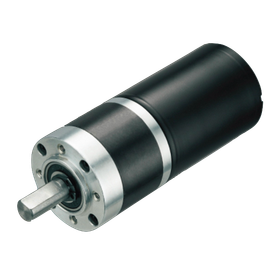
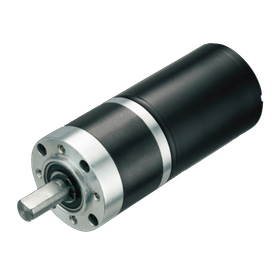
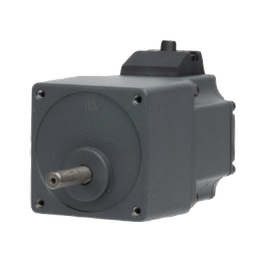
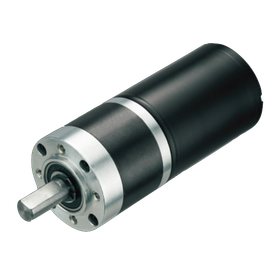
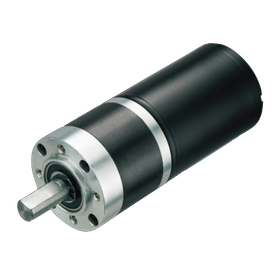
The "safety slide cutter" protects the operator's hands and eliminates on-site near-misses and labor accident risks. Its safe structure, which prevents direct contact with the blade, ensures high safety during cutting operations of materials such as paper, film, thin resin sheets, and fabrics. In recent years, there has been a growing demand to incorporate the mechanism of this manual slide cutter into packaging lines and sheet processing operations to create "automatic cutting devices (auto sheet cutters)." By automating the manual back-and-forth movement of the blade, it eliminates labor accident risks while achieving uniform cutting pitches and dramatically improving productivity. The "PGM series (parallel geared motor)" that we handle is a geared motor with a slim, space-saving parallel axis structure. It can be flatly integrated as the drive axis for slide mechanisms or automatic cutting sliders with thickness restrictions, and can be considered as an option to support smooth and powerful linear feeding.
Added to bookmarks
Bookmarks listBookmark has been removed
Bookmarks listYou can't add any more bookmarks
By registering as a member, you can increase the number of bookmarks you can save and organize them with labels.
Free membership registration
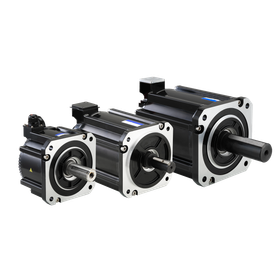
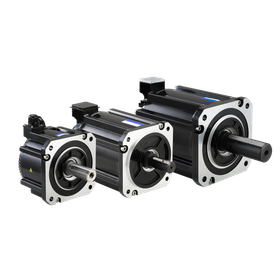
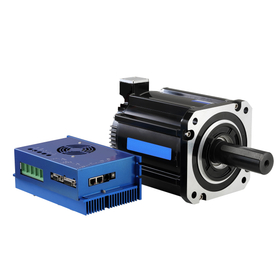
High-strength steel sheets (high-tensile materials) used in automotive suspension components and structural frames, as well as thick metal parts with a thickness of up to 8mm. While they achieve excellent strength and weight reduction, the high difficulty of forming and weight pose challenges in processing technology. In the press processing line for such thick plates and high-tensile materials, ensuring forming accuracy is essential, and the automation of a "heavy-duty feeder" that reliably feeds heavy metal sheets into the mold, as well as a "heavy-load transfer mechanism" that lifts and discharges thick workpieces after processing, significantly affects the overall takt time of the line. Our "CMH series (low voltage, high output coreless motor)" is a high-output brushless motor driven by DC and equipped with a Hall sensor. It has powerful torque capable of handling loads exceeding 1 ton, making it a viable option for automatic supply of thick press work, lifting lifters, and robust drive shafts around die cushions.
Added to bookmarks
Bookmarks listBookmark has been removed
Bookmarks listYou can't add any more bookmarks
By registering as a member, you can increase the number of bookmarks you can save and organize them with labels.
Free membership registration
In the field of "cell production methods" where assembly, inspection, and sorting of parts are performed, there has been a rapid increase in the introduction of "desktop robots" and "compact inspection robots" that can be installed in the limited space of workbenches. The biggest challenge in designing these small and desktop-sized robots is "securing space for control panels and the complexity of wiring." No matter how much the robot body is miniaturized, the motor drivers and control amplifiers for driving take up space, and the countless cables extending from them lead to risks of disconnection and increased assembly labor. The "SGM series (small brushless geared motors)" that we handle is a compact motor with an integrated driver that solves this problem. By integrating the drive driver circuit into the motor body, it eliminates the need for external driver installation space and achieves a simple wiring system that only connects the DC power supply and control signals. This contributes to the dramatic miniaturization and reduced wiring of desktop robots.
Added to bookmarks
Bookmarks listBookmark has been removed
Bookmarks listYou can't add any more bookmarks
By registering as a member, you can increase the number of bookmarks you can save and organize them with labels.
Free membership registration
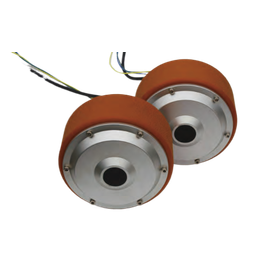
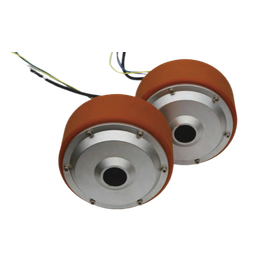
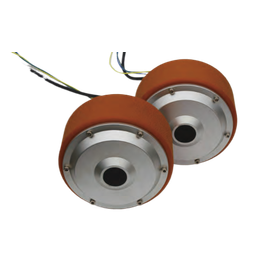
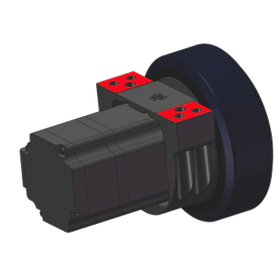
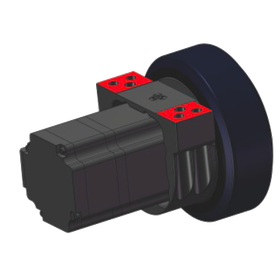
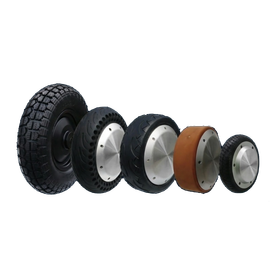
The lithium iron phosphate battery (LFP), which has overcome the major challenge of "thermal runaway (fire risk)" that was common with conventional lithium-ion batteries, is rapidly gaining popularity as a power source for autonomous service robots and collaborative AGVs operating in offices, hospitals, and factories where workers are present, thanks to its extremely high safety. Next-generation mobility that operates safely in environments with people requires not only battery safety but also "quietness" that eliminates unpleasant gear noise and a "low-floor compact chassis" that allows smooth movement in narrow corridors. Our "HSM series (hub servo motor)" features an in-wheel unit that incorporates a direct drive motor within the wheel. With no reduction gears, it boasts overwhelming quietness and can be considered an ideal chassis for service AGVs and collaborative robots that leverage the safety of LFP batteries.
Added to bookmarks
Bookmarks listBookmark has been removed
Bookmarks listYou can't add any more bookmarks
By registering as a member, you can increase the number of bookmarks you can save and organize them with labels.
Free membership registration
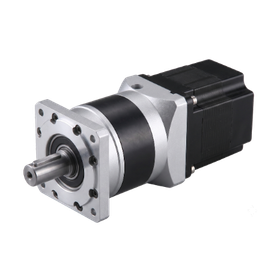
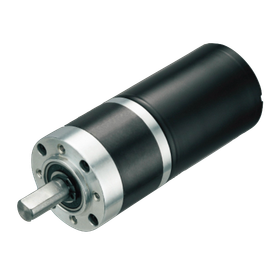
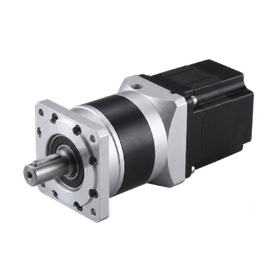
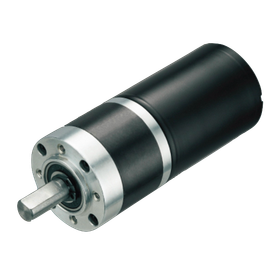
"Vertical multi-joint robots" that thrive in various manufacturing environments such as assembly, welding, and picking, as well as "collaborative robots" that work alongside humans. For these robotic arms to lift heavy workloads and stop precisely at the targeted position, a robust "joint section (reducer)" that can withstand the weight of the arm and its inertia while amplifying the motor's power is essential. In particular, multi-axis arm joints require extreme rigidity to minimize shock loads from rapid acceleration and deceleration, as well as play (backlash) during stops. Our "Precision Planetary Reducers (PLE/PLF series)" utilize a genuine planetary mechanism that distributes the load through a sun gear and multiple planetary gears. They directly transmit the precise movements of servo motors, making them a tough drive unit that achieves the high torque and excellent positioning accuracy required for robotic arms.
Added to bookmarks
Bookmarks listBookmark has been removed
Bookmarks listYou can't add any more bookmarks
By registering as a member, you can increase the number of bookmarks you can save and organize them with labels.
Free membership registration
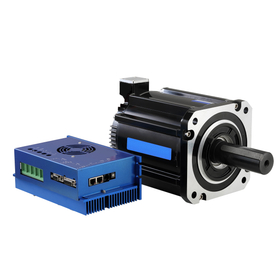
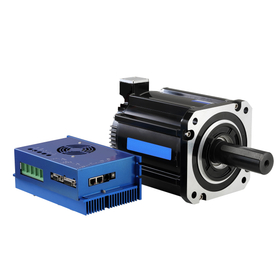
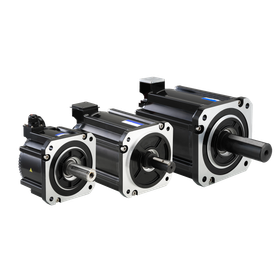
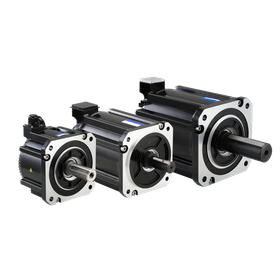
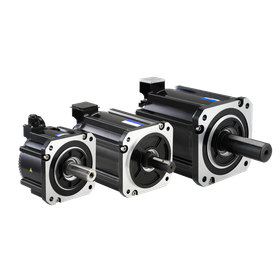
"People often resign themselves to the fact that complex assembly, picking, and inspection tasks can only be done through manual labor and movement..." The 'self-driving robot (mobile manipulator)' equipped with arms such as a SCARA robot on an AGV (automated guided vehicle) is gaining attention as the "ultimate labor-saving and efficiency-enhancing solution" that automates these simple and manual tasks, thereby alleviating the serious labor shortage. This system, which moves freely within the factory and allows the robotic arm to perform tasks at the desired location, requires "DC battery (low voltage) operation" as the unit is cable-free. At the same time, advanced servo control is essential for the precise operation of the arm and the millimeter-level positioning of the unit. Our "low voltage, high output coreless servo motors (CMS series)" are large-capacity motors with servo specifications that enable high-precision control thanks to the built-in encoders. They can be considered as an option for achieving uncompromising precision control and powerful operation in the drive axes and arm joints of self-driving SCARA robots powered by battery.
Added to bookmarks
Bookmarks listBookmark has been removed
Bookmarks listYou can't add any more bookmarks
By registering as a member, you can increase the number of bookmarks you can save and organize them with labels.
Free membership registration
In the electrical design of control panels and industrial machinery, creating accurate circuit diagrams and wiring diagrams using 2D CAD with electrical symbols compliant with JIS C 0617 (IEC 60617) is essential for maintaining the quality and reliability of equipment. The design work of placing and connecting numerous devices and wiring symbols on CAD directly relates to the complexity of circuits and the increase in the number of wires, impacting design man-hours and the risk of miswiring. Our "SGM Series (Compact Brushless Geared Motors)" responds to the need for efficiency in electrical design and space-saving for equipment. With our lineup of "Driver Built-in Models," which integrate the drive driver into the motor body, we significantly reduce wiring between external drivers and the complex connections on JIS symbols. This not only alleviates the effort required for creating circuit diagrams in electrical CAD but also achieves space-saving and reduced wiring within actual control panels. It is a viable option for driving axes in tabletop automation equipment, medical devices, and FA systems.
Added to bookmarks
Bookmarks listBookmark has been removed
Bookmarks listYou can't add any more bookmarks
By registering as a member, you can increase the number of bookmarks you can save and organize them with labels.
Free membership registration
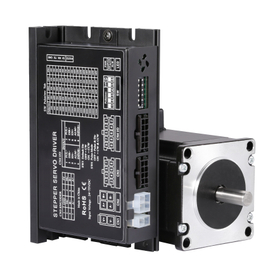
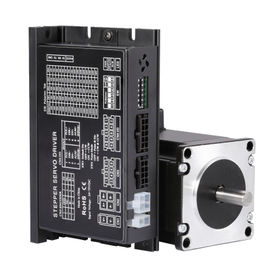
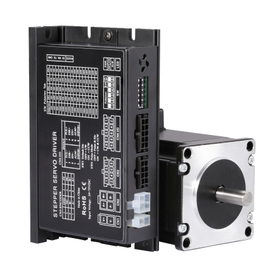
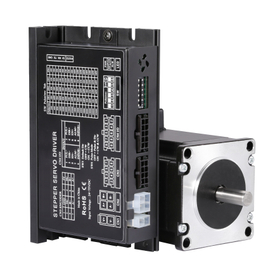
"Deep drawing press processing" forms seamless three-dimensional shapes from thick metal sheets, such as drive system housings for automobiles and protective cases for large equipment. The integrated production line, utilizing large press equipment and advanced mold technology, is a crucial process for achieving lightweight and high-rigidity products. To enhance the productivity of deep drawing processing lines using large presses, it is essential to automate the high-precision feeding of the metal sheets (coil materials and sheet materials) into the molds with an "NC roll feeder," as well as the automatic retrieval of large workpieces after processing with a "transfer transport robot and positioning mechanism." Our "stepping motor series" is a control motor equipped with precise rotational angle control via pulse signals and high responsiveness. Even in press automation lines where servo motors are commonly used, our stepping motors offer overwhelming "cost advantages (low price)" and "high-speed rotation and precise positioning performance," making them a viable option to enhance the cost-effectiveness of transport and supply units.
Added to bookmarks
Bookmarks listBookmark has been removed
Bookmarks listYou can't add any more bookmarks
By registering as a member, you can increase the number of bookmarks you can save and organize them with labels.
Free membership registration
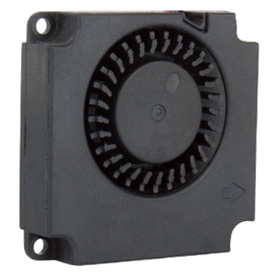
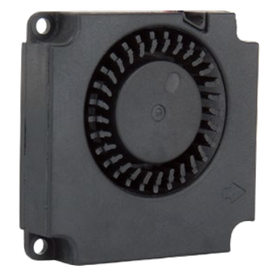
The replacement of traditional lead batteries with "lithium-ion batteries" is rapidly advancing as backup power sources for industrial equipment and power sources for AGVs. In particular, smart batteries that support CAN communication can visualize lifespan, remaining capacity, and even "cell temperature" in real-time, significantly contributing to DX maintenance that prevents sudden stops and accidents. The most important factor in maintaining the performance of these lithium batteries and preventing thermal runaway and degradation is "thermal management (heat dissipation and cooling)." If the heat generated during charging and discharging is trapped inside the control panel or battery box, it can lead to reduced lifespan and error stops. Our "small DC fans (AF/BF series)" efficiently exhaust and cool the heat trapped inside battery panels and FA equipment control panels. They can be considered as reliable cooling parts that work in conjunction with a temperature monitoring system via CAN communication to ensure effective heat dissipation during high temperatures.
Added to bookmarks
Bookmarks listBookmark has been removed
Bookmarks listYou can't add any more bookmarks
By registering as a member, you can increase the number of bookmarks you can save and organize them with labels.
Free membership registration
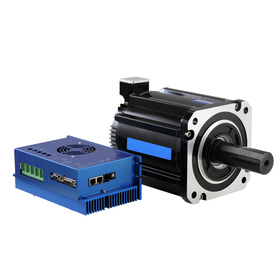
In the context of unmanned vehicles such as AGVs (Automated Guided Vehicles) and AMRs (Autonomous Mobile Robots) that support the automation of factories and logistics warehouses, managing the battery, which serves as the power source, is a critical issue that affects operational efficiency. There is a shift from traditional lead batteries to smart lithium-ion batteries that can visualize lifespan and remaining charge in real-time via CAN communication, enabling predictive maintenance to prevent sudden stops. Next-generation AGVs equipped with these "smart batteries" also require compact and intelligent motors in their drive systems (undercarriage). Our "HSM Series (Hub Servo Motor)" is a direct drive in-wheel motor that integrates a motor and encoder within the wheel. Since it does not have a transmission mechanism like gears, it allows for ample space for lithium batteries and control units, making it possible to minimize the height and compactness of the vehicle to the extreme. It can be considered as an advanced undercarriage for AGVs aimed at smart factories.
Added to bookmarks
Bookmarks listBookmark has been removed
Bookmarks listYou can't add any more bookmarks
By registering as a member, you can increase the number of bookmarks you can save and organize them with labels.
Free membership registration
In logistics warehouses and manufacturing plants, the large volume of "waste expanded polystyrene" generated as packaging material puts pressure on storage space and significantly increases waste plastic processing costs. A system that dissolves and reduces 1 kg of waste expanded polystyrene into a gel-like state using 1 liter of a dedicated solvent (HM solvent) and re-resources it at a plant is a groundbreaking solution that balances waste volume reduction and improved recycling rates. To further enhance the efficiency of this volume reduction process, the introduction of "automated collection robots (collection AGVs)" that autonomously patrol within factories and distribution centers to transport bulky expanded polystyrene to processing equipment is underway. The "HSM series (hub servo motor)" we handle is an in-wheel motor that incorporates a direct drive motor inside the wheel. Since it does not require transmission mechanisms such as gears, it can be considered as a drive unit for low-floor, compact collection robots and smart AGVs.
Added to bookmarks
Bookmarks listBookmark has been removed
Bookmarks listYou can't add any more bookmarks
By registering as a member, you can increase the number of bookmarks you can save and organize them with labels.
Free membership registration
The "C heavy oil," widely used in large vessels and self-generating power facilities, is an excellent fuel in terms of cost but contains asphalt components, fine solid sludge, and a high moisture content. Supplying these untreated to the engine can cause serious damage such as wear and seizure of the fuel injection nozzles. Therefore, the stable operation of the "fuel oil cleaning device (NEW OFRO unit)" that properly heats and processes C heavy oil to completely remove impurities and moisture is crucial for determining the overall lifespan and operational reliability of the engine. Since the viscosity of C heavy oil varies significantly with temperature and oil quality, the pumps that deliver oil to the centrifuge and filters must maintain the specified flow rate and pressure without being affected by viscosity changes or resistance fluctuations, requiring "high-precision flow control (feedback control)." Our "low-voltage, high-output coreless servo motors (CMS series)" are large-capacity motors equipped with high-resolution encoders. They can be considered a reliable drive shaft for precision transfer pumps in the C heavy oil cleaning line and for separation mechanisms where control is essential.
Added to bookmarks
Bookmarks listBookmark has been removed
Bookmarks listYou can't add any more bookmarks
By registering as a member, you can increase the number of bookmarks you can save and organize them with labels.
Free membership registration
Water-based waste liquids such as water-soluble cutting fluids and mold cleaning waste liquids generated from factories. If these are treated as industrial waste and outsourced directly, it incurs enormous costs. To solve this issue, the introduction of a "vacuum distillation wastewater treatment device" that efficiently evaporates and separates only the moisture at low temperatures by reducing the pressure (creating a vacuum) inside the device is progressing, allowing the concentration and volume reduction of waste liquids to be reduced to a fraction of the original liquid. To ensure stable continuous automatic operation of the vacuum distillation device 24/7, it is essential to regularly and precisely dose defoaming agents to prevent rapid foaming inside the distillation vessel, as well as to have a drain pump mechanism that automatically discharges the accumulated concentrated liquid and recovered water. The "SGM series (small brushless geared motors)" handled by our company can be considered as motors for driving various small pumps and automatic valves incorporated into such vacuum distillation devices and wastewater treatment plants. With a space-saving design and long-life characteristics, including models with built-in drivers, it contributes to the miniaturization of the equipment and the improvement of reliability for continuous automatic operation.
Added to bookmarks
Bookmarks listBookmark has been removed
Bookmarks listYou can't add any more bookmarks
By registering as a member, you can increase the number of bookmarks you can save and organize them with labels.
Free membership registration
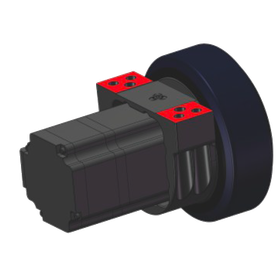
In factories and plants, "air casters" (air film floating heavy load transport devices) are utilized as a means to move large machinery, structures, and heavy objects such as molds, weighing from hundreds of kilograms to thousands of tons. By using compressed air to slightly lift the transport target, friction with the floor is reduced to nearly zero, allowing for safe and free multidirectional movement with minimal force. There is a growing demand to automate and self-drive the heavy load carts lifted by these air casters without relying on manual labor, or to operate them remotely via radio control. Since the frictional resistance with the floor is extremely low, simply attaching drive wheels for propulsion and turning enables the realization of an automatic transport system for heavy loads. Our "WGM series (wheel geared motor)" is a drive wheel unit where the motor is directly combined with a wheel (wheel-type gear head). We provide a compact drive axle that can be integrated as the mobility drive for air caster-equipped carts and self-driving heavy load transport robots.
Added to bookmarks
Bookmarks listBookmark has been removed
Bookmarks listYou can't add any more bookmarks
By registering as a member, you can increase the number of bookmarks you can save and organize them with labels.
Free membership registration
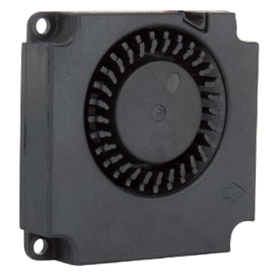
Due to PFAS regulations and considerations for the environment and safety, there is a global acceleration in the transition from organic solvents and fluorinated cleaning agents to "water-based industrial cleaning agents." In water-based cleaning systems, there are many heat sources inside the equipment, such as heaters for warming the cleaning solution, ultrasonic oscillators, and blowers for air knives. Particularly in water-based cleaning lines for precision parts and electronic circuit boards, the heat from control panels, power units, and drying processes can become trapped within the equipment, increasing the risk of malfunction and reduced lifespan of electronic components. As a thermal management and exhaust heat solution for such cleaning equipment, we propose our "Small DC Fans (AF/BF Series)." We offer a lineup of axial fans (AF Series) that prioritize airflow for ventilation and exhaust within the equipment, and blower fans (BF Series) suitable for confined spaces and pinpoint cooling. These can be considered as cooling components that support the stable operation and longevity of water-based cleaning machines and various FA equipment.
Added to bookmarks
Bookmarks listBookmark has been removed
Bookmarks listYou can't add any more bookmarks
By registering as a member, you can increase the number of bookmarks you can save and organize them with labels.
Free membership registration
"Center-stitch binding," which is essential for creating brochures, manuals, and booklets, involves folding sheets of paper in half and securing them at the center with staples. Center-stitched booklets are widely used as printed materials that offer good openability and save space. Desktop binding tools and automatic center-stitch binding machines that are active in offices and on-demand printing environments need to incorporate multiple mechanisms, such as paper positioning, staple crimping, and paper folding, within a limited desktop-sized housing. Our "PGM series," which uses parallel axis gears with spur gears, has achieved overwhelming "thinness" and "low cost" in geared motors. While it does not possess the strength of planetary gears, it provides significant advantages as the internal mechanism of binding equipment with thickness limitations and as a drive shaft for paper transport conveyors where multiple units are desired at a lower cost.
Added to bookmarks
Bookmarks listBookmark has been removed
Bookmarks listYou can't add any more bookmarks
By registering as a member, you can increase the number of bookmarks you can save and organize them with labels.
Free membership registration
In seawater cooling lines for power plants, chemical plants, shipbuilding and vessels, and coastal factories, the attachment and proliferation of marine organisms (mollusks) such as barnacles and purple sea urchins inside the piping can lead to significant problems, causing pipe blockages and reduced heat exchange efficiency. The "magnetic foreign matter attachment prevention device," which suppresses the attachment and adhesion of organisms through magnetic force without using chemical agents, is gaining popularity as a solution that dramatically reduces the maintenance effort for piping without imposing an environmental burden. To ensure the stable operation of such seawater intake and cooling systems, the presence of "intake pumps and circulation pumps" that continuously draw large amounts of seawater and "automatic cleaning strainers (valve and scraper mechanism)" that prevent clogging before the piping is essential. Our "low-voltage, high-output coreless motor (CMH series)" is a large-capacity motor with a Hall sensor, and it is a viable option as a robust drive shaft for various pumps and piping maintenance equipment used in such seawater environments.
Added to bookmarks
Bookmarks listBookmark has been removed
Bookmarks listYou can't add any more bookmarks
By registering as a member, you can increase the number of bookmarks you can save and organize them with labels.
Free membership registration
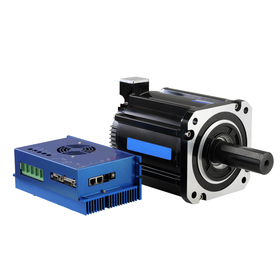
The treatment of "waste fuel," such as waste gasoline and waste light oil recovered from scrapped vehicles at automobile dismantling businesses (ELV processing facilities), is a significant challenge. The recovered waste fuel is contaminated with rust, debris, and fine solids from the fuel tank, making it unsuitable for reuse in its original state and incurring disposal costs. By passing this waste fuel through precision filtration systems (CJC filters) to remove fine impurities and purify it to a shiny clean state, there is growing attention on efforts to safely recycle it as fuel for company-owned work vehicles and heating heaters. In this waste fuel regeneration system, a "liquid transfer pump" that supplies the contaminated waste fuel to the filtration system at a stable pressure requires a robust and reliable drive system capable of withstanding long hours of continuous operation. Our "low-voltage, high-output coreless motor (CMH series)" is a large-capacity motor with a hall sensor and brushless DC specifications, making it a viable option as a tough drive shaft for such waste fuel regeneration units and various fuel transfer pumps.
Added to bookmarks
Bookmarks listBookmark has been removed
Bookmarks listYou can't add any more bookmarks
By registering as a member, you can increase the number of bookmarks you can save and organize them with labels.
Free membership registration
In large marine vessels, the deterioration of lubricating oil and contamination by foreign substances can lead to seizure of the cylinder bearings, directly resulting in serious navigation failures. It is essential to prevent the intrusion of fine carbon (soot) generated by combustion, metal wear particles, and moisture, and to maintain the cleanliness of the oil quality as a key aspect of preventive maintenance. Therefore, the introduction of a "marine lubricating oil cleaning unit" that combines continuous coarse separation using a centrifuge and high-precision filters (removing particles down to 1μm) is indispensable. In this cleaning unit, the "oil transfer pump" that continuously circulates and supplies high-viscosity lubricating oil, and the drive shaft of the "centrifuge drum" that generates strong centrifugal force, require high durability and reliability to withstand long hours of continuous operation and load fluctuations in the onboard environment. The "low-voltage, high-output coreless motor (CMH series)" that we handle is a large-capacity motor with a brushless DC design equipped with Hall sensors, making it a viable option as a robust power source for such marine lubricating oil cleaning devices and various fluid pumps.
Added to bookmarks
Bookmarks listBookmark has been removed
Bookmarks listYou can't add any more bookmarks
By registering as a member, you can increase the number of bookmarks you can save and organize them with labels.
Free membership registration
In surface treatment and plating factories, the disposal costs of heavy metal sludge (dewatered cake) generated from wastewater treatment processes have become a significant financial burden on factory operations. Conventional dewatering using filter presses results in a high moisture content (approximately 70-80%), which causes the disposal weight to increase. To address this issue, the introduction of a "plating wastewater treatment device" that combines centrifugal separation and drum drying is progressing, reducing the moisture content to below 40% and dramatically decreasing waste disposal costs by converting the slurry into powder form. In this system, a "transfer pump" supplies high-density wastewater containing heavy metal slurry, a "centrifugal dewatering drum" generates powerful centrifugal force, and a "screw conveyor" pushes out the solid components that have turned into powder within the drying drum. A highly durable and powerful drive unit that can withstand the resistance of sludge-like materials is essential. Our "low-voltage, high-output coreless motor (CMH series)" is a large-capacity motor with a brushless DC specification equipped with Hall sensors, making it a viable option for the tough drive shaft of such wastewater treatment and volume reduction devices.
Added to bookmarks
Bookmarks listBookmark has been removed
Bookmarks listYou can't add any more bookmarks
By registering as a member, you can increase the number of bookmarks you can save and organize them with labels.
Free membership registration
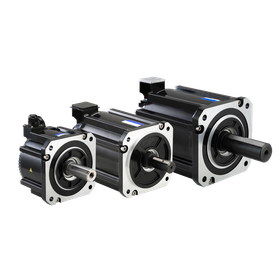
In hydraulic systems and lubrication lines of large machinery, the "whitening of oil (emulsification)" caused by condensation or contamination with cooling water is a significant cause of serious problems, leading to machine seizing and valve sticking. The "coalescer-type oil-water separator," which efficiently removes fine moisture from cloudy hydraulic oil and lubricating oil by significantly growing the water droplets with a special filter and separating them, is effective. It allows for the restoration of oil to a clear state without disposal, significantly extending the oil change cycle and reducing maintenance costs. When continuously operating this coalescer-type oil-water separator, it is essential to supply oil to the element at appropriate pressure and flow rates using a "liquid transfer pump" or "bypass circulation unit" to prevent clogging and emulsification of the oil. Therefore, high durability and stable rotation are required for the drive shafts of these units. Our "low-voltage, high-output coreless motor (CMH series)" is a large-capacity motor with a brushless DC specification equipped with Hall sensors, making it a viable option as a robust power source for such oil-water separation devices and oil circulation pumps.
Added to bookmarks
Bookmarks listBookmark has been removed
Bookmarks listYou can't add any more bookmarks
By registering as a member, you can increase the number of bookmarks you can save and organize them with labels.
Free membership registration
In metal processing factories, the use of "drill sharpening machines" that regrind used drills and end mills without discarding them, thereby extending tool life, is on the rise. These tabletop devices allow anyone to easily achieve accurate cutting edge angles and thinning grinding simply by "aligning visually," without relying on the skills of experienced workers, and they boast high demand as a definitive solution for reducing processing costs. In the design of such tabletop grinders and tool grinding devices, the precision of the "positioning mechanism," which finely controls the cutting edge position of the drill and the grinding approach angle, significantly affects the grinding quality (cutting edge strength and sharpness), in addition to the drive unit that rotates the grinding wheel uniformly at a constant speed. Our "stepping motor series" can be considered as a drive axis for these tabletop grinders and automatic tool regrinding devices, responsible for precise positioning of the grinding head angle adjustment and feed mechanism. They can be utilized as actuators that achieve high reproducibility in grinding precision while keeping costs down without using expensive servo motors.
Added to bookmarks
Bookmarks listBookmark has been removed
Bookmarks listYou can't add any more bookmarks
By registering as a member, you can increase the number of bookmarks you can save and organize them with labels.
Free membership registration
The adoption of "press fittings," which allow for the connection of stainless steel pipes without the use of traditional fire-based "welding" or the more labor-intensive "threading," is expanding in water supply, air conditioning, and air piping work for buildings and factories. By simply crimping the outer circumference of the fittings with a dedicated tool, reliable construction can be achieved, significantly contributing to shortening construction periods and alleviating labor shortages. For on-site installation of these press fittings, "electric crimping tools (press tools)" and "cutting and beveling machines" for stainless steel pipes require lightweight and compact designs that are easy for field workers to handle, as well as high-output drive systems capable of firmly crimping thick stainless steel pipes. Our "small geared motors (SGM series)" are motors that can be considered for the drive units of such electric tools and portable processing equipment for piping construction. They contribute to securing strong crimping torque through gear reduction while also achieving a compact and lightweight design, supporting further labor-saving and stabilization of construction quality in piping work.
Added to bookmarks
Bookmarks listBookmark has been removed
Bookmarks listYou can't add any more bookmarks
By registering as a member, you can increase the number of bookmarks you can save and organize them with labels.
Free membership registration
In the manufacturing industry's design and development field, the introduction of tools that allow for cross-searching past design drawings, defect records, and technical documents using AI is progressing. By instantly referencing the know-how of experienced engineers and reusing (standardizing) similar designs, it becomes possible to reduce design man-hours and prevent quality issues before they arise. In the process of referencing past drawings and advancing the development and standardization of new devices, designers constantly face the challenge of "compactness and cost reduction of drive components." There is a growing demand to replace large gear motors used in past designs with the latest space-saving, high-torque reduction gears. Our "Precision Planetary Gear Reducers (PLE/PLF Series)" are precision reduction units that utilize planetary gears known for their high torque and durability. They can be considered as a viable option for drive shafts that achieve overall compactness and high responsiveness in the design of the latest FA lines, robots, and various automation equipment.
Added to bookmarks
Bookmarks listBookmark has been removed
Bookmarks listYou can't add any more bookmarks
By registering as a member, you can increase the number of bookmarks you can save and organize them with labels.
Free membership registration
Marine organisms such as "barnacles," which lead to deteriorating fuel efficiency and reduced navigational capabilities of vessels. To prevent these from adhering to the hull and significantly reduce maintenance labor and annual maintenance costs, antifouling paint containing additives is essential. In factories that manufacture such specialized paints and additives, the "mixing" process, which evenly blends high-viscosity resins and components without inconsistencies, greatly affects quality. Additionally, the "liquid transfer pump" that sends out the completed high-viscosity paint experiences extremely high loads. To ensure stable operation of these mixing machines and high-pressure pumps used in paint manufacturing, a torque-rich power source that can withstand changes in viscosity and resistance is required. Our "low-voltage, high-output coreless motor (CMH series)" is a large-capacity motor with a hall sensor, designed as a tough drive shaft for mixing equipment and paint pumps handling such high-viscosity liquids.
Added to bookmarks
Bookmarks listBookmark has been removed
Bookmarks listYou can't add any more bookmarks
By registering as a member, you can increase the number of bookmarks you can save and organize them with labels.
Free membership registration
With the electrification of automobiles, the demand for electrical components such as ECU cases and motor cases is expanding. These parts are mass-produced through "deep drawing press processing," which creates a seamless three-dimensional shape from a single metal sheet. Deep drawing processing often involves multiple press processes (transfer processing) performed consecutively, and the performance of the "automatic transfer mechanism (transfer feeder)" that quickly and accurately transfers the workpiece (metal parts) between processes greatly affects production efficiency. This transfer mechanism requires both "high torque" to handle heavy metal parts and molds, and "millimeter-level positioning accuracy" to set the workpiece in the exact position of the mold. Our "low voltage, high output coreless servo motor (CMS series)" is a motor that can be considered as a drive shaft supporting the precise transfer and positioning of heavy objects in the automation equipment of such press processing lines.
Added to bookmarks
Bookmarks listBookmark has been removed
Bookmarks listYou can't add any more bookmarks
By registering as a member, you can increase the number of bookmarks you can save and organize them with labels.
Free membership registration
In large AGVs and industrial vehicles powered by batteries, when using AC motors as the power source, inverters and boost circuits are required to convert from DC power to AC, which complicates and enlarges the system configuration. Additionally, the decrease in torque due to battery voltage drop becomes a design concern. To address these challenges, an effective approach is to adopt "high-output DC motors designed to operate directly from a DC battery power source from the outset." Our "low-voltage, high-output coreless motors (CMH series)" are large-capacity brushless motors that can be directly driven by battery power sources such as DC 24V or 48V. They provide strong torque from the moment of startup without the need for additional devices like boost inverters. This motor can be considered as a power source for battery-operated industrial machinery that requires a simple and robust drive system, as well as for replacing three-phase AC motors.
Added to bookmarks
Bookmarks listBookmark has been removed
Bookmarks listYou can't add any more bookmarks
By registering as a member, you can increase the number of bookmarks you can save and organize them with labels.
Free membership registration
Compressors account for a significant portion of power consumption in factories. Air leaks from their piping lines directly lead to enormous power losses (cost losses). In recent years, "acoustic cameras (ultrasonic cameras)" that detect these air leaks using specialized microphone arrays and visualize them on displays have become widespread. Taking it a step further, there is a growing demand to incorporate these acoustic cameras into leak testing devices on automated lines or to mount them on the pan-tilt mechanisms of surveillance cameras within factories for 24-hour automated inspections. Our "stepping motor series" can be considered as precise positioning drive axes for such inspection cameras, allowing them to be accurately directed to the desired angles or to slide along the piping. This offers a cost-effective alternative to expensive servo motors, enabling the automation of inspection equipment while keeping costs down.
Added to bookmarks
Bookmarks listBookmark has been removed
Bookmarks listYou can't add any more bookmarks
By registering as a member, you can increase the number of bookmarks you can save and organize them with labels.
Free membership registration
In the context of labor shortages in the manufacturing industry, the urgent need for "labor-saving" measures to reduce the man-hours required for control panel production and maintenance is becoming increasingly critical. Among these, the "plug-in terminal blocks compatible with round crimp terminals," which eliminate the need for traditional screw tightening, torque management, and post-operation re-tightening tasks, are gaining attention as a technology that dramatically improves the efficiency and reliability of internal wiring. On the other hand, as we promote the complete maintenance-free operation of control panels, "thermal management" becomes equally important alongside wiring labor-saving measures. As equipment within the panel is densely arranged due to space-saving designs, heat accumulation becomes more likely, leading to reduced lifespan and malfunctions of devices such as drivers and power supplies. The "compact DC fans (axial flow type AF series, blower type BF series)" that we handle are fan motors that can be considered for exhaust and local cooling applications of heat-generating components within control panels where labor-saving and high-density arrangements are progressing. We propose the stabilization of the internal environment of the panel through reliable heat exhaust, in conjunction with the reduction of wiring man-hours achieved by the evolution of terminal blocks.
Added to bookmarks
Bookmarks listBookmark has been removed
Bookmarks listYou can't add any more bookmarks
By registering as a member, you can increase the number of bookmarks you can save and organize them with labels.
Free membership registration
"The domestic products do not fit the budget, but the overseas products raise quality concerns..." This is the dilemma faced in design environments, which is resolved by Crew Co., Ltd.'s 'SGM Series.' It is a small brushless geared motor that comes in an ultra-compact size starting from an outer diameter of 24mm. The biggest feature is its "overwhelming cost performance," designed with the premise of mass production through automation equipment by applying conventional core motor technology. It achieves significant cost reductions while maintaining the advantages of brushless motors, such as low noise, long lifespan, and maintenance-free operation. Additionally, we offer two drive types: the "driver-integrated type (ID type)" that directly contributes to space-saving in equipment, and the "external driver type (ED type)" that maximizes power output. With the driver-integrated type, you can drive and control it instantly with just a power supply (DC12V/24V) and a PWM signal, as easily as with traditional brushed motors. As a power source for automation equipment that requires strict cost constraints and reliable operation, such as tabletop robots, vending machines, and crane games, we thoroughly support Japanese engineers in taking their "next step" with comprehensive assistance.
Added to bookmarks
Bookmarks listBookmark has been removed
Bookmarks listYou can't add any more bookmarks
By registering as a member, you can increase the number of bookmarks you can save and organize them with labels.
Free membership registration
In the quality assurance of electronic devices, the importance of "traceability" in tracking the manufacturing history and components used for printed circuit boards (PCBs) is increasing. When assigning serial numbers or two-dimensional codes (QR or DataMatrix) to the boards, it was common to use labels in the past; however, there was a risk of peeling or smudging due to the high temperatures (around 250°C) in the reflow oven. Therefore, it has now become mainstream to incorporate a laser marker at the front of the SMT (Surface Mount Technology) line (before the solder printer and mounter), which directly burns the solder resist of the board using a laser (peeling and coloring). The key to successfully achieving this laser printing is "the accurate stopping and positioning of the board." To print extremely small two-dimensional codes and read them accurately with a camera in the subsequent process, the board must stop on the conveyor without any millimeter-level shifts or vibrations. The "AC Servo Motor (CMS Series)" that we handle is a motor that can be considered as the driving axis for precise board transport and positioning mechanisms such as laser markers in these SMT lines.
Added to bookmarks
Bookmarks listBookmark has been removed
Bookmarks listYou can't add any more bookmarks
By registering as a member, you can increase the number of bookmarks you can save and organize them with labels.
Free membership registration
In the cleaning process of industrial parts, responding to regulations regarding "PFAS (per- and polyfluoroalkyl substances)" has become urgent. While domestic regulations in Japan are limited to certain substances, discussions are underway in Europe regarding "comprehensive regulations" targeting over 10,000 types of PFAS under the REACH regulation, making it essential for globally operating manufacturers to switch to PFAS-free cleaning agents. However, changing the cleaning agent alters the surface tension and permeability of the liquid, so simply replacing the liquid will not maintain the traditional cleaning quality. It is necessary to review the entire "mechanical cleaning process," including adjustments to cavitation (microbubbles) in ultrasonic cleaning, spray pressure during shower cleaning, circulation flow rate of the cleaning solution, and immersion time of the workpieces (conveyor speed). Our "Brushless Motors (CMH Series)" can be considered as drive motors that flexibly control the flow rate of the circulation pump for the cleaning solution and the speed of the conveyor, in accordance with the characteristics of these new PFAS-free cleaning agents.
Added to bookmarks
Bookmarks listBookmark has been removed
Bookmarks listYou can't add any more bookmarks
By registering as a member, you can increase the number of bookmarks you can save and organize them with labels.
Free membership registration
In steel frame construction, the connection of square steel pipe columns has traditionally relied on "on-site welding" performed by skilled workers. However, a severe shortage of welders, delays in construction schedules due to weather, and the risks of discrepancies during high-altitude work have become significant challenges in the construction industry. As a solution, the "on-site non-welding joint method," represented by column couplers, is gaining popularity. By eliminating arc welding work on-site and replacing it with mechanical connections using bolts, consistent construction quality can be ensured regardless of weather conditions and without the need for specialized skills. Safety is also improved since no open flames are used, and significant reductions in construction time are expected. However, to facilitate smooth non-welding connections on-site, it is essential to perform highly precise dimensional processing (cutting, drilling, etc.) on joint components and steel materials during the factory production stage. The "AC Servo Motor (CMS Series)" that we handle is a motor that can be considered as a driving axis for precision processing machines and automation lines for construction steel materials, fundamentally supporting such non-welding methods.
Added to bookmarks
Bookmarks listBookmark has been removed
Bookmarks listYou can't add any more bookmarks
By registering as a member, you can increase the number of bookmarks you can save and organize them with labels.
Free membership registration
In steel frame buildings, "braces" protect the structure from horizontal loads caused by earthquakes and strong winds. The turnbuckle is a core component that adjusts the tension of these braces, ensuring seismic safety. As it is a crucial safety component that serves as the lifeline of the building, strict strength (yield point and tensile strength) and dimensional accuracy based on JIS standards (such as JIS A 3302) are required. Traditionally, some processes relied on manual labor by craftsmen, but in recent years, the introduction of "automated production lines" using robots and specialized machines for processes such as cutting steel, rolling threads, and welding has become mainstream to eliminate quality variations and provide "stable quality." The "AC servo motor (CMS series)" that we handle is a motor that can be considered as a precise drive axis for automated processing machines and transport robots, supporting the quality of such architectural hardware from the manufacturing stage.
Added to bookmarks
Bookmarks listBookmark has been removed
Bookmarks listYou can't add any more bookmarks
By registering as a member, you can increase the number of bookmarks you can save and organize them with labels.
Free membership registration
In the design of AGVs (Automated Guided Vehicles) for transporting heavy loads, "lightweight vehicle bodies" and "securing internal space" have been long-standing challenges. Conventional lead-acid batteries have low energy density and are very heavy, so to ensure the necessary operating time, the batteries themselves become enormous, occupying a significant portion of the vehicle's weight. By switching to lithium-ion batteries, the weight can be reduced to about one-third and the volume to about one-half for the same capacity. This creates more space inside the vehicle body, enabling a lower floor design and an increase in maximum load capacity. The "Wheel Gear Motor (WGM Series)" that we handle is a motor unit that can be considered for the undercarriage of heavy load AGVs, further leveraging the advantages of space-saving design brought about by lithium batteries.
Added to bookmarks
Bookmarks listBookmark has been removed
Bookmarks listYou can't add any more bookmarks
By registering as a member, you can increase the number of bookmarks you can save and organize them with labels.
Free membership registration
When considering the power source for AGVs (automated guided vehicles), the "voltage drop characteristics during discharge" is an important factor directly related to driving performance. Lead-acid batteries have the characteristic of gradually decreasing voltage as discharge progresses and battery capacity decreases. As a result, in the latter half of operation, the voltage supplied to the motor drops, leading to a decrease in the AGV's driving speed and torque. On the other hand, lithium-ion batteries have a "constant voltage characteristic," maintaining a flat voltage until the end of discharge, allowing for stable driving performance right up until the battery is depleted. The "AC servo motor (CMS series)" that we handle leverages the stable voltage supply of these lithium batteries, making it a motor that can be considered for the drive axis of unmanned transport equipment, which requires millimeter-level stopping accuracy at stations and precise trajectory control of multi-joint arms.
Added to bookmarks
Bookmarks listBookmark has been removed
Bookmarks listYou can't add any more bookmarks
By registering as a member, you can increase the number of bookmarks you can save and organize them with labels.
Free membership registration
The use of "piezoelectric wire sensors" is expanding as sensors that detect minute vibrations and pressure. Unlike ceramic piezoelectric elements, these sensors are made from flexible piezoelectric materials such as fluororesin (PVDF, etc.) processed into a coaxial cable shape, making it easy to arrange them on curved surfaces and lay them over long distances, which is their most significant feature. When mechanical stress such as pressure, bending, or vibration is applied to the sensor, a voltage is generated due to the piezoelectric effect (piezo effect). They do not require a power supply (self-generating) and can capture minute changes with "high-speed response" in the microsecond range, from low frequencies of a few hertz to ultrasonic bands (broadband). Utilizing this characteristic, they are used in applications such as contact detection bumpers for AGVs (automated guided vehicles), vital sensing in monitoring beds, and monitoring film tension and abnormal vibrations on manufacturing lines. Although we are not a sensor manufacturer, we handle motor products that can be incorporated into "precise tension control of film winding machines" and "drive units of AGVs equipped with contact sensors" that operate in conjunction with such high-sensitivity sensors.
Added to bookmarks
Bookmarks listBookmark has been removed
Bookmarks listYou can't add any more bookmarks
By registering as a member, you can increase the number of bookmarks you can save and organize them with labels.
Free membership registration
One of the biggest advantages of switching the power supply of AGVs (Automated Guided Vehicles) from lead-acid batteries to lithium-ion batteries is the "efficiency of charging operations." Lead-acid batteries have long charging times, and to avoid stopping operations, it was necessary to set up a "battery exchange room" where heavy spare batteries had to be manually swapped out. In contrast, lithium-ion batteries can be rapidly charged at high currents and support "opportunity charging," which utilizes waiting times and loading/unloading times. This eliminates the need for battery exchange operations and makes it easier to establish a 24-hour continuous operation system for AGVs. The "Brushless Motors (CMH Series)" we offer can be considered as motors for driving components such as the upper transport conveyor of continuously operating AGVs during charging intervals and the contact ejection mechanism of automatic charging stations.
Added to bookmarks
Bookmarks listBookmark has been removed
Bookmarks listYou can't add any more bookmarks
By registering as a member, you can increase the number of bookmarks you can save and organize them with labels.
Free membership registration
In the medical field, simulation exercises using sophisticated patient models are essential to elevate nursing procedures learned through e-learning and other methods to a practical level. Particularly for physical interventions such as cardiopulmonary resuscitation (CPR), position changes, and joint range of motion training, if one cannot realistically experience "patient weight" and "muscle and joint resistance," it will be impossible to apply the correct force in actual clinical settings. Modern high-function simulators reproduce these "force sensations" through electronic control, achieving a more realistic and tense OSCE (Objective Structured Clinical Examination). The "AC Servo Motor (CMS Series)" that we handle is the optimal solution as a simulator actuator, faithfully reproducing the human body's resistance during chest compressions and the stiffness of joints in paralyzed patients, thanks to its precise torque control technology.
Added to bookmarks
Bookmarks listBookmark has been removed
Bookmarks listYou can't add any more bookmarks
By registering as a member, you can increase the number of bookmarks you can save and organize them with labels.
Free membership registration
In manufacturing sites and logistics hubs, the introduction of "work assist suits" is progressing to reduce the physical burden on workers (such as back pain) caused by transporting heavy objects and working in a bent posture. There are two main types of assist suits. One is the "passive (non-electric) type," which utilizes the rebound force of rubber or gas springs, characterized by being lightweight and easy to put on and take off. The other is the "active (electric) type," which detects the wearer's movements with sensors and directly assists power using motors. While the active type can provide strong assistance, the biggest design challenge is how to make it lightweight and slim, and how to ensure that it can be easily put on and taken off without interfering with work, due to the inclusion of motors and batteries. The "small geared motor (SGM series)" that our company handles is a motor that can be considered as a compact and lightweight drive unit for such active assist suits and wearable robots, providing power assistance without hindering the movements of human joints (such as the waist and knees).
Added to bookmarks
Bookmarks listBookmark has been removed
Bookmarks listYou can't add any more bookmarks
By registering as a member, you can increase the number of bookmarks you can save and organize them with labels.
Free membership registration
Precast concrete (PCa), which contributes to labor-saving and shortening construction periods at construction sites. PCa products (columns, beams, wall panels, box culverts, etc.) are manufactured by pouring and curing concrete in steel molds at factories in advance, and they are characterized by maintaining high quality regardless of weather conditions. The manufacturing process of PCa involves a complex series of steps including mold cleaning and assembly, reinforcement placement, concrete pouring, compaction, steam curing, and demolding. Due to the nature of small-batch production with a variety of products, the introduction of a 'production management system' that accurately tracks the status of molds, pouring schedules, and inventory locations at shipping areas significantly affects the productivity of the factory. Our 'Wheel Gear Motor (WGM series)' is an optimal motor solution for the undercarriage of 'heavy load transport AGVs' that safely and automatically transport large and heavy concrete products and steel molds, ranging from several tons to several dozen tons, within such PCa factories.
Added to bookmarks
Bookmarks listBookmark has been removed
Bookmarks listYou can't add any more bookmarks
By registering as a member, you can increase the number of bookmarks you can save and organize them with labels.
Free membership registration
The temperature control design required for injection molding molds varies significantly depending on the type of resin being poured. For "hard resins" such as glass fiber reinforced resin and super engineering plastics, it is necessary to set the mold temperature higher to ensure fluidity, requiring a strong heating cycle using heaters or thermal oil. In special resin pressing processes (stamping), reliable mold temperature control directly impacts the quality of the molded product. Conversely, "soft resins" like TPU must be sufficiently cooled and solidified within the mold to avoid deformation during demolding. Therefore, in addition to improving release properties with Teflon coatings on the mold, the ability of the "mold temperature control unit (chiller)" to efficiently circulate cooling water and effectively remove heat is crucial. Our "brushless motors (CMH series)" are widely used to drive the water and oil circulation pumps of mold temperature control units, supporting precise temperature management of molds tailored to these resin characteristics.
Added to bookmarks
Bookmarks listBookmark has been removed
Bookmarks listYou can't add any more bookmarks
By registering as a member, you can increase the number of bookmarks you can save and organize them with labels.
Free membership registration
The manufacturing of lithium-ion batteries is divided into three processes: "front-end (electrode manufacturing)," "middle-end (cell assembly)," and "back-end (formation and inspection)." In the front-end process, a slurry made by mixing active materials and solvents is coated onto metal foil with high precision and then compressed and dried using a roll press machine. In the middle-end process, after precise cutting, the materials are stacked and rolled up, then sealed in aluminum film and filled with electrolyte. In the back-end process, the batteries undergo initial charging and aging tests before being shipped. In such gigafactories, clean transportation that thoroughly eliminates dust and moisture is required. Our "lightweight autonomous robot direct drive in-wheel motor" is used as the mobility system for thin autonomous transport robots operating within such battery factories and logistics.
Added to bookmarks
Bookmarks listBookmark has been removed
Bookmarks listYou can't add any more bookmarks
By registering as a member, you can increase the number of bookmarks you can save and organize them with labels.
Free membership registration
In metal processing (cutting and grinding), welding, and automatic assembly lines, "clamps" and "jigs" are used to securely fix and hold the workpieces in precise positions. They are one of the most important technical elements for maintaining processing accuracy (dimensional tolerances), reducing setup time, and ensuring worker safety. In jig design, it is essential to ensure "holding force (clamping force)" that can withstand processing gravity and cutting resistance, while also preventing excessive tightening that could cause "workpiece distortion or deformation (warping)." The methods include manual toggle clamps, as well as hydraulic and pneumatic clamps suitable for automation, and the increasingly popular "electric clamps." Electric clamps, in particular, are indispensable for smart factory implementation and poka-yoke (error prevention) as they allow for numerical control of clamping force, seat confirmation via sensors, and detection of foreign object entrapment. Kuru Co., Ltd. is not a manufacturer of jigs and clamps themselves, but it has a proven track record of using its own products as motors for actuators that open and close electric clamps and rotate and transport workpieces with the jigs.
Added to bookmarks
Bookmarks listBookmark has been removed
Bookmarks listYou can't add any more bookmarks
By registering as a member, you can increase the number of bookmarks you can save and organize them with labels.
Free membership registration
"Valves" are responsible for fluid control such as water, oil, gas, chemicals, and powders in factory equipment, various plants, water treatment, semiconductor, and food manufacturing lines. Depending on the application and fluid characteristics, a variety of structures are used, including butterfly valves, ball valves, globe valves, diaphragm valves, and sanitary valves. The transition from manual valves to "electric automatic valves (electric actuator)" is essential for labor-saving, high-precision flow control, and remote monitoring. When selecting electric valves, important technical elements include the "tightening torque (operating torque)" that moves the valve body, prevention of water hammer caused by rapid closure, "sealability (selection of seat material)" to prevent fluid leakage, and "flow proportional control" through fine opening adjustments. Particularly in high-viscosity liquids or fluids containing solids, measures against overload during valve jamming and high torque retention are challenges. While Kuru Co., Ltd. is not a manufacturer of valves themselves, they have a track record of using their own products as "opening and closing actuators" to drive various valves and as motors for the piping lines before and after.
Added to bookmarks
Bookmarks listBookmark has been removed
Bookmarks listYou can't add any more bookmarks
By registering as a member, you can increase the number of bookmarks you can save and organize them with labels.
Free membership registration