1~45 item / All 97 items
Displayed results
Filter by category

Added to bookmarks
Bookmarks listBookmark has been removed
Bookmarks listYou can't add any more bookmarks
By registering as a member, you can increase the number of bookmarks you can save and organize them with labels.
Free membership registration
Contact this company
Inquiry Form1~45 item / All 97 items
Filter by category
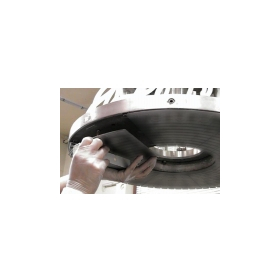
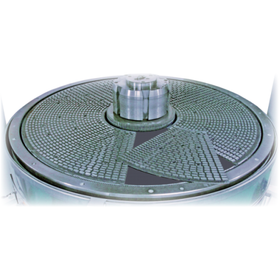
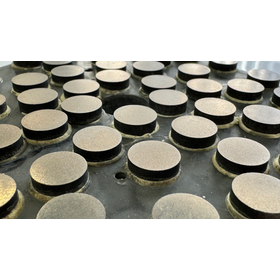
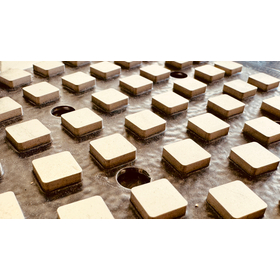
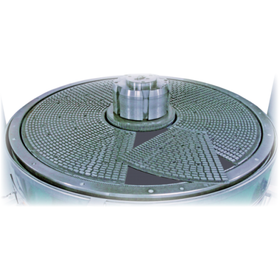
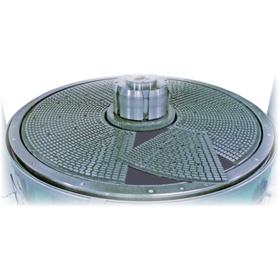
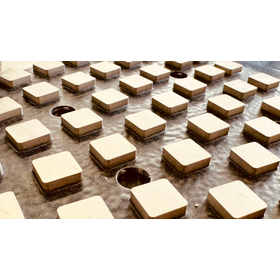
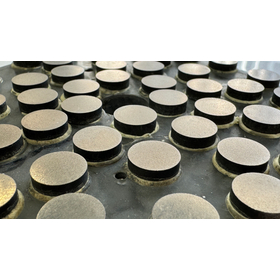
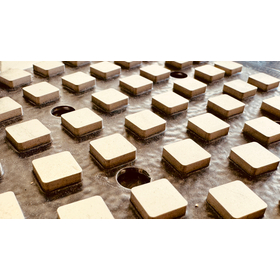
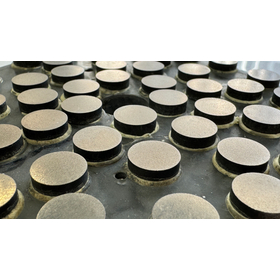
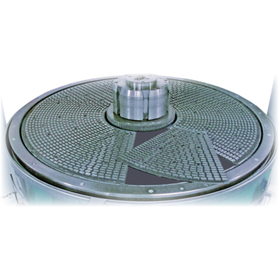
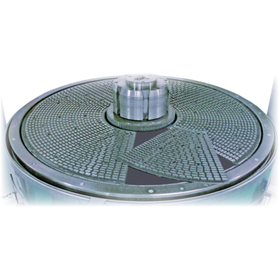
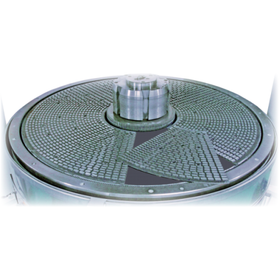
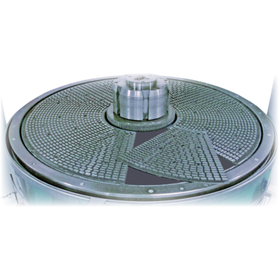
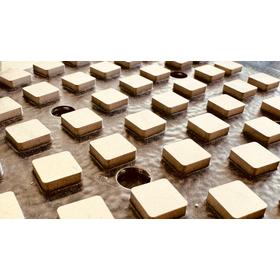
In the grinding process, the condition of the pad significantly affects the quality of the finish. However, conventional correction work is time-consuming and labor-intensive, leading to increased equipment downtime and burdens on workers. The DP-equipped correction carrier achieves efficient pad correction in a short time due to its high cutting power and uniform contact provided by diamond abrasives. Additionally, its lightweight design improves operability, making it easy for anyone to handle. As a result, it not only shortens correction time but also contributes to extending pad life and improving finish uniformity. It supports stable equipment operation and enhances productivity. 【Features of the DP-equipped correction carrier】 ■ Correction time reduced to 1/4 ■ Number of operators reduced from 2 to 1 ■ Precision of the grinding plate and the pad surface are reliably controlled *For more details, please refer to the related links or feel free to contact us.
Added to bookmarks
Bookmarks listBookmark has been removed
Bookmarks listYou can't add any more bookmarks
By registering as a member, you can increase the number of bookmarks you can save and organize them with labels.
Free membership registration
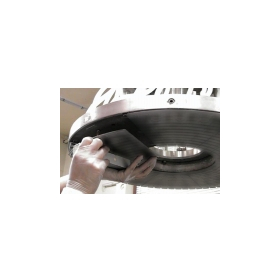
Variations in the finish in the polishing process are greatly influenced by the condition of the polishing pad. As the pad wears, warps, or becomes clogged, pressure is not applied evenly, resulting in inconsistencies on the processed surface. The DP-equipped correction carrier uniformly corrects the pad surface in a short time with high cutting power from diamond abrasives. It effectively removes warps and clogs, bringing it to a stable condition. This helps suppress variations in the finish and stabilizes processing accuracy. It reduces quality fluctuations and supports stable production. **Features of the DP-equipped correction carrier:** - Correction time reduced to 1/4 - Number of operators reduced from 2 to 1 - Ensures precise control of both polishing flatness and the pad surface *For more details, please refer to the related links or feel free to contact us.*
Added to bookmarks
Bookmarks listBookmark has been removed
Bookmarks listYou can't add any more bookmarks
By registering as a member, you can increase the number of bookmarks you can save and organize them with labels.
Free membership registration
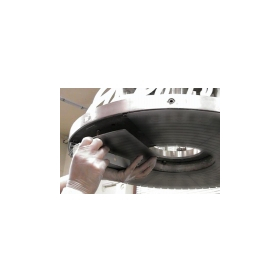
We would like to introduce our "Correction Carrier with DP." Reducing the burden on workers, improving productivity, and enhancing work quality. Our "field-first" correction carrier, proven by implementation results, can be tested for free in your desired size. After the free trial, 98% of customers decide to adopt it. Please feel free to contact us when you need assistance. 【Features】 ■ Correction time reduced to 1/4 ■ Workers reduced from 2 to 1 ■ Precision of the grinding plate and the surface of the pad are reliably controlled *For more details, please refer to the related links or feel free to contact us.
Added to bookmarks
Bookmarks listBookmark has been removed
Bookmarks listYou can't add any more bookmarks
By registering as a member, you can increase the number of bookmarks you can save and organize them with labels.
Free membership registration
In coagulation treatment, flocs (aggregates) are supposed to settle down, resulting in clear supernatant water. However, in practice, there can be issues where flocs rise to the surface during processing or after standing. This article will introduce the factors and countermeasures for flocs floating in coagulation treatment. *For detailed content of the article, you can view it through the related links. Please feel free to contact us for more information.*
Added to bookmarks
Bookmarks listBookmark has been removed
Bookmarks listYou can't add any more bookmarks
By registering as a member, you can increase the number of bookmarks you can save and organize them with labels.
Free membership registration
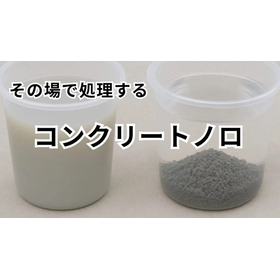
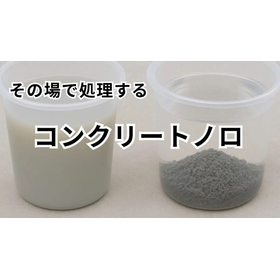
Concrete slurry generated from core drilling and cutter work is a strongly alkaline sludge and cannot be discharged as is. For environmental protection and compliance with regulations, prompt and reliable treatment is required. This is where the treatment method using coagulants comes into focus. We will introduce a technique that allows fine cement particles dissolved in water to precipitate quickly, resulting in clean supernatant water. *For detailed information, please refer to the related links. Feel free to contact us for more details.
Added to bookmarks
Bookmarks listBookmark has been removed
Bookmarks listYou can't add any more bookmarks
By registering as a member, you can increase the number of bookmarks you can save and organize them with labels.
Free membership registration
Construction site wastewater often contains sediment, cement, and oil, necessitating appropriate treatment. Among the various methods, coagulation treatment is an effective way to flocculate fine particles for sedimentation and separation. Here, we will introduce the differences between powdered and liquid coagulants used in wastewater treatment, as well as their respective advantages and disadvantages, and key points for selection. *For detailed information, please refer to the related links. Feel free to contact us for more details.*
Added to bookmarks
Bookmarks listBookmark has been removed
Bookmarks listYou can't add any more bookmarks
By registering as a member, you can increase the number of bookmarks you can save and organize them with labels.
Free membership registration
Coagulation processing refers to the process of gathering fine particles in a liquid to make them larger (by sticking them together), thereby separating contaminants from water. I would like to review the points to determine whether coagulation is possible in advance. - If left alone, it will settle (separate) - The pH is neutral - It is cloudy (including those that are colored and not transparent) - It does not contain chemical products such as surfactants (those that are dissolved in water are difficult) - It is neither too hot nor too cold (generally around 10 to 30°C is good) Looking at the points of distinction and coffee (in this case, instant coffee), almost all of them apply unless it is freshly brewed hot coffee. This means we will experiment assuming that coagulation processing is possible. *For detailed content of the article, please refer to the related links. For more information, feel free to contact us.
Added to bookmarks
Bookmarks listBookmark has been removed
Bookmarks listYou can't add any more bookmarks
By registering as a member, you can increase the number of bookmarks you can save and organize them with labels.
Free membership registration
The yellow liquid used for color checks... this is one of the wastewater types, but there are certainly coagulants that can treat it. The caution when performing coagulation treatment on color check wastewater is "do not mix." But what does "do not mix" mean? It means to avoid mixing various coagulants as a test! Even if a coagulant can treat wastewater, the treatment may not proceed if certain components are included. That component is the "polymer coagulant." *For more detailed information, please refer to the related links. Feel free to contact us for more details.
Added to bookmarks
Bookmarks listBookmark has been removed
Bookmarks listYou can't add any more bookmarks
By registering as a member, you can increase the number of bookmarks you can save and organize them with labels.
Free membership registration
New Year's visit to a shrine, illumination, crowded trains It's difficult to move freely; today, that's the topic! The treatment of wastewater with a high concentration of SS (suspended solids) is not going well. What should we do in such cases? First, it might be good to understand the behavior (movement) in coagulation treatment. *You can view the detailed content of the article through the related links. For more information, please feel free to contact us.*
Added to bookmarks
Bookmarks listBookmark has been removed
Bookmarks listYou can't add any more bookmarks
By registering as a member, you can increase the number of bookmarks you can save and organize them with labels.
Free membership registration
Has there ever been a heavy rain that caused water to accumulate in the elevator pit? The pit contains mixed machine oil, and even if it is pumped out, the treatment of the oil-contaminated wastewater is very difficult. If only the oil and dirt could be collected. *You can view the detailed content of the article through the related link. For more information, please feel free to contact us.*
Added to bookmarks
Bookmarks listBookmark has been removed
Bookmarks listYou can't add any more bookmarks
By registering as a member, you can increase the number of bookmarks you can save and organize them with labels.
Free membership registration
Can powder coagulants treat wastewater containing black smoke? I would like to conduct a test right away. It looks extremely black, but if we consider the black smoke as a state where very dark particles are suspended, it seems that coagulation treatment might work well. The question is how much dirt is contained in it. *For more details, you can view the related links. Please feel free to contact us for more information.
Added to bookmarks
Bookmarks listBookmark has been removed
Bookmarks listYou can't add any more bookmarks
By registering as a member, you can increase the number of bookmarks you can save and organize them with labels.
Free membership registration
When I dug, murky water mixed with oil came out... In such cases, whether it's mixed with oil or not, please try the coagulant Oil Flock that can handle murky water treatment. Even though water comes out when you dig, you have no idea what kind of water it will be. If it's just muddy water, there's no problem; you can simply use a coagulant to separate the mud from the water, and that's the end of it. However, there are times when wastewater mixed with oil comes out. Oil cannot be discharged into rivers and streams. Therefore, when selecting a coagulant for treating murky water to reduce turbidity, it is necessary to choose one that can also remove oil. *For more details, you can view the related links. Please feel free to contact us for more information.
Added to bookmarks
Bookmarks listBookmark has been removed
Bookmarks listYou can't add any more bookmarks
By registering as a member, you can increase the number of bookmarks you can save and organize them with labels.
Free membership registration
The wastewater treatment of colloidal silica can be processed with coagulants. However, whether it can be treated depends on factors such as particle size, so it cannot be said that anything can be treated. Additionally, the treatment conditions vary depending on the type of coagulant used. *For more detailed information, please refer to the related links. Feel free to contact us for further inquiries.*
Added to bookmarks
Bookmarks listBookmark has been removed
Bookmarks listYou can't add any more bookmarks
By registering as a member, you can increase the number of bookmarks you can save and organize them with labels.
Free membership registration
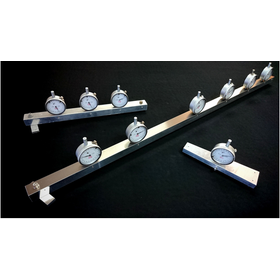
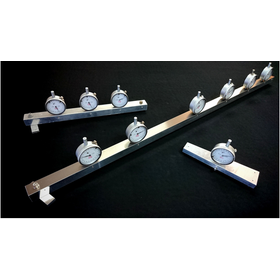
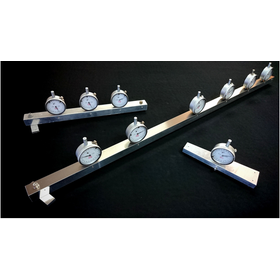
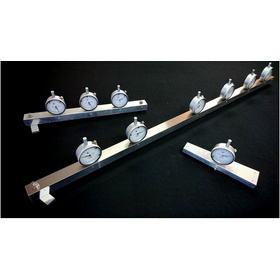
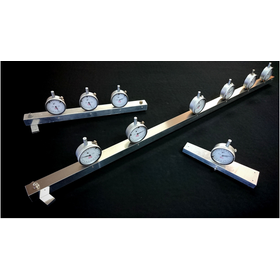
Have you ever experienced the following when measuring flatness with a flatness tester or similar device? - The workpiece doesn't fit in the measuring device (too large, too thick) - It can't be measured accurately because it's being pulled by a vacuum chuck (too thin) - The measuring device is not available, and you urgently need to take measurements! In such cases, you can use the "simple measurement method using a dial gauge." That said, it's not just a regular gauge measurement. This time, we will introduce a clever technique called "inverted measurement that does not create deflection due to weight." I would be happy if you read until the end! *You can view the detailed content of the article through the related links. For more information, please feel free to contact us.
Added to bookmarks
Bookmarks listBookmark has been removed
Bookmarks listYou can't add any more bookmarks
By registering as a member, you can increase the number of bookmarks you can save and organize them with labels.
Free membership registration
Hello, this is grinding-polishing.com! In the first part, we discussed the shape changes that occur when no measures are taken, and the effects on the workpiece. In the second part, we will explain the methods for correction! *You can view the detailed content of the article through the related links. For more information, please feel free to contact us.
Added to bookmarks
Bookmarks listBookmark has been removed
Bookmarks listYou can't add any more bookmarks
By registering as a member, you can increase the number of bookmarks you can save and organize them with labels.
Free membership registration
Hello! This is the technical department of Grinding and Polishing Dot Com! It's been a while since we've shared technical content. In the world of polishing and grinding, it's often said that the shape and management of the reference plate are important. But why is that? This time, I will clearly explain why it is necessary to manage polishing and grinding reference plates, what happens if they are not managed, how to manage them, and how to make appropriate corrections. *You can view the detailed content of the article through the related links. For more information, please feel free to contact us.*
Added to bookmarks
Bookmarks listBookmark has been removed
Bookmarks listYou can't add any more bookmarks
By registering as a member, you can increase the number of bookmarks you can save and organize them with labels.
Free membership registration
Last time, I talked about the "test of abrasive grain protrusion height." This time, I took a little break and reflected on the "differences in grit size." I will summarize what is generally said about grit size and share my observations from hands-on experience in the field! *You can view the detailed content of the article through the related links. For more information, please feel free to contact us.*
Added to bookmarks
Bookmarks listBookmark has been removed
Bookmarks listYou can't add any more bookmarks
By registering as a member, you can increase the number of bookmarks you can save and organize them with labels.
Free membership registration
Even though we refer to fixed abrasive tools in general, various manufacturers are constantly working on them in different ways every day. Since the manufacturing methods, characteristics, and diamond abrasive particle sizes (grit, D50, type of diamond) differ among manufacturers, have you ever experienced that even with the same grit, the processing capabilities and surface roughness of the products vary? So why do capabilities differ even when the "particle size is the same"? I believe one reason for this is the difference in the protrusion of the diamonds. Does a higher protrusion mean it works better...? There is also a relationship with pressure/rotation, and I feel that there is an appropriate protrusion height depending on the workpiece and processing conditions. When you get down to it, what size of abrasive particles in micrometers should be used, and how much of that should be protruding for the abrasives to work most effectively (to penetrate the workpiece)? *You can view the detailed content of the article through the related links. For more information, please feel free to contact us.
Added to bookmarks
Bookmarks listBookmark has been removed
Bookmarks listYou can't add any more bookmarks
By registering as a member, you can increase the number of bookmarks you can save and organize them with labels.
Free membership registration
The "average linear expansion coefficient" is a numerical value that indicates how much an object expands or contracts on average over a certain temperature range. In this age where information can be easily found… even if I’m told, as a humanities major, I can’t understand it at all. Of course, I understand the definition. But whether it becomes something I can grasp or use is a different matter. *You can view the detailed content of the article through the related links. For more information, please feel free to contact us.*
Added to bookmarks
Bookmarks listBookmark has been removed
Bookmarks listYou can't add any more bookmarks
By registering as a member, you can increase the number of bookmarks you can save and organize them with labels.
Free membership registration
This article explains the refractive index and Abbe number. In the world of optics, terms like "refractive index" and "Abbe number" often come up. I have a general understanding of them, but if asked whether I truly understand, I would say it's a bit unclear... So this time, I want to gain a solid understanding! *For detailed content of the article, you can view it through the related links. Please feel free to contact us for more information.
Added to bookmarks
Bookmarks listBookmark has been removed
Bookmarks listYou can't add any more bookmarks
By registering as a member, you can increase the number of bookmarks you can save and organize them with labels.
Free membership registration
Hello! This is Grinding and Polishing Dot Com! The other day, something happened on-site. The video below is the sound of the machine at that time. *Sound will play. Did you notice the unusual noise? At this point, we don't know: "What's wrong?" "Is it really an abnormal sound?" "Is it just rubbing?" One thing is clear: it is "different from usual." Such daily troubles? happen every day, and while there are countless things we want to investigate, various events occur daily, making it hard to keep up. This is not just for us; isn't it the same for everyone in their daily work? We are barely managing our daily tasks. When it comes to noticing something "extra," it becomes quite difficult. This time, I would like to delve into that "ability to notice"! *You can view the detailed content of the article through the related link. For more information, please feel free to contact us.
Added to bookmarks
Bookmarks listBookmark has been removed
Bookmarks listYou can't add any more bookmarks
By registering as a member, you can increase the number of bookmarks you can save and organize them with labels.
Free membership registration
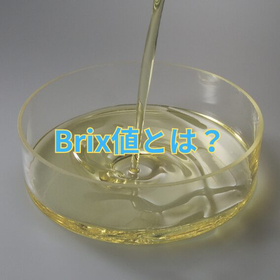
Recently, a customer decided to evaluate our fixed abrasive grains, and when we sent a coolant specifically for fixed abrasive grains, they asked for the Brix value of this coolant. Brix?? International conference (BRICS)?? I must admit, it was the first time I had heard that name, so I first checked with the coolant manufacturer, and they responded that the sugar content value is 2.3. They asked for the Brix value, but it's a sugar content value?? I’m completely confused! Realizing my lack of knowledge, I decided to look it up for now. *For more details, you can view the related links. Please feel free to contact us for more information.*
Added to bookmarks
Bookmarks listBookmark has been removed
Bookmarks listYou can't add any more bookmarks
By registering as a member, you can increase the number of bookmarks you can save and organize them with labels.
Free membership registration
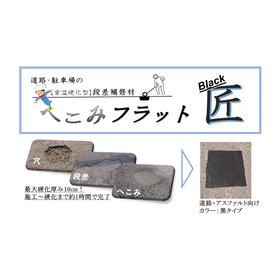
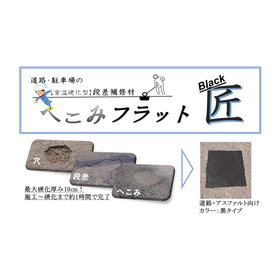
Even though I understand, I can't help but want to close my eyes at the small holes in the cart path. If it clearly needs repairs, then there's no choice, but I completely understand the feeling of wanting to request repairs just for a small hole, even if it means stopping operations. However, golf carts are more susceptible to the effects of holes and bumps due to their small tires, making vibrations feel more intense. If that hole can be repaired to a level where "it's fine for carts to pass" within about an hour of starting the repairs, wouldn't you want to try it? For partial repairs of holes that eliminate customer travel stress without stopping operations, I recommend "Hekomi Flat Takumi." First, please take a look at the link below to see how it looks after repairs and how solidly it becomes!
Added to bookmarks
Bookmarks listBookmark has been removed
Bookmarks listYou can't add any more bookmarks
By registering as a member, you can increase the number of bookmarks you can save and organize them with labels.
Free membership registration
Oil Flock (U-02) is a powdered coagulant that can separate dirt from water simply by mixing it into dirty water. It is easy to use even with small amounts of wastewater, around 100ml, and has a proven track record with large-scale wastewater as well. Of course, not all wastewater can be treated, but if you are even slightly interested, please check the treatment effect with a free sample. *For an overview of Oil Flock, please visit our website via the link below. [Some of our treatment achievements] *Excerpt Emulsion wastewater (mayonnaise production wastewater, wax stripping wastewater), drain wastewater, water-based paint wastewater, die-cast release agent wastewater, polishing wastewater, muddy water, paint cleaning wastewater, air conditioning filter cleaning wastewater, nickel solution, muddy seawater, glaze wastewater, dyeing wastewater, etc. [Water quality improvement items] There are many achievements in improving SS (suspended solids), pH, BOD, COD, n-Hex, and heavy metal removal. We also offer free wastewater treatment tests. We welcome any questions, no matter how small.
Added to bookmarks
Bookmarks listBookmark has been removed
Bookmarks listYou can't add any more bookmarks
By registering as a member, you can increase the number of bookmarks you can save and organize them with labels.
Free membership registration
The most common feedback from customers who have adopted DP correction carriers and pad dressers is the customization tailored to their processing environment. Typically, customers often purchase fixed pattern products or use those that come with their equipment, but is it suitable for their equipment? On the other hand, our products build unique patterns that incorporate both the basic pattern and the customer's requests. Changes made so far include: - Material changes (selecting materials considering corrosion and strength) - Pattern changes (constructing the best pattern based on precision, rate, and free test results) - Granularity changes (selecting the appropriate grit based on pre-tests for the current PAD) We create products with considerable effort that other companies may not want to undertake. * Adjustments to the thickness of various materials (carrier, DP) and the construction of immediately usable DP surface conditions, etc. Please download the materials to check the features of the DP correction carrier. For inquiries about testing and customization, please contact us.
Added to bookmarks
Bookmarks listBookmark has been removed
Bookmarks listYou can't add any more bookmarks
By registering as a member, you can increase the number of bookmarks you can save and organize them with labels.
Free membership registration
Edge roll-off... also known as "edge roll-off," is actually a challenge that one encounters when performing flat polishing at least once. The causes of this edge roll-off can be narrowed down to a certain extent. 1. Hardness, elasticity, and thickness of the pad 2. Precision of the pad 3. Processing conditions 4. Dressing unevenness Among these, issues related to pad precision and dressing unevenness are common in the polishing industry, and it is often the case that adjustments to processing conditions or pad replacements are made to address these problems. However... to be honest, it's quite a waste. Using our pride, the DP-equipped correction carrier from Yachiyo Micro Science, it is often very easy to make corrections! If you are struggling with edge roll-off in polishing, please feel free to consult with us.
Added to bookmarks
Bookmarks listBookmark has been removed
Bookmarks listYou can't add any more bookmarks
By registering as a member, you can increase the number of bookmarks you can save and organize them with labels.
Free membership registrationAs a specialized company providing precision grinding, polishing, and environmental-related solutions, we have been addressing the challenges of many customers for over 80 years. ~Recent Case Studies~ - Semiconductor Compounds: Improved productivity of next-generation devices with polishing materials and polishing pads for sapphire (Al2O3) and gallium nitride (GaN) substrates. - EUV Mask Blanks: Provided polishing materials and polishing pads suitable for fields requiring extreme precision. - Optical Glass (High-Precision Lenses, Prisms, etc.): Stable quality of cerium oxide polishing materials reduces the burden of production management. - Large Correction Carriers: Contributed to improved precision and cost reduction on large double-sided machines of 22B or more, easing the workload. Do you have any of these concerns? "I want to stabilize polishing quality more." "I want to maximize the performance of polishing materials and polishing pads." "I want to try fixed abrasives, but I don't know which one is suitable." "I want to reduce the cost of wastewater treatment." At grinding-polishing.com / agglomerant.com, we provide information and know-how that can help improve on-site operations every month. This month, we are featuring "The Basics of Precision Measurement! The Structure and Principles of Micro Gauges. How to Prepare for Accurate Measurements!"
Added to bookmarks
Bookmarks listBookmark has been removed
Bookmarks listYou can't add any more bookmarks
By registering as a member, you can increase the number of bookmarks you can save and organize them with labels.
Free membership registration
Q: What are the raw materials for the correction carrier? A: The material of the carrier is resin. Typical correction carriers use cast iron, so ultra-lightweight versions cannot be made with the same specifications. Q: Are there any specified machine manufacturers for using the correction carrier? A: There are no specified manufacturers. It can be created to match your equipment. Q: What kind of information (drawings, etc.) is needed for production? A: We are confirming the carrier gear information and the size of the base plate. We will provide additional materials regarding the necessary information. Q: How long does it take from order to delivery? A: It takes about 2 months from the order. Q: Do you have specific improvement data? A: The dressing time has been reduced from 2 hours to 10-30 minutes. Improvement of workpiece edge drooping. There are also improvements in the polishing rate after dressing. Q: How much does it cost? Is there a price list? A: The price varies depending on size and specifications, so please contact us first. Q: Can I try it out? A: If our existing patterns are available, we can lend them out for up to 1 month.
Added to bookmarks
Bookmarks listBookmark has been removed
Bookmarks listYou can't add any more bookmarks
By registering as a member, you can increase the number of bookmarks you can save and organize them with labels.
Free membership registration
Isn't this something you've experienced? - The polishing time has increased. - Decreased yield (the workpiece edge becomes rounded). - There are times when flatness is compromised. While the condition of the polishing material and the polishing processing conditions also have an impact, let's first check if the accuracy of the PAD has deteriorated. The basic idea of polishing is that the accuracy of the polishing PAD is transferred to the workpiece. In many cases, a DP correction carrier is used for PAD correction. However, it is often used without much thought, and the most important point, "correction," is frequently not done properly. To determine if the correction carrier is suitable, please check the following: - Is the PAD designed to be correctable? - Is a DP that can dress the PAD being used? - Is the overall thickness of the correction carrier uniform? If you experience any of the following after using the correction carrier in polishing: - The polishing rate does not recover. - The yield does not improve (does not return). - Changes in the PAD surface condition are not noticeable. Please feel free to consult with us. If you have been using it for a long time without maintenance, the correction capability may have been lost.
Added to bookmarks
Bookmarks listBookmark has been removed
Bookmarks listYou can't add any more bookmarks
By registering as a member, you can increase the number of bookmarks you can save and organize them with labels.
Free membership registration
The basics of polishing emphasize the importance of precision management of the polishing pad, and a commonly used tool for maintaining that precision is the DP-equipped correction carrier. Using a correction carrier not only allows for precision adjustments but also plays a crucial role in cleaning the pad. However, depending on the situation, there are significant and dangerous disadvantages when it comes to polishing. 1. Rust 2. Slow polishing speed on the upper side 3. Requires two people for setup (or needs to be set up with a machine) Among these three, the common factor related to "different polishing speeds on the upper and lower sides" and "setup issues" is "weight." When considering setup, it’s easy to imagine that a lighter weight can lead to improved workability and safety, even with larger equipment. On the other hand, what is the relationship between the polishing speeds of the upper and lower sides and weight? Polishing conditions are set in grams. Therefore, the weight of the correction carrier can negatively impact dressing and truing. The heavier the carrier, the greater the pressure applied to the lower side, leading to changes in the surface condition of the upper and lower pads. It is undoubtedly better for the correction carrier to be lighter in order to maintain as similar a condition as possible. Would you like to try an ultra-lightweight correction carrier for free to counteract such disadvantages?
Added to bookmarks
Bookmarks listBookmark has been removed
Bookmarks listYou can't add any more bookmarks
By registering as a member, you can increase the number of bookmarks you can save and organize them with labels.
Free membership registration
When you hear "custom," does it evoke a cool image? If you are using a cast iron DP-equipped correction carrier, it is possible to customize it to make it look cool and to facilitate precision management. Our correction carriers use a resin carrier, making them very lightweight compared to cast iron, and they feature DP on both sides of the carrier. The lightweight design is expected to improve "safety" and "workability," but the biggest feature is the customization tailored to the polishing environment. The correction of the PAD needs to change the DP arrangement and particle size depending on the processing environment and the hardness of the PAD. By customizing to fit the polishing environment, it is also possible to significantly reduce correction time. There are many cases where a dressing operation that used to take 1 to 2 hours has been shortened to about 5 to 30 minutes depending on the customer. In addition to time savings, we can effectively correct the PAD's precision, leading to improvements in edge droop and polishing rates, among other achievements in yield enhancement. We will propose correction carriers tailored to your current challenges and needs, so please feel free to consult with us. Depending on the type, you can use the correction carrier free of charge for up to one month.
Added to bookmarks
Bookmarks listBookmark has been removed
Bookmarks listYou can't add any more bookmarks
By registering as a member, you can increase the number of bookmarks you can save and organize them with labels.
Free membership registration
"Mizusumairu" is widely used for the removal of contaminants from alkaline wastewater such as muddy water, bentonite, and wash water from concrete and mortar generated at civil engineering construction sites. There are two types of Mizusumairu: "Standard Type" and "Alkaline Type," which are used according to the characteristics of the wastewater. Standard Type: General treatment of neutral wastewater generated at construction sites. Alkaline Type: Neutralization and coagulation treatment of strongly alkaline (pH 10 or higher) wastewater mixed with bentonite, concrete, or mortar. 【Features】 1. Improves water quality from acidic to alkaline regions to a neutral state. 2. Can improve contaminants such as SS (suspended solids) and COD. 3. The separated and coagulated contaminants form sludge that does not re-dissolve. 4. Inorganic coagulants utilize components found in nature, resulting in relatively low environmental impact. Please use the Alkaline Type for strongly alkaline wastewater (water mixed with concrete or mortar) with a pH of 10 or higher. We can provide sample products, so please feel free to apply from the link below. https://gyosyuzai.com/index-phpmizusmile3index
Added to bookmarks
Bookmarks listBookmark has been removed
Bookmarks listYou can't add any more bookmarks
By registering as a member, you can increase the number of bookmarks you can save and organize them with labels.
Free membership registration
Are you using a DP-equipped correction carrier (pad dresser) somewhat casually? There are points that should change depending on the type of PAD when using a DP-equipped correction carrier. Main usage purposes include: - Dress - Improvement and prevention of clogging - Uniformity of PAD condition - Rate increase - Yield improvement However, the basics of polishing lie in the precision of the reference plate. The DP-equipped correction carrier is used to correct the precision of that reference plate (PAD) and to improve and maintain its surface condition, but currently, there are few customers focusing on the precision of the PAD. From a different perspective, this can be a point of differentiation. There are two main ways to improve the surface condition of the PAD: - Correcting the overall precision of the reference plate (truing) - Correcting and improving the surface condition of the reference plate (dressing) DP-equipped correction carriers can also be broadly divided into two types based on their purpose: - Ring type (truing + dressing) - Inset (dressing) Why not check what type should be used for current challenges (such as edge droop and rate improvement) and daily management, and what the current state is? If you consult us, on-site support from technical staff is also possible.
Added to bookmarks
Bookmarks listBookmark has been removed
Bookmarks listYou can't add any more bookmarks
By registering as a member, you can increase the number of bookmarks you can save and organize them with labels.
Free membership registration
Microparticles such as precision abrasives (abrasives) may physically aggregate in water due to intermolecular forces and charging effects. This aggregation can lead to the formation of coarse abrasive particles, which may cause scratches, scuffs, and changes in concentration. To prevent this physical aggregation, one method is to coat each particle (abrasive grain) to prevent physical aggregation between particles. By using coatings to prevent physical aggregation, it can also lead to improved dispersion of slurries, suppressing the aggregation and adsorption between particles. Please try the additive "EVERFLO," which is expected to improve and enhance polishing performance simply by mixing it into polishing slurries. Expected effects from the addition of EVERFLO: - Improved dispersion - Suppression of scratches and scuffs - Increased lifespan (stabilization of polishing ability) - Improved cleanability *Note* When used in silica slurries, there is a possibility of gelation, so please confirm in advance whether gelation occurs.
Added to bookmarks
Bookmarks listBookmark has been removed
Bookmarks listYou can't add any more bookmarks
By registering as a member, you can increase the number of bookmarks you can save and organize them with labels.
Free membership registration
If you are facing challenges such as reducing cleaning time for pitch, wax, and protective films, or achieving zero residue, we highly recommend trying our products. These cleaning agents have a relatively high flash point and are suitable for high-temperature cleaning. 【Removal Targets and Products】 Elise M9300: Pitch cleaning and removal Elise M9040: Protective film cleaning and removal Nine Fresh: Cleaning and removal of slot wax, RW, and AC wax Marco 100: Removal and cleaning of CS wax ■Features - High-temperature cleaning available Elise M9300, Elise M9040, Nine Fresh - Alkaline Marco 100 For more details, please contact our sales representative. 【Contact Information】 Yachiyo Micro Science Co., Ltd. Grinding and Polishing Division Sales Department TEL: 03-3256-6011 (Head Office) / 06-7941-6671 (Osaka) E-mail: contact@ymi.co.jp
Added to bookmarks
Bookmarks listBookmark has been removed
Bookmarks listYou can't add any more bookmarks
By registering as a member, you can increase the number of bookmarks you can save and organize them with labels.
Free membership registration
Yachiyo Micro Science was founded in 1937 and has been handling polishing auxiliary materials for optical glass for about 50 years. Throughout this long history, we have developed and provided various products in response to our customers' needs, allowing us to propose optimal conditions for our clients. Our products are widely used, including in cutting-edge applications such as semiconductor compounds and EUV mask blanks. 【Main Products】 - Cerium oxide polishing powder (MIREK) - Polishing pads (urethane / hard urethane / suede, etc.) - Pad dressers (features: ultra-lightweight / high precision / reduced dressing time) - Diamond pellets - Fixed abrasive tools, Briermeur (diamond tools for double-sided / single-sided lapping machines) - Coolant, Diamond Cut series (cutting fluid) - Coagulants (wastewater treatment agents) 【Operational Information Sites】 GrindingPolishing.com (grinding and polishing technology information site) Coagulants.com (water treatment information site) We are constantly striving for technological innovation and quality improvement to meet our customers' diverse needs. If you have any issues in your processing operations, please feel free to consult us. We will provide optimal solutions leveraging our expertise and extensive experience.
Added to bookmarks
Bookmarks listBookmark has been removed
Bookmarks listYou can't add any more bookmarks
By registering as a member, you can increase the number of bookmarks you can save and organize them with labels.
Free membership registration
Oil Flock is a revolutionary coagulant that can handle not only wastewater containing oil but also various types of contaminated water. ■ Features of Oil Flock Versatility: Proven performance in treating various types of wastewater, not just oil. Easy operation: Treatment is completed simply by adding it to the contaminated water and stirring. No specialized knowledge is required. High performance: The treated water has a high purification capability that meets final discharge standards. By introducing Oil Flock, your company's wastewater treatment will become more efficient and environmentally friendly. ■ Try it first with a free sample We would like you to experience the excellent performance of Oil Flock. Please apply through the sample request link below.
Added to bookmarks
Bookmarks listBookmark has been removed
Bookmarks listYou can't add any more bookmarks
By registering as a member, you can increase the number of bookmarks you can save and organize them with labels.
Free membership registration
Dents and uneven surfaces in parking lots can lead to complaints. - The car's body or tires got damaged. - Someone tripped and got injured. - The area to exit was soaked due to a puddle. - It's bumpy and difficult to navigate with a wheelchair. Even if it doesn't lead to complaints, it can naturally deter customers... Before that happens! For first-timers, the "Dents Flat Master" allows you to easily and independently repair dents and uneven surfaces. When you hire a contractor, the parking lot may be unusable for an entire day, but the Dents Flat Master takes about an hour from the start of construction to hardening (to a hardness that allows cars to pass), minimizing the impact. [How to Use] 1. Clean the area to be repaired (sweep out sand and debris as much as possible). 2. Pour the liquid agent into the bag containing the aggregate and mix it together. (Twisting the opening of the bag while mixing increases its sealability.) 3. Pour the mixed material into the repair area. 4. Use a trowel or similar tool to level it out. (It becomes easier to smooth out after a little time has passed as it starts to harden.) 5. Wait for about 40 minutes until it hardens, and it's complete.
Added to bookmarks
Bookmarks listBookmark has been removed
Bookmarks listYou can't add any more bookmarks
By registering as a member, you can increase the number of bookmarks you can save and organize them with labels.
Free membership registration
Even small dents and cracks in the parking lot can turn into larger dents and uneven surfaces if not addressed. We recommend repairs before they cause damage to vehicles or injuries from tripping. Do you have any of the following issues when considering partial repairs? - Cost issues (repairs can be quite expensive) - Long periods of parking lot unavailability affecting business operations - Just wanting to repair the dented or uneven areas * It doesn't have to be extensive. Dento Flat Artisan solves all of the above challenges. Cost: One box (19,800 yen) can repair approximately 4 square meters. (Thickness: 2.5mm) Duration: It reaches a hardness that can withstand vehicle weight about an hour after application. Application: Repairs can be made only in the areas of concern. * Dento Flat Artisan Gray is gray and suitable for concrete and cement. Since you just need to mix two materials and pour them into the repair area, even beginners can easily apply it. Please repair as soon as possible before the damaged areas and dents worsen. You can order it on Amazon. Please purchase through the link below.
Added to bookmarks
Bookmarks listBookmark has been removed
Bookmarks listYou can't add any more bookmarks
By registering as a member, you can increase the number of bookmarks you can save and organize them with labels.
Free membership registration
Mixing two materials together and pouring them into holes and uneven surfaces will complete the partial repair. The time from mixing the materials to setting is about 1 hour! You can perform repairs before business hours or during lunch breaks, and by the time business starts, it will have set enough for vehicles to pass. Hekomi Flat Artisan Gray is suitable for repairing concrete parking lots, ramps, etc. [Instructions] 1. Clean the area to be repaired (sweep out sand and debris as much as possible). 2. Add the liquid agent to the bag containing the aggregate and mix them together. (Twisting the opening of the bag while mixing increases its seal). 3. Pour the mixed material into the repair area. 4. Use a trowel or similar tool to level it out. (It becomes easier to smooth out after it has set for a little while). 5. Wait for about 40 minutes until it sets, and it's complete. *To ensure a clean repair area and prevent splatter marks, it is recommended to surround the repair area with masking tape before proceeding with the repair for a neat finish.
Added to bookmarks
Bookmarks listBookmark has been removed
Bookmarks listYou can't add any more bookmarks
By registering as a member, you can increase the number of bookmarks you can save and organize them with labels.
Free membership registration
By mixing two materials together and pouring them into holes and uneven surfaces, the partial repair is completed just by leveling the surface. The time from mixing the materials to solidification is about 1 hour! You can perform repairs before business hours or during lunch breaks, and by the time business starts, it will have solidified to a level that vehicles can pass. Hekomi Flat Takumi BLACK is suitable for repairing asphalt parking lots and similar surfaces. 【How to use】 1. Clean the area to be repaired (sweep out sand and debris as much as possible). 2. Pour the liquid agent into the bag containing the aggregate and mix them together. (Twisting the opening of the bag while mixing increases its sealability.) 3. Pour the mixed material into the area that needs repair. 4. Use a trowel or similar tool to level it out. (It becomes easier to smooth out after it has set for a little while.) 5. Wait for about 40 minutes until it solidifies, and it's complete. *To ensure the repair area is clean and to prevent splatter marks, it is recommended to surround the repair area with masking tape before proceeding with the repair for a neat finish.
Added to bookmarks
Bookmarks listBookmark has been removed
Bookmarks listYou can't add any more bookmarks
By registering as a member, you can increase the number of bookmarks you can save and organize them with labels.
Free membership registration
However, whether treatment is possible depends on factors such as particle size, so we cannot say that any material can be treated. The treatment situation also varies depending on the type of coagulant. Here is a guide on how to confirm whether treatment is possible. 1. Check the original particle size If it is around 80 nm, there is a possibility of treatment. If it becomes finer than that, treatment becomes significantly more difficult. 2. Confirm the coagulation effect First, check the effect as it is. If treatment is possible, that’s fine; if it’s difficult, move on to the next step. 3. Dilution Dilute while the coagulant is added. Check the effect while performing dilution and adding the coagulant. Dilute boldly to about 5 to 10 times and confirm at what dilution there is an effect. The alkalinity of colloidal silica wastewater can interfere with coagulation treatment, so it is also important to start with neutralization treatment in such cases. After neutralization treatment with sulfuric acid bands, coagulation treatment may significantly reduce the amount of coagulant used. First, please check the effect with a free sample or consider our free wastewater treatment test.
Added to bookmarks
Bookmarks listBookmark has been removed
Bookmarks listYou can't add any more bookmarks
By registering as a member, you can increase the number of bookmarks you can save and organize them with labels.
Free membership registration
"Belatrix" is a polishing pad (PAD) designed for ultra-precision polishing processes. To meet the diverse needs of our customers, we offer more than 20 types of suede pads, and we can also provide additional options such as groove processing. If you have any concerns regarding polishing, please feel free to consult us. We will propose suitable solutions tailored to your requirements. [Features] ■ Designed for ultra-precision polishing ■ A lineup of over 20 types of suede pads ■ Additional options such as groove processing are also available *For more details, please refer to the related links or feel free to contact us.
Added to bookmarks
Bookmarks listBookmark has been removed
Bookmarks listYou can't add any more bookmarks
By registering as a member, you can increase the number of bookmarks you can save and organize them with labels.
Free membership registration
"EVERFLO" is a concentrated liquid additive that enhances the performance of various abrasives such as cerium, zirconium, and alumina. It is effective in various polishing slurries used in grinding to precision polishing processes. This product forms a surfactant film on the particles of the abrasive, suppressing the bonding between particles and improving re-dispersibility. In addition to dispersion effects, improvements in surface accuracy have also been observed. 【Effects】 ■ Improved re-dispersibility ■ Reduction of scratches, scuffs, and discoloration ■ Improvement in surface accuracy ■ Enhanced cleanability, among others *For more details, please feel free to contact us.
Added to bookmarks
Bookmarks listBookmark has been removed
Bookmarks listYou can't add any more bookmarks
By registering as a member, you can increase the number of bookmarks you can save and organize them with labels.
Free membership registration
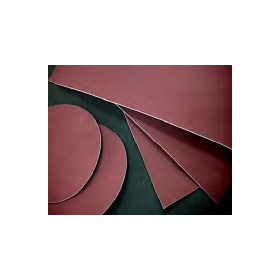
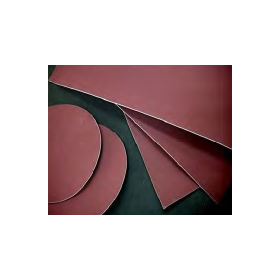
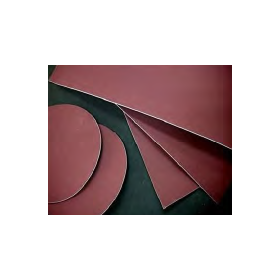
We would like to introduce our "Epoxy Pads." These pads are suitable for precision polishing of glass products such as optical glass and LCD glass, surface polishing of metals like stainless steel, plastics, quartz, and mirror polishing of semiconductor wafers made from silicon and germanium. Additionally, their excellent pad wettability retains slurry, enhancing polishing efficiency, and thorough quality control leads to stable and consistent quality, improving the yield rate. 【Features】 ■ Standard Sizes - Epoxy Pad (mm): □460×460, Φ900, Φ1200 - Epoxy Urethane Pad (mm): □460×460, Φ900 ■ Thickness: Standard thickness (mm): 0.5, 0.8, 1.25, 1.5 ■ Secondary Processing: Also supports tape processing and groove processing *For more details, please feel free to contact us at the information below. 【Contact Information】 Yachiyo Micro Science Co., Ltd. Grinding and Polishing Division, Sales Department TEL: 03-3256-6011 (Tokyo) / 06-6948-6671 (Osaka) E-mail: contact@ymi.co.jp
Added to bookmarks
Bookmarks listBookmark has been removed
Bookmarks listYou can't add any more bookmarks
By registering as a member, you can increase the number of bookmarks you can save and organize them with labels.
Free membership registration