1~45 item / All 81 items
Displayed results
Filter by category

Added to bookmarks
Bookmarks listBookmark has been removed
Bookmarks listYou can't add any more bookmarks
By registering as a member, you can increase the number of bookmarks you can save and organize them with labels.
Free membership registration
Contact this company
Inquiry Form1~45 item / All 81 items
Filter by category
In the electronics component industry, environmental management during the manufacturing process is emphasized to ensure product quality and reliability. Particularly in the cleaning process, the removal of fine contaminants directly affects product performance. Improper cleaning in unsuitable environments can lead to component failures and performance degradation. Our chemical adsorbent "Purafil SP" uses sodium permanganate as an oxidizing agent, increasing the amount of oxidizer compared to traditional potassium permanganate formulations, thereby enhancing its oxidative power. While ensuring safety, it can remove nitrogen oxides, formaldehyde, sulfur dioxide, and other gases through oxidation reactions, keeping the environment in the cleaning process clean. 【Application Scenarios】 - Air purification in the cleaning process of electronic components - Gas removal around manufacturing lines - Maintenance of the environment within clean rooms 【Benefits of Implementation】 - Reduction of contamination risks in the cleaning process - Stabilization of product quality - Improvement of the manufacturing environment
Added to bookmarks
Bookmarks listBookmark has been removed
Bookmarks listYou can't add any more bookmarks
By registering as a member, you can increase the number of bookmarks you can save and organize them with labels.
Free membership registration
In mining operations, especially underground, safety management due to the generation of hydrogen sulfide gas is crucial. Even low concentrations of hydrogen sulfide gas can affect the health of workers and cause corrosion of equipment. Therefore, it is essential to accurately detect trace amounts of hydrogen sulfide gas and take early measures. Our low-concentration hydrogen sulfide gas detector accurately measures ultra-low concentrations of hydrogen sulfide gas at the ppb level, supporting safety in underground environments. 【Usage Scenarios】 - Local gas concentration measurement in underground work areas - Monitoring hydrogen sulfide concentration in process gases - Sample measurement from gas backs 【Benefits of Implementation】 - Improved safety and health management for workers - Reduced risk of corrosion to equipment - Strengthened safety management systems
Added to bookmarks
Bookmarks listBookmark has been removed
Bookmarks listYou can't add any more bookmarks
By registering as a member, you can increase the number of bookmarks you can save and organize them with labels.
Free membership registrationIn the field of disaster prevention and crisis management, responses to unexpected natural disasters are required. In particular, accidents caused by volcanic gases not only evoke memories of the Ontake Mountain eruption disaster but are also reported every year, making their risks significant. With the revision of the active volcano law, local governments are mandated to ensure the safety of tourists, increasing the importance of monitoring volcanic gases. Our product helps understand the mechanisms by which volcanic gases (sulfur dioxide and sulfurous gas) affect the human body and supports rapid responses. Sulfur dioxide and sulfurous gas can damage airway epithelium and trigger inflammation, potentially leading to asthma attacks. Since individual tolerance to gases varies and effects can occur even at low concentrations, early detection and information sharing are essential. 【Usage Scenarios】 - Monitoring areas around volcanoes - Understanding gas concentrations during evacuation guidance - Safety management for tourists 【Benefits of Implementation】 - Early detection of rising gas concentrations, contributing to swift evacuation guidance - Supporting accurate situational judgment through gas information sharing among stakeholders - Reducing the risk of volcanic gas poisoning accidents
Added to bookmarks
Bookmarks listBookmark has been removed
Bookmarks listYou can't add any more bookmarks
By registering as a member, you can increase the number of bookmarks you can save and organize them with labels.
Free membership registration
In the rubber product manufacturing industry, it is necessary to address sulfur-based gases generated during the vulcanization process. Even at low concentrations, these sulfur-based gases can be highly corrosive and may cause failures in control equipment. Changes in resistance values due to corrosion of chip resistors can potentially affect the operation of control devices. JM Solutions Co., Ltd. provides comprehensive support from the investigation of sulfur-based gases to countermeasures, proposing environmental improvements tailored to our customers' sites. 【Application Scenarios】 - Measures against sulfur-based gas generation during the vulcanization process - Prevention of control equipment failures - Maintenance and improvement of factory operating rates 【Benefits of Implementation】 - Reduction of equipment failure risks due to corrosive gases - Achievement of stable operation of control equipment - Stabilization of production lines

Added to bookmarks
Bookmarks listBookmark has been removed
Bookmarks listYou can't add any more bookmarks
By registering as a member, you can increase the number of bookmarks you can save and organize them with labels.
Free membership registration
In the production line of automobile manufacturers, the manufacturing process of sulfide-based all-solid-state batteries may generate hydrogen sulfide gas due to materials, reactions, high-temperature treatments, and incomplete reactions. Hydrogen sulfide gas is toxic, making its monitoring and removal crucial for ensuring the safety of workers and the stable operation of the production line. 【Usage Scenarios】 - Manufacturing line for sulfide-based all-solid-state batteries - Heating and chemical processing of materials - Reaction processes - Research and development facilities 【Benefits of Implementation】 - Ensuring a safe working environment - Stable operation of the production line - Support for compliance with regulations
Added to bookmarks
Bookmarks listBookmark has been removed
Bookmarks listYou can't add any more bookmarks
By registering as a member, you can increase the number of bookmarks you can save and organize them with labels.
Free membership registration
In the semiconductor manufacturing industry and applications where cleanliness is required, it is important to accurately grasp the fluid flow rate and velocity within piping for stable plant operation and quality control. In particular, selecting measurement instruments is essential to prevent the contamination of fine pollutants and maintain the reliability of the manufacturing process. Our porous pitot tube, "Barflow Tube," has a lower permanent pressure loss compared to conventional throttling mechanisms, contributing to energy savings while stably detecting the average flow velocity within the piping. This supports process stabilization and quality maintenance. 【Usage Scenarios】 - Flow rate and velocity management of various fluids in semiconductor manufacturing lines - Airflow measurement in clean rooms - Fluid measurement in environments requiring precise process control 【Benefits of Implementation】 - Energy-saving effects due to low pressure loss - Improved process management through stable flow detection - Reliable data acquisition through measurement of average flow velocity within piping

Added to bookmarks
Bookmarks listBookmark has been removed
Bookmarks listYou can't add any more bookmarks
By registering as a member, you can increase the number of bookmarks you can save and organize them with labels.
Free membership registration
In shipyards, the suppression of nitrogen oxides (NOx) emissions in exhaust gases associated with welding operations is required. In particular, SCR (Selective Catalytic Reduction) systems play a crucial role in reducing environmental impact by converting NOx into nitrogen and water using urea or ammonia. However, if the uniform diffusion of urea water and its mixing with exhaust gases is insufficient, the denitrification efficiency may decrease. Our static mixer contributes to improving the denitrification efficiency of SCR systems by promoting the diffusion of urea water inline and effectively enhancing the mixing of urea water and exhaust gases throughout the flue. 【Usage Scenarios】 - Exhaust gas treatment of SCR systems for welding fume countermeasures - Promotion of uniform spraying of urea water and mixing with exhaust gases - Stabilization and improvement of denitrification efficiency 【Effects of Implementation】 - Reduction of NOx emissions - Strengthened compliance with environmental regulations - Maintenance and enhancement of SCR system performance
Added to bookmarks
Bookmarks listBookmark has been removed
Bookmarks listYou can't add any more bookmarks
By registering as a member, you can increase the number of bookmarks you can save and organize them with labels.
Free membership registration
In the incineration industry, it is essential to accurately grasp the amount of harmful substances emitted in exhaust gases and comply with environmental regulations. In particular, the exhaust gas flow rate fluctuates depending on the operating conditions of the incinerator and the type of fuel used, making precise flow measurement indispensable. Inaccurate measurements can lead to fines for exceeding regulatory limits and may result in environmental pollution. Our porous pitot tube bar flow tube can measure the flow rate and velocity of exhaust gases simply by inserting it into the flue. It supports compliance with environmental regulations at a low cost. 【Usage Scenarios】 - Measurement of exhaust gas flow rate from incinerators - Compliance with environmental regulations - Monitoring of exhaust gas flow rate 【Benefits of Implementation】 - Compliance with environmental regulations - Contribution to energy-saving operations in plants - Risk reduction through accurate flow measurement
Added to bookmarks
Bookmarks listBookmark has been removed
Bookmarks listYou can't add any more bookmarks
By registering as a member, you can increase the number of bookmarks you can save and organize them with labels.
Free membership registration
In the water treatment industry, chlorine gas is used in the disinfection process. This gas can corrode control equipment and surrounding facilities, potentially leading to failures. Equipment downtime affects the continuity of the water treatment process and can hinder stable supply. Our chlorine gas removal filter system eliminates chlorine gas using a chemical adsorbent, reducing the risk of equipment corrosion. 【Usage Scenarios】 - Near sources of chlorine gas in the disinfection process - Inside control panels - Within water treatment facility equipment 【Benefits of Implementation】 - Extended equipment lifespan - Maintenance of a stable water treatment process - Reduction in maintenance costs
Added to bookmarks
Bookmarks listBookmark has been removed
Bookmarks listYou can't add any more bookmarks
By registering as a member, you can increase the number of bookmarks you can save and organize them with labels.
Free membership registration
In the pulp industry, measures against hydrogen sulfide gas are required to protect the health and safety of workers. In particular, the generation of hydrogen sulfide gas from waste paper processing and wastewater treatment facilities not only deteriorates the working environment but also causes equipment failures due to corrosion. The Koro Shooter removes hydrogen sulfide gas and contributes to the improvement of the working environment. 【Usage Scenarios】 * Waste paper processing plants * Wastewater treatment facilities * Protecting the health and safety of workers 【Benefits of Implementation】 * Improvement of the working environment * Prevention of equipment failures due to corrosion * Cost-effective measures against hydrogen sulfide gas
Added to bookmarks
Bookmarks listBookmark has been removed
Bookmarks listYou can't add any more bookmarks
By registering as a member, you can increase the number of bookmarks you can save and organize them with labels.
Free membership registration
In the livestock industry, the odor caused by hydrogen sulfide gas generated from livestock waste is a significant issue. This unpleasant smell not only leads to complaints from nearby residents but can also adversely affect the health of workers and the growth environment of livestock. Our product removes sulfur gases and sulfide gases through chemical reactions, addressing the odor problem. It is ideal for countering hydrogen sulfide gas (H2S) and sulfur dioxide gas (SO2). 【Usage Scenarios】 - Livestock barns - Composting facilities - Wastewater treatment facilities - Other livestock-related facilities where odors occur 【Benefits of Implementation】 - Reduction of unpleasant odors - Improvement of the working environment - Measures against complaints from nearby residents - Enhancement of the growth environment for livestock
Added to bookmarks
Bookmarks listBookmark has been removed
Bookmarks listYou can't add any more bookmarks
By registering as a member, you can increase the number of bookmarks you can save and organize them with labels.
Free membership registration
In the incineration industry, it is essential to accurately grasp the amount of harmful substances emitted in exhaust gases and comply with regulatory values. Particularly, depending on the operating conditions of the incinerator, the exhaust gas flow rate can fluctuate, leading to variations in emissions, making accurate flow measurement crucial. Inaccurate flow measurement can result in excessive emissions and increase the environmental burden. Our porous pitot tube bar flow tube can measure the flow rate and velocity of exhaust gases simply by being inserted into the flue. It can be implemented at a low cost and contributes to energy-saving operations throughout the plant. 【Usage Scenarios】 - Measurement of exhaust gas flow rate from incinerators - Emission management - Energy-saving measures 【Benefits of Implementation】 - Emission management through accurate flow measurement - Low-cost implementation - Contribution to energy-saving operations across the plant
Added to bookmarks
Bookmarks listBookmark has been removed
Bookmarks listYou can't add any more bookmarks
By registering as a member, you can increase the number of bookmarks you can save and organize them with labels.
Free membership registration
In the chemical industry, reaction control relies heavily on the uniform mixing of reactants, which is a crucial factor influencing reaction efficiency and product quality. Particularly when mixing multiple liquids, achieving uniformity in mixing becomes a challenge. Uneven mixing can lead to reaction bias and the generation of by-products, potentially resulting in a decline in the quality of the final product. Our static mixer mixing evaluation experiments compare the mixing performance of plate-type and screw-type mixers, proposing the optimal mixing method. 【Application Scenarios】 - Mixing processes in chemical reaction processes - Manufacturing processes requiring the mixing of multiple liquids - Aiming to improve reaction efficiency 【Benefits of Implementation】 - Improved reaction efficiency - Stabilization of product quality - Potential cost reduction
Added to bookmarks
Bookmarks listBookmark has been removed
Bookmarks listYou can't add any more bookmarks
By registering as a member, you can increase the number of bookmarks you can save and organize them with labels.
Free membership registration
In the food processing industry, hygiene management of the manufacturing environment is crucial for maintaining product quality. Chlorine gas generated during the cleaning process can lead to product quality deterioration and corrosion of manufacturing equipment. Our chlorine gas removal filter system effectively removes chlorine gas using chemical adsorbents, contributing to the preservation of product quality. 【Usage Scenarios】 - Cleaning processes in food processing plants - Quality control departments - Protection of manufacturing equipment 【Benefits of Implementation】 - Reduced risk of product quality deterioration - Extended lifespan of manufacturing equipment - Stable supply of quality products
Added to bookmarks
Bookmarks listBookmark has been removed
Bookmarks listYou can't add any more bookmarks
By registering as a member, you can increase the number of bookmarks you can save and organize them with labels.
Free membership registration
In the automotive industry's quality control, managing harmful substances during the manufacturing process is crucial for ensuring product safety and reliability. Particularly in processes that use materials such as polyacetal resin (POM), it is necessary to properly manage the generation of formaldehyde gas. The formaldehyde meter htV quickly measures formaldehyde gas concentration, reducing risks in quality control by ensuring the safety of the work environment. 【Usage Scenarios】 - Polyacetal resin (POM) molding processing sites - Manufacturing sites handling chemical substances - Worker health management 【Benefits of Implementation】 - Improved safety of the work environment - Enhanced work efficiency through rapid measurement - Compliance with regulations
Added to bookmarks
Bookmarks listBookmark has been removed
Bookmarks listYou can't add any more bookmarks
By registering as a member, you can increase the number of bookmarks you can save and organize them with labels.
Free membership registration
In the power generation industry, accurate measurement of exhaust gas flow is required in response to environmental regulations. It is particularly important to accurately grasp the concentration of substances in exhaust gases and manage emissions appropriately to comply with legal regulations. Inaccurate measurements can lead to regulatory violations. Our porous pitot tube bar flow tube can measure the flow rate and velocity of exhaust gases simply by inserting it into the flue. It is low-cost and contributes to energy-saving operations in the plant. 【Usage Scenarios】 - Measurement of exhaust gas flow - Response to environmental regulations - Measurement of exhaust gases in flues 【Benefits of Implementation】 - Compliance with environmental regulations - Promotion of energy savings - Cost reduction
Added to bookmarks
Bookmarks listBookmark has been removed
Bookmarks listYou can't add any more bookmarks
By registering as a member, you can increase the number of bookmarks you can save and organize them with labels.
Free membership registration
In the safety management of chemical plants, accurate measurement of exhaust gas flow is essential for regulatory compliance and ensuring a safe working environment. Particularly, obtaining precise flow data is crucial for managing the risk of hazardous substance leaks and ensuring proper ventilation. Inaccurate measurements can increase the risk of accidents and potentially lead to plant shutdowns. Our porous pitot tube bar flow tube can measure the flow rate and velocity of exhaust gases simply by inserting it into the flue. It contributes to plant safety management at a low cost. 【Usage Scenarios】 - Monitoring the concentration of hazardous substances in exhaust gases - Optimizing ventilation systems - Compliance with regulatory requirements 【Benefits of Implementation】 - Improved safety through accurate flow measurement - Stable operation of the plant - Cost reduction
Added to bookmarks
Bookmarks listBookmark has been removed
Bookmarks listYou can't add any more bookmarks
By registering as a member, you can increase the number of bookmarks you can save and organize them with labels.
Free membership registration
In the steel industry, accurate measurement of exhaust gas flow is essential for the efficient operation of plants and energy conservation. Measuring exhaust gas flow leads to the optimization of combustion efficiency, proper management of equipment, and compliance with environmental regulations. Inaccurate measurements can result in energy waste and increased environmental impact. Our porous pitot tube bar flow tube can measure the flow rate and velocity of exhaust gas simply by inserting it into the flue. It contributes to energy-saving operations throughout the plant at a low cost. 【Application Scenarios】 - Measurement of exhaust gas flow in blast furnaces, converters, sintering furnaces, etc. - Understanding the emission levels of harmful substances in exhaust gas - Optimization of combustion efficiency 【Benefits of Implementation】 - Reduction of energy costs - Stable operation of the plant - Decrease in environmental impact
Added to bookmarks
Bookmarks listBookmark has been removed
Bookmarks listYou can't add any more bookmarks
By registering as a member, you can increase the number of bookmarks you can save and organize them with labels.
Free membership registration
In the rubber industry, measures against odors caused by sulfur gases generated during the vulcanization process are required. These odors not only worsen the working environment but also raise concerns about their impact on nearby residents. Additionally, sulfur gases can corrode the contact parts of control equipment, leading to failures. Our products have been developed to address these challenges. 【Application Scenarios】 - Vulcanization process in rubber factories - Locations where odor control is necessary - Places where the risk of control equipment failure needs to be reduced 【Effects of Implementation】 - Improvement of the working environment due to odor reduction - Reduction of the risk of control equipment failure - Increased factory operating rates
Added to bookmarks
Bookmarks listBookmark has been removed
Bookmarks listYou can't add any more bookmarks
By registering as a member, you can increase the number of bookmarks you can save and organize them with labels.
Free membership registration
In molding processing plants, managing the concentration of harmful substances is crucial to protect the health and safety of workers. In particular, the formaldehyde gas generated during the molding of polyacetal resin (POM) requires proper management. It is necessary to appropriately monitor the working environment based on the guidelines set by the Ministry of Health, Labour and Welfare. The formaldehyde meter htV quickly measures the concentration of formaldehyde gas, contributing to ensuring a safe environment for workers. 【Usage Scenarios】 - Polyacetal resin (POM) molding processing sites - Manufacturing sites handling chemical substances - Health management for workers 【Benefits of Implementation】 - Improved safety of the working environment - Enhanced work efficiency through rapid measurement - Compliance with regulations
Added to bookmarks
Bookmarks listBookmark has been removed
Bookmarks listYou can't add any more bookmarks
By registering as a member, you can increase the number of bookmarks you can save and organize them with labels.
Free membership registration
In the water supply and drainage industry, efficient water treatment is required at water purification plants. In particular, the uniform mixing of coagulants is a crucial factor that affects the purification effect. If coagulants are not mixed properly, floc formation may be hindered, leading to a decrease in purification efficiency. J.M.S.'s Static Mixer 2800 efficiently mixes coagulants using only inline plates, contributing to the optimization of the water purification process. 【Usage Scenarios】 - Coagulant injection at water purification plants - Individual liquid separation processes - Water treatment plants 【Benefits of Implementation】 - Improved efficiency of separation equipment - Energy-saving effects - Reduction in installation costs
Added to bookmarks
Bookmarks listBookmark has been removed
Bookmarks listYou can't add any more bookmarks
By registering as a member, you can increase the number of bookmarks you can save and organize them with labels.
Free membership registration
The continuously measured gas data is output as an analog signal of 4-20mA. The product is compact and lightweight, weighing 300g. It is ideal for the following individuals: - Those who want to create a system for observing volcanic gases. - Those who want to investigate gas concentration trends. - Those who want to measure volcanic gases without incurring high costs. - Those who are troubled by equipment failures caused by sulfur gas and sulfur dioxide. - Those who want to create a system for continuous observation of gas concentrations.
Added to bookmarks
Bookmarks listBookmark has been removed
Bookmarks listYou can't add any more bookmarks
By registering as a member, you can increase the number of bookmarks you can save and organize them with labels.
Free membership registration
Wireless gas monitoring logger. Battery-operated, so no power supply is needed. Uses 4G LTE mobile network to monitor gas data. As long as there is mobile signal reception, immediate gas monitoring can be performed. Ideal for: - Those who want to easily measure volcanic gases. - Those who want to investigate gas concentration trends. - Those who want to measure volcanic gases without incurring high costs. - Those struggling with equipment failures due to sulfur gas and sulfur dioxide.
Added to bookmarks
Bookmarks listBookmark has been removed
Bookmarks listYou can't add any more bookmarks
By registering as a member, you can increase the number of bookmarks you can save and organize them with labels.
Free membership registration
The continuously measured gas data is output as analog signals in 4-20mA. The product is compact and lightweight at 300g. Ideal for those who: - Want to create a system for observing sulfur gas. - Want to investigate gas concentration trends. - Want to measure hydrogen sulfide gas without incurring high costs. - Are troubled by equipment failures caused by sulfur gas or sulfur dioxide. - Want to create a system for continuous observation of gas concentrations.
Added to bookmarks
Bookmarks listBookmark has been removed
Bookmarks listYou can't add any more bookmarks
By registering as a member, you can increase the number of bookmarks you can save and organize them with labels.
Free membership registration
Wireless gas monitoring logger. Battery-operated, so no power supply is needed. Uses 4G LTE mobile network to monitor gas data. As long as there is mobile signal reception, immediate gas monitoring can be performed. Ideal for those who: - Want to easily measure sulfur gas and sulfide gas. - Want to investigate the gas concentration trend of hydrogen sulfide gas. - Want to measure sulfide gas and sulfur gas without incurring high costs. - Are troubled by equipment failures caused by sulfide gas and sulfur gas.
Added to bookmarks
Bookmarks listBookmark has been removed
Bookmarks listYou can't add any more bookmarks
By registering as a member, you can increase the number of bookmarks you can save and organize them with labels.
Free membership registration
The Coro Shooter protects equipment from corrosive gases caused by air pollution. India is experiencing significant economic development. On the other hand, air pollution has become a major social issue. The SOx and NOx contained in air pollution have high corrosive components, which can lead to equipment failure. The Coro Shooter removes SOx and NOx to purify the air and prevent equipment failure caused by corrosive gases.
Added to bookmarks
Bookmarks listBookmark has been removed
Bookmarks listYou can't add any more bookmarks
By registering as a member, you can increase the number of bookmarks you can save and organize them with labels.
Free membership registration
Simply plug it into the outlet to monitor the power supply. When events such as power interruptions, voltage drops, or sags occur, the details of the events are saved to the logger. Available in AC 100v and 200v models. The outlet shapes include Type A as well as international specifications Type O, SE, and BF.
Added to bookmarks
Bookmarks listBookmark has been removed
Bookmarks listYou can't add any more bookmarks
By registering as a member, you can increase the number of bookmarks you can save and organize them with labels.
Free membership registration
Potassium carbonate removes sulfur gas/sulfide gas in one go. It is ideal for countermeasures against hydrogen sulfide gas (H2S) and sulfur dioxide gas (SO2). Reaction equation with hydrogen sulfide gas: H2S + 2KOH + 2O2 → K2SO4 + 2H2O Reaction equation with sulfur dioxide gas: SO2 + 2KOH → K2SO3 + H2O
Added to bookmarks
Bookmarks listBookmark has been removed
Bookmarks listYou can't add any more bookmarks
By registering as a member, you can increase the number of bookmarks you can save and organize them with labels.
Free membership registration
By simply plugging it into an outlet, you can safely monitor and record the status of the AC power, including surges (voltage spikes), sags (voltage drops), impulses (instantaneous voltage fluctuations), frequency variations, phase angle, and power outages. Data analysis is performed on a computer, and the analyzed data can be displayed in graphic format or as a text file. Communication with the computer is done via an infrared optical sensor, ensuring complete electrical isolation from the AC power for safety. If the set alarm values (configured from the computer) are exceeded, a red LED will blink to indicate an abnormal condition (blinking can also be turned off).
Added to bookmarks
Bookmarks listBookmark has been removed
Bookmarks listYou can't add any more bookmarks
By registering as a member, you can increase the number of bookmarks you can save and organize them with labels.
Free membership registration
The only temperature data logger compliant with UL intrinsic safety explosion-proof standards MODEL: JR-1001 Class 1, Division 1, Groups A, B, C & D Class 2, Division 1, Groups E, F & G Class 3, Division 1, Hazardous Locations T3C Ideal for temperature measurement during the storage and transportation of flammable products such as explosives. Compact and lightweight (33×43×20mm, 35g), it allows for easy connection to a PC without the need for cables (RS-232C, D-Sub 9pin).
Added to bookmarks
Bookmarks listBookmark has been removed
Bookmarks listYou can't add any more bookmarks
By registering as a member, you can increase the number of bookmarks you can save and organize them with labels.
Free membership registrationVolcanic accidents remind us of the disaster caused by the eruption of Mount Ontake in 2014. However, in terms of the number of volcanic incidents, accidents due to volcanic gas poisoning are overwhelmingly more frequent and are reported every year. Additionally, with the revision of the Active Volcano Law, local governments are obligated to ensure the safety of tourists, increasing the importance of monitoring volcanic gases. This time, I will explain the mechanisms by which volcanic gases (sulfur dioxide and sulfurous gas) affect the human body. <Sulfurous Gas and Sulfur Dioxide (SO2)> Harmful gases such as sulfurous gas and sulfur dioxide (SO2) damage the epithelial lining of the airways. This damage leads to the accumulation of inflammatory cells in the airways, causing inflammation. Due to this inflammation, the airways become sensitive, leading to airway constriction and triggering asthma attacks. The type of inflammation varies among individuals, resulting in allergic asthma or COPD. It is believed that various factors, including genetic and environmental influences, contribute to these types. Therefore, individuals have different tolerances to the gas, and there have been reports of asthma patients experiencing attacks even at low concentrations of around 0.2 ppm. Additionally, it is said that there are many undiagnosed asthma patients who are unaware of their condition.
Added to bookmarks
Bookmarks listBookmark has been removed
Bookmarks listYou can't add any more bookmarks
By registering as a member, you can increase the number of bookmarks you can save and organize them with labels.
Free membership registrationVolcanic accidents remind us of the disaster caused by the eruption of Mount Ontake in 2014. However, the number of incidents related to volcanic accidents is overwhelmingly higher for those caused by volcanic gas poisoning, which are reported every year. Additionally, with the revision of the Active Volcano Law, local governments are now obligated to ensure the safety of tourists, increasing the importance of monitoring volcanic gases. This time, I will explain the mechanism by which volcanic gas (hydrogen sulfide gas) affects the human body. <Hydrogen Sulfide Gas H2S> Each cell that makes up our body requires respiration to live. Hydrogen sulfide gas has a property that allows it to easily dissolve into cells, causing respiratory distress and cell death, which leads to organ damage. Particularly, when lung cells are damaged, it can result in respiratory distress due to pneumonia or pulmonary edema, potentially leading to death. However, while high concentrations of hydrogen sulfide gas are dangerous to the human body, recent research suggests that low concentrations may have anti-inflammatory effects. This illustrates the fine line between poison and medicine. Perhaps the relief of fatigue after soaking in a hot spring is influenced by hydrogen sulfide gas?
Added to bookmarks
Bookmarks listBookmark has been removed
Bookmarks listYou can't add any more bookmarks
By registering as a member, you can increase the number of bookmarks you can save and organize them with labels.
Free membership registration
(1) Removal of Volcanic Gases Sulfur dioxide and hydrogen sulfide gases are highly corrosive components that can corrode metals and cause equipment failures. To prevent equipment failures in volcanic areas, hot spring regions, and geothermal power plants, we manufacture and sell devices for the removal of volcanic gases. We have numerous achievements in volcanic tourist areas and hot spring regions. (2) Observation of Volcanic Gases We manufacture, sell, and maintain volcanic gas (hydrogen sulfide and sulfur dioxide) observation disaster prevention systems for volcanic tourist areas across Japan. (3) Research and Development of Volcanic Gases We are also engaged in research and development on volcanic gas themes in collaboration with universities conducting Earth science research. We present our research at volcanology conferences and have obtained patents through industry-academia collaboration with universities.
Added to bookmarks
Bookmarks listBookmark has been removed
Bookmarks listYou can't add any more bookmarks
By registering as a member, you can increase the number of bookmarks you can save and organize them with labels.
Free membership registration
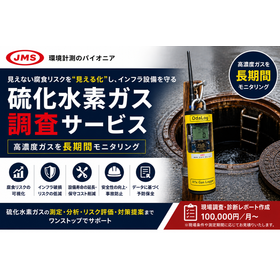
Continuous measurement for up to 6 months is possible. Measurements can be taken in the range of 0-2000 ppm and high concentration levels. No electrical work is required. You can simply hang the concentration meter at the site you want to measure to record the trends of hydrogen sulfide gas. (Please be careful not to submerge it.)
Added to bookmarks
Bookmarks listBookmark has been removed
Bookmarks listYou can't add any more bookmarks
By registering as a member, you can increase the number of bookmarks you can save and organize them with labels.
Free membership registration
Floating microscopic particles (including metal flakes and metal particles) and reactive gases can adversely affect servers, either alone or in combination with environmental factors such as humidity and temperature. The risks posed by excessively small particles or high concentrations of harmful gases may lead to server malfunctions or, in the worst case, complete system failures. IBM and AWS may have specified design environment specifications to manage data centers at level G1 of ASI/ISA71.04-1985. By measuring with corrosion gas test specimens, which are an environmental analysis method compliant with ISA S71.04-2013, it is possible to visualize the environment of the data center.
Added to bookmarks
Bookmarks listBookmark has been removed
Bookmarks listYou can't add any more bookmarks
By registering as a member, you can increase the number of bookmarks you can save and organize them with labels.
Free membership registration
There are various methods for removing hydrogen sulfide gas. In this instance, we conducted comparative experiments using (1) chemical adsorbent methods and (2) photocatalytic methods, which are commonly adopted for hydrogen sulfide gas countermeasures. We filled a 1m³ container with 3.4 ppm (3400 ppb) of gas and compared the removal performance of the chemical adsorbent method and the photocatalytic method. According to the data in the graph, it was found that the chemical adsorbent method sharply decreased the gas concentration compared to the photocatalytic method. While the photocatalytic method took about 120 seconds to reduce the concentration from 3.4 ppm to 0 ppm, the chemical adsorbent completed the removal in approximately 40 to 50 seconds. It can be concluded that by adopting a removal device using a chemical adsorbent, it is possible to minimize the time that electronic devices are exposed to hydrogen sulfide gas when it intrudes.
Added to bookmarks
Bookmarks listBookmark has been removed
Bookmarks listYou can't add any more bookmarks
By registering as a member, you can increase the number of bookmarks you can save and organize them with labels.
Free membership registration
The Pitot tube has a rod-like shape. It is inserted vertically into the piping to measure flow rate. Holes are provided on the rod to detect total pressure and static pressure. By measuring the differential pressure (also called dynamic pressure), the flow velocity of the fluid flowing in the pipe can be determined. The multi-hole Pitot tube has multiple holes on the rod that comply with JIS B 8330, allowing for the measurement of average flow velocity. The two pressure sensing pipes that exit the Pitot tube are connected to the high-pressure and low-pressure sides of a differential pressure transmitter. The differential pressure is converted to flow rate through square root calculation processing by the differential pressure transmitter. It is often used for measuring exhaust gas flow rates in large-diameter ducts. Large-diameter ducts (300A or 500A and above) cannot be manufactured with orifice plates or are very costly, making the Pitot tube flow meter a strong option. Among flow meters, the Pitot tube is simple and relatively low-cost.
Added to bookmarks
Bookmarks listBookmark has been removed
Bookmarks listYou can't add any more bookmarks
By registering as a member, you can increase the number of bookmarks you can save and organize them with labels.
Free membership registration
Hydrogen sulfide gas is highly toxic, and concentrations of hydrogen sulfide gas above 10 ppm can lead to a diminished sense of smell, with headaches and nausea potentially occurring quickly. At high concentrations around 800 ppm, the risk of acute poisoning increases, and the possibility of death arises. However, even at low concentrations of hydrogen sulfide gas at the ppb (0.05 ppm) level, which have no impact on the human body, the effects on equipment can be significant. According to ISA standards, gas management for electrical control equipment is required to be below 50 ppb. Machinery is more vulnerable to hydrogen sulfide gas than humans, necessitating strict management.
Added to bookmarks
Bookmarks listBookmark has been removed
Bookmarks listYou can't add any more bookmarks
By registering as a member, you can increase the number of bookmarks you can save and organize them with labels.
Free membership registration
Purafil SP uses sodium permanganate as an oxidizing agent. Compared to the conventional chemical adsorbent using potassium permanganate (Purafil Select), it enhances the oxidizing power by filling it with the oxidizing agent. While ensuring safety, Purafil SP can increase the oxidizing power compared to Purafil Select. It can remove nitrogen oxides, formaldehyde, sulfur dioxide, and other substances through oxidation reactions.
Added to bookmarks
Bookmarks listBookmark has been removed
Bookmarks listYou can't add any more bookmarks
By registering as a member, you can increase the number of bookmarks you can save and organize them with labels.
Free membership registration
Oxidation of microorganisms and organic matter: Potassium permanganate has the ability to react with and oxidize microorganisms and organic matter. This helps to remove unpleasant odors and harmful microorganisms from the air, demonstrating a purifying effect. Odor removal: Potassium permanganate is particularly effective as an oxidizing agent against organic matter, allowing it to decompose and neutralize substances that cause unpleasant or foul odors. By keeping the amount of potassium permanganate, which needs to be handled with care, to a minimum, safety is ensured. It can also be used safely during handling.
Added to bookmarks
Bookmarks listBookmark has been removed
Bookmarks listYou can't add any more bookmarks
By registering as a member, you can increase the number of bookmarks you can save and organize them with labels.
Free membership registration
This is an adsorbent that removes chlorine gas through a chemical reaction. It prevents corrosion caused by chlorine gas. Unlike physical adsorbents like activated carbon, chemical adsorbents remove gas through chemical reactions, so there is no concern about gas re-release.
Added to bookmarks
Bookmarks listBookmark has been removed
Bookmarks listYou can't add any more bookmarks
By registering as a member, you can increase the number of bookmarks you can save and organize them with labels.
Free membership registration
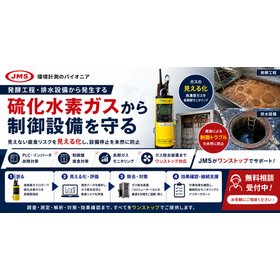
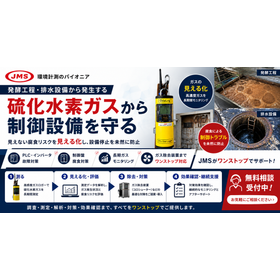
The steam used for power generation at geothermal power plants contains hydrogen sulfide gas components. Even low concentrations of hydrogen sulfide gas, which do not affect the human body, can have a significant impact on the control equipment within the power plant. Hydrogen sulfide gas is invisible and has a heavy specific gravity, allowing it to infiltrate the electrical rooms and control rooms that manage the power plant through various pathways, leading to corrosion and failure of the equipment. JM Solutions Co., Ltd. provides total support for hydrogen sulfide measures within geothermal power plants, from investigation to countermeasures.
Added to bookmarks
Bookmarks listBookmark has been removed
Bookmarks listYou can't add any more bookmarks
By registering as a member, you can increase the number of bookmarks you can save and organize them with labels.
Free membership registrationA centrifuge is a device that generates centrifugal force by high-speed rotation to separate components of a liquid mixture. Coagulants are used to optimize this separation process by causing fine particles and impurities in the liquid mixture to aggregate or precipitate, thereby activating the separation process. When mixing the liquid mixture with the coagulant, properly stirring the coagulant allows for rapid centrifugation. A static mixer 2800 is used in this mixing, enabling efficient centrifugation and contributing to energy savings in the plant by reducing operating time. Additionally, cleaning is easy, and maintenance is very high, allowing for a reduction in running costs after adoption.
Added to bookmarks
Bookmarks listBookmark has been removed
Bookmarks listYou can't add any more bookmarks
By registering as a member, you can increase the number of bookmarks you can save and organize them with labels.
Free membership registration
The main reason hydrogen sulfide gas is generated during the manufacturing process of sulfide-based solid-state batteries is due to the materials and reactions used in the manufacturing process. In the manufacturing process, the materials that make up the components of sulfide-based solid-state batteries include sulfides. When these sulfides are heated or undergo chemical treatment, they may decompose and produce hydrogen sulfide gas. In battery manufacturing, multiple reactions can occur simultaneously. In some reaction processes, sulfides may change, resulting in hydrogen sulfide being produced as a byproduct. The manufacturing of sulfide-based solid-state batteries may involve high-temperature processing. When materials change at high temperatures, there is a possibility that sulfides will decompose and generate hydrogen sulfide. If incomplete reactions occur during the process or if impurities are present, this may contribute to the generation of hydrogen sulfide from sulfides. Since hydrogen sulfide gas is toxic and hazardous, monitoring and removal of hydrogen sulfide gas are necessary in factories and research facilities.
Added to bookmarks
Bookmarks listBookmark has been removed
Bookmarks listYou can't add any more bookmarks
By registering as a member, you can increase the number of bookmarks you can save and organize them with labels.
Free membership registration
In artificial dialysis performed at dialysis facilities and medical institutions, wastewater treatment and pH adjustment are important factors. In artificial dialysis, a dialysis machine is used to purify the patient's blood. The dialysis solution used in this process generates a large amount of waste liquid, which needs to be properly treated. Wastewater treatment is carried out to safely discharge the waste liquid into the environment. The general procedure involves filtering the waste liquid to remove impurities and harmful substances. Additionally, chemical treatment and the use of activated carbon may also be employed to reduce the concentration of organic and inorganic substances in the waste liquid. Furthermore, adjusting the pH of the waste liquid is also crucial in wastewater treatment for artificial dialysis. pH adjustment may be performed using acidic or alkaline substances. A common method is to add an appropriate amount of acid or alkali to adjust the pH of the dialysis solution. This process is conducted while monitoring the pH of the dialysis solution using a pH meter. The wastewater treatment and pH adjustment for artificial dialysis must be properly managed in facilities such as hospitals and dialysis centers. When stirring is performed with an inline mixer, establishing the conditions for piping flow velocity allows for the maintenance of consistent stirring conditions.
Added to bookmarks
Bookmarks listBookmark has been removed
Bookmarks listYou can't add any more bookmarks
By registering as a member, you can increase the number of bookmarks you can save and organize them with labels.
Free membership registration