Even with the same water, if the measurement method or the reference liquid is different, the values will change? This explains the mechanism of turbidity units and how to read the reference values.
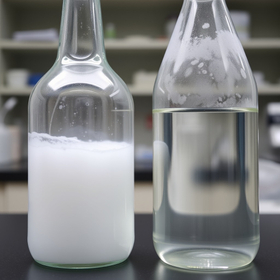
Turbidity is an indicator that represents the degree of cloudiness in water. The causes of cloudiness can include the mixing of suspended substances such as soil, or the chemical changes of substances dissolved in water. The size of the particles that contribute to cloudiness ranges widely from 1 nm to 1 mm. ■ Is turbidity measured with "light"? A turbidity meter shines light through water and measures the transmitted light that is weakened by being obstructed by particles, as well as the scattered light that is deflected by the particles. There are methods that measure only transmitted light and others that measure both transmitted and scattered light. Scattered light can be received in a 90-degree direction or collected using an integrating sphere. ■ How is it different from SS? SS (suspended solids) is an indicator that measures the weight of the material left after filtering water through a 2 mm sieve and then a filter paper with a pore size of 1 μm. Turbidity looks at changes in light, while SS looks at weight. The output of a turbidity meter using infrared backscattering is proportional to the specific surface area of the particles, and for coarse particles, the correlation with concentration may not be clear. Even with the same SS, the turbidity value can vary depending on the size of the particles. Please feel free to consult us first.
Inquire About This Product
basic information
■ There is not just one way to determine "degree"? The unit of turbidity changes depending on which substance's turbidity is used as a reference. The main units are as follows: 1. Degree (Kaolin): A turbidity of 1 degree is defined as containing 1 mg of standard kaolin in 1 L of purified water. 2. Degree (Formazin): A turbidity of 1 degree is defined as containing 1 mg of formazin in 1 L of purified water. It is also referred to as FTU. 3. NTU: A unit based on the measurement method EPA 180.1 in the United States, using formazin as the standard solution. ■ NTU and FTU According to materials from the National Institute for Land and Infrastructure Management, NTU is considered equivalent to FTU. ■ The "degree" of tap water is based on polystyrene! Since kaolin is a natural clay, the properties of the particles can vary. Therefore, in the water quality testing of tap water, the method was revised in 2003 to calibrate using a suspension of polystyrene-based particles. ■ Does the value change even with the same water? Even with the same sample, the turbidity values can change depending on the measurement method. Values from turbidity meters with different methods cannot be directly compared. When comparing values, make sure to check that the measurement methods and calibration standards are aligned.
Price range
Delivery Time
Applications/Examples of results
■What does a turbidity standard value of 2 degrees for drinking water mean? According to the ministerial ordinance regarding water quality standards, the turbidity of drinking water is set to be 2 degrees or lower. Additionally, there is a target value of 1 degree or lower as a water quality management goal. Microorganisms attached to turbidity particles are partially protected from disinfection. Turbidity is an important factor not only in terms of appearance but also from a disinfection perspective. ■Is factory wastewater not regulated by turbidity?! The uniform wastewater standards set by the ministerial ordinance do not include a turbidity item. The relevant item concerning turbidity is the amount of suspended solids (SS), with a permissible limit of 200 mg/L (daily average of 150 mg/L). This applies to factories and businesses that discharge an average of 50 cubic meters or more of wastewater per day. There may be stricter standards set by prefectural ordinances. ■Things to check before measuring turbidity 1. Measurement location: Is it raw water, filtered water, or wastewater? 2. Value range: Is it low turbidity or high turbidity? 3. Units and calibration: What standard solution is the value based on? 4. Measurement method: Will it be monitored continuously or measured from a sample? ■Consultation on turbidity management Our company offers coagulants and water quality measurement equipment and services. Please feel free to consult with us first.
catalog(2)
Download All Catalogs

Company information

Since our founding, we have continued to provide flexible services with the motto of accurately supplying a diverse range of products that respond to changes in the times and the diversification of consumer needs, tailored to various applications and requirements. With the corporate slogan "Chemical Engineering Partner," we, as a group of experts in chemical technology, actively discover ideas to solve our customers' problems from advanced technologies both domestically and internationally, and propose them.