


A system that can centrally manage equipment maintenance operations. We will provide introductory materials on "Three Steps to Successfully Implement Field DX" and a collection of case studies.


Easy operation management with a smartphone! More convenient with added features like a dashcam!


We provide systems that meet the needs of all sectors of the machinery industry.


【Demo units available for rental upon inquiry!】Power distribution board / distribution board fixed and transport carrier with easy mobility on casters!

Effective printing security system for information leakage prevention and personal data protection.


Creating shifts that align with appropriate budgets and time is easy! It is equipped with a wealth of features to solve various challenges.

Visualize the process! It is possible to continuously deliver better products to customers.


Safe transmission of drawings and specifications without email attachment. Minimize the risk of information leakage with deadlines and passwords.

Evaluate employees' achievements with points! By praising them, we draw out their motivation and create a sense of unity in the workplace.


Significantly improve response quality! A case of outsourcing operational maintenance work that also achieved a shift to core business activities!


Operation is only through screen touch! We support the labor management tasks of crew members.

If you want to know tips for maintaining not just doing the 3 regulars, please refer to this.

Both on-site operations and accounting ledgers. Unifying all aspects of mold management.

You can check the location information and estimated arrival time of the ready-mix concrete truck on-site. Time management from factory shipment to on-site arrival can be performed.


Guarantees the authenticity of all electronic data. Enables the enhancement of the security of electronic data through timestamps quickly and economically.


Reduction of the workload for the key management officer! Managing "who took out which key, when, and when it was returned."


Achieving automated transportation with AGVs! A case where the utilization of existing shelves became possible through system integration.

WMS "Rojizard ZERO" continues to be chosen by over 1,800 sites, accelerating the digital transformation of logistics operations with implementation in as little as one month and 365 days of support!


Contributing to the efficiency and cost reduction of payroll processing.

Log in from your computer or mobile device! You can easily view it anytime, anywhere.


We will introduce examples of providing extensive support for the preparation of materials for internal controls and lectures for stakeholders, as well as support for the internal implementation of new business launches!


Catalog revisions and production will be carried out through automated processing by a program. This will result in shorter delivery times, significant cost reductions, and the elimination of errors.

Introducing three challenges in spare parts management and four key points for efficient execution!

This will explain the handling of municipal HACCP by prefecture and standards that can replace municipal HACCP.

We have compiled content that will be useful for managers aiming to elevate the SQC level of the entire organization!


Maximum effect with minimal settings! Easily control the pump of the coolant system. Fine-tune which pump to control.


Now, it's clear at a glance who is doing what! Complete security with cloud solutions for businesses.


Visualizing the series of flows in examination operations.

Digitalize your company's purchasing rules as they are! A purchasing system that fits complex workflows: "Jienie2.0 PROCURESUITE."


Sales and delivery management system for towel rental businesses.
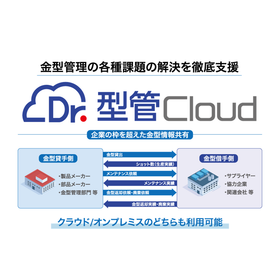

From individual company mold management to integrated management including business partners. Supporting the visualization of mold location information by consolidating related parties to comply with the "appropriate use law."


Utilization of RFID radar functionality for product and inventory search. A case study of significant reduction in stockouts.
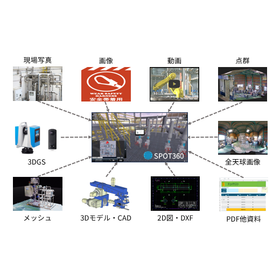

Integrating on-site information into a single 3D map, managing and reviewing the site while in the office.


No need for LAN construction or dedicated servers! You can read multiple tags at once within the reading range.


Introduction to the Sales Management System "Business Revolution" for Machinery and Tool Trading Companies Handling a Variety of Low-Volume Products.

On-site weather observations will be conducted to measure "wind direction, wind speed, rainfall, temperature, humidity, and atmospheric pressure."

Market valuation function, swap function, commitment function, and collateral management are all standard features!


We will inform the driver of safe driving and operational precautions in real-time through voice alerts.


Specialized in long materials, capable of providing cutting instructions for long materials.

Annual costs reduced by 50%! This is a case study of the implementation of the human resource management solution Generalist.


We connect all users who need 3D measurement operators and measurement results! [Product demo now available]


Support in pairs! Customization is also possible if it doesn't fit your company's operations.


Covers about 90% of all failure modes without additional sensors! Discovering new efficiency through condition-based maintenance.

Improving asset monitoring through data integration! A case study that saved $2.6 million.


Easily switch between in-person and remote! Even remote, which tends to be avoided, can be easily booked!

Standardization of proposal skills! Employees with insufficient experience can consult their supervisors in advance on how to proceed with business negotiations.


A service that provides real-time information about the position and movement of vessels, as well as their current location within the port.


Complete everything from schedule sharing to meeting hosting with "Microsoft Teams"!

We visualize the overall picture of IT infrastructure and provide efficient and consistent services.


Universal Control System (UCS) that realizes AI × Cloud × Real-time Control, which could not be achieved with conventional DCS.


"Repair costs" and "capital expenditures" that influence the life cycle cost.


A budget management and management accounting solution that leverages the convenience and flexibility of Excel while addressing its drawbacks, and pursuing availability, maintainability, and safety.


Increase corporate reliability and recognition! Streamline the management of dormitory and company housing entry and exit! Support the visualization of dormitory management and employee benefits.


[Trial Available] Reduce inventory time by 83% with handheld terminal inventory.

The event will be held from September 16 (Wednesday) to September 18 (Friday), 2026! A seminar will also be held on September 18 (Friday).
★★★Starting from 800 yen per month, you can manage business cards and customer information★★★ / Fully support the 7 important areas of DX with a "one tool"!


No staff, extended business hours! Expanding to 24-hour service and early morning and late-night hours.

Based on extensive experience and know-how, we can provide comprehensive support from site construction to shipping!

We will introduce a case where we successfully transitioned to a sales model on our own e-commerce platform, enabling a variety of promotional activities!
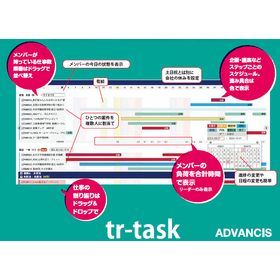

Visualize the processes and workloads of personnel for each project from design to shipping on a single screen. Achieve maximum results with a limited workforce.
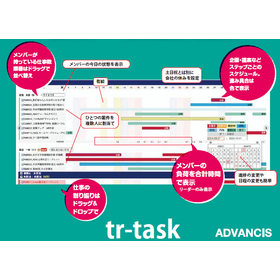
From basic design to construction management, share the progress of the project and the staff's workload using color and time.

Is your recruitment site stalled due to the hassle of updates? We provide continuous support from system management to update outsourcing.

The application of "overtime work limit regulations" to the construction industry can be implemented without burden!


A comprehensive diagnostic test that reveals intellectual abilities and job suitability.


ÖSSUR has successfully standardized both the processes and systems of its three large logistics centers and the growing number of regional warehouses.

Let's promote equipment maintenance DX, advance technology transfer, and aim for improved productivity!

Let's execute efficient and reliable equipment maintenance operations with the equipment inspection app!

Introducing the differences from post-event maintenance and specific improvement examples! Let's consider the efficiency gained through the implementation of preventive maintenance systems.

Explaining the four required abilities and key points to engage the field!

We will also introduce the purposes, history, and roles of production management!

I will provide a detailed explanation of the overview of Poka-Yoke, the benefits of its implementation, and specific examples of countermeasures!

Please use this as a tip to advance OJT more effectively and enhance the overall development capability of the organization!

Please look for hints on how to transform training into organizational strength while reducing the burden on the field!

I will provide a detailed explanation of the overview, the 10 items to be addressed, as well as specific creation methods and tips for operation!

By following the correct procedures to advance business standardization, we can achieve improved operational efficiency, increased productivity, and enhanced customer satisfaction!

A clear explanation of the differences from the manual and how to create it! We will also introduce ways to utilize it to improve work efficiency and enhance quality.

We will also introduce the importance of hygiene management and three key points to prevent accidents.

We will also introduce the features and costs of each management app, as well as how to choose them by industry!

I will explain the differences between A, B, C and HACCP, as well as the process for obtaining certification!

Introducing the differences between goal-oriented and problem-solving approaches, as well as specific methods for advancing strategies and identifying key areas to target.

Introducing the challenges and concerns of inspection records in the manufacturing industry, along with successful cases of moving away from paper.

We will clearly explain the basic concept of 4M, as well as the derived "5M + 1E" and "6M," and how to apply them in the field!

Not only will we provide an overview, but we will also introduce the reasons for occurrence, how to find them, and how to aim for productivity improvement through enhancements!

Introducing the points on purpose and writing style, as well as precautions when creating and managing.

Introducing the issues and benefits of handwritten daily reports, along with points to consider during implementation and examples.

This explains the meaning and importance of near misses, common examples by industry, and how to write reports that help prevent recurrence.

Introducing three standards related to and different from ISO 9001! Also explaining the important role of PDCA in building a QMS.

Check the differences between HACCP Standard A and Standard B, as well as the implementation costs for each!

A detailed explanation of the purposes and types of quality inspection! Including microbiological testing and allergen testing.

Explain the specific duties, scope, and areas of responsibility! Provide detailed explanations with examples.

We will also explain the basics of near-miss incidents and KYT (Hazard Prediction Training)!