


Easy management on a computer! A compact and lightweight welding current meter that supports multiple waveform displays.


Confirm the operation and stop of small-capacity load equipment and load changes with current data. It supports daily inspections and the detection of abnormal signs.
Continuously measure the simple electric power consumption for each equipment and line. Differences can be compared based on operating conditions and production time periods.
Add measurement points to large equipment circuits ranging from 125A to 630A. Record alternating current by operating days, time periods, and durations, which can be used to verify equipment operation.


Smart and highly accurate leak detection! Precisely detecting minute leakage currents.

Measure the current of the rack distribution board and important circuits. For load verification during equipment updates and server expansions.
Continuing measurement of extrusion processes for circuits ranging from 125A to 630A. You can compare the variety, production lot, operating time, setting change records, and current history.


45 size analog meters! A variety of analog meters ranging from ammeters to frequency meters! Instruments for distribution boards, control panels, sub-distribution boards, and panels.

08 size analog meter! A variety of analog meters ranging from ammeters to frequency meters! Instruments for distribution boards, control panels, sub-distribution boards, and panels.

An example of a system configuration using the "PAL Series Sensor × PUSHLOG" that enables immediate visualization of power without the need for server or network setup.

Introducing a system configuration example using the "PAL Series Sensor × CEW-M4," ideal for large-scale centralized management visualization!
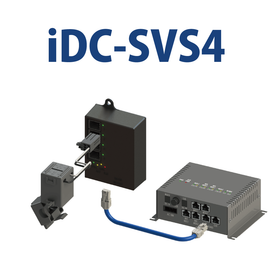
Concentrated monitoring of up to 1,024 points | Power distribution board monitoring system for data centers
Check the alternating current of the load equipment over time. This can be used as a basis for equipment maintenance decisions regarding operating conditions and load trends.
Understanding power usage trends during nighttime, breaks, and downtime by circuit. Supporting the review of operations during standby.
Add measurement points to existing circuits from 125A to 630A using a split clamp type. Choose according to circuit capacity and cable diameter, and it can be integrated with Modbus.

68 size analog meters! A variety of types of analog meters ranging from ammeters to frequency meters! Instruments for distribution boards, control panels, distribution panels, and panels.

Instrument (digital meter) for measuring and indicating three-phase alternating current ★★★ Instruments for distribution boards, control panels, distribution panels, and panels.
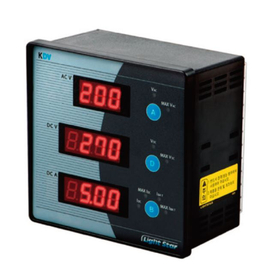
Electronic multi-meter for rectifier panels ★★★ Instruments for distribution boards, control panels, distribution panels, and panels.

Electric digital meter for measuring and displaying leakage current. Also has a built-in alarm relay. ★★★ Instruments for distribution boards, control panels, distribution panels, and panels.


Measure the leakage current (I0r) under live line conditions. Data management and anomaly management are easy with the logging function.

Compact IoT Sensor for AC Current Measurement with Modbus RTU

Compact IoT Sensor with Built-in Modbus RTU Communication for Circuit-Level AC Current Measurement (125–630A)

We will introduce an example of a system configuration using the "PAL series sensors × PLC," which is optimal for taking the first step towards visualizing electricity by utilizing already installed equipment.

You can safely and easily install sensors using the "retrofit clamp-type sensor" without stopping the equipment currently in operation.

Retrofit Visibility for High-Capacity PDU, UPS Secondary, and Rack Distribution Circuits
Multi-point measurement of branch current of the rack PDU using split clamp type, visualizing load imbalance and changes for each circuit.
Comparing type E and type E2 in terms of circuit configuration and current capacity. We assist in selecting simple electric energy sensors suitable for factory distribution boards and equipment circuits.
AC current sensor "PAL-Plus Large Capacity Version" compatible with 125A to 630A.


This is a phase meter used for voltage matching tests and VCT combination tests at power generation and transformation stations.


If you're considering easy power management and energy-saving measurement, take this opportunity with this one unit.


Safer, easier to use, and more efficient! Equipped with audible and visual alarms "Input Alert".

1mm + 2mm probe with K thermocouple! The carefully selected tip is strong and durable.

Slim and thin Joe easily fits into densely packed wires! Introducing a multifunctional integrated tool.

Large battery capacity with 4 AA batteries! The easy-to-read measurement/generation screen can display input and output simultaneously.

Measures AC/DC voltage, resistance, continuity, capacitance, diodes, and voltage/current frequency!

Battery life is up to 800 hours! Operating temperature range from -40℃ (up to 20 minutes) to +55℃!

50-size analog meters! A variety of analog meters ranging from ammeters to frequency meters! Instruments for distribution boards, control panels, distribution panels, and panels.
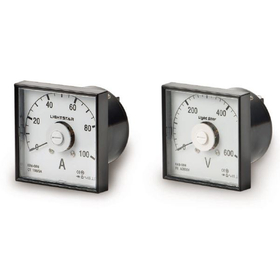
08N size analog meter! A variety of analog meters ranging from ammeters to frequency meters! Instruments for distribution boards, control panels, distribution panels, and panels.

11-size analog meters! A variety of analog meters ranging from ammeters to frequency meters! Instruments for distribution boards, control panels, distribution panels, and panels.

Digital meter for measuring and displaying leakage current. Also displays voltage, harmonics, etc. Built-in alarm relay. ★★★ Instruments for distribution boards, control panels, distribution panels, and panels.

Portable power quality analyzer (meter) ★★★ Instruments for distribution boards, control panels, distribution panels, and panels.
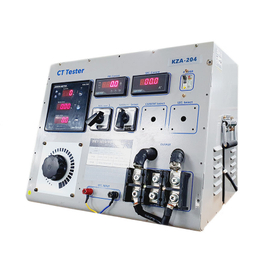
Testing device (tester) for current transformers and voltage transformers ★★★ Instruments for distribution boards, control panels, distribution panels, and panels.

Instrument for measuring current transformers and voltage transformers (error meter) ★★★ Instruments for distribution boards, control panels, distribution panels, and panels.

Equipment capable of managing motors ★★★ For distribution boards, control panels, distribution panels, and panels.

A multifunctional multimeter for distribution boards equipped with a beautiful design and communication functions, collection meter ★★★ Instruments for distribution boards, control panels, distribution panels, and panels.


Measurable in 8 items! A compact device that requires no computer or power supply and is portable.

Recording measurement data on 16G memory! Zero Resistance Ammeter


Standard external magnetizing ammeter that is compact, lightweight, and low-cost.

Microcurrent measurement unit for embedded systems

The current logger LogStick LS200-A operates on a button battery. Its compact design allows for easy measurement and recording anywhere.


High-performance voltmeter, high-resistance meter, pA meter


Achieving further miniaturization and weight reduction! Wide-range high-precision multimeter.

It is also possible to measure leakage current on the output (secondary side) of three-phase inverters and motors.


KYORITSU: Capable of measuring 4-20mA DC loop current without circuit interruption, ideal for signal measurement in process instrumentation and building instrumentation.

KYORITSU: Slim, ultra-lightweight, pocket-sized AC clamp


Multi-functional with 4 roles in 1 device! Digital DC integrated ammeter for plating management using a touch panel.


Please select a model that suits your needs.

Compact detachable jaw AC/DC current clamp meter that meets on-site requirements.

You can measure current without disconnecting the 4-20mA circuit.

A compact multifunction calibrator equipped with the functions required by process engineers.


Supports a wide frequency range from several Hz to 30 MHz! Ultra-thin probe with a cross-section of 1.7 mm.

Reduce unnecessary voltage disturbances caused by capacitive coupling! Accurate current measurement is possible.
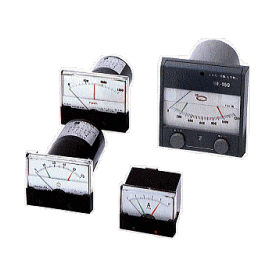
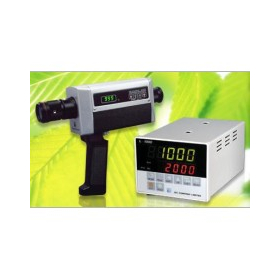
Ideal for power monitoring. A non-contact meter relay with excellent seismic and shock resistance.
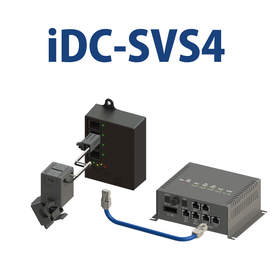
A remote monitoring system that is optimal for centrally monitoring the operational status of distribution boards, compatible with measurements of alternating current and direct current.

Simplify power monitoring for each facility with smart sensors featuring built-in communication functions and an intuitive, visual manager software.

We will introduce the environment in which our products are made, showcasing the Hexacore headquarters and factory.

You can start visualizing easily and at low cost with IoT sensors that have built-in communication functions.

Modbus-Enabled Remote Monitoring for Power Panels, UPS Systems, and HVAC Loads

Retrofit Current Monitoring to Existing Panels, PDUs, and Bus-Duct Branches

Retrofit Current Monitoring into Distribution Panels, PDUs, and PDPs

Collecting circuit-specific current from the data center via Modbus. Utilizing the existing monitoring environment for visualization.

Modbus-compatible split clamp-type sensor that makes it easy to consider retrofitting to racks and distribution boards.

Visualizing the current for each circuit. For comparing loads between racks and checking before and after equipment expansion.

Before adding servers or changing equipment, carefully check the current of the rack branch circuit.

Continuously monitor the current changes of racks and PDUs, from daily monitoring to situation confirmation during troubles.

Visualize the load status of high-capacity circuits with a Modbus-compatible current sensor. It supports a range from 125A to 630A, making it compatible with a wide variety of equipment.

Retrofitting current monitoring to existing systems. We support the visualization of current data while considering the burden of facility renovations.

Integrating AC current data with PLC, BMS, and SCADA. We support IoT monitoring utilizing the existing Modbus infrastructure.

Expand the monitoring points gradually according to the required number of circuits. Supports multi-circuit monitoring for up to 31 units and a maximum distance of 100m.

First, we will confirm compatibility and communication from one circuit. We will start small and support the gradual expansion of power monitoring to match operational needs.
Measured using large-capacity circuits that supply power to equipment groups and auxiliary systems. You can compare records of production schedules, operating days, maintenance work, and current fluctuations.
Record the alternating current of the factory master and line branches over time. Confirm trends at the factory and line level, and then organize the lower circuits to examine in detail.


A measurement solution for more efficient and rational measurement of voltage, current, and temperature of electric components in vehicles (EV, HEV, PHEV).


Printer equipped! Introducing the standard model of the ammeter for resistance welding machines.


"Peak current 30A to 300kA" can be used in narrow space circuits! For measuring AC current! *Demo unit available.

Easy to use with a thin and soft material! Current probe for power electronics development.

Capable of measuring CW and pulse modulation with a single unit.