
List of Mixing and Stirring Equipment products
- classification:Mixing and Stirring Equipment
46~60 item / All 534 items


It won't break even after 1 million repetitions! A mat switch with reliable operation, high durability, and low price. Suitable for options in machine tools as well. Please consult us about delivery t...
- Sensors


We can accommodate high resistance over 10,000 ohms, with diameters ranging from approximately 30 mm to 8 inches, and we also offer thinning and chip processing arrangements!
- Other semiconductors
- Processing Contract
- Wafer
![[LAB MILL2 Grinding Example] Adzuki...](https://image.mono.ipros.com/public/product/image/226060/IPROS7845556568149503583.png?w=280&h=280)

Using a small milk cup (processing capacity 50mL), crush 10g of adzuki beans in 60 seconds!
- Crusher/Mill
![[LAB MILL2 Grinding Example] Black ...](https://image.mono.ipros.com/public/product/image/226060/IPROS9366276349463366399.png?w=280&h=280)
Using a small mill cup (processing capacity 50mL), grind 5g of black pepper in 60 seconds!
- Crusher/Mill
![[LAB MILL2 Grinding Example] Small ...](https://image.mono.ipros.com/public/product/image/226060/IPROS153458897344618234.png?w=280&h=280)
Using a small milk cup (processing capacity 50mL), crush 5g of small fish in 60 seconds!
- Crusher/Mill
![[LAB MILL2 Grinding Example] Cabbag...](https://image.mono.ipros.com/public/product/image/226060/IPROS1168309255412782396.png?w=280&h=280)
Crushing 4g of cabbage in 30 seconds using dry ice for cooling!
- Crusher/Mill
![[LAB MILL2 Grinding Example] Salmon...](https://image.mono.ipros.com/public/product/image/226060/IPROS11822961883075523091.png?w=280&h=280)
Crushed 7g of salmon into powder in 30 seconds using dry ice cooling!
- Crusher/Mill
![[LAB MILL2 Grinding Example] Sausag...](https://image.mono.ipros.com/public/product/image/226060/IPROS14901457517484460967.png?w=280&h=280)
Crushed 6g of sausage in 30 seconds using dry ice cooling!
- Crusher/Mill
![[LAB MILL2 Grinding Example] Chicke...](https://image.mono.ipros.com/public/product/image/226060/IPROS4375947570019939317.png?w=280&h=280)
Using dry ice for cooling grinding, 8g of two pieces of chicken breast were ground in 30 seconds!
- Crusher/Mill
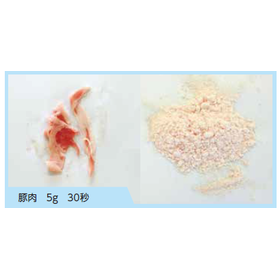
Crushing 5g of pork in 30 seconds using dry ice cooling!
- Crusher/Mill
![[LAB MILL2 Grinding Example] Chocol...](https://image.mono.ipros.com/public/product/image/226060/IPROS14712499702599994567.png?w=280&h=280)
Crushed 3g of chocolate bar in 20 seconds using cooling grinding with dry ice!
- Crusher/Mill
![[LAB MILL2 Grinding Example] Chocol...](https://image.mono.ipros.com/public/product/image/226060/IPROS16861082096258605469.png?w=280&h=280)
Crushing two chocolate candies in 20 seconds using dry ice cooling!
- Crusher/Mill
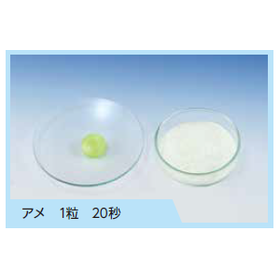
Crushing a piece of candy in 20 seconds using dry ice for cooling!
- Crusher/Mill
![[LAB MILL2 Grinding Example] Lettuc...](https://image.mono.ipros.com/public/product/image/226060/IPROS3997390145084047460.png?w=280&h=280)
Crushing 4g of lettuce in 30 seconds using dry ice cooling!
- Crusher/Mill
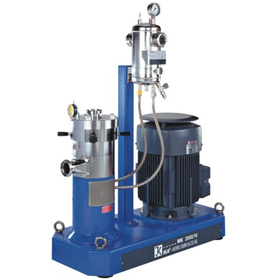

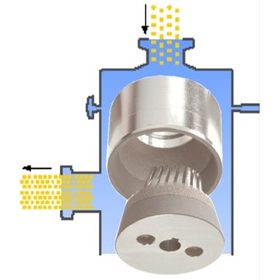
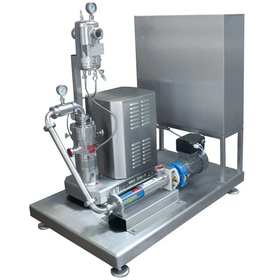
Contributes to improving dispersion efficiency and reproducibility in the pre-mixing process before bead milling.
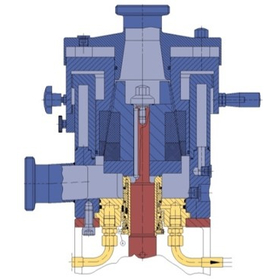
- Emulsifier/Disperser
- Vacuum degassing machine
- Dispersion/emulsification equipment/homogenizer
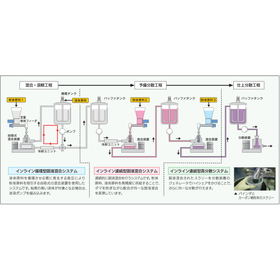
What is decentralized process design? Key points for stabilizing quality.
In dispersion engineering, stable quality cannot be achieved solely based on the performance of the equipment. What is important is the overall design of the process, taking into account material properties and process conditions. This is referred to as dispersion process design. Dispersion quality is determined not only by the strength of shear but also by multiple factors such as flow state, residence time, and method of input. If these conditions are not properly designed, localized agglomeration or variation can occur, making it difficult to maintain stable quality. For example, poor wetting during powder input or the occurrence of stagnant areas due to flow bias can lead to clumping or dispersion issues. Additionally, even if the shear energy is sufficient, if it does not act uniformly on all particles, differences in dispersion state will arise. Therefore, in dispersion processes, it is crucial to design "flow," "shear," and "processing time" as an integrated system. This allows for all particles to receive the same dispersion history, achieving uniform and highly reproducible dispersion quality. In particular, inline continuous processing has the advantage of maintaining consistent conditions within the flow, making it easier to ensure reproducibility in process design. Dispersion process design is a key concept for stabilizing quality and successfully scaling up.


For a wide range of applications in emulsification, dispersion, suspension, and dissolution! An emulsifying and dispersing machine that enables high-speed continuous processing.
- Emulsifier/Disperser
- Dispersion/emulsification equipment/homogenizer
- Mixer/agitator
![[Data] Case Studies on Crushing, Cl...](https://image.mono.ipros.com/public/product/image/52219/IPROS7404856649183842959.png?w=280&h=280)

A wide range of product lineup and issues that can be solved! We will introduce numerous case studies of crushing, classification, and disintegration equipment.
- Crusher
- Classifier