List of Physics and chemistry equipment products
- classification:Physics and chemistry equipment
991~1035 item / All 15617 items
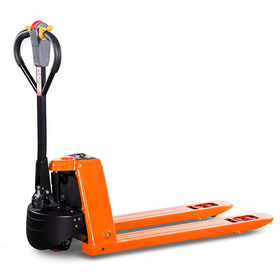
Reduce the workload from handling heavy objects! Here are five case studies that solved customer challenges! We are also accepting free consultations and tests tailored to your work!
- Other conveying machines
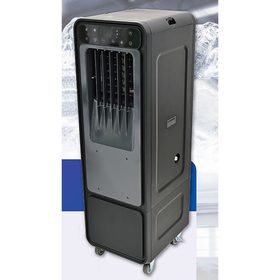
Strong cold wind from room temperature to -13°C! Depending on the usage environment, you can choose between the combo type or the separate type!
- Cooling system
April 10, 2024 (Wednesday) to April 12, 2024 (Friday) Notice of Participation in Nagoya Manufacturing World 2024
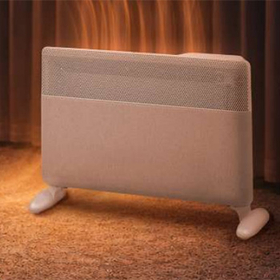
Sanwa Shiki Ventilator Co., Ltd. will be exhibiting at the 2024 Monozukuri World (Nagoya) held at Port Messe Nagoya. We will also be showcasing our large cooling fans and cool/warm ambient products. Date: April 10, 2024 - April 12, 2024 Opening: 10:00 AM Location: Nagoya Port Messe (Exhibition Hall 1) *Our booth: 19-1 We would be grateful if you could visit us if you have the time.
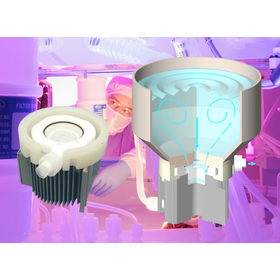
High cleaning performance, suitable for advanced sanitary environments! It stirs powerfully even with a small opening!
- Mixer/agitator
- mixer
- Mixer
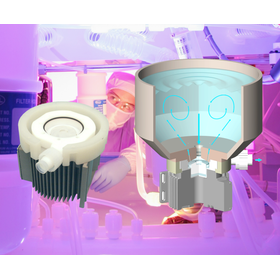
Quickly wet powders such as gum and thickeners! Innovative integrated dynamic mixing head.
- Mixer/agitator
- mixer
- Mixer
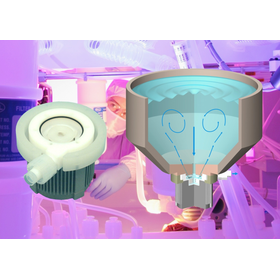
Large solids such as polymers can be instantly crushed, dissolved, and dispersed!
- Mixer/agitator
- mixer
- Mixer
From the disintegration of solid materials to the stirring of high-viscosity liquids! Technical documentation on bottom entry mixers.
- Mixer/agitator
- mixer
- Mixer
Disperse and mix the powder while sucking it into the liquid! Ideal for dissolving gelling agents and thickeners.
- Mixer/agitator
- mixer
- Powder Mixer
Standard hot water system with pump, heater, and temperature control unit.
- Drying Equipment
If you want to achieve both high hygiene standards and versatility of use, the Ultra Sanitary Series is the way to go!
- Mixer/agitator
- mixer
- Mixer
Process efficiency improvement! Reduction of processing time possible! Many models available according to processing volume!
- Mixer/agitator
- mixer
- Mixer
This one machine is easy to operate and high-performance for research, development, and small-scale production!
- Mixer/agitator
- mixer
- Mixer
The power of in-line mixing and advanced sanitation shines even in small-scale production at the pilot scale!
- Mixer/agitator
- mixer
- Mixer
Achieve powerful in-line mixing even on a lab scale! The range of small mixers expands!
- Mixer/agitator
- Mixer
- mixer
Unchanging stirring power, even in a narrow test tube!
- Mixer/agitator
- mixer
- Mixer
A reliable device for working in sterile environments, mixing hazardous substances, and operating under vacuum!
- mixer
- Mixer/agitator
- Mixer
Prevent oxidation with dried nitrogen gas using high-pressure air.
- Drying Equipment
Hopper-type hot air dryer. Bulk dryer for plastic pellets and the like.
- Drying Equipment
Dispersion is not determined by the equipment. It is determined by the process design of the resin dispersion system.
- Emulsifier/Disperser
- Vacuum degassing machine
- Dispersion/emulsification equipment/homogenizer
What are the causes and countermeasures for quality variation in dispersed engineering? An explanation of design points to prevent instability in particle size distribution and reduced reproducibility.
In dispersion processes, issues such as unstable particle size distribution and quality variation between batches occur in many settings. These quality variations are caused not only by equipment performance but also by variations in dispersion conditions, flow states, and process design. For example, when shear energy is uneven, differences arise in the disintegration state of particles, leading to a wider particle size distribution and residual agglomeration. Additionally, in batch processing, variations in mixing uniformity and residence time can cause fluctuations in dispersion state between batches, making it difficult to ensure reproducibility. Particularly in high-viscosity systems or high solid content slurries, even slight variations in conditions can significantly impact quality. To suppress quality variations, it is crucial to design processes that maintain consistent dispersion energy and flow conditions. By stabilizing conditions, as in inline continuous processing, it becomes possible to reduce inter-batch differences and achieve stable dispersion quality. Furthermore, in dispersion processes, not only the performance of the equipment itself but also operating conditions such as input order, residence time, and flow control greatly affect quality. Inline continuous processing makes it easier to maintain these conditions consistently, ensuring stable dispersion even in high-viscosity slurries. By designing the entire process, it is possible to fundamentally suppress quality variations.
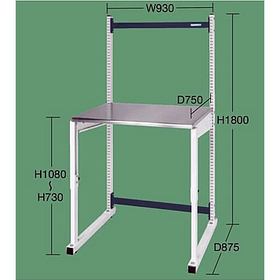
Reduce excessive sitting work. A meeting desk that allows you to quickly stand and sit with electric height adjustment.
- Stainless steel container
Ideal for planting and harvesting tasks in greenhouses and fields.
- Stainless steel container
Non-slip seal ideal for forklifts and outdoor work.
- Stainless steel container
Stretch film 14μ × W500 × L300m, 30 boxes, 180 rolls per set.
- Stainless steel container
Small and lightweight compression load cell for force measurement.
- Stainless steel container
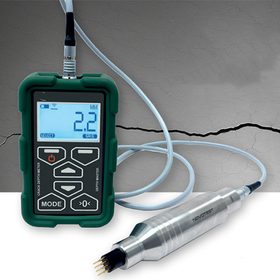
With a tip diameter of φ6mm, it can thoroughly inspect deep into narrow piping with a long cable of up to 40m.
- Stainless steel container
Inspect every corner of the twisted piping with a flexible cable. The 7-inch large monitor displays the interior of the pipe in a big way.
- Stainless steel container
It is possible to place the entire shelf frame into the furnace due to its large size.
- Drying Equipment
Corrosion-resistant dryer with SUS316 specifications.
- Drying Equipment
Mixing multiple liquids and combinations of organic and inorganic solvents are both acceptable! We are flexible in accommodating customizations based on your requests.
- Other physicochemical equipment
- Chemicals
High-pressure air used for dry air generator.
- Drying Equipment
- Other processing machines
Support the cold chain with exceptional energy efficiency! Providing an efficient cooling environment.
- Refrigerators and freezers
- freezer
- Cooling system
The quality of the battery slurry is determined by the process. A dispersion design that can be reproduced from research to mass production.
- Emulsifier/Disperser
- Vacuum degassing machine
- Dispersion/emulsification equipment/homogenizer
Thanks to our unique dispersion system, we can achieve the mixing and dispersion of fine powders in a short time without generating lumps! We can accommodate both continuous and batch processes.
- Emulsifier/Disperser
- Vacuum degassing machine
- Dispersion/emulsification equipment/homogenizer
Reproducibility of slurry dispersion is created from process design.
- Emulsifier/Disperser
- Vacuum degassing machine
- Dispersion/emulsification equipment/homogenizer
Why can't powders be supplied stably? - What causes supply irregularities in low bulk density powders?
In low bulk density powders and fine powders, issues such as "unstable supply," "pulsation," and "bridging without falling" frequently occur. Particularly with CNTs, carbon black, and flake powders, the particles tend to entangle easily and have low flowability, making stable quantitative supply difficult with conventional powder feeding methods. When powder supply becomes unstable, instantaneous concentration fluctuations occur, significantly affecting the dispersion quality, viscosity, and conductivity in subsequent processes. In practice, even problems that appear to be "poor dispersion" often have their causes on the powder supply side. Moreover, in low bulk density powders, bridging, rat-holing, and supply pulsations due to air entrapment are likely to occur within the hopper, and simply relying on feeder capacity may not resolve these issues. To achieve stable supply, it is crucial to design the entire process, including hopper design, supply methods, transport conditions, and feeding methods, according to the characteristics of the powder. Our company offers a solid-liquid mixing process that includes quantitative supply using loss-in-weight feeders and integration with inline dispersion devices. By designing the entire process from powder supply to dispersion as a cohesive unit, we support the establishment of stable manufacturing conditions even for high-performance materials.
The quality of the positive electrode slurry is determined by the process, not the equipment. A dispersed design that takes mass production into account.
- Emulsifier/Disperser
- Vacuum degassing machine
- Dispersion/emulsification equipment/homogenizer
The dispersion quality of battery materials is determined by the process. A solid-liquid mixing dispersion system that suppresses agglomeration and aggregation.
- Emulsifier/Disperser
- Vacuum degassing machine
- Dispersion/emulsification equipment/homogenizer
What are the causes and countermeasures for quality variation in dispersed engineering? An explanation of design points to prevent instability in particle size distribution and reduced reproducibility.
In dispersion processes, issues such as unstable particle size distribution and quality variation between batches occur in many settings. These quality variations are caused not only by equipment performance but also by variations in dispersion conditions, flow states, and process design. For example, when shear energy is uneven, differences arise in the disintegration state of particles, leading to a wider particle size distribution and residual agglomeration. Additionally, in batch processing, variations in mixing uniformity and residence time can cause fluctuations in dispersion state between batches, making it difficult to ensure reproducibility. Particularly in high-viscosity systems or high solid content slurries, even slight variations in conditions can significantly impact quality. To suppress quality variations, it is crucial to design processes that maintain consistent dispersion energy and flow conditions. By stabilizing conditions, as in inline continuous processing, it becomes possible to reduce inter-batch differences and achieve stable dispersion quality. Furthermore, in dispersion processes, not only the performance of the equipment itself but also operating conditions such as input order, residence time, and flow control greatly affect quality. Inline continuous processing makes it easier to maintain these conditions consistently, ensuring stable dispersion even in high-viscosity slurries. By designing the entire process, it is possible to fundamentally suppress quality variations.
Dispersion is not determined by the equipment. It is determined by the process design of the solid-liquid mixing dispersion system.
- Dispersion/emulsification equipment/homogenizer
- Emulsifying and dispersing machine
- Emulsifier/Disperser
What are the causes and countermeasures for quality variation in dispersed engineering? An explanation of design points to prevent instability in particle size distribution and reduced reproducibility.
In dispersion processes, issues such as unstable particle size distribution and quality variation between batches occur in many settings. These quality variations are caused not only by equipment performance but also by variations in dispersion conditions, flow states, and process design. For example, when shear energy is uneven, differences arise in the disintegration state of particles, leading to a wider particle size distribution and residual agglomeration. Additionally, in batch processing, variations in mixing uniformity and residence time can cause fluctuations in dispersion state between batches, making it difficult to ensure reproducibility. Particularly in high-viscosity systems or high solid content slurries, even slight variations in conditions can significantly impact quality. To suppress quality variations, it is crucial to design processes that maintain consistent dispersion energy and flow conditions. By stabilizing conditions, as in inline continuous processing, it becomes possible to reduce inter-batch differences and achieve stable dispersion quality. Furthermore, in dispersion processes, not only the performance of the equipment itself but also operating conditions such as input order, residence time, and flow control greatly affect quality. Inline continuous processing makes it easier to maintain these conditions consistently, ensuring stable dispersion even in high-viscosity slurries. By designing the entire process, it is possible to fundamentally suppress quality variations.
Thanks to our unique dispersion system, mixing and dispersing fine powders can be achieved in a short time without causing clumping! We can accommodate both continuous and batch processes.
- Emulsifier/Disperser
- Vacuum degassing machine
- Dispersion/emulsification equipment/homogenizer
Supports CNT aggregation prevention and uniform dispersion. Assists in stabilizing the quality of conductive material slurry through continuous processing.
- Emulsifier/Disperser
- Powder Supply Device
- Dispersion/emulsification equipment/homogenizer
What causes clumping when adding powder? Design points for preventing and addressing poor dispersion.
In dispersion processes, the occurrence of agglomerates (clumps) during powder addition, which cannot be resolved in subsequent dispersion stages, is a common issue in many settings. The cause of this is that the powder does not wet uniformly in the liquid, leading to the formation of localized high-concentration areas. These agglomerates are also referred to as "fisheyes," and due to their internal unwetted structure, they are difficult to break apart. Once an agglomerate forms during powder addition, liquid has difficulty penetrating its interior, resulting in only the outer layer being wetted, which makes it hard for the internal particles to be disintegrated. Additionally, depending on the addition position and speed, the powder may float on the liquid surface or remain stagnant without following the flow within the equipment, promoting the formation of agglomerates. Particularly under conditions of high viscosity or high solid content, the low fluidity makes it challenging to achieve uniformity in the initial dispersion stage, leading to a higher likelihood of agglomerates remaining. Such agglomerates may not be completely resolved even with strong shear in subsequent processes, causing variations in the quality of the final product and introducing foreign substances. To prevent the formation of agglomerates, it is crucial to improve wettability during powder addition, ensure appropriate addition positions and flow design, and optimize the initial dispersion. By performing shear and mixing simultaneously right after addition, as in inline powder addition and simultaneous dispersion, it is possible to suppress the formation of agglomerates and achieve stable dispersion quality.
Easily agglomerated CNF, uniformly without clumping. The quality of dispersion is determined by process design.
- Emulsifier/Disperser
- Dispersion/emulsification equipment/homogenizer
- Emulsifying and dispersing machine