
List of Physics and chemistry equipment products
- classification:Physics and chemistry equipment
1~45 item / All 15745 items


It won't break even after 1 million repetitions! A mat switch with reliable operation, high durability, and low price. Suitable for options in machine tools as well. Please consult us about delivery t...
- Sensors


We can accommodate high resistance over 10,000 ohms, with diameters ranging from approximately 30 mm to 8 inches, and we also offer thinning and chip processing arrangements!
- Other semiconductors
- Processing Contract
- Wafer


[Issue] The oil-soaked sludge is heavy, the oil removal process is difficult, and the floor is covered in oil!
- Separation device
- Solid-liquid separation filter
- Filtration Equipment

[Issue] The frequency of filter replacement is high, considering other methods!
- Separation device
- Solid-liquid separation filter
- Filtration Equipment

[Issue] Particulate sludge that cannot be removed accumulates at the bottom of the tank after cutting!
- Separation device
- Solid-liquid separation filter
- Filtration Equipment

[Issue] The maintenance costs for liquid replacement work due to the deterioration of coolant fluid are burdensome!
- Separation device
- Solid-liquid separation filter
- Filtration Equipment

[Issue] Severe malfunctions due to aging deterioration and clogging!
- Separation device
- Solid-liquid separation filter
- Filtration Equipment

[Issue] It is necessary to continue using the cylindrical grinding machine for precise work while maintaining accuracy!
- Separation device
- Solid-liquid separation filter
- Filtration Equipment
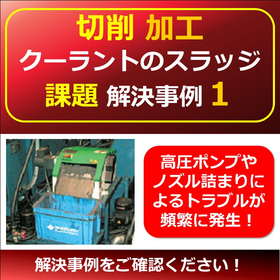
[Issue] Problems frequently occur due to clogging of high-pressure pumps and nozzles!
- Separation device
- Solid-liquid separation filter
- Filtration Equipment

[Issue] Maintenance tasks such as tank cleaning are difficult with just a paper filter!
- Separation device
- Solid-liquid separation filter
- Filtration Equipment
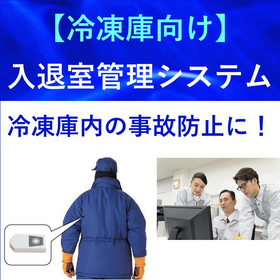
A system that activates the office's patrol light to issue a warning if a person stays in the freezer for more than 30 minutes. To prevent accidents in the freezer.
- Entrance and exit control system
- IC tag
- Refrigerators and freezers

Achieving high dewatering performance of sludge and high durability of the roller!
- Separation device
- Solid-liquid separation filter
- Filtration Equipment

[Issue] During manufacturing, a lot of moisture and oil residue remains in the iron powder, causing concern!
- Separation device
- Solid-liquid separation filter
- Filtration Equipment

[Issue] Insufficient sludge recovery, and operational stoppages during work!
- Separation device
- Solid-liquid separation filter
- Filtration Equipment

[Issue] A problem has arisen where sludge tends to accumulate when the materials used change!
- Separation device
- Solid-liquid separation filter
- Filtration Equipment

[Issue] Fine sludge cannot be completely removed, and it accumulates to about half of the tank in three months!
- Separation device
- Solid-liquid separation filter
- Filtration Equipment

Sludge recovery rate increased by three times! Tank cleaning frequency reduced to one-third!
- Separation device
- Solid-liquid separation filter
- Filtration Equipment

Maintenance such as coolant fluid replacement and cleaning has drastically decreased!
- Separation device
- Solid-liquid separation filter
- Filtration Equipment

Powerfully collect "sludge" in coolant liquid using a magnetic method!
- Separation device
- Solid-liquid separation filter
- Filtration Equipment

(Sludge Recovery) Successful Case 1 (The cutting fluid lifespan of the casting machining center has doubled!)
1. Background of Introduction - In the case of cast iron cutting, the chips are fine and contain a large amount of carbon, which frequently causes problems due to clogging of high-pressure pumps and nozzles... 2. Effects After Introduction - As a result of a two-month test, the lifespan of the cutting fluid was extended to twice as long, and the defect rate showed astonishing results... ★ For more details, please be sure to check the "Case Study Materials"! ☆ We can provide proposals based on usage conditions and installation environments in collaboration with the manufacturer.

The magnet separator method creates a difference in "sludge recovery capability" / Maintenance-free, no liquid replacement for 7 years!
- Separation device
- Solid-liquid separation filter
- Filtration Equipment
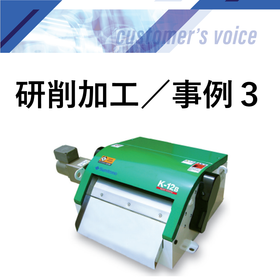
The magnet separator method creates a difference in "sludge recovery capability" / Maintenance can be troublesome, and it's also easy to forget about maintenance!
- Separation device
- Solid-liquid separation filter
- Filtration Equipment

The magnetic separator method creates a difference in "sludge recovery capability" / The lifespan of the magnetic drum is extended, and operational costs are drastically reduced!
- Separation device
- Solid-liquid separation filter
- Filtration Equipment

The magnet separator method creates a difference in "sludge recovery capability" / Stable quality that can maintain the obvious. Over 30 years of trust and achievements!
- Separation device
- Solid-liquid separation filter
- Filtration Equipment

The magnet separator method creates a difference in "sludge recovery capability" / Significantly reduces costs and time loss in cleaning!
- Separation device
- Solid-liquid separation filter
- Filtration Equipment

The magnetic separator method creates a difference in "sludge recovery capability" / The lifespan of cutting fluid in machining centers for castings is doubled!
- Separation device
- Solid-liquid separation filter
- Filtration Equipment

The magnet separator method creates a difference in "sludge recovery capability" / The accumulation of sludge in the coolant tank of the machining center has drastically decreased!
- Separation device
- Solid-liquid separation filter
- Filtration Equipment

The magnet separator method creates a difference in "sludge recovery capability" / Zero oil removal in shaving processing contributes to extending pump life!
- Separation device
- Solid-liquid separation filter
- Filtration Equipment

Non-magnetic sludge is also filtered powerfully! A unit model combining "paper filter" and "magnet" is also available, significantly reducing the consumption of filter paper.


- Separation device
- Solid-liquid separation filter
- Filtration Equipment

[Product Catalog] Paper Filter Method / Information on Coolant Liquid and Sludge Recovery Equipment
The "paper filter" removes impurities such as grinding sludge and abrasive particles, and is a coolant treatment device that can be used regardless of magnetic or non-magnetic materials. We also offer a unit model that combines the "magnet separator" and "paper filter," which can be utilized for various applications such as grinding machines, honing machines, and wire drawing machines. 【Features】 1. Three types available for different applications (including models combined with magnets) 2. Capable of filtering average particles from 10μ to 95μ 3. Significantly reduces the consumption of filter paper (paper filter) ★ For more details, please check the "product catalog."

(Surface grinding) Sludge recovery case study (Company N) ▲ Is there anything better in terms of durability and filtration accuracy?
- Separation device
- Solid-liquid separation filter
- Filtration Equipment

If the deterioration of the magnetic separator is left unaddressed, the likelihood of reduced sludge recovery increases. Please take advantage of our "free inspection service" for preventive maintenan...
- Separation device
- Solid-liquid separation filter
- Filtration Equipment

Information on the free inspection service for "magnet separators."
If the deterioration of the magnetic separator is left unaddressed, the possibility of reduced sludge recovery increases. Please take advantage of our "Free Inspection Service" for preventive maintenance. ◆ Do you have any of these concerns with your "magnetic separator"? - I don't know how to perform maintenance! - I don't know the guidelines for parts replacement! ◆ Leaving the deterioration unaddressed increases the likelihood of various issues occurring: ▲ Sludge is not being discharged! ▲ The separation of oil and water is worsening! ◇ The "Free Inspection Service" will assist in preventive maintenance. 1. Overview of the "Free Inspection Service": - Inspect all operating "magnetic separators" in your factory. - Comprehensive assessment and reporting on the condition of major components and coolant fluid, etc. 2. Benefits of the "Free Inspection Service": - Understand the operating status and deterioration condition, which aids in preventive maintenance. - The model name and other details will be included in the "report." This makes parts procurement easier in case of a failure, etc. ★ The "catalog" contains specific examples of deterioration and inspection items. - Sales Agent: Sanotech Co., Ltd. - Manufacturer: Sumitomo Heavy Industries Fine Tech Co., Ltd. (We will provide explanations from the manufacturer.)

Introducing a case study of a semiconductor manufacturing company that achieved cost reduction in the manufacturing process of magnetic paste (MAG PICKER / wet type).
- Separation device
- Solid-liquid separation filter
- Filtration Equipment

【Chemical Material Manufacturing】 Magnetic Fine Powder / Recovery Case Magnet-Type Magnetic Separator "MAG PICKERⓇ / Wet Type"
【New Application】Introducing a case where an electronic component manufacturing company achieved cost reduction in the manufacturing process of magnetic paste (using MAG PICKER/wet method) 1. Overview Continuous concentration of magnetic pastes such as nickel and ferrite, achieving appropriate moisture content - Recovery of magnetic materials using a rotating powerful magnet drum - Achieving appropriate moisture content by adjusting rotation speed and roller pressure 2. Target Industry Manufacturers of electronic components and magnetic fine powders, chemical, material, and chemical-related companies, etc. 3. Target Issues ▲ As the fine particle size of magnetic powders increases, the filtration time using filters also increases, etc. 4. Results After Implementation ◎ The time required for paste generation using conventional filters has been significantly reduced ☆ Please download the "catalog" to check the specifications ★ Evaluation units are available for loan upon arrangement --------------------------------------- ◇ Sales Agent - Sanotec Co., Ltd. - Email: dx-gogo@sanotec.co.jp ◆ Manufacturer - Sumitomo Heavy Industries Fine Tech Co., Ltd. (explanations available from the manufacturer)

Introducing a case where "arsenic" contained in contaminated sludge was removed to below environmental standard levels (MAG PICKER / wet method).
- Separation device
- Metal detection and detection equipment
- Filtration Equipment
【Chemical Material Manufacturing】 Magnetic Fine Powder / Recovery Case Magnet-Type Magnetic Separator "MAG PICKERⓇ / Wet Type"
【New Application】Introducing a case where an electronic component manufacturing company achieved cost reduction in the manufacturing process of magnetic paste (using MAG PICKER/wet method) 1. Overview Continuous concentration of magnetic pastes such as nickel and ferrite, achieving appropriate moisture content - Recovery of magnetic materials using a rotating powerful magnet drum - Achieving appropriate moisture content by adjusting rotation speed and roller pressure 2. Target Industry Manufacturers of electronic components and magnetic fine powders, chemical, material, and chemical-related companies, etc. 3. Target Issues ▲ As the fine particle size of magnetic powders increases, the filtration time using filters also increases, etc. 4. Results After Implementation ◎ The time required for paste generation using conventional filters has been significantly reduced ☆ Please download the "catalog" to check the specifications ★ Evaluation units are available for loan upon arrangement --------------------------------------- ◇ Sales Agent - Sanotec Co., Ltd. - Email: dx-gogo@sanotec.co.jp ◆ Manufacturer - Sumitomo Heavy Industries Fine Tech Co., Ltd. (explanations available from the manufacturer)

◆ Introduction to "4 Successful Cases" of Sludge Recovery from Cutting Process/Coolant Liquid!


- Filtration Equipment
- Separation device
- High-power magnetic separator, magnetic filter

【Solid-liquid separation / Separation of magnetic and non-magnetic materials / Moisture content adjustment / Foreign matter removal】 ◇ Drum-type "magnetic separator" capable of continuous magnetic sel...
- Separation device
- Solid-liquid separation filter
- Filtration Equipment

Removal of magnetic foreign substances - Magnetic drum type magnetic separator 'MAGPICERⓇ / Wet type'
【Solid-liquid separation / Separation of magnetic and non-magnetic materials / Moisture content adjustment / Foreign matter removal】 ◇ Drum-type "magnetic separator" capable of continuous magnetic selection processing - "Dehydration mechanism" + "Automatic discharge mechanism" + "Continuous magnetic selection processing" (Increases production efficiency without stopping the manufacturing line!) 1. Functions ◆ Liquid separation ◆ Separation of magnetic and non-magnetic materials ◆ Moisture content adjustment (concentration control) ◆ Removal of magnetic foreign matter 2. Benefits ◆ Increases production efficiency for the next process by dehydrating and adjusting the moisture content of the recovered materials ◆ No filters or consumables required ◆ Achieves high magnetic force of 0.9 Tesla (excluding some large models) over a wide area of the magnet drum surface with permanent magnets, capturing difficult magnetic materials in the liquid ◆ Continuous magnetic selection processing without stopping the manufacturing process due to the automatic discharge mechanism for magnetic materials adsorbed to the magnet drum ☆ For details, please download the "catalog" ★ Sample tests and demo machine rentals are currently available --------------------------------------- ◇ Sales agent ・ Sanotech Co., Ltd. ◆ Manufacturer ・ Sumitomo Heavy Industries Fine Tech Co., Ltd. (Explanation available from the manufacturer)

Achieving a high magnetic field of 9,000 Gauss over a wide area of the magnet drum surface, ensuring a large adsorption area, and capturing non-magnetic materials mixed with the powder.
- Separation device
- Solid-liquid separation filter
- Filtration Equipment

The "Permanent Magnet Drum-Type Magnetic Separator" with "Ultra-High Magnetic Force Magnet Drum" adsorbs and separates magnetic fine powders and non-magnetic materials in the slurry!
- Separation device
- High-power magnetic separator, magnetic filter
- Filtration Equipment
![[Example] Adsorbing "metal fine pow...](https://image.mono.ipros.com/public/product/image/076/2001517806/IPROS14743233125973497893.jpg?w=280&h=280)
The recovery of residuals from drainage has become 98% possible, significantly reducing the amount of metal fine powder residue in the waste liquid.
- Separation device
- High-power magnetic separator, magnetic filter
- Filtration Equipment
![[Example] Adsorption and removal of...](https://image.mono.ipros.com/public/product/image/f54/2001517921/IPROS5723632332101580527.jpg?w=280&h=280)
Reduction in the concentration of magnetic and non-magnetic substances in the liquid, leading to decreased frequency of pipe blockages and sediment layer cleaning.
- Separation device
- High-power magnetic separator, magnetic filter
- Filtration Equipment
![[Comprehensive Catalog] Coolant Tre...](https://image.mono.ipros.com/public/product/image/4e7/2000845788/IPROS02176169969756745687.png?w=280&h=280)
We will introduce coolant devices such as "magnet separators," "cyclone separators," "paper filters," and "filter conveyors."
- Separation device
- Solid-liquid separation filter
- Filtration Equipment

"Coolant Tank Unit / Case Studies Introduction" (Catalog)
The "coolant tank unit" configuration varies depending on the customer's usage conditions, including "machining machine / machined parts / coolant fluid / processing flow rate." We present seven examples with different usage conditions, clearly indicating the manufacturing configuration suitable for each condition, along with the effectiveness points. <Example of Usage Conditions> ◆ Usage Conditions - Machining Machine: Cylindrical Grinding Machine - Machined Parts: Automotive Parts - Material: SCM Material - Coolant Fluid Used: Water-soluble - Processing Flow Rate: 200 L/min ◆ Manufacturing Example - Unit Configuration: - Primary Filtration: Magnetic Separator with Rare Earth Magnet Specification - Secondary Filtration: Cyclone Separator - Tank: Oval Type with Two Chambers - Outline Dimensions: Width 2500 × Depth 100 × Height 2000 mm (Effectiveness Points) With an oval-shaped tank, circulating coolant within the tank reduces cleaning work. ★ For details, please check the "catalog." - Sales Agent: Sanotec Co., Ltd. - Manufacturer: Sumitomo Heavy Industries Fine Tech Co., Ltd. (Further explanation will be provided by the manufacturer.)

The magnetic separator method creates a difference in "sludge recovery capability" / "Grinding sludge recovery from tank deposits" has greatly improved in grinding processing!
- Separation device
- Solid-liquid separation filter
- Filtration Equipment

The magnet separator method creates a difference in "sludge recovery capability" / Maintenance such as coolant liquid replacement and cleaning drastically decreases in grinding processing!
- Separation device
- Solid-liquid separation filter
- Filtration Equipment

The magnet separator method creates a difference in "sludge recovery capability" / Achieving high dewatering performance of sludge and high durability of rollers in grinding processing!
- Separation device
- Solid-liquid separation filter
- Filtration Equipment

Collect non-magnetic sludge with a filter! ❶ Filter sludge from 10 to 95μ ❷ Available with magnet + paper filter model ❸ Available with high flow processing model


- Separation device
- Solid-liquid separation filter
- Filtration Equipment

(Surface Grinding) Sludge Recovery Success Case 2 (Achieved zero liquid replacement operation for 7 years with a low failure rate!)
The failure rate is low. We developed our own coolant purification system, achieving zero liquid replacement operation for 7 years! (Excerpt) 1. Background of Implementation - In order to build a factory trusted by customers, we focused on creating dry floor surfaces, establishing a clean factory, and promoting zero waste liquid activities. As part of this initiative, we conducted a comparison of the dewatering performance of magnetic separators... 2. Effects After Implementation - Thanks to the optimization of the arrangement of magnets, we are able to recover abrasive particles along with magnetic sludge, and the dewatering is very effective, with a moisture content below 30%... ★ For more details, please be sure to check the "Case Study Materials"! ☆ In collaboration with the manufacturer, we can provide proposals based on usage conditions and installation environments.

We will introduce a case where the recovery yield rate was improved in the manufacturing process of metal micropowders (MAG PICKER / wet method).
- Separation device
- Solid-liquid separation filter
- Filtration Equipment
【Chemical Material Manufacturing】 Magnetic Fine Powder / Recovery Case Magnet-Type Magnetic Separator "MAG PICKERⓇ / Wet Type"
【New Application】Introducing a case where an electronic component manufacturing company achieved cost reduction in the manufacturing process of magnetic paste (using MAG PICKER/wet method) 1. Overview Continuous concentration of magnetic pastes such as nickel and ferrite, achieving appropriate moisture content - Recovery of magnetic materials using a rotating powerful magnet drum - Achieving appropriate moisture content by adjusting rotation speed and roller pressure 2. Target Industry Manufacturers of electronic components and magnetic fine powders, chemical, material, and chemical-related companies, etc. 3. Target Issues ▲ As the fine particle size of magnetic powders increases, the filtration time using filters also increases, etc. 4. Results After Implementation ◎ The time required for paste generation using conventional filters has been significantly reduced ☆ Please download the "catalog" to check the specifications ★ Evaluation units are available for loan upon arrangement --------------------------------------- ◇ Sales Agent - Sanotec Co., Ltd. - Email: dx-gogo@sanotec.co.jp ◆ Manufacturer - Sumitomo Heavy Industries Fine Tech Co., Ltd. (explanations available from the manufacturer)

Introducing a case study on reducing ceramic deposition in multilayer ceramic capacitor manufacturing and improving pipe clogging (MAG PICKER / Wet Type).
- Separation device
- Ceramics
- Filtration Equipment
【Chemical Material Manufacturing】 Magnetic Fine Powder / Recovery Case Magnet-Type Magnetic Separator "MAG PICKERⓇ / Wet Type"
【New Application】Introducing a case where an electronic component manufacturing company achieved cost reduction in the manufacturing process of magnetic paste (using MAG PICKER/wet method) 1. Overview Continuous concentration of magnetic pastes such as nickel and ferrite, achieving appropriate moisture content - Recovery of magnetic materials using a rotating powerful magnet drum - Achieving appropriate moisture content by adjusting rotation speed and roller pressure 2. Target Industry Manufacturers of electronic components and magnetic fine powders, chemical, material, and chemical-related companies, etc. 3. Target Issues ▲ As the fine particle size of magnetic powders increases, the filtration time using filters also increases, etc. 4. Results After Implementation ◎ The time required for paste generation using conventional filters has been significantly reduced ☆ Please download the "catalog" to check the specifications ★ Evaluation units are available for loan upon arrangement --------------------------------------- ◇ Sales Agent - Sanotec Co., Ltd. - Email: dx-gogo@sanotec.co.jp ◆ Manufacturer - Sumitomo Heavy Industries Fine Tech Co., Ltd. (explanations available from the manufacturer)

◆ Introduction to "8 Successful Cases" of Sludge Recovery from Coolant in Grinding Processing!


- Filtration Equipment
- High-power magnetic separator, magnetic filter
- Separation device