We have compiled a list of manufacturers, distributors, product information, reference prices, and rankings for Coating.
ipros is IPROS GMS IPROS One of the largest technical database sites in Japan that collects information on.

Coating Product List and Ranking from 569 Manufacturers, Suppliers and Companies

Last Updated: Aggregation Period:Dec 10, 2025~Jan 06, 2026
This ranking is based on the number of page views on our site.

Coating Manufacturer, Suppliers and Company Rankings

Last Updated: Aggregation Period:Dec 10, 2025~Jan 06, 2026
This ranking is based on the number of page views on our site.

  1. 吉田SKT Aichi//Manufacturing and processing contract
  2. グローバルコード 本社 Osaka//Trading company/Wholesale
  3. NGKファインモールド Aichi//Machine elements and parts
  4. 4 KGテクノサービス Saitama//Resin/Plastic
  5. 5 null/null

Coating Product ranking

Last Updated: Aggregation Period:Dec 10, 2025~Jan 06, 2026
This ranking is based on the number of page views on our site.

  1. Advantages and disadvantages of re-coating a non-stick frying pan. 吉田SKT
  2. Effective hard coating for resin molding of glass-filled engineering plastics. NGKファインモールド
  3. Low friction solution with PEEK coating and high-performance lubricants. グローバルコード 本社
  4. 4 Causes of Teflon coating peeling and how to address them. 吉田SKT
  5. 5 Granting biodegradability to difficult-to-decompose plastics | High-performance plastic additives KGテクノサービス

Coating Product List

106~120 item / All 2478 items

Displayed results

Fluorine coating

Applicable to complex-shaped parts! It has a friction coefficient of 0.05 to 0.15 and possesses self-lubricating properties.

Our "Fluoropolymer Coating" utilizes TFE, FEP, PFA, Silkware, and various others tailored to specific applications. It is difficult for substances to adhere, and if they do, removal is easy. It is resistant to most chemicals and can be used over a wide range from -260°C to +260°C, with standard electrical insulation properties. We propose coatings tailored to our customers' needs. 【Types of Fluoropolymers】 ■ TFE: A general fluoropolymer with non-stick and low friction properties. ■ FEP: Has nearly the same physical properties as TFE but excels in corrosion and wear resistance. ■ PFA: Excellent non-stick properties with a non-pinhole coating. ■ Silkware: A decorative coating for kitchen use that enhances wear resistance and non-stick properties, suitable for kitchen equipment (such as the interior of rice cookers). ■ ETFE: A coating with excellent tensile strength and elongation properties. *For more details, please refer to the PDF document or feel free to contact us.

  • Surface treatment contract service

Added to bookmarks

Bookmarks list

Bookmark has been removed

Bookmarks list

You can't add any more bookmarks

By registering as a member, you can increase the number of bookmarks you can save and organize them with labels.

Free membership registration

Nylon coating

Using nylon 11, which has excellent physical properties! It is non-toxic and has a proven track record in food machinery and medical devices.

"Nylon coating" is a crystalline thermoplastic resin that possesses excellent performance and balanced properties. It has insulation properties that can withstand up to 30 kV/mm at a thickness of 0.4 mm, and there is no delamination in the steel ball drop test (Φ25 mm, 2 kg, height 50 cm). It has versatile applications among powder materials for metal coatings. 【Properties】 ■ Weather resistance: Strong against ultraviolet rays, suitable for outdoor use ■ Food hygiene: Passes food hygiene tests, can be cleaned with ethanol ■ Low friction: Excellent wear resistance with a low friction coefficient ■ Sea water resistance: Strong against corrosion in sea water, used in various cover applications ■ Film thickness: 300–500 μm ■ Color (standard colors): Black, Blue, White *For more details, please refer to the PDF document or feel free to contact us.

  • Surface treatment contract service

Added to bookmarks

Bookmarks list

Bookmark has been removed

Bookmarks list

You can't add any more bookmarks

By registering as a member, you can increase the number of bookmarks you can save and organize them with labels.

Free membership registration

Ceramic coating

Over three times the wear resistance of hard chrome plating! We will propose materials and processing methods that meet our customers' needs.

The characteristics of ceramics include high hardness, low friction, and non-combustibility, among various applications. Our company proposes materials and processing methods that meet our customers' needs. The coating technology known as "chemical densification," which is one type of "ceramic coating," forms an intermediate layer through a chemical bond created by the mutual diffusion of Cr in the coating and Fe in the substrate, resulting in extremely high adhesion. Additionally, the high hardness ranges from 1500 to 2000 Vickers, and the porosity is close to zero, preventing the ingress of corrosive liquids and gases. 【Properties】 ■ High hardness: 1500 to 2000 Vickers ■ Non-porous: Nearly zero porosity prevents the ingress of corrosive liquids and gases ■ Wear resistance: Over three times the wear resistance of hard chrome plating ■ Electrical insulation: 1 to 10 x 10^Ω/cm *For more details, please refer to the PDF document or feel free to contact us.

  • Surface treatment contract service

Added to bookmarks

Bookmarks list

Bookmark has been removed

Bookmarks list

You can't add any more bookmarks

By registering as a member, you can increase the number of bookmarks you can save and organize them with labels.

Free membership registration

PPS coating

Ideal for fixtures for electroplating! It is resistant to adhesive substances and has excellent properties as a sliding surface.

PPS (Polyphenylene Sulfide) is a high-flow crystalline resin composed of benzene rings and sulfur, developed by Phillips Petroleum Company in the United States as a thermoplastic engineering plastic. It has excellent heat resistance, chemical resistance, and electrical properties, and is characterized by having extremely few pinholes compared to fluororesins with two coats of application. It is difficult for adhesives to adhere to it, has extremely high rigidity compared to other engineering plastics, and maintains excellent mechanical properties even at high temperatures. 【Properties】 ■ Heat Resistance: The PPS coating, when painted or baked, can withstand high temperatures of up to 300°C. ■ Chemical Resistance: While it is susceptible to oxidizing acids and oxidizers such as nitric acid and concentrated sulfuric acid, it has strong resistance to all other acids, alkalis, inorganic salts, and organic solvents. ■ Mechanical Properties: It has extremely high rigidity compared to other engineering plastics and maintains excellent mechanical properties even at high temperatures. ■ Electrical Properties: It has excellent insulation properties and shows extremely low dielectric loss tangent, particularly over a wide frequency range. *For more details, please refer to the PDF document or feel free to contact us.

  • Surface treatment contract service

Added to bookmarks

Bookmarks list

Bookmark has been removed

Bookmarks list

You can't add any more bookmarks

By registering as a member, you can increase the number of bookmarks you can save and organize them with labels.

Free membership registration

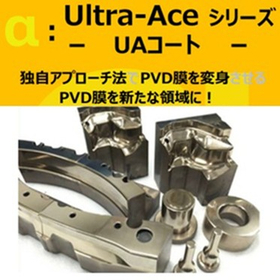
What is PVD (Physical Vapor Deposition) coating?

PVD coating refers to a method of physically vaporizing and depositing high-melting-point materials such as metals using electrical power.

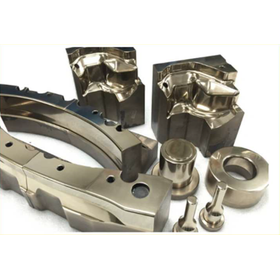
Generally, it is a process in which hard metallic substances such as titanium are vaporized and plasma-treated to form an even harder nitride film on the surface of the treated item using nitrogen. PVD treatment can apply various films depending on the type of material being melted and vaporized. For example, if titanium is melted, a titanium nitride film is formed; if chromium is melted, a chromium nitride film is produced. Similar to nitriding treatment, the selection of the film must be differentiated based on the intended use and conditions of the mold, making it very important to carefully consider and accurately select the appropriate film. The thickness of PVD coatings is typically between 2 to 4 micrometers, with a hardness around 3000 HV, which is comparable to the hardness of the surface of cutting tools. As a reference for hardness, the interior of the mold is about 350 HV, while the surface treatment through gas soft nitriding reaches around 1300 HV. The color of the coating varies depending on the material being deposited, with common colors for tools being gold, as well as other shades like orange, gray, and purple. Since the processing temperature is around 450°C, there is no dimensional change or distortion of the material during treatment. The recrystallization temperature of mold materials is around 560°C, so exceeding this temperature will result in a decrease in hardness and deformation.

  • Plasma surface treatment equipment

Added to bookmarks

Bookmarks list

Bookmark has been removed

Bookmarks list

You can't add any more bookmarks

By registering as a member, you can increase the number of bookmarks you can save and organize them with labels.

Free membership registration

[Development] Achieving thick film yttria with ceramic DIP coating.

Improvement of plasma resistance in semiconductor manufacturing processes, setters for molten metals, crucibles, rollers, etc., enhanced wettability for longer lifespan, and coating on graphite is also possible!

Various setters for firing such as MLCC and ferrite components, plasma-resistant materials for semiconductor manufacturing equipment, crucibles for various metal melting, transport rollers, and various quartz components. We have developed a dip coating technique for ceramics that was generally considered difficult, enabling thick film coatings on various fine ceramics, quartz, isotropic graphite, and refractory materials that are hydrophobic. Features: 1. Unique dipping technology provides: - High freedom of shape, strong adhesion to substrates, uniform film thickness, and high surface roughness. - While the design freedom for the coated object increases, consultation is required based on the shape. 2. Wide range of coating materials and target substrates: - Coatable ceramic materials: Most oxides and non-oxides (BN, SiC, Si3N4, etc.) - Target substrates: General fine ceramics, isotropic graphite, glass such as quartz, refractories, and metals (heat resistance temperature confirmation required). 3. High advantages of dipping over other coating methods: - Low cost (mass production effect) - Capable of handling three-dimensional structures, hollow shapes, and large sizes (size confirmation required). Film Thickness: Standard target film thickness: 50μ±5–10μ We optimize the use of composite ceramic films according to applications. Please feel free to contact us.

  • Fine Ceramics
  • Processing Contract
  • Surface treatment contract service

Added to bookmarks

Bookmarks list

Bookmark has been removed

Bookmarks list

You can't add any more bookmarks

By registering as a member, you can increase the number of bookmarks you can save and organize them with labels.

Free membership registration

Ceramic coating [*Sample available*]

Even complex structures up to 1 meter in size can be fully coated! *Case-specific coating examples are currently being offered.

Narasaki Industries has developed a ceramic DIP coating that achieves an incredibly precise control of film thickness. This allows for a greater degree of freedom in ceramic coatings for many materials. 【Four Features】 ◆ High freedom of shape, capable of coating 3D shapes at meter scale ◆ Applicable to most high-functionality materials ◆ Capable of an average thick film of 50μ ◆ Excellent surface roughness and smoothness (Ra 0.8 or lower) 【Materials that can be coated】 ■ Fine ceramics (alumina, zirconia, aluminum nitride, etc.) ■ Heat-resistant glass such as quartz glass ■ Graphite, high melting point metals *Please download and view our coating case collection. We optimize using composite ceramic films according to your application. Feel free to contact us.

  • スクリーンショット 2022-10-19 135815.png
  • IPROS41773619475751603317.jpeg
  • Fine Ceramics
  • Processing Contract
  • Surface treatment contract service

Added to bookmarks

Bookmarks list

Bookmark has been removed

Bookmarks list

You can't add any more bookmarks

By registering as a member, you can increase the number of bookmarks you can save and organize them with labels.

Free membership registration

Proposal for extending the lifespan of the multi-light setter! New method of ceramic coating!

We propose extending the lifespan of setters, which are essential consumable components in the sintering process of electronic parts! We are expanding inquiries under the theme of 'SDGs' with consideration for the Earth!

Narasaki Industries has developed a ceramic coating that achieves incredibly precise film thickness control. Its name is "Ceramic Dip Coating." As the name suggests, the workpiece is dipped into a ceramic slurry to form a film. This allows for a more flexible ceramic coating applicable to a wide variety of materials and shapes. 【Features】 ◆ High freedom of shape, capable of coating 3D shapes on a meter scale ◆ Coating possible on almost all ceramic substrates ◆ Average thickness of 50μm achievable ◆ Excellent thermal shock resistance with a film having a pore diameter of 0.1μm and a porosity of 30-40% ◆ Good surface roughness of the coating with excellent smoothness (Ra below 0.8) 【Materials that can be coated】 ■ Mullite ■ Alumina-based ■ Porous and dense materials used for setters, etc. *Please download and view the coating case collection. We utilize composite ceramic films tailored to your applications to achieve optimization. Feel free to contact us.

Added to bookmarks

Bookmarks list

Bookmark has been removed

Bookmarks list

You can't add any more bookmarks

By registering as a member, you can increase the number of bookmarks you can save and organize them with labels.

Free membership registration

Excellent release properties! [In development] BN coating

Stabilization of film thickness by replacing spray application and brush application! High-quality film formation can be expected to extend the lifecycle of the workpiece!

◆Ceramic DIP Coating ◆Ceramic Dip Coating This is a new coating technology that involves "dipping in a ceramic slurry to form a film." It is characterized by a higher degree of freedom in shape compared to conventional methods. There are many applications in firing tools such as setters and refractory materials, and we are currently addressing multiple themes for replacing thermal spray coatings!

Added to bookmarks

Bookmarks list

Bookmark has been removed

Bookmarks list

You can't add any more bookmarks

By registering as a member, you can increase the number of bookmarks you can save and organize them with labels.

Free membership registration

Stainless vessel optional product Teflon coating

Adding the excellent properties of fluororesin, such as chemical resistance and non-stickiness, to stainless steel vessels.

Teflon coating can add the excellent properties of fluororesin, such as chemical resistance and non-stickiness, to stainless vessels. We can process coatings from a thin layer of 30 microns to a thick layer of up to 300 microns with no pinholes, depending on your application. For more details, please download the catalog or contact us.

  • Other painting machines
  • Other surface treatment equipment

Added to bookmarks

Bookmarks list

Bookmark has been removed

Bookmarks list

You can't add any more bookmarks

By registering as a member, you can increase the number of bookmarks you can save and organize them with labels.

Free membership registration

DLC Coating, DLC System “Low temperature deposition” “Hard to peel off”

The plasma ion implantation method enables diamond-hard, low-friction, high-cohesion coatings on various shapes and sizes of metals, resins, and rubber materials.

DLC (diamond-like carbon) coating deposits a low-friction DLC film using plasma ion implantation coating method. 【Features】 ■Capable of handling work with complicated shapes ・By using the work itself as a source of plasma, plasma is formed along the shape of the work and allows gas to flow around and deposit a film on complicated shapes and interiors. ■Excellent lubricity ・Excellent lubricity due to the formation of low coefficient of friction film ■Can deposit on resin and rubber as well as metal and aluminum. ・Low-temperature deposition is possible. ■Can deposit with the flexibility to follow the shape of the base material (even resin is resistant to film peeling). *Please contact us if you have any problems with life reduction due to friction of parts. *We can provide technical explanations and trial production. *We also sell DLC deposition system. * For more details, please contact us or download our catalog for more information.

Added to bookmarks

Bookmarks list

Bookmark has been removed

Bookmarks list

You can't add any more bookmarks

By registering as a member, you can increase the number of bookmarks you can save and organize them with labels.

Free membership registration