We have compiled a list of manufacturers, distributors, product information, reference prices, and rankings for Furnace.
ipros is IPROS GMS IPROS One of the largest technical database sites in Japan that collects information on.

Furnace Product List and Ranking from 405 Manufacturers, Suppliers and Companies | IPROS GMS

Last Updated: Aggregation Period:Mar 18, 2026~Apr 14, 2026
This ranking is based on the number of page views on our site.

Furnace Manufacturer, Suppliers and Company Rankings

Last Updated: Aggregation Period:Mar 18, 2026~Apr 14, 2026
This ranking is based on the number of page views on our site.

  1. 中遠熱処理技研 Shizuoka//Ferrous/Non-ferrous metals
  2. 三幸 Tokyo//Electronic Components and Semiconductors
  3. 関口鐵工所 本社 Nagano//Industrial Machinery
  4. 4 SHOEI MFG.CO.,LTD. Japanese Headquarters Nara//Industrial Machinery
  5. 5 アドバンテック東洋 Tokyo//Testing, Analysis and Measurement

Furnace Product ranking

Last Updated: Aggregation Period:Mar 18, 2026~Apr 14, 2026
This ranking is based on the number of page views on our site.

  1. What is metal heat treatment that can be learned from the basics, even in materials for new employee training? 中遠熱処理技研
  2. 各種熱処理炉<開発から製造まで一貫サポート> 三幸
  3. Large batch aluminum brazing furnace 進和 ジョイテックセンター
  4. 4 Electric Muffle Furnace FUW Series アドバンテック東洋
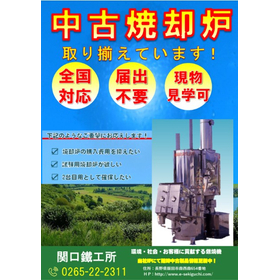
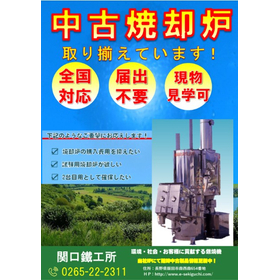
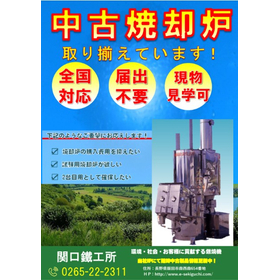
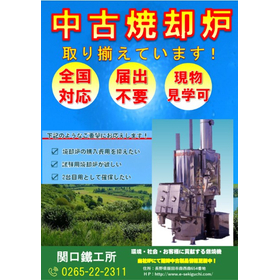
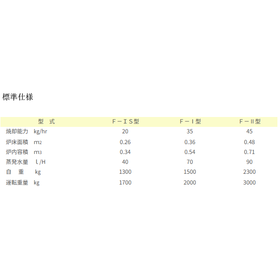
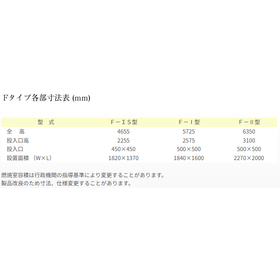
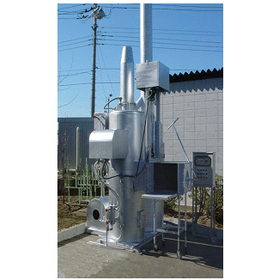
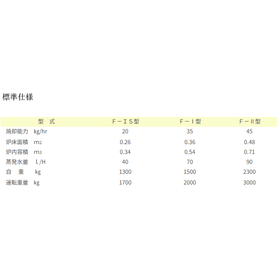
  5. 5 Information on Used Incinerators 関口鐵工所 本社

Furnace Product List

1501~1526 item / All 1526 items

Displayed results

Used equipment sales

We provide support even after the sale! Delivering "trusted used implementation equipment" nationwide.

Since our founding, we have not only played a role in the distribution of used implementation equipment but have also established ourselves as a technical group that engages in purchasing, refurbishing, and maintenance. Rather than delivering used machines in their original condition, we perform cleaning, maintenance, and installation in-house, and we have gained the trust of our customers by providing after-sales support. If you are looking for specific equipment, please do not hesitate to contact us. 【Equipment We Handle】 ■ Mounter ■ Printing Machine ■ Inspection Machine ■ Reflow Oven ■ Insertion Machine ■ Fluxer/Solder Bath ■ Peripheral Equipment *We can also search for equipment that is not in our inventory, so please include the manufacturer, model name, flow standards, and any other confirmation details in the inquiry form linked below. *Please understand that some models may not be eligible for maintenance. *For more details, please refer to the PDF document or feel free to contact us. (Website for used equipment: Updated May 2022)

  • Other mounting machines
  • Used goods purchase
  • Sales Management
  • Furnace

Added to bookmarks

Bookmarks list

Bookmark has been removed

Bookmarks list

You can't add any more bookmarks

By registering as a member, you can increase the number of bookmarks you can save and organize them with labels.

Free membership registration

[Research Material] Global Market for Glass Annealing Furnaces

World Market for Glass Annealing Furnaces: Flat Glass Annealing Furnaces, Curved Glass Annealing Furnaces, Others, Construction, Automotive, General Industry, Others

This research report (Global Glass Tempering Furnace Market) investigates and analyzes the current state and outlook for the global glass tempering furnace market over the next five years. It includes information on the overview of the global glass tempering furnace market, trends of major companies (sales, selling prices, market share), market size by segment, market size by major regions, and distribution channel analysis. The segments by type in the glass tempering furnace market include flat glass tempering furnaces, curved glass tempering furnaces, and others, while the segments by application cover construction, automotive, general industry, and others. The regional segments are divided into North America, the United States, Europe, Asia-Pacific, Japan, China, India, South Korea, Southeast Asia, South America, the Middle East, and Africa to calculate the market size of glass tempering furnaces. It also includes the market share of major companies in the glass tempering furnace sector, product and business overviews, and sales performance.

  • Other services
  • Furnace

Added to bookmarks

Bookmarks list

Bookmark has been removed

Bookmarks list

You can't add any more bookmarks

By registering as a member, you can increase the number of bookmarks you can save and organize them with labels.

Free membership registration

[Research Material] Global Market for Ultra-Thin Electric Fireplaces

Global Market for Ultra-Thin Electric Fireplaces: Built-in Type, Wall-Mounted Type, Residential, Commercial

This research report (Global Ultra Thin Electric Fireplace Market) investigates and analyzes the current status and outlook for the global ultra-thin electric fireplace market over the next five years. It includes information on the overview of the global ultra-thin electric fireplace market, trends of major companies (sales, selling prices, market share), market size by segment, market size by major regions, and distribution channel analysis. The segments of the ultra-thin electric fireplace market by type include built-in and wall-mounted types, while the segments by application focus on residential and commercial uses. The regional segments are divided into North America, the United States, Europe, Asia-Pacific, Japan, China, India, South Korea, Southeast Asia, South America, the Middle East, and Africa to calculate the market size of ultra-thin electric fireplaces. It also includes the market share of major companies in the ultra-thin electric fireplace market, product and business overviews, and sales performance.

  • Other services
  • Furnace

Added to bookmarks

Bookmarks list

Bookmark has been removed

Bookmarks list

You can't add any more bookmarks

By registering as a member, you can increase the number of bookmarks you can save and organize them with labels.

Free membership registration

[Market Report] Global Market for Warm Air Furnaces

The global market for warm air stoves will reach 10.5 billion dollars by 2031.

The global warm air furnace market, which achieved sales of 7.81 billion USD in 2022, is on a steady growth trajectory and is projected to reach 10.5 billion USD by 2031. This growth is progressing at a compound annual growth rate (CAGR) of 3.4% from 2023 to 2031, highlighting the increasing demand for efficient and reliable heating solutions in both commercial and residential sectors. Warm air furnaces, known as forced air furnaces, are a key solution in modern heating systems. They operate by heating air and circulating it throughout the building via a network of vents and ducts. The heating process begins in the combustion chamber of the furnace, where fuel sources such as oil or natural gas are ignited to generate heat, which is then transferred to the air. For application methods, please check the [PDF download] button or apply directly through the related links.

  • others
  • Furnace

Added to bookmarks

Bookmarks list

Bookmark has been removed

Bookmarks list

You can't add any more bookmarks

By registering as a member, you can increase the number of bookmarks you can save and organize them with labels.

Free membership registration

[Research Case] Overall Market Survey of Industrial Furnaces in China

A case study of sales amounts and units by customer industry, as well as customer analysis and other research!

We would like to introduce a case where we conducted a "Comprehensive Market Research on Industrial Furnaces in China." The development of the industrial furnace market in China is changing, primarily due to the impact of environmental protection policies. Many steel companies have halted production, leading to a decrease in business revenue for companies in the steel industry, and some related customers are also showing a trend of reducing orders for industrial furnaces. To understand the current state of the industrial furnace market, we commissioned a survey. The survey was conducted over approximately three months, targeting the overall industrial furnace market in mainland China, excluding Taiwan, Macau, and Hong Kong, as well as about three major companies. [Survey Contents (Partial)] ■ Sales value and volume trends of industrial furnaces from 2014 to 2024 ■ Sales value trends by furnace capacity from 2014 to 2024 ■ Sales volume trends by furnace capacity from 2014 to 2024 ■ Sales value by company for 2020 (overall and by furnace capacity) ■ Sales volume by company for 2020 (overall and by furnace capacity) *For more details, please refer to the related links or feel free to contact us.

  • Company:MIR
  • Price:Other
  • Other contract services
  • Furnace

Added to bookmarks

Bookmarks list

Bookmark has been removed

Bookmarks list

You can't add any more bookmarks

By registering as a member, you can increase the number of bookmarks you can save and organize them with labels.

Free membership registration

Small chlorine furnace <Scepter - cleaning quartz jig with dry chlorination>

Selective removal of accumulated films and reaction products through chloride volatilization! Maintains the dimensions and surface roughness of the base material.

The "Small Chlorine Furnace" is a dry cleaning device for fixtures that utilizes "selective chlorination → volatilization" with Cl2/HCl. It targets GaN/AlN/Si-based products adhered to MOCVD/epitaxial furnace susceptors, quartz boats, and tubes, converting them into chlorides at temperature stages and gas compositions suited to the materials, and removing them through volatilization at low temperatures. Additionally, it minimizes waste liquid burden without the need for acid washing, and reduces dimensional changes, distortion, and grain boundary damage. 【Features】 ■Selective chlorination × staged temperature: Converts adhered substances to chlorides → volatilizes at low temperatures, suppressing substrate damage. ■Dry process with minimal waste liquid: No acid washing, shortening cleaning and drying processes. ■Maintains dimensions and surfaces: Operates under negative pressure and controls oxygen partial pressure to minimize distortion and roughness changes. ■Compatible with multiple materials: Applicable to fixtures made of quartz, SiC, C/C, metals (Mo/W/Al-based), etc. *For more detailed information, please download or feel free to contact us.

  • Industrial Furnace
  • Furnace

Added to bookmarks

Bookmarks list

Bookmark has been removed

Bookmarks list

You can't add any more bookmarks

By registering as a member, you can increase the number of bookmarks you can save and organize them with labels.

Free membership registration

Small chlorine furnace <Impurity separation by selective volatilization of metal chlorides>

Impurities are chlorinated with chlorine/hydrochloric acid! They preferentially volatilize with vapor pressure differences and step temperatures.

The "small-scale chlorine furnace" is a product that simplifies post-processing with dry separation and low contamination while leaving the base material intact and eliminating the need for cleaning. It converts metallic impurities in the material into volatile chlorides through selective chlorination using Cl2/HCl, and preferentially removes them through controlled temperature stages and residence times in a dry process. Additionally, by utilizing the vapor pressure difference and Gibbs free energy difference of metal chlorides, it can achieve high selectivity in separation without compromising the composition or crystal phase of the base material, resulting in almost no wastewater discharge, thus reducing environmental impact and costs. 【Features】 ■ Selectivity: Utilizes the vapor pressure difference of chlorides to preferentially volatilize only target impurities. ■ Staged temperature profile: Sequential separation from low to medium temperature, minimizing damage to the base material. ■ Dry and low waste: Almost zero wastewater with no cleaning required, making post-processing simple. *For more detailed information, please download the materials or feel free to contact us.

  • Industrial Furnace
  • Furnace

Added to bookmarks

Bookmarks list

Bookmark has been removed

Bookmarks list

You can't add any more bookmarks

By registering as a member, you can increase the number of bookmarks you can save and organize them with labels.

Free membership registration

Series Start: The Power of Small Carbon Furnaces

Explaining the capabilities of small carbon furnaces from a practical perspective! We will also introduce challenges and benefits.

"Although the temperature can be achieved, the targeted reaction site cannot be created." We will overcome that barrier with a small carbon furnace. In this series, we will explain the capabilities of a small carbon furnace that can reproducibly handle extremely low oxygen atmospheres (O2 ppm level) and ultra-high temperatures (2,000-3,000°C range) from a practical perspective. Do you face these challenges? ■ Heating can be done, but slight oxygen contamination causes variations in properties ■ Large furnaces have slow ramp-up times, making it difficult to establish conditions ■ Temperature unevenness and undercooking lead to instability in crystallinity and pore structure Benefits of miniaturization × extremely low O2 × ultra-high temperature ■ Reach target temperatures quickly → increases the number of trials per day ■ Ensures uniform heating even with small samples → improved reproducibility ■ Balances oxygen management and thermal history → achieves desired crystalline phases, conductivity, and microstructure In this series, we will sequentially introduce the development background, heating principles, application-specific know-how, safety design, specifications & expansions, mini case studies, and FAQs. *For more detailed information, please download the materials or feel free to contact us.

  • Industrial Furnace
  • Furnace

Added to bookmarks

Bookmarks list

Bookmark has been removed

Bookmarks list

You can't add any more bookmarks

By registering as a member, you can increase the number of bookmarks you can save and organize them with labels.

Free membership registration

Serialized Part 2: Background of the Development of Small Carbon Furnaces

Introducing the challenges in the research field, potential solutions, and concepts!

While the demand for dry reduction heat treatment is increasing, the following challenges are prominent on-site. ■ Challenges in Research Environments - Limitations on maximum achievable temperature (recipe design is constrained by material and structural upper limits in tubular furnaces) - Limitations on sample preparation volume (effective heating area is narrow, making it unsuitable for scale considerations) - Difficulty in maintaining extremely low oxygen levels (ppm to ppb range) (due to leaks, residual O2, and fine cracks from heat shock, etc.) ■ Directions for Solutions (Required Specifications) - Uniform heating in a short time: rapid temperature rise, high temperature uniformity, and good response - Flexible scaling: continuous support from small sample sizes to small-scale mass production - Atmosphere control: stabilization of extremely low oxygen levels with Ar/N2 (with small amounts of H2 as needed) and low residual O2 design ■ Concept Graphite heating element × high insulation structure × low leak design. A compact carbon furnace optimized for prototyping and condition setting, enabling faster and more reproducible dry reduction processes. *For more detailed information, please download the materials or feel free to contact us.

  • Industrial Furnace
  • Furnace

Added to bookmarks

Bookmarks list

Bookmark has been removed

Bookmarks list

You can't add any more bookmarks

By registering as a member, you can increase the number of bookmarks you can save and organize them with labels.

Free membership registration

Serial Part 3: The Principle of Small Carbon Furnaces

Why extreme low oxygen and 3000℃ levels are possible! Explaining the principles of a small carbon furnace.

The small carbon furnace is characterized by its ability to maintain an extremely low oxygen environment and ultra-high temperatures (around 3000°C). In this explanation, we will simply clarify "why this is possible" from a fundamental perspective. 1) Why does it become "extremely low oxygen"? ■ The furnace material itself is an "oxygen getter." The hot zone of the furnace is composed of carbon (graphite). Residual O2/CO2/H2O reacts with carbon and is reduced and fixed as CO/CO2, effectively lowering the oxygen activity. As a result, even materials that are sensitive to oxidation can be processed in a mild atmosphere. ■ Built-in vacuum system + replacement Before heating, the system is evacuated, and by repeatedly purging with inert gas (such as Ar/N2), the air inside the sample can be expelled in advance. This is effective for gas replacement in pores and powder gaps that cannot be reached by simple "ventilation." 2) Why is "3000°C" possible? ■ Heating element = high-temperature stability of graphite Graphite exhibits extremely high heat resistance under inert atmospheres and vacuum, allowing for efficient heating of the hot zone through resistance heating. *For more detailed information, please download the materials or feel free to contact us.

  • Industrial Furnace
  • Furnace

Added to bookmarks

Bookmarks list

Bookmark has been removed

Bookmarks list

You can't add any more bookmarks

By registering as a member, you can increase the number of bookmarks you can save and organize them with labels.

Free membership registration

Serialized Part 4: Main Uses of Small Carbon Furnaces

Synthesis and sintering of high-temperature materials, as well as high crystallization of carbon-based materials! Here are some main application examples.

In the previous session, we introduced the "principle" of the small carbon furnace. This time, we will discuss the actual applications and how it can be applied in research and development. ■ Main Application Examples 1. Synthesis and Sintering of High-Temperature Materials (up to 3000°C) Thanks to the extremely low oxygen environment unique to carbon furnaces, it is possible to sinter high melting point materials such as carbides and nitrides without oxidation. 2. High Crystallization of Carbon-Based Materials Suitable for the high crystallization of materials like graphite and carbon nanotubes. 3. High-Temperature Treatment and Reduction Reactions of Metal Materials Metal oxides can be reduced under low oxygen conditions, allowing for control of microstructure and phases. 4. Evaluation of High-Temperature Gas Reactions Interactions with reactive gases and material stability can be verified in various atmospheres such as N2, H2, and Ar. 5. Material Process Evaluation at Research and Development and Prototype Scale Used for R&D purposes to optimize conditions in a short time. In the future, we are considering applications for the development of new materials utilizing more precise control of oxygen partial pressure. Next time, we will provide a detailed introduction to the "specifications." *For more detailed information, please download the materials or feel free to contact us.

  • Industrial Furnace
  • Furnace

Added to bookmarks

Bookmarks list

Bookmark has been removed

Bookmarks list

You can't add any more bookmarks

By registering as a member, you can increase the number of bookmarks you can save and organize them with labels.

Free membership registration

Serialized Part 5: Main Uses of Small Carbon Furnaces

Introduction to device specifications and configuration! The device size can also accommodate larger machines.

In the previous session, we introduced the applications of a small carbon furnace. This time, we will present the actual specifications and configuration of the device. This device is designed as a compact type for research and development, allowing installation even in limited spaces. It supports heating in a vacuum and inert gas (Ar, N2) atmosphere, achieving a stable heating environment that suppresses oxidation. This specification serves as an example of the specs for a small research device. The device size can also accommodate larger models. 【Main Specifications】 ■ External dimensions: 1000W × 1000D × 2100H mm ■ Effective internal dimensions: 200W × 200D × 200H mm ■ Supported atmosphere: Inert gas (Ar, N2) and vacuum ■ Internal material: Graphite ■ Door structure: Front-opening type ■ Vacuum pump: Rotary pump ■ Recording and monitoring: Temperature, flow rate, pressure, etc. 【Safety Devices】 ■ Over-temperature prevention ■ Cooling water level detection, etc. *For more detailed information, please download the materials or feel free to contact us.

  • Industrial Furnace
  • Furnace

Added to bookmarks

Bookmarks list

Bookmark has been removed

Bookmarks list

You can't add any more bookmarks

By registering as a member, you can increase the number of bookmarks you can save and organize them with labels.

Free membership registration

About a small metal furnace that allows for firing in a clean atmosphere.

All-metal construction! In high-temperature ranges, the metal surface reacts easily with trace amounts of O2, reducing the effects of residual oxygen.

We would like to introduce the "Small Metal Furnace" that we handle. It operates stably at temperatures up to 1800°C, accommodating high-temperature treatments (sintering/diffusion bonding/aging, etc.), and minimizes contamination from furnace materials with an all-metal construction, improving the reproducibility of color and properties. Additionally, it features a compact design that allows for easy installation even in environments with limited space, such as universities and research laboratories. 【Features】 ■ Stable operation up to 1800°C: Suitable for high-temperature treatments (sintering/diffusion bonding/aging, etc.) ■ Cleanliness: Minimizes contamination from furnace materials with an all-metal construction ■ Reproducibility of low-oxygen atmosphere: Standardized purging and replacement with N2/Ar ■ Compact design: Easy installation in environments with limited space, such as universities and research laboratories *For more detailed information, please download the materials or feel free to contact us.

  • 画像2.png
  • Industrial Furnace
  • Furnace

Added to bookmarks

Bookmarks list

Bookmark has been removed

Bookmarks list

You can't add any more bookmarks

By registering as a member, you can increase the number of bookmarks you can save and organize them with labels.

Free membership registration

About custom-made tubular furnaces.

From just firing to measuring and optimizing! You can select the necessary instrumentation as options.

The "tubular furnace" we handle allows for the selection of necessary instrumentation equipment as options tailored to the customer's application. It operates stably at temperatures up to 1200°C, with a heating zone of Φ120mm×500mmL. The tube size is Φ70mm×1000mmL. Additionally, it is compatible with various gas types such as inert gases like N2 and Ar, as well as H2. Please feel free to contact us for inquiries. 【Features】 ■ Stable operation: Up to 1200°C (higher temperatures can be discussed) ■ Heating zone: Φ120mm×500mmL ■ Tube size: Φ70mm×1000mmL (size/zone length can be customized) ■ Atmosphere: Compatible with various gas types such as inert gases like N2 and Ar, as well as H2 *For more detailed information, please download the materials or feel free to contact us.

  • 画像2.png
  • Industrial Furnace
  • Furnace

Added to bookmarks

Bookmarks list

Bookmark has been removed

Bookmarks list

You can't add any more bookmarks

By registering as a member, you can increase the number of bookmarks you can save and organize them with labels.

Free membership registration

Carbon furnace <suitable for basic reaction tests of carbonization>

SiC/TiC/ZrC at high temperatures and extremely low oxygen 'quickly and reproducibly.' Optimization of solid-phase carbides, composite carbides (with B4C), and carbon supply conditions in a short cycle.

We handle a compact "carbon furnace" that can be gradually replaced from vacuum to inert gas. It can be used for experiments and processes related to solid-phase carbonization (powder mixing method, coating method, carburizing) and composite carbonization (such as using B4C) for increasing hardness and optimizing carbon supply conditions (types, ratios, and contact states of carbon materials). Please feel free to contact us if you have any inquiries. 【Reasons to Choose Our Carbon Furnace (Partial)】 ■ Rapidly reaches high temperatures - Stable attainment and maintenance of 1600-2800°C** - Temperature guidelines effective for carbonization: SiC 1600–2000°C, TiC 1500–2100°C, ZrC 1800–2300°C ■ Suppresses side reactions at extremely low oxygen partial pressure - Vacuum → Replacement with Ar/N2 - Reduces residual oxygen through getter action of furnace carbon, suppressing CO generation *For more details, please feel free to contact us.

  • Industrial Furnace
  • Furnace

Added to bookmarks

Bookmarks list

Bookmark has been removed

Bookmarks list

You can't add any more bookmarks

By registering as a member, you can increase the number of bookmarks you can save and organize them with labels.

Free membership registration

Carbon furnace <suitable for basic reaction tests of nitriding>

Reproduced well with 'extremely low oxygen × high temperature × vacuum replacement.' Short cycle tests for N2-based solid-phase nitriding, surface nitriding, and layer growth.

The "carbon furnace" we handle is suitable for basic reaction tests of nitriding. Since the reaction initiation temperature is high with N2 alone, balancing grain growth and coarsening is difficult, and during cooling, surface reoxidation occurs, leading to variations in color, resistance, and hardness. Our product addresses these challenges. Additionally, we have a track record of manufacturing furnaces at mass production scales, not just small units. Please feel free to contact us when you need assistance. 【Reasons Why Our Carbon Furnace is Effective】 ■ Creates an extremely low oxygen partial pressure - Gradually lowers the oxygen potential through vacuum pumping and N2 replacement - The carbon in the furnace material absorbs residual O2, suppressing oxidation side reactions ■ Quickly reaches sufficient high-temperature ranges - Achieves and maintains temperatures from 1400 to 2400°C in a short time ■ Short cycle for condition setting - Allows simultaneous evaluation of multiple samples with tray flexibility/shelf configuration, making it easier to verify the effects of thickness and contact *For more details, please feel free to contact us.

  • Industrial Furnace
  • Furnace

Added to bookmarks

Bookmarks list

Bookmark has been removed

Bookmarks list

You can't add any more bookmarks

By registering as a member, you can increase the number of bookmarks you can save and organize them with labels.

Free membership registration

Small Chlorine Furnace: Unlocking New Possibilities for Urban Mining Recycling through Dry Chlorination

We are theoretically examining a new approach to selectively volatilize and recover specific metals from systems containing multiple metals through precise control of "temperature × pressure × chlorination reaction."

The "chlorine furnace" we handle has a structure that allows for independent control of temperature and chlorine partial pressure under reduced pressure. Urban mines contain metals such as Au, Cu, Sn, Fe, and Ni, which coexist in a complex manner. If these can be separated using the dry chlorination volatilization method, it would be possible to realize a new recycling method that efficiently recovers valuable metals while reducing the burden of wastewater treatment. Furthermore, due to the characteristics of this device, which can precisely control temperature, pressure, and chlorine partial pressure, we believe it could develop into "selective recovery of valuable metals from urban mines" in the future. 【Features】 ■ Volatilization of base metals at low temperatures: Selective volatilization of FeCl3, SnCl4, etc., around 200-300°C ■ Control of noble metal salt generation at medium temperatures: Separation of noble metals using stable regions such as AuCl3 ■ Reaction sequence switching through pressure control: Control of the generation and decomposition equilibrium of chlorides under reduced pressure conditions *For more detailed information, please download the materials or feel free to contact us.

  • Industrial Furnace
  • Furnace

Added to bookmarks

Bookmarks list

Bookmark has been removed

Bookmarks list

You can't add any more bookmarks

By registering as a member, you can increase the number of bookmarks you can save and organize them with labels.

Free membership registration

Small Chlorine Furnace <New Experimental Platform for High-Temperature Corrosion Evaluation>

Utilizing the high corrosion-resistant structure and precise atmosphere control of small chlorine furnaces, applications for research on corrosion mechanisms of metals, alloys, and ceramics.

Our company offers a "chlorine furnace" that can reproduce corrosion behavior in chlorine and hydrogen chloride atmospheres. This experimental furnace safely reproduces high temperatures in corrosive environments. It is theoretically expected to be applied to fundamental research on high-temperature corrosion mechanisms caused by chlorine gas, durability evaluations of chlorine-resistant materials (high alloys, coatings, ceramics), and testing platforms for corrosion prevention coatings. We also provide test equipment. 【Features】 ■ Compatible with corrosive gases such as chlorine and hydrogen chloride ■ Simultaneous control of reduced pressure and temperature ■ High-purity atmosphere due to dry structure ■ Reduced risk of process gas leakage due to constant reduced pressure atmosphere *For more detailed information, please download the materials or feel free to contact us.

  • Industrial Furnace
  • Furnace

Added to bookmarks

Bookmarks list

Bookmark has been removed

Bookmarks list

You can't add any more bookmarks

By registering as a member, you can increase the number of bookmarks you can save and organize them with labels.

Free membership registration

Multi-atmosphere furnace <Firing with toxic gas generation, safety × reproducibility>

We design everything from vacuum replacement to atmosphere control, heating, and exhaust gas detoxification (scrubber/catalytic oxidation/thermal oxidation) in a seamless manner.

We handle "multi-atmosphere furnaces" designed to accommodate gases such as NH3 and CO. The design integrates vacuum replacement, atmosphere control, heating, and exhaust gas harmlessness (scrubber/catalytic oxidation/thermal oxidation) in a seamless process. Additionally, we have a proven track record of manufacturing furnaces at mass production scale, not just for small units. [Reasons why our carbon furnace is effective for graphitization] - Accommodates gases such as NH3 and CO: Designed with materials, piping temperature control, and instrumentation tailored to the characteristics of the gas types. - Built-in vacuum system: Allows for vacuum replacement before and after processing, enabling designated gas replacement and reducing the risk of residual gas when the furnace is opened. - Rectangular design with stacked shelves: High flexibility in tray design allows for parallel DOE of multiple samples under the same conditions, enabling rapid extraction of optimal conditions for scale-up. *For more detailed information, please download our materials or feel free to contact us.

  • Industrial Furnace
  • Furnace

Added to bookmarks

Bookmarks list

Bookmark has been removed

Bookmarks list

You can't add any more bookmarks

By registering as a member, you can increase the number of bookmarks you can save and organize them with labels.

Free membership registration

Small Halogen-Compatible Furnace: Halogen Gas × High-Temperature Process Compatible

For those who want to use halogen as process gas and are troubled by emissions from samples.

In processes involving halogen gases (such as Cl, F, Br), common issues tend to arise in general electric furnaces, including: ■ Rapid corrosion of heaters and insulation materials due to halogens ■ Incompatibility of packing and piping materials, leading to leaks and safety concerns As a result, there are situations where the consideration of new material processes is abandoned. Thermonik ENG's "Compact Halogen-Compatible Furnace" is designed for two scenarios: 1. When you want to actively flow halogens as process gases 2. When halogens volatilize from samples and contaminate the furnace This specialized furnace aims to change the mindset from "it's not possible because of halogens" to "testing is possible even with halogens." [Features] ■ High corrosion-resistant materials: Achieved through Thermonik's unique technology ■ Corrosive gas monitoring compatibility: Capable of interlocking operation with leakage detection sensors ■ Scale adaptability: Supports sample processing from a few grams to several hundred grams ■ Operation under constant negative pressure: Reduces the risk of process gas leakage by operating at a pressure lower than atmospheric pressure.

  • Electric furnace
  • Furnace

Added to bookmarks

Bookmarks list

Bookmark has been removed

Bookmarks list

You can't add any more bookmarks

By registering as a member, you can increase the number of bookmarks you can save and organize them with labels.

Free membership registration

Tubular furnace for catalyst activation

Observe and record the behavior during the reaction process to optimize catalyst activation.

In the catalyst industry, optimizing reaction conditions is essential in the catalyst activation process. In particular, subtle adjustments in temperature, pressure, and gas flow rate significantly influence catalyst performance. Traditional calcination methods only provide data before and after calcination, making it difficult to understand the process in detail. Our tubular furnace implements flow control (MFC), pressure gauges, thermocouples for material temperature, sampling lines, and other components within appropriate ranges and specifications, allowing for synchronized logging of temperature, flow rate, and pressure with the same timestamp. This enables detailed analysis of the catalyst activation process and helps identify optimal conditions. 【Application Scenarios】 - Catalyst activation process - Optimization of reaction conditions - Development of new catalysts 【Benefits of Implementation】 - Visualization of the reaction process - Improvement of catalyst performance - Reduction of development time

  • Industrial Furnace
  • Furnace

Added to bookmarks

Bookmarks list

Bookmark has been removed

Bookmarks list

You can't add any more bookmarks

By registering as a member, you can increase the number of bookmarks you can save and organize them with labels.

Free membership registration

Tubular furnace for battery electrodes

Observe and record the behavior during the reaction process to solve the issues of electrode sintering.

In the battery industry, particularly in electrode manufacturing, quality control during the firing process is crucial. To optimize the uniformity and properties of electrode materials, detailed data acquisition on temperature, pressure, and gas flow during firing is essential. Relying solely on results before and after firing makes it difficult to optimize the process, which can lead to the occurrence of defects and variations in performance. Our tubular furnace addresses these challenges by acquiring detailed data during firing and enabling process visualization. 【Application Scenarios】 - Research and development of electrode materials - Optimization of electrode manufacturing processes - Improvement of quality control 【Benefits of Implementation】 - Quality improvement through optimization of the firing process - Reduction of defect rates - Increased efficiency in research and development

  • Industrial Furnace
  • Furnace

Added to bookmarks

Bookmarks list

Bookmark has been removed

Bookmarks list

You can't add any more bookmarks

By registering as a member, you can increase the number of bookmarks you can save and organize them with labels.

Free membership registration

Tubular furnace for metals and alloys

Observe and record the behavior during the reaction to accelerate alloy development.

In the metal and alloy industry, precise temperature management and atmosphere control during the firing process are essential for the development of new materials and quality control. Particularly, since the alloy composition and heat treatment conditions significantly affect the properties of the products, it is important to understand not only the results before and after firing but also the behavior during the firing process in detail. Conventional tubular furnaces only provide data before and after firing, which poses challenges in optimizing the process and can be time-consuming. Our tubular furnace supports problem-solving in alloy development by visualizing the firing process in detail through synchronized logging of flow rate, pressure, material temperature, and exhaust analysis. 【Application Scenarios】 - Research and development of new alloys - Examination of heat treatment conditions for alloys - Optimization of the firing process in quality control 【Benefits of Implementation】 - Reduction of development time through visualization of the firing process - Improvement of product quality by establishing optimal heat treatment conditions - Increased efficiency in quality control through detailed data acquisition of the process

  • Industrial Furnace
  • Furnace

Added to bookmarks

Bookmarks list

Bookmark has been removed

Bookmarks list

You can't add any more bookmarks

By registering as a member, you can increase the number of bookmarks you can save and organize them with labels.

Free membership registration

Multi-Atmosphere Furnace for Chemical Reactions

Firing accompanied by the generation of toxic gas, safety × reproducibility.

In the chemical industry, safe and reproducible firing in reaction processes is essential for quality control and efficient production. Particularly in reactions that generate toxic gases such as ammonia and carbon monoxide, proper exhaust treatment and control of the furnace environment are required. Inadequate firing conditions can lead to reaction failures or the leakage of harmful substances. Our multi-atmosphere furnace is designed for seamless vacuum replacement, atmosphere control, heating, and exhaust detoxification, enabling a safe and highly reproducible reaction process. 【Application Scenarios】 - Chemical reactions involving toxic gases - Reactions requiring precise temperature and atmosphere control - Reaction processes at mass production scale 【Benefits of Implementation】 - Realization of a safe firing environment - Improvement in reaction reproducibility - Increased efficiency in scale-up

  • Industrial Furnace
  • Furnace

Added to bookmarks

Bookmarks list

Bookmark has been removed

Bookmarks list

You can't add any more bookmarks

By registering as a member, you can increase the number of bookmarks you can save and organize them with labels.

Free membership registration

Carbon Furnace for Research Institutions

Accelerating new material development in ultra-low oxygen environments.

In research institutions engaged in new material development, precise temperature management and atmosphere control are required to maximize the properties of materials. Particularly in processes such as high-temperature phase transitions, crystallization, and sintering, oxygen concentration significantly affects the quality of the materials. Processing under inappropriate conditions may lead to undesired properties or degradation of the materials. Our carbon furnace achieves "ultra-low oxygen × 3000℃ class × vacuum replacement," enabling highly reproducible high-temperature treatments. 【Application Scenarios】 - Fundamental research on new materials - Evaluation of material properties - Small-batch production of diverse varieties 【Benefits of Implementation】 - Production of high-quality materials - Reduction of research and development time - Adaptability to a variety of materials

  • Industrial Furnace
  • Furnace

Added to bookmarks

Bookmarks list

Bookmark has been removed

Bookmarks list

You can't add any more bookmarks

By registering as a member, you can increase the number of bookmarks you can save and organize them with labels.

Free membership registration

Carbon furnace for powder metallurgy

Support for precision molding in extremely low oxygen environments.

In the powder metallurgy industry, especially in precision molding, the sintering process is crucial for maximizing the material's properties. The control of oxygen concentration and temperature during sintering significantly affects the product's strength and dimensional accuracy, potentially leading to defects and performance degradation. Our carbon furnace achieves a precise sintering process through an ultra-low oxygen environment and high-temperature control at around 3000°C. 【Application Scenarios】 - Sintering of parts requiring high precision shapes - Sintering of special alloys and ceramics - Research and development of new materials 【Benefits of Implementation】 - Generation of high-density and homogeneous sintered bodies - Improvement in product strength and durability - Increased yield

  • Industrial Furnace
  • Furnace

Added to bookmarks

Bookmarks list

Bookmark has been removed

Bookmarks list

You can't add any more bookmarks

By registering as a member, you can increase the number of bookmarks you can save and organize them with labels.

Free membership registration