We have compiled a list of manufacturers, distributors, product information, reference prices, and rankings for Heating Furnace.
ipros is IPROS GMS IPROS One of the largest technical database sites in Japan that collects information on.

Heating Furnace Product List and Ranking from 45 Manufacturers, Suppliers and Companies | IPROS GMS

Last Updated: Aggregation Period:May 20, 2026~Jun 16, 2026
This ranking is based on the number of page views on our site.

Heating Furnace Manufacturer, Suppliers and Company Rankings

Last Updated: Aggregation Period:May 20, 2026~Jun 16, 2026
This ranking is based on the number of page views on our site.

  1. サーモニックENG Chiba//Other manufacturing
  2. トピア 本社工場、名古屋事業所、神奈川事業所、埼玉営業所、神奈川営業所 Mie//Automobiles and Transportation Equipment
  3. 米倉製作所 Osaka//Testing, Analysis and Measurement
  4. 4 TPR商事 Tokyo//others
  5. 5 九州日昌 Fukuoka//Industrial Machinery

Heating Furnace Product ranking

Last Updated: Aggregation Period:May 20, 2026~Jun 16, 2026
This ranking is based on the number of page views on our site.

  1. Integrated molding hot stamp [double door ring] トピア 本社工場、名古屋事業所、神奈川事業所、埼玉営業所、神奈川営業所
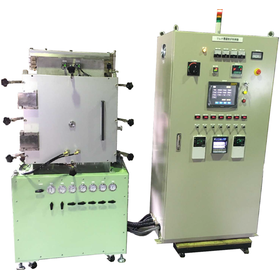
  2. Multi-atmosphere furnace |Moist atmosphere sintering not restricted by gas type サーモニックENG
  3. Factors and Countermeasures for Delayed Destruction in Hot Pressing *Presentation of Explanatory Materials トピア 本社工場、名古屋事業所、神奈川事業所、埼玉営業所、神奈川営業所
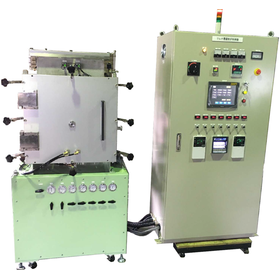
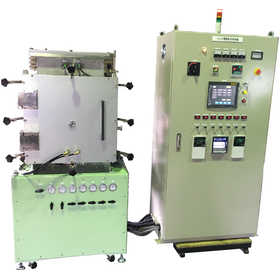
  4. 4 "IR Series Concentrated Light Heating Furnace" Ultra-fast Heating and Cooling, Energy-saving, Compact 米倉製作所
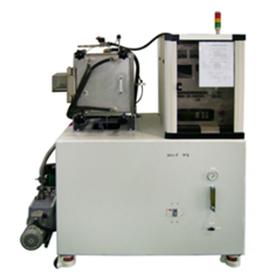
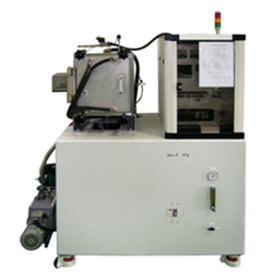
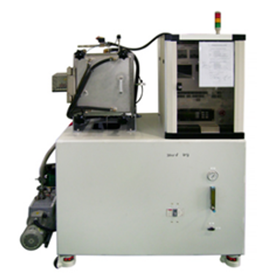
  5. 4 Flat-type infrared heating furnace IR-FP Series 米倉製作所

Heating Furnace Product List

61~85 item / All 85 items

Displayed results

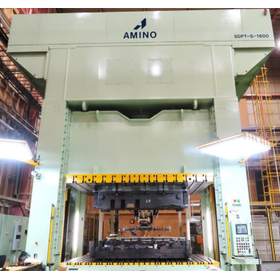
Integrated molding hot stamp [double door ring]

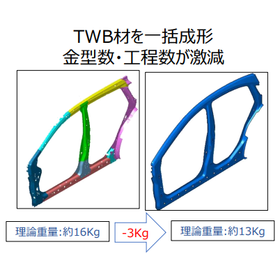
Excellent analysis technology enables molding! The double door ring (DDR) allows for the mass molding of tailored materials (TWB), significantly reducing the number of molds and processes.

The "One-Piece Molding Hot Stamping" is a technology that enables weight reduction by eliminating the need for overlapping assembly, thereby reducing material usage. It achieves high performance and high rigidity of components, enhancing safety. Additionally, we offer a "Large Hot Press Heating Furnace for Delayed Fracture Response" measuring 3000mm x 2000mm, as well as "Multi-Material Welding" in our lineup. We provide a consistent manufacturing process from design to product creation to inspection and evaluation, so please feel free to contact us when needed. 【Features】 ■ Weight Reduction: Reduction of materials by eliminating overlapping assembly ■ Cost Reduction: Lower mold investment and simplification of assembly processes ■ Enhanced Safety: Achieving high performance and high rigidity of components ■ Overwhelming Strength: Capable of achieving a strength of 1.5 GPa. *For more details, please refer to the PDF materials or feel free to contact us.

  • Prototype Services
  • Processing Contract
  • Contract manufacturing
  • Heating Furnace

Added to bookmarks

Bookmarks list

Bookmark has been removed

Bookmarks list

You can't add any more bookmarks

By registering as a member, you can increase the number of bookmarks you can save and organize them with labels.

Free membership registration

Factors and Countermeasures for Delayed Destruction in Hot Pressing *Presentation of Explanatory Materials

【Maximum 3500mm × 2500mm | Introduction of a straight loader transport type large hot press heating furnace】Mass forming of TWB materials, significantly reducing the number of molds and processes.

The cause of delayed destruction in hot pressing is "intruded hydrogen (H2)." Our integrated molding hot press can address the following two points. 【Causes of Delayed Destruction in Hot Pressing and Countermeasures】 ■ Lowering the dew point in the heating furnace (reduction of moisture) By setting the dew point inside the furnace to -100℃ to 30℃, moisture molecules in the atmosphere are condensed, and moisture is removed from the furnace. ■ Lowering hydrogen concentration in the heating furnace (reduction of hydrogen concentration) The atmosphere inside the furnace is made inert using nitrogen or argon, reducing the hydrogen concentration to below 5 mol%. 【Benefits of Integrated Molding Hot Stamping】 ■ Weight reduction: Material reduction by eliminating overlapping assembly ■ Cost reduction: Decreased mold investment and simplified assembly process ■ Improved safety: Achieving high performance and high rigidity of components *For more details, please download the catalog or feel free to contact us.

  • 大型ホットプレス加熱炉1.png
  • Vehicle body parts
  • Prototype Services
  • Contract manufacturing
  • Heating Furnace

Added to bookmarks

Bookmarks list

Bookmark has been removed

Bookmarks list

You can't add any more bookmarks

By registering as a member, you can increase the number of bookmarks you can save and organize them with labels.

Free membership registration

AICFD: Heat Dissipation Analysis of Air-Cooled Motors

Conducted heat dissipation simulation of air-cooled motors using AICFD and performed validation of the analysis results!

In the modern industrial sector, motors are utilized as essential power sources across various industries. To maintain the normal operation of motors, it is crucial to prevent overheating, and in the case of air-cooled motors, appropriate heat dissipation design is directly linked to reliability and performance. The thermal fluid analysis software AICFD addresses such challenges and provides a tool for achieving proper thermal design with easy operability and efficient data acquisition. In this article, we conducted a heat dissipation simulation for air-cooled motors using AICFD and validated the analysis results. *For detailed content of the article, please refer to the related links. For more information, feel free to download the PDF or contact us.*

  • 20-2.png
  • Other analysis software
  • Heating Furnace

Added to bookmarks

Bookmarks list

Bookmark has been removed

Bookmarks list

You can't add any more bookmarks

By registering as a member, you can increase the number of bookmarks you can save and organize them with labels.

Free membership registration

[Discussion on Far Infrared] Characteristics of Far Infrared Heating Furnaces

Improvement of quality! Labor saving! Introduction to the characteristics of general far-infrared heating furnaces.

AMK Co., Ltd. is a company that handles industrial far-infrared heaters, heating devices, and drying equipment. It is a typical far-infrared heating furnace that continuously conveys the objects to be heated parallel to the surface where the far-infrared heaters are arranged. This allows for a significant reduction in heating processing time, improvement in quality, streamlining of processes, and labor saving. Therefore, it is well known that there has been a shift from hot air furnaces to continuous far-infrared furnaces. However, due to the same action as light, it is often difficult to achieve uniform heating, especially in areas that are shaded or where the distance from the heater varies depending on the three-dimensional shape of the object, even when using fans. *For more details, please refer to the catalog or feel free to contact us.*

  • Company:AMK
  • Price:Other
  • Other heaters
  • Heating device
  • Drying Equipment
  • Heating Furnace

Added to bookmarks

Bookmarks list

Bookmark has been removed

Bookmarks list

You can't add any more bookmarks

By registering as a member, you can increase the number of bookmarks you can save and organize them with labels.

Free membership registration

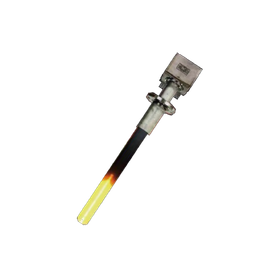
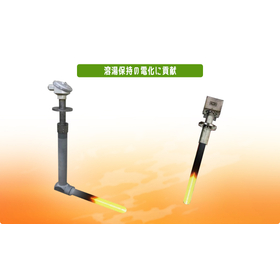
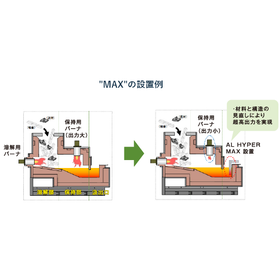
Promoting decarbonization through electric melting pot maintenance "ALHYPER MAX"

Switching from gas heating to reduce CO₂ emissions. Achieving decarbonization and efficiency improvement simultaneously with high-output electrification.

Ideal for companies that feel "reducing CO₂ emissions from gas furnaces is a challenge" in the pursuit of decarbonizing manufacturing sites. 'ALHYPER MAX' significantly reduces CO₂ emissions through electric heating and maintains stable molten metal with a high output of 20kW. 【Product Features】 - Smooth transition from gas furnaces to electrification - Rapid and stable temperature maintenance with high output - Contributes to CO₂ emission reduction - Can be retrofitted to existing furnaces *For more details, please refer to the related links or feel free to contact us.*

Added to bookmarks

Bookmarks list

Bookmark has been removed

Bookmarks list

You can't add any more bookmarks

By registering as a member, you can increase the number of bookmarks you can save and organize them with labels.

Free membership registration

Small Chlorine Furnace | Dry Removal of Metal Impurities from Ceramic Powder

Selective removal of metal impurities from SiO2・Al2O3・Si3N4 powder while leaving the base material intact.

In the high purification of ceramic powders, metal impurities such as Fe, Ni, Cr, and Na can affect product characteristics, sinterability, insulation properties, and yield. Our small chlorine furnace can explore conditions for the dry removal of metal impurities mixed in ceramic powders like SiO2, Al2O3, and Si3N4 as volatile chlorides through selective chlorination using Cl2/HCl. Unlike wet processing, it reduces the need for washing water, waste liquid treatment, and drying processes, making it suitable for processing moisture-sensitive powders and high-purity materials that want to avoid recontamination. By comparing temperature, gas type, gas concentration, and treatment time with small samples, it can be utilized for the prototyping and condition exploration of high-purity ceramic powders. 【Features】 ■ Supports selective chlorination using Cl2/HCl ■ Allows for the dry removal of metal impurities such as Fe, Ni, Cr, and Na ■ Applicable to ceramic powders like SiO2, Al2O3, and Si3N4 ■ Reduces waste liquid and drying processes associated with wet processing ■ Enables comparison of temperature, gas concentration, and treatment time with small samples *For more details, please download the materials or contact us.

  • Industrial Furnace
  • Heating Furnace

Added to bookmarks

Bookmarks list

Bookmark has been removed

Bookmarks list

You can't add any more bookmarks

By registering as a member, you can increase the number of bookmarks you can save and organize them with labels.

Free membership registration

Metal furnace | Reducing the influence of O, C, and H₂O in an ultra-high vacuum and high-purity atmosphere.

Control of degassing, dehydration, and decarbonization of oxide and nitride materials in ultra-high vacuum to reducing atmosphere.

The "metal furnace" we handle is an electric furnace designed for high-purity heat treatment in an ultra-high vacuum atmosphere. By constructing the hot zone inside the furnace with metal materials, it suppresses outgassing and carbon contamination from graphite materials, insulation materials, and organic substances, creating a clean heat treatment environment that reduces the influence of oxygen, carbon, and moisture. The metal furnace accommodates atmosphere control from ultra-high vacuum to Ar/N₂/H₂, thanks to its metal heater and metal chamber structure, making it suitable for degassing, dehydration, decarbonization, and reduction treatment of high-purity powders and ceramic components. **Features** - Supports ultra-high vacuum atmosphere - Achieves vacuum levels of 10^-3 to 10^-5 Pa - Metal hot zone construction - Reduces contamination from furnace materials due to metal heater and chamber structure - High-precision temperature and atmosphere control - Accommodates atmosphere control tailored to specific needs, including vacuum, Ar, N₂, and H₂ - Scalable from small to large - After confirming conditions with a small unit, expansion to a larger furnace can be considered Additionally, we can conduct firing tests using actual samples as a condition check before equipment installation. *For more details, please feel free to contact us.*

  • Industrial Furnace
  • Heating Furnace

Added to bookmarks

Bookmarks list

Bookmark has been removed

Bookmarks list

You can't add any more bookmarks

By registering as a member, you can increase the number of bookmarks you can save and organize them with labels.

Free membership registration

Multi-atmosphere furnace |Precision design with dual axes of atmosphere and temperature

Vacuum replacement → Program switch to air/N2/Ar/(small amount of H2 as needed). Reproduce and evaluate phase transition, phase stability, and surface chemistry well.

Our company offers a "Multi-Atmosphere Furnace" that is precisely designed for material evaluation and phase transition testing in oxidation/reduction atmospheres, utilizing a dual-axis of "atmosphere x temperature." It features a built-in vacuum system that allows for vacuum replacement before and after processing, followed by replacement with the specified gas, thereby reducing the risk of residual gas during furnace opening. Additionally, the high degree of freedom in tray design allows for parallel DOE (Design of Experiments) under the same conditions and multiple samples, enabling the extraction of optimal conditions for scale-up in a short cycle. [Reasons why our carbon furnace is effective for graphitization] - Compatible with generated gases such as NH3 and CO: Designed with materials, piping temperature control, and instrumentation tailored to gas characteristics. - Built-in vacuum system: Allows for vacuum replacement before and after processing, followed by replacement with the specified gas, reducing the risk of residual gas during furnace opening. - Rectangular casing x stacked design: High flexibility in tray design allows for parallel DOE under the same conditions and multiple samples, enabling the extraction of optimal conditions for scale-up in a short cycle. *For more detailed information, please download the materials or feel free to contact us.

  • Industrial Furnace
  • Heating Furnace

Added to bookmarks

Bookmarks list

Bookmark has been removed

Bookmarks list

You can't add any more bookmarks

By registering as a member, you can increase the number of bookmarks you can save and organize them with labels.

Free membership registration

Multi-atmosphere furnace | Improvement of reproducibility in ceramics sintering and densification conditions

Manage dew point and oxygen concentration to reproducibly evaluate ceramics sintering and densification conditions.

In the sintering and densification of ceramics, not only temperature but also atmospheric gas, dew point, oxygen concentration, and heating conditions affect density, porosity, grain growth, and surface condition. In particular, when managing firing in a humid atmosphere, switching between oxidizing and reducing atmospheres, or controlling atmospheric history such as drying → humidifying → drying, it can be difficult to reproduce conditions with conventional electric furnaces or tube furnaces. Our multi-atmosphere furnace can switch to various atmospheric gases such as N2, Ar, Air, H2, and NH3 after displacing the air in the furnace through vacuum replacement. Additionally, by connecting a Wetter, it is possible to examine ceramic firing conditions that manage humid atmospheres and dew points. 【Features】 ■ Capable of switching to various gas atmospheres after vacuum replacement ■ Supports humid atmosphere and dew point control through Wetter connection ■ Can manage atmospheric history such as drying → humidifying → drying ■ Enables examination of sintering, densification, and high-density conditions for ceramics ■ Condition management combining dew point meters and O2 meters can also be considered *For more details, please download the materials or contact us.

  • Industrial Furnace
  • Heating Furnace

Added to bookmarks

Bookmarks list

Bookmark has been removed

Bookmarks list

You can't add any more bookmarks

By registering as a member, you can increase the number of bookmarks you can save and organize them with labels.

Free membership registration

Multi-Atmosphere Furnace | Dew Point Control and Metal Surface Treatment with Humid Atmosphere

Manage dew point and oxygen concentration to prevent oxidation, modify, and pre-treat metal surfaces.

In the surface treatment of metal parts and powder materials, not only temperature but also ambient gas, dew point, oxygen concentration, and treatment time significantly affect the surface condition and quality. In particular, for oxidation prevention, surface modification, coating pretreatment, and hydrophilization/hydrophobicity treatment, it is important to reproducibly examine conditions while switching between dry, humid, and reducing atmospheres. Our multi-atmosphere furnace can switch between various ambient gases such as N2, Ar, Air, H2, and NH3 after displacing the air in the furnace through vacuum replacement. Additionally, by connecting a Wetter, it is possible to manage surface treatment conditions with controlled humid atmospheres and dew points. 【Features】 ■ Capable of switching to various gas atmospheres after vacuum replacement ■ Supports humid atmosphere and dew point control through Wetter connection ■ Can manage atmosphere history such as dry → humid → dry ■ Applicable for oxidation prevention, surface modification, and pretreatment of metal surfaces ■ Condition management combining dew point meters and O2 meters can also be considered *For more details, please download the materials or contact us.

  • Industrial Furnace
  • Heating Furnace

Added to bookmarks

Bookmarks list

Bookmark has been removed

Bookmarks list

You can't add any more bookmarks

By registering as a member, you can increase the number of bookmarks you can save and organize them with labels.

Free membership registration

Multi-atmosphere furnace | For firing environmental purification materials and exhaust gas evaluation

Support for the firing of environmental purification materials and exhaust gas evaluation with atmosphere control such as vacuum, air, and NH3.

In the development of environmental purification materials and catalyst materials, the atmosphere, temperature, and exhaust gas components during firing can affect material performance. Particularly in the firing of materials containing organic components, the activation of catalysts, and treatments involving the generation of gases such as NH3 and CO, controlling the furnace atmosphere and considering exhaust gas treatment equipment are crucial. Our multi-atmosphere furnace can accommodate multiple atmospheres such as vacuum, air, N2, Ar, and NH3, and can be custom-designed according to the firing conditions and exhaust gas generation conditions of the materials. For the firing and heat treatment of environmental purification materials, catalyst materials, adsorbents, and ceramic materials, we can provide a comprehensive examination from the furnace body to gas supply, exhaust, and pollution control equipment. ■ I want to examine the firing conditions for environmental purification materials and catalyst materials. ■ I want to consider exhaust equipment assuming the generation of gases such as NH3 and CO. ■ I want to process in multiple atmospheres such as vacuum, air, N2, Ar, and NH3. ■ The existing furnaces do not match the gas types, furnace dimensions, and exhaust gas treatment conditions. ■ I would like to consult from research and development to prototype and pre-mass production evaluation. * The materials include points for consideration such as the basic configuration of the multi-atmosphere furnace, compatible atmospheres, temperature specifications, gas supply and exhaust equipment, and exhaust gas treatment.

  • Industrial Furnace
  • Heating Furnace

Added to bookmarks

Bookmarks list

Bookmark has been removed

Bookmarks list

You can't add any more bookmarks

By registering as a member, you can increase the number of bookmarks you can save and organize them with labels.

Free membership registration

Metal furnace for sample preprocessing analysis | Compatible with high vacuum and high purity atmosphere

Supports degassing, oxidation prevention, and stabilization of samples before analysis in a high vacuum and high purity atmosphere.

In analysis and evaluation, factors such as oxidation of the sample surface, adsorbed moisture, residual gases, organic components, and contamination by impurities can affect the measurement results. Particularly before conducting high-precision analysis, surface analysis, or material evaluation, it is important to thermally treat the analytical sample under high vacuum and high purity conditions to stabilize its state. Our metal furnace is constructed with metal components, which makes it easier to minimize the influence of dust and impurities from insulation materials, allowing for cleaner high-purity atmospheres for firing and heat treatment compared to other types of furnaces. Additionally, it is easier to achieve high vacuum compared to conventional insulated furnaces, enabling degassing, oxidation prevention, reduction treatment, annealing, and consideration of heat treatment conditions for samples in vacuum, N2, Ar, H2, and other atmospheres. ■ I want to degas the sample in high vacuum before analysis. ■ I want to minimize the effects of surface oxidation and adsorbed moisture. ■ I want to thermally treat the analytical sample in a high-purity atmosphere. ■ I want to perform sample pretreatment in vacuum, N2, Ar, H2 atmospheres. ■ The existing furnaces do not meet the required vacuum level, cleanliness, or internal dimensions.

  • Industrial Furnace
  • Heating Furnace

Added to bookmarks

Bookmarks list

Bookmark has been removed

Bookmarks list

You can't add any more bookmarks

By registering as a member, you can increase the number of bookmarks you can save and organize them with labels.

Free membership registration

Metal furnace for research and development | Compatible with vacuum, reduction atmosphere, and high-temperature heat treatment

Support for material development and high-temperature heat treatment in a vacuum and reducing atmosphere.

In research and development as well as prototype evaluation, a high-temperature furnace that can meticulously examine temperature, atmosphere, and processing time for each material is essential. Particularly in the bonding of ceramics and metals, brazing, annealing, firing, and reduction atmosphere treatments, the cleanliness and atmosphere control within the furnace significantly affect quality. Our metal furnace is a high-temperature atmosphere furnace that uses metal heaters such as Mo and W, and it can accommodate atmospheres like vacuum, N2, Ar, and H2. We offer custom designs based on the material, size, temperature, and atmosphere of the items being processed, suitable for material evaluation, prototyping, and pre-production studies at universities, research institutions, and corporate research labs. ■ Looking for a high-temperature furnace for research and development ■ Want to consider bonding and sealing of ceramics and metals ■ Want to evaluate brazing, annealing, and firing conditions ■ Want to process in vacuum, N2, Ar, and H2 atmospheres ■ Standard furnaces do not meet temperature, internal dimensions, and atmosphere conditions

  • Industrial Furnace
  • Heating Furnace

Added to bookmarks

Bookmarks list

Bookmark has been removed

Bookmarks list

You can't add any more bookmarks

By registering as a member, you can increase the number of bookmarks you can save and organize them with labels.

Free membership registration

Selection of furnace for Cl₂・HCl special atmosphere sintering | Corresponding to chlorination reaction and corrosion evaluation

Organize the firing conditions and safety specifications using corrosive gases.

Are you considering sintering, chlorination reactions, and corrosion evaluation in a special atmosphere such as Cl₂ and HCl? In sintering using corrosive and reactive gases like Cl₂ and HCl, it is necessary to consider specifications not only for temperature and gas concentration but also for materials inside the furnace, jig materials, sealing materials, piping, valves, exhaust piping, pollution control devices, and safety interlocks. In particular, for chlorination reactions and volatile separation, the volatility of the generated chlorides, condensation location, recovery methods, insulation of exhaust piping, and pollution control capabilities are important. Additionally, since corrosive gases are handled, leak prevention measures, gas detection, exhaust routes, and safety shutdown conditions significantly impact equipment specifications. This document organizes the treatment objectives, gas conditions, furnace type selection, and key points for confirming jigs, piping, exhaust, pollution control, and safety measures in Cl₂ and HCl special atmosphere sintering. - For sintering and reaction evaluation in Cl₂ and HCl atmospheres - For consideration of chlorination reactions, volatile separation, and impurity removal - For removal of deposits from jigs and components, and evaluation of corrosion and durability - For insulation of exhaust, condensation measures, and specification review of pollution control devices - For sintering tests and condition exploration before equipment installation

  • Industrial Furnace
  • Heating Furnace

Added to bookmarks

Bookmarks list

Bookmark has been removed

Bookmarks list

You can't add any more bookmarks

By registering as a member, you can increase the number of bookmarks you can save and organize them with labels.

Free membership registration

Contract Analysis Services: Thermal Analysis

We will determine the temperature distribution of the structure, the incoming (outgoing) heat quantity, temperature gradient, heat flux, etc.

[Contracted Analysis Services] Thermal analysis involves determining the temperature distribution, incoming (or outgoing) heat, temperature gradients, heat flux, and so on of structures. It is also possible to conduct analyses to determine the deformation and stress of structures by refining the obtained temperature distribution. For more details, please contact us or refer to the catalog.

  • Other operation management software
  • Integrated operation management
  • Heating Furnace

Added to bookmarks

Bookmarks list

Bookmark has been removed

Bookmarks list

You can't add any more bookmarks

By registering as a member, you can increase the number of bookmarks you can save and organize them with labels.

Free membership registration

Uniform heating performance △t3~8℃! Stack type heating furnace.

【Up to 70% reduction in output】 Achieves uniform heating and stationary heating! With a clean environment, dust and foreign matter contamination is difficult, making it effective for small sensors. *Case studies available.

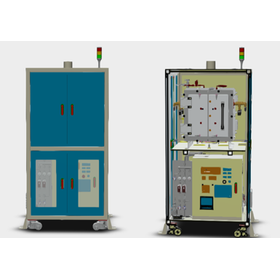
The stack furnace handled by Kyushu Nichisho is an effective heating method for lead frames, substrates after electronic component mounting, and small sensors mounted on transport carriers. (There are also proven results with ECUs and 600×600 size films.) By implementing inline processing, productivity efficiency is increased, and stable heating operation for 24 hours is possible. Additionally, it can accommodate a wide variety of industries, not only in the semiconductor and electronic component sectors but also in the automotive and food industries. The small volume of the heating chamber contributes to energy savings. 【Features】 ■ Supports inline processing with front and rear devices due to a wide variety of configurations ■ Achieves long-term stable reproducibility of temperature control ■ Reduces dust and vibration through stationary heating, improving product quality ■ Significantly reduces the installation floor space in factories by transitioning from 2D to 3D ■ Contributes to energy savings by greatly reducing the volume of the heating chamber *For more details, please refer to the external link page or feel free to contact us.

  • Heating device
  • Heating Furnace

Added to bookmarks

Bookmarks list

Bookmark has been removed

Bookmarks list

You can't add any more bookmarks

By registering as a member, you can increase the number of bookmarks you can save and organize them with labels.

Free membership registration

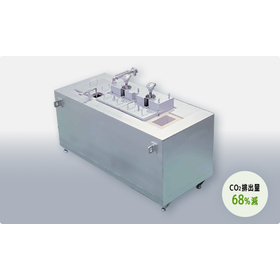
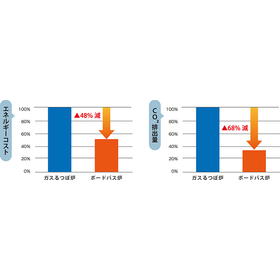
Board Bus Furnace: Suppressing Coal Generation and Stabilizing Quality

By directly heating aluminum, we suppress the rise in surrounding temperature, prevent the generation of soot, and reduce the impact on the quality of cast products.

Solving issues such as "the surrounding temperature rises due to gas heating, causing soot to adhere to the aluminum surface." The "Board Bus Furnace" suppresses the rise in surrounding temperature through direct heating, preventing soot from adhering to cast products and stabilizing quality. 【Features】 - Suppresses the rise in surrounding temperature - Reduces soot generation on aluminum surfaces - Stabilizes quality - Energy-efficient operation *For more details, please refer to the related links or feel free to contact us.

Added to bookmarks

Bookmarks list

Bookmark has been removed

Bookmarks list

You can't add any more bookmarks

By registering as a member, you can increase the number of bookmarks you can save and organize them with labels.

Free membership registration

Small Chlorine Furnace | Impurity Separation by Selective Volatilization of Metal Chlorides

Chloride metal impurities with Cl2 and HCl, leaving the base material for selective separation.

The "small-scale chlorine furnace" is a test furnace designed for a dry process that uses halogen gases such as Cl2 and HCl to convert and separate metal impurities into volatile chlorides. Impurities in materials such as Fe, Ni, Cu, Al, Na, Cr, and P may become chlorides with different vapor pressures and boiling points than the base material through chlorination. By utilizing this property, conditions can be examined to selectively volatilize and separate only the impurities while leaving the base material intact by adjusting temperature, gas type, and treatment time. It is suitable for cases where one wants to minimize waste liquid treatment and drying processes like those in wet processing, as well as for reducing impurities in powders, ceramics, and high-purity materials that are sensitive to moisture. 【Features】 ■ Compatible with selective chlorination using Cl2 and HCl ■ Examination of separation of metal impurities as volatile chlorides ■ Dry purification utilizing vapor pressure differences and reaction temperature differences ■ Applicability to high-purity powders, ceramics, SiC, Si3N4, Al2O3, etc. ■ Comparison of temperature, gas concentration, and treatment time with small sample sizes *For more details, please download the materials or contact us.

  • Industrial Furnace
  • Heating Furnace

Added to bookmarks

Bookmarks list

Bookmark has been removed

Bookmarks list

You can't add any more bookmarks

By registering as a member, you can increase the number of bookmarks you can save and organize them with labels.

Free membership registration

Small Carbon Furnace | Main Applications in 3000°C Class and Low Oxygen Atmosphere

Introduction of applications that can be examined using a small carbon furnace, such as graphitization, carbonization, sintering, and crystallization.

Our "Small Carbon Furnace" is an electric furnace designed for high-temperature processing at around 3000°C in a low-oxygen atmosphere. By using carbon materials inside the furnace and treating them in an inert gas atmosphere such as Ar or N2 after vacuum replacement, it creates a stable heating environment that suppresses oxidation and re-oxidation at high temperatures. This document introduces the main applications of the small carbon furnace, including the graphitization of carbon materials, carbonization and sintering of ceramics, high-temperature processing of high melting point materials, and small-scale testing for research and development. 【Main Specifications】 ■ Equipment dimensions: 1000W × 1000D × 2100H mm ■ Effective dimensions inside the furnace: 200W × 200D × 200H mm ■ Compatible atmospheres: Inert gases Ar, N2, and vacuum ■ Material inside the furnace: Graphite ■ Door structure: Hinged type ■ Vacuum pump: Rotary pump ■ Monitoring and recording: Temperature, flow rate, pressure, etc. *For more details, please download the document or contact us.

  • Industrial Furnace
  • Heating Furnace

Added to bookmarks

Bookmarks list

Bookmark has been removed

Bookmarks list

You can't add any more bookmarks

By registering as a member, you can increase the number of bookmarks you can save and organize them with labels.

Free membership registration

Small Chlorine Furnace | Dry Separation and Recovery of Valuable Metals from Urban Mines

Control the temperature, chlorine partial pressure, and pressure to selectively separate Au, Cu, Sn, Fe, Ni, etc. through chlorination volatilization.

Urban mines contain a complex mixture of valuable metals and base metals such as Au, Cu, Sn, Fe, and Ni. When separating and recovering these through wet processing, challenges may arise related to the use of reagents, waste liquid treatment, pretreatment processes, and drying processes. Our small chlorine furnace can selectively separate and recover metal components by converting them into volatile chlorides through dry chlorination using Cl2/HCl, while controlling temperature, chlorine partial pressure, and pressure. For example, in the low-temperature range, easily volatile chlorides such as FeCl3 and SnCl4 can be removed first, and in the mid-temperature range, the separation of precious metals can be considered using the vapor pressure differences of AuCl3 and others. 【Features】 ■ Supports dry chlorination and chloride volatilization using Cl2/HCl ■ Allows for selective separation of multiple metals such as Au, Cu, Sn, Fe, and Ni ■ Accommodates staged processing with controlled temperature, chlorine partial pressure, and pressure ■ Reduces waste liquid and drying processes associated with wet processing ■ Enables exploration of urban mine recycling conditions with small sample sizes *For more details, please download the materials or contact us.

  • Industrial Furnace
  • Heating Furnace

Added to bookmarks

Bookmarks list

Bookmark has been removed

Bookmarks list

You can't add any more bookmarks

By registering as a member, you can increase the number of bookmarks you can save and organize them with labels.

Free membership registration

Multi-atmosphere furnace | Supports firing and exhaust gas treatment accompanied by harmful gas generation.

Addressing the hard-to-see exhaust gas risks on a small scale through scale-up solutions in furnace, exhaust, and emission control design.

Our company offers a "Multi-Atmosphere Furnace" designed to handle the firing process that generates harmful gases such as NH3, CO, and NOx. During the firing of raw materials containing organic substances, resin-based materials, catalyst carriers, and battery materials, gases such as NH3, CO, NOx, HCN, and hydrocarbon gases may be emitted during heating and holding. Gases that were not an issue in small tubular furnaces or small-scale tests can become significant challenges in terms of exhaust concentration, emission volume, corrosiveness, and safety measures as the number of tray layers and processing volume increase. Our Multi-Atmosphere Furnace can design the entire firing process, including vacuum replacement, atmosphere control, heating, exhaust, and coordination with emission treatment equipment. 【Features】 ■ Furnace design considering the generation of gases such as NH3, CO, and NOx ■ Gas replacement in the furnace before and after processing through vacuum replacement ■ Compatibility with various atmospheres such as N2, Ar, Air, and NH3 ■ Consideration of emission treatment methods such as scrubbers, catalytic oxidation, and thermal oxidation ■ Support for scale-up considerations anticipating increased tray layers and processing volume *For more details, please download the materials or contact us.

  • Industrial Furnace
  • Heating Furnace

Added to bookmarks

Bookmarks list

Bookmark has been removed

Bookmarks list

You can't add any more bookmarks

By registering as a member, you can increase the number of bookmarks you can save and organize them with labels.

Free membership registration

Tube furnace | Supports catalyst activation and reaction behavior evaluation

Synchronously record temperature, flow rate, pressure, and exhaust to visualize catalyst activation conditions.

We offer a "tubular furnace" suitable for catalyst activation and reaction behavior evaluation. In catalyst processing, slight differences in temperature, pressure, gas flow rate, and atmosphere switching can affect activity and reproducibility. General-purpose tubular furnaces may only analyze before and after firing, making it difficult to grasp the timing of reaction start and end, as well as gas generation behavior. This equipment incorporates MFCs, pressure gauges, thermocouples, sampling lines, and more according to the application, allowing for synchronized logging of temperature, flow rate, pressure, and exhaust data. 【Features】 ■ Simultaneous recording of temperature, flow rate, pressure, and exhaust data ■ Understanding the timing of reaction start, end, and gas generation ■ Implementation of MFCs, pressure gauges, and thermocouples according to application ■ Design of sampling ports and exhaust analysis lines ■ Ideal for comparing catalyst activation conditions and confirming reproducibility *For more details, please download the materials or contact us.

  • Industrial Furnace
  • Heating Furnace

Added to bookmarks

Bookmarks list

Bookmark has been removed

Bookmarks list

You can't add any more bookmarks

By registering as a member, you can increase the number of bookmarks you can save and organize them with labels.

Free membership registration

Multi-atmosphere furnace | For chemical reactions, reactive gas treatment, and exhaust gas evaluation

Support for examining the conditions of chemical reaction processes, including reactive gases and exhaust gas treatment.

In the development of chemical reaction processes, the reaction efficiency and safety can vary significantly due to factors such as temperature, ambient gases, and the exhaust gas components generated during the reaction. Particularly in reactions involving gases like NH3 and CO, as well as in the examination of reaction conditions under multiple atmospheres such as Air, N2, Ar, vacuum, and ammonia, it is crucial to design not only the furnace itself but also the gas supply, exhaust, and emission control systems. Our multi-atmosphere furnace can be custom-designed to match the material inside the furnace, gas supply lines, exhaust systems, emission control equipment, and safety measures according to the treated materials and reaction gases. We can accommodate everything from research and development to prototype and pre-mass production evaluations for chemical reactions, thermal decomposition, reduction reactions, oxidation reactions, and ammonia atmosphere treatments. ■ I want to examine the reaction conditions for chemical reaction processes. ■ I want to consider exhaust equipment assuming the generation of gases like NH3 and CO. ■ I want to process under multiple atmospheres such as Air, N2, Ar, vacuum, and ammonia. ■ I want to examine the internal material and sealing structure of the furnace according to the reaction gas. ■ The existing furnaces do not match the gas types, exhaust specifications, and safety measures. * The materials include the basic configuration of the multi-atmosphere furnace, compatible atmospheres, gas supply and exhaust systems, and design points when handling reactive gases.

  • Industrial Furnace
  • Heating Furnace

Added to bookmarks

Bookmarks list

Bookmark has been removed

Bookmarks list

You can't add any more bookmarks

By registering as a member, you can increase the number of bookmarks you can save and organize them with labels.

Free membership registration

How to conduct firing tests | Selecting kilns, jigs, and containers by sample type

Organize the firing test conditions suitable for powder, substrates, jigs, and components.

In firing tests, the type of furnace, fixtures, containers, and recovery methods vary depending on "what is being fired." The points to be checked and the items to be evaluated differ for powders, substrates and plates, fixtures and parts, and molded bodies and pellets. For example, with powders, it is important to check for dispersibility, moisture absorption, and recovery methods; for substrates, warping, distortion, and in-plane temperature differences; for fixtures and parts, gas flow and dead spots; and for molded bodies, cracks, shrinkage, and contact marks. This document organizes the items to be checked before firing tests by sample type, considerations for selecting fixtures and containers, and perspectives for selecting furnace types in a list format. ■ For consideration of firing tests before equipment introduction ■ For organizing conditions of powders, substrates, fixtures, and parts ■ For initial considerations in selecting furnace types, fixtures, and containers

  • Industrial Furnace
  • Heating Furnace

Added to bookmarks

Bookmarks list

Bookmark has been removed

Bookmarks list

You can't add any more bookmarks

By registering as a member, you can increase the number of bookmarks you can save and organize them with labels.

Free membership registration

Exploration of firing conditions for material development | Support from prototype evaluation in a small furnace to equipment design.

Support for firing tests and equipment specification from the stage of uncertain conditions.

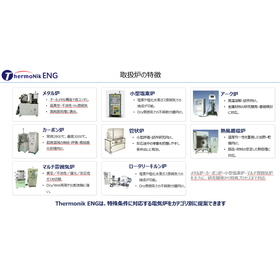
Are you having trouble determining firing temperature, holding time, and atmospheric conditions in material development? In the early stages of material development, there are often many cases where firing temperature, holding time, atmosphere, type of furnace, sample quantity, and recovery methods are not yet determined. Additionally, there may be instances where you want to compare multiple atmospheres such as N₂, Ar, H₂, NH₃, vacuum, humidification, Cl₂, HCl, or check the furnace configuration suitable for powders, molded bodies, substrates, jigs, and components. At Thermonik ENG, we assist from the stage where conditions are not yet finalized by organizing objectives and sample conditions, and we support prototype evaluations by varying temperature, time, and atmosphere in a small furnace. The results obtained are reflected in the specifications of the equipment and furnace design, including internal dimensions, heaters, insulation, gas systems, and exhaust safety design. - For exploring firing conditions in the material development stage - For prototype evaluation and reactivity confirmation in a small furnace - For cross-examination of multiple atmospheres and furnace types - For specification and furnace design considerations before equipment installation

  • Industrial Furnace
  • Heating Furnace

Added to bookmarks

Bookmarks list

Bookmark has been removed

Bookmarks list

You can't add any more bookmarks

By registering as a member, you can increase the number of bookmarks you can save and organize them with labels.

Free membership registration

Search Keywords Related to Heating Furnace