766~810 item / All 1805 items
Displayed results
Filter by category

Added to bookmarks
Bookmarks listBookmark has been removed
Bookmarks listYou can't add any more bookmarks
By registering as a member, you can increase the number of bookmarks you can save and organize them with labels.
Free membership registration
Contact this company
Inquiry FormBefore making an inquiry
Download Profile766~810 item / All 1805 items
Filter by category

In the diagnostic drug manufacturing industry, it is essential to maintain and inherit strict manufacturing standards and quality control systems to ensure product quality and safety. Particularly in overseas locations and factories, it is extremely important to uphold these standards to maintain the reliability of the global supply chain. Dependence on Japanese veterans, the difficulty of instilling technology in local staff, insufficient use of manuals, and differences in judgment criteria between Japan and overseas can pose potential risks in quality management. Our service addresses these challenges and supports the establishment of a system that allows overseas locations to inherit technology and maintain quality standards independently. 【Usage Scenarios】 - Standardization of technology and skills in the diagnostic drug manufacturing process at overseas factories - Instilling quality management knowledge and manufacturing techniques in local staff - Unification of quality management standards between Japan and overseas locations - Maintaining stable quality even in the absence of Japanese veterans - Cultivating appropriate judgment skills in local staff during abnormal occurrences 【Effects of Implementation】 - Standardization of technology and skills leading to uniform quality at overseas locations - Skill enhancement of local staff and establishment of an autonomous quality management system - Improved reliability in the global supply chain - Stabilization of product quality and risk reduction
Added to bookmarks
Bookmarks listBookmark has been removed
Bookmarks listYou can't add any more bookmarks
By registering as a member, you can increase the number of bookmarks you can save and organize them with labels.
Free membership registration
In the medical device manufacturing industry, compliance with GMP (Good Manufacturing Practice) is extremely important for ensuring product quality and safety. Particularly in overseas locations and factories, maintaining and inheriting strict manufacturing standards and quality control systems is essential for preserving the reliability of the global supply chain. Dependence on Japanese veterans, the difficulty of instilling skills in local staff, insufficient use of manuals, and differences in judgment criteria between Japan and overseas can pose potential risks to GMP compliance. Our service addresses these challenges and supports the establishment of a system that enables overseas locations to inherit technology and maintain GMP standards independently. 【Usage Scenarios】 - Standardization of technology and skills in the medical device manufacturing process at overseas factories - Instilling GMP-related knowledge and manufacturing techniques in local staff - Unification of quality control standards between Japan and overseas locations - Maintaining stable quality even in the absence of Japanese veterans - Cultivating appropriate judgment skills in local staff during abnormal occurrences
Added to bookmarks
Bookmarks listBookmark has been removed
Bookmarks listYou can't add any more bookmarks
By registering as a member, you can increase the number of bookmarks you can save and organize them with labels.
Free membership registration
In the animal pharmaceutical industry, compliance with GMP (Good Manufacturing Practice) is crucial for ensuring product quality and safety. Particularly in overseas locations and factories, maintaining and inheriting strict manufacturing standards and quality control systems is essential for preserving the reliability of the global supply chain. Dependence on Japanese veterans, the difficulty of instilling technology in local staff, insufficient use of manuals, and differences in judgment criteria between Japan and overseas can pose potential risks to GMP compliance. Our service addresses these challenges and supports the establishment of a system that enables overseas locations to inherit technology and maintain GMP standards independently. 【Usage Scenarios】 - Standardization of technology and skills in the animal pharmaceutical manufacturing process at overseas factories - Instilling GMP-related knowledge and manufacturing techniques in local staff - Unifying quality control standards between Japan and overseas locations - Maintaining stable quality even in the absence of Japanese veterans - Cultivating appropriate judgment skills in local staff during abnormal occurrences
Added to bookmarks
Bookmarks listBookmark has been removed
Bookmarks listYou can't add any more bookmarks
By registering as a member, you can increase the number of bookmarks you can save and organize them with labels.
Free membership registration
In the clinical trial drug manufacturing industry, compliance with GMP (Good Manufacturing Practice) is extremely important for ensuring product quality and safety. Particularly in overseas locations and factories, maintaining and inheriting strict manufacturing standards and quality control systems is essential for preserving the reliability of the global supply chain. Dependence on Japanese veterans, the difficulty of instilling technology in local staff, insufficient use of manuals, and differences in judgment criteria between Japan and overseas can pose potential risks to GMP compliance. Our service addresses these challenges and supports the establishment of a system that enables overseas locations to inherit technology and maintain GMP standards independently. 【Usage Scenarios】 - Standardization of technology and skills in the clinical trial drug manufacturing process at overseas factories - Instilling GMP-related knowledge and manufacturing techniques in local staff - Unification of quality control standards between Japan and overseas locations - Maintaining stable quality even in the absence of Japanese veterans - Fostering appropriate judgment skills in local staff during abnormal occurrences
Added to bookmarks
Bookmarks listBookmark has been removed
Bookmarks listYou can't add any more bookmarks
By registering as a member, you can increase the number of bookmarks you can save and organize them with labels.
Free membership registration
In the generic pharmaceutical industry, compliance with GMP (Good Manufacturing Practice) is extremely important for ensuring product quality and safety. Particularly in overseas locations and factories, maintaining and inheriting strict manufacturing standards and quality control systems is essential for preserving the reliability of the global supply chain. Dependence on Japanese veterans, the difficulty of instilling technology in local staff, insufficient use of manuals, and differences in judgment criteria between Japan and overseas can pose potential risks to GMP compliance. Our service addresses these challenges and supports the establishment of a system that allows overseas locations to inherit technology and maintain GMP standards independently. 【Usage Scenarios】 - Standardization of technology and skills in the pharmaceutical manufacturing process at overseas factories - Instilling GMP-related knowledge and manufacturing techniques in local staff - Unification of quality control standards between Japan and overseas locations - Maintaining stable quality even in the absence of Japanese veterans - Fostering appropriate judgment skills in local staff during abnormal occurrences
Added to bookmarks
Bookmarks listBookmark has been removed
Bookmarks listYou can't add any more bookmarks
By registering as a member, you can increase the number of bookmarks you can save and organize them with labels.
Free membership registration
In the energy infrastructure industry, it is crucial to maintain and pass on advanced welding techniques stably to ensure safety. Particularly when there is a high dependence on skilled Japanese technicians, there are cases where these techniques do not become established among local staff, or where standardized information is difficult to utilize on-site. Additionally, differences in judgment criteria between Japan and overseas often lead to variations in quality. In response to these challenges, our service aims to visualize the tacit knowledge, such as experience, intuition, and tips possessed by veteran Japanese technicians, and standardize it into a form that local staff can understand and practice. Through "visualization" using photos, diagrams, videos, and examples of acceptable and unacceptable practices, as well as demonstrations by Japanese personnel and practical training for local staff, we support the development of judgment skills during abnormal situations and the training of local key personnel and leaders. This aims to break away from a state where Japanese individuals continuously teach, and instead establish a self-sustaining system where local personnel can make their own judgments and pass on techniques and skills to the next generation.
Added to bookmarks
Bookmarks listBookmark has been removed
Bookmarks listYou can't add any more bookmarks
By registering as a member, you can increase the number of bookmarks you can save and organize them with labels.
Free membership registration
In the semiconductor manufacturing equipment industry, overseas bases and factories often face challenges in maintaining and passing on advanced precision adjustment techniques. Particularly when there is a high dependence on skilled Japanese engineers, there are cases where these techniques do not become established among local staff, or where standardized information is difficult to utilize on-site. Additionally, differences in judgment criteria between Japan and overseas can often lead to variations in quality. In response to these challenges, our service aims to visualize the tacit knowledge, such as experience, intuition, and tips possessed by veteran Japanese engineers, and standardize it into a form that local staff can understand and practice. Through "visualization" using photos, diagrams, videos, and examples of acceptable and unacceptable practices, as well as demonstrations by Japanese personnel and practical training for local staff, we support the development of judgment skills during abnormalities and troubles, as well as the training of local key personnel and leaders. This aims to move away from a state where Japanese individuals continuously teach, and instead establish a self-sustaining system where local talent can make their own judgments and pass on techniques and skills to the next generation.
Added to bookmarks
Bookmarks listBookmark has been removed
Bookmarks listYou can't add any more bookmarks
By registering as a member, you can increase the number of bookmarks you can save and organize them with labels.
Free membership registration
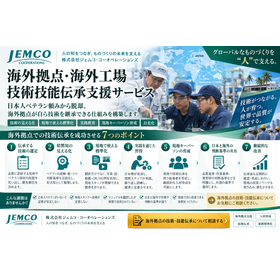
In the industrial machinery sector, overseas bases and factories often face challenges in maintaining and passing down advanced assembly procedures consistently. This is particularly true when there is a high dependency on skilled Japanese engineers, which can lead to situations where their expertise does not become established among local staff, or where standardized information is difficult to utilize on-site. Additionally, differences in judgment criteria between Japan and overseas can frequently cause variations in quality. In response to these challenges, our service aims to visualize the tacit knowledge, such as experience, intuition, and tips held by veteran Japanese engineers, and standardize it into a form that local staff can understand and practice. Through "visualization" using photos, diagrams, videos, and examples of acceptable and unacceptable practices, as well as demonstrations by Japanese personnel followed by practical training for local staff, we support the development of decision-making skills during abnormalities and troubles, as well as the training of local key personnel and leaders. This aims to move away from a situation where Japanese individuals continuously teach, and instead establish a self-sustaining system where local personnel can make their own judgments and pass on skills and techniques to the next generation.
Added to bookmarks
Bookmarks listBookmark has been removed
Bookmarks listYou can't add any more bookmarks
By registering as a member, you can increase the number of bookmarks you can save and organize them with labels.
Free membership registration
In the shipbuilding industry, overseas bases and factories often face challenges in maintaining and passing on advanced welding techniques. This is particularly true when there is a high dependency on skilled Japanese technicians, leading to situations where these techniques do not become established among local staff, or where standardized information is difficult to apply on-site. Additionally, differences in judgment criteria between Japan and overseas can frequently cause variations in quality. In response to these challenges, our service aims to visualize the tacit knowledge, such as experience, intuition, and tips possessed by veteran Japanese technicians, and standardize it into a form that local staff can understand and practice. Through "visualization" using photos, diagrams, videos, and examples of acceptable and unacceptable practices, as well as demonstrations by Japanese personnel and practical training for local staff, we support the development of judgment skills during abnormalities and troubles, and the training of local key personnel and leaders. This approach aims to move away from a situation where Japanese individuals continuously teach, and instead establish a self-sustaining system where local talent can make their own judgments and pass on techniques and skills to the next generation.
Added to bookmarks
Bookmarks listBookmark has been removed
Bookmarks listYou can't add any more bookmarks
By registering as a member, you can increase the number of bookmarks you can save and organize them with labels.
Free membership registration
In the aerospace industry, strict management and transmission of advanced welding techniques are required to ensure product safety and reliability. Particularly in overseas locations and factories, a high dependence on skilled technicians can lead to challenges where such techniques are not easily established among local staff, or where standardized information is not fully utilized on-site. Additionally, differences in judgment criteria between Japan and overseas may also be pointed out as a cause of quality variation. In response to these situations, our service aims to visualize the tacit knowledge such as experience, intuition, and judgment criteria possessed by veteran Japanese technicians and standardize it into a form that local staff can understand and practice. Through the use of photos, diagrams, videos, and examples of acceptable and unacceptable practices for "visualization," as well as demonstrations by Japanese personnel and practical training for local staff, we support the development of judgment skills during abnormalities and troubles, as well as the training of local key personnel and leaders. This aims to move away from a state where Japanese personnel continuously teach, and instead establish a self-sustaining system where local talent can make their own judgments and pass on techniques and skills to the next generation.
Added to bookmarks
Bookmarks listBookmark has been removed
Bookmarks listYou can't add any more bookmarks
By registering as a member, you can increase the number of bookmarks you can save and organize them with labels.
Free membership registration
In the automotive manufacturing industry, overseas bases and factories often face challenges in maintaining and passing on advanced welding techniques. This is particularly true when there is a high dependence on skilled Japanese technicians, which can lead to situations where the techniques do not become established among local staff, or where standardized information is difficult to utilize on-site. Additionally, differences in judgment criteria between Japan and overseas can frequently cause variations in quality. In response to these challenges, our service aims to visualize the tacit knowledge, such as experience, intuition, and tips possessed by veteran Japanese technicians, and standardize it into a form that local staff can understand and practice. By utilizing photos, diagrams, videos, and examples of acceptable and unacceptable practices for "visualization," as well as through demonstrations by Japanese personnel and practical training for local staff, we support the development of judgment skills during abnormalities and troubles, as well as the training of local key personnel and leaders. This aims to break away from a state where Japanese individuals continuously teach, and instead build a self-sustaining system where local personnel can make their own judgments and pass on techniques and skills to the next generation. 【Usage Scenarios】 - Standardization of welding techniques in overseas factories - Technical guidance for local operators - Unification of quality standards - Succession of techniques due to the retirement of veteran technicians - Improvement of productivity at overseas bases
Added to bookmarks
Bookmarks listBookmark has been removed
Bookmarks listYou can't add any more bookmarks
By registering as a member, you can increase the number of bookmarks you can save and organize them with labels.
Free membership registration
In the railway vehicle manufacturing industry, maintaining and standardizing safety standards at overseas bases and factories is a significant challenge. If the experience and judgment criteria of skilled technicians are not adequately communicated to local staff, it may lead to variations in safety and a decline in quality. Additionally, there are cases where simply translating manuals makes it difficult to share practical applications and judgment criteria on-site. Our service supports the establishment of a system that enables overseas bases to inherit technology and standardize safety standards on their own. 【Usage Scenarios】 - Stabilization of safety standards at overseas factories - Establishment of safety technology among local staff - Unification of judgment criteria between Japan and overseas bases - Maintenance of safety standards in the absence of skilled technicians 【Benefits of Implementation】 - Stabilization of safety standards at overseas bases - Autonomous inheritance of safety technology by local staff - Unification of safety standards globally - Reduction of accident risks and improvement of reliability
Added to bookmarks
Bookmarks listBookmark has been removed
Bookmarks listYou can't add any more bookmarks
By registering as a member, you can increase the number of bookmarks you can save and organize them with labels.
Free membership registration
In overseas bases and factories for construction machinery, maintaining and passing on advanced repair techniques can be a challenge. This is particularly true when there is a high dependency on skilled Japanese technicians, which can lead to situations where these techniques do not become established among local staff, or where standardized information is difficult to utilize on-site. Additionally, differences in judgment criteria between Japan and overseas can often cause variations in quality. In response to these challenges, our service aims to visualize the tacit knowledge such as experience, intuition, and tips held by veteran Japanese technicians, and standardize it into a form that local staff can understand and practice. Through the use of photos, diagrams, videos, and examples of acceptable and unacceptable practices for "visualization," as well as demonstrations by Japanese staff and practical training for local staff, we support the development of judgment skills during abnormalities and troubles, as well as the training of local key personnel and leaders. This aims to move away from a situation where Japanese individuals continuously teach, and instead establish a self-sustaining system where local personnel can make their own judgments and pass on techniques and skills to the next generation. 【Usage Scenarios】 - Standardization of repair techniques in overseas factories - Technical guidance for local operators - Unification of quality standards - Succession of techniques due to the retirement of veteran technicians - Improvement of productivity at overseas bases
Added to bookmarks
Bookmarks listBookmark has been removed
Bookmarks listYou can't add any more bookmarks
By registering as a member, you can increase the number of bookmarks you can save and organize them with labels.
Free membership registration
In the robot manufacturing industry, stabilizing and standardizing quality at overseas bases and factories is a critical challenge. When there is a high dependency on veteran Japanese engineers, their skills and know-how may not be passed on to local staff, potentially leading to variations in quality and decreased productivity. Additionally, there are cases where simply translating manuals makes it difficult to share practical knowledge and judgment criteria on-site. Our service supports the establishment of a system that enables overseas bases to inherit technology on their own and standardize quality. 【Usage Scenarios】 - Stabilizing the quality of robot operations at overseas factories - Ensuring the retention of robot operation skills among local staff - Unifying robot operation judgment criteria between Japan and overseas bases - Maintaining robot operation quality in the absence of veteran engineers 【Benefits of Implementation】 - Stabilization of robot operation quality at overseas bases - Autonomous inheritance of robot operation skills by local staff - Unification of robot operation quality standards globally - Increased productivity and cost reduction
Added to bookmarks
Bookmarks listBookmark has been removed
Bookmarks listYou can't add any more bookmarks
By registering as a member, you can increase the number of bookmarks you can save and organize them with labels.
Free membership registration
In the textile machinery manufacturing industry, stabilizing and standardizing quality at overseas bases and factories is a crucial challenge. When there is a high dependency on veteran Japanese engineers, their skills and know-how may not be effectively transferred to local staff, potentially leading to variations in quality and decreased productivity. Additionally, there are cases where simply translating manuals makes it difficult to share practical knowledge and judgment criteria on-site. Our service supports the establishment of a system that enables overseas bases to inherit technology independently and standardize quality. 【Usage Scenarios】 - Stabilizing quality at overseas factories - Ensuring technology transfer to local staff - Unifying judgment criteria between Japan and overseas bases - Maintaining quality in the absence of veteran engineers 【Benefits of Implementation】 - Stabilization of quality at overseas bases - Autonomous technology transfer by local staff - Unification of quality standards globally - Improved productivity and cost reduction
Added to bookmarks
Bookmarks listBookmark has been removed
Bookmarks listYou can't add any more bookmarks
By registering as a member, you can increase the number of bookmarks you can save and organize them with labels.
Free membership registration
In the energy equipment manufacturing industry, stabilizing and standardizing inspection procedures at overseas bases and factories is a significant challenge. When there is a high dependency on veteran Japanese engineers, their skills and know-how may not be transferred to local staff, potentially leading to variations in inspection results and decreased productivity. Additionally, simply translating manuals may not be sufficient for sharing practical knowledge and judgment criteria on-site. Our service supports the establishment of a system that enables overseas bases to inherit technology independently and standardize quality. 【Usage Scenarios】 - Stabilizing the quality of inspection procedures at overseas factories - Establishing inspection techniques among local staff - Unifying judgment criteria between Japan and overseas bases - Maintaining inspection quality in the absence of veteran engineers 【Benefits of Implementation】 - Stabilization of inspection procedure quality at overseas bases - Autonomous inheritance of inspection techniques by local staff - Unification of inspection standards globally - Increased productivity and cost reduction
Added to bookmarks
Bookmarks listBookmark has been removed
Bookmarks listYou can't add any more bookmarks
By registering as a member, you can increase the number of bookmarks you can save and organize them with labels.
Free membership registration
In the medical device manufacturing industry, maintaining product accuracy and stabilizing quality are extremely important. Establishing advanced technology and strict quality standards among local staff at overseas locations and factories often poses challenges. When there is a high dependency on veteran Japanese engineers, their skills and know-how may not be adequately conveyed to local staff, potentially leading to variations in quality and decreased productivity. Additionally, there are cases where simply translating manuals does not facilitate practical understanding or the sharing of judgment criteria on the ground. Our service supports the establishment of a system that enables overseas locations to inherit technology and standardize quality on their own. 【Usage Scenarios】 - Stabilizing quality at overseas factories - Establishing technology among local staff - Unifying judgment criteria between Japan and overseas locations - Maintaining quality in the absence of veteran engineers 【Benefits of Implementation】 - Stabilization of quality at overseas locations - Autonomous inheritance of technology by local staff - Unification of quality standards globally - Increased productivity and cost reduction
Added to bookmarks
Bookmarks listBookmark has been removed
Bookmarks listYou can't add any more bookmarks
By registering as a member, you can increase the number of bookmarks you can save and organize them with labels.
Free membership registration
In the home appliance manufacturing industry, stabilizing and standardizing quality at overseas bases and factories is an important challenge. When there is a high dependency on veteran Japanese engineers, their skills and know-how may not be passed on to local staff, potentially leading to variations in quality and decreased productivity. Additionally, there are cases where simply translating manuals makes it difficult to share practical applications and judgment criteria on-site. Our service supports the establishment of a system that enables overseas bases to inherit technology on their own and standardize quality. 【Usage Scenarios】 - Stabilizing quality at overseas factories - Ensuring technology transfer to local staff - Unifying judgment criteria between Japan and overseas bases - Maintaining quality in the absence of veteran engineers 【Benefits of Implementation】 - Stabilization of quality at overseas bases - Autonomous technology transfer by local staff - Unification of quality standards globally - Increased productivity and cost reduction
Added to bookmarks
Bookmarks listBookmark has been removed
Bookmarks listYou can't add any more bookmarks
By registering as a member, you can increase the number of bookmarks you can save and organize them with labels.
Free membership registration
In the industrial machinery sector, stabilizing and standardizing quality at overseas bases and factories is a critical issue. When there is a high dependency on veteran Japanese engineers, their skills and know-how may not be transferred to local staff, potentially leading to variations in quality and decreased productivity. Additionally, there are cases where simply translating manuals makes it difficult to share practical knowledge and judgment criteria on-site. Our service supports the establishment of a system that enables overseas bases to inherit technology and standardize quality on their own. 【Usage Scenarios】 - Stabilizing quality at overseas factories - Ensuring technology transfer to local staff - Unifying judgment criteria between Japan and overseas bases - Maintaining quality in the absence of veteran engineers 【Effects of Implementation】 - Stabilization of quality at overseas bases - Autonomous transfer of technology by local staff - Unification of quality standards globally - Increased productivity and cost reduction
Added to bookmarks
Bookmarks listBookmark has been removed
Bookmarks listYou can't add any more bookmarks
By registering as a member, you can increase the number of bookmarks you can save and organize them with labels.
Free membership registration
In the plant engineering industry and maintenance inspections, there is a demand for the stable maintenance and transmission of advanced welding techniques. Particularly in cases where there is a high dependence on skilled technicians, it is often observed that these techniques do not become established among local staff, or that standardized information is difficult to utilize on-site. Additionally, differences in judgment criteria between Japan and overseas can frequently lead to variations in quality. In response to these challenges, our service aims to visualize the tacit knowledge such as experience, intuition, and tips possessed by veteran Japanese technicians, and standardize it into a form that local staff can understand and practice. Through "visualization" using photos, diagrams, videos, and examples of acceptable and unacceptable practices, as well as demonstrations by Japanese personnel and practical training for local staff, we support the development of judgment skills during abnormal situations and the training of local key personnel and leaders. This aims to move away from a state where Japanese individuals continuously teach, and instead establish a self-sustaining system where local personnel can make their own judgments and pass on techniques and skills to the next generation. 【Usage Scenarios】 - Standardization of welding techniques in overseas factories - Technical guidance for local operators - Unification of quality standards - Technical succession due to the retirement of veteran technicians - Improvement of productivity at overseas bases
Added to bookmarks
Bookmarks listBookmark has been removed
Bookmarks listYou can't add any more bookmarks
By registering as a member, you can increase the number of bookmarks you can save and organize them with labels.
Free membership registration
In the shipbuilding industry, stabilizing and standardizing the quality of welding technology at overseas bases and factories is a critical issue. When there is a high dependency on veteran Japanese technicians, their skills and know-how may not be passed on to local staff, potentially leading to variations in quality and decreased productivity. Additionally, there are cases where simply translating manuals makes it difficult to share practical applications and judgment criteria on-site. Our service supports the establishment of a system that allows overseas bases to inherit technology and standardize quality on their own. 【Usage Scenarios】 - Stabilizing welding quality at overseas factories - Establishing welding technology among local staff - Unifying welding judgment criteria between Japan and overseas bases - Maintaining quality in the absence of veteran welding technicians 【Benefits of Implementation】 - Stabilization of welding quality at overseas bases - Autonomous inheritance of welding technology by local staff - Unification of welding quality standards globally - Increased productivity and cost reduction
Added to bookmarks
Bookmarks listBookmark has been removed
Bookmarks listYou can't add any more bookmarks
By registering as a member, you can increase the number of bookmarks you can save and organize them with labels.
Free membership registration
In the OTC pharmaceutical industry, compliance with GMP (Good Manufacturing Practice) is crucial for ensuring product quality and safety. Particularly in overseas locations and factories, maintaining and inheriting strict manufacturing standards and quality control systems is essential for preserving the reliability of the global supply chain. Dependence on Japanese veterans, the difficulty of instilling technology in local staff, insufficient use of manuals, and differences in judgment criteria between Japan and overseas can pose potential risks to GMP compliance. Our service addresses these challenges and supports the establishment of a system that allows overseas locations to inherit technology and maintain GMP standards independently. 【Usage Scenarios】 - Standardization of technology and skills in the OTC pharmaceutical manufacturing process at overseas factories - Instilling GMP-related knowledge and manufacturing techniques in local staff - Unification of quality control standards between Japan and overseas locations - Maintaining stable quality even in the absence of Japanese veterans - Cultivating appropriate judgment skills in local staff during abnormal occurrences
Added to bookmarks
Bookmarks listBookmark has been removed
Bookmarks listYou can't add any more bookmarks
By registering as a member, you can increase the number of bookmarks you can save and organize them with labels.
Free membership registration
In the semiconductor manufacturing equipment industry, stabilizing and standardizing quality at overseas bases and factories is a critical issue. When there is a high dependence on veteran Japanese engineers, their skills and know-how may not be passed on to local staff, potentially leading to variations in quality and decreased productivity. Additionally, there are cases where simply translating manuals makes it difficult to share practical knowledge and judgment criteria on-site. Our service supports the establishment of a system that enables overseas bases to inherit technology independently and standardize quality. 【Usage Scenarios】 - Stabilizing quality at overseas factories - Ensuring technology transfer to local staff - Unifying judgment criteria between Japan and overseas bases - Maintaining quality in the absence of veteran engineers 【Benefits of Implementation】 - Stabilization of quality at overseas bases - Autonomous inheritance of technology by local staff - Unification of quality standards globally - Increased productivity and cost reduction
Added to bookmarks
Bookmarks listBookmark has been removed
Bookmarks listYou can't add any more bookmarks
By registering as a member, you can increase the number of bookmarks you can save and organize them with labels.
Free membership registration
In the aerospace industry, strict quality standards and thorough safety training are required to ensure product safety and reliability. In overseas bases and factories, the advanced expertise and safety know-how of veteran Japanese engineers may not be sufficiently passed on to local staff, potentially leading to variations in quality and risks of accidents. There are cases where simply translating manuals makes it difficult to share practical judgment and safety awareness on-site. Our service supports the establishment of a system that enables overseas bases to inherit safety-related technologies independently and standardize quality. 【Usage Scenarios】 - Stabilization of safety standards in overseas factories - Establishment of safety training for local staff - Unification of safety judgment standards between Japan and overseas bases - Maintenance of safety management in the absence of veteran engineers 【Effects of Implementation】 - Stabilization of safety management in overseas bases - Autonomous inheritance of safety technology by local staff - Unification of safety standards globally - Reduction of accident risks and maintenance of productivity
Added to bookmarks
Bookmarks listBookmark has been removed
Bookmarks listYou can't add any more bookmarks
By registering as a member, you can increase the number of bookmarks you can save and organize them with labels.
Free membership registration
In the heavy machinery manufacturing industry, stabilizing and standardizing maintenance know-how at overseas bases and factories is a crucial issue. When there is a high dependency on veteran Japanese technicians, their skills and know-how may not be effectively transferred to local staff, potentially leading to variations in maintenance quality and decreased productivity. Additionally, there are cases where simply translating manuals makes it difficult to share practical applications and decision-making criteria on-site. Our service supports the establishment of a system that enables overseas bases to inherit technology independently and standardize maintenance quality. 【Usage Scenarios】 - Stabilizing maintenance quality at overseas factories - Establishing maintenance technology among local staff - Unifying maintenance decision-making criteria between Japan and overseas bases - Maintaining maintenance quality in the absence of veteran technicians 【Benefits of Implementation】 - Stabilization of maintenance quality at overseas bases - Autonomous inheritance of maintenance technology by local staff - Unification of maintenance standards globally - Increased efficiency and cost reduction in maintenance operations
Added to bookmarks
Bookmarks listBookmark has been removed
Bookmarks listYou can't add any more bookmarks
By registering as a member, you can increase the number of bookmarks you can save and organize them with labels.
Free membership registration
In the automotive parts manufacturing industry, stabilizing and standardizing quality at overseas bases and factories is a critical issue. When there is a high dependency on veteran Japanese engineers, their skills and know-how may not be passed on to local staff, potentially leading to variations in quality and decreased productivity. Additionally, there are cases where simply translating manuals makes it difficult to share practical knowledge and decision-making criteria on-site. Our service supports the establishment of a system that enables overseas bases to inherit technology independently and standardize quality. 【Usage Scenarios】 - Stabilizing quality at overseas factories - Ensuring technology transfer to local staff - Unifying decision-making criteria between Japan and overseas bases - Maintaining quality in the absence of veteran engineers 【Benefits of Implementation】 - Stabilization of quality at overseas bases - Autonomous technology transfer by local staff - Unification of quality standards globally - Increased productivity and cost reduction
Added to bookmarks
Bookmarks listBookmark has been removed
Bookmarks listYou can't add any more bookmarks
By registering as a member, you can increase the number of bookmarks you can save and organize them with labels.
Free membership registration
In the robot manufacturing industry, the assembly process requires the transmission of advanced technical skills to ensure product quality stability and maintain production efficiency. Particularly in manufacturing processes that rely on the experience and intuition of skilled technicians, variations in quality can occur during the absence of these technicians or during generational transitions, increasing the risk of decreased production efficiency. Additionally, relying solely on manualized information makes it difficult to convey the subtle nuances and judgment criteria of the field, posing challenges for the establishment of technology. Our service addresses these issues and supports the establishment of a system that allows overseas bases to inherit technology independently. 【Usage Scenarios】 - Stabilization of quality in the absence of veteran Japanese staff - Establishment of technology among local staff - Unification of judgment criteria at overseas bases - Transmission of essential technologies crucial for improving assembly accuracy 【Effects of Implementation】 - Autonomous development of technology and skills at overseas bases - Stabilization of quality and improvement of production efficiency - Reduced dependence on Japanese technicians - Promotion of continuous improvement activities by local personnel
Added to bookmarks
Bookmarks listBookmark has been removed
Bookmarks listYou can't add any more bookmarks
By registering as a member, you can increase the number of bookmarks you can save and organize them with labels.
Free membership registration
In the packaging materials manufacturing industry, maintaining and passing on advanced technical skills is essential for stabilizing product quality and improving production efficiency. Particularly in manufacturing processes that rely on the experience and intuition of skilled technicians, the absence of these technicians or generational transitions can lead to variations in quality and an increased risk of decreased production efficiency. Additionally, relying solely on manualized information makes it difficult to convey the subtle nuances and judgment criteria of the field, posing challenges for the establishment of technology. Our service addresses these issues and supports the establishment of a system that allows overseas bases to inherit technology independently. 【Usage Scenarios】 - Stabilizing quality in the absence of veteran Japanese staff - Establishing technology among local staff - Unifying judgment criteria at overseas bases - Passing on critical technologies essential for improving production efficiency 【Benefits of Implementation】 - Autonomous development of technology and skills at overseas bases - Stabilization of quality and improvement of production efficiency - Reduced dependence on Japanese technicians - Promotion of continuous improvement activities by local personnel
Added to bookmarks
Bookmarks listBookmark has been removed
Bookmarks listYou can't add any more bookmarks
By registering as a member, you can increase the number of bookmarks you can save and organize them with labels.
Free membership registration
In the printing and binding industry, maintaining and passing on advanced technical skills is essential for stabilizing product quality and improving yield. Particularly in manufacturing processes that rely on the experience and intuition of skilled technicians, variations in quality can occur during the absence of these technicians or during generational transitions, increasing the risk of reduced yield. Additionally, relying solely on manualized information makes it difficult to convey the subtle nuances and judgment criteria of the field, posing challenges for the establishment of technology. Our service addresses these issues and supports the establishment of a system that allows overseas bases to inherit technology independently. 【Usage Scenarios】 - Stabilizing quality in the absence of Japanese veterans - Establishing technology among local staff - Unifying judgment criteria at overseas bases - Passing on essential technologies crucial for improving yield 【Effects of Implementation】 - Autonomous operation of technology and skills at overseas bases - Stabilization of quality and improvement of yield - Reduced dependence on Japanese technicians - Promotion of continuous improvement activities by local personnel
Added to bookmarks
Bookmarks listBookmark has been removed
Bookmarks listYou can't add any more bookmarks
By registering as a member, you can increase the number of bookmarks you can save and organize them with labels.
Free membership registration
In the textile industry, maintaining and passing on advanced technical skills is essential for stabilizing product quality and improving production efficiency. Particularly in manufacturing processes that rely on the experience and intuition of skilled technicians, variations in quality can occur during the absence of these technicians or during generational transitions, increasing the risk of decreased production efficiency. Additionally, relying solely on manualized information makes it difficult to convey the subtle nuances and judgment criteria of the field, posing challenges to the establishment of technology. Our service addresses these issues and supports the establishment of a system that allows overseas bases to inherit technology independently. 【Usage Scenarios】 - Stabilizing quality in the absence of veteran Japanese staff - Establishing technology among local staff - Standardizing judgment criteria at overseas bases - Passing on essential technologies crucial for improving production efficiency 【Effects of Implementation】 - Autonomous operation of technology and skills at overseas bases - Stabilization of quality and improvement of production efficiency - Reduced dependence on Japanese technicians - Promotion of continuous improvement activities by local personnel
Added to bookmarks
Bookmarks listBookmark has been removed
Bookmarks listYou can't add any more bookmarks
By registering as a member, you can increase the number of bookmarks you can save and organize them with labels.
Free membership registration
In the pharmaceutical industry, maintaining and passing on advanced technical skills is essential for product quality stability and compliance with GMP (Good Manufacturing Practice). Particularly in manufacturing processes that rely on the experience and intuition of skilled technicians, variations in quality can occur during the absence of these technicians or during generational transitions, increasing the risk of non-compliance with GMP. Additionally, relying solely on manualized information makes it difficult to convey the subtle nuances and judgment criteria of the field, posing challenges to the establishment of technology. Our service addresses these issues and supports the establishment of a system that allows overseas locations to inherit technology independently. 【Usage Scenarios】 - Stabilizing quality in the absence of Japanese veterans - Establishing technology among local staff - Standardizing judgment criteria at overseas locations - Transmitting essential technologies critical for GMP compliance 【Benefits of Implementation】 - Enabling self-sufficiency in technology and skills at overseas locations - Stabilizing quality and ensuring GMP compliance - Reducing dependence on Japanese technicians - Promoting continuous improvement activities by local personnel
Added to bookmarks
Bookmarks listBookmark has been removed
Bookmarks listYou can't add any more bookmarks
By registering as a member, you can increase the number of bookmarks you can save and organize them with labels.
Free membership registration
In the operation of chemical plants, maintaining and passing on advanced technical skills is essential for ensuring product quality stability and safe operations. Particularly in manufacturing processes that rely on the experience and intuition of skilled technicians, variations in quality can occur during the absence of these technicians or during generational transitions, increasing the risk of unsafe operations. Additionally, relying solely on manualized information can make it difficult to convey the subtle nuances and judgment criteria of the field, posing challenges to the establishment of technology. Our service addresses these issues and supports the establishment of a system that allows overseas bases to inherit technology independently. 【Usage Scenarios】 - Stabilization of operations in the absence of Japanese veterans - Establishment of technology among local staff - Unification of judgment criteria at overseas bases - Transmission of essential technologies crucial for safe operations 【Benefits of Implementation】 - Autonomous development of technology and skills at overseas bases - Stabilization of operational quality - Reduced dependence on Japanese technicians - Promotion of continuous improvement activities by local personnel
Added to bookmarks
Bookmarks listBookmark has been removed
Bookmarks listYou can't add any more bookmarks
By registering as a member, you can increase the number of bookmarks you can save and organize them with labels.
Free membership registration
In the precision machinery manufacturing industry, maintaining and passing on advanced technical skills is essential for stabilizing product quality and improving yield rates. Particularly in manufacturing processes that rely on the experience and intuition of skilled technicians, variations in quality can occur during the absence of these technicians or during generational transitions, increasing the risk of reduced yield. Additionally, relying solely on manualized information makes it difficult to convey the subtle nuances and judgment criteria present in the field, posing challenges to the establishment of technology. Our service addresses these issues and supports the establishment of a system that allows overseas bases to inherit technology independently. 【Usage Scenarios】 - Stabilizing quality in the absence of veteran Japanese staff - Establishing technology among local staff - Standardizing judgment criteria at overseas bases - Passing on essential technologies crucial for improving yield 【Benefits of Implementation】 - Autonomous development of technology and skills at overseas bases - Stabilization of quality and improvement of yield - Reduced dependence on Japanese technicians - Promotion of continuous improvement activities by local personnel
Added to bookmarks
Bookmarks listBookmark has been removed
Bookmarks listYou can't add any more bookmarks
By registering as a member, you can increase the number of bookmarks you can save and organize them with labels.
Free membership registration
In the aerospace industry, maintaining and passing on advanced technical skills is essential for ensuring product safety and quality stability. Particularly in manufacturing processes that rely on the experience and intuition of skilled technicians, variations in quality can occur during the absence of these technicians or during generational transitions, potentially increasing safety risks. Additionally, relying solely on manualized information makes it difficult to convey the subtle nuances and judgment criteria present on-site, posing challenges for the establishment of technology. Our service addresses these issues and supports the establishment of a system that allows overseas bases to inherit technology independently. 【Usage Scenarios】 - Stabilizing quality in the absence of Japanese veterans - Establishing technology among local staff - Unifying judgment criteria at overseas bases - Passing on critical technologies essential for ensuring safety 【Effects of Implementation】 - Autonomous operation of technology and skills at overseas bases - Stabilization of quality and improvement of safety - Reduced dependence on Japanese technicians - Promotion of continuous improvement activities by local personnel
Added to bookmarks
Bookmarks listBookmark has been removed
Bookmarks listYou can't add any more bookmarks
By registering as a member, you can increase the number of bookmarks you can save and organize them with labels.
Free membership registration
In the medical device manufacturing industry, maintaining product quality stability and high precision requires the preservation and transmission of advanced technical skills. Particularly in manufacturing processes that rely on the experience and intuition of skilled technicians, variations in quality can occur during the absence of these technicians or during generational transitions, increasing the risk of decreased precision. Additionally, relying solely on manualized information makes it difficult to convey the subtle nuances and judgment criteria present on-site, posing challenges to the establishment of technology. Our service addresses these issues and supports the establishment of a system that allows overseas bases to inherit technology independently. 【Usage Scenarios】 - Stabilizing quality in the absence of veteran Japanese technicians - Establishing technology among local staff - Unifying judgment criteria at overseas bases - Transmitting essential technologies crucial for maintaining precision 【Effects of Implementation】 - Enabling self-sufficiency in technology and skills at overseas bases - Stabilizing quality and improving precision - Reducing dependence on Japanese technicians - Promoting continuous improvement activities by local personnel
Added to bookmarks
Bookmarks listBookmark has been removed
Bookmarks listYou can't add any more bookmarks
By registering as a member, you can increase the number of bookmarks you can save and organize them with labels.
Free membership registration
In the home appliance manufacturing industry, maintaining and passing on advanced technical skills is essential for stabilizing product quality and improving productivity. Particularly in manufacturing processes that rely on the experience and intuition of skilled technicians, variations in quality can occur during the absence of these technicians or during generational transitions, increasing the risk of decreased productivity. Additionally, relying solely on manualized information makes it difficult to convey the subtle nuances and judgment criteria of the field, posing challenges for the establishment of technology. Our service addresses these issues and supports the establishment of a system where overseas bases can inherit technology independently. 【Usage Scenarios】 - Stabilizing quality in the absence of veteran Japanese staff - Establishing technology among local staff - Standardizing judgment criteria at overseas bases - Transmitting essential technologies crucial for improving productivity 【Effects of Implementation】 - Autonomous operation of technology and skills at overseas bases - Stabilization of quality and improvement of productivity - Reduced dependence on Japanese technicians - Promotion of continuous improvement activities by local personnel
Added to bookmarks
Bookmarks listBookmark has been removed
Bookmarks listYou can't add any more bookmarks
By registering as a member, you can increase the number of bookmarks you can save and organize them with labels.
Free membership registration
In the automotive parts manufacturing industry, maintaining and passing on advanced technical skills is essential for stabilizing product quality and improving yield rates. Particularly in manufacturing processes that rely on the experience and intuition of skilled technicians, variations in quality can occur during times of technician absence or generational change, increasing the risk of yield decline. Additionally, relying solely on manualized information makes it difficult to convey the subtle nuances and judgment criteria present on the shop floor, posing challenges for the establishment of technology. Our service addresses these issues and supports the establishment of a system that allows overseas bases to inherit technology independently. 【Usage Scenarios】 - Stabilizing quality in the absence of veteran Japanese technicians - Establishing technology among local staff - Standardizing judgment criteria at overseas bases - Passing on essential technologies crucial for improving yield 【Benefits of Implementation】 - Autonomous operation of technology and skills at overseas bases - Stabilization of quality and improvement of yield - Reduced dependence on Japanese technicians - Promotion of continuous improvement activities by local personnel
Added to bookmarks
Bookmarks listBookmark has been removed
Bookmarks listYou can't add any more bookmarks
By registering as a member, you can increase the number of bookmarks you can save and organize them with labels.
Free membership registration
In the renewable energy industry, maintenance inspections require advanced technology and accurate judgment to ensure stable operation and safety of equipment. Particularly at overseas locations, the transfer of technology to local staff often becomes a challenge, leading to an increased reliance on experienced Japanese personnel. This can result in difficulties in responding during the absence of these personnel and inconsistencies in judgment criteria. Our service addresses these challenges by establishing a system that enables overseas locations to inherit technology independently. 【Usage Scenarios】 - Standardization of technology and skills at overseas maintenance inspection sites - Improvement of abnormal detection and initial response capabilities by local staff - Reduction of the burden on experienced Japanese personnel and elimination of dependency - Uniformity of maintenance quality on a global scale 【Effects of Implementation】 - Promotion of the establishment and self-sufficiency of maintenance technology at overseas locations - Increased efficiency and stabilization of maintenance work quality - Skill enhancement and development of judgment capabilities among local staff - Facilitation of technology transfer in global expansion
Added to bookmarks
Bookmarks listBookmark has been removed
Bookmarks listYou can't add any more bookmarks
By registering as a member, you can increase the number of bookmarks you can save and organize them with labels.
Free membership registration
In the robot manufacturing industry, advanced technology and know-how are directly linked to product quality and production efficiency. In particular, complex programming and precise assembly techniques tend to rely heavily on the experience of skilled technicians. However, dependence on veteran technicians can become a bottleneck for technology transfer, potentially leading to variations in quality and decreased productivity at overseas locations. Relying solely on standardized information makes it difficult to respond flexibly to on-site conditions, and differences in judgment criteria between Japan and overseas often pose challenges. Our service supports the establishment of a system that enables overseas locations to autonomously inherit technology and stabilize quality. 【Usage Scenarios】 - Transmission of robot assembly and maintenance technology at overseas factories - Improvement of programming skills by local staff - Standardization of technology between Japan and overseas locations - Development of troubleshooting abilities 【Benefits of Implementation】 - Standardization of technical levels at overseas locations - Reduction of dependence on veteran technicians - Enhancement of local staff's autonomous problem-solving capabilities - Improvement of productivity and stabilization of quality on a global scale
Added to bookmarks
Bookmarks listBookmark has been removed
Bookmarks listYou can't add any more bookmarks
By registering as a member, you can increase the number of bookmarks you can save and organize them with labels.
Free membership registration
In the home appliance manufacturing industry, there is a demand for stabilizing the quality and improving the efficiency of assembly lines at overseas locations. In particular, there are cases where the know-how of skilled technicians does not transfer to local staff, leading to product variability and decreased productivity. There is also the challenge that simply translating manuals makes practical implementation on-site difficult. Our service aims to address these issues by visualizing and standardizing the tacit knowledge held by experienced Japanese professionals, supporting the transmission of technology and skills in a way that local staff can understand and practice, thereby promoting autonomy at overseas locations and improving assembly efficiency. 【Usage Scenarios】 - Variability in quality on assembly lines at overseas factories - Delays in the establishment of technology and skills among local staff - High dependence on experienced Japanese professionals - Efficiency and standardization of assembly work 【Benefits of Implementation】 - Stabilization of assembly quality at overseas locations - Autonomous execution of work by local staff - Reduction of dependence on experienced Japanese professionals - Improvement in assembly work efficiency and productivity
Added to bookmarks
Bookmarks listBookmark has been removed
Bookmarks listYou can't add any more bookmarks
By registering as a member, you can increase the number of bookmarks you can save and organize them with labels.
Free membership registration
In overseas bases of the textile industry, the experience and intuition of veteran Japanese professionals may be essential to maintain stable quality in dyeing techniques. However, challenges such as the absence of veterans, difficulties in instilling skills in local staff, and the lack of progress in utilizing manuals can lead to variations in quality and decreased production efficiency. Additionally, differences in judgment criteria between Japan and overseas may hinder prompt responses during trouble occurrences. Our service aims to address these challenges by establishing a system that allows overseas bases to inherit technology independently and supports the self-sufficiency of local personnel. 【Usage Scenarios】 - Stabilization of dyeing technique quality in overseas factories - Promotion of skill retention among local staff - Technology inheritance utilizing manuals - Unification of judgment criteria between Japan and overseas bases 【Effects of Implementation】 - Stabilization of dyeing technique quality - Improvement of skill levels among local staff - Efficiency in the technology inheritance cycle - Promotion of autonomous improvement activities in overseas bases
Added to bookmarks
Bookmarks listBookmark has been removed
Bookmarks listYou can't add any more bookmarks
By registering as a member, you can increase the number of bookmarks you can save and organize them with labels.
Free membership registration
In the aerospace field, precision work requires high quality standards and safety. In particular, the advanced skills and judgment criteria possessed by experienced veteran technicians are directly linked to the reliability of the products. However, accurately passing on these skills to overseas locations and younger personnel has become a challenge for many companies. The transmission of tacit knowledge, which is difficult to formalize, and the differences in judgment criteria between Japan and overseas can lead to variations in quality and decreased production efficiency. Our service addresses these challenges and supports the establishment of a system that allows overseas locations to autonomously inherit technology. 【Usage Scenarios】 - Precision parts manufacturing in overseas factories - Standardization of quality management criteria at overseas locations - Transmission of advanced skills to local staff - Addressing the shortage of veteran technicians 【Benefits of Implementation】 - Stabilization of quality at overseas locations - Establishment and autonomy of technology by local personnel - Reduction of errors through shared judgment criteria - Establishment of a continuous technology inheritance system
Added to bookmarks
Bookmarks listBookmark has been removed
Bookmarks listYou can't add any more bookmarks
By registering as a member, you can increase the number of bookmarks you can save and organize them with labels.
Free membership registration
In overseas bases and factories of the paper manufacturing industry, a reliable transmission of technical skills to maintain and improve quality is essential for stable operations. In particular, production systems that rely on the experience and intuition of skilled Japanese operators tend to face challenges such as a shortage of personnel and the personalization of technology, which can hinder stable operations at overseas locations. Relying solely on manualized information may not adequately respond to subtle changes in on-site conditions, potentially leading to variations in quality and a decline in production efficiency. Our service supports the establishment of a system that enables overseas bases to autonomously inherit technology and achieve stable operations. 【Usage Scenarios】 - Maintaining quality in the absence of veteran Japanese staff - Establishing technology among local staff - Increasing the utilization rate of manuals - Unifying judgment criteria between Japan and overseas bases - Strengthening local response capabilities during abnormalities and troubles 【Benefits of Implementation】 - Stabilization of quality at overseas bases - Improvement of technical levels among local staff - Maintenance and enhancement of production efficiency - Reduced dependence on Japanese operators - Establishment of a continuous cycle of technical improvement
Added to bookmarks
Bookmarks listBookmark has been removed
Bookmarks listYou can't add any more bookmarks
By registering as a member, you can increase the number of bookmarks you can save and organize them with labels.
Free membership registration
In the food processing industry, strict adherence to hygiene management standards is required to maintain product quality and safety. Particularly at overseas locations, challenges such as a lack of Japanese veteran know-how, difficulties in instilling technical skills in local staff, the underutilization of manuals, and differing criteria between Japan and overseas can lead to variations in hygiene management levels and instability in quality. Our service addresses these challenges and establishes a system that allows overseas locations to inherit hygiene management techniques independently. 【Usage Scenarios】 - Maintenance and improvement of hygiene management standards at overseas factories - Instilling hygiene management techniques in local staff - Promoting the use of manuals and enhancing understanding - Unifying judgment criteria between Japan and overseas locations 【Effects of Implementation】 - Stabilization of hygiene management levels at overseas locations - Autonomous practice of hygiene management by local staff - Reduction of quality issues and improvement of product safety - Increased productivity through continuous improvement activities
Added to bookmarks
Bookmarks listBookmark has been removed
Bookmarks listYou can't add any more bookmarks
By registering as a member, you can increase the number of bookmarks you can save and organize them with labels.
Free membership registration
In the food processing industry, strict adherence to hygiene management standards is required to maintain product quality and safety. Particularly at overseas locations, challenges such as a lack of Japanese veteran know-how, difficulties in instilling technical skills in local staff, limited utilization of manuals, and differing judgment criteria between Japan and overseas can lead to variations in hygiene management levels and instability in quality. Our service addresses these challenges and establishes a system that allows overseas locations to inherit hygiene management techniques independently. 【Application Scenarios】 - Maintenance and improvement of hygiene management standards at overseas factories - Instilling hygiene management techniques in local staff - Promoting the use of manuals and enhancing understanding - Unifying judgment criteria between Japan and overseas locations 【Effects of Implementation】 - Stabilization of hygiene management levels at overseas locations - Autonomous practice of hygiene management by local staff - Reduction of quality issues and improvement of product safety - Increased productivity through continuous improvement activities
Added to bookmarks
Bookmarks listBookmark has been removed
Bookmarks listYou can't add any more bookmarks
By registering as a member, you can increase the number of bookmarks you can save and organize them with labels.
Free membership registration