721~765 item / All 1805 items
Displayed results
Filter by category

Added to bookmarks
Bookmarks listBookmark has been removed
Bookmarks listYou can't add any more bookmarks
By registering as a member, you can increase the number of bookmarks you can save and organize them with labels.
Free membership registration
Contact this company
Inquiry FormBefore making an inquiry
Download Profile721~765 item / All 1805 items
Filter by category

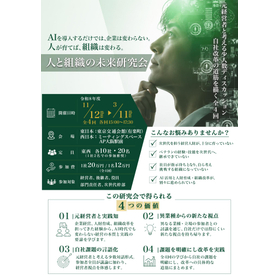
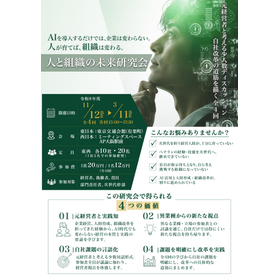
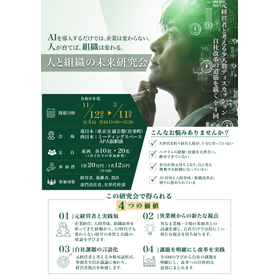
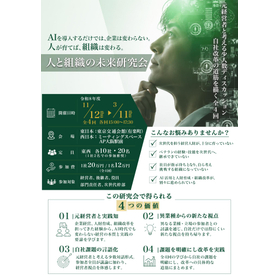
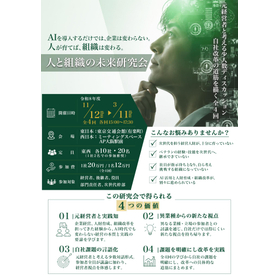
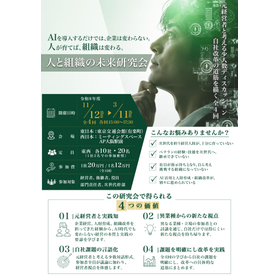
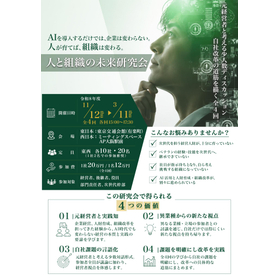
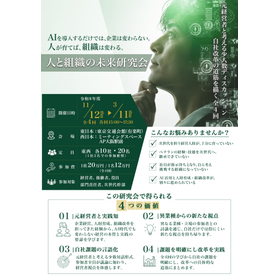
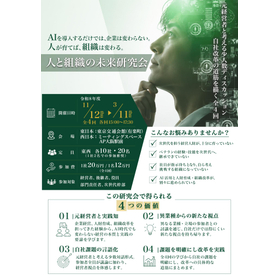
In the remodeling industry, improving customer satisfaction and achieving sustainable business growth require the streamlining of operations and business improvements. In particular, it is essential to address a wide range of challenges, including smooth communication with customers, progress management on-site, material procurement, personnel allocation, and safety management. To effectively solve these challenges and contribute to business growth, practical management decision-making skills and the ability to mobilize the organization are indispensable. The "Future Research Group for People and Organizations" is a small-group, practical program consisting of four sessions aimed at business owners, successors, executives, department heads, and next-generation leaders. By engaging in dialogue around the same round table with experienced top management and executives from different industries about their company's management challenges, participants can refine their management decision-making skills and connect them to their company's reform initiatives. 【Utilization Scenarios】 - Accurate responses to customer requests - Improved accuracy in progress management of on-site work - Cost management through optimization of material procurement - Increased productivity through efficient personnel allocation - Strengthening of safety management systems - Enhanced inter-departmental collaboration 【Effects of Implementation】 - Clarifying on-site challenges and identifying concrete solutions - Improving decision-making capabilities of management - Formulating specific plans for organizational reform - Gaining new perspectives through interaction with different industries - Applying practical learning to one's own company
Added to bookmarks
Bookmarks listBookmark has been removed
Bookmarks listYou can't add any more bookmarks
By registering as a member, you can increase the number of bookmarks you can save and organize them with labels.
Free membership registration
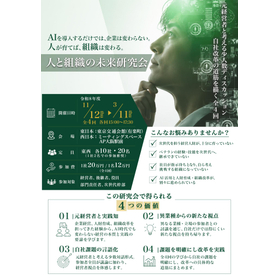
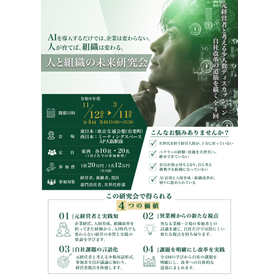
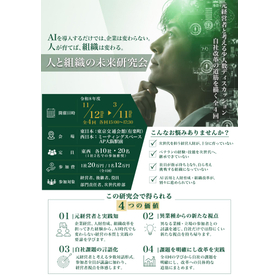
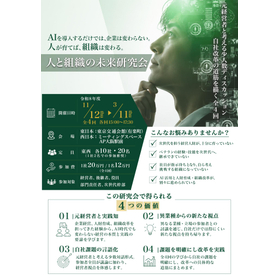
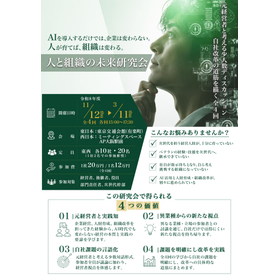
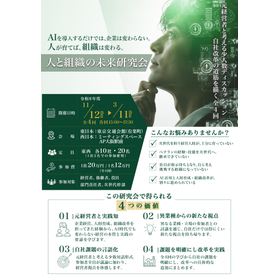
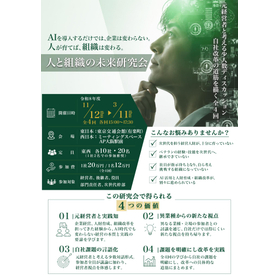
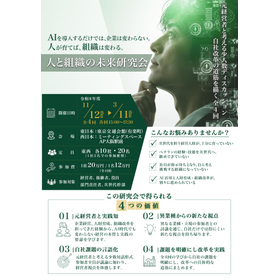
In the urban development industry, streamlining on-site operations and improving business processes are essential for project success and profitability. In particular, addressing a wide range of challenges such as complex process management, material procurement, personnel allocation, and safety management is required. To effectively solve these challenges and lead to sustainable growth, practical management judgment and the ability to mobilize the organization are crucial. The "Future Research Group for People and Organizations" is a small-group, four-session practical program aimed at business owners, successors, executives, department heads, and next-generation leaders. By engaging in dialogue around their company's management issues with experienced top executives and leaders from different industries at the same roundtable, participants can refine their management judgment and connect it to their company's reform initiatives. 【Utilization Scenarios】 - Reducing delay risks in on-site progress management - Cost reduction through optimization of material procurement - Increasing productivity through efficient personnel allocation - Strengthening safety management systems - Enhancing interdepartmental collaboration 【Effects of Implementation】 - Clarifying on-site challenges and discovering specific solutions - Improving decision-making capabilities of management - Formulating concrete plans for organizational reform - Gaining new perspectives through interaction with different industries - Incorporating practical learning into one's own company
Added to bookmarks
Bookmarks listBookmark has been removed
Bookmarks listYou can't add any more bookmarks
By registering as a member, you can increase the number of bookmarks you can save and organize them with labels.
Free membership registration
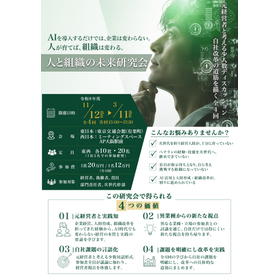
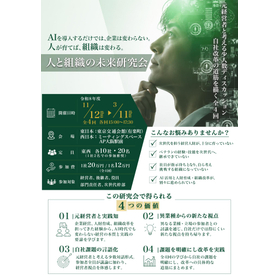
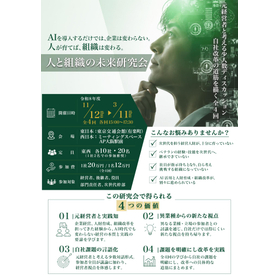
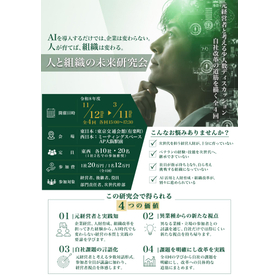
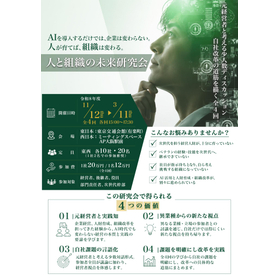
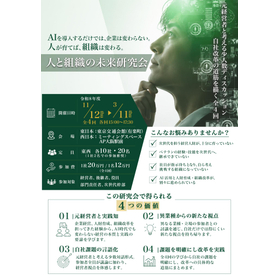
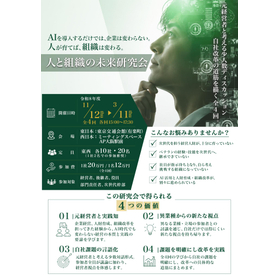
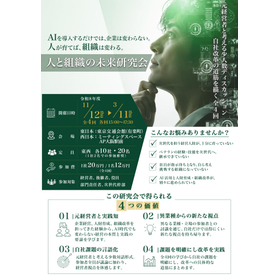
In the field of facility management, improving the accuracy of maintenance planning and business operations is essential for stable facility operation and cost management. In particular, addressing a wide range of challenges such as aging infrastructure, preventive maintenance, emergency response, and budget management is required. To effectively solve these challenges and lead to sustainable facility operations, practical management judgment and the ability to mobilize the organization are crucial. The "Future Research Group on People and Organizations" is a small-group, hands-on program consisting of four sessions aimed at business owners, successors, executives, department heads, and next-generation leaders. By engaging in dialogue around their company's management issues with experienced executives and leaders from different industries at the same round table, participants can refine their management judgment and connect it to their company's reform initiatives. 【Utilization Scenarios】 - Reducing delay risks in maintenance planning - Cost reduction through optimization of material procurement - Improving productivity through efficient personnel allocation - Strengthening safety management systems - Enhancing interdepartmental collaboration 【Benefits of Implementation】 - Clarifying challenges in maintenance planning and identifying specific solutions - Improving decision-making capabilities of management - Formulating concrete plans for organizational reform - Gaining new perspectives through interaction with different industries - Applying practical learning to one's own company
Added to bookmarks
Bookmarks listBookmark has been removed
Bookmarks listYou can't add any more bookmarks
By registering as a member, you can increase the number of bookmarks you can save and organize them with labels.
Free membership registration
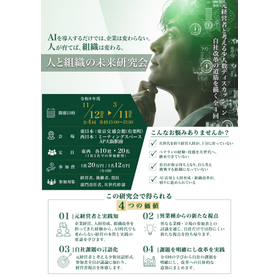
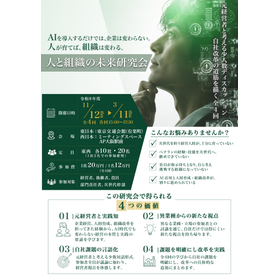
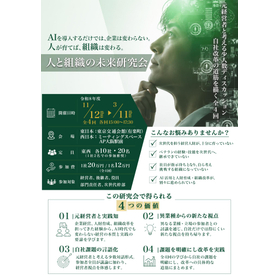
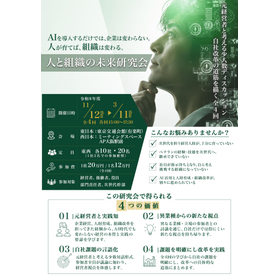
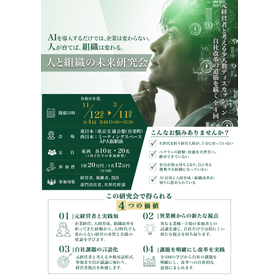
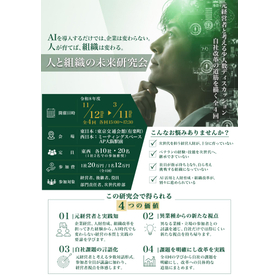
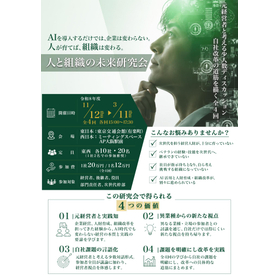
In the maintenance and management of the infrastructure industry, improving efficiency on-site and enhancing operations are essential for the success of projects and increasing profitability. In particular, addressing a wide range of challenges such as complex inspection and repair plans, material procurement, personnel allocation, and safety management is required. To effectively solve these challenges and lead to sustainable growth, practical management judgment and the ability to mobilize the organization are crucial. The "Future Research Group for People and Organizations" is a small-scale, practical program consisting of four sessions aimed at business owners, successors, executives, department heads, and next-generation leaders. By engaging in dialogue around a round table with experienced top management and executives from different industries about their own management challenges, participants can refine their management judgment and connect it to their company's reform initiatives. 【Utilization Scenarios】 - Reducing delay risks in on-site progress management - Cost reduction through optimization of material procurement - Increasing productivity through efficient personnel allocation - Strengthening safety management systems - Enhancing inter-departmental collaboration 【Effects of Implementation】 - Clarifying on-site challenges and identifying concrete solutions - Improving decision-making abilities of management - Formulating specific plans for organizational reform - Gaining new perspectives through interaction with different industries - Applying practical learning to one's own company
Added to bookmarks
Bookmarks listBookmark has been removed
Bookmarks listYou can't add any more bookmarks
By registering as a member, you can increase the number of bookmarks you can save and organize them with labels.
Free membership registration
In the architectural design industry, improving the quality of design reviews and enhancing operational efficiency are essential for the success and profitability of projects. In particular, there is a need to address a wide range of challenges, such as verifying complex design content, building consensus among stakeholders, and reducing rework. To effectively solve these challenges and lead to sustainable growth, practical management judgment and the ability to mobilize the organization are crucial. The "Future Research Group for People and Organizations" is a small-group, hands-on program consisting of four sessions aimed at business owners, successors, executives, department heads, and next-generation leaders. By engaging in dialogue around their company's management challenges at the same roundtable as experienced top executives and management from different industries, participants can refine their management judgment and connect it to their company's reform initiatives. 【Utilization Scenarios】 - Efficient management of issues raised during design reviews - Reduction of misunderstandings through strengthened collaboration with related departments - Rapid understanding of the impact scope associated with design changes - Quality improvement through the standardization of the design process - Support for skill enhancement of design personnel 【Effects of Implementation】 - Clarification of challenges in design reviews and identification of concrete solutions - Improvement of decision-making capabilities among management - Development of specific plans for organizational reform - Acquisition of new perspectives through interaction with different industries - Practical learning applied within the company
Added to bookmarks
Bookmarks listBookmark has been removed
Bookmarks listYou can't add any more bookmarks
By registering as a member, you can increase the number of bookmarks you can save and organize them with labels.
Free membership registration
In the energy industry, the efficiency of equipment maintenance and business improvement are essential for stable plant operations and increased profitability. In particular, there is a need to address a wide range of challenges, including complex inspection plans, material procurement, personnel allocation, and safety management. To effectively solve these challenges and lead to sustainable growth, practical management decision-making skills and the ability to mobilize the organization are crucial. The "Future Research Group on People and Organizations" is a small-group, practical program consisting of four sessions aimed at business owners, successors, executives, department heads, and next-generation leaders. By engaging in dialogue around their company's management issues with experienced top executives and management from different industries at the same roundtable, participants can refine their management decision-making skills and connect them to their company's reform initiatives. [Utilization Scenarios] - Reducing delay risks in equipment inspection planning - Cost reduction through optimization of maintenance material procurement - Improving productivity through efficient allocation of maintenance personnel - Strengthening safety management systems in equipment maintenance - Enhancing interdepartmental collaboration [Effects of Implementation] - Clarifying equipment maintenance challenges and identifying specific solutions - Improving decision-making capabilities of management - Formulating concrete plans for organizational reform - Gaining new perspectives through interaction with different industries - Applying practical learning to one's own company
Added to bookmarks
Bookmarks listBookmark has been removed
Bookmarks listYou can't add any more bookmarks
By registering as a member, you can increase the number of bookmarks you can save and organize them with labels.
Free membership registration
In the logistics industry, optimizing delivery routes and improving operations are essential for cost reduction and enhancing customer satisfaction. In particular, there is a need to address a wide range of challenges, including complex delivery planning, vehicle management, driver allocation, and adherence to deadlines. To effectively solve these challenges and lead to sustainable growth, practical management judgment and the ability to mobilize the organization are crucial. The "Future Research Group on People and Organizations" is a small-group, practical program consisting of four sessions aimed at business owners, successors, executives, department heads, and next-generation leaders. By engaging in dialogue around their company's management issues at the same roundtable as experienced top executives and management from different industries, participants can refine their management judgment and connect it to their company's reform initiatives. 【Utilization Scenarios】 - Reducing the risk of delivery route delays - Improving vehicle utilization rates - Streamlining driver allocation - Enhancing on-time delivery rates - Strengthening interdepartmental collaboration 【Effects of Implementation】 - Clarifying delivery challenges and identifying specific solutions - Improving decision-making capabilities of management - Formulating concrete plans for organizational reform - Gaining new perspectives through interaction with different industries - Applying practical learning to one's own company
Added to bookmarks
Bookmarks listBookmark has been removed
Bookmarks listYou can't add any more bookmarks
By registering as a member, you can increase the number of bookmarks you can save and organize them with labels.
Free membership registration
In the IT industry, improving development efficiency and business processes is essential for project success and profitability. In particular, addressing a wide range of challenges such as complex requirements definition, progress management, resource allocation, and quality control is required. To effectively solve these challenges and lead to sustainable growth, practical management judgment and the ability to mobilize the organization are crucial. The "Future Research Group on People and Organizations" is a small-scale, practical program consisting of four sessions aimed at business owners, successors, executives, department heads, and next-generation leaders. By engaging in dialogue around their company's management challenges with experienced top executives and leaders from different industries at the same round table, participants can refine their management judgment and connect it to their company's reform initiatives. [Utilization Scenarios] - Reducing delay risks in development projects - Cost reduction through optimized resource allocation - Improving productivity through efficient personnel placement - Strengthening quality management systems - Enhancing inter-departmental collaboration [Effects of Implementation] - Clarifying the challenges in the development field and finding concrete solutions - Improving the decision-making ability of management - Formulating specific plans for organizational reform - Gaining new perspectives through interaction with different industries - Applying practical learning to one's own company
Added to bookmarks
Bookmarks listBookmark has been removed
Bookmarks listYou can't add any more bookmarks
By registering as a member, you can increase the number of bookmarks you can save and organize them with labels.
Free membership registration
In the manufacturing industry, improving efficiency on the ground and enhancing operations are essential for the success of projects and increasing profitability. In particular, addressing a wide range of challenges such as complex process management, material procurement, personnel allocation, and safety management is required. To effectively solve these challenges and lead to sustainable growth, practical management judgment and the ability to mobilize the organization are crucial. The "Future Research Group for People and Organizations" is a small-group, practical program consisting of four sessions aimed at business owners, successors, executives, department heads, and next-generation leaders. By engaging in dialogue around their own management challenges with experienced top executives and leaders from different industries at the same round table, participants can refine their management judgment and connect it to their company's reform initiatives. 【Utilization Scenarios】 - Reducing delay risks in on-site progress management - Cost reduction through optimization of material procurement - Increasing productivity through efficient personnel allocation - Strengthening safety management systems - Enhancing collaboration between departments 【Effects of Implementation】 - Clarifying on-site challenges and identifying concrete solutions - Improving decision-making capabilities of management - Formulating specific plans for organizational reform - Gaining new perspectives through interaction with different industries - Integrating practical learning into one's own company
Added to bookmarks
Bookmarks listBookmark has been removed
Bookmarks listYou can't add any more bookmarks
By registering as a member, you can increase the number of bookmarks you can save and organize them with labels.
Free membership registration
In the real estate management industry, the efficiency and improvement of various tasks such as property maintenance, tenant relations, and financial management are essential for enhancing profitability and maintaining customer satisfaction. In particular, specialized knowledge and quick decision-making are required for addressing issues like property aging, vacancy strategies, complaint handling, and compliance with regulations. To effectively solve these challenges and achieve sustainable business growth, practical management judgment and the ability to mobilize the organization are crucial. The "Future Research Group for People and Organizations" is a small-group, four-session practical program aimed at business owners, successors, executives, department heads, and next-generation leaders. By engaging in dialogue around a roundtable with experienced top executives and management from different industries about their own management challenges, participants can sharpen their management judgment and connect it to their company's reform initiatives. 【Utilization Scenarios】 - Cost optimization in property maintenance - Acceleration of tenant relations and improvement of satisfaction - Enhanced accuracy in financial management and profitability improvement - Strengthening compliance with regulations and risk management - Enhanced collaboration between departments 【Effects of Implementation】 - Clarifying challenges in property management and discovering concrete solutions - Improving decision-making capabilities of management - Formulating specific plans for organizational reform - Gaining new perspectives through interaction with different industries - Applying practical learning to one's own company
Added to bookmarks
Bookmarks listBookmark has been removed
Bookmarks listYou can't add any more bookmarks
By registering as a member, you can increase the number of bookmarks you can save and organize them with labels.
Free membership registration
In the construction industry, improving efficiency on-site and enhancing operations are essential for project success and profitability. In particular, addressing a wide range of challenges such as complex process management, material procurement, personnel allocation, and safety management is required. To effectively solve these challenges and achieve sustainable growth, practical management decision-making skills and the ability to mobilize the organization are crucial. This program supports the resolution of these challenges and the realization of organizational reform. 【Utilization Scenarios】 - Reducing delay risks in on-site progress management - Cost reduction through optimization of material procurement - Increasing productivity through efficient personnel allocation - Strengthening safety management systems - Enhancing inter-departmental collaboration 【Effects of Implementation】 - Clarifying on-site issues and identifying specific solutions - Improving decision-making capabilities of management - Formulating concrete plans for organizational reform - Gaining new perspectives through interaction with different industries - Incorporating practical learning into the organization
Added to bookmarks
Bookmarks listBookmark has been removed
Bookmarks listYou can't add any more bookmarks
By registering as a member, you can increase the number of bookmarks you can save and organize them with labels.
Free membership registration
In the telemedicine industry, there is a demand for improving patient convenience and expanding access to healthcare. Particularly, to continue providing high-quality medical services within limited resources, efficient operations and overall organizational optimization are essential. Inadequate patient flow management can lead to decreased patient satisfaction and increased burden on healthcare professionals. This seminar is a practical program that delves deeply into your company's management challenges through dialogue with experienced executives, connecting them to concrete reform proposals. 【Usage Scenarios】 - Reducing patient waiting times - Smooth coordination from consultation to billing - Optimizing staff allocation and flow within wards - Streamlining reservation systems - Reducing the burden on healthcare professionals 【Benefits of Implementation】 - Improved patient satisfaction - Enhanced operational efficiency - Maintenance and improvement of the quality of medical services - Increased overall organizational productivity
Added to bookmarks
Bookmarks listBookmark has been removed
Bookmarks listYou can't add any more bookmarks
By registering as a member, you can increase the number of bookmarks you can save and organize them with labels.
Free membership registration
In the genomic medicine industry, the provision of services based on advanced expertise and ethical considerations is essential. In particular, to continue providing optimal medical services tailored to each patient in response to rapid technological innovation, efficient operations and overall organizational optimization are indispensable. Inadequate service deployment can lead to decreased patient satisfaction and increased burdens on healthcare professionals. This seminar is a practical program that delves deeply into your company's management challenges through dialogue with experienced top executives, connecting them to concrete reform proposals. 【Utilization Scenarios】 - Reducing patient wait times - Smooth coordination from consultation to billing - Optimization of personnel allocation and flow within the ward - Streamlining the reservation system - Reducing the burden on healthcare professionals 【Effects of Implementation】 - Improvement in patient satisfaction - Enhancement of operational efficiency - Maintenance and improvement of the quality of medical services - Increase in overall organizational productivity
Added to bookmarks
Bookmarks listBookmark has been removed
Bookmarks listYou can't add any more bookmarks
By registering as a member, you can increase the number of bookmarks you can save and organize them with labels.
Free membership registration
In the caregiving industry, there is a demand for improving user satisfaction and providing high-quality services with limited personnel. In particular, efficient operations and the optimization of the entire organization are essential for sustainable business management. Inadequate operational management can lead to decreased user satisfaction and increased burdens on caregiving staff. This seminar is a practical program that delves deeply into the management challenges of your company through dialogue with experienced top executives, connecting them to specific reform proposals. 【Utilization Scenarios】 - Reducing user waiting times - Smooth coordination from service provision to billing - Optimizing personnel placement and flow within facilities - Streamlining reservation systems - Reducing the burden on caregiving staff 【Effects of Implementation】 - Improved user satisfaction - Enhanced operational efficiency - Maintenance and improvement of the quality of caregiving services - Increased productivity across the organization
Added to bookmarks
Bookmarks listBookmark has been removed
Bookmarks listYou can't add any more bookmarks
By registering as a member, you can increase the number of bookmarks you can save and organize them with labels.
Free membership registration
In the insurance industry and medical collaboration, there is a demand for improvements in patient flow, such as reducing patient wait times and ensuring a smooth consultation process. Particularly, to continue providing high-quality medical services with limited resources, efficient operations and optimization across the organization are essential. Inadequate patient flow management can lead to decreased patient satisfaction and increased burdens on healthcare professionals. This seminar is a practical program that delves deeply into your company's management challenges through dialogue with experienced executives, connecting them to specific reform proposals. 【Usage Scenarios】 - Reducing patient wait times - Smooth coordination from consultation to billing - Optimization of staff allocation and movement within the ward - Streamlining the reservation system - Reducing the burden on healthcare professionals 【Effects of Implementation】 - Improved patient satisfaction - Enhanced operational efficiency - Maintenance and improvement of the quality of medical services - Increased productivity across the organization
Added to bookmarks
Bookmarks listBookmark has been removed
Bookmarks listYou can't add any more bookmarks
By registering as a member, you can increase the number of bookmarks you can save and organize them with labels.
Free membership registration
In the food and beverage industry, there is a growing demand for the development of innovative health foods in response to consumers' increasing health consciousness. To capture market needs and create competitive products, strategic product development and effective marketing are essential. Inefficiencies in the development process and delays in bringing products to market can lead to lost opportunities. This seminar is a practical program that delves deeply into the management challenges of your health food development through dialogue with experienced top executives, connecting to concrete reform proposals. 【Utilization Scenarios】 - Market research and analysis in new product development - Improvement and rebranding of existing products - Planning effective promotion strategies - Optimization of the supply chain - Strengthening quality control systems 【Effects of Implementation】 - Product development that aligns with market needs - Shortening of the development cycle - Enhancement of brand image - Increase in sales and profits
Added to bookmarks
Bookmarks listBookmark has been removed
Bookmarks listYou can't add any more bookmarks
By registering as a member, you can increase the number of bookmarks you can save and organize them with labels.
Free membership registration
In the cosmetics industry, understanding market needs in new product development and formulating effective promotion strategies are essential. Particularly in a highly competitive market environment, it is crucial to respond to diverse consumer needs and enhance brand value through strategic management decisions and optimization across the organization. Inadequate market analysis and strategy formulation can lead to a decline in product competitiveness and damage to brand image. This seminar is a practical program that delves deeply into your company's management challenges through dialogue with experienced top executives, connecting them to specific reform initiatives. 【Utilization Scenarios】 - Understanding market needs in new product development - Formulating effective promotion strategies - Developing brand strategies - Competitive analysis and differentiation strategies - Enhancing strategic execution across the organization 【Benefits of Implementation】 - Improved market competitiveness - Enhanced brand value - Increased management decision-making ability - Improved overall organizational productivity
Added to bookmarks
Bookmarks listBookmark has been removed
Bookmarks listYou can't add any more bookmarks
By registering as a member, you can increase the number of bookmarks you can save and organize them with labels.
Free membership registration
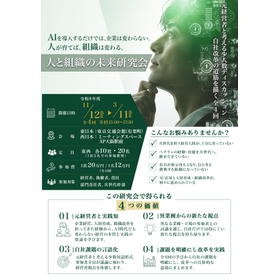
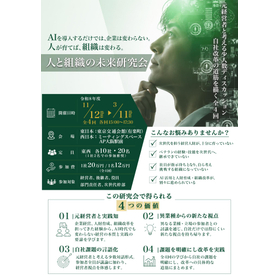
In the regenerative medicine industry, there is a demand for the practical application of innovative technologies and the establishment of a supporting business foundation. Particularly in the areas of research and development, clinical application, and market deployment, there are various challenges such as complex regulatory compliance, fundraising, and organizational structure development. If these challenges are not adequately addressed, it could lead to delays in commercialization and missed opportunities. This seminar is a practical program that delves deeply into your company's management issues in the field of regenerative medicine through dialogue with former top executives of major companies, connecting them to specific commercialization concepts. 【Utilization Scenarios】 - Launching and promoting new businesses - Developing fundraising strategies - Negotiating with regulatory authorities and approval processes - Building and strengthening organizational structures - Formulating market entry strategies 【Effects of Implementation】 - Clarification and enhancement of commercialization plans - Improvement of management decision-making capabilities - Reduction of risks and maximization of opportunities - Pathway to sustainable business growth
Added to bookmarks
Bookmarks listBookmark has been removed
Bookmarks listYou can't add any more bookmarks
By registering as a member, you can increase the number of bookmarks you can save and organize them with labels.
Free membership registration
In the CRO industry, there is a demand for the streamlining of clinical trial processes, improvement in quality, and reduction of the burden on patients. Particularly, to continue conducting clinical trials quickly and accurately within limited resources, efficient operations and optimization across the organization are essential. Inadequate management of clinical trial processes can lead to delays in trial duration, increased costs, and even a decline in data quality. This seminar is a practical program that delves deeply into management challenges as a CRO through dialogue with experienced top executives, connecting to specific reform initiatives. 【Utilization Scenes】 - Identifying and resolving bottlenecks in the clinical trial process - Streamlining data collection and management - Strengthening collaboration among stakeholders - Optimizing resource allocation - Reducing the burden on clinical trial personnel 【Effects of Implementation】 - Shortening the duration of clinical trials - Improving operational efficiency - Enhancing the quality of clinical trial data - Increasing overall organizational productivity
Added to bookmarks
Bookmarks listBookmark has been removed
Bookmarks listYou can't add any more bookmarks
By registering as a member, you can increase the number of bookmarks you can save and organize them with labels.
Free membership registration
In the medical device industry, accurately capturing the needs of the medical field and optimizing operations across the organization are essential for the market entry of new products and strengthening the competitiveness of existing products. Particularly, to continue providing high-quality medical services with limited resources, it is crucial to understand market trends and quickly formulate business strategies. Inadequate market entry strategies can lead to delays in product adoption and missed opportunities. This seminar is a practical program that delves deeply into the management challenges of participants through dialogue with experienced executives, connecting them to concrete reform ideas. 【Utilization Scenarios】 - Formulating market entry strategies for new products - Product development based on the needs of the medical field - Competitive analysis and differentiation strategies - Optimization of sales channels - Compliance with regulations specific to the medical device industry 【Benefits of Implementation】 - Increased probability of successful market entry - Strengthened competitiveness of products - Improved business efficiency - Enhanced productivity across the organization
Added to bookmarks
Bookmarks listBookmark has been removed
Bookmarks listYou can't add any more bookmarks
By registering as a member, you can increase the number of bookmarks you can save and organize them with labels.
Free membership registration
In the medical device industry, accurately capturing the needs of the healthcare field and optimizing operations and the entire organization are essential for the market entry of new products and strengthening the competitiveness of existing products. Particularly, to continue providing high-quality medical services with limited resources, it is crucial to understand market trends and quickly formulate business strategies. Inadequate market entry strategies can lead to delays in product adoption and missed opportunities. This seminar is a practical program that delves deeply into your company's management challenges through dialogue with experienced top executives, connecting them to specific reform proposals. 【Utilization Scenarios】 - Formulating market entry strategies for new products - Product development based on the needs of the healthcare field - Competitive analysis and differentiation strategies - Optimization of sales channels - Compliance with regulations specific to the medical device industry 【Benefits of Implementation】 - Increased probability of successful market entry - Strengthened product competitiveness - Improved business efficiency - Enhanced overall organizational productivity
Added to bookmarks
Bookmarks listBookmark has been removed
Bookmarks listYou can't add any more bookmarks
By registering as a member, you can increase the number of bookmarks you can save and organize them with labels.
Free membership registration
In the medical device industry, accurately capturing the needs of the medical field and optimizing operations and the entire organization are essential for the market entry of new products and strengthening the competitiveness of existing products. Particularly, to continue providing high-quality medical services with limited resources, it is crucial to understand market trends and quickly formulate business strategies. Inadequate market entry strategies can lead to delays in product adoption and missed opportunities. This seminar is a practical program that delves deeply into the management challenges of your company through dialogue with experienced top executives, connecting them to concrete reform proposals. 【Utilization Scenarios】 - Formulating market entry strategies for new products - Product development based on the needs of the medical field - Competitive analysis and differentiation strategies - Optimization of sales channels - Compliance with regulations specific to the medical device industry 【Effects of Implementation】 - Increased probability of successful market entry - Strengthening product competitiveness - Improvement of business efficiency - Enhanced overall organizational productivity
Added to bookmarks
Bookmarks listBookmark has been removed
Bookmarks listYou can't add any more bookmarks
By registering as a member, you can increase the number of bookmarks you can save and organize them with labels.
Free membership registration
In the pharmaceutical industry, there is a demand for strategic planning in new drug development and for advancing research and development efficiently within limited resources. Particularly, to respond to the increasingly complex development processes and market changes, accurate judgment from management and optimization across the entire organization are essential. Inadequate strategy formulation can lead to delays in development and inefficient allocation of resources. This seminar is a practical program that delves deeply into management challenges in your company's new drug development strategy through dialogue with experienced top executives, connecting to concrete reform proposals. 【Utilization Scenarios】 - Formulating management strategies for new drug development - Efficient operation of research and development departments - Optimizing the process until market launch - Enhancing decision-making capabilities across the organization - Developing the next generation of leaders 【Effects of Implementation】 - Improved quality of new drug development strategies - Increased efficiency of research and development processes - Maintenance and enhancement of market competitiveness - Strengthened driving force for organizational transformation
Added to bookmarks
Bookmarks listBookmark has been removed
Bookmarks listYou can't add any more bookmarks
By registering as a member, you can increase the number of bookmarks you can save and organize them with labels.
Free membership registration
In the healthcare industry, there is a demand for improvements in patient flow, such as reducing patient wait times and ensuring a smooth consultation process. Particularly, to continue providing high-quality medical services with limited resources, efficient operations and optimization across the organization are essential. Inadequate management of patient flow can lead to decreased patient satisfaction and increased burdens on healthcare professionals. This seminar is a practical program that delves deeply into your company's management challenges through dialogue with experienced top executives, connecting them to specific reform proposals. 【Utilization Scenarios】 - Reducing patient wait times - Smooth coordination from consultation to billing - Optimization of staff allocation and flow within the ward - Streamlining the reservation system - Reducing the burden on healthcare professionals 【Effects of Implementation】 - Improved patient satisfaction - Enhanced operational efficiency - Maintenance and improvement of the quality of medical services - Increased productivity across the organization
Added to bookmarks
Bookmarks listBookmark has been removed
Bookmarks listYou can't add any more bookmarks
By registering as a member, you can increase the number of bookmarks you can save and organize them with labels.
Free membership registration
In the IT industry, particularly in the development process, it is essential to respond to rapidly changing technological trends and to advance efficient and high-quality product development. Identifying bottlenecks in the development process, strengthening collaboration between teams, and making decisions on the introduction of the latest technologies are key to project success. It is not uncommon to find it difficult to discover solutions to these challenges solely within one's own company. This seminar offers practical approaches to address these issues. 【Usage Scenarios】 - Identifying inefficient parts of the development process - Addressing communication challenges between teams - Establishing criteria for the introduction of the latest technologies - Reviewing project management methods 【Benefits of Implementation】 - Shortening the development cycle - Improving quality and reducing bugs - Enhancing team productivity - Promoting innovation
Added to bookmarks
Bookmarks listBookmark has been removed
Bookmarks listYou can't add any more bookmarks
By registering as a member, you can increase the number of bookmarks you can save and organize them with labels.
Free membership registration
In the construction industry, improving efficiency on-site and enhancing operations are essential for project success and profitability. In particular, addressing a wide range of challenges such as complex process management, material procurement, personnel allocation, and safety management is required. To effectively solve these challenges and lead to sustainable growth, practical management judgment and the ability to mobilize the organization are crucial. The "Future Research Group on People and Organizations" is a small-group, practical program consisting of four sessions aimed at business owners, successors, executives, department heads, and next-generation leaders. By engaging in dialogue around their company's management issues with experienced top executives and leaders from different industries at the same round table, participants can refine their management judgment and connect it to their company's reform initiatives. [Utilization Scenes] - Reducing delay risks in on-site progress management - Cost reduction through optimization of material procurement - Improving productivity through efficient personnel allocation - Strengthening safety management systems - Enhancing inter-departmental collaboration [Effects of Implementation] - Clarifying on-site challenges and identifying specific solutions - Improving decision-making capabilities of management - Formulating concrete plans for organizational reform - Gaining new perspectives through interaction with different industries - Incorporating practical learning into their own company
Added to bookmarks
Bookmarks listBookmark has been removed
Bookmarks listYou can't add any more bookmarks
By registering as a member, you can increase the number of bookmarks you can save and organize them with labels.
Free membership registration
In the real estate industry, there is a demand for the efficiency of property management and the accompanying improvement of operations. Especially for smoothly advancing a wide range of tasks such as property maintenance, tenant support, and financial management, accurate judgment and the ability to mobilize the organization are essential. In an era where AI provides "answers," the ability to pose questions and drive organizational change is being emphasized. This seminar will provide practical learning and a pathway to concrete reform proposals in response to these challenges. 【Utilization Scenarios】 - Streamlining property management operations - Improving the quality of tenant support - Optimizing financial management - Reviewing internal business processes 【Effects of Implementation】 - Increased efficiency in property management operations - Enhanced management decision-making ability - Concrete planning for company reform - Revitalization of the entire organization
Added to bookmarks
Bookmarks listBookmark has been removed
Bookmarks listYou can't add any more bookmarks
By registering as a member, you can increase the number of bookmarks you can save and organize them with labels.
Free membership registration
In the education industry, there is a demand for practical learning and organizational transformation capabilities to cultivate the next generation of talent. Especially in today's fast-changing world, the ability to ask questions, make judgments, and drive organizational change is essential. However, the challenges in the educational field are diverse, and it can be difficult to find effective solutions. This seminar provides an opportunity to outline a path for organizational reform through dialogue with top management experienced professionals. 【Utilization Scenarios】 - Formulating management strategies in educational institutions - Designing next-generation leader development programs - Strengthening the learning support system across the organization - Exploring specific approaches to solving challenges in the educational field 【Benefits of Implementation】 - Improvement in management decision-making skills - Acquisition of new perspectives on organizational challenges - Development of concrete reform plans - Building networks with different industries
Added to bookmarks
Bookmarks listBookmark has been removed
Bookmarks listYou can't add any more bookmarks
By registering as a member, you can increase the number of bookmarks you can save and organize them with labels.
Free membership registration
In the service industry, continuous business improvement and organizational strengthening are required to meet customer expectations and enhance satisfaction. Especially in a rapidly changing market environment, the ability to identify challenges and drive the organization is crucial. This seminar provides an opportunity to connect practical learning and dialogue to the vision of organizational reform in response to these challenges. 【Utilization Scenes】 - Executives, directors, department heads, next-generation leaders - Streamlining operations and improving business processes - Considering measures to enhance customer satisfaction - Organizing management challenges within the company 【Benefits of Implementation】 - Improved management decision-making skills - Development of concrete plans for organizational reform - Building networks with executives from different industries - Applying practical knowledge to address company-specific challenges
Added to bookmarks
Bookmarks listBookmark has been removed
Bookmarks listYou can't add any more bookmarks
By registering as a member, you can increase the number of bookmarks you can save and organize them with labels.
Free membership registration
In the agricultural sector, efficient production management is required to improve productivity, ensure stable harvests, and achieve sustainable management. In particular, responding to external factors such as weather and pests, optimizing materials, and effectively utilizing human resources are critical issues directly linked to profitability. It is essential to find concrete solutions to these challenges from the perspective of experienced managers and to translate them into practice. The "Future Research Group on People and Organizations" is a small-group, practical program consisting of four sessions aimed at managers, successors, executives, department heads, and next-generation leaders. Participants engage in dialogue about their company's management challenges around the same round table with experienced top executives and leaders from different industries. By not only "listening" but also "questioning, thinking, and engaging in dialogue," they sharpen their management decision-making skills and connect to the vision for their company's reform. Top executives from leading Japanese companies such as Panasonic, Hino Motors, and JAL Card will participate. They will share practical knowledge while engaging in dialogue with managers and executives from different industries, applying this knowledge to their own company's challenges.
Added to bookmarks
Bookmarks listBookmark has been removed
Bookmarks listYou can't add any more bookmarks
By registering as a member, you can increase the number of bookmarks you can save and organize them with labels.
Free membership registration
In the logistics industry, there is a demand for cost reduction and improved customer satisfaction through the optimization of delivery routes. In particular, efficient route planning and quick decision-making are essential to respond to complex delivery networks and ever-changing traffic conditions. Inappropriate route settings can lead to increased fuel costs, delivery delays, and greater burdens on drivers. This seminar is a practical program that helps organize your company's management challenges and connect them to reform initiatives through dialogue with experienced top executives. 【Usage Scenarios】 - Inefficiencies in delivery routes - Rising fuel costs - Long working hours for drivers - Complaints from customers about delivery delays - The need for data-driven decision-making 【Benefits of Implementation】 - Improved delivery efficiency - Cost reduction - Enhanced customer satisfaction - Strengthened management decision-making capabilities - Concrete realization of company reforms
Added to bookmarks
Bookmarks listBookmark has been removed
Bookmarks listYou can't add any more bookmarks
By registering as a member, you can increase the number of bookmarks you can save and organize them with labels.
Free membership registration
In the financial industry, rapid and accurate decision-making is required to respond to the fast-changing market environment and the diversification of customer needs. In particular, the acceleration of customer response is a crucial factor that directly contributes to improved customer satisfaction and the establishment of competitive advantage. Inadequate responses can lead to customer attrition and a decline in brand image. This seminar provides an opportunity to deeply explore your company's management challenges and find practical solutions through dialogue with experienced top executives. 【Usage Scenarios】 - Improvement of delays and inefficiencies in customer response - Rapid response to changing market needs - Differentiation from competitors 【Effects of Implementation】 - Acceleration and improvement of decision-making accuracy - Increased customer satisfaction - Overall organizational efficiency improvement
Added to bookmarks
Bookmarks listBookmark has been removed
Bookmarks listYou can't add any more bookmarks
By registering as a member, you can increase the number of bookmarks you can save and organize them with labels.
Free membership registration
In the retail industry, responding to demand fluctuations and preventing excess inventory and stockouts are crucial for improving profitability and maintaining customer satisfaction. In particular, inventory management based on accurate demand forecasting is essential for preventing lost opportunities and improving cash flow. Inadequate inventory management can lead to lost sales opportunities and increased storage costs. This seminar is a practical program that delves deeply into your company's management challenges through dialogue with experienced top executives, connecting them to concrete reform proposals, including inventory optimization. 【Usage Scenarios】 - Challenges in inventory management in retail - Improving the accuracy of demand forecasting - Reducing excess inventory and stockouts - Improving cash flow - Streamlining store operations 【Effects of Implementation】 - Cost reduction through optimized inventory management - Reduced lost opportunities and increased sales - Enhanced management decision-making - Development of concrete reform proposals for your company
Added to bookmarks
Bookmarks listBookmark has been removed
Bookmarks listYou can't add any more bookmarks
By registering as a member, you can increase the number of bookmarks you can save and organize them with labels.
Free membership registration
In the food and beverage industry, there is a demand for daily operational efficiency and the creation of organizations that can adapt to change. In particular, it is important to find practical solutions to challenges such as labor shortages, cost management, and maintaining customer satisfaction. This seminar provides an opportunity to develop management skills that enable participants to pose questions, make judgments, and drive organizational change in response to these challenges. 【Utilization Scenarios】 - Identifying challenges in store operations - Generating ideas for operational improvements - Considering talent development and organizational management - Differentiation strategies from competing stores 【Effects of Implementation】 - Discovering specific measures for improving on-site efficiency - Enhancing management decision-making skills - Planning for organizational reform
Added to bookmarks
Bookmarks listBookmark has been removed
Bookmarks listYou can't add any more bookmarks
By registering as a member, you can increase the number of bookmarks you can save and organize them with labels.
Free membership registration
In the manufacturing industry, there is a constant demand for efficiency improvements and business enhancements to respond to rapidly changing markets and achieve sustainable growth. Especially in an era where AI provides "answers," the ability to ask questions, make judgments, and drive the organization becomes crucial. A practical approach to deeply understanding on-site challenges and leading them to solutions is essential. This seminar aims to outline specific solutions and pathways for organizational reform through dialogue with former executives of major companies, addressing the challenges faced by the manufacturing industry. 【Utilization Scenarios】 - Improving on-site productivity - Reviewing business processes - Streamlining the entire organization - Strengthening management decision-making capabilities - Formulating plans for organizational reform 【Effects of Implementation】 - Discovering concrete clues for solving on-site challenges - Enhancing the decision-making capabilities of management - Clarifying pathways for achieving organizational reform - Building networks with executives from different industries
Added to bookmarks
Bookmarks listBookmark has been removed
Bookmarks listYou can't add any more bookmarks
By registering as a member, you can increase the number of bookmarks you can save and organize them with labels.
Free membership registration
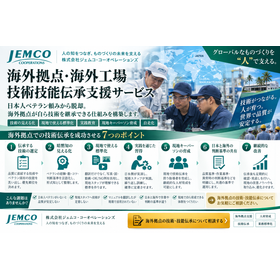
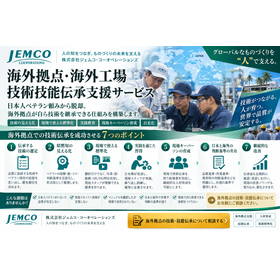
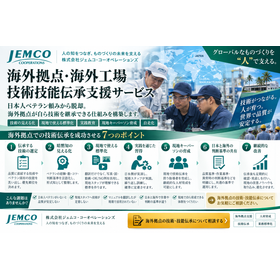
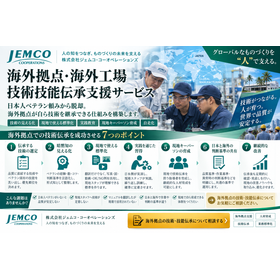
In the operation of mining machinery, the judgment of skilled technicians on-site and accurate responses during abnormal situations are required. Particularly in overseas bases and factories, there is a high dependency on Japanese technicians, and establishing technical skills among local staff can be a challenge. It is not uncommon for standardized information to be difficult to utilize on-site, or for differences in judgment criteria between Japan and overseas to cause variations in operations. In response to these challenges, our service aims to visualize the tacit knowledge, such as experience, intuition, and tips possessed by veteran Japanese technicians, and standardize it into a form that local staff can understand and practice. Through "visualization" using photos, diagrams, videos, and examples of acceptable and unacceptable practices, as well as demonstrations by Japanese staff and practical training for local staff, we support the development of judgment skills during abnormalities and troubles, as well as the training of local key personnel and leaders. This aims to move away from a situation where Japanese technicians continuously teach, and instead build a self-sustaining system where local personnel can make their own judgments and pass on skills and techniques to the next generation.
Added to bookmarks
Bookmarks listBookmark has been removed
Bookmarks listYou can't add any more bookmarks
By registering as a member, you can increase the number of bookmarks you can save and organize them with labels.
Free membership registration
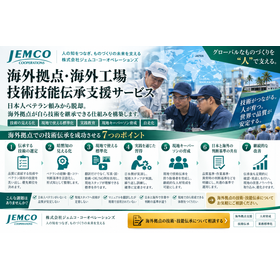
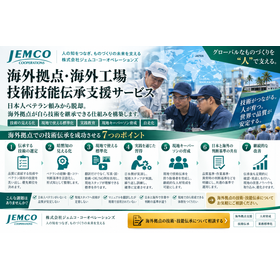
In the railway vehicle industry, there is a demand for the stable maintenance and transmission of advanced welding techniques to ensure the safety and quality of vehicles. Particularly in overseas bases and factories, when there is a high dependence on skilled technicians, challenges may arise such as the difficulty for local staff to adopt these techniques or the limited applicability of standardized information on-site. Additionally, differences in judgment criteria between Japan and overseas can often lead to variations in quality. In response to these challenges, our service aims to visualize the tacit knowledge, such as the experience, intuition, and tips possessed by veteran Japanese technicians, and standardize it into a form that local staff can understand and practice. Through "visualization" using photos, diagrams, videos, and examples of acceptable and unacceptable practices, as well as demonstrations by Japanese personnel and practical training for local staff, we support the development of judgment skills during abnormalities and troubles, as well as the training of local key personnel and instructors. This aims to move away from a state where Japanese individuals continuously teach, towards building a self-sustaining system where local personnel can make their own judgments and pass on techniques and skills to the next generation.
Added to bookmarks
Bookmarks listBookmark has been removed
Bookmarks listYou can't add any more bookmarks
By registering as a member, you can increase the number of bookmarks you can save and organize them with labels.
Free membership registration
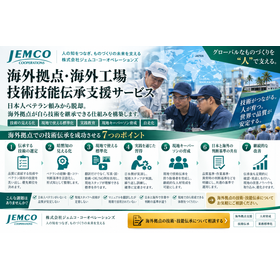
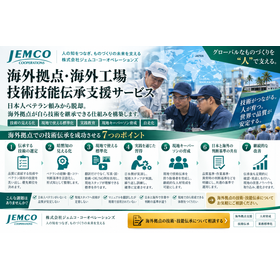
In the robot manufacturing industry and its related fields, maintaining and passing on advanced programming skills can be a challenge. Particularly when there is a high dependency on skilled Japanese technicians, there are cases where their expertise does not become established among local staff, or where standardized information is difficult to utilize on-site. Additionally, differences in judgment criteria between Japan and overseas often lead to variations in quality. In response to these challenges, our service aims to visualize the tacit knowledge, such as experiences, intuition, and tips possessed by veteran Japanese technicians, and standardize it into a form that local staff can understand and practice. Through "visualization" using photos, diagrams, videos, and examples of acceptable and unacceptable practices, as well as demonstrations by Japanese personnel and practical training for local staff, we support the development of judgment skills during abnormalities and troubles, as well as the cultivation of local key personnel and instructors. This aims to break away from a state where Japanese individuals continuously teach, and instead establish a self-sustaining system where local talent can make their own judgments and pass on skills and techniques to the next generation.
Added to bookmarks
Bookmarks listBookmark has been removed
Bookmarks listYou can't add any more bookmarks
By registering as a member, you can increase the number of bookmarks you can save and organize them with labels.
Free membership registration
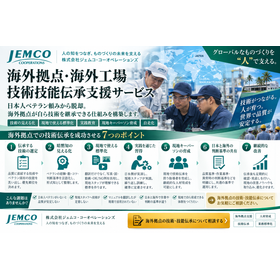
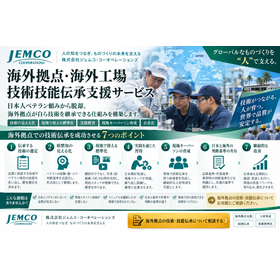
In overseas bases and factories of chemical plants, accurately understanding and transmitting technology and knowledge in complex processes can be a challenge. Particularly when there is a high dependence on skilled technicians, it can be difficult for local staff to internalize that understanding, and there are cases where standardized information does not easily translate into practical application on-site. Additionally, differences in judgment criteria between Japan and overseas can often impact the stable operation of processes and quality maintenance. In response to these challenges, our service aims to visualize the tacit knowledge, such as experience, intuition, and tips held by veteran Japanese technicians, and standardize it into a form that local staff can understand and practice. Through "visualization" using photos, diagrams, videos, and examples of acceptable and unacceptable practices, as well as demonstrations by Japanese staff and practical training for local staff, we support the development of judgment skills during abnormalities and troubles, as well as the cultivation of local key personnel and leaders. This aims to break away from a state where Japanese personnel continuously teach, and instead establish a self-sustaining system where local talent can understand the processes themselves and pass on their skills and techniques to the next generation.
Added to bookmarks
Bookmarks listBookmark has been removed
Bookmarks listYou can't add any more bookmarks
By registering as a member, you can increase the number of bookmarks you can save and organize them with labels.
Free membership registration
In the biopharmaceutical industry, compliance with GMP (Good Manufacturing Practice) is extremely important for ensuring product quality and safety. Particularly in overseas locations and factories, maintaining and inheriting strict manufacturing standards and quality control systems is essential for preserving the reliability of the global supply chain. Dependence on Japanese veterans, the difficulty of instilling technology in local staff, insufficient use of manuals, and differences in judgment criteria between Japan and overseas can pose potential risks to GMP compliance. Our service addresses these challenges and supports the establishment of a system that enables overseas locations to inherit technology and maintain GMP standards independently. 【Usage Scenarios】 - Standardization of culture techniques in the biopharmaceutical manufacturing process at overseas factories - Instilling GMP-related knowledge and culture techniques in local staff - Unification of quality control standards between Japan and overseas locations - Maintaining stable quality even in the absence of Japanese veterans - Fostering appropriate judgment skills among local staff during abnormal occurrences 【Benefits of Implementation】 - Maintenance of stable culture techniques based on global standards - Strengthening of quality control systems at overseas locations - Improvement of local personnel's technical skills and autonomous operations - Enhancement of overall supply chain reliability
Added to bookmarks
Bookmarks listBookmark has been removed
Bookmarks listYou can't add any more bookmarks
By registering as a member, you can increase the number of bookmarks you can save and organize them with labels.
Free membership registration
In the active pharmaceutical ingredient manufacturing industry, compliance with GMP (Good Manufacturing Practice) is extremely important for ensuring product quality and safety. Particularly in overseas locations and factories, maintaining and inheriting strict manufacturing standards and quality control systems is essential for preserving the reliability of the global supply chain. Dependence on Japanese veterans, difficulties in transferring technology to local staff, insufficient use of manuals, and differences in judgment criteria between Japan and overseas can pose potential risks to GMP compliance. Our service addresses these challenges and supports the establishment of a system that enables overseas locations to inherit technology and maintain GMP standards independently. 【Usage Scenarios】 - Standardization of technology and skills in the active pharmaceutical ingredient synthesis process at overseas factories - Establishment of GMP-related knowledge and manufacturing techniques among local staff - Unification of quality control standards between Japan and overseas locations - Maintaining stable quality even in the absence of Japanese veterans - Cultivating appropriate judgment skills among local staff in the event of anomalies
Added to bookmarks
Bookmarks listBookmark has been removed
Bookmarks listYou can't add any more bookmarks
By registering as a member, you can increase the number of bookmarks you can save and organize them with labels.
Free membership registration
In the pharmaceutical manufacturing industry, particularly in the tablet pressing and filling processes, compliance with GMP (Good Manufacturing Practice) is extremely important for ensuring product quality and safety. In overseas locations and factories, maintaining and inheriting strict manufacturing standards and quality control systems is essential for ensuring the reliability of the global supply chain. Dependence on Japanese veterans, the difficulty of instilling technology in local staff, insufficient use of manuals, and differences in judgment criteria between Japan and overseas can pose potential risks to GMP compliance. Our service addresses these challenges and supports the establishment of a system that enables overseas locations to inherit technology and maintain GMP standards independently. 【Usage Scenarios】 - Standardization of technology and skills in the tablet pressing and filling processes at overseas factories - Instilling GMP-related knowledge and manufacturing techniques in local staff - Unification of quality control standards between Japan and overseas locations - Maintaining stable quality even in the absence of Japanese veterans - Fostering appropriate judgment skills among local staff in the event of anomalies
Added to bookmarks
Bookmarks listBookmark has been removed
Bookmarks listYou can't add any more bookmarks
By registering as a member, you can increase the number of bookmarks you can save and organize them with labels.
Free membership registration
In the vaccine manufacturing industry, strict adherence to aseptic procedures is extremely important for ensuring product quality and safety. Particularly in overseas locations and factories, maintaining and inheriting advanced manufacturing standards and quality control systems is essential for preserving the reliability of the global supply chain. Dependence on Japanese veterans, the difficulty of instilling technology in local staff, insufficient use of manuals, and differences in judgment criteria between Japan and overseas can pose potential risks in aseptic operations. Our service addresses these challenges and supports the establishment of a system that allows overseas locations to inherit technology and maintain aseptic operation standards. 【Usage Scenarios】 - Standardization of aseptic operation techniques and skills in the vaccine manufacturing process at overseas factories - Instilling knowledge related to aseptic operations and manufacturing techniques in local staff - Unification of quality control standards between Japan and overseas locations - Maintaining stable quality even in the absence of Japanese veterans - Cultivating appropriate judgment skills in local staff during abnormal occurrences 【Effects of Implementation】 - Stabilization of quality through the standardization of techniques and skills in aseptic operations - Realization of autonomous operations through the instillation of technology in local staff - Improvement of reliability through the establishment of manufacturing systems based on global standards
Added to bookmarks
Bookmarks listBookmark has been removed
Bookmarks listYou can't add any more bookmarks
By registering as a member, you can increase the number of bookmarks you can save and organize them with labels.
Free membership registration
In the cell therapy industry, maintaining and inheriting strict manufacturing standards and quality control systems is essential for ensuring the quality and safety of products, as well as for maintaining the reliability of the global supply chain. Particularly in overseas locations and factories, reliance on Japanese veterans, the difficulty of instilling technology in local staff, insufficient use of manuals, and differences in judgment criteria between Japan and overseas can pose potential risks in quality management. Our service addresses these challenges and supports the establishment of a system that allows overseas locations to inherit technology and maintain quality standards independently. 【Use Cases】 - Standardization of techniques and skills in cell culture processes at overseas factories - Instilling manufacturing techniques in local staff - Unifying quality management standards between Japan and overseas locations - Maintaining stable quality even in the absence of Japanese veterans - Cultivating appropriate judgment skills in local staff during abnormal occurrences 【Benefits of Implementation】 - Establishing a manufacturing system based on global standards - Enabling local personnel to operate independently and building a sustainable technology inheritance system - Stabilizing quality and improving the reliability of the supply chain
Added to bookmarks
Bookmarks listBookmark has been removed
Bookmarks listYou can't add any more bookmarks
By registering as a member, you can increase the number of bookmarks you can save and organize them with labels.
Free membership registration
In the gene therapy industry, compliance with GMP (Good Manufacturing Practice) is extremely important for ensuring product quality and safety. Particularly in overseas locations and factories, maintaining and inheriting strict manufacturing standards and quality control systems is essential for preserving the reliability of the global supply chain. Dependence on Japanese veterans in the vector manufacturing process, the difficulty of instilling technology in local staff, insufficient use of manuals, and differences in judgment criteria between Japan and overseas can pose potential risks to GMP compliance. Our service addresses these challenges and supports the establishment of a system that allows overseas locations to inherit technology and maintain GMP standards independently. 【Usage Scenarios】 - Standardization of technology and skills in the vector manufacturing process at overseas factories - Instilling GMP-related knowledge and manufacturing techniques in local staff - Unification of quality control standards between Japan and overseas locations - Maintaining stable quality even in the absence of Japanese veterans - Cultivating appropriate judgment skills in local staff during abnormal occurrences
Added to bookmarks
Bookmarks listBookmark has been removed
Bookmarks listYou can't add any more bookmarks
By registering as a member, you can increase the number of bookmarks you can save and organize them with labels.
Free membership registration