811~855 item / All 1805 items
Displayed results
Filter by category

Added to bookmarks
Bookmarks listBookmark has been removed
Bookmarks listYou can't add any more bookmarks
By registering as a member, you can increase the number of bookmarks you can save and organize them with labels.
Free membership registration
Contact this company
Inquiry FormBefore making an inquiry
Download Profile811~855 item / All 1805 items
Filter by category


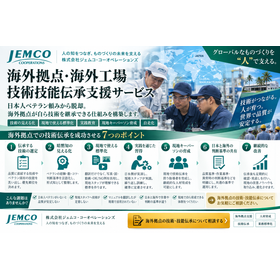
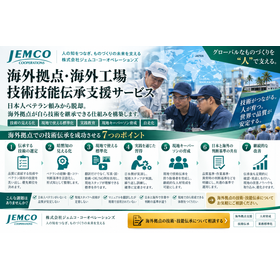
In the chemical plant industry, the transmission of technology and skills based on advanced expertise and strict safety standards is essential. Particularly in overseas locations, reliance on veteran Japanese engineers, the establishment of technical skills among local staff, the use of manuals, and the sharing of judgment criteria can pose challenges that may compromise the stability of safety management and quality maintenance. To address these challenges and maintain and improve the quality of safety education, it is necessary to formalize tacit knowledge and establish a system for autonomous technical inheritance by local staff. Our service aims to visualize and standardize the experiences and judgment criteria held by veteran Japanese engineers in response to these challenges in safety education for chemical plants, translating them into a form that local staff can understand and practice. This aims to enable overseas locations to inherit technology independently and maintain and improve safety levels. 【Usage Scenarios】 - Standardization of safety education in overseas factories - Transmission of hazard prediction training (KYT) and risk assessment methods to local staff - Accurate understanding and practice of emergency response procedures - Sharing of judgment criteria in plant operations - Safety education during the introduction of new equipment


Added to bookmarks
Bookmarks listBookmark has been removed
Bookmarks listYou can't add any more bookmarks
By registering as a member, you can increase the number of bookmarks you can save and organize them with labels.
Free membership registration
In the pharmaceutical manufacturing industry, compliance with GMP (Good Manufacturing Practice) is extremely important for ensuring product quality and safety. Particularly in overseas locations and factories, maintaining and inheriting strict manufacturing standards and quality control systems is essential for preserving the reliability of the global supply chain. Dependence on Japanese veterans, the difficulty of instilling skills in local staff, insufficient use of manuals, and differences in judgment criteria between Japan and overseas can pose potential risks to GMP compliance. Our service addresses these challenges and supports the establishment of a system that allows overseas locations to inherit technology and maintain GMP standards independently. 【Usage Scenarios】 - Standardization of technology and skills in the pharmaceutical manufacturing process at overseas factories - Instilling GMP-related knowledge and manufacturing techniques in local staff - Unification of quality control standards between Japan and overseas locations - Maintaining stable quality even in the absence of Japanese veterans - Cultivating appropriate judgment skills in local staff during abnormal occurrences
Added to bookmarks
Bookmarks listBookmark has been removed
Bookmarks listYou can't add any more bookmarks
By registering as a member, you can increase the number of bookmarks you can save and organize them with labels.
Free membership registration
In overseas bases and factories of heavy industry, maintaining and passing on advanced welding techniques can be a challenge. Particularly when there is a high dependence on skilled Japanese technicians, there are cases where these techniques do not become established among local staff, or where standardized information is difficult to utilize on-site. Additionally, differences in judgment criteria between Japan and overseas often lead to variations in quality. In response to these challenges, our service aims to visualize the tacit knowledge, such as experience, intuition, and tips possessed by veteran Japanese technicians, and standardize it into a form that local staff can understand and practice. Through "visualization" using photos, diagrams, videos, and examples of acceptable and unacceptable practices, as well as demonstrations by Japanese personnel and practical training for local staff, we support the development of judgment skills during abnormalities and troubles, as well as the training of local key personnel and leaders. This aims to move away from a state where Japanese individuals continuously teach, and instead establish a self-sustaining system where local personnel can make their own judgments and pass on techniques and skills to the next generation. 【Usage Scenarios】 - Standardization of welding techniques in overseas factories - Technical guidance for local operators - Unification of quality standards - Technology transfer due to the retirement of veteran technicians - Improvement of productivity at overseas bases
Added to bookmarks
Bookmarks listBookmark has been removed
Bookmarks listYou can't add any more bookmarks
By registering as a member, you can increase the number of bookmarks you can save and organize them with labels.
Free membership registration
In the automotive manufacturing industry, stabilizing and standardizing quality at overseas locations and factories is a critical issue. When there is a high dependency on veteran Japanese engineers, their skills and know-how may not be effectively transferred to local staff, potentially leading to variations in quality and decreased productivity. Additionally, there are cases where merely translating manuals does not facilitate the sharing of practical knowledge and decision-making criteria on-site. Our service supports the establishment of a system that enables overseas locations to inherit technology independently and standardize quality. 【Usage Scenarios】 - Stabilizing quality at overseas factories - Ensuring technology transfer to local staff - Unifying decision-making criteria between Japan and overseas locations - Maintaining quality in the absence of veteran engineers 【Benefits of Implementation】 - Stabilization of quality at overseas locations - Autonomous technology transfer by local staff - Unification of quality standards globally - Increased productivity and cost reduction
Added to bookmarks
Bookmarks listBookmark has been removed
Bookmarks listYou can't add any more bookmarks
By registering as a member, you can increase the number of bookmarks you can save and organize them with labels.
Free membership registration
In the semiconductor manufacturing industry, maintaining and passing on advanced technical skills is essential for stabilizing product quality and improving yield. Particularly in manufacturing processes that rely on the experience and intuition of skilled technicians, variations in quality can occur during the absence of these technicians or during generational transitions, increasing the risk of yield decline. Additionally, relying solely on manualized information makes it difficult to convey the subtle nuances and judgment criteria present on the shop floor, posing challenges for the establishment of technology. Our service addresses these issues and supports the establishment of a system that allows overseas locations to inherit technology independently. 【Usage Scenarios】 - Stabilizing quality in the absence of veteran Japanese staff - Establishing technology among local staff - Standardizing judgment criteria at overseas locations - Passing on essential technologies crucial for improving yield 【Benefits of Implementation】 - Autonomous operation of technology and skills at overseas locations - Stabilization of quality and improvement of yield - Reduced dependence on Japanese technicians - Promotion of continuous improvement activities by local personnel
Added to bookmarks
Bookmarks listBookmark has been removed
Bookmarks listYou can't add any more bookmarks
By registering as a member, you can increase the number of bookmarks you can save and organize them with labels.
Free membership registration
In the residential sales industry, there is a demand for the early empowerment of young talent through the acquisition of property knowledge and customer service skills. Relying on the experience and knowledge of trainers for on-the-job training (OJT) can lead to inconsistencies in the content being taught and may increase the burden on trainers. Establishing a training system that allows young employees to think for themselves, deepen their property knowledge, and grow is essential for improving the overall service quality of the organization. Our service supports the resolution of these human resource development challenges. 【Usage Scenarios】 - Moving away from OJT that relies solely on trainers - Eliminating inconsistencies in training content provided by trainers - Reducing the burden on trainers - Developing young talent who can think and act independently 【Benefits of Implementation】 - Increased achievement rates for training goals - Standardization and homogenization of training skills - Reduced training burden on trainers - Early empowerment of young talent and improved retention rates
Added to bookmarks
Bookmarks listBookmark has been removed
Bookmarks listYou can't add any more bookmarks
By registering as a member, you can increase the number of bookmarks you can save and organize them with labels.
Free membership registration
In the rental brokerage industry, there is a demand for the early empowerment of young talent through the acquisition of property knowledge and customer service skills. Relying on on-the-job training (OJT) dependent on the experience and knowledge of instructors can lead to inconsistencies in the content taught and increase the burden on the instructors. Establishing a training system that allows young employees to think for themselves, deepen their property knowledge, and grow is essential for improving the overall service quality of the organization. Our service supports the resolution of these human resource development challenges. 【Usage Scenarios】 - Moving away from instructor-dependent OJT - Eliminating inconsistencies in training content provided by instructors - Reducing the burden on instructors - Developing talent that can think and act independently 【Effects of Implementation】 - Improved achievement rates of training goals - Standardization and homogenization of teaching skills - Reduced training burden on instructors - Early empowerment of young talent and improved retention rates
Added to bookmarks
Bookmarks listBookmark has been removed
Bookmarks listYou can't add any more bookmarks
By registering as a member, you can increase the number of bookmarks you can save and organize them with labels.
Free membership registration
In the real estate management industry, there is a demand for young talent to quickly become effective through the acquisition of property knowledge and customer service skills. Particularly in handling complaints, prompt and accurate judgment along with careful explanations are essential. Relying on on-the-job training (OJT) based on the experience and knowledge of instructors can lead to inconsistencies in what is taught and increase the burden on the instructors. Establishing a training system that allows young employees to think for themselves, deepen their property knowledge, and grow is crucial for improving the overall service quality of the organization. Our service supports the resolution of these talent development challenges. 【Usage Scenarios】 - Moving away from instructor-dependent OJT - Eliminating inconsistencies in training content provided by instructors - Reducing the burden on instructors - Developing young talent who can think and act independently 【Effects of Implementation】 - Increased achievement rate of training goals - Standardization and homogenization of teaching skills - Reduced training load on instructors - Early effectiveness and improved retention rates of young talent
Added to bookmarks
Bookmarks listBookmark has been removed
Bookmarks listYou can't add any more bookmarks
By registering as a member, you can increase the number of bookmarks you can save and organize them with labels.
Free membership registration
In the developer industry, there is a demand for the early empowerment of young talent through the acquisition of property knowledge and customer service skills. Relying on on-the-job training (OJT) dependent on the experience and knowledge of instructors can lead to inconsistencies in the content taught and an increased burden on the instructors. Establishing a training system that allows young employees to think for themselves, deepen their property knowledge, and grow is essential for improving the overall service quality of the organization. Our service supports the resolution of these human resource development challenges. 【Usage Scenarios】 - Moving away from instructor-dependent OJT - Eliminating inconsistencies in training content provided by instructors - Reducing the burden on instructors - Developing young talent who can think and act independently 【Benefits of Implementation】 - Improved achievement rates of training goals - Standardization and homogenization of teaching skills - Reduced training burden on instructors - Early empowerment of young talent and improved retention rates
Added to bookmarks
Bookmarks listBookmark has been removed
Bookmarks listYou can't add any more bookmarks
By registering as a member, you can increase the number of bookmarks you can save and organize them with labels.
Free membership registration
In the remodeling industry, there is a demand for the early development of young talent with diverse construction knowledge and communication skills with customers. Relying on the experience and knowledge of instructors for on-the-job training (OJT) can lead to inconsistencies in the content taught and increase the burden on instructors. Establishing a training system that allows young employees to think for themselves, understand the construction process, and grow is essential for improving the overall service quality of the organization. Our service supports the resolution of these human resource development challenges. 【Usage Scenarios】 - Moving away from instructor-dependent OJT - Eliminating inconsistencies in training content provided by instructors - Reducing the burden on instructors - Developing young talent who can think and act independently 【Benefits of Implementation】 - Increased achievement rate of training goals - Standardization and homogenization of teaching skills - Reduced training burden on instructors - Early development of young talent and improved retention rates
Added to bookmarks
Bookmarks listBookmark has been removed
Bookmarks listYou can't add any more bookmarks
By registering as a member, you can increase the number of bookmarks you can save and organize them with labels.
Free membership registration
In the real estate investment industry, there is a demand for the early empowerment of young talent through the acquisition of property knowledge and customer service skills. Relying on on-the-job training (OJT) dependent on the experience and knowledge of instructors can lead to inconsistencies in the content being taught and increase the burden on instructors. Establishing a training system that allows young employees to think for themselves, deepen their property knowledge, and grow is essential for improving the overall service quality of the organization. Our service supports the resolution of these human resource development challenges. 【Usage Scenarios】 - Moving away from instructor-dependent OJT - Eliminating inconsistencies in training content provided by instructors - Reducing the burden on instructors - Developing talent that can think and act independently 【Benefits of Implementation】 - Improved achievement rates of training goals - Standardization and homogenization of teaching skills - Reduced training burden on instructors - Early empowerment and increased retention rates of young talent
Added to bookmarks
Bookmarks listBookmark has been removed
Bookmarks listYou can't add any more bookmarks
By registering as a member, you can increase the number of bookmarks you can save and organize them with labels.
Free membership registration
In hospitals, there is a demand for a systematic and effective training system for young talent that does not depend on the quality and experience of the instructors. Issues such as variations in the content taught by different instructors and the heavy burden on instructors can lead to a decline in the quality of training. Establishing a training system that allows young individuals to think for themselves and grow is essential for improving the overall capabilities of the organization. Our service supports the resolution of these training challenges. 【Usage Scenarios】 - Moving away from instructor-dependent on-the-job training (OJT) - Eliminating variations in training content provided by instructors - Reducing the burden on instructors - Developing young talent who can think and act independently 【Effects of Implementation】 - Increased achievement rates of training goals - Standardization and homogenization of teaching skills - Reduced training burden on instructors - Early development of young talent into valuable assets and improved retention rates
Added to bookmarks
Bookmarks listBookmark has been removed
Bookmarks listYou can't add any more bookmarks
By registering as a member, you can increase the number of bookmarks you can save and organize them with labels.
Free membership registration
In the architectural design industry, young professionals are required to understand design philosophy, possess specialized knowledge to translate client requests into reality, and have the technical skills to implement these ideas. Relying on on-the-job training (OJT) dependent on the experience and knowledge of instructors can lead to inconsistencies in the content taught and increase the burden on the instructors. Establishing a training system that allows young professionals to think for themselves, deepen their design philosophy, and grow is essential for improving the overall design quality of the organization. Our service supports the resolution of these human resource development challenges. 【Usage Scenarios】 - Moving away from instructor-dependent OJT - Eliminating inconsistencies in training content provided by instructors - Reducing the burden on instructors - Developing young professionals who can think and act independently 【Effects of Implementation】 - Increased achievement rate of training goals - Standardization and homogenization of teaching skills - Reduced training load on instructors - Early empowerment of young professionals and improved retention rates
Added to bookmarks
Bookmarks listBookmark has been removed
Bookmarks listYou can't add any more bookmarks
By registering as a member, you can increase the number of bookmarks you can save and organize them with labels.
Free membership registration
In the inheritance consulting industry, young talent is required to have specialized knowledge to handle complex inheritance cases and meet the diverse needs of clients, as well as strong communication skills. Relying on on-the-job training (OJT) dependent on the experience and knowledge of instructors can lead to inconsistencies in the content taught and increase the burden on instructors. Building a training system that allows young professionals to think for themselves, deepen their knowledge of inheritance, and grow is essential for improving the overall service quality of the organization. Our service supports the resolution of these human resource development challenges. 【Usage Scenarios】 - Moving away from instructor-dependent OJT - Eliminating inconsistencies in training content provided by instructors - Reducing the burden on instructors - Developing young talent who can think and act independently 【Benefits of Implementation】 - Increased achievement rate of training goals - Standardization and homogenization of teaching skills - Reduced training burden on instructors - Early development of young talent into valuable assets and improved retention rates
Added to bookmarks
Bookmarks listBookmark has been removed
Bookmarks listYou can't add any more bookmarks
By registering as a member, you can increase the number of bookmarks you can save and organize them with labels.
Free membership registration
In the senior housing industry, there is a demand for the early empowerment of young talent in appropriate communication with residents and life support skills. Relying on on-the-job training (OJT) based on the experience and knowledge of instructors can lead to inconsistencies in the content taught and an increased burden on the instructors. Establishing a training system that allows young staff to think for themselves, deepen communication with residents, and grow is essential for improving the overall service quality of the organization. Our service supports the resolution of these human resource development challenges. 【Usage Scenarios】 - Moving away from instructor-dependent OJT - Eliminating inconsistencies in training content provided by instructors - Reducing the burden on instructors - Developing young talent who can think and act independently 【Benefits of Implementation】 - Increased achievement rate of training goals - Standardization and homogenization of teaching skills - Reduced training burden on instructors - Early empowerment of young talent and improved retention rates
Added to bookmarks
Bookmarks listBookmark has been removed
Bookmarks listYou can't add any more bookmarks
By registering as a member, you can increase the number of bookmarks you can save and organize them with labels.
Free membership registration
In the commercial facility industry, there is a demand for the early empowerment of young talent in areas such as tenant negotiations and customer interactions. Relying on on-the-job training (OJT) that depends on the experience and knowledge of instructors can lead to inconsistencies in the content taught and increase the burden on instructors. Establishing a training system that allows young employees to think for themselves, deepen their property knowledge, and grow is essential for improving the overall service quality of the organization. Our service supports the resolution of these talent development challenges. 【Usage Scenarios】 - Moving away from instructor-dependent OJT - Eliminating inconsistencies in training content provided by instructors - Reducing the burden on instructors - Developing young talent who can think and act independently 【Benefits of Implementation】 - Increased achievement rate of training goals - Standardization and homogenization of teaching skills - Reduced training burden on instructors - Early empowerment of young talent and improved retention rates
Added to bookmarks
Bookmarks listBookmark has been removed
Bookmarks listYou can't add any more bookmarks
By registering as a member, you can increase the number of bookmarks you can save and organize them with labels.
Free membership registration
In the hotel and accommodation industry, there is a demand for the early empowerment of young talent to provide high-quality customer service and support. Relying on on-the-job training (OJT) dependent on the experience and knowledge of leaders can lead to inconsistencies in the acquisition of customer service manners and service knowledge, as well as an increased burden on the leaders. Building a training system that allows young employees to think for themselves, understand customer needs, and grow is essential for improving the overall service quality of the organization. Our service supports the resolution of these human resource development challenges. 【Usage Scenarios】 - Moving away from OJT that relies solely on leaders - Eliminating inconsistencies in training content provided by leaders - Reducing the burden on leaders - Developing young talent who can think and act independently 【Benefits of Implementation】 - Increased achievement rate of training goals - Standardization and homogenization of teaching skills - Reduced training burden on leaders - Early empowerment of young talent and improved retention rates
Added to bookmarks
Bookmarks listBookmark has been removed
Bookmarks listYou can't add any more bookmarks
By registering as a member, you can increase the number of bookmarks you can save and organize them with labels.
Free membership registration
In the due diligence of real estate funds, it is important to confirm the capabilities and training systems of personnel responsible for on-site operations in order to accurately assess the value of the target property. Relying on on-the-job training (OJT) dependent on the experience and knowledge of leaders can lead to variations in training content, resulting in a lack of uniformity in personnel skill levels, which may become a risk factor in future business operations. Establishing a training system that allows young employees to think for themselves, deepen their property knowledge, and grow is essential for the sustainable enhancement of the investment target's value. Our service supports the resolution of these personnel training challenges. 【Usage Scenarios】 - Moving away from OJT that relies on leaders - Eliminating variations in training content provided by leaders - Reducing the burden on leaders - Developing personnel who can think and act independently 【Effects of Implementation】 - Increased achievement rate of training goals - Standardization and homogenization of coaching skills - Reduced training burden on leaders - Early empowerment of young employees and improved retention rates
Added to bookmarks
Bookmarks listBookmark has been removed
Bookmarks listYou can't add any more bookmarks
By registering as a member, you can increase the number of bookmarks you can save and organize them with labels.
Free membership registration
In pharmacies, there is a demand for a systematic and effective training system for young pharmacists that does not rely on the quality and experience of the instructors. Issues such as variations in training content depending on the instructor and the heavy burden placed on instructors can lead to a decline in the quality of training. Establishing a training system that allows young pharmacists to think for themselves and grow is essential for improving the overall capability of the pharmacy. Our service supports the resolution of these human resource development challenges. 【Usage Scenarios】 - Moving away from OJT that relies solely on instructors - Eliminating variations in training content provided by instructors - Reducing the burden on instructors - Developing young pharmacists who can think and act independently 【Effects of Implementation】 - Increased achievement rate of training goals - Standardization and homogenization of instructional skills - Reduced training burden on instructors - Early empowerment of young pharmacists and improved retention rates
Added to bookmarks
Bookmarks listBookmark has been removed
Bookmarks listYou can't add any more bookmarks
By registering as a member, you can increase the number of bookmarks you can save and organize them with labels.
Free membership registration
In dental clinics, the development of young staff is crucial for providing careful service and high-quality care to patients. However, on-the-job training (OJT) that relies on the experience and skills of the instructor can lead to inconsistencies in the quality of care and increase the burden on the instructor. Establishing a training system that enables young staff to think for themselves and tailor their responses to each individual patient is essential for improving the overall service level of the clinic. Our service supports the resolution of these human resource development challenges. 【Usage Scenarios】 - Moving away from instructor-dependent OJT - Eliminating inconsistencies in training content provided by instructors - Reducing the burden on instructors - Developing young staff who can think and act independently 【Effects of Implementation】 - Improved achievement rates of training goals - Standardization and homogenization of instructional skills - Reduced training burden on instructors - Early empowerment of young staff and improved retention rates
Added to bookmarks
Bookmarks listBookmark has been removed
Bookmarks listYou can't add any more bookmarks
By registering as a member, you can increase the number of bookmarks you can save and organize them with labels.
Free membership registration
In rehabilitation facilities, the development of young staff is emphasized to improve treatment accuracy and provide high-quality care to patients. Relying on the experience and skills of instructors for on-the-job training (OJT) can lead to variations in the training content and increase the burden on instructors. Establishing a training system that allows young staff to think for themselves, learn proactively, and grow is essential for standardizing treatment accuracy and improving the overall quality of care within the organization. Our service supports the resolution of these human resource development challenges. 【Usage Scenarios】 - Moving away from instructor-dependent OJT - Eliminating variations in training content provided by instructors - Reducing the burden on instructors - Developing young staff who can think and act independently 【Effects of Implementation】 - Increased achievement rate of training goals - Standardization and homogenization of instructional skills - Reduced training burden on instructors - Early empowerment of young staff and improved retention rates
Added to bookmarks
Bookmarks listBookmark has been removed
Bookmarks listYou can't add any more bookmarks
By registering as a member, you can increase the number of bookmarks you can save and organize them with labels.
Free membership registration
In the elderly care service industry, there is a demand for a systematic and effective development of young talent that does not depend on the quality or experience of the instructors. Issues such as variations in the content taught by different instructors and the heavy burden placed on them can lead to a decline in the quality of training. Establishing a development system that allows young individuals to think for themselves and grow is essential for improving the overall capabilities of the organization. Our service supports the resolution of these talent development challenges. 【Usage Scenarios】 - Moving away from instructor-dependent on-the-job training (OJT) - Eliminating variations in training content provided by instructors - Reducing the burden on instructors - Developing talent that can think and act independently 【Effects of Implementation】 - Increased achievement rates of training goals - Standardization and homogenization of teaching skills - Reduced training burden on instructors - Early empowerment of young talent and improved retention rates
Added to bookmarks
Bookmarks listBookmark has been removed
Bookmarks listYou can't add any more bookmarks
By registering as a member, you can increase the number of bookmarks you can save and organize them with labels.
Free membership registration
In daycare centers, there is a demand for a systematic and effective development of young talent that does not depend on the quality and experience of the instructors. Issues such as variations in the content taught by different instructors and the heavy burden placed on them can lead to a decline in the quality of development. Establishing a system that allows young individuals to think for themselves and grow is essential for improving the overall capabilities of the organization. Our service supports the resolution of these talent development challenges. 【Utilization Scenarios】 - Moving away from instructor-dependent on-the-job training (OJT) - Eliminating variations in development content provided by instructors - Reducing the burden on instructors - Developing talent that can think and act independently 【Effects of Implementation】 - Increased achievement rate of development goals - Standardization and homogenization of instructional skills - Reduced development burden on instructors - Early empowerment and improved retention rates of young talent
Added to bookmarks
Bookmarks listBookmark has been removed
Bookmarks listYou can't add any more bookmarks
By registering as a member, you can increase the number of bookmarks you can save and organize them with labels.
Free membership registration
In the home nursing industry, there is a demand for a systematic and effective training system for young talent that does not rely on the experience and skills of individual instructors. Variability in training content due to different instructors and the increased burden on instructors can lead to a decline in the quality of training. Establishing a training system that allows young professionals to think for themselves and grow is essential for improving the quality of home nursing services. Our service supports the resolution of these training challenges. 【Usage Scenarios】 - Moving away from instructor-dependent OJT - Eliminating variability in training content provided by instructors - Reducing the burden on instructors - Developing talent that can think and act independently 【Effects of Implementation】 - Increased achievement rate of training goals - Standardization and homogenization of teaching skills - Reduced training burden on instructors - Early empowerment of young professionals and improved retention rates
Added to bookmarks
Bookmarks listBookmark has been removed
Bookmarks listYou can't add any more bookmarks
By registering as a member, you can increase the number of bookmarks you can save and organize them with labels.
Free membership registration
In rehabilitation facilities, the development of young staff is emphasized to improve treatment accuracy and provide high-quality care to patients. Relying on on-the-job training (OJT) dependent on the experience and skills of instructors can lead to variations in the content of instruction and increase the burden on instructors. Establishing a system that allows young staff to think for themselves, learn proactively, and grow is essential for standardizing treatment accuracy and improving the overall quality of care within the organization. Our service supports the resolution of these human resource development challenges. 【Usage Scenarios】 - Moving away from instructor-dependent OJT - Eliminating variations in training content provided by instructors - Reducing the burden on instructors - Developing young staff who can think and act independently 【Effects of Implementation】 - Increased achievement rate of development goals - Standardization and homogenization of instructional skills - Reduced training burden on instructors - Early empowerment of young staff and improved retention rates
Added to bookmarks
Bookmarks listBookmark has been removed
Bookmarks listYou can't add any more bookmarks
By registering as a member, you can increase the number of bookmarks you can save and organize them with labels.
Free membership registration
In child welfare facilities, there is a need for a systematic and effective development of young talent that does not depend on the quality and experience of the instructors. Issues such as variations in teaching content depending on the instructor and the heavy burden on instructors can lead to a decline in the quality of development. Building a system that allows young individuals to think for themselves and grow is essential for improving the overall capability of the organization. Our service supports the resolution of these talent development challenges. 【Usage Scenarios】 - Moving away from OJT that relies on instructors - Eliminating variations in development content provided by instructors - Reducing the burden on instructors - Developing talent that can think and act independently 【Effects of Implementation】 - Increased achievement rates of development goals - Standardization and homogenization of teaching skills - Reduced developmental burden on instructors - Early empowerment and improved retention rates of young talent
Added to bookmarks
Bookmarks listBookmark has been removed
Bookmarks listYou can't add any more bookmarks
By registering as a member, you can increase the number of bookmarks you can save and organize them with labels.
Free membership registration
In support facilities for people with disabilities, there is a demand for a systematic and effective training system for young talent that does not depend on the quality and experience of the instructors. Issues such as variations in support content depending on the instructor and the heavy burden on instructors can lead to a decline in the quality of support. Establishing a training system that allows young individuals to think for themselves and grow is essential for improving the overall support capabilities of the organization. Our service supports the resolution of these training challenges. 【Usage Scenarios】 - Moving away from instructor-dependent on-the-job training (OJT) - Eliminating variations in training content provided by instructors - Reducing the burden on instructors - Developing talent that can think and act independently 【Effects of Implementation】 - Increased achievement rate of training goals - Standardization and homogenization of instructional skills - Reduced training burden on instructors - Early empowerment of young talent and improved retention rates
Added to bookmarks
Bookmarks listBookmark has been removed
Bookmarks listYou can't add any more bookmarks
By registering as a member, you can increase the number of bookmarks you can save and organize them with labels.
Free membership registration
In the home nursing industry, there is a demand for a systematic and effective development of young talent that does not rely on the experience and skills of the instructors. Variability in the training content provided by different instructors and the increased burden on instructors can lead to a decline in the quality of development. Establishing a training system that allows young professionals to think for themselves and grow is essential for improving the quality of home nursing services. Our service supports the resolution of these talent development challenges. 【Usage Scenarios】 - Moving away from instructor-dependent on-the-job training (OJT) - Eliminating variability in training content provided by instructors - Reducing the burden on instructors - Developing talent that can think and act independently 【Effects of Implementation】 - Increased achievement rate of development goals - Standardization and homogenization of instructional skills - Reduced training burden on instructors - Early empowerment of young professionals and improved retention rates
Added to bookmarks
Bookmarks listBookmark has been removed
Bookmarks listYou can't add any more bookmarks
By registering as a member, you can increase the number of bookmarks you can save and organize them with labels.
Free membership registration
In the pharmacy industry, there is a demand for a systematic and effective training system for young talent that does not rely on the quality or experience of the instructors. Issues such as variations in the content taught by different instructors and the heavy burden placed on them can lead to a decline in the quality of training. Establishing a training system that allows young professionals to think for themselves and grow is essential for improving the overall capabilities of the organization. Our service supports the resolution of these training challenges. 【Usage Scenarios】 - Moving away from instructor-dependent on-the-job training (OJT) - Eliminating variations in training content provided by instructors - Reducing the burden on instructors - Developing talent that can think and act independently 【Benefits of Implementation】 - Increased achievement rate of training goals - Standardization and homogenization of teaching skills - Reduced training load on instructors - Early development of young talent and improved retention rates
Added to bookmarks
Bookmarks listBookmark has been removed
Bookmarks listYou can't add any more bookmarks
By registering as a member, you can increase the number of bookmarks you can save and organize them with labels.
Free membership registration
In the clinic industry, there is a demand for a systematic and effective training system for young talent that does not rely on the quality and experience of the instructors. Issues such as variations in training content depending on the instructor and the heavy burden on instructors can lead to a decline in the quality of patient care. Building a training system that allows young professionals to think for themselves and grow is essential for improving the overall service of the clinic. Our service supports the resolution of these training challenges. 【Usage Scenarios】 - Moving away from instructor-dependent on-the-job training (OJT) - Eliminating variations in training content provided by instructors - Reducing the burden on instructors - Developing talent that can think and act independently 【Benefits of Implementation】 - Increased achievement rate of training goals - Standardization and homogenization of teaching skills - Reduced training burden on instructors - Early empowerment of young professionals and improved retention rates
Added to bookmarks
Bookmarks listBookmark has been removed
Bookmarks listYou can't add any more bookmarks
By registering as a member, you can increase the number of bookmarks you can save and organize them with labels.
Free membership registration
In care facilities, there is a demand for a systematic and effective development of young talent that does not rely on the quality and experience of instructors. Issues such as variations in the content taught by different instructors and the heavy burden on instructors can lead to a decline in the quality of development. Establishing a system that allows young individuals to think for themselves and grow is essential for improving the overall capabilities of the organization. Our service supports the resolution of these talent development challenges. 【Usage Scenarios】 - Moving away from instructor-dependent on-the-job training (OJT) - Eliminating variations in training content provided by instructors - Reducing the burden on instructors - Developing talent that can think and act independently 【Effects of Implementation】 - Increased achievement rate of development goals - Standardization and homogenization of instructional skills - Reduced training burden on instructors - Early empowerment of young talent and improved retention rates
Added to bookmarks
Bookmarks listBookmark has been removed
Bookmarks listYou can't add any more bookmarks
By registering as a member, you can increase the number of bookmarks you can save and organize them with labels.
Free membership registration
In hospitals, there is a demand for a systematic and effective development of young talent that does not depend on the quality and experience of the instructors. Issues such as variations in the content taught by different instructors and the heavy burden placed on them can lead to a decline in the quality of training. Establishing a system that allows young professionals to think for themselves and grow is essential for improving the overall capabilities of the organization. Our service supports the resolution of these talent development challenges. 【Utilization Scenarios】 - Moving away from instructor-dependent on-the-job training (OJT) - Eliminating variations in training content provided by instructors - Reducing the burden on instructors - Developing talent that can think and act independently 【Effects of Implementation】 - Increased achievement rates of training goals - Standardization and homogenization of teaching skills - Reduced training burden on instructors - Early empowerment of young professionals and improved retention rates
Added to bookmarks
Bookmarks listBookmark has been removed
Bookmarks listYou can't add any more bookmarks
By registering as a member, you can increase the number of bookmarks you can save and organize them with labels.
Free membership registration
In educational institutions, there is a demand for a systematic and effective development of young talent that does not depend on the quality and experience of the instructors. Issues such as variations in the content taught by different instructors and the heavy burden placed on them can lead to a decline in the quality of development. Establishing a system that allows young individuals to think for themselves and grow is essential for improving the overall capabilities of the organization. Our service supports the resolution of these talent development challenges. 【Usage Scenarios】 - Moving away from instructor-dependent on-the-job training (OJT) - Eliminating variations in development content provided by instructors - Reducing the burden on instructors - Developing talent that can think and act independently 【Effects of Implementation】 - Increased achievement rates for development goals - Standardization and homogenization of instructional skills - Reduced developmental burden on instructors - Early empowerment of young talent and improved retention rates
Added to bookmarks
Bookmarks listBookmark has been removed
Bookmarks listYou can't add any more bookmarks
By registering as a member, you can increase the number of bookmarks you can save and organize them with labels.
Free membership registration
In the entertainment industry, there is a demand for a systematic and effective development of young talent that does not rely on the quality or experience of leaders. Issues such as variations in the content taught by different leaders and the heavy burden on leaders can lead to a decline in the quality of development. Establishing a system that allows young people to think for themselves and grow is essential for improving the overall capabilities of the organization. Our service supports the resolution of these talent development challenges. 【Utilization Scenarios】 - Moving away from leader-dependent on-the-job training (OJT) - Eliminating variations in development content provided by leaders - Reducing the burden on leaders - Developing talent that can think and act independently 【Effects of Implementation】 - Increased achievement rates of development goals - Standardization and homogenization of teaching skills - Reduced development burden on leaders - Early empowerment of young talent and improved retention rates
Added to bookmarks
Bookmarks listBookmark has been removed
Bookmarks listYou can't add any more bookmarks
By registering as a member, you can increase the number of bookmarks you can save and organize them with labels.
Free membership registration
In the real estate industry, there is a demand for the early empowerment of young talent through the acquisition of property knowledge and customer service skills. Relying on on-the-job training (OJT) that depends on the experience and knowledge of instructors can lead to inconsistencies in the content taught and increase the burden on instructors. Establishing a training system that allows young employees to think for themselves, deepen their property knowledge, and grow is essential for improving the overall service quality of the organization. Our service supports the resolution of these human resource development challenges. 【Usage Scenarios】 - Moving away from instructor-dependent OJT - Eliminating inconsistencies in training content provided by instructors - Reducing the burden on instructors - Developing young talent who can think and act independently 【Effects of Implementation】 - Increased achievement rate of training goals - Standardization and homogenization of teaching skills - Reduced training burden on instructors - Early empowerment of young talent and improved retention rates
Added to bookmarks
Bookmarks listBookmark has been removed
Bookmarks listYou can't add any more bookmarks
By registering as a member, you can increase the number of bookmarks you can save and organize them with labels.
Free membership registration
In the transportation and logistics industry, there is a demand for systematic and effective training of young talent that does not rely on experienced instructors, while ensuring thorough safe driving practices. Issues such as variations in driving skills and safety check procedures among instructors, as well as the heavy burden placed on them, can lead to a decline in the quality of training. Establishing a training system that allows young employees to think for themselves, enhance their awareness of safe driving, and grow is essential for accident prevention and overall organizational capability improvement. Our service supports the resolution of these training challenges. 【Usage Scenarios】 - Moving away from instructor-dependent on-the-job training (OJT) - Eliminating variations in training content provided by instructors - Reducing the burden on instructors - Developing young talent who can think and act independently 【Benefits of Implementation】 - Increased achievement rate of training goals - Standardization and homogenization of instructional skills - Reduced training burden on instructors - Early development of young employees into valuable assets and improved retention rates
Added to bookmarks
Bookmarks listBookmark has been removed
Bookmarks listYou can't add any more bookmarks
By registering as a member, you can increase the number of bookmarks you can save and organize them with labels.
Free membership registration
In the consulting industry, there is a demand for a systematic and effective development of young talent that does not rely on the quality or experience of the leaders. Issues such as variations in the content taught by different leaders and the heavy burden placed on leaders can lead to a decline in the quality of development. Establishing a system that allows young talent to think for themselves and grow is essential for improving the overall capabilities of the organization. Our service supports the resolution of these talent development challenges. 【Usage Scenarios】 - Moving away from OJT that relies solely on leaders - Eliminating variations in development content provided by leaders - Reducing the burden on leaders - Developing talent that can think and act independently 【Effects of Implementation】 - Increased achievement rates of development goals - Standardization and homogenization of teaching skills - Reduced developmental burden on leaders - Early empowerment of young talent and improved retention rates
Added to bookmarks
Bookmarks listBookmark has been removed
Bookmarks listYou can't add any more bookmarks
By registering as a member, you can increase the number of bookmarks you can save and organize them with labels.
Free membership registration
In the advertising and marketing industry, there is a demand for a systematic and effective training program for young talent that does not rely on the quality or experience of the leaders. Issues such as varying content taught by different leaders and the heavy burden placed on leaders can lead to a decline in the quality of training. Establishing a training system that allows young talent to think for themselves and grow is essential for improving the overall capabilities of the organization. Our service supports the resolution of these training challenges. 【Usage Scenarios】 - Moving away from leader-dependent on-the-job training (OJT) - Eliminating variations in training content provided by leaders - Reducing the burden on leaders - Developing young talent who can think and act independently 【Benefits of Implementation】 - Increased achievement rates of training goals - Standardization and homogenization of teaching skills - Reduced training burden on leaders - Early development of young talent into valuable assets and improved retention rates
Added to bookmarks
Bookmarks listBookmark has been removed
Bookmarks listYou can't add any more bookmarks
By registering as a member, you can increase the number of bookmarks you can save and organize them with labels.
Free membership registration
In the financial industry, where compliance adherence and advanced expertise are required, it is essential to establish a systematic and effective training system for young talent that does not rely on the quality and experience of leaders. Issues such as variations in the content taught by different leaders and the heavy burden placed on them can lower the quality of training and potentially lead to compliance risks. Building a training framework that allows young employees to think for themselves and grow is crucial for enhancing the overall capabilities of the organization and strengthening risk management. Our service supports the resolution of these talent development challenges. 【Usage Scenarios】 - Moving away from leader-dependent on-the-job training (OJT) - Eliminating variations in training content provided by leaders - Reducing the burden on leaders - Developing talent that can think and act independently 【Benefits of Implementation】 - Increased achievement rate of training goals - Standardization and homogenization of teaching skills - Reduced training burden on leaders - Early empowerment of young talent and improved retention rates
Added to bookmarks
Bookmarks listBookmark has been removed
Bookmarks listYou can't add any more bookmarks
By registering as a member, you can increase the number of bookmarks you can save and organize them with labels.
Free membership registration
In the medical and welfare industry, there is a demand for a systematic and effective development of young talent that does not depend on the quality and experience of leaders. Issues such as variations in the content taught by different leaders and the heavy burden on leaders can lead to a decline in the quality of development. Establishing a system that allows young individuals to think for themselves and grow is essential for improving the overall capabilities of the organization. Our service supports the resolution of these talent development challenges. 【Usage Scenarios】 - Moving away from leader-dependent on-the-job training (OJT) - Eliminating variations in training content provided by leaders - Reducing the burden on leaders - Developing talent that can think and act independently 【Effects of Implementation】 - Increased achievement rate of development goals - Standardization and homogenization of teaching skills - Reduced developmental burden on leaders - Early empowerment of young talent and improved retention rates
Added to bookmarks
Bookmarks listBookmark has been removed
Bookmarks listYou can't add any more bookmarks
By registering as a member, you can increase the number of bookmarks you can save and organize them with labels.
Free membership registration
In the food service industry, there is a demand for a systematic and effective training system for young talent that does not rely on the experience and skills of instructors in the inheritance of cooking techniques. Issues such as variations in what is taught by different instructors and the heavy burden placed on instructors can lead to a decline in the quality of training. Establishing a training system that allows young talent to think for themselves and acquire and improve cooking techniques is essential for enhancing the overall service level of the establishment. Our service supports the resolution of these human resource development challenges. 【Usage Scenarios】 - Moving away from instructor-dependent on-the-job training for cooking techniques - Eliminating variations in training content provided by instructors - Reducing the burden on instructors - Developing talent that can think for themselves and acquire and improve cooking techniques 【Effects of Implementation】 - Increased achievement rates for cooking technique acquisition goals - Standardization and homogenization of teaching skills - Reduced training burden on instructors - Early empowerment of young talent and improved retention rates
Added to bookmarks
Bookmarks listBookmark has been removed
Bookmarks listYou can't add any more bookmarks
By registering as a member, you can increase the number of bookmarks you can save and organize them with labels.
Free membership registration
In the retail industry, there is a demand for a systematic and effective development of young talent that does not rely on the quality or experience of leaders. Issues such as variations in the content taught by different leaders and the heavy burden placed on leaders can lead to a decline in the quality of development. Establishing a framework that allows young employees to think for themselves and grow is essential for improving the overall capabilities of the organization. Our service supports the resolution of these talent development challenges. 【Usage Scenarios】 - Moving away from OJT that relies on leaders - Eliminating variations in development content provided by leaders - Reducing the burden on leaders - Developing talent that can think and act independently 【Effects of Implementation】 - Increased achievement rate of development goals - Standardization and homogenization of coaching skills - Reduced developmental burden on leaders - Early empowerment of young employees and improved retention rates
Added to bookmarks
Bookmarks listBookmark has been removed
Bookmarks listYou can't add any more bookmarks
By registering as a member, you can increase the number of bookmarks you can save and organize them with labels.
Free membership registration
In the manufacturing industry, maintaining and improving quality control requires the transmission of know-how from skilled workers on the ground and the early development of young talent into effective contributors. On-the-job training (OJT) that relies on the experience and skills of instructors can lead to inconsistencies in training content and increase the burden on instructors, which can hinder the stabilization and improvement of quality. Establishing a training system that enables young employees to think for themselves, understand the importance of quality control, and put it into practice is essential for enhancing the overall quality level of the organization. Our service supports the resolution of these human resource development challenges. 【Usage Scenarios】 - Moving away from instructor-dependent OJT - Eliminating variations in training content provided by instructors - Reducing the burden on instructors - Developing talent that can think and act independently 【Benefits of Implementation】 - Improved achievement rates of training goals - Standardization and homogenization of instructional skills - Reduced training load on instructors - Early development of young talent and improved retention rates
Added to bookmarks
Bookmarks listBookmark has been removed
Bookmarks listYou can't add any more bookmarks
By registering as a member, you can increase the number of bookmarks you can save and organize them with labels.
Free membership registration
In the IT and software development industry, there is a demand for a systematic and effective training system for young talent that does not rely on the experience and skills of individual leaders. Issues such as differing code review standards among leaders and the heavy burden placed on them can lead to a decline in the quality of training. Establishing a training system that allows young talent to think for themselves and grow is essential for improving the overall development capabilities of the organization. Our service supports the resolution of these training challenges. 【Usage Scenarios】 - Moving away from leader-dependent on-the-job training (OJT) - Eliminating variations in training content provided by leaders - Reducing the burden on leaders - Developing talent that can think and act independently 【Benefits of Implementation】 - Increased achievement rates of training goals - Standardization and homogenization of coaching skills - Reduced training burden on leaders - Early empowerment of young talent and improved retention rates
Added to bookmarks
Bookmarks listBookmark has been removed
Bookmarks listYou can't add any more bookmarks
By registering as a member, you can increase the number of bookmarks you can save and organize them with labels.
Free membership registration
In the frozen and refrigerated industry, strict temperature management and the early empowerment of inexperienced drivers are required. In particular, the driving skills and safety awareness developed through daily operations tend to rely on the experience and knowledge of individual instructors, leading to variations in what is taught and increasing the burden on instructors. Additionally, to cultivate the ability of young drivers to think for themselves and make judgments that lead to safe driving, systematic training is necessary. Our service supports the resolution of such human resource development challenges and establishes a framework for organizations to continuously nurture young talent. 【Usage Scenarios】 - Initial training for new drivers - Transfer of skills and know-how from veteran drivers - Improvement of safety driving awareness - Reduction of the training burden on instructors 【Benefits of Implementation】 - Standardization and enhancement of safe driving skills - Early empowerment of young drivers - Uniformity in the quality of instruction among instructors - Improved sustainability of the training system
Added to bookmarks
Bookmarks listBookmark has been removed
Bookmarks listYou can't add any more bookmarks
By registering as a member, you can increase the number of bookmarks you can save and organize them with labels.
Free membership registration