856~900 item / All 1805 items
Displayed results
Filter by category

Added to bookmarks
Bookmarks listBookmark has been removed
Bookmarks listYou can't add any more bookmarks
By registering as a member, you can increase the number of bookmarks you can save and organize them with labels.
Free membership registration
Contact this company
Inquiry FormBefore making an inquiry
Download Profile856~900 item / All 1805 items
Filter by category

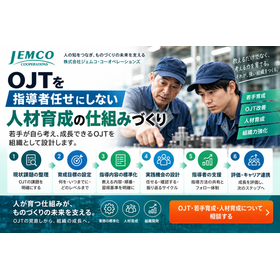
In the EC logistics industry, maintaining and improving picking accuracy is essential. In particular, the early empowerment of less experienced staff directly impacts operational efficiency and customer satisfaction. The skills and judgment required for daily picking tasks tend to rely heavily on the experience and knowledge of individual trainers, leading to variability in training content and increased burdens on trainers. Additionally, to cultivate young staff who can think independently and develop the judgment necessary for accurate picking, systematic training is required. Our service supports the resolution of such human resource development challenges and establishes a framework for organizations to continuously nurture young talent. 【Use Cases】 - Initial training for new staff - Knowledge transfer from experienced personnel - Raising awareness regarding improvements in picking accuracy - Reducing the training burden on trainers 【Benefits of Implementation】 - Standardization and enhancement of picking skills - Early empowerment of young staff - Uniformity in training quality among trainers - Improved sustainability of the training system
Added to bookmarks
Bookmarks listBookmark has been removed
Bookmarks listYou can't add any more bookmarks
By registering as a member, you can increase the number of bookmarks you can save and organize them with labels.
Free membership registration
In the delivery industry, there is a demand for thorough safe driving practices and the early development of inexperienced drivers into effective team members. In particular, the driving skills and safety awareness cultivated through daily operations tend to rely heavily on the individual experiences and knowledge of each instructor, leading to variations in what is taught and increasing the burden on instructors. Additionally, to foster young drivers' ability to think for themselves and develop the judgment necessary for safe driving, a systematic training approach is required. Our service supports the resolution of these human resource development challenges and establishes a framework for organizations to continuously nurture young talent. 【Usage Scenarios】 - Initial training for new drivers - Transfer of skills and know-how from veteran drivers - Raising awareness regarding safe driving - Reducing the training burden on instructors 【Benefits of Implementation】 - Standardization and improvement of safe driving skills - Early development of young drivers into effective team members - Consistency in the quality of instruction among instructors - Enhanced sustainability of the training system
Added to bookmarks
Bookmarks listBookmark has been removed
Bookmarks listYou can't add any more bookmarks
By registering as a member, you can increase the number of bookmarks you can save and organize them with labels.
Free membership registration
In the bus and tourism industry, there is a demand for thorough safe driving practices and the early empowerment of inexperienced drivers. In particular, the driving skills and safety awareness cultivated through daily operations tend to rely heavily on the experience and knowledge of individual instructors, leading to variability in the content taught by different instructors and increasing the burden on them. Additionally, to foster young drivers' ability to think for themselves and develop the judgment necessary for safe driving, a systematic training approach is required. Our service supports the resolution of these human resource development challenges and establishes a framework for organizations to continuously nurture young talent. 【Usage Scenarios】 - Initial training for new drivers - Transfer of skills and know-how from veteran drivers - Raising awareness regarding safe driving - Reducing the training burden on instructors 【Effects of Implementation】 - Standardization and improvement of safe driving skills - Early empowerment of young drivers - Uniformity in the quality of instruction among instructors - Enhanced sustainability of the training system
Added to bookmarks
Bookmarks listBookmark has been removed
Bookmarks listYou can't add any more bookmarks
By registering as a member, you can increase the number of bookmarks you can save and organize them with labels.
Free membership registration
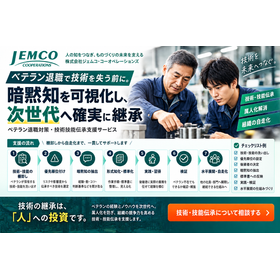
In the taxi and hire industry, high-quality customer service and the early development of inexperienced drivers into effective team members are essential. In particular, the customer service skills and safety awareness cultivated through daily operations tend to rely heavily on the experience and knowledge of individual trainers, leading to inconsistencies in what is taught and increasing the burden on trainers. Additionally, to foster the judgment skills necessary for young drivers to think for themselves and provide satisfactory service to customers, a systematic training approach is required. Our service supports the resolution of these human resource development challenges and establishes a framework for organizations to continuously nurture young talent. 【Usage Scenarios】 - Initial training for new drivers - Transfer of customer service know-how from veteran drivers - Raising awareness regarding customer satisfaction improvement - Reducing the training burden on instructors 【Benefits of Implementation】 - Standardization and enhancement of customer service skills - Early development of young drivers into effective team members - Uniformity in the quality of training among instructors - Improved sustainability of the training system
Added to bookmarks
Bookmarks listBookmark has been removed
Bookmarks listYou can't add any more bookmarks
By registering as a member, you can increase the number of bookmarks you can save and organize them with labels.
Free membership registration
In the moving industry, skills to safely and carefully transport customers' valuable belongings, as well as prompt work, are required. In particular, it is directly linked to improving customer satisfaction when inexperienced drivers and workers quickly acquire practical skills, including appropriate responses to customers. However, the techniques and know-how cultivated in daily operations tend to depend on the experiences of individual instructors, leading to variations in training content and increasing the burden on instructors. Additionally, to foster the ability of young staff to think independently and make optimal decisions based on customer situations, systematic development is necessary. Our service supports the resolution of such human resource development challenges and establishes a framework for continuously nurturing young talent within the organization. 【Usage Scenarios】 - Initial training for new staff - Transmission of skills and know-how from veteran staff - Improvement of customer response skills - Reduction of the burden on instructors 【Effects of Implementation】 - Standardization and enhancement of customer response skills - Early empowerment of young staff - Uniformity in the quality of instruction among instructors - Improved sustainability of the development system
Added to bookmarks
Bookmarks listBookmark has been removed
Bookmarks listYou can't add any more bookmarks
By registering as a member, you can increase the number of bookmarks you can save and organize them with labels.
Free membership registration
In the 3PL industry, there is a demand for the development of personnel capable of handling diverse tasks and for the early empowerment of inexperienced drivers. In particular, the driving skills and safety awareness cultivated through daily operations tend to depend on the individual instructor's experience and knowledge, leading to variations in what is taught by different instructors and increasing the burden on them. Additionally, to foster young drivers' ability to think for themselves and develop judgment skills that lead to safe driving, a systematic training approach is necessary. Our service supports the resolution of these personnel development challenges and establishes a framework for organizations to continuously nurture young talent. 【Usage Scenarios】 - Initial training for new drivers - Transfer of skills and know-how from veteran drivers - Raising awareness regarding safe driving - Reducing the burden of instructor training 【Benefits of Implementation】 - Standardization and improvement of safe driving skills - Early empowerment of young drivers - Uniformity in the quality of instruction among instructors - Enhanced sustainability of the training system
Added to bookmarks
Bookmarks listBookmark has been removed
Bookmarks listYou can't add any more bookmarks
By registering as a member, you can increase the number of bookmarks you can save and organize them with labels.
Free membership registration
In the consulting industry, there is a demand for the development of personnel with advanced problem-solving skills and expertise. It is particularly important for young employees not only to rely on the guidance of experienced senior staff but also to acquire the ability to identify challenges and devise solutions on their own, which contributes to the overall improvement of service quality within the organization. Relying solely on on-the-job training (OJT) from mentors can lead to issues such as variability in development and increased burden on mentors, making it difficult to establish a continuous talent development system. Our service addresses these challenges and creates a framework for proactive growth among young employees throughout the organization. 【Usage Scenarios】 - Early empowerment of young employees - Standardization of development quality among mentors - Reduction of mentor burden - Improvement of problem-solving capabilities across the organization 【Effects of Implementation】 - Development of young employees' ability to think and act independently - Standardization and efficiency of the development process - Enhancement of mentors' development skills - Overall improvement in organizational productivity
Added to bookmarks
Bookmarks listBookmark has been removed
Bookmarks listYou can't add any more bookmarks
By registering as a member, you can increase the number of bookmarks you can save and organize them with labels.
Free membership registration
In the education industry, there is a demand for a systematic and effective development of young talent that does not rely on the quality or experience of the instructors. Issues such as variations in the content taught by different instructors and the heavy burden placed on them can lead to a decline in the quality of development. Establishing a system that allows young individuals to think for themselves and grow is essential for improving the overall capabilities of the organization. Our service supports the resolution of these talent development challenges. 【Usage Scenarios】 - Moving away from instructor-dependent on-the-job training (OJT) - Eliminating variations in development content provided by instructors - Reducing the burden on instructors - Developing talent that can think and act independently 【Benefits of Implementation】 - Increased achievement rate of development goals - Standardization and homogenization of instructional skills - Reduced development burden on instructors - Early empowerment of young talent and improved retention rates
Added to bookmarks
Bookmarks listBookmark has been removed
Bookmarks listYou can't add any more bookmarks
By registering as a member, you can increase the number of bookmarks you can save and organize them with labels.
Free membership registration
In the transportation and logistics industry, there is a demand for thorough safe driving practices and the early development of inexperienced drivers into effective team members. In particular, the driving skills and safety awareness cultivated through daily operations tend to rely heavily on the individual experience and knowledge of each instructor, leading to variations in the content taught by different instructors and increasing the burden on them. Additionally, to foster young drivers' ability to think independently and develop judgment skills that lead to safe driving, a systematic training approach is necessary. Our service supports the resolution of these human resource development challenges and establishes a framework for organizations to continuously nurture young talent. 【Usage Scenarios】 - Initial training for new drivers - Transfer of skills and know-how from veteran drivers - Raising awareness regarding safe driving - Reducing the training burden on instructors 【Benefits of Implementation】 - Standardization and improvement of safe driving skills - Early development of young drivers into effective team members - Uniformity in the quality of instruction among instructors - Enhanced sustainability of the training system
Added to bookmarks
Bookmarks listBookmark has been removed
Bookmarks listYou can't add any more bookmarks
By registering as a member, you can increase the number of bookmarks you can save and organize them with labels.
Free membership registration
In the medical and welfare industry, acquiring advanced specialized knowledge and skills is essential for providing high-quality care to patients. Particularly in rapidly changing medical technologies and complex welfare services, variations in the content taught by instructors and the increased burden on instructors can pose challenges in the development of young talent. These challenges may affect the uniformity and continuity of services. Our service is designed to establish a system for continuous talent development within the organization, supporting the creation of a training framework that allows young professionals to think for themselves and grow. 【Usage Scenarios】 - Specialized knowledge and skill training for new staff - Skill enhancement for less experienced staff - Reducing the burden on instructors and standardizing training - Improving the overall service quality of the team 【Benefits of Implementation】 - Early empowerment of young staff - Stabilization of service quality through the standardization of training content - Reduced training burden on instructors - Overall enhancement of organizational expertise
Added to bookmarks
Bookmarks listBookmark has been removed
Bookmarks listYou can't add any more bookmarks
By registering as a member, you can increase the number of bookmarks you can save and organize them with labels.
Free membership registration
In the construction industry, ensuring safety on-site and developing young talent are important challenges. In particular, safety education requires a systematic approach that accurately conveys the know-how of experienced instructors, allowing young employees to understand and practice proactively. Relying solely on on-the-job training (OJT) can lead to variations in educational content, increased burdens on instructors, and lost opportunities for the growth of young employees. Our service supports the resolution of these challenges in safety education at construction sites and establishes a framework for continuous talent development within organizations. 【Usage Scenarios】 - Safety education for new and young employees - Skill enhancement for on-site workers - Reducing the burden of instructor development - Improving safety awareness - Accident prevention 【Effects of Implementation】 - Development of young employees who can think and act independently - Standardization of instructional content leading to uniform educational quality - Reduction of instructor burden and improvement of training efficiency - Enhancement of overall organizational safety levels - Establishment of a continuous talent development cycle
Added to bookmarks
Bookmarks listBookmark has been removed
Bookmarks listYou can't add any more bookmarks
By registering as a member, you can increase the number of bookmarks you can save and organize them with labels.
Free membership registration
In the retail industry, courteous customer service and accurate proposals based on product knowledge are essential for improving customer satisfaction. Particularly in the process of new employees and young staff acquiring customer service skills, there may be variations in the content taught by trainers, leading to increased burdens on the trainers. These challenges can hinder the provision of consistent service. Our service supports the resolution of these issues by moving away from trainer-dependent on-the-job training (OJT) and establishing a development system where young employees can think for themselves and grow. 【Usage Scenarios】 - Customer service training for new employees - Skill enhancement for young staff - Standardization of service levels across stores - Reduction of trainer burden 【Effects of Implementation】 - Standardization and improvement of customer service skills - Increased customer satisfaction - Promotion of autonomous growth for young employees - Streamlining of store operations
Added to bookmarks
Bookmarks listBookmark has been removed
Bookmarks listYou can't add any more bookmarks
By registering as a member, you can increase the number of bookmarks you can save and organize them with labels.
Free membership registration
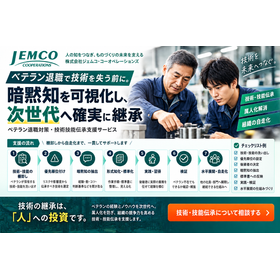
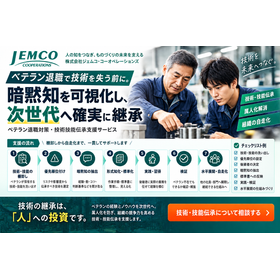
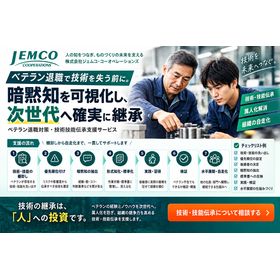
In the medical and welfare industry, the "tacit knowledge" possessed by experienced professionals, which is essential for accurately understanding patients' conditions and providing appropriate treatments and care, plays a crucial role in chart analysis and daily operations. In particular, the "tacit knowledge" held by veteran healthcare workers—such as learning from past cases, noticing subtle changes in patients, and having judgment criteria in complex situations—is difficult to formalize and poses a high risk of being lost due to retirement or transfers. If these skills and know-how are not passed on, it could lead to decreased analysis accuracy, variability in care quality, and delays in training new staff, ultimately affecting the services provided to patients. Our service offers comprehensive support to visualize the valuable skills and techniques of veteran healthcare professionals and ensure their reliable transfer to the next generation. 【Usage Scenarios】 - Reducing the risk of skill loss due to the retirement or transfer of veteran healthcare workers - Promoting understanding of complex chart information and developing successors - Formalizing diagnostic criteria and care processes - Building an analysis and care system that does not rely on individual skills
Added to bookmarks
Bookmarks listBookmark has been removed
Bookmarks listYou can't add any more bookmarks
By registering as a member, you can increase the number of bookmarks you can save and organize them with labels.
Free membership registration
In the power industry, the "tacit knowledge" possessed by veteran engineers with years of experience, such as on-site judgment criteria and troubleshooting know-how, supports the quality and efficiency of equipment maintenance operations. This valuable technology and skill are difficult to formalize, and there is always a risk of loss due to retirement or transfers. If the formalization of maintenance inspection records is insufficient, successors may not be able to accurately grasp the on-site situation, potentially leading to delays in response and an increase in mistakes. Our service visualizes the maintenance-related technology and skills of veteran engineers and provides support to ensure their reliable inheritance to the next generation. 【Usage Scenarios】 - Reducing the risk of loss of technology due to the retirement or transfer of veteran maintenance personnel - Standardization of maintenance inspection records and development of successors - Clarification of on-site judgment criteria and reasons - Building a maintenance system that does not rely on individual skills 【Effects of Implementation】 - Maintenance of and improvement in business quality through stable inheritance of maintenance inspection records - Shortening the successor development period and early strengthening of capabilities - Skill enhancement and productivity improvement for the entire maintenance team - Organizational strengthening of technical capabilities and sustainable infrastructure operations
Added to bookmarks
Bookmarks listBookmark has been removed
Bookmarks listYou can't add any more bookmarks
By registering as a member, you can increase the number of bookmarks you can save and organize them with labels.
Free membership registration
In the gas industry, the "tacit knowledge" possessed by veteran technicians with many years of experience, including on-site judgment criteria and troubleshooting know-how, supports the quality and efficiency of piping inspection operations. This valuable technology and skill are difficult to formalize, and there is always a risk of losing them due to retirement or transfers. If the formalization of maintenance inspection records is insufficient, successors may not be able to accurately grasp the on-site situation, potentially leading to delays in response and an increase in mistakes. Our service visualizes the technologies and skills related to piping inspection held by veteran technicians and provides support to ensure their reliable inheritance to the next generation. 【Usage Scenarios】 - Reducing the risk of loss of technology due to the retirement or transfer of veteran maintenance personnel - Standardizing maintenance inspection records and developing successors - Clarifying judgment criteria and reasons on-site - Building a maintenance system that does not rely on individual skills 【Benefits of Implementation】 - Maintaining and improving business quality through stable inheritance of maintenance inspection records - Shortening the successor development period and enabling early contribution - Skill enhancement and productivity improvement for the entire maintenance team - Strengthening organizational technical capabilities and ensuring sustainable infrastructure operations
Added to bookmarks
Bookmarks listBookmark has been removed
Bookmarks listYou can't add any more bookmarks
By registering as a member, you can increase the number of bookmarks you can save and organize them with labels.
Free membership registration
In the water supply industry, particularly in water purification management, the "tacit knowledge" possessed by veteran technicians, such as on-site judgment criteria and troubleshooting know-how gained from years of experience, supports the quality and efficiency of maintenance and inspection operations. This valuable technology and skill are difficult to formalize, and there is always a risk of loss due to retirement or transfers. If the formalization of maintenance and inspection records is insufficient, successors may not be able to accurately grasp the on-site situation, potentially leading to delays in response and an increase in mistakes. Our service visualizes the technology and skills related to water purification management held by veteran technicians and provides support to ensure their reliable inheritance to the next generation. 【Usage Scenarios】 - Reducing the risk of loss of technology due to the retirement or transfer of veteran maintenance personnel - Standardizing maintenance and inspection records and developing successors - Clarifying on-site judgment criteria and reasons - Building a maintenance system that does not rely on individual skills 【Benefits of Implementation】 - Maintaining and improving business quality through stable inheritance of maintenance and inspection records - Shortening the successor development period and enabling early contribution - Skill enhancement and productivity improvement for the entire maintenance team - Raising the overall organizational technical capability and ensuring sustainable infrastructure operation
Added to bookmarks
Bookmarks listBookmark has been removed
Bookmarks listYou can't add any more bookmarks
By registering as a member, you can increase the number of bookmarks you can save and organize them with labels.
Free membership registration
In the road infrastructure industry, particularly in bridge inspections, the "tacit knowledge" possessed by veteran engineers with years of experience—such as on-site judgment criteria and the ability to identify anomalies—supports the quality and efficiency of inspection work. This valuable technology and skill are difficult to formalize, and there is always a risk of loss due to retirement or transfers. If the formalization of inspection records is insufficient, successors may not be able to accurately grasp the on-site situation, potentially leading to delays in response and an increase in mistakes. Our service visualizes the technology and skills related to bridge inspections held by veteran engineers and provides support to ensure their reliable transfer to the next generation. 【Usage Scenarios】 - Reducing the risk of loss of technology due to the retirement or transfer of veteran maintenance personnel - Standardizing bridge inspection records and developing successors - Clarifying judgment criteria and reasons on-site - Building a maintenance system that does not rely on individual skills 【Effects of Implementation】 - Maintaining and improving business quality through stable inheritance of inspection records - Shortening the successor development period and enabling early effectiveness - Skill enhancement and productivity improvement for the entire maintenance team - Strengthening organizational technical capabilities and ensuring sustainable infrastructure operations
Added to bookmarks
Bookmarks listBookmark has been removed
Bookmarks listYou can't add any more bookmarks
By registering as a member, you can increase the number of bookmarks you can save and organize them with labels.
Free membership registration
In the telecommunications industry's base station maintenance, the "tacit knowledge" possessed by veteran engineers with many years of experience, such as on-site judgment criteria and troubleshooting know-how, supports the quality and efficiency of maintenance inspection operations. This valuable technology and skill are difficult to formalize, and there is always a risk of loss due to retirement or transfers. If the formalization of maintenance inspection records is insufficient, successors may not be able to accurately grasp the on-site situation, potentially leading to delays in response and an increase in mistakes. Our service visualizes the maintenance inspection techniques and skills held by veteran engineers and provides support to ensure their reliable transfer to the next generation. 【Usage Scenarios】 - Reducing the risk of loss of technology due to the retirement or transfer of veteran maintenance personnel - Standardizing maintenance inspection records and developing successors - Clarifying judgment criteria and reasons on-site - Building a maintenance system that does not rely on individual skills 【Benefits of Implementation】 - Maintaining and improving business quality through stable inheritance of maintenance inspection records - Shortening the successor development period and enabling early effectiveness - Enhancing the skills of the entire maintenance team and improving productivity - Raising the overall technical capabilities of the organization and ensuring sustainable infrastructure operations
Added to bookmarks
Bookmarks listBookmark has been removed
Bookmarks listYou can't add any more bookmarks
By registering as a member, you can increase the number of bookmarks you can save and organize them with labels.
Free membership registration
In the railway industry, the "tacit knowledge" possessed by veteran engineers with many years of experience, including on-site judgment criteria and troubleshooting know-how, supports the quality and efficiency of track maintenance and inspection operations. This valuable technology and skill are difficult to formalize, and there is always a risk of loss due to retirement or transfers. If the formalization of maintenance and inspection records is insufficient, successors may not be able to accurately grasp the on-site situation, potentially leading to delays in response and an increase in mistakes. Our service visualizes the technologies and skills related to track maintenance and inspection held by veteran engineers and provides support to ensure their reliable inheritance to the next generation. 【Usage Scenarios】 - Reducing the risk of loss of technology due to the retirement or transfer of veteran maintenance personnel - Standardizing maintenance and inspection records and developing successors - Clarifying judgment criteria and reasons on-site - Building a maintenance system that does not rely on individual skills 【Effects of Implementation】 - Maintaining and improving business quality through stable inheritance of maintenance and inspection records - Shortening the successor development period and enabling early contribution - Upskilling the entire maintenance team and improving productivity - Raising the overall organizational technical capability and ensuring sustainable infrastructure operations
Added to bookmarks
Bookmarks listBookmark has been removed
Bookmarks listYou can't add any more bookmarks
By registering as a member, you can increase the number of bookmarks you can save and organize them with labels.
Free membership registration
In the sewer industry, the "tacit knowledge" possessed by veteran technicians with years of experience, including on-site judgment criteria and troubleshooting know-how, supports the quality and efficiency of maintenance and inspection operations. This valuable technology and skill are difficult to formalize, and there is always a risk of loss due to retirement or transfers. If the formalization of maintenance and inspection records is insufficient, successors may not be able to accurately grasp the on-site situation, potentially leading to delays in response and an increase in mistakes. Our service visualizes the maintenance and inspection techniques and skills held by veteran technicians and provides support to ensure their reliable transfer to the next generation. 【Usage Scenarios】 - Reducing the risk of loss of skills due to the retirement or transfer of veteran maintenance personnel - Standardizing maintenance and inspection records and developing successors - Clarifying judgment criteria and reasons on-site - Building a maintenance system that does not rely on individual skills 【Benefits of Implementation】 - Maintaining and improving business quality through stable inheritance of maintenance and inspection records - Shortening the successor development period and enabling early contribution - Upskilling the entire maintenance team and improving productivity - Raising the overall technical capabilities of the organization and ensuring sustainable infrastructure operations
Added to bookmarks
Bookmarks listBookmark has been removed
Bookmarks listYou can't add any more bookmarks
By registering as a member, you can increase the number of bookmarks you can save and organize them with labels.
Free membership registration
In the port industry, the "tacit knowledge" possessed by veteran engineers who have been involved in wharf maintenance for many years—such as on-site judgment criteria and troubleshooting know-how—supports the quality and efficiency of maintenance and inspection operations. This valuable technology and skill are difficult to formalize, and there is always a risk of loss due to retirement or transfers. If the formalization of maintenance and inspection records is insufficient, successors may not be able to accurately grasp the on-site situation, potentially leading to delays in response and an increase in mistakes. Our service visualizes the technology and skills related to wharf maintenance held by veteran engineers and provides support to ensure their reliable transfer to the next generation. 【Usage Scenarios】 - Reducing the risk of loss of technology due to the retirement or transfer of veteran maintenance personnel - Standardizing maintenance and inspection records and developing successors - Clarifying judgment criteria and reasons on-site - Building a maintenance system that does not rely on individual skills 【Benefits of Implementation】 - Maintaining and improving business quality through stable inheritance of maintenance and inspection records - Shortening the successor development period and enabling early contribution - Enhancing the skills of the entire maintenance team and improving productivity - Raising the overall technical capabilities of the organization and ensuring sustainable infrastructure operations
Added to bookmarks
Bookmarks listBookmark has been removed
Bookmarks listYou can't add any more bookmarks
By registering as a member, you can increase the number of bookmarks you can save and organize them with labels.
Free membership registration
In the oil and chemical plant industry, the "tacit knowledge" possessed by veteran engineers with many years of experience, including on-site judgment criteria and troubleshooting know-how, supports the quality and efficiency of maintenance and inspection operations. This valuable technology and skill are difficult to formalize, and there is always a risk of loss due to retirement or transfers. If the formalization of maintenance and inspection records is insufficient, successors may not be able to accurately grasp the on-site situation, potentially leading to delays in response and an increase in mistakes. Our service visualizes the maintenance and inspection techniques and skills held by veteran engineers and provides support to ensure their reliable inheritance to the next generation. [Usage Scenarios] - Reducing the risk of loss of technology due to the retirement or transfer of veteran maintenance personnel - Standardizing maintenance and inspection records and developing successors - Clarifying on-site judgment criteria and reasons - Building a maintenance system that does not rely on individual skills [Effects of Implementation] - Maintaining and improving business quality through stable inheritance of maintenance and inspection records - Shortening the successor development period and enabling early contribution - Skill enhancement and productivity improvement for the entire maintenance team - Strengthening organizational technical capabilities and sustainable infrastructure operations
Added to bookmarks
Bookmarks listBookmark has been removed
Bookmarks listYou can't add any more bookmarks
By registering as a member, you can increase the number of bookmarks you can save and organize them with labels.
Free membership registration
In the aviation industry, particularly in the field of control technology, the "tacit knowledge" possessed by veteran engineers with years of experience—such as on-site judgment criteria and troubleshooting know-how—supports the quality and efficiency of operations. This valuable technology and skill are difficult to formalize, and there is always a risk of loss due to retirement or transfers. If the formalization of maintenance inspection records is insufficient, successors may not be able to accurately grasp the on-site situation, potentially leading to delays in response and an increase in mistakes. Our service visualizes the control technology skills possessed by veteran engineers and provides support to ensure their reliable transfer to the next generation. 【Usage Scenarios】 - Reducing the risk of loss of technology due to the retirement or transfer of veteran control personnel - Standardizing control records and developing successors - Clarifying on-site judgment criteria and reasons - Building a control system that does not rely on individual skills 【Benefits of Implementation】 - Maintaining and improving operational quality through stable inheritance of control records - Shortening the successor development period and enabling early contribution - Upskilling the entire control team and enhancing productivity - Raising the overall organizational technical capability and ensuring sustainable air traffic control operations
Added to bookmarks
Bookmarks listBookmark has been removed
Bookmarks listYou can't add any more bookmarks
By registering as a member, you can increase the number of bookmarks you can save and organize them with labels.
Free membership registration
In dam discharge operations, the "tacit knowledge" possessed by veteran engineers with many years of experience, such as situational judgment and responses to unexpected events, supports safe and efficient operations. This valuable technology and skill are difficult to formalize, and there is always a risk of loss due to retirement or transfers. If the formalization of discharge operation records is insufficient, successors may not be able to accurately grasp the on-site situation, which could lead to delays in response and an increase in mistakes. Our service visualizes the technology and skills related to discharge operations held by veteran engineers and provides support to ensure their reliable inheritance to the next generation. 【Usage Scenarios】 - Reducing the risk of loss of technology due to the retirement or transfer of veteran maintenance personnel - Standardization of maintenance inspection records and successor development - Clarification of judgment criteria and reasons on-site - Building a maintenance system that does not rely on individual skills 【Benefits of Implementation】 - Maintenance and improvement of business quality through stable inheritance of maintenance inspection records - Shortening the successor development period and early strengthening of capabilities - Skill enhancement and productivity improvement for the entire maintenance team - Organizational strengthening of technical capabilities and sustainable infrastructure operations
Added to bookmarks
Bookmarks listBookmark has been removed
Bookmarks listYou can't add any more bookmarks
By registering as a member, you can increase the number of bookmarks you can save and organize them with labels.
Free membership registration
In the district heating supply industry, the "tacit knowledge" possessed by veteran engineers with years of experience, such as on-site judgment criteria and troubleshooting know-how, supports the quality and efficiency of heat source management operations. This valuable technology and skill are difficult to formalize, and there is always a risk of loss due to retirement or transfers. If the formalization of maintenance inspection records is insufficient, successors may not be able to accurately grasp the on-site situation, potentially leading to delays in response and an increase in mistakes. Our service visualizes the technology and skills related to heat source management held by veteran engineers and provides support to ensure their reliable inheritance to the next generation. 【Usage Scenarios】 - Reducing the risk of loss of technology due to the retirement or transfer of veteran maintenance personnel - Standardizing maintenance inspection records and developing successors - Clarifying on-site judgment criteria and reasons - Building a maintenance system that does not rely on individual skills 【Effects of Implementation】 - Maintaining and improving business quality through stable inheritance of maintenance inspection records - Shortening the successor development period and enabling early contribution - Skill enhancement and productivity improvement for the entire maintenance team - Raising the overall technical capability of the organization and ensuring sustainable infrastructure operation
Added to bookmarks
Bookmarks listBookmark has been removed
Bookmarks listYou can't add any more bookmarks
By registering as a member, you can increase the number of bookmarks you can save and organize them with labels.
Free membership registration
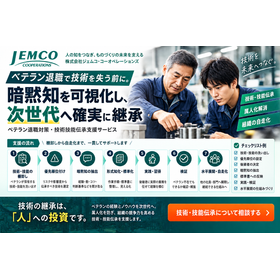
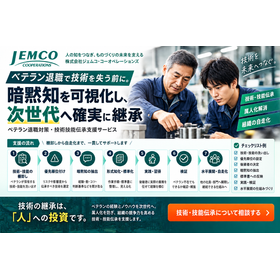
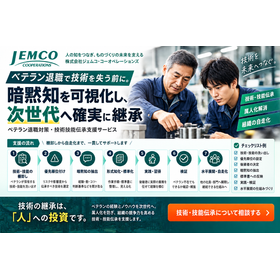
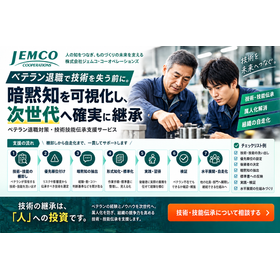
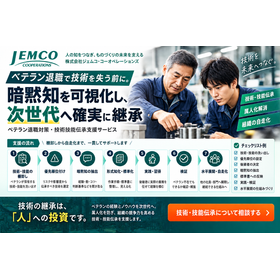
In the manufacturing industry, advanced expertise and know-how backed by years of experience from skilled technicians are essential for maintaining product quality and improving production efficiency. In particular, "tacit knowledge" such as experience, intuition, and tips cultivated on-site is difficult to formalize, posing a high risk of being lost due to the retirement or transfer of veteran technicians. If these skills and know-how are not inherited, it could lead to decreased productivity, variability in quality, and delays in acquiring new technologies, potentially impacting business continuity. Our service provides comprehensive support to visualize the valuable skills and techniques held by veteran technicians in the manufacturing field and ensure their reliable transfer to the next generation. 【Usage Scenarios】 - Reducing the risk of skill loss due to the retirement or transfer of veteran technicians - Promoting understanding of complex on-site work procedures and know-how, and fostering successors - Formalizing work standards and best practices - Building a production system that does not rely on individual skills 【Benefits of Implementation】 - Maintaining and improving production quality through stable inheritance of skills and know-how - Shortening the successor training period and enabling early contribution - Enhancing the skills of the entire on-site team and improving productivity - Raising the overall technical capabilities of the organization and establishing a sustainable production system
Added to bookmarks
Bookmarks listBookmark has been removed
Bookmarks listYou can't add any more bookmarks
By registering as a member, you can increase the number of bookmarks you can save and organize them with labels.
Free membership registration
In the construction industry, the on-site skills and know-how backed by years of experience play a crucial role in ensuring safe and high-quality construction. In particular, the "tacit knowledge" such as the experience, intuition, and tips possessed by skilled workers is difficult to formalize and poses a high risk of being lost due to retirement or transfers. If these skills and know-how are not passed down, it could lead to a decline in construction quality, delays in project timelines, and an increased risk of accidents, potentially impacting business continuity. Our service provides comprehensive support to visualize the valuable skills and techniques of veteran workers and ensure their reliable transfer to the next generation. 【Usage Scenarios】 - Reducing the risk of loss of skills due to the retirement or transfer of veteran workers - Promoting understanding of complex work procedures on-site and developing successors - Formalizing work standards and best practices - Building a construction system that does not rely on individual skills 【Benefits of Implementation】 - Maintaining and improving construction quality through stable transfer of skills and know-how - Shortening the successor development period and enabling early contribution - Enhancing the skills of the entire on-site team and improving productivity - Raising the overall technical capabilities of the organization and fostering sustainable growth
Added to bookmarks
Bookmarks listBookmark has been removed
Bookmarks listYou can't add any more bookmarks
By registering as a member, you can increase the number of bookmarks you can save and organize them with labels.
Free membership registration
In the infrastructure industry, the "tacit knowledge" possessed by veteran engineers with years of experience, such as on-site judgment criteria and troubleshooting know-how, supports the quality and efficiency of maintenance and inspection operations. This valuable technology and skill are difficult to formalize, and there is always a risk of loss due to retirement or transfers. If the formalization of maintenance and inspection records is insufficient, successors may not be able to accurately grasp the on-site situation, potentially leading to delays in response and an increase in mistakes. Our service visualizes the maintenance and inspection techniques and skills held by veteran engineers and provides support to ensure their reliable transfer to the next generation. 【Usage Scenarios】 - Reducing the risk of loss of skills due to the retirement or transfer of veteran maintenance personnel - Standardizing maintenance and inspection records and developing successors - Clarifying judgment criteria and reasons on-site - Building a maintenance system that does not rely on individual skills 【Benefits of Implementation】 - Maintaining and improving business quality through stable inheritance of maintenance and inspection records - Shortening the successor training period and enabling early contribution - Skill enhancement and productivity improvement for the entire maintenance team - Strengthening organizational technical capabilities and ensuring sustainable infrastructure operations
Added to bookmarks
Bookmarks listBookmark has been removed
Bookmarks listYou can't add any more bookmarks
By registering as a member, you can increase the number of bookmarks you can save and organize them with labels.
Free membership registration
In the medical and welfare industry, the "tacit knowledge" possessed by experienced professionals, which is essential for accurately understanding patients' conditions and providing appropriate treatment and care, plays a crucial role in chart analysis and daily operations. In particular, the "tacit knowledge" held by veteran healthcare workers, such as insights gained from past cases, awareness of subtle changes in patients, and criteria for judgment in complex situations, is difficult to formalize and poses a high risk of being lost due to retirement or transfers. If these skills and know-how are not inherited, it may lead to decreased analysis accuracy, variability in the quality of care, and delays in training new staff, ultimately affecting the service provided to patients. Our service offers comprehensive support to visualize the valuable skills and techniques of veteran healthcare workers and ensure their reliable transfer to the next generation. [Usage Scenarios] - Reducing the risk of skill loss due to the retirement or transfer of veteran healthcare workers - Promoting understanding of complex chart information and developing successors - Formalizing diagnostic criteria and care processes - Building an analysis and care system that does not rely on individual skills
Added to bookmarks
Bookmarks listBookmark has been removed
Bookmarks listYou can't add any more bookmarks
By registering as a member, you can increase the number of bookmarks you can save and organize them with labels.
Free membership registration
In the medical and welfare industry, the "tacit knowledge" possessed by professionals with many years of experience is essential for accurately understanding patients' conditions and providing appropriate treatment and care. This tacit knowledge plays an important role in chart analysis and daily operations. In particular, the tacit knowledge held by veteran healthcare workers, such as lessons learned from past cases, awareness of subtle changes in patients, and criteria for judgment in complex situations, is difficult to formalize and poses a high risk of being lost due to retirement or transfer. If these skills and know-how are not passed on, it may lead to decreased analysis accuracy, variability in the quality of care, and delays in training new staff, which can affect the provision of services to patients. Our service provides comprehensive support to visualize the valuable skills and techniques of veteran healthcare professionals and ensure their reliable transfer to the next generation. 【Usage Scenarios】 - Reducing the risk of loss of skills due to the retirement or transfer of veteran healthcare workers - Promoting understanding of complex chart information and developing successors - Formalizing diagnostic criteria and care processes - Building an analysis and care system that does not rely on individual skills
Added to bookmarks
Bookmarks listBookmark has been removed
Bookmarks listYou can't add any more bookmarks
By registering as a member, you can increase the number of bookmarks you can save and organize them with labels.
Free membership registration
In the financial industry, advanced expertise and long-standing experience underpinning technology and know-how play a crucial role in system development and maintenance operations. In particular, the "tacit knowledge" possessed by skilled engineers, such as system design philosophy, response know-how during failures, and performance tuning secrets, is difficult to formalize and poses a high risk of being lost due to retirement or transfers. If this technology and know-how are not inherited, it may lead to an increase in system failures, deterioration of maintainability, and impact business continuity. Our service provides comprehensive support to visualize the valuable skills and techniques of veteran engineers and ensure their reliable transfer to the next generation. 【Usage Scenarios】 - Reducing the risk of technology loss due to the retirement or transfer of veteran engineers - Promoting understanding of complex system infrastructure and developing successors - Formalizing development standards and best practices - Building a development system that does not rely on individual skills 【Benefits of Implementation】 - Maintaining and improving system quality through stable inheritance of technology and know-how - Shortening the successor development period and enabling early contribution - Enhancing the skills and productivity of the entire development team - Raising the overall technical capability of the organization and fostering sustainable growth
Added to bookmarks
Bookmarks listBookmark has been removed
Bookmarks listYou can't add any more bookmarks
By registering as a member, you can increase the number of bookmarks you can save and organize them with labels.
Free membership registration
In the retail industry, product knowledge and customer service know-how backed by years of experience play a crucial role in sales and customer satisfaction. In particular, the "tacit knowledge" held by veteran staff, such as product features, tailored suggestions based on customer needs, and effective display methods, is difficult to formalize and poses a high risk of being lost due to retirements or transfers. If this knowledge is not passed down, it could lead to lost sales opportunities, decreased customer satisfaction, and prolonged training periods for new staff, potentially impacting business operations. Our service provides comprehensive support to visualize the valuable product knowledge and skills of veteran staff and ensure their reliable transfer to the next generation. 【Usage Scenarios】 - Reducing the risk of losing product knowledge due to the retirement or transfer of veteran staff - Promoting understanding of complex product knowledge and developing successors - Formalizing sales standards and best practices - Building a sales system that does not rely on individual skills 【Benefits of Implementation】 - Maintaining and improving sales quality through stable transfer of product knowledge and know-how - Shortening the successor development period and enabling early contribution - Enhancing the skills of the entire sales team and improving productivity - Raising the overall organizational product knowledge capability and ensuring sustainable growth
Added to bookmarks
Bookmarks listBookmark has been removed
Bookmarks listYou can't add any more bookmarks
By registering as a member, you can increase the number of bookmarks you can save and organize them with labels.
Free membership registration
In the transportation and logistics industry, the "tacit knowledge" held by experienced drivers and operations managers—such as insights on route selection, tips for avoiding traffic, and handling sudden troubles—are crucial elements that support operational efficiency and safety. This know-how is difficult to formalize and poses a risk of being lost due to the retirement or transfer of veterans. If technology and know-how are not passed down, it could lead to decreased operational efficiency, increased accident risks, and worsened maintainability, potentially impacting business continuity. Our service supports the optimization of operations management by visualizing the valuable skills and techniques of veterans and ensuring their reliable transfer to the next generation. 【Usage Scenarios】 - Reducing the risk of losing operational know-how due to the retirement or transfer of veteran operations personnel - Promoting understanding of complex operational routes and situational judgment, and fostering successors - Formalizing operational standards and best practices - Building an operations management system that does not rely on individual skills 【Benefits of Implementation】 - Maintaining and improving operational quality through stable inheritance of operational know-how - Shortening the successor training period and enabling early contribution - Enhancing the skills and productivity of the entire operations management team - Raising the overall organizational capability in operations management and fostering sustainable growth
Added to bookmarks
Bookmarks listBookmark has been removed
Bookmarks listYou can't add any more bookmarks
By registering as a member, you can increase the number of bookmarks you can save and organize them with labels.
Free membership registration
In the energy industry, advanced expertise, technology, and know-how backed by years of experience are essential for the stable operation of plants and ensuring safety. In particular, in equipment maintenance planning, the "tacit knowledge" possessed by skilled engineers—such as the characteristics of equipment, the intuition to detect signs of abnormalities, and troubleshooting tips—plays a crucial role in accident prevention and efficient maintenance. When these technologies and know-how are difficult to formalize and are lost due to the retirement or transfer of veteran engineers, it can lead to a decline in the accuracy of maintenance plans, unexpected troubles, and prolonged recovery times, potentially impacting business continuity. Our service visualizes the valuable skills and techniques of veteran engineers in the energy industry, supporting the continuity of equipment maintenance plans and ensuring their reliable transfer to the next generation. 【Usage Scenarios】 - Reducing the risk of loss of equipment maintenance know-how due to the retirement or transfer of veteran engineers - Developing successors for the maintenance and inspection of complex plant equipment - Formalizing maintenance standards and best practices - Building an equipment maintenance system that does not rely on individual skills
Added to bookmarks
Bookmarks listBookmark has been removed
Bookmarks listYou can't add any more bookmarks
By registering as a member, you can increase the number of bookmarks you can save and organize them with labels.
Free membership registration
In the agricultural sector, cultivation techniques and know-how backed by years of experience significantly impact the quality and yield of crops. In particular, the "tacit knowledge" possessed by skilled farmers—such as the ability to discern soil characteristics, intuition for reading crop growth signs, and strategies for dealing with pests and diseases—are difficult to formalize and pose a high risk of being lost due to retirement or a lack of successors. If these techniques and know-how are not passed down, it could lead to a decline in cultivation techniques, instability in yields, and variability in quality, potentially affecting the continuity of farming operations. Our service provides comprehensive support to visualize the valuable cultivation techniques and skills of veteran farmers and ensure their reliable transfer to the next generation. 【Usage Scenarios】 - Reducing the risk of loss of cultivation techniques due to the retirement of veteran farmers and a lack of successors - Recording and sharing cultivation know-how based on years of experience - Formalizing cultivation standards and best practices - Building a farming system that does not rely on individual cultivation skills 【Benefits of Implementation】 - Maintaining and improving quality and yield through stable inheritance of cultivation techniques and know-how - Shortening the successor training period and enabling early contribution - Enhancing the skills of the entire cultivation team and improving productivity - Raising the overall organizational cultivation skill level and ensuring sustainable farming
Added to bookmarks
Bookmarks listBookmark has been removed
Bookmarks listYou can't add any more bookmarks
By registering as a member, you can increase the number of bookmarks you can save and organize them with labels.
Free membership registration
In the field of research and development, expertise and know-how backed by years of experience play a crucial role in new discoveries and technological innovations. In particular, the "tacit knowledge" possessed by seasoned researchers, such as insights into experiments, tips for data analysis, and experiences from trial and error, are difficult to formalize and pose a high risk of being lost due to retirement or transfers. If this technology and know-how are not inherited, it could lead to decreased efficiency in research and development, loss of past insights, and delays in successor training, potentially impacting business continuity. Our service provides comprehensive support to visualize the valuable skills and techniques of veteran researchers and ensure their reliable transfer to the next generation. 【Usage Scenarios】 - Reducing the risk of technology loss due to the retirement or transfer of veteran researchers - Promoting understanding of complex experimental data and analysis methods, and training successors - Formalizing development standards and best practices - Building a research and development system that does not rely on individual skills 【Benefits of Implementation】 - Maintaining and improving research and development quality through stable inheritance of technology and know-how - Shortening the successor training period and enabling early contribution - Enhancing the skills and productivity of the entire research and development team - Raising the overall organizational technical capability and ensuring sustainable growth
Added to bookmarks
Bookmarks listBookmark has been removed
Bookmarks listYou can't add any more bookmarks
By registering as a member, you can increase the number of bookmarks you can save and organize them with labels.
Free membership registration
In the service industry, the know-how of experienced staff plays a crucial role in enhancing customer satisfaction. In particular, the "tacit knowledge" possessed by veteran staff—such as the ability to accurately grasp customer requests, flexible responses according to the situation, and tips for handling complaints—tends to be difficult to formalize and is at high risk of being lost due to retirement or transfers. If this know-how is not passed down, it could lead to a decline in the quality of customer interactions, variability in customer satisfaction, and an increase in complaints, potentially impacting business continuity. Our service provides comprehensive support to visualize the valuable response techniques and skills of veteran staff and ensure their reliable transfer to the next generation. 【Usage Scenarios】 - Reducing the risk of loss of response know-how due to the retirement or transfer of veteran staff - Promoting understanding of complex customer interaction cases and developing successors - Formalizing response standards and best practices - Building a response system that does not rely on individual skills 【Benefits of Implementation】 - Maintaining and improving customer satisfaction through stable inheritance of response know-how - Shortening the successor development period and enabling early contribution - Upskilling the entire response team and increasing productivity - Enhancing organizational response capabilities and fostering sustainable growth
Added to bookmarks
Bookmarks listBookmark has been removed
Bookmarks listYou can't add any more bookmarks
By registering as a member, you can increase the number of bookmarks you can save and organize them with labels.
Free membership registration
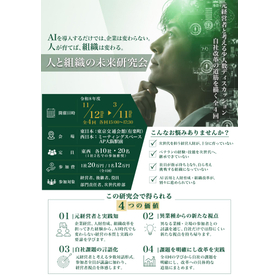
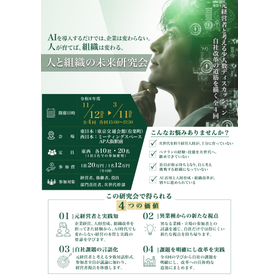
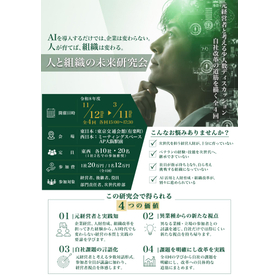
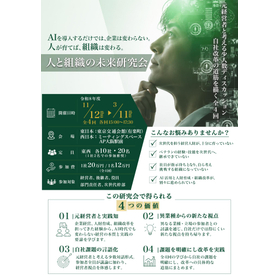
In the chemical industry, there is a demand for the development of human resources that can adapt to a rapidly changing era. Particularly in the age of AI, the ability to pose questions, make judgments, and drive organizational change is highly valued. To promote process automation and strengthen competitiveness, it is essential to cultivate practical management decision-making skills and implement reforms across the entire organization. Relying solely on traditional educational methods may make it difficult to address these challenges. Our research group supports the development of management talent through practical learning and dialogue to tackle these issues. 【Application Scenarios】 - Development of executives, successors, board members, department heads, and next-generation leaders - Individual learning related to company-specific management challenges - Learning through dialogue with management from different industries - Formulation of organizational reform concepts 【Benefits of Implementation】 - Improvement of management decision-making skills - Discovery of specific approaches to company challenges - Development of practical concepts for organizational reform - Insights gained through dialogue with external counterparts
Added to bookmarks
Bookmarks listBookmark has been removed
Bookmarks listYou can't add any more bookmarks
By registering as a member, you can increase the number of bookmarks you can save and organize them with labels.
Free membership registration
In the manufacturing industry, there is a demand for human resource development that can respond to rapidly changing times. Especially in the age of AI, the ability to ask questions, make judgments, and drive the organization is highly valued. To improve the accuracy of supply chain forecasts and strengthen competitiveness, the development of practical management judgment skills and comprehensive organizational reform are essential. Relying solely on traditional educational methods may make it difficult to address these challenges. This research group supports the development of management talent through practical learning and dialogue to tackle these issues. 【Application Scenarios】 - Development of managers, successors, executives, department heads, and next-generation leaders - Individual learning related to the company's management challenges - Learning through dialogue with management from different industries - Formulation of organizational reform concepts 【Effects of Implementation】 - Improvement of management judgment skills - Discovery of specific approaches to company challenges - Formulation of practical concepts for organizational reform - Insights gained through dialogue with external sounding boards
Added to bookmarks
Bookmarks listBookmark has been removed
Bookmarks listYou can't add any more bookmarks
By registering as a member, you can increase the number of bookmarks you can save and organize them with labels.
Free membership registration
In the mining industry, there is a demand for human resource development that can respond to rapidly changing times. Especially in the age of AI, the ability to pose questions, make judgments, and drive the organization is highly valued. To enhance the efficiency of resource exploration and strengthen competitiveness, it is essential to cultivate practical management decision-making skills and reform the entire organization. Relying solely on traditional educational methods may make it difficult to address these challenges. Our research group supports the development of management talent through practical learning and dialogue to tackle these issues. 【Usage Scenarios】 - Development of managers, successors, executives, department heads, and next-generation leaders - Individual learning related to the company's management challenges - Learning through dialogue with management from different industries - Formulating concepts for organizational reform 【Benefits of Implementation】 - Improvement of management decision-making skills - Discovery of specific approaches to company challenges - Formulation of practical concepts for organizational reform - Insights gained through dialogue with external sounding boards
Added to bookmarks
Bookmarks listBookmark has been removed
Bookmarks listYou can't add any more bookmarks
By registering as a member, you can increase the number of bookmarks you can save and organize them with labels.
Free membership registration
In the infrastructure industry, there is a demand for human resource development that can respond to a rapidly changing era. Especially in the age of AI, the ability to pose questions, make judgments, and drive the organization is highly valued. To improve the accuracy of maintenance planning and strengthen competitiveness, it is essential to cultivate practical management judgment skills and implement reforms across the entire organization. Relying solely on traditional educational methods may make it difficult to address these challenges. Our research group supports the development of management talent through practical learning and dialogue to tackle these issues. 【Usage Scenarios】 - Development of executives, successors, board members, department heads, and next-generation leaders - Individual learning related to the company's management challenges - Learning through dialogue with management from different industries - Formulating concepts for organizational reform 【Benefits of Implementation】 - Improvement of management judgment skills - Discovery of specific approaches to company challenges - Formulation of practical concepts for organizational reform - Insights gained through dialogue with external sounding boards
Added to bookmarks
Bookmarks listBookmark has been removed
Bookmarks listYou can't add any more bookmarks
By registering as a member, you can increase the number of bookmarks you can save and organize them with labels.
Free membership registration
In the energy sector, particularly in the field of renewable energy integration, there is a demand for human resource development that can respond to a rapidly changing era. In the age of AI, the ability to pose questions, make judgments, and drive organizational action is highly valued. To improve productivity and enhance competitiveness, the cultivation of practical management decision-making skills and comprehensive organizational reform are essential. Traditional educational methods may struggle to address these challenges. Our research group supports the development of management talent through practical learning and dialogue to tackle these issues. 【Utilization Scenarios】 - Development of executives, successors, board members, department heads, and next-generation leaders - Individual learning related to company-specific management challenges - Learning through dialogue with management from different industries - Formulation of organizational reform concepts 【Benefits of Implementation】 - Improvement of management decision-making skills - Discovery of specific approaches to company challenges - Development of practical concepts for organizational reform - Insights gained through dialogue with external sounding boards
Added to bookmarks
Bookmarks listBookmark has been removed
Bookmarks listYou can't add any more bookmarks
By registering as a member, you can increase the number of bookmarks you can save and organize them with labels.
Free membership registration
In the transportation and logistics industry, there is a demand for human resource development that can respond to rapidly changing times. Especially in the AI era, the ability to ask questions, make judgments, and drive the organization is highly valued. To improve operational efficiency and strengthen competitiveness, it is essential to cultivate practical management decision-making skills and reform the entire organization. Traditional educational methods may find it difficult to address these challenges. This research group supports the development of management talent through practical learning and dialogue in response to such issues. 【Utilization Scenarios】 - Development of managers, successors, executives, department heads, and next-generation leaders - Individual learning related to the company's management challenges - Learning through dialogue with management from different industries - Formulation of organizational reform concepts 【Effects of Implementation】 - Improvement of management decision-making skills - Discovery of specific approaches to company challenges - Formulation of practical concepts for organizational reform - Insights gained through dialogue with external sounding boards
Added to bookmarks
Bookmarks listBookmark has been removed
Bookmarks listYou can't add any more bookmarks
By registering as a member, you can increase the number of bookmarks you can save and organize them with labels.
Free membership registration
In the construction industry, there is a demand for human resource development that can respond to a rapidly changing era. Especially in the age of AI, the ability to ask questions, make judgments, and drive the organization is highly valued. To improve productivity and strengthen competitiveness, it is essential to cultivate practical management decision-making skills and reform the entire organization. Relying solely on traditional educational methods may make it difficult to address these challenges. Our research group supports the development of management talent through practical learning and dialogue to tackle these issues. 【Application Scenarios】 - Development of managers, successors, executives, department heads, and next-generation leaders - Individual learning related to the company's management challenges - Learning through dialogue with management from different industries - Formulating concepts for organizational reform 【Benefits of Implementation】 - Improvement of management decision-making skills - Discovery of specific approaches to company challenges - Development of practical concepts for organizational reform - Insights gained through dialogue with external sounding boards
Added to bookmarks
Bookmarks listBookmark has been removed
Bookmarks listYou can't add any more bookmarks
By registering as a member, you can increase the number of bookmarks you can save and organize them with labels.
Free membership registration
In the IT and telecommunications industry, there is a demand for human resource development that can respond to a rapidly changing era. Especially in the age of AI, the ability to pose questions, make judgments, and drive organizational action is highly valued. To utilize data analysis foundations and strengthen competitiveness, it is essential to cultivate practical management judgment skills and reform the entire organization. Relying solely on traditional educational methods may make it difficult to address these challenges. This research group supports the development of management talent through practical learning and dialogue in response to these issues. 【Application Scenarios】 - Development of executives, successors, board members, department heads, and next-generation leaders - Individual learning related to the company's management challenges - Learning through dialogue with executives from different industries - Formulating concepts for organizational reform 【Effects of Implementation】 - Improvement of management judgment skills - Discovery of specific approaches to company challenges - Development of practical concepts for organizational reform - Insights gained through dialogue with external sounding boards
Added to bookmarks
Bookmarks listBookmark has been removed
Bookmarks listYou can't add any more bookmarks
By registering as a member, you can increase the number of bookmarks you can save and organize them with labels.
Free membership registration