901~945 item / All 1805 items
Displayed results
Filter by category

Added to bookmarks
Bookmarks listBookmark has been removed
Bookmarks listYou can't add any more bookmarks
By registering as a member, you can increase the number of bookmarks you can save and organize them with labels.
Free membership registration
Contact this company
Inquiry FormBefore making an inquiry
Download Profile901~945 item / All 1805 items
Filter by category

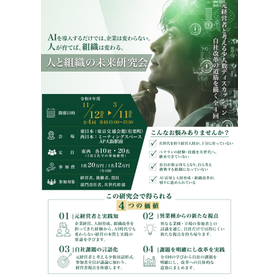
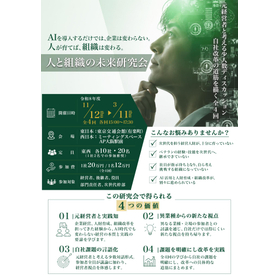
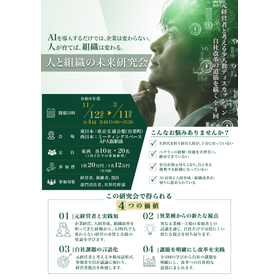
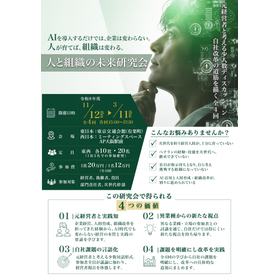
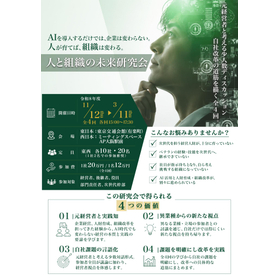
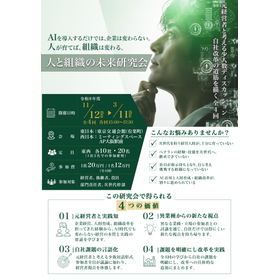
In the financial industry, there is a demand for the development of human resources that can adapt to a rapidly changing era. Especially in the age of AI, the ability to pose questions, make judgments, and drive organizational change is highly valued. To improve the accuracy of risk assessment and strengthen competitiveness, it is essential to cultivate practical management decision-making skills and reform the entire organization. Relying solely on traditional educational methods may make it difficult to address these challenges. This research group supports the development of management talent through practical learning and dialogue in response to such issues. 【Utilization Scenarios】 - Development of executives, successors, board members, department heads, and next-generation leaders - Individual learning related to the company's management challenges - Learning through dialogue with management from different industries - Formulation of organizational reform concepts 【Effects of Implementation】 - Improvement of management decision-making skills - Discovery of specific approaches to company challenges - Formulation of practical concepts for organizational reform - Insights gained through dialogue with external sounding boards
Added to bookmarks
Bookmarks listBookmark has been removed
Bookmarks listYou can't add any more bookmarks
By registering as a member, you can increase the number of bookmarks you can save and organize them with labels.
Free membership registration
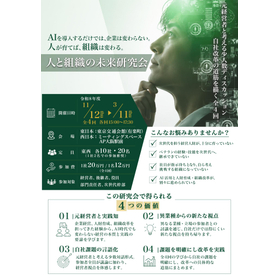
In the pharmaceutical industry, there is a demand for talent development that can respond to rapidly changing times. Especially in the age of AI, the ability to ask questions, make judgments, and drive the organization is highly valued. To accelerate research and development and strengthen competitiveness, it is essential to cultivate practical management decision-making skills and reform the entire organization. Traditional educational methods may struggle to address these challenges. Our research group supports the development of management talent through practical learning and dialogue to tackle these issues. 【Utilization Scenarios】 - Development of managers, successors, executives, department heads, and next-generation leaders - Individual learning related to the company's management challenges - Learning through dialogue with management from different industries - Formulation of organizational reform concepts 【Effects of Implementation】 - Improvement of management decision-making skills - Discovery of specific approaches to company challenges - Formulation of practical concepts for organizational reform - Insights gained through dialogue with external sounding boards
Added to bookmarks
Bookmarks listBookmark has been removed
Bookmarks listYou can't add any more bookmarks
By registering as a member, you can increase the number of bookmarks you can save and organize them with labels.
Free membership registration
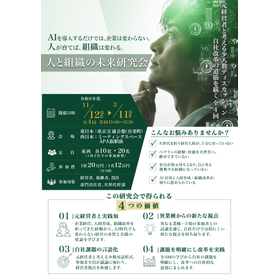
In the oil and gas industry, there is a demand for talent development that can respond to rapidly changing times. Particularly in the age of AI, the ability to pose questions, make judgments, and drive organizational change is highly valued. To enhance productivity and strengthen competitiveness, it is essential to cultivate practical management decision-making skills and implement reforms across the entire organization. Traditional educational methods may struggle to address these challenges. This research group supports the development of management talent through practical learning and dialogue to tackle these issues. 【Application Scenarios】 - Development of executives, successors, board members, department heads, and next-generation leaders - Individual learning related to the company's management challenges - Learning through dialogue with management from different industries - Formulation of organizational reform concepts 【Benefits of Implementation】 - Improvement of management decision-making skills - Discovery of specific approaches to company challenges - Development of practical concepts for organizational reform - Insights gained through dialogue with external sounding boards
Added to bookmarks
Bookmarks listBookmark has been removed
Bookmarks listYou can't add any more bookmarks
By registering as a member, you can increase the number of bookmarks you can save and organize them with labels.
Free membership registration
In the automotive industry, there is a demand for human resource development that can respond to rapidly changing times. Particularly in advanced technology fields such as autonomous driving development, the ability to pose questions, make judgments, and drive the organization is highly valued. To improve productivity and strengthen competitiveness, it is essential to cultivate practical management decision-making skills and reform the entire organization. Relying solely on traditional educational methods may make it difficult to address these challenges. This research group supports the development of management talent through practical learning and dialogue to tackle such issues. 【Utilization Scenarios】 - Development of executives, successors, board members, department heads, and next-generation leaders - Individual learning related to the company's management challenges - Learning through dialogue with management from different industries - Formulation of organizational reform concepts 【Effects of Implementation】 - Improvement of management decision-making skills - Discovery of specific approaches to company challenges - Formulation of practical concepts for organizational reform - Insights gained through dialogue with external sounding boards
Added to bookmarks
Bookmarks listBookmark has been removed
Bookmarks listYou can't add any more bookmarks
By registering as a member, you can increase the number of bookmarks you can save and organize them with labels.
Free membership registration
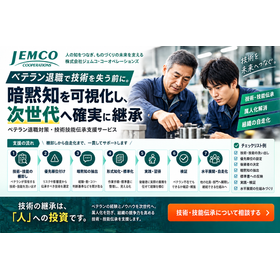
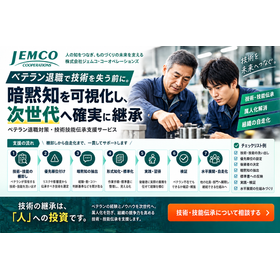
In the clinic industry, there are concerns about the risk of losing specialized interview skills and know-how due to the retirement of veteran staff with many years of experience. In particular, the inheritance of "tacit knowledge," which is difficult to articulate, such as careful hearing tailored to each patient's situation and precise questions based on symptoms, is an important issue. If these skills are lost, it may lead to a decrease in diagnostic accuracy and require more time for training new personnel. Our service supports the establishment of a system to inventory and reliably pass on the valuable interview skills and know-how of veteran staff to the next generation. 【Usage Scenarios】 - Measures against the risk of losing interview skills due to the retirement of veteran nurses and reception staff - Formalizing the criteria and tips for interviews tailored to patients' conditions - Establishing an effective interview training system for new and young staff - Standardizing and improving the overall interview level of the clinic 【Benefits of Implementation】 - Maintaining and improving the quality of interviews even in the absence of veterans - Early empowerment of new and young staff - Raising the overall technical and responsive capabilities of the clinic - Establishing a continuous personnel development cycle
Added to bookmarks
Bookmarks listBookmark has been removed
Bookmarks listYou can't add any more bookmarks
By registering as a member, you can increase the number of bookmarks you can save and organize them with labels.
Free membership registration
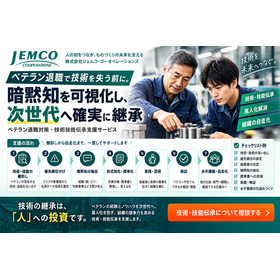
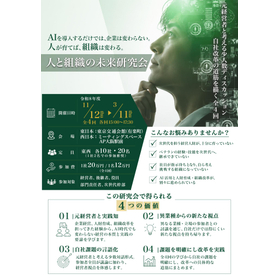
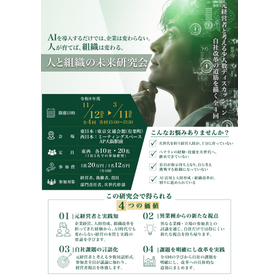
In rehabilitation facilities, there are concerns about the risk of losing specialized exercise therapy techniques and know-how due to the retirement of veteran staff with many years of experience. In particular, the inheritance of "tacit knowledge," which is difficult to articulate, such as individualized responses tailored to each patient's condition and accurate judgment in emergencies, is an important issue. If these techniques are lost, it may lead to a decline in the quality of rehabilitation and require more time for training new personnel. Our service supports the inventory of valuable techniques and skills held by veteran staff and the establishment of a system to ensure their transmission to the next generation. 【Usage Scenarios】 - Measures against the risk of losing exercise therapy techniques due to the retirement of veteran physical therapists and occupational therapists - Formalizing the criteria and tips for creating individualized rehabilitation plans - Establishing an effective technical training system for new and young staff - Standardizing and improving the overall level of exercise therapy in the facility 【Effects of Implementation】 - Maintaining and improving the quality of rehabilitation even in the absence of veterans - Early empowerment of new and young staff - Raising the overall technical and responsive capabilities of the facility - Establishing a continuous personnel development cycle
Added to bookmarks
Bookmarks listBookmark has been removed
Bookmarks listYou can't add any more bookmarks
By registering as a member, you can increase the number of bookmarks you can save and organize them with labels.
Free membership registration
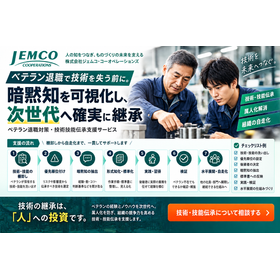
In the pharmacy and dispensing industry, there are concerns about the risk of losing specialized dispensing skills and know-how due to the retirement of veteran pharmacists with many years of experience. In particular, the inheritance of "tacit knowledge," which is difficult to articulate, such as individualized responses tailored to each patient and accurate judgment in emergencies, is an important issue. If these skills are lost, there may be a decline in the quality of dispensing and a longer time required for training new personnel. Our service supports the inventory of valuable skills and techniques held by veteran pharmacists and the establishment of a system to ensure their reliable transmission to the next generation. 【Usage Scenarios】 - Measures against the risk of losing dispensing skills due to the retirement of veteran pharmacists - Formalizing the criteria and tips for responding to individual prescriptions - Establishing an effective training system for new and young pharmacists - Standardizing and improving the overall dispensing level of the pharmacy 【Benefits of Implementation】 - Maintaining and improving the quality of dispensing even in the absence of veterans - Accelerating the effectiveness of new and young pharmacists - Raising the overall technical and responsive capabilities of the pharmacy - Establishing a continuous personnel development cycle
Added to bookmarks
Bookmarks listBookmark has been removed
Bookmarks listYou can't add any more bookmarks
By registering as a member, you can increase the number of bookmarks you can save and organize them with labels.
Free membership registration
In rehabilitation facilities, there are concerns about the risk of losing specialized exercise therapy techniques and know-how due to the retirement of veteran staff with many years of experience. In particular, the inheritance of "tacit knowledge," which is difficult to articulate, such as individualized responses tailored to each patient's condition and accurate judgment in emergencies, is an important issue. If these techniques are lost, it may lead to a decline in the quality of rehabilitation and require more time to train new personnel. Our service supports the inventory of valuable techniques and skills held by veteran staff and helps establish a system to ensure their transmission to the next generation. [Usage Scenarios] - Measures against the risk of losing exercise therapy techniques due to the retirement of veteran physical and occupational therapists - Formalizing the criteria and tips for creating individualized rehabilitation plans - Establishing an effective technical guidance system for new and young staff - Standardizing and improving the overall level of exercise therapy in the facility [Effects of Implementation] - Maintaining and improving the quality of rehabilitation even in the absence of veterans - Early empowerment of new and young staff - Raising the overall technical skills and responsiveness of the facility - Establishing a continuous personnel development cycle
Added to bookmarks
Bookmarks listBookmark has been removed
Bookmarks listYou can't add any more bookmarks
By registering as a member, you can increase the number of bookmarks you can save and organize them with labels.
Free membership registration
In care facilities, there are concerns about the risk of losing specialized assistance skills and know-how due to the retirement of veteran staff with many years of experience. In particular, the inheritance of "tacit knowledge," which is difficult to articulate, such as individualized responses tailored to each user and accurate judgment in emergencies, is an important issue. If these skills are lost, it may lead to a decline in the quality of care and require more time for the development of new personnel. Our service supports the inventory of valuable skills and techniques held by veteran staff and the establishment of a system to ensure their reliable transmission to the next generation. 【Usage Scenarios】 - Measures against the risk of losing assistance skills due to the retirement of veteran caregivers - Formalizing the criteria and tips for creating individualized care plans - Establishing an effective technical training system for new and young staff - Standardizing and improving the overall care level of the facility 【Effects of Implementation】 - Maintaining and improving the quality of care even in the absence of veterans - Early empowerment of new and young staff - Raising the overall technical and responsive capabilities of the facility - Establishing a continuous personnel development cycle
Added to bookmarks
Bookmarks listBookmark has been removed
Bookmarks listYou can't add any more bookmarks
By registering as a member, you can increase the number of bookmarks you can save and organize them with labels.
Free membership registration
In dental clinics, there are concerns about the risk of losing specialized treatment techniques and know-how due to the retirement of veteran dentists and dental hygienists with many years of experience. In particular, the inheritance of "tacit knowledge," which is difficult to articulate, such as individualized responses tailored to each patient and accurate judgment in emergencies, is an important issue. If these techniques are lost, there may be a decline in the quality of treatment and a longer time required for training new personnel. Our service supports the inventory of valuable techniques and skills held by veteran staff and helps establish a system to ensure their reliable transmission to the next generation. 【Use Cases】 - Measures against the risk of losing treatment techniques due to the retirement of veteran dentists and dental hygienists - Formalizing criteria and tips for creating individualized treatment plans - Establishing an effective technical training system for new and young staff - Standardizing and improving the overall treatment level of the clinic 【Benefits of Implementation】 - Maintaining and improving the quality of treatment even in the absence of veterans - Rapidly developing new and young staff into effective contributors - Raising the overall technical skills and responsiveness of the clinic - Establishing a continuous personnel development cycle
Added to bookmarks
Bookmarks listBookmark has been removed
Bookmarks listYou can't add any more bookmarks
By registering as a member, you can increase the number of bookmarks you can save and organize them with labels.
Free membership registration
In support facilities for people with disabilities, there are concerns about the risk of losing specialized support skills and know-how due to the retirement of veteran staff with many years of experience. In particular, the inheritance of "tacit knowledge," which is difficult to articulate, such as creating individualized support plans tailored to each user and making accurate judgments in emergencies, is an important issue. If these skills are lost, it could lead to a decline in the quality of support and may require significant time to train new personnel. Our service supports the inventory of valuable skills and techniques held by veteran staff and helps establish a system to ensure their reliable transmission to the next generation. 【Usage Scenarios】 - Measures against the risk of losing support skills due to the retirement of veteran support staff - Formalizing judgment criteria and tips for creating individualized support plans - Establishing an effective technical training system for new and young staff - Standardizing and improving the overall support level of the facility 【Effects of Implementation】 - Maintaining and improving the quality of support even in the absence of veterans - Early empowerment of new and young staff - Raising the overall technical and responsive capabilities of the facility - Establishing a continuous personnel development cycle
Added to bookmarks
Bookmarks listBookmark has been removed
Bookmarks listYou can't add any more bookmarks
By registering as a member, you can increase the number of bookmarks you can save and organize them with labels.
Free membership registration
In home medical care services, individualized responses tailored to each patient and accurate judgments in emergencies are required. Particularly in the operation of medical devices, the "tacit knowledge" that veteran staff possess, which is difficult to articulate, becomes crucial. If these skills are lost, there is a risk of declining care quality and a potential delay in training new personnel. Our service supports the inventory of valuable skills and techniques related to medical device operation held by veteran staff, helping to establish a system for reliably passing these on to the next generation. 【Usage Scenarios】 - Risk management for the loss of medical device operation skills due to the retirement of veteran staff - Formalizing judgment criteria and tips for creating individualized care plans - Establishing an effective technical training system for new and young staff - Standardizing and improving the overall care level of the facility 【Benefits of Implementation】 - Maintaining and improving care quality even in the absence of veterans - Accelerating the effectiveness of new and young staff - Raising the overall technical and responsive capabilities of the facility - Establishing a continuous personnel development cycle
Added to bookmarks
Bookmarks listBookmark has been removed
Bookmarks listYou can't add any more bookmarks
By registering as a member, you can increase the number of bookmarks you can save and organize them with labels.
Free membership registration
In medical device manufacturing, there are concerns about the risk of losing specialized maintenance skills and know-how due to the retirement of veteran maintenance personnel with many years of experience. In particular, the inheritance of tacit knowledge, which is difficult to articulate, such as tailored responses to the characteristics of equipment and accurate judgment in emergencies, is an important issue. If these skills are lost, there may be a decline in the quality of maintenance services and a longer time required for training new personnel. Our service supports the inventory of valuable skills and techniques held by veteran staff and helps establish a system to ensure their transfer to the next generation. 【Usage Scenarios】 - Measures against the risk of loss of maintenance skills due to the retirement of veteran maintenance personnel - Formalizing judgment criteria and tips for individualized maintenance - Establishing an effective technical training system for new and young staff - Standardization and improvement of the overall level of maintenance services 【Benefits of Implementation】 - Maintaining and improving the quality of maintenance even in the absence of veterans - Rapid development of new and young staff into effective contributors - Elevating the overall technical skills and responsiveness of maintenance - Establishing a continuous personnel development cycle
Added to bookmarks
Bookmarks listBookmark has been removed
Bookmarks listYou can't add any more bookmarks
By registering as a member, you can increase the number of bookmarks you can save and organize them with labels.
Free membership registration
In the nursery, there are concerns about the risk of losing specialized childcare skills and know-how due to the retirement of veteran childcare workers with many years of experience. In particular, the inheritance of "tacit knowledge," which is difficult to articulate, such as individualized responses tailored to each child and accurate judgment in emergencies, is an important issue. If these skills are lost, it could lead to a decline in the quality of childcare and may require significant time to develop new talent. Our service supports the inventory of valuable skills and techniques held by veteran childcare workers and helps establish a system to ensure their reliable transmission to the next generation. 【Usage Scenarios】 - Measures against the risk of losing childcare skills due to the retirement of veteran childcare workers - Formalizing criteria and tips for creating individualized childcare plans - Establishing an effective training system for new and young childcare workers - Standardizing and improving the overall level of childcare in the nursery 【Benefits of Implementation】 - Maintaining and improving the quality of childcare even in the absence of veterans - Rapidly developing new and young childcare workers into effective team members - Raising the overall technical skills and responsiveness of the nursery - Establishing a continuous talent development cycle
Added to bookmarks
Bookmarks listBookmark has been removed
Bookmarks listYou can't add any more bookmarks
By registering as a member, you can increase the number of bookmarks you can save and organize them with labels.
Free membership registration
In medical device manufacturing, there are concerns about the risk of losing specialized maintenance skills and know-how due to the retirement of veteran maintenance personnel with many years of experience. In particular, the inheritance of tacit knowledge, which is difficult to articulate, such as individualized responses tailored to the characteristics of the equipment and accurate judgment in emergencies, is an important issue. If these skills are lost, it may lead to a decline in the quality of maintenance services and require significant time to train new personnel. Our service supports the inventory of valuable skills and techniques held by veteran staff and helps establish a system to ensure their reliable transmission to the next generation. 【Usage Scenarios】 - Measures against the risk of losing maintenance skills due to the retirement of veteran maintenance personnel - Formalizing judgment criteria and tips for individualized maintenance - Establishing an effective technical training system for new and young staff - Standardizing and improving the overall level of maintenance services 【Benefits of Implementation】 - Maintaining and improving the quality of maintenance even in the absence of veterans - Rapidly developing new and young staff into effective contributors - Enhancing the overall technical skills and responsiveness of maintenance - Establishing a continuous talent development cycle
Added to bookmarks
Bookmarks listBookmark has been removed
Bookmarks listYou can't add any more bookmarks
By registering as a member, you can increase the number of bookmarks you can save and organize them with labels.
Free membership registration
In schools (such as special needs schools), there are concerns about the risk of losing specialized support skills and know-how due to the retirement of veteran staff with many years of experience. In particular, the inheritance of "tacit knowledge," which is difficult to articulate, such as individualized responses tailored to each student and accurate judgment in emergencies, is an important issue. If these skills are lost, there may be a decline in the quality of support and it could take time to develop new personnel. Our service supports the inventory of valuable skills and techniques held by veteran staff and helps establish a system to ensure their reliable transmission to the next generation. 【Usage Scenarios】 - Measures against the risk of loss of support skills due to the retirement of veteran teachers and support staff - Formalizing criteria and tips for creating individualized support plans - Establishing an effective technical guidance system for new and young staff - Standardizing and improving the overall support level of the facility 【Effects of Implementation】 - Maintaining and improving the quality of support even in the absence of veterans - Early empowerment of new and young staff - Raising the overall technical and responsive capabilities of the facility - Establishing a continuous personnel development cycle
Added to bookmarks
Bookmarks listBookmark has been removed
Bookmarks listYou can't add any more bookmarks
By registering as a member, you can increase the number of bookmarks you can save and organize them with labels.
Free membership registration
In medical device manufacturing, there are concerns about the risk of losing specialized maintenance skills and know-how due to the retirement of veteran maintenance personnel with many years of experience. In particular, the inheritance of tacit knowledge that is difficult to articulate, such as individualized responses tailored to the characteristics of the equipment and accurate judgment in emergencies, is an important issue. If these skills are lost, it may lead to a decline in the quality of maintenance services and require significant time to train new personnel. Our service supports the inventory of valuable skills and techniques held by veteran staff and helps establish a system to ensure their reliable transmission to the next generation. [Usage Scenarios] - Measures against the risk of loss of maintenance skills due to the retirement of veteran maintenance personnel - Formalization of judgment criteria and tips in individualized maintenance - Establishment of an effective technical training system for new and young staff - Standardization and improvement of the overall level of maintenance services [Benefits of Implementation] - Maintaining and improving the quality of maintenance even in the absence of veterans - Early empowerment of new and young staff - Elevation of overall technical skills and responsiveness in maintenance - Establishment of a continuous personnel development cycle
Added to bookmarks
Bookmarks listBookmark has been removed
Bookmarks listYou can't add any more bookmarks
By registering as a member, you can increase the number of bookmarks you can save and organize them with labels.
Free membership registration
In home medical care services, individualized responses tailored to each patient and accurate judgment in emergencies are required. Particularly in the operation of medical devices, the "tacit knowledge" that veteran staff possess, which is difficult to articulate, becomes crucial. If these skills are lost, it may lead to a decline in the quality of care and require significant time to train new personnel. Our service supports the inventory of valuable techniques and skills related to medical device operation held by veteran staff, establishing a system to ensure their transmission to the next generation. 【Usage Scenarios】 - Risk management for the loss of medical device operation skills due to the retirement of veteran staff - Formalizing the criteria and tips for creating individualized care plans - Establishing an effective technical training system for new and young staff - Standardizing and improving the overall care level of the facility 【Effects of Implementation】 - Maintaining and improving the quality of care even in the absence of veterans - Accelerating the effectiveness of new and young staff - Raising the overall technical and responsive capabilities of the facility - Establishing a continuous personnel development cycle
Added to bookmarks
Bookmarks listBookmark has been removed
Bookmarks listYou can't add any more bookmarks
By registering as a member, you can increase the number of bookmarks you can save and organize them with labels.
Free membership registration
In the medical and welfare industry, there are concerns about the risk of losing specialized care techniques and know-how due to the retirement of veteran staff with many years of experience. In particular, the inheritance of tacit knowledge that is difficult to articulate, such as individualized responses tailored to each patient and accurate decision-making in emergencies, is an important issue. If these techniques are lost, there may be a decline in the quality of care and a longer time required for training new personnel. Our service supports the inventory of valuable techniques and skills held by veteran staff and the establishment of a system to ensure their reliable transmission to the next generation. 【Usage Scenarios】 - Measures against the risk of losing care techniques due to the retirement of veteran caregivers and nurses - Formalizing the criteria and tips for creating individualized care plans - Establishing an effective technical training system for new and young staff - Standardizing and improving the overall care level of the facility 【Effects of Implementation】 - Maintaining and improving the quality of care even in the absence of veterans - Early empowerment of new and young staff - Raising the overall technical and responsive capabilities of the facility - Establishing a continuous personnel development cycle
Added to bookmarks
Bookmarks listBookmark has been removed
Bookmarks listYou can't add any more bookmarks
By registering as a member, you can increase the number of bookmarks you can save and organize them with labels.
Free membership registration
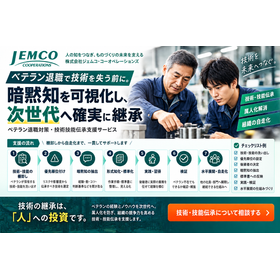
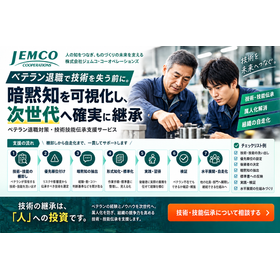
In the manufacturing industry, there are concerns about the risk of losing skilled techniques and know-how due to the retirement of veteran employees with many years of experience. In particular, tacit knowledge that relies on experience and intuition is often not formalized, making it difficult to pass on to the next generation. The loss of these skills and techniques can lead to decreased productivity, variations in quality, and even impact business continuity. Our service supports the establishment of a system that allows for the continued transmission of technology within the company by inventorying the skills and techniques of veteran employees and extracting and formalizing tacit knowledge. 【Usage Scenarios】 - The retirement of veteran employees is approaching. - The know-how of skilled workers is not formalized. - There are challenges in passing on technology to the next generation. - There is a desire to maintain and improve productivity and quality. 【Benefits of Implementation】 - Reduces the risk of loss of skills and techniques. - Visualizes tacit knowledge and makes it shareable. - Streamlines the development of successors. - Establishes a cycle of technology transmission within the company. - Enhances business continuity.
Added to bookmarks
Bookmarks listBookmark has been removed
Bookmarks listYou can't add any more bookmarks
By registering as a member, you can increase the number of bookmarks you can save and organize them with labels.
Free membership registration
In the construction industry, there are concerns about the risk of losing valuable skills and know-how cultivated on-site due to the retirement of veteran engineers with many years of experience. In particular, the criteria for judgment and tacit knowledge on-site are often difficult to codify, making the transmission to the next generation a significant challenge. If these skills are lost, it could lead to a decline in quality and a decrease in work efficiency. Our service aims to reduce the risk of skill and knowledge loss in preparation for the retirement of veteran employees and to ensure reliable technology transfer. 【Usage Scenarios】 - Construction sites where veteran skilled workers are nearing retirement - Tasks that emphasize on-site experience and intuition - Lack of technical guidance for younger and mid-level employees - Know-how that is difficult to convey with standardized work procedures alone 【Benefits of Implementation】 - Maintaining and improving the technical level on-site even after the retirement of veteran employees - Early development and skill enhancement of younger and mid-level employees - Standardization of work quality and improvement of productivity - Breaking free from dependency on individual skills and strengthening organizational capabilities
Added to bookmarks
Bookmarks listBookmark has been removed
Bookmarks listYou can't add any more bookmarks
By registering as a member, you can increase the number of bookmarks you can save and organize them with labels.
Free membership registration
In the IT and software industry, advanced expertise and long years of experience underpinning technology and know-how play a crucial role in product development and maintenance operations. In particular, the "tacit knowledge" possessed by skilled engineers, such as design philosophies of code, debugging insights, and performance tuning secrets, is difficult to formalize and poses a high risk of being lost due to retirement or transfers. If this technology and know-how are not inherited, it may lead to decreased development efficiency, increased bugs, and worsened maintainability, potentially impacting business continuity. Our service provides comprehensive support to visualize the valuable skills and techniques of veteran engineers and ensure their reliable inheritance to the next generation. 【Utilization Scenarios】 - Reducing the risk of technology loss due to the retirement or transfer of veteran engineers - Promoting understanding of complex codebases and developing successors - Formalizing development standards and best practices - Building a development system that does not rely on individual skills 【Effects of Implementation】 - Maintaining and improving development quality through stable inheritance of technology and know-how - Shortening the successor training period and enabling early contribution - Enhancing the skills of the entire development team and improving productivity - Raising the overall technical capability of the organization and fostering sustainable growth
Added to bookmarks
Bookmarks listBookmark has been removed
Bookmarks listYou can't add any more bookmarks
By registering as a member, you can increase the number of bookmarks you can save and organize them with labels.
Free membership registration
In the food and beverage industry, recipes based on the intuition and experience of skilled artisans developed over many years support the taste and quality of the establishment. However, the retirement of veteran staff poses a risk of losing these valuable skills and know-how. A decline in the reproducibility of recipes or the loss of a unique store flavor can impact customer satisfaction and brand image. Our service supports the transmission of skills by extracting the tacit knowledge related to recipes held by veteran staff and converting it into explicit knowledge that anyone can replicate. 【Use Cases】 - Inheriting secret recipes due to the retirement of veteran chefs - Efficient recipe training for new staff - Standardizing store flavors and maintaining quality - Utilizing know-how in the development of new menus 【Benefits of Implementation】 - Stabilization of quality through recipe standardization - Rapid integration of new staff as effective team members - Maintenance and enhancement of unique store flavors and techniques - Providing a consistent customer experience even in the absence of veterans
Added to bookmarks
Bookmarks listBookmark has been removed
Bookmarks listYou can't add any more bookmarks
By registering as a member, you can increase the number of bookmarks you can save and organize them with labels.
Free membership registration
In the transportation and logistics industry, particularly in operations management, the tacit knowledge held by veteran personnel with years of experience—such as judgment criteria under complex situations and know-how for responding to unexpected events—is essential for maintaining safe and efficient operations. When this know-how is lost due to the retirement of veteran staff, it can lead to delays in operations, increased accident risks, and a decline in service quality. Our service aims to reduce these risks and support the establishment of a sustainable operations management system. 【Usage Scenarios】 - The risk of losing operational know-how due to the retirement of veteran operations managers - Uncertainty regarding the judgment criteria and response methods of veterans during unexpected operational troubles - The difficulty of providing practical guidance based on experience in the training of new and young operations managers - The formalization of the tacit knowledge held by veterans regarding operational efficiency and safety measures 【Effects of Implementation】 - Continuation of stable operations management even after veteran retirements - Quick and accurate situational judgment and response by new and young personnel - Rapid identification of causes and formulation of recurrence prevention measures during operational troubles - Improvement of the overall level of operations management within the organization and maintenance and enhancement of service quality
Added to bookmarks
Bookmarks listBookmark has been removed
Bookmarks listYou can't add any more bookmarks
By registering as a member, you can increase the number of bookmarks you can save and organize them with labels.
Free membership registration
In the fishing industry, traditional fishing methods backed by years of experience and specialized know-how for specific sea areas and fish species support the core of the business. In particular, the judgment criteria based on the intuition and experience of skilled fishermen are difficult to standardize, and the loss of these skills could directly lead to a decrease in catch volume and a decline in operational efficiency. Smooth transmission of technology to successors is an urgent issue for the sustainable development of the fishing industry. Our service systematically organizes the valuable techniques and skills possessed by veteran fishermen and provides support for their reliable inheritance to the next generation. 【Usage Scenarios】 - Inheritance of traditional fishing methods due to the retirement of veteran fishermen - Formalization of know-how specialized in specific fishing grounds or fish species - Early development of young fishermen and improvement of skill levels - Reduction of risks to the continuation of fishing operations due to the absence of successors 【Effects of Implementation】 - Prevention of the dissipation of long-cultivated fishing techniques - Maintenance and improvement of catch efficiency - Early empowerment of young fishermen - Assurance of the sustainability of fishing businesses
Added to bookmarks
Bookmarks listBookmark has been removed
Bookmarks listYou can't add any more bookmarks
By registering as a member, you can increase the number of bookmarks you can save and organize them with labels.
Free membership registration
In the retail industry, the retirement of veteran employees with many years of experience poses a risk of losing valuable know-how such as the quality of customer service, product knowledge, and tips for effective interaction with customers. Particularly, the ability to provide tailored responses to each customer's needs and to offer accurate advice based on the situation directly impacts customer satisfaction and repeat rates, making the transfer of this knowledge extremely important. Customer service techniques, which rely heavily on experience and intuition, are difficult to formalize, and passing this knowledge on to successors often becomes a challenge. Our service extracts the tacit knowledge held by veteran employees and transforms it into a form that anyone can understand and practice, thereby maintaining and improving the overall level of customer service in stores and facilitating smooth knowledge transfer. 【Usage Scenarios】 - Stores approaching the retirement of veteran employees - Companies feeling challenged in improving the customer service skills of new staff - Situations where there is a desire to share the "tips" for customer interaction that cannot be fully conveyed through manuals - Aiming for uniformity in the overall level of customer service across the store 【Benefits of Implementation】 - Ability to provide a certain level of customer service even in the absence of veterans - Early empowerment of new staff and reduction of training periods - Improvement in repeat rates through the maintenance and enhancement of customer satisfaction - Strengthening of organizational customer service capabilities that do not rely on individual skills
Added to bookmarks
Bookmarks listBookmark has been removed
Bookmarks listYou can't add any more bookmarks
By registering as a member, you can increase the number of bookmarks you can save and organize them with labels.
Free membership registration
In the agricultural sector, cultivation techniques and know-how backed by years of experience significantly impact the quality and yield of crops. In particular, the tacit knowledge possessed by veteran farmers, such as the intuition to assess soil conditions, the subtle adjustments of watering and fertilization according to crop growth, and the early detection and countermeasures for pests and diseases, are difficult to standardize, raising concerns about the risk of losing these skills. If these techniques are not passed down as veterans retire, there is a possibility of decreased productivity and variability in quality. Our service supports the establishment of a system to visualize these valuable cultivation techniques held by veterans and ensure their reliable transmission to the next generation. 【Usage Scenarios】 - Succession of cultivation techniques due to the retirement of veteran farmers - Practical technical guidance in successor training - Sharing cultivation know-how to respond to climate change and soil changes - Establishing a technical guidance system for new farmers 【Benefits of Implementation】 - Reduced risk of loss of cultivation techniques - Stabilization of crop quality and yield - Early development of successors and improvement of technical levels - Overall enhancement of the organization's cultivation technical capabilities - Realization of sustainable agricultural management
Added to bookmarks
Bookmarks listBookmark has been removed
Bookmarks listYou can't add any more bookmarks
By registering as a member, you can increase the number of bookmarks you can save and organize them with labels.
Free membership registration
In the beauty and barber industry, there are concerns about the risk of losing "tacit knowledge," such as unique techniques and customer service know-how, due to the retirement of veteran practitioners with many years of experience. If these skills and techniques are not passed down, it could lead to a decline in service quality and customer satisfaction. Our service will inventory the valuable skills and techniques possessed by veteran practitioners, organize their impact on the business, and prioritize the techniques that should be inherited. Furthermore, we will extract the tacit knowledge that only experienced practitioners possess, such as experience, intuition, tips, and judgment criteria, and convert it into explicit knowledge. This will make it easier for successors to practice and verify, supporting the establishment of a system that allows for the continued transmission of skills within the company even after retirement. 【Usage Scenarios】 - Salons where veteran hairdressers or barbers are scheduled to retire - Those feeling challenges in inheriting specific techniques - Aiming to promote the skill improvement of new and young staff - Seeking to standardize the skill level across the entire salon - Wanting to maintain stable service delivery to customers
Added to bookmarks
Bookmarks listBookmark has been removed
Bookmarks listYou can't add any more bookmarks
By registering as a member, you can increase the number of bookmarks you can save and organize them with labels.
Free membership registration
In the educational field, there are concerns about the risk of losing teaching know-how and educational methods due to the retirement of veteran instructors with many years of experience. In particular, tacit knowledge such as tips for individualized instruction and judgment criteria based on specific situations is often not formalized, making it difficult to pass on to the next generation. The loss of these skills and techniques could lead to a decline in the quality of education. Our service supports the inventory of valuable skills and techniques held by veteran instructors and helps establish a system for their reliable transfer to the next generation. 【Usage Scenarios】 - Succession of teaching know-how due to the retirement of veteran teachers - Effective transmission of techniques to new instructors - Reflection of tacit knowledge in educational curricula - Standardization of teaching methods and uniformity of quality 【Benefits of Implementation】 - Systematic organization and succession of teaching know-how - Maintenance and improvement of educational quality - Early empowerment of new instructors - Strengthening the overall teaching capability of the organization - Establishing a system for continuing education in the absence of veterans
Added to bookmarks
Bookmarks listBookmark has been removed
Bookmarks listYou can't add any more bookmarks
By registering as a member, you can increase the number of bookmarks you can save and organize them with labels.
Free membership registration
In the financial industry, advanced judgment and criteria backed by years of experience are essential for risk management and accurate lending decisions. In particular, the subtle nuances of individual cases and judgments based on past examples are difficult to formalize, and there is a risk of losing this knowledge with the retirement of veteran employees. If this tacit knowledge is not passed down, it could lead to a decline in the accuracy of reviews and an increase in judgment errors. Our service supports the establishment of a system to extract the valuable review know-how possessed by veteran employees and ensure its transmission to the next generation. 【Usage Scenarios】 - Risk of loss of review know-how due to the retirement of veteran reviewers - Formalization of judgment criteria and reasons for individual cases - Standardization of review skills in successor training - Stabilization of the review system and risk reduction 【Benefits of Implementation】 - Maintenance and improvement of review accuracy - Reduction of judgment errors - Early development and empowerment of successors - Enhancement of the overall review capability of the organization - Stable execution of review operations even in the absence of veterans
Added to bookmarks
Bookmarks listBookmark has been removed
Bookmarks listYou can't add any more bookmarks
By registering as a member, you can increase the number of bookmarks you can save and organize them with labels.
Free membership registration
In the oil and gas industry, there is a demand for human resource development that can respond to rapidly changing times. Particularly in the age of AI, the ability to ask questions, make judgments, and drive organizational change is highly valued. To enhance productivity and strengthen competitiveness, it is essential to cultivate practical management decision-making skills and implement reforms across the entire organization. Relying solely on traditional educational methods may make it difficult to address these challenges. Our research group supports the development of management talent through practical learning and dialogue to tackle these issues. 【Usage Scenarios】 - Development of business owners, successors, executives, department heads, and next-generation leaders - Individual learning related to the company's management challenges - Learning through dialogue with management from different industries - Formulation of organizational reform concepts 【Effects of Implementation】 - Improvement of management decision-making skills - Discovery of specific approaches to company challenges - Development of practical concepts for organizational reform - Insights gained through dialogue with external sounding boards
Added to bookmarks
Bookmarks listBookmark has been removed
Bookmarks listYou can't add any more bookmarks
By registering as a member, you can increase the number of bookmarks you can save and organize them with labels.
Free membership registration
In the pharmaceutical industry, there is a demand for talent development that can respond to rapidly changing times. Especially in the age of AI, the ability to pose questions, make judgments, and drive organizational change is highly valued. To accelerate drug discovery and strengthen competitiveness, the cultivation of practical management judgment and comprehensive organizational reform is essential. Traditional educational methods may struggle to address these challenges. This research group supports the development of management talent through practical learning and dialogue to tackle these issues. 【Utilization Scenarios】 - Development of executives, successors, board members, department heads, and next-generation leaders - Individual learning related to the company's management challenges - Learning through dialogue with executives from different industries - Formulation of organizational reform concepts 【Effects of Implementation】 - Improvement of management judgment - Discovery of specific approaches to company challenges - Development of practical concepts for organizational reform - Insights gained through dialogue with external sounding boards
Added to bookmarks
Bookmarks listBookmark has been removed
Bookmarks listYou can't add any more bookmarks
By registering as a member, you can increase the number of bookmarks you can save and organize them with labels.
Free membership registration
In the food and beverage industry, there is a demand for human resource development that can adapt to a rapidly changing era. Particularly in the age of AI, the ability to pose questions, make judgments, and drive organizational action is highly valued. To enhance productivity and strengthen competitiveness, it is essential to cultivate practical management decision-making skills and implement reforms across the entire organization. Addressing challenges such as advanced quality management and supply chain optimization may have limitations when relying solely on traditional educational methods. This research group supports the development of management talent through practical learning and dialogue in response to these challenges. 【Utilization Scenarios】 - Development of executives, successors, board members, department heads, and next-generation leaders - Individual learning related to the company's management issues - Learning through dialogue with management from different industries - Formulation of organizational reform concepts 【Effects of Implementation】 - Improvement of management decision-making skills - Discovery of specific approaches to company issues - Formulation of practical concepts for organizational reform - Insights gained through dialogue with external sounding boards
Added to bookmarks
Bookmarks listBookmark has been removed
Bookmarks listYou can't add any more bookmarks
By registering as a member, you can increase the number of bookmarks you can save and organize them with labels.
Free membership registration
In the automotive industry, there is a demand for the development of human resources capable of responding to a rapidly changing era. Particularly in the age of AI, the ability to pose questions, make judgments, and drive organizational action is emphasized. To optimize the supply chain and strengthen competitiveness, it is essential to cultivate practical management judgment and implement reforms across the organization. Relying solely on traditional educational methods may make it difficult to address these challenges. This research group supports the development of management talent through practical learning and dialogue to tackle these issues. 【Usage Scenarios】 - Development of executives, successors, board members, department heads, and next-generation leaders - Individual learning related to the company's management challenges - Learning through dialogue with management from different industries - Formulating concepts for organizational reform 【Effects of Implementation】 - Improvement of management judgment - Discovery of specific approaches to company challenges - Formulation of practical concepts for organizational reform - Insights gained through dialogue with external sounding boards
Added to bookmarks
Bookmarks listBookmark has been removed
Bookmarks listYou can't add any more bookmarks
By registering as a member, you can increase the number of bookmarks you can save and organize them with labels.
Free membership registration
In the electronics industry, particularly in the development of new materials, there is a demand for human resource development that can respond to a rapidly changing era. In the age of AI, the ability to pose questions, make judgments, and drive organizational change is highly valued. To enhance productivity and strengthen competitiveness, it is essential to cultivate practical management judgment and reform the entire organization. Traditional educational methods may struggle to address these challenges. Our research group supports the development of management talent through practical learning and dialogue to tackle these issues. 【Utilization Scenarios】 - Development of managers, successors, executives, department heads, and next-generation leaders - Individual learning related to management challenges in the company's new material development - Learning through dialogue with management from different industries - Formulation of organizational reform concepts 【Effects of Implementation】 - Improvement of management judgment - Discovery of specific approaches to company challenges - Formulation of practical concepts for organizational reform - Insights gained through dialogue with external sounding boards
Added to bookmarks
Bookmarks listBookmark has been removed
Bookmarks listYou can't add any more bookmarks
By registering as a member, you can increase the number of bookmarks you can save and organize them with labels.
Free membership registration
In the textile industry, there is a demand for the development of human resources that can adapt to a rapidly changing era. Especially in the age of AI, the ability to pose questions, make judgments, and drive the organization is highly valued. To enhance functionality and strengthen competitiveness, it is essential to cultivate practical management decision-making skills and reform the entire organization. Relying solely on traditional educational methods may make it difficult to address these challenges. This research group supports the development of management talent through practical learning and dialogue in response to these issues. 【Utilization Scenarios】 - Development of managers, successors, executives, department heads, and next-generation leaders - Individual learning related to the company's management challenges - Learning through dialogue with executives from different industries - Formulation of organizational reform concepts 【Effects of Implementation】 - Improvement of management decision-making skills - Discovery of specific approaches to company challenges - Formulation of practical concepts for organizational reform - Insights gained through dialogue with external sounding boards
Added to bookmarks
Bookmarks listBookmark has been removed
Bookmarks listYou can't add any more bookmarks
By registering as a member, you can increase the number of bookmarks you can save and organize them with labels.
Free membership registration
In the agricultural sector, there is a demand for human resource development that can respond to rapidly changing times. Especially in the age of AI, the ability to ask questions, make judgments, and drive organizations is being emphasized. To improve productivity and strengthen competitiveness, the cultivation of practical management decision-making skills and overall organizational reform are essential. Traditional educational methods may find it difficult to address these challenges. This research group supports the development of management talent through practical learning and dialogue to tackle these issues. 【Application Scenarios】 - Development of managers, successors, executives, department heads, and next-generation leaders - Individual learning related to the company's management challenges - Learning through dialogue with management from different industries - Formulation of organizational reform concepts 【Effects of Implementation】 - Improvement of management decision-making skills - Discovery of specific approaches to company challenges - Formulation of practical concepts for organizational reform - Insights gained through dialogue with external sounding boards
Added to bookmarks
Bookmarks listBookmark has been removed
Bookmarks listYou can't add any more bookmarks
By registering as a member, you can increase the number of bookmarks you can save and organize them with labels.
Free membership registration
In the materials manufacturing industry, there is a demand for human resource development that can adapt to a rapidly changing era. Especially in the age of AI, the ability to pose questions, make judgments, and drive organizational action is highly valued. To enhance productivity and strengthen competitiveness, it is essential to cultivate practical management decision-making skills and implement reforms across the entire organization. Traditional educational methods may struggle to address these challenges. Our research group supports the development of management talent through practical learning and dialogue to tackle these issues. 【Application Scenarios】 - Development of executives, successors, board members, department heads, and next-generation leaders - Individual learning related to the company's management challenges - Learning through dialogue with management from different industries - Formulation of organizational reform concepts 【Benefits of Implementation】 - Improvement of management decision-making skills - Discovery of specific approaches to company challenges - Development of practical concepts for organizational reform - Insights gained through dialogue with external sounding boards
Added to bookmarks
Bookmarks listBookmark has been removed
Bookmarks listYou can't add any more bookmarks
By registering as a member, you can increase the number of bookmarks you can save and organize them with labels.
Free membership registration
In the energy industry, there is a demand for human resource development that can respond to rapidly changing times. Especially in the AI era, the ability to pose questions, make judgments, and drive the organization is highly valued. To improve productivity and strengthen competitiveness, it is essential to cultivate practical management decision-making skills and reform the entire organization. Relying solely on traditional educational methods may make it difficult to address these challenges. This research group supports the development of management talent through practical learning and dialogue to tackle these issues. 【Application Scenarios】 - Development of managers, successors, executives, department heads, and next-generation leaders - Individual learning related to the company's management challenges - Learning through dialogue with management from different industries - Formulation of organizational reform concepts 【Effects of Implementation】 - Improvement of management decision-making skills - Discovery of specific approaches to company challenges - Formulation of practical concepts for organizational reform - Insights gained through dialogue with external sounding boards
Added to bookmarks
Bookmarks listBookmark has been removed
Bookmarks listYou can't add any more bookmarks
By registering as a member, you can increase the number of bookmarks you can save and organize them with labels.
Free membership registration
In the biotechnology industry, there is a demand for human resource development that can respond to rapidly changing times. Especially in the age of AI, the ability to pose questions, make judgments, and drive organizational change is highly valued. To enhance productivity and strengthen competitiveness in the field of genome analysis, the cultivation of practical management judgment and comprehensive organizational reform is essential. Traditional educational methods may struggle to address these challenges. This research group supports the development of management talent through practical learning and dialogue to tackle these issues. 【Application Scenarios】 - Development of managers, successors, executives, department heads, and next-generation leaders - Individual learning related to the company's management challenges (genome analysis-related) - Learning through dialogue with management from different industries - Formulation of organizational reform concepts 【Effects of Implementation】 - Improvement of management judgment - Discovery of specific approaches to company challenges (genome analysis-related) - Formulation of practical concepts for organizational reform - Insights gained through dialogue with external sounding boards
Added to bookmarks
Bookmarks listBookmark has been removed
Bookmarks listYou can't add any more bookmarks
By registering as a member, you can increase the number of bookmarks you can save and organize them with labels.
Free membership registration
In the semiconductor industry, there is a demand for talent development that can adapt to a rapidly changing era. Especially in the age of AI, the ability to pose questions, make judgments, and drive organizational action is highly valued. To enhance productivity and strengthen competitiveness, it is essential to cultivate practical management decision-making skills and implement reforms across the entire organization. Relying solely on traditional educational methods may make it difficult to address these challenges. Our research group supports the development of management talent through practical learning and dialogue to tackle these issues. 【Utilization Scenes】 - Development of executives, successors, board members, department heads, and next-generation leaders - Individual learning related to the company's management challenges - Learning through dialogue with management from different industries - Formulation of organizational reform concepts 【Effects of Implementation】 - Improvement of management decision-making skills - Discovery of specific approaches to company challenges - Formulation of practical concepts for organizational reform - Insights gained through dialogue with external sounding boards
Added to bookmarks
Bookmarks listBookmark has been removed
Bookmarks listYou can't add any more bookmarks
By registering as a member, you can increase the number of bookmarks you can save and organize them with labels.
Free membership registration
In the food industry, there is a demand for human resource development that can respond to rapidly changing times. Particularly in the AI era, the ability to pose questions, make judgments, and drive organizational change is emphasized. To improve the accuracy of demand forecasting and strengthen competitiveness, it is essential to cultivate practical management decision-making skills and implement reforms across the organization. Traditional educational methods may struggle to address these challenges. Our research group supports the development of management talent through practical learning and dialogue to tackle these issues. 【Usage Scenarios】 - Development of managers, successors, executives, department heads, and next-generation leaders - Individual learning related to the company's management challenges - Learning through dialogue with management from different industries - Formulation of organizational reform concepts 【Benefits of Implementation】 - Improvement of management decision-making skills - Discovery of specific approaches to company challenges - Development of practical concepts for organizational reform - Insights gained through dialogue with external sounding boards
Added to bookmarks
Bookmarks listBookmark has been removed
Bookmarks listYou can't add any more bookmarks
By registering as a member, you can increase the number of bookmarks you can save and organize them with labels.
Free membership registration
In the chemical industry, there is a demand for the development of human resources capable of adapting to a rapidly changing era. Particularly in the age of AI, the ability to pose questions, make judgments, and drive organizational change is highly valued. To enhance productivity and strengthen competitiveness, it is essential to cultivate practical management decision-making skills and implement comprehensive organizational reforms. Traditional educational methods may struggle to address these challenges. Our research group supports the development of management talent through practical learning and dialogue to tackle these issues. 【Application Scenarios】 - Development of managers, successors, executives, department heads, and next-generation leaders - Individual learning related to the company's management challenges - Learning through dialogue with executives from different industries - Formulation of organizational reform concepts 【Benefits of Implementation】 - Improvement of management decision-making skills - Discovery of specific approaches to company challenges - Development of practical concepts for organizational reform - Insights gained through dialogue with external sounding boards
Added to bookmarks
Bookmarks listBookmark has been removed
Bookmarks listYou can't add any more bookmarks
By registering as a member, you can increase the number of bookmarks you can save and organize them with labels.
Free membership registration
In the automotive industry, there is a demand for the development of human resources capable of responding to a rapidly changing era. Especially in the age of AI, the ability to pose questions, make judgments, and drive organizational action is highly valued. To enhance productivity and strengthen competitiveness, it is essential to cultivate practical management decision-making skills and implement reforms across the entire organization. Relying solely on traditional educational methods may make it difficult to address these challenges. This research group supports the development of management talent through practical learning and dialogue in response to these issues. 【Application Scenarios】 - Development of managers, successors, executives, department heads, and next-generation leaders - Individual learning related to the company's management challenges - Learning through dialogue with executives from different industries - Formulation of organizational reform concepts 【Benefits of Implementation】 - Improvement of management decision-making skills - Discovery of specific approaches to company challenges - Development of practical concepts for organizational reform - Insights gained through dialogue with external sounding boards
Added to bookmarks
Bookmarks listBookmark has been removed
Bookmarks listYou can't add any more bookmarks
By registering as a member, you can increase the number of bookmarks you can save and organize them with labels.
Free membership registration
In the food industry, there is a demand for the development of human resources capable of responding to rapidly changing times. Particularly in the era of AI, the ability to pose questions, make judgments, and drive organizational action is emphasized. To improve the accuracy of demand forecasting and strengthen competitiveness, it is essential to cultivate practical management decision-making skills and implement reforms across the entire organization. Relying solely on traditional educational methods may make it difficult to address these challenges. This research group supports the development of management talent through practical learning and dialogue to tackle these issues. 【Usage Scenarios】 - Development of managers, successors, executives, department heads, and next-generation leaders - Individual learning related to the company's management challenges - Learning through dialogue with executives from different industries - Formulation of organizational reform concepts 【Effects of Implementation】 - Improvement of management decision-making skills - Discovery of specific approaches to company challenges - Formulation of practical concepts for organizational reform - Insights gained through dialogue with external sounding boards
Added to bookmarks
Bookmarks listBookmark has been removed
Bookmarks listYou can't add any more bookmarks
By registering as a member, you can increase the number of bookmarks you can save and organize them with labels.
Free membership registration