406~450 item / All 478 items
Displayed results
Filter by category
Added to bookmarks
Bookmarks listBookmark has been removed
Bookmarks listYou can't add any more bookmarks
By registering as a member, you can increase the number of bookmarks you can save and organize them with labels.
Free membership registration
Contact this company
Inquiry Form406~450 item / All 478 items
Filter by category

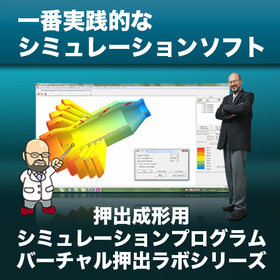
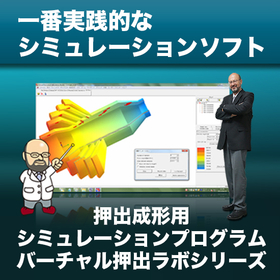
In the wire industry, insulation performance is a crucial factor that affects the safety and reliability of products. Insulation failure can lead to leakage currents or short circuits, potentially resulting in serious accidents. In wire manufacturing, the uniformity of materials, temperature management, and die design during the extrusion molding process are key elements that influence insulation performance. The Virtual Extrusion Lab series addresses these challenges by enabling optimal design and stable molding, contributing to the reduction of defective products. 【Application Scenarios】 - Extrusion molding of insulation materials in wire manufacturing - Optimization of die design - Optimization of molding conditions - Identification and countermeasures for defect causes 【Effects of Implementation】 - Reduction of insulation failures - Reduction of material costs - Shortening of molding time - Improvement of product quality
Added to bookmarks
Bookmarks listBookmark has been removed
Bookmarks listYou can't add any more bookmarks
By registering as a member, you can increase the number of bookmarks you can save and organize them with labels.
Free membership registration
In the automotive industry, weight reduction has become a crucial issue for improving fuel efficiency and reducing environmental impact. Extrusion molding technology can contribute to the manufacturing of lightweight and high-strength components, but trial and error during the design phase and molding defects can lead to increased costs. The "Virtual Extrusion Lab Series" simulates the extrusion molding process with easy operation, supporting optimal design and stable molding. This enables the efficient production of high-quality, lightweight automotive parts. 【Usage Scenarios】 - Shape optimization during the design phase of automotive parts - Early detection and countermeasures for molding defects - Streamlining material selection 【Benefits of Implementation】 - Shortened design period - Reduction in material costs - Decrease in waste due to molding defects
Added to bookmarks
Bookmarks listBookmark has been removed
Bookmarks listYou can't add any more bookmarks
By registering as a member, you can increase the number of bookmarks you can save and organize them with labels.
Free membership registration
Simulation software for extrusion molding is currently available in various types. However, it is also true that there are many cases where it is not being utilized effectively. Many of the reasons for this include "the usage is difficult," "uncertainty about how to use the software for troubleshooting," and "lack of someone to consult with." In other words, if the product itself is user-friendly and the support system after purchase is robust, simulation software becomes an essential item for extrusion molding sites, as it can help eliminate unnecessary costs. The "Virtual Extrusion Lab Series" offers easy-to-understand operation and comprehensive support, making it a product that can be confidently used even by those who have previously avoided simulation software. Our website also showcases actual case studies and examples of cost reduction.
Added to bookmarks
Bookmarks listBookmark has been removed
Bookmarks listYou can't add any more bookmarks
By registering as a member, you can increase the number of bookmarks you can save and organize them with labels.
Free membership registration
Many of the causes of extrusion molding troubles are said to lie within the extruder. Smooth melting of the material is an essential condition for eliminating molding defects. In addition to general parameters such as pressure, temperature, residence time, and melting completion position, our proprietary parameters from Compulast provide detailed output on the state of the material during melting, making it easy to identify trouble factors within the extruder. It is equipped with input templates that allow for easy input of complex screw shapes like mixing and barrier designs, as well as detailed heater settings.
Added to bookmarks
Bookmarks listBookmark has been removed
Bookmarks listYou can't add any more bookmarks
By registering as a member, you can increase the number of bookmarks you can save and organize them with labels.
Free membership registration
The conditions for achieving ideal extrusion are narrow, and the accuracy is easily influenced by the molding conditions, making irregular extrusion a field where the advantages of simulation are particularly evident. The irregular extrusion module derives a stable mold shape against disturbances based on the unique optimal mold design theory "Cross-Flow Minimization Method" developed by Compulast. It thoroughly supports the abundant ideas of mold designers with simple operability and quick analysis.
Added to bookmarks
Bookmarks listBookmark has been removed
Bookmarks listYou can't add any more bookmarks
By registering as a member, you can increase the number of bookmarks you can save and organize them with labels.
Free membership registration
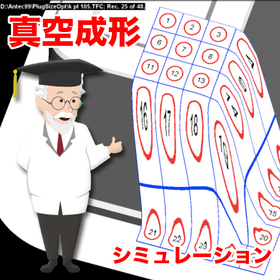
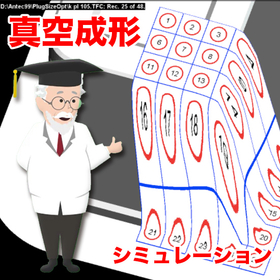
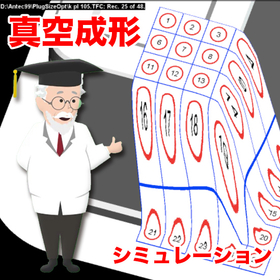
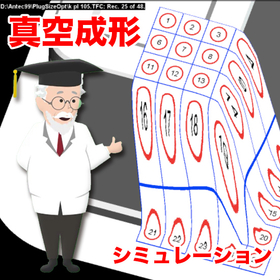
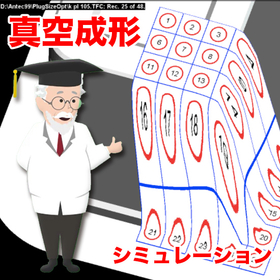
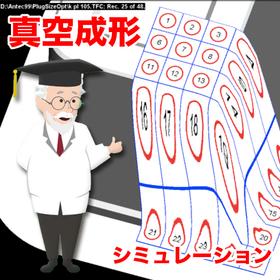
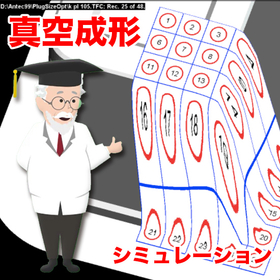
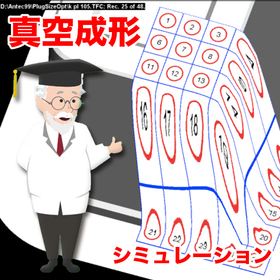
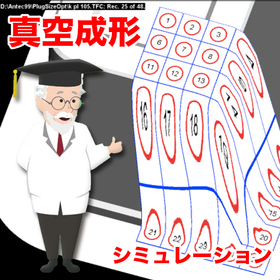
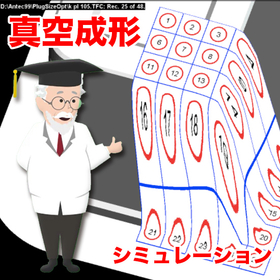
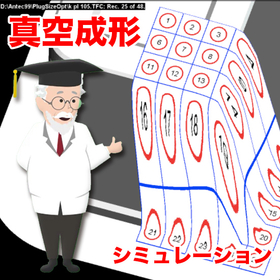
In the display industry, thinness is a crucial factor that influences product competitiveness. Vacuum forming technology is essential for the manufacturing of display components, but molding defects and uneven wall thickness can negatively impact product quality and performance. T-SIM provides an optimal solution for achieving both thinness and high-quality product manufacturing by employing an integrated viscoelastic model to accurately simulate sheet sag during drawdown and cooling after molding. 【Application Scenarios】 - Examination of optimal molding conditions in vacuum forming of display components - Improvement of product quality through uniform wall thickness distribution - Reduction of the risk of molding defects 【Benefits of Implementation】 - Cost reduction through a decrease in the number of prototypes - Shortening of product development timelines - Stable supply of high-quality display components
Added to bookmarks
Bookmarks listBookmark has been removed
Bookmarks listYou can't add any more bookmarks
By registering as a member, you can increase the number of bookmarks you can save and organize them with labels.
Free membership registration
In the container industry, molding technologies that can accommodate a variety of shapes and materials are in demand. Particularly for containers with high design quality or those that pursue functionality, it is crucial to accurately predict the behavior of the sheet during molding and to mold under optimal conditions. Improper molding can lead to a decline in container quality and a deterioration in yield. T-SIM adopts an integral viscoelastic model to accurately analyze sheet sag during drawdown and cooling after molding, enabling flexible reproduction of various vacuum forming processes. 【Application Scenarios】 - Food containers - Medical containers - Industrial containers 【Benefits of Implementation】 - Optimization of wall thickness distribution - Suppression of molding defects - Reduction of material costs
Added to bookmarks
Bookmarks listBookmark has been removed
Bookmarks listYou can't add any more bookmarks
By registering as a member, you can increase the number of bookmarks you can save and organize them with labels.
Free membership registration
In the packaging industry, there is a demand for balancing product protection and cost reduction. In particular, it is important to eliminate waste in packaging materials and to create optimal designs. Inappropriate designs can lead to increased costs due to material waste and molding defects. The vacuum forming simulation program T-SIM simulates various molding conditions and supports optimal packaging design. 【Usage Scenarios】 - Cost reduction of packaging materials - Reduction of molding defects - Optimal thickness design 【Benefits of Implementation】 - Reduction in material costs - Improved yield - Shortened design period
Added to bookmarks
Bookmarks listBookmark has been removed
Bookmarks listYou can't add any more bookmarks
By registering as a member, you can increase the number of bookmarks you can save and organize them with labels.
Free membership registration
In the construction industry, insulation performance is a crucial factor that influences a building's energy efficiency and residential comfort. The manufacturing of insulation materials using vacuum forming technology requires uniform thickness and appropriate shapes. Sheet sagging and deformation during the cooling process can lead to a decrease in insulation performance. The vacuum forming simulation program T-SIM addresses these challenges by employing an integral viscoelastic model, accurately analyzing sheet sagging during drawdown and cooling after molding, thus supporting optimal insulation material design. 【Application Scenarios】 - Development of high-performance insulation building materials - Optimization of the manufacturing process for insulation materials through vacuum forming - Achieving uniform thickness distribution by automatically back-calculating the initial sheet temperature settings 【Benefits of Implementation】 - Improved insulation performance - Optimization of material costs - Reduced risk of molding defects
Added to bookmarks
Bookmarks listBookmark has been removed
Bookmarks listYou can't add any more bookmarks
By registering as a member, you can increase the number of bookmarks you can save and organize them with labels.
Free membership registration
In the electronics industry, as products become smaller and more high-performance, heat dissipation measures have become an important issue. In the design of components for efficiently dissipating heat, vacuum forming technology is essential. However, difficulties in predicting sheet sag during molding and the cooling process can pose barriers to design. T-SIM adopts an integral viscoelastic model to address these challenges. 【Usage Scenarios】 - Electronic device enclosures - Heat dissipation components - Thermoplastic resin molding 【Benefits of Implementation】 - Automatic calculation of optimal initial sheet temperature settings - Uniform distribution of wall thickness - Reduction of the risk of molding defects
Added to bookmarks
Bookmarks listBookmark has been removed
Bookmarks listYou can't add any more bookmarks
By registering as a member, you can increase the number of bookmarks you can save and organize them with labels.
Free membership registration
In the toy industry, ensuring product safety is the top priority. Especially for toys that children may put in their mouths, it is crucial to prevent breakage due to molding defects and exposure to harmful substances. The vacuum forming simulation program T-SIM flexibly reproduces various molding conditions and automatically calculates the optimal initial sheet temperature settings to achieve a uniform thickness distribution. 【Usage Scenarios】 - Safety evaluation of vacuum-formed toys - Improvement of product durability - Reduction of molding defect risks 【Benefits of Implementation】 - Enhanced product safety - Reduction in the number of prototypes - Cost savings
Added to bookmarks
Bookmarks listBookmark has been removed
Bookmarks listYou can't add any more bookmarks
By registering as a member, you can increase the number of bookmarks you can save and organize them with labels.
Free membership registration
In the agricultural sector, the durability of agricultural machinery and materials significantly impacts product lifespan and costs. This is particularly true for products used in harsh environments, where material selection and molding methods are crucial. Inappropriate material selection or molding defects can lead to early deterioration or damage of products, potentially resulting in increased costs. The vacuum forming simulation program T-SIM simulates various molding conditions to support optimal design. 【Application Scenarios】 - Design of agricultural machinery parts - Molding of agricultural materials - Pre-simulation of durability tests 【Benefits of Implementation】 - Improved product durability - Optimization of material costs - Reduction in the number of prototypes
Added to bookmarks
Bookmarks listBookmark has been removed
Bookmarks listYou can't add any more bookmarks
By registering as a member, you can increase the number of bookmarks you can save and organize them with labels.
Free membership registration
In the aerospace industry, lightweight and high-strength components are required. Vacuum forming is an effective method for manufacturing complex-shaped parts, but the strength is greatly influenced by the forming conditions, making pre-validation through simulation essential. In particular, accurately predicting temperature and stress application, and finding the optimal forming conditions, are crucial for enhancing the reliability of components. T-SIM supports the strength design of aerospace parts by employing an integral viscoelastic model and accurately analyzing sheet sag during drawdown and cooling after forming. 【Application Scenarios】 - Forming of aircraft interior components - Manufacturing of rocket parts - Design of drone exterior components 【Benefits of Implementation】 - Improved component strength by identifying optimal forming conditions - Cost reduction through a decrease in the number of prototypes - Shortened development time through quality prediction at the design stage
Added to bookmarks
Bookmarks listBookmark has been removed
Bookmarks listYou can't add any more bookmarks
By registering as a member, you can increase the number of bookmarks you can save and organize them with labels.
Free membership registration
In the home appliance design industry, vacuum forming technology is essential for balancing product appearance and functionality. Particularly for products with complex shapes and high design quality, it is necessary to prevent molding defects and consistently produce high-quality products. Improper molding can damage the product's appearance and lead to a decrease in functionality. T-SIM automatically calculates the optimal initial sheet temperature settings to flexibly reproduce various vacuum forming processes and achieve a uniform thickness distribution. 【Usage Scenarios】 - Design consideration for home appliances - Prototyping through vacuum forming - Optimization of molding conditions - Mold design 【Benefits of Implementation】 - Realization of high-design products - Reduction of molding defects - Shortening of prototyping periods - Cost reduction
Added to bookmarks
Bookmarks listBookmark has been removed
Bookmarks listYou can't add any more bookmarks
By registering as a member, you can increase the number of bookmarks you can save and organize them with labels.
Free membership registration
In the food packaging industry, the airtightness of packaging materials is crucial for maintaining product quality. In particular, accurate analysis that does not overlook even slight abnormalities during the molding process is required to prevent the deterioration of contents and ensure consumer safety. The vacuum forming simulation program T-SIM supports the design of highly airtight packaging materials by accurately analyzing sheet sagging and the cooling process. 【Application Scenarios】 - Design of food packaging containers - Evaluation of packaging material airtightness - Reduction of foreign matter contamination risks 【Benefits of Implementation】 - Reduction of product waste due to sealing failures - Extension of shelf life - Increased reliability from customers
Added to bookmarks
Bookmarks listBookmark has been removed
Bookmarks listYou can't add any more bookmarks
By registering as a member, you can increase the number of bookmarks you can save and organize them with labels.
Free membership registration
In the medical device industry, precision molding prioritizes product quality and safety above all else. Particularly in the molding of medical device components with complex shapes and fine structures, it is essential to accurately predict material behavior and prevent molding defects before they occur. The vacuum molding simulation program T-SIM employs an integral viscoelastic model to accurately analyze sheet sag during drawdown and cooling after molding, thereby supporting the production of high-quality medical device components. 【Application Scenarios】 - Medical tubes - Implant components - Diagnostic containers 【Benefits of Implementation】 - Reduction of molding defects - Decrease in the number of prototypes - Improvement in product quality
Added to bookmarks
Bookmarks listBookmark has been removed
Bookmarks listYou can't add any more bookmarks
By registering as a member, you can increase the number of bookmarks you can save and organize them with labels.
Free membership registration
In the automotive industry, weight reduction is an essential factor for improving fuel efficiency and performance. Vacuum forming technology contributes to the manufacturing of lightweight and high-strength components, but it also carries the risk of molding defects. Particularly in complex shapes and thin-walled molding, issues such as material sagging and uneven wall thickness become challenges. The vacuum forming simulation program T-SIM addresses these challenges and supports the production of high-quality lightweight components by deriving optimal molding conditions. 【Application Scenarios】 - Design and development of automotive parts - Prototyping of parts aimed at weight reduction - Reduction of molding defects - Optimization of material selection 【Benefits of Implementation】 - Early detection of issues during the design phase - Reduction in the number of prototypes - Optimization of material costs - Stable supply of high-quality lightweight components
Added to bookmarks
Bookmarks listBookmark has been removed
Bookmarks listYou can't add any more bookmarks
By registering as a member, you can increase the number of bookmarks you can save and organize them with labels.
Free membership registration
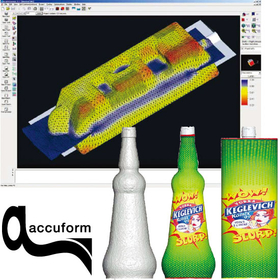
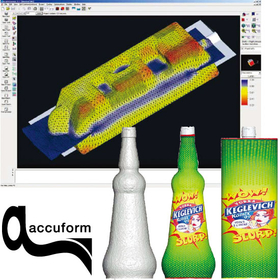
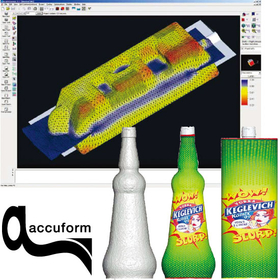
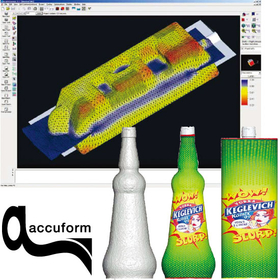
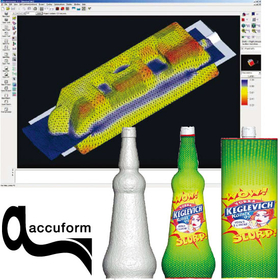
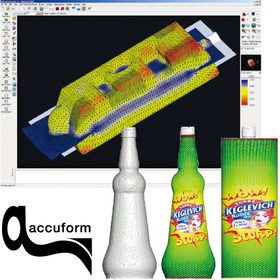
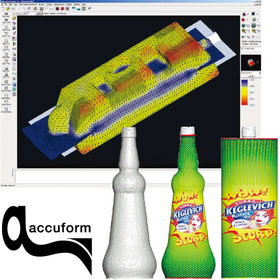
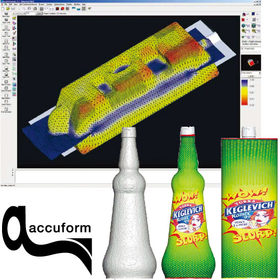
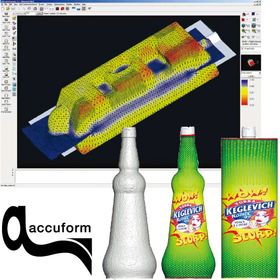
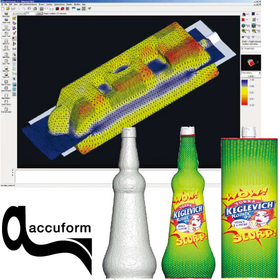
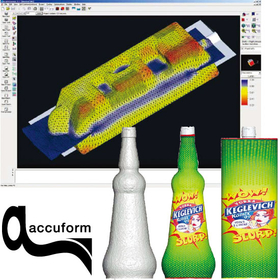
We flexibly reproduce the increasingly diverse vacuum forming processes, including the specification of clamp positions, temperature and thickness distribution of the sheet, friction and heat transfer between the mold and the sheet, timing of vacuum and pressure air, and the shape of the assist plug. We automatically calculate the optimal initial sheet temperature settings to achieve a uniform thickness distribution.
Added to bookmarks
Bookmarks listBookmark has been removed
Bookmarks listYou can't add any more bookmarks
By registering as a member, you can increase the number of bookmarks you can save and organize them with labels.
Free membership registration
In the packaging industry, there is a demand for balancing product protection and cost reduction. Blow molding significantly affects the quality and cost of products due to the shape and wall thickness of containers, making the reduction of molding defects and material optimization crucial. B-SIM addresses these challenges by simulating the blow molding process. 【Application Scenarios】 - Shape consideration during the design phase of packaging containers - Cost reduction through material optimization - Prediction and countermeasures for molding defects 【Benefits of Implementation】 - Reduction in the number of prototypes - Reduction in material costs - Shortening of product development time
Added to bookmarks
Bookmarks listBookmark has been removed
Bookmarks listYou can't add any more bookmarks
By registering as a member, you can increase the number of bookmarks you can save and organize them with labels.
Free membership registration
In the aerospace industry, there is a demand for component designs that achieve both lightweight and high strength. Particularly for components with complex shapes, it is crucial to accurately predict material behavior during the molding process and to conduct optimal designs. Inadequate designs can lead to insufficient strength of components and increased manufacturing costs. B-SIM supports lightweight design by accurately reproducing time-dependent deformations using the K-BKZ model. 【Application Scenarios】 - Design of aircraft components - Design of rocket components - Design of drone components 【Benefits of Implementation】 - Component designs that balance lightweight and strength - Reduction in the number of prototypes - Shortening of design periods
Added to bookmarks
Bookmarks listBookmark has been removed
Bookmarks listYou can't add any more bookmarks
By registering as a member, you can increase the number of bookmarks you can save and organize them with labels.
Free membership registration
In the agricultural sector, improving soil moisture retention is a crucial factor that affects crop growth. This is especially important in arid regions or when there is a desire to reduce the effort of watering. The performance of soil amendments becomes vital in these cases. The shape and composition of soil amendments can significantly alter moisture retention, necessitating appropriate design. The blow molding simulation program B-SIM accurately simulates time dependency and large deformations in the design of soil amendment shapes, allowing for the exploration of optimal shapes. 【Application Scenarios】 - Design of soil amendment shapes - Product development aimed at improving moisture retention - Cost reduction 【Benefits of Implementation】 - Enhanced moisture retention through optimal shape design - Reduction in the number of prototypes - Shortened product development time
Added to bookmarks
Bookmarks listBookmark has been removed
Bookmarks listYou can't add any more bookmarks
By registering as a member, you can increase the number of bookmarks you can save and organize them with labels.
Free membership registration
In the sports industry, the durability of products affects performance and safety. In particular, product designs that can withstand impacts and repeated use are required. Insufficient durability can increase the risk of product failure and injury. The blow molding simulation program B-SIM accurately reproduces time-dependent deformation and assists in designing products to enhance durability. 【Application Scenarios】 - Design of sports equipment (helmets, protectors, etc.) - Simulation before impact testing - Balancing product lightweighting and durability 【Effects of Implementation】 - Improved product durability - Reduction in the number of prototypes - Shortened design period
Added to bookmarks
Bookmarks listBookmark has been removed
Bookmarks listYou can't add any more bookmarks
By registering as a member, you can increase the number of bookmarks you can save and organize them with labels.
Free membership registration
In the toy industry, compliance with product safety standards is the most important issue. Especially for toys that children may put in their mouths, it is necessary to minimize the risk of breakage due to molding defects and the risk of swallowing parts. B-SIM supports the development of safe toys by simulating various conditions in blow molding and evaluating the strength and durability of products in advance. 【Usage Scenarios】 - Simulation of toy drop tests - Strength evaluation due to thinning of parts - Reduction of foreign object contamination risks 【Benefits of Implementation】 - Improved product safety - Cost reduction through fewer prototypes - Shortened product development period
Added to bookmarks
Bookmarks listBookmark has been removed
Bookmarks listYou can't add any more bookmarks
By registering as a member, you can increase the number of bookmarks you can save and organize them with labels.
Free membership registration
In the home appliance industry, improving product quality and reducing costs are important challenges. In blow molding, optimizing mold design significantly impacts product quality and cost. It is necessary to reduce the number of prototypes and eliminate material waste. B-SIM addresses these challenges through blow molding simulation. 【Usage Scenarios】 - Container design for home appliances - Reduction of prototype iterations - Reduction of material costs 【Benefits of Implementation】 - Improved quality through optimized mold design - Shortened prototype development time - Cost reduction
Added to bookmarks
Bookmarks listBookmark has been removed
Bookmarks listYou can't add any more bookmarks
By registering as a member, you can increase the number of bookmarks you can save and organize them with labels.
Free membership registration
In the chemical industry, the chemical resistance of products is extremely important. Exposure to chemicals can lead to degradation or malfunction of products. Particularly in blow-molded containers and components, environmental conditions such as the type and concentration of chemicals and temperature greatly influence the product's lifespan and safety. B-SIM is the optimal product for simulating the blow-molding process while considering these factors and evaluating chemical resistance. 【Use Cases】 - Design of chemical containers - Design of components for chemical plants - Alternative to chemical resistance testing 【Benefits of Implementation】 - Improved product reliability - Reduced design time - Cost savings
Added to bookmarks
Bookmarks listBookmark has been removed
Bookmarks listYou can't add any more bookmarks
By registering as a member, you can increase the number of bookmarks you can save and organize them with labels.
Free membership registration
In the pharmaceutical industry, the reliability of containers is crucial for quality assurance. The uniformity of the shape and wall thickness of blow-molded containers significantly affects the protective performance and shelf life of the contents. Molding defects can lead to product quality deterioration and safety issues. B-SIM addresses these challenges through blow molding simulation. 【Application Scenarios】 - Quality evaluation during the design and prototyping stages of pharmaceutical containers - Reduction of defect rates through optimization of molding conditions - Prediction of container strength and durability 【Benefits of Implementation】 - Cost reduction through fewer prototypes - Stable supply of high-quality containers - Improved product reliability
Added to bookmarks
Bookmarks listBookmark has been removed
Bookmarks listYou can't add any more bookmarks
By registering as a member, you can increase the number of bookmarks you can save and organize them with labels.
Free membership registration
In the cosmetics industry, there is a demand for highly designed containers that catch the consumer's eye. In particular, complex shapes and thin-walled molding can easily become manufacturing challenges, potentially leading to an increase in the number of prototypes and costs. B-SIM supports a wide range of processes from direct blow to injection and stretch blow, contributing to solving these challenges by accurately reproducing time-dependent deformation using the K-BKZ model. The parison and preform shapes can be input using the B-SIM template, and can also be imported from Ansys and STL files. It accurately reproduces blow molding with a variety of settings, including clamp position, temperature of the parison and preform, thickness distribution, friction and heat transfer with the mold, timing of the blow, and direction of mold movement. 【Application Scenarios】 - Prototyping of highly designed containers - Optimization of thickness distribution in thin-walled molding - Prediction and countermeasures for molding defects 【Benefits of Implementation】 - Reduction in the number of prototypes - Cost reduction - Manufacturing of high-quality containers
Added to bookmarks
Bookmarks listBookmark has been removed
Bookmarks listYou can't add any more bookmarks
By registering as a member, you can increase the number of bookmarks you can save and organize them with labels.
Free membership registration
In the food industry, container design is primarily focused on maintaining product quality and ensuring safety. In particular, it is essential to protect the contents and minimize molding defects during the manufacturing process. Inadequate container design can lead to deterioration or leakage of contents, potentially compromising product safety and brand image. B-SIM addresses these challenges through blow molding simulation. 【Application Scenarios】 - Shape design of food containers - Optimization of wall thickness distribution - Prediction of molding defects 【Benefits of Implementation】 - Improvement in container quality - Reduction in the number of prototypes - Cost savings
Added to bookmarks
Bookmarks listBookmark has been removed
Bookmarks listYou can't add any more bookmarks
By registering as a member, you can increase the number of bookmarks you can save and organize them with labels.
Free membership registration
In the medical industry, precision molding prioritizes product quality and safety as the most critical issues. Particularly for medical device components that require complex shapes and thin-walled molding, it is essential to minimize the risk of molding defects and to make accurate predictions during the design phase. B-SIM contributes to improving product reliability by simulating time-dependent deformations with high precision. 【Application Scenarios】 - Design of medical containers - Prediction of molding defects in precision parts - Reduction of prototype iterations 【Benefits of Implementation】 - Reduced risk of molding defects - Improved quality during the design phase - Cost reduction
Added to bookmarks
Bookmarks listBookmark has been removed
Bookmarks listYou can't add any more bookmarks
By registering as a member, you can increase the number of bookmarks you can save and organize them with labels.
Free membership registration
In the automotive industry, lightweighting is a crucial challenge for improving fuel efficiency and reducing environmental impact. Blow molding technology can contribute to the production of lightweight and high-strength parts, but advanced simulation is essential for optimal shape design. B-SIM accurately reproduces time-dependent deformations and supports optimal shape design for lightweighting. 【Application Scenarios】 - Fuel tanks - Intake manifolds - Ducts 【Benefits of Implementation】 - Improved fuel efficiency through lightweighting - Reduction in the number of prototypes - Shortened design period
Added to bookmarks
Bookmarks listBookmark has been removed
Bookmarks listYou can't add any more bookmarks
By registering as a member, you can increase the number of bookmarks you can save and organize them with labels.
Free membership registration
The parison and preform shapes can be imported from Ansys and STL files in addition to dimension input using the B-SIM template. Various settings such as clamp position, temperature of the parison and preform, thickness distribution, friction and heat transfer with the mold, timing of the blow, and direction of mold movement allow for accurate reproduction of the blow molding process.
Added to bookmarks
Bookmarks listBookmark has been removed
Bookmarks listYou can't add any more bookmarks
By registering as a member, you can increase the number of bookmarks you can save and organize them with labels.
Free membership registration
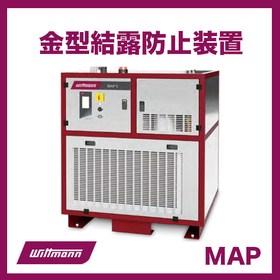
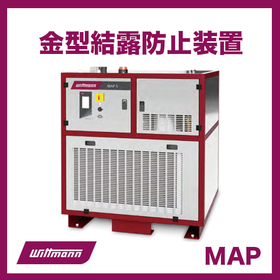
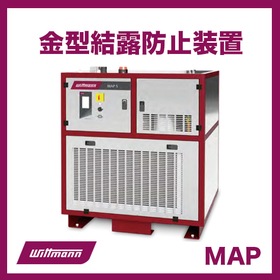
In the energy industry, there is always a demand for streamlining manufacturing processes and reducing costs. In particular, condensation on molds in injection molding can lead to defects in molding and an increase in energy consumption. To address this issue, Wittmann's MAP mold condensation prevention device can be helpful. 【Usage Scenarios】 * Injection molding factories * Companies that need energy-saving measures * Companies that want to reduce molding defects 【Benefits of Implementation】 * Eliminates the need for cooling water temperature adjustments, reducing energy consumption * Reduces material waste by decreasing molding defects * Eliminates the need for humidity control throughout the factory, reducing air conditioning costs
Added to bookmarks
Bookmarks listBookmark has been removed
Bookmarks listYou can't add any more bookmarks
By registering as a member, you can increase the number of bookmarks you can save and organize them with labels.
Free membership registration
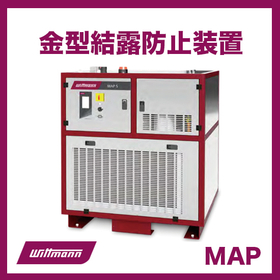
In the telecommunications industry, the quality and reliability of electronic components are extremely important. Condensation on molds can lead to molding defects, which may result in decreased product performance or failures. This is particularly problematic in communication equipment used outdoors, where condensation due to temperature changes is more likely to occur. Wittmann's mold condensation prevention device, MAP, effectively prevents condensation around the mold, enabling stable molding. 【Application Scenarios】 * Manufacturing of communication equipment parts * Manufacturing of parts for outdoor-installed devices * Molding of precision components 【Benefits of Implementation】 * Reduction of molding defects * Improvement in product quality * Increase in productivity * Reduction in maintenance costs
Added to bookmarks
Bookmarks listBookmark has been removed
Bookmarks listYou can't add any more bookmarks
By registering as a member, you can increase the number of bookmarks you can save and organize them with labels.
Free membership registration
In the agricultural sector, maintaining product quality and improving productivity are essential. Particularly for products that are susceptible to temperature and humidity fluctuations, condensation-related molding defects pose a significant challenge. The condensation prevention device MAP effectively prevents condensation on molds by blowing dry air around the cooling water circulation of injection molding machines. This enables stable molding throughout the year and contributes to the reduction of molding defects. 【Usage Scenarios】 - Manufacturing of agricultural plastic products - Molding in environments where temperature and humidity management is difficult - Mitigating cost increases due to molding defects 【Benefits of Implementation】 - Reduction of molding defects - Improvement in product quality - Increase in productivity
Added to bookmarks
Bookmarks listBookmark has been removed
Bookmarks listYou can't add any more bookmarks
By registering as a member, you can increase the number of bookmarks you can save and organize them with labels.
Free membership registration
In the daily necessities manufacturing industry, there is a constant demand for improvements in product quality and production efficiency. Condensation on molds is a significant challenge that can lead to molding defects and decreased productivity. Particularly in seasons or environments with high humidity, troubles caused by condensation are more likely to occur. The Wittmann injection molding mold condensation prevention device, MAP, effectively prevents condensation on molds by enclosing only the area around the cooling water of the injection molding machine with plastic sheets and blowing dry air into that space. This enables stable molding throughout the year, reduces molding defects, and contributes to increased productivity. 【Usage Scenarios】 - Injection molding of plastic products for daily necessities - Factory environments where humidity management is difficult - Reducing losses due to molding defects 【Benefits of Implementation】 - Reduction of molding defects - Increased productivity - Reduction of overall humidity control costs in the factory
Added to bookmarks
Bookmarks listBookmark has been removed
Bookmarks listYou can't add any more bookmarks
By registering as a member, you can increase the number of bookmarks you can save and organize them with labels.
Free membership registration
In the aerospace industry, lightweight design and high-quality parts manufacturing are essential. Condensation on molds during injection molding can lead to molding defects and compromise product quality. Especially for aerospace components that require high precision, dimensional changes and surface defects caused by condensation are unacceptable. The MAP condensation prevention device effectively prevents condensation around the mold, enabling stable molding. This helps reduce the occurrence of defective products and allows for efficient manufacturing of high-quality products. 【Application Scenarios】 - Injection molding of aerospace components - Parts manufacturing aimed at weight reduction - Manufacturing of parts requiring high precision 【Benefits of Implementation】 - Reduction of molding defects - Improvement of product quality - Cost reduction
Added to bookmarks
Bookmarks listBookmark has been removed
Bookmarks listYou can't add any more bookmarks
By registering as a member, you can increase the number of bookmarks you can save and organize them with labels.
Free membership registration
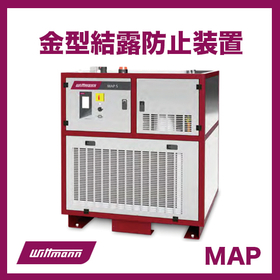
In the toy industry, reducing molding defects is crucial for the stable supply of high-quality products. In particular, condensation on molds due to seasonal and environmental changes is a significant factor that leads to molding defects. Mold condensation can result in poor product appearance and dimensional changes, potentially lowering yield rates. The Wittmann injection molding mold condensation prevention device, MAP, is an energy-saving condensation prevention system that encloses only the area where the cooling water of the injection molding machine circulates with plastic sheets or similar materials, blowing dry air only into that space. This eliminates the need to adjust the cooling water temperature according to the outside air temperature, stabilizing molding throughout the year and reducing molding defects. If humidity control for the entire factory was previously implemented, costs related to air conditioning can also be significantly reduced. 【Application Scenarios】 - Injection molding process for toys - Environments prone to molding defects due to seasonal or temperature changes - Factories aiming to stabilize the quality of molded products 【Benefits of Implementation】 - Reduction in molding defect rates - Improvement in product quality - Increase in productivity - Cost reduction (air conditioning expenses, disposal of defective products, etc.)
Added to bookmarks
Bookmarks listBookmark has been removed
Bookmarks listYou can't add any more bookmarks
By registering as a member, you can increase the number of bookmarks you can save and organize them with labels.
Free membership registration
In the electronic components industry, there is always a demand for improved product quality and yield. Condensation on molds is one of the major factors that cause molding defects and decrease yield. The MAP effectively prevents mold condensation by blowing dry air around the cooling water circulation of the injection molding machine. This contributes to reducing molding defects and improving yield. 【Usage Scenarios】 * Injection molding of electronic components * Factories aiming to improve yield * Quality control departments 【Effects of Implementation】 * Reduction of molding defects * Improvement of yield * Achievement of stable molding quality
Added to bookmarks
Bookmarks listBookmark has been removed
Bookmarks listYou can't add any more bookmarks
By registering as a member, you can increase the number of bookmarks you can save and organize them with labels.
Free membership registration
In the food packaging industry, ensuring product quality and safety is the top priority. In particular, condensation increases the risk of mold growth and foreign matter contamination, which can lead to product quality deterioration and health hazards for consumers. The mold condensation prevention device MAP effectively prevents condensation on molds by sealing only the area around the cooling water circulation of the injection molding machine and blowing in dry air. This enables stable molding throughout the year, reduces molding defects, and contributes to improved product quality. Additionally, it eliminates the need for humidity control throughout the factory, leading to reduced air conditioning costs. 【Application Scenarios】 - Manufacturing of food packaging containers - Molding of food-related parts - Molding in environments where hygiene management is required 【Benefits of Implementation】 - Reduced risk of quality deterioration due to condensation - Cost savings from reduced molding defects - Reduced humidity management costs for the entire factory - Improved product quality and ensured safety
Added to bookmarks
Bookmarks listBookmark has been removed
Bookmarks listYou can't add any more bookmarks
By registering as a member, you can increase the number of bookmarks you can save and organize them with labels.
Free membership registration
In the home appliance industry, there is a constant demand for improvements in product quality and production efficiency. In particular, condensation on molds during the injection molding process can lead to molding defects, resulting in material waste and an increase in rework, which drives up costs. MAP features an energy-saving design that supplies dry air only around the mold, effectively preventing condensation. This reduces molding defects and achieves stable production. 【Usage Scenarios】 - Occurrence of mold condensation in the injection molding process - Material waste and rework due to molding defects - Reduction of humidity management costs for the entire factory 【Effects of Implementation】 - Decrease in molding defect rates - Reduction in material costs - Improvement in productivity - Reduction in air conditioning costs
Added to bookmarks
Bookmarks listBookmark has been removed
Bookmarks listYou can't add any more bookmarks
By registering as a member, you can increase the number of bookmarks you can save and organize them with labels.
Free membership registration
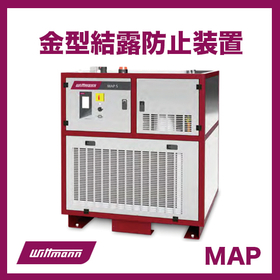
In the medical device industry, high molding precision is required to ensure product quality and safety. Condensation on molds can lead to molding defects and potentially degrade product quality. This is particularly problematic when manufacturing precision parts, as changes in dimensions and surface roughness due to condensation can arise. Wittmann's MAP mold condensation prevention device encloses only the area around the cooling water circulating in the injection molding machine and blows in dry air to prevent condensation on the mold. This enables stable molding throughout the year, reduces molding defects, and contributes to the improvement of medical device quality. 【Usage Scenarios】 - Molding of precise medical device parts - Molding in clean room environments - Sites with strict quality control 【Benefits of Implementation】 - Stabilization of molding precision - Reduction of molding defects - Improvement of product quality - Cost reduction
Added to bookmarks
Bookmarks listBookmark has been removed
Bookmarks listYou can't add any more bookmarks
By registering as a member, you can increase the number of bookmarks you can save and organize them with labels.
Free membership registration
In the automotive industry, there is a demand for a stable supply of high-quality parts. Condensation on molds can lead to molding defects, which may result in decreased quality and productivity. The MAP mold condensation prevention device effectively prevents condensation on molds by blowing dry air around the cooling water circulation of the injection molding machine. It achieves stable molding throughout the year, regardless of external temperatures, and reduces molding defects. 【Usage Scenarios】 - Injection molding lines of automotive parts manufacturers - Quality control departments - Production technology departments 【Benefits of Implementation】 - Reduction in molding defect rates - Stabilization of quality - Improvement in productivity - Cost reduction
Added to bookmarks
Bookmarks listBookmark has been removed
Bookmarks listYou can't add any more bookmarks
By registering as a member, you can increase the number of bookmarks you can save and organize them with labels.
Free membership registration
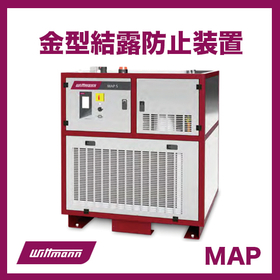
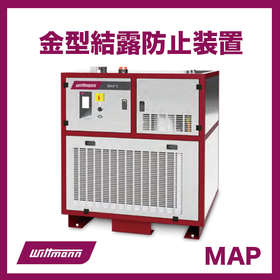
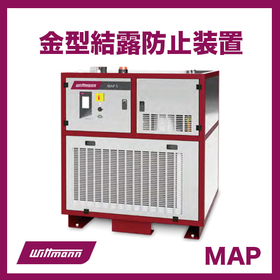
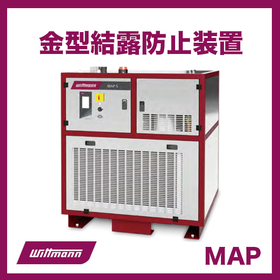
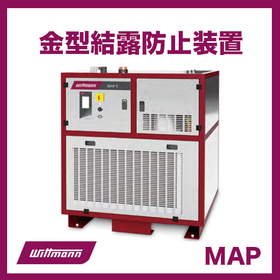
The revolutionary device "MAP," which prevents the major enemy of injection molding, "condensation on molds," surrounds only the area where the cooling water of the injection molding machine circulates with plastic sheets or similar materials and blows dry air only into that space. This is an energy-saving type of condensation prevention system. Since it eliminates the need to adjust the cooling water temperature according to the outside temperature, molding becomes stable throughout the year, and defects in molding are reduced. If humidity control for the entire factory was previously necessary, costs related to air conditioning can also be significantly reduced.
Added to bookmarks
Bookmarks listBookmark has been removed
Bookmarks listYou can't add any more bookmarks
By registering as a member, you can increase the number of bookmarks you can save and organize them with labels.
Free membership registration
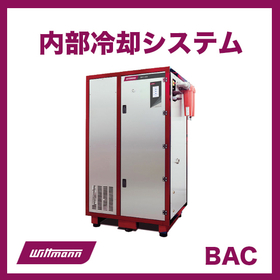
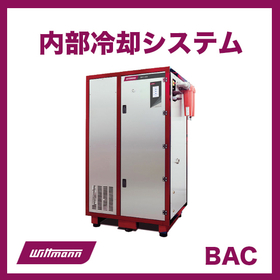
In the energy industry, there is a constant demand for improved product quality and increased production efficiency. In particular, reducing cooling time in the manufacturing process is essential for cost reduction and productivity enhancement. Wittmann's BAC internal cooling system improves the quality of molded products and shortens the cooling cycle by providing a stable supply of cooled compressed air. 【Application Scenarios】 - Manufacturing of energy-related products - Molding of plastic parts - Improvement of production efficiency 【Benefits of Implementation】 - Reduced cooling time - Increased productivity - Cost reduction
Added to bookmarks
Bookmarks listBookmark has been removed
Bookmarks listYou can't add any more bookmarks
By registering as a member, you can increase the number of bookmarks you can save and organize them with labels.
Free membership registration
In the daily necessities industry, mass production of products and cost reduction are always required. Waste loss due to molding defects and long cooling times decrease production efficiency and increase costs. Wittmann's BAC internal cooling system improves the quality of molded products and shortens the cooling cycle by providing a stable supply of cooling compressed air. This enhances production efficiency and cost performance. 【Application Scenarios】 - Cost reduction in mass production of daily necessities - Reduction of molding defect rates - Shortening of production lead times 【Effects of Implementation】 - Increased productivity due to reduced cooling time - Reduction in material costs due to lower defect rates - Decrease in running costs
Added to bookmarks
Bookmarks listBookmark has been removed
Bookmarks listYou can't add any more bookmarks
By registering as a member, you can increase the number of bookmarks you can save and organize them with labels.
Free membership registration